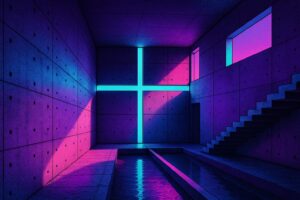
Yo, what’s up. Ryo here. Let’s get real for a sec. You’ve definitely seen them. The pics flooding your feed from that trip to Japan—Naoshima, maybe, or some slick museum in the middle of nowhere. Massive walls of impossibly smooth, gray concrete. Sharp angles. Slices of pure, unfiltered sunlight cutting through the darkness. It’s a whole vibe, for sure. Aesthetic AF. But also… kinda looks like a high-end fallout shelter, right? It’s cold, it’s stark, it’s… empty. Yet, peep the captions: #zen, #spiritualjourney, #peace, #mindfulness. People leave these places talking about profound, life-changing experiences. And you’re scrolling through, thinking, “For real? From a concrete box?” It’s a total head-scratcher. How can a material we associate with underpasses and brutalist council flats feel so… sacred? Japan is the land of ancient wooden temples, delicate paper screens, and intricate gardens. So why is this raw, hardcore concrete the go-to for some of its most revered modern spiritual spaces? That’s the million-yen question. Is it all just for the ‘gram, or is there something deeper going on? The truth is, to get what’s happening in these buildings, you have to CTRL+ALT+DEL your Western ideas of what a “sacred space” is supposed to be. It’s not about gold leaf, stained glass, or epic statues. It’s about something way more elemental. This isn’t just architecture; it’s a full-on philosophical statement about nature, space, and what it means to be human in a chaotic world. We’re about to deep-dive into the mind of the man behind it all, the self-taught, ex-boxer legend, Tadao Ando. We’ll break down why his concrete sanctuaries hit different, and how these seemingly empty spaces are actually filled with a quiet power that’s been part of Japanese culture for centuries. This is the lowdown on the interplay of light and shadow, the real meaning of emptiness, and why a concrete wall might just be the most spiritual thing you’ll ever encounter. Let’s get into it.
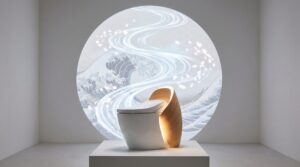
This quiet power extends beyond churches, as seen in how Japan transforms even its public toilets into low-key art galleries.
The Brutalist Vibe vs. The Zen Mindset: A Total Misread
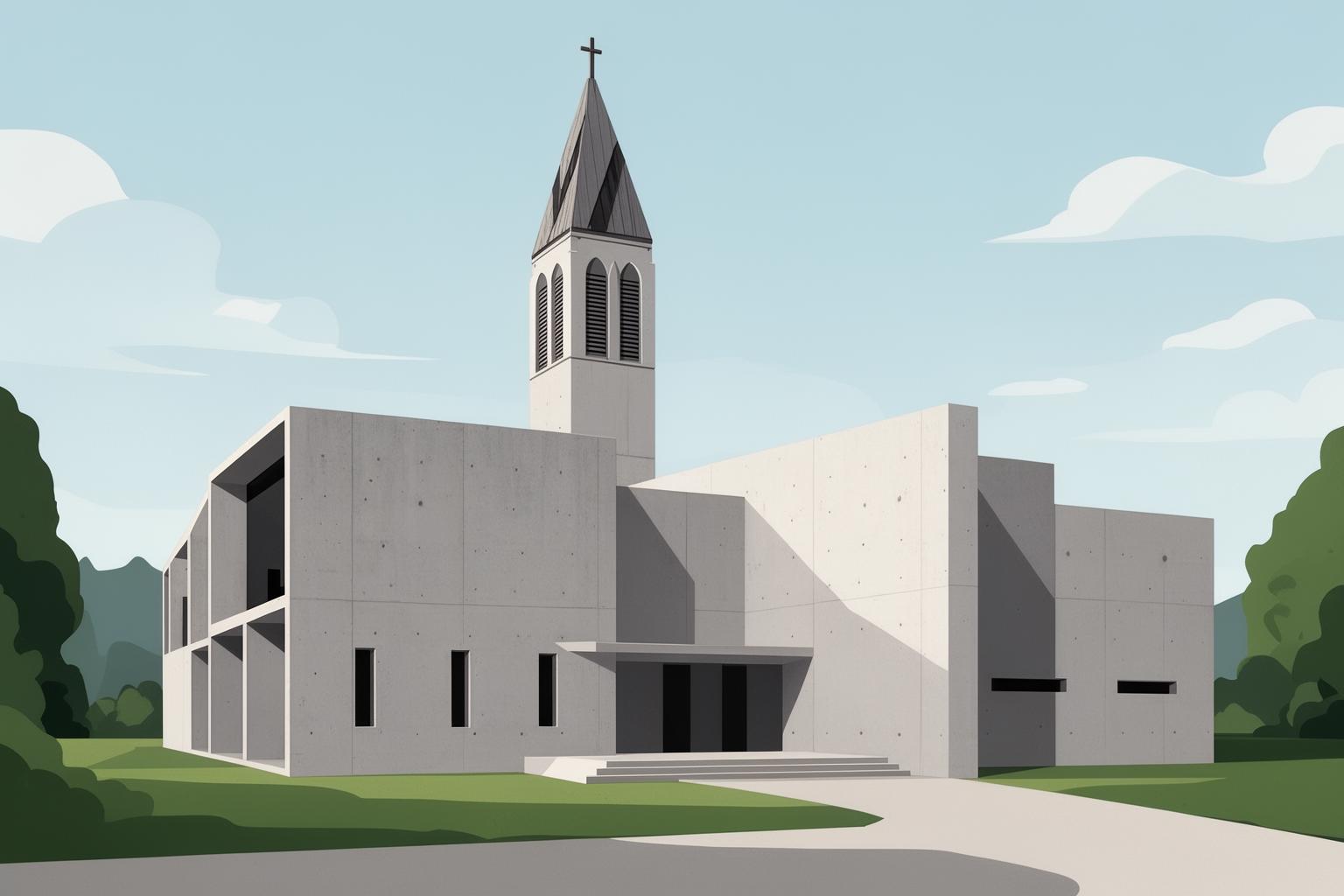
First, let’s set the record straight. When you first encounter an Ando building, especially if you’re familiar with architecture from Europe or North America, your mind might immediately categorize it as “Brutalist.” It’s an understandable misjudgment. Raw concrete? Check. Massive, monolithic shapes? Check. Geometric and imposing? Check. It hits all the visual markers. But labeling Ando’s work as Brutalist is like calling a katana a butter knife. While they may share similar materials, their philosophy, intention, and essence are worlds apart. Brutalism, derived from the French term ‘béton brut’ (raw concrete), often carries a heavy social and political weight, sometimes feeling oppressive. It emphasizes function, mass, and a fortress-like presence—architecture that proclaims, “Look at me. I am here. I am powerful.” In contrast, Ando’s concrete speaks softly. It’s not meant to assert power but to create a space where you can discover your own. To grasp this, we need to explore a couple of profound concepts from the Japanese aesthetic tradition that stand in stark contrast to Western architectural norms.
Deconstructing “Wabi-Sabi”: It’s More Than Rustic Pottery
You’ve probably come across the term wabi-sabi. It’s become a worldwide catchphrase for anything rustic, minimalist, and charmingly imperfect. But it represents much more than an interior design trend. It’s a comprehensive worldview and a way of seeing and accepting the world deeply embedded in the Japanese mindset. Let’s unpack it. Wabi (侘) embodies quiet, rustic simplicity. It’s the satisfaction found in a simple life, free from the pursuit of luxury and materialism—an elegance rooted in humility. Sabi (寂) reflects the beauty that emerges with age, the patina of time—the moss on an old stone lantern, the faded hues of an ancient scroll, the weathered wood of a temple gate. It acknowledges transience, impermanence, and the bittersweet beauty of things that don’t last. Together, wabi-sabi celebrates finding beauty in imperfection and depth in nature, embracing the natural cycles of growth, decay, and death. How does this relate to Ando’s concrete? Completely. For Ando, concrete is not a sterile, flawless industrial material; it is a living canvas embodying wabi-sabi. From a distance, his concrete surfaces may appear uniform, but they are designed to be experienced closely. They catch light subtly, revealing textures and shadows. Crucially, they are intended to age. Over time, rain stains, darkens here, lightens there—they record the passage of time and their environmental interactions. They develop a unique sabi. This sharply contrasts with the Western ideal of upkeep, which aims to keep buildings looking pristine indefinitely. Ando’s creations are meant to age gracefully, becoming more beautiful as they weather and blend with their surroundings. That smooth gray wall is a testament to the beauty of impermanence—a tangible expression of a philosophy that embraces the inevitable flow of time.
“Ma” (間): Embracing the Power of Emptiness
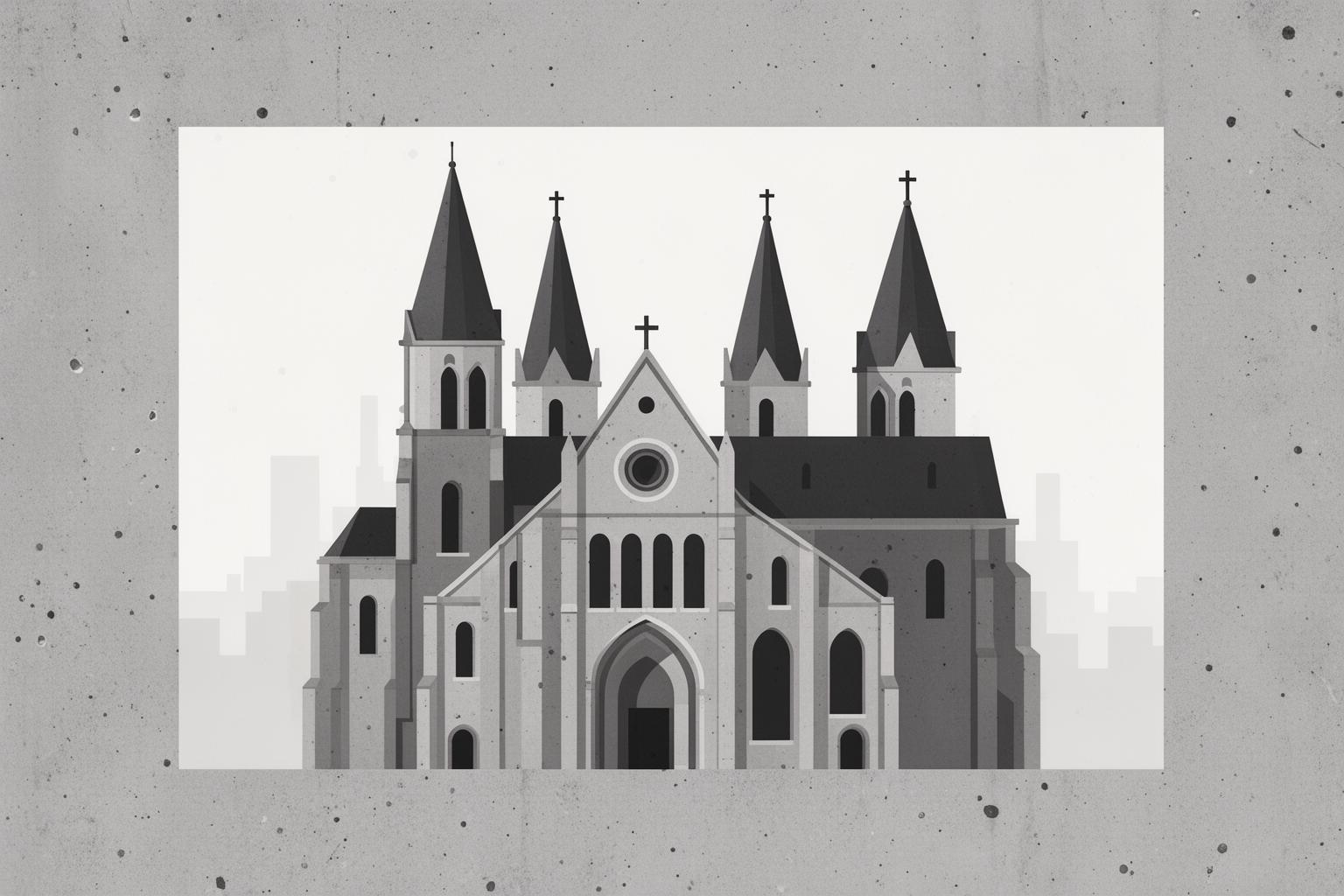
The second crucial concept to understand is Ma (間). This principle is central to nearly every Japanese art form—painting, music, flower arranging, and of course, architecture. Ma is often simplified as “empty space,” but this does not capture its full meaning. It’s not mere nothingness. It’s the interval, the pause, the gap between elements that gives them significance. Consider music: the silence between notes creates rhythm and melody. Without the spaces, it’s just noise. In a Japanese ink wash painting, the large unpainted areas of white paper are as vital as the brushstrokes themselves, creating tension, balance, and room for imagination. Ma is the pregnant pause, the charged, active emptiness. Tadao Ando is a master of Ma. His buildings are renowned for their vast, unembellished walls and long, empty corridors. A Western architect might see this as wasted space—a missed opportunity to add a window, artwork, or furniture. For Ando, this emptiness is integral. He designs these spaces to clear your mind. When you walk a long, narrow corridor flanked by towering, smooth concrete walls with only a sliver of sky visible above, you are compelled to stop dwelling on your tasks or plans. Your senses narrow down. All you notice is the texture of the wall, the ground beneath your feet, and the quality of the light above. The emptiness is not vacant; it is full of potential for reflection. It is a place meant to be filled not with objects but with your own thoughts and emotions. This approach fundamentally differs from Western design. Take a Gothic cathedral as an example: it aims to overwhelm with stimuli—the soaring height, intricate stained glass narrating biblical tales, ornate statues, and the echoing organ—directing your gaze outward and upward toward a defined vision of God. Ando’s spaces do the opposite: they strip away everything to turn your attention inward, toward your spirit and your personal connection to the essential elements of existence.
Let There Be Light (But Not Too Much): Ando’s Divine Geometry
If Ma is the charged emptiness that defines Ando’s spaces, then light is the divine performer on that stage. In his architecture, light serves not merely for illumination but as a fundamental building material, as tangible and thoughtfully employed as concrete itself. He shapes space with it, evokes emotion, and links the human spirit to the rhythms of nature. He knows light is never fixed—it shifts with the time of day, seasons, and weather. A space bathed in a sharp, bright beam of midday sun becomes soft, melancholic, and diffuse under a cloudy sky. This constant transformation breathes life into his buildings. Rather than creating static objects, he crafts dynamic environments that embody the passage of time. This respect for light draws deeply from Japanese culture, where Amaterasu Omikami, the sun goddess, is the chief deity of Shinto. Light is, quite literally, divine. Traditional Japanese architecture, with its translucent shoji screens, sought to diffuse and soften natural light, producing a gentle, harmonious glow. Ando reinterprets this ancient sensitivity with bold, modern, and strikingly geometric form.
The Cross as a Void: The Church of the Light
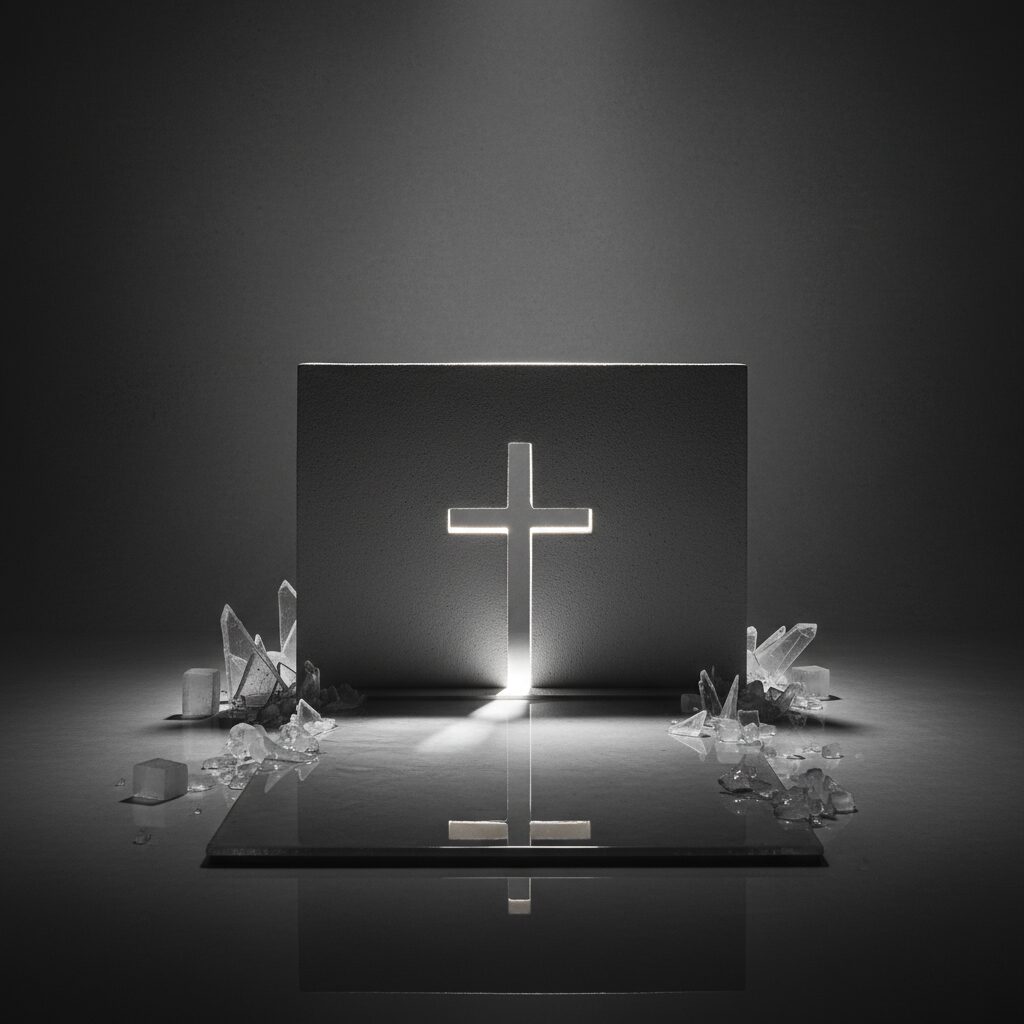
None better illustrates this than his masterpiece, the Church of the Light, nestled in a quiet Osaka suburb. On a gray, overcast day, its exterior—a simple, austere concrete box—may initially underwhelm. Upon entry, you pass through a deliberately disorienting sequence of walls, a classic Ando method to clear the mind for what lies ahead. Inside, the space is a dark, cavernous concrete cube, nearly devoid of ornamentation—no icons, paintings, or elaborate altar. Your eyes gradually adapt to the dimness until you notice the front wall, expected to hold an altar, but instead is solid concrete punctuated by a single, potent void: a cruciform slit open to the sky. Here, light does more than illuminate; it is the cross itself. It streams into the shadowed interior as a raw, powerful beam of nature. The moment is breathtaking. The brilliance lies in subverting expectations. Traditionally, a church cross is a crafted object—gold, wood, or stone—then lit. This is a human-made symbol. In Ando’s church, the cross is defined by absence, a hole in material. This sacred symbol is not man-made but a portal for a fundamental universal force to enter. The experience continuously changes: soft and angled in morning light, a sharp blade at midday, flickering through passing clouds, and glowing golden at sunset before fading into twilight. The church becomes a celestial clock, marking the day’s and seasons’ passage. By distilling the Christian symbol to its purest geometric form and embodying it in light, Ando universalizes its meaning. One need not be Christian to feel moved by light’s triumph over darkness. He transforms a specific religious icon into a primal spiritual encounter connecting with ancient sun worship. This radical simplicity achieves a profundity often elusive even in lavish cathedrals.
Water as a Mirror: The Water Temple
Ando’s craftsmanship extends beyond light to orchestrating natural elements harmoniously. On Awaji Island, he created another spiritual marvel, Honpukuji, known as the Water Temple. Again, he challenges expectations. Ascending a small hill past a traditional temple cemetery, you anticipate a temple structure but find a vast, oval lotus pond instead. The moment is disorienting—where is the temple? The pond’s surface mirrors sky, clouds, and green hills, blending heaven and earth. A staircase descends into the water’s center—this is the entrance. The journey symbolizes a powerful act. In Buddhism, the lotus flower rising from mud to bloom in pure beauty symbolizes enlightenment and purity. Descending the stairs, you symbolically leave behind the mundane, passing through cleansing water and the lotus realm into sacred space below. The transformation is profound. You move from the bright, vast reflected sky, down a dark concrete stairwell, entering the temple’s core. The sanctuary is a circular chamber, evoking a womb-like sense of being held. Vermilion red dominates—a traditional temple color meant to ward off evil and signify sacredness. Light enters indirectly through a wooden lattice circling the chamber’s upper wall, casting dramatic shadows and a soft, ethereal glow. At the center sits the Buddha statue. The entire progression is a choreographed pilgrimage: from light to dark, openness to enclosure, nature’s water and sky to a spiritual realm of color and shadow. Ando uses water’s reflection to blur architecture’s boundary with landscape, then guides you on a subterranean journey to concentrated spirituality—a miniature pilgrimage.
Framing Nature: The Art of Borrowed Scenery (Shakkei)
Ando’s passion for blending architecture with nature echoes an age-old Japanese idea: shakkei (借景), or “borrowed scenery.” This foundational principle in Japanese garden design uses the external landscape—a distant mountain, a cluster of trees, or a nearby temple’s roof—as an integral part of the garden’s composition, fostering a sense of infinite space and connection to the broader world. Ando continually employs this concept with a modern, minimalist approach. His windows and openings transcend mere function; they are carefully placed frames that curate nature’s view. A vast concrete wall might block 99% of a chaotic scene, leaving only a horizontal slit perfectly aligning sea and sky. A square window may capture a lone, gnarled pine tree as if it were a living painting. At Naoshima’s Benesse House Museum, such moments abound: walking a concrete corridor, an aperture suddenly reveals a breathtaking panorama of the Seto Inland Sea. Here, the concrete walls function like blinders, stripping away distractions and directing your gaze to a single, carefully chosen natural element. Ando doesn’t simply construct buildings; he teaches how to see. This framing elevates the natural world into art, transforming the building into a lens encouraging deeper appreciation. It is architecture as meditation, guiding you into mindful observation.
The Material World: Why Concrete?
So we’ve recognized that Ando’s work is deeply influenced by Japanese philosophy. Yet, the question persists: why opt for this material? In a nation renowned for its carpentry and wooden construction traditions, and infamous for frequent earthquakes, why choose heavy, rigid, and unforgiving concrete? The answer unveils another dimension of his brilliance and rebellious nature. The use of concrete is not merely an aesthetic decision; it is a purposeful statement about modernity, craftsmanship, and defiance against the disorder of contemporary life.
The Boxer’s Mentality: Wrestling with Materials
Discussing Ando inevitably involves his background. He didn’t attend a prestigious architecture school. Instead, he was a professional boxer in his youth and taught himself architecture by studying books and traveling worldwide to observe masterpieces by architects like Le Corbusier and Louis Kahn. He approaches his work with a fighter’s mindset. He frequently describes architecture as a battle—a struggle against budgets, building codes, and, most critically, a fight with the materials themselves to shape them according to his vision. His chosen adversary is concrete. He avoids easy materials, seeking instead the challenge of mastering this raw, harsh substance and refining it to sublime perfection. Here, one can see a distinctly Japanese dedication to process and craftsmanship—monozukuri (ものづくり). Monozukuri literally translates to “thing-making,” but it conveys profound pride and a spiritual bond with the entire creative process, from raw material to finished product. Ando’s concrete is far from ordinary, sidewalk-grade mix. It has legendary status in architecture for its flawless quality. The precise formula remains a closely guarded secret, but the end result is a surface as smooth and lustrous as silk. Crafting these walls is an art form. The wooden formwork, or molds, into which the concrete is poured, must be made with the finesse of a master cabinetmaker, as any flaw in the wood will be permanently imprinted on the concrete. Then there are the iconic tie-holes—the small, perfectly arranged circular indentations visible on all his walls, which are marks left by the steel bolts (or ties) holding the formwork together during pouring. Most architects would fill these holes and plaster over them to achieve a seamless finish. Ando leaves them exposed. Why? Because they honestly record how the building was created. They serve as a signature, a testament to the rigorous process and human labor involved in construction. They form a rhythmic, geometric pattern on the surface, a kind of machine-age ornamentation born directly from the building’s structural logic. In this obsessive quest for perfection, Ando transforms a mundane industrial material into something precious and profoundly human.
An Architecture of Resistance
Choosing concrete is also a bold act of defiance against the visual clutter of the modern Japanese city. Stroll through the center of any major Japanese city—Tokyo, Osaka—and you’re overwhelmed by a cacophony of sights and sounds: neon signs, overhead power lines tangled like spaghetti, mismatched buildings crammed tightly together, constant noise from pachinko parlors and train stations. It’s vibrant and exhilarating but can also be overwhelming and exhausting. Ando’s buildings respond directly to this chaos. They stand as bastions of tranquility. Using thick, windowless concrete walls as a barrier, he intentionally turns away from the chaotic urban environment. He crafts an inner world, a sanctuary where the city’s noise and clutter are shut out, allowing a different reality—one of silence, light, and reflection—to emerge. His early masterpiece, the Row House in Sumiyoshi (also called the Azuma House), perfectly exemplifies this. He inserted a stark concrete box within a row of traditional wooden townhouses in a dense Osaka neighborhood. The house has no street-facing windows; all its light and air come through an open-air courtyard at its center. This courtyard separates the living room from the kitchen and bathroom, meaning that to move between spaces, residents must go outside regardless of the weather. If it’s raining, they need an umbrella to reach the toilet. This seems irrational by conventional standards but was a pivotal act of resistance for Ando. He was critiquing modern society’s fixation on convenience and how it disconnects us from nature. By compelling residents to experience rain, wind, sun, and cold daily, he kept them tied to natural rhythms even in a dense urban setting. This is architecture that does not pamper; it challenges. It demands presence and awareness of one’s surroundings.
The Human Experience: Is It Actually Livable?
This brings us to the elephant in the room. Despite their philosophical depth and aesthetic beauty, what is it truly like to live in, or even simply be inside, an Ando building? The photos are breathtaking, but the reality can be complex. His architecture is demanding, and the criticisms are as sharp as his buildings’ edges. Many find the spaces unmistakably cold, both literally and figuratively. The concrete functions as a massive thermal sink, causing interiors to be chilly during winter. The minimalist design, free of personal clutter and soft furnishings, can feel stark and unwelcoming to some. This is not “cozy” architecture; it doesn’t embrace you. The Azuma House, with its notorious outdoor courtyard, is often cited as a classic example of architecture that prioritizes philosophical ideals over human comfort. Ando himself is famously unapologetic about this. He takes a tough-love stance, believing that modern convenience has made people soft and numb. He wants his buildings to awaken you, to heighten your senses, even if it entails some discomfort.
The Critique: Beautiful but Cold?
This is a reasonable point of contention. For many, a home should be a sanctuary of comfort and ease. Ando’s residential projects challenge that very assumption. They suggest that a home should also keep you engaged with your surroundings, fostering discipline and mindfulness. This idea draws from Zen philosophy, where enduring hardship—like a monk meditating for hours in a cold, drafty hall—is viewed as a path to spiritual clarity. The slight chill you feel from the cool concrete wall is meant to remind you that you are a physical being, anchored in a particular time and place. It stands in contrast to the perfectly climate-controlled, sensor-activated smart home that anticipates your every need before you even realize it. This philosophy will not resonate with everyone, and this is a major reason his work is so polarizing. It isn’t designed for mass appeal; it’s created for a specific lifestyle and mindset. It asks you to meet it halfway, to make an effort to appreciate it. For those who align with its rhythm, the experience is transformative. For those who don’t, it can feel like a merely beautiful, very cold garage.
Sound, Touch, and Temperature: A Full-Body Experience
To truly understand Ando, you must engage more than just your eyes. His buildings are meant to be experienced through all the senses. They serve as phenomenological playgrounds. Let’s break down the sensory experience. First, sound. In a typical home filled with carpets, curtains, and soft furnishings, sound is absorbed and muffled. In an Ando space, the hard, smooth surfaces of concrete, glass, and wood produce a unique acoustic environment. Sound reflects and reverberates. The click of a shoe on the floor, the turning of a page, a quiet conversation—these small noises become distinct moments. More importantly, silence itself becomes an event. In the absence of sound, the quiet is profound—not an empty void, but a dense, present silence. You become acutely aware of the absence of noise. Next, touch. There is a continuous dialogue of textures. The primary sensation is the surprising, almost liquid smoothness of the concrete. When you run your hand along a wall, you expect roughness but instead encounter a cool, silky surface. This contrasts with the warmth and grain of wooden floorboards, the cold precision of steel handrails, or the rough texture of an outdoor stone path. Ando compels you to pay attention to what you touch, cultivating mindfulness of the surrounding materials. Finally, temperature and atmosphere. You sense shifts in temperature as you move from sunlit spots to shaded corners. Sunlight streaming through a narrow ceiling slit doesn’t just light the floor; it creates patches of warmth you can feel on your skin. You notice the coolness of a breeze flowing through a corridor, the humidity in the air. By stripping away conventional architectural layers, Ando exposes you to the raw, physical reality of the space. You don’t just see his buildings; you feel them on your skin and in your bones. It is a holistic, full-body experience that no photograph can capture.
The Concrete Sanctuary in a Post-Modern World
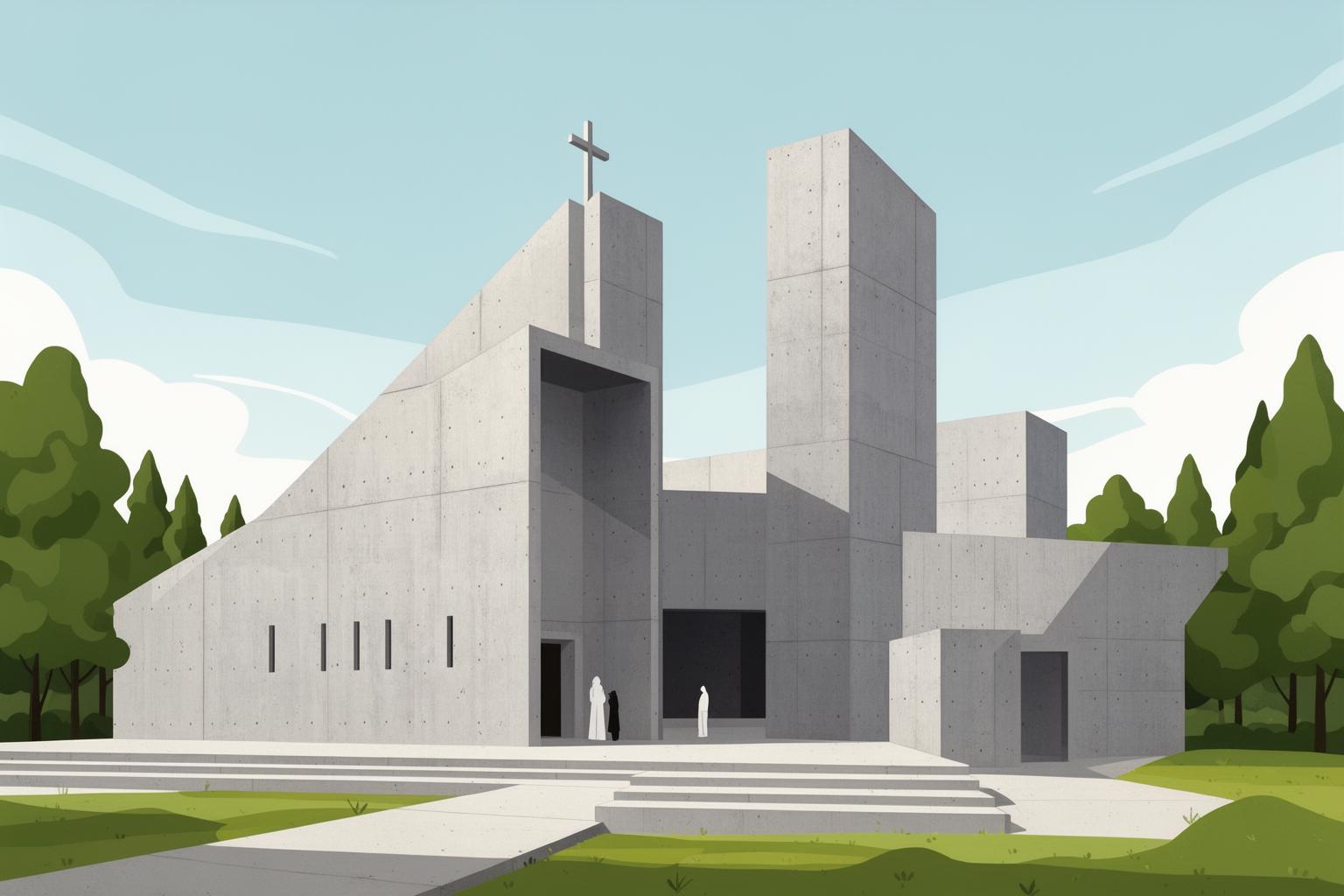
So, let’s return to that initial confusion. Why does a concrete box in Japan feel more spiritual than a grand cathedral? Because Tadao Ando’s architecture isn’t about providing answers; it’s about creating a space where you can discover your own. It’s a physical embodiment of deeply rooted Japanese philosophies, skillfully expressed in a universal, modern language that anyone can intuitively understand. He draws on ancient concepts like wabi-sabi, the beauty found in imperfection and impermanence, and Ma, the significance of intentional emptiness, to shape his spaces. His concrete is not the cold, lifeless material of urban decay; it’s a living canvas meant to age gracefully, marking the passage of time. The vast, empty volumes aren’t wasted space; they are sacred voids designed to clear the mind and invite introspection. His brilliance lies in how he orchestrates nature. He manipulates light and shadow with surgical precision, using them to sculpt space and evoke deep emotion. He frames nature with his concrete walls, borrowing scenery like the garden masters of old, encouraging us to see the world with renewed, focused clarity. The light streaming through the cross-shaped void in the Church of the Light exemplifies this—a moment where nature, geometry, and spirituality converge in a powerful experience. Yes, his work can be demanding. It may feel uncomfortable, impractical, and cold. It challenges our modern obsession with convenience at every turn. But that is exactly the point. His buildings are acts of resistance. They are silent sanctuaries amid a noisy, chaotic world. They block out distractions and clutter, forcing us into a direct, unfiltered confrontation with the most fundamental elements of existence: light, shadow, water, air, and the quiet landscape of our own minds. In today’s era of constant digital distraction, sensory overload, and virtual living, the silent, tangible reality of these concrete sanctuaries feels more essential and relevant than ever. They are not just buildings to admire from a distance or capture on social media. They are invitations—inviting us to slow down, pay attention, disconnect from noise, and simply be present. And in our world today, what could be a more spiritual experience than that? It’s the ultimate flex in a world that never stops talking: the profound luxury of silence.