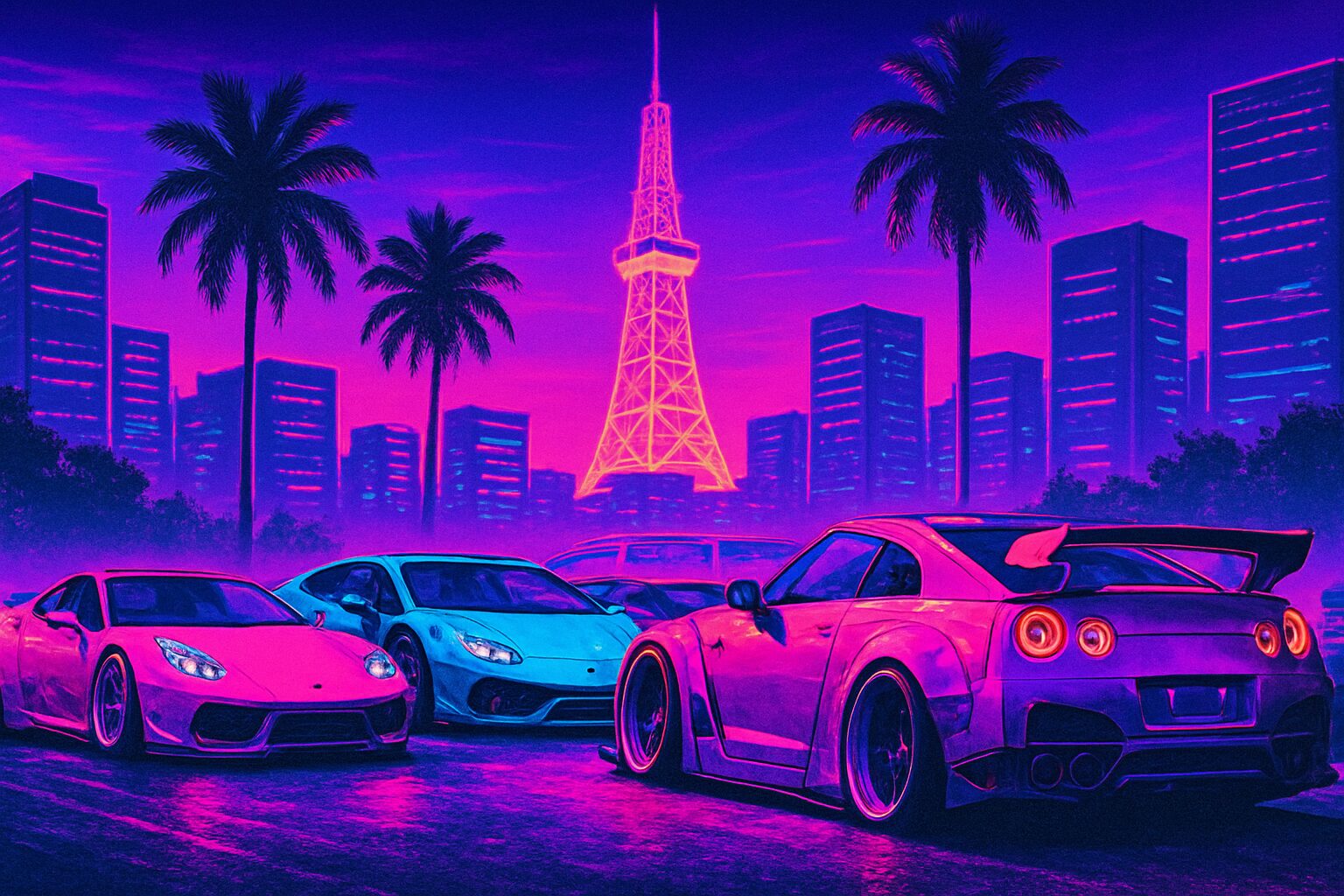
Yo, what’s the 4-1-1? Let’s get one thing straight. You think you know Japan? You’ve seen the temples, you’ve slurped the ramen, maybe you even vibed with the Shibuya Crossing chaos. That’s all G, for real. But you haven’t truly plugged into the mainframe of Japan’s modern cultural engine until you’ve stood in a neon-drenched parking area at 1 AM, the air thick with the smell of high-octane fuel and rebellious spirit, your chest vibrating with the bass-heavy idle of a V12 Lamborghini that’s been surgically altered to look like a machine from a dystopian future. This ain’t your average Cars & Coffee, my friend. This is a Liberty Walk meet. It’s loud, it’s unapologetic, and it’s a direct, throbbing artery connected to one of Japan’s most misunderstood and visually arresting subcultures: the bosozoku. To understand what Wataru Kato and his Liberty Walk (LBWK) crew are doing to Ferraris and GT-Rs, you first have to understand the soul of the kaido racers and the Shakotan legends that came before. It’s a whole lineage, a story of defiance etched in fiberglass and tire smoke. It’s less about a simple car show and more about a cultural pilgrimage. It’s where heritage meets horsepower, and trust me, the energy is absolutely electric. This is your all-access pass to a world that’s giving main character energy, 24/7. So buckle up, fam. We’re about to dive deep into the concrete jungle where automotive legends are born. Peep the ground zero of this whole movement below.
To truly feel the full spectrum of Japan’s car culture, you should also experience the unmatched atmosphere of a sunset touge run.
The Gospel of Kato-san: What Exactly is Liberty Walk?
Before we even discuss the meets, you need to grasp the brand, the myth, the legend: Liberty Walk. This is not just an ordinary tuning shop—it’s a global movement, a philosophy centered around a charismatic, chain-smoking guru: Wataru Kato. From Aichi Prefecture, Kato-san is the original pioneer who saw a multi-hundred-thousand-dollar Italian supercar and thought, “What this needs is a Dremel, some bolt-on fenders, and a hefty dose of rebellion.” The world went absolutely wild for it.
His often-repeated mantra is about freedom—the liberty to customize your car however you want, ignoring the purists. This philosophy didn’t emerge from nowhere; it harkens back to his youth in the 70s and 80s, when Japan’s car culture was raw, rebellious, and heavily influenced by the bosozoku gangs. These weren’t just kids on noisy bikes; they were crafting an entire aesthetic. They transformed ordinary domestic sedans and Skylines into street-hunting beasts known as kaido racers. Think insanely low stances (shakotan), massive front splitters (deppa), and exhaust pipes shooting skyward (takeyari). It was art born from defiance.
Kato-san captured that exact spirit. He viewed the supercar world as too sterile, too precious. His signature? The now-iconic riveted over-fenders. He literally cuts into the immaculate bodywork of a Ferrari 458 or Lamborghini Aventador to bolt on wide, aggressive fender flares. For collectors, it’s sacrilege. For fans, it’s freedom. It declares, “This is my car, not a museum piece.” The result? A machine that looks like it just raced off a Group 5 grid from the 1980s, ready for a street battle. Pure, distilled aggression and style. The drip, as the kids say, is immaculate. Under the LBWK banner, there are different lines: LB-Works is the most extreme for high-end exotics; LB-Performance offers milder kits; and LB-Nation caters to domestic Japanese cars, bringing the style back full circle to the cars that inspired it all, like the Nissan GT-R and Toyota 86. Understanding this brand DNA is essential because a Liberty Walk meet isn’t simply a gathering of cars wearing the same body kit—it’s a congregation of enthusiasts who have embraced Kato-san’s gospel of automotive freedom.
The Symphony of Chaos: Deconstructing the Vibe
Arriving at an authentic Liberty Walk meet, especially one held at an iconic location like Daikoku Parking Area near Yokohama, is a full sensory assault—in the absolute best way. Forget any preconceptions you have about car meets. This is an entirely different experience. It’s part car show, part block party, part art installation, and entirely about the vibe.
First, there’s the sound. Oh, the sound. It hits you before you even catch sight of anything. It’s a rich, layered symphony. You have the deep, earth-shaking growl of American V8s in slammed muscle cars, a low-frequency hum that resonates through your bones. Over that, the high-pitched, banshee wail of a de-catted Lamborghini V12 bounces off the concrete walls of the highway overpass. Then comes the distinctive, irregular brap-brap-brap of a Mazda rotary engine, a sound so unique it’s instantly identifiable. Cutting through it all is the sharp hiss of air suspension releasing pressure, lowering cars so close their frames almost brush the asphalt. Add to this the J-pop, techno, or hip-hop blasting from custom sound systems loud enough to host a small festival, alongside the constant buzz of chatter and laughter from the crowd. This isn’t noise; it’s a soundscape. It’s the anthem of the culture.
Next, your eyes adjust to the visual chaos. The spectacle is overwhelming. Beneath the flat, sodium-vapor glow of the parking lot lights, every car becomes a canvas of personal expression. You’ll see candy-apple red paint so deep it looks wet, shimmering with metallic flakes. Nearby might be a vehicle painted in military-spec matte green, covered in sponsorship decals like a genuine race car. Neon underglow, once thought obsolete, has come back with a vengeance, casting vivid pools of blue, pink, and green light onto the pavement. Headlights often feature customized “demon eyes,” small LED projectors that give cars the look of slumbering dragons. The sheer diversity is staggering. Down one row you might find a classic Hakosuka Nissan Skyline, a crown jewel of Japanese automotive heritage, parked next to a brand-new McLaren 720S, both modified with the same rebellious spirit. It’s a living, breathing museum where the exhibits roar and spit flames.
The smell is just as powerful. The air is thick with the sweet, acrid scent of unburnt gasoline from engines running rich tunes. There’s the sharp, hot aroma of rubber from quick burnouts and the unmistakable smell of overheated brakes and clutches. It all blends into an intoxicating mix that every car enthusiast instantly recognizes as the scent of home.
Finally, there’s the feeling—the atmosphere. Despite the intimidating looks of some cars and owners, the vibe is surprisingly relaxed and welcoming. This is a community founded on shared passion. There’s no gatekeeping here. Whether you show up in a million-dollar Liberty Walk Aventador or a modest, tastefully modified Honda Civic, you’re part of the family. An unspoken respect permeates the scene. People take pride in their builds and are almost always eager to share their stories (a translation app on your phone helps a lot). It’s a space of mutual admiration. You’ll see groups of friends gathered around an open engine bay, pointing, smiling, and swapping stories. It’s pure, unfiltered passion, and that energy is contagious. This isn’t a competition; it’s a celebration.
Time Machine: Tracing the Roots Back to the Bosozoku
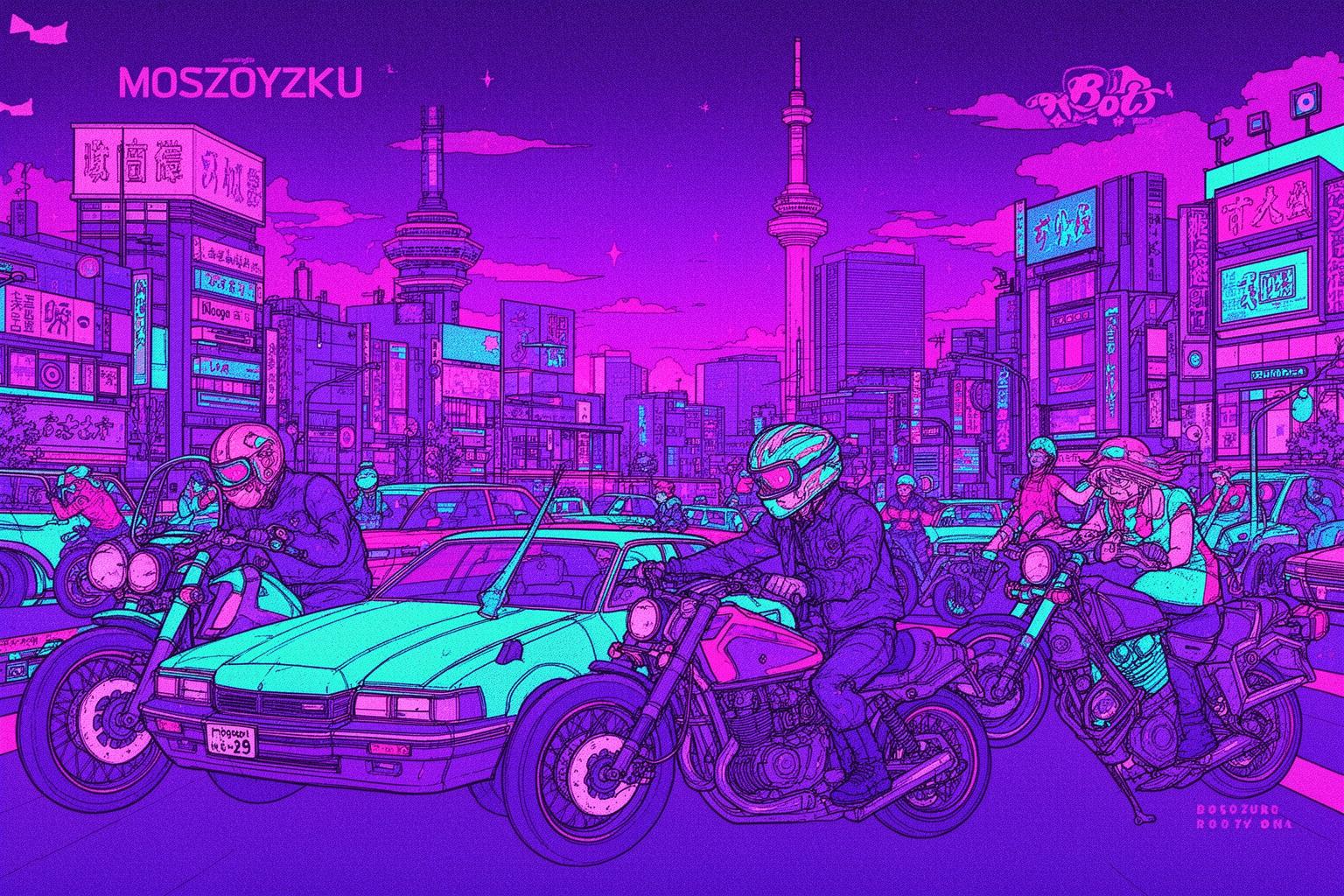
Alright, it’s time for a history lesson, because you can’t truly grasp what Liberty Walk is doing without understanding its roots. This is where we dive deep, beyond the flashy cars and into the very heart of Japanese rebellion. We need to discuss the bosozoku (暴走族), which literally means “running-out-of-control tribe.”
Let’s rewind to post-WWII Japan, specifically the 1950s and 60s. The country was in the midst of its economic miracle, rebuilding at a rapid pace. This created a society that valued conformity, hard work, and loyalty to the company and the nation. However, for some young people, this rigid social framework felt suffocating. They were searching for an escape, an identity, a family. At first, they found this in the form of the kaminari-zoku or “thunder tribe,” groups of working-class youth on motorcycles, inspired by American greaser culture from films like Rebel Without a Cause. They would remove the baffles from their exhausts to make as much noise as possible while cruising city streets. This was the primordial soup from which the bosozoku would arise.
By the 1970s and 80s, the bosozoku had grown into a full-fledged subculture with its own unique aesthetics, codes, and rituals. It was a massive movement, boasting tens of thousands of members across Japan. These weren’t just car clubs; they were youth gangs, often involved in turf wars and confrontations with the police. Their ethos was one of defiance against mainstream society, expressed most vividly through their vehicles.
The bikes were the most iconic aspect. They were modified in ways that were completely impractical and designed solely to shock visually and audibly. Seats were extended upwards in what was called a san-dan (three-level) seat. Handlebars were squeezed inward and angled down (shibori), forcing the rider into an aggressive, hunched-over stance. Fairings were oversized and painted with loud graphics. But the most important feature was the exhaust—multi-piped, often without mufflers, engineered to generate the loudest possible noise. The goal was to be both seen and, more importantly, heard.
As members aged, many transitioned to cars, and this is where the kaido racer aesthetic, the direct predecessor of Liberty Walk’s style, emerged. They took domestic sports cars and sedans—Nissan Skylines, Toyota Celicas, Mazda Savannas—and applied the same extreme modification logic. Let’s break down the key elements, because you’ll see each one echoed in a modern LBWK kit:
- Shakotan: Meaning “low car.” The aim was to get the vehicle as close to the ground as possible, often by cutting springs, resulting in a harsh ride but an undeniably aggressive stance.
- Works Fenders: Wide, bolt-on fender flares inspired by the Group 5 “Super Silhouette” race cars of the time. They allowed for much wider wheels and tires. Sound familiar? This is the ancestor of the Liberty Walk over-fender.
- Deppa: A long, protruding front spoiler or air dam, sometimes extending a foot or more beyond the car’s front. It had no aerodynamic purpose and was purely for style.
- Takeyari: Literally “bamboo spear.” Ridiculously long exhaust pipes, often angled skyward, occasionally shaped like stars or lightning bolts. Again, style trumped function.
- Oni-Kyan: “Demon camber.” This involved tilting the wheels at an extreme negative angle. Initially, it was a practical way to fit wider wheels under the fenders, but it evolved into a bold aesthetic statement about pushing limits.
This style was wrapped in a distinct uniform and symbolism. The tokkō-fuku (“special attack uniform”) was a jumpsuit similar to a factory worker’s, heavily embroidered with the gang’s name, slogans, and often nationalist symbols like the Rising Sun flag (Kyokujitsu-ki). This direct visual reference to kamikaze pilots from the war was a deliberate act of co-opting a symbol of national sacrifice for their own anti-establishment purposes. It was controversial and meant to be.
The heyday of the bosozoku as a widespread gang phenomenon ended in the early 2000s due to intense police crackdowns and shifting social norms. But the spirit didn’t vanish. It evolved. The more violent, gang-related aspects faded, but the passion for the cars endured. Many former members created kyushakai (旧車会), or “old car clubs.” These groups dedicated themselves to preserving and celebrating the kaido racer style, separating the automotive art form from its rebellious origins. It became a hobby, a form of historical reenactment on wheels. And it is from this rich, complex, and defiant culture that Liberty Walk emerged.
Liberty Walk: The New School Heirs to an Old School Rebellion
Now, let’s connect the dots. When you spot a Liberty Walk GT-R with its ground-hugging stance and massive riveted fenders, you’re not simply looking at a modern tuned car. You’re witnessing the direct, legitimate heir to the kaido racers of the 1980s. Kato-san isn’t merely a businessman; he’s a cultural preservationist and a contemporary folk artist who has been completely transparent about his inspirations.
He grew up during the height of this culture. The cars he saw tearing through the streets of Aichi in his youth became the blueprint for his entire empire. He famously stated, “I was inspired by the Shakotan and Kaido racers of my youth. I wanted to bring that style to modern cars.” This wasn’t just a marketing tactic; it was his mission statement. He took the core values of that underground subculture and applied them to vehicles that the original bosozoku kids could only dream about.
Let’s compare side-by-side. The LB-Works over-fenders? They are a direct evolution of the “works” flares from the Silhouette race cars that the kaido racers emulated. The exposed rivets holding them in place aren’t a lazy design choice; they’re a deliberate homage to the raw, functional aesthetic of those vintage builds. The extreme low ride height, now achieved with advanced air suspension instead of chopped springs? Pure shakotan DNA. The enormous “ducktail” or “swan neck” wings on the back of his creations? Modern descendants of the wild wings and spoilers of the kaido racers. The aggressive front splitters? Spiritual successors to the deppa.
What Kato-san did that was revolutionary was to take this uniquely Japanese, often feared and misunderstood aesthetic and apply it to the world’s most elite supercars. When he first cut into the fenders of a Lamborghini Murciélago, the automotive community gasped. Purists were outraged. This was vandalism! But Kato-san grasped something profound: the ultimate act of rebellion in the 21st century wasn’t modifying a cheap domestic sedan, but rather taking a rolling sculpture worth a fortune and fearlessly customizing it to your own vision. It was the bosozoku spirit reborn in a hyper-capitalist world. He proved the philosophy of “my car, my rules” transcends price tags.
This is why Liberty Walk has resonated so deeply worldwide. It’s not just about a striking body kit. It’s about a story. It’s about tapping into an authentic, rebellious car culture that feels raw and real in a world of increasingly sanitized, computer-controlled vehicles. When someone in London or Los Angeles bolts an LBWK kit onto their car, they are, in a small way, joining this long and storied Japanese lineage. They are channeling the spirit of those kids from the ’70s who simply wanted to be free. And a car meet is where this global tribe gathers to pay homage to Kato-san.
Your Mission, Should You Choose to Accept It: Crashing the Meet
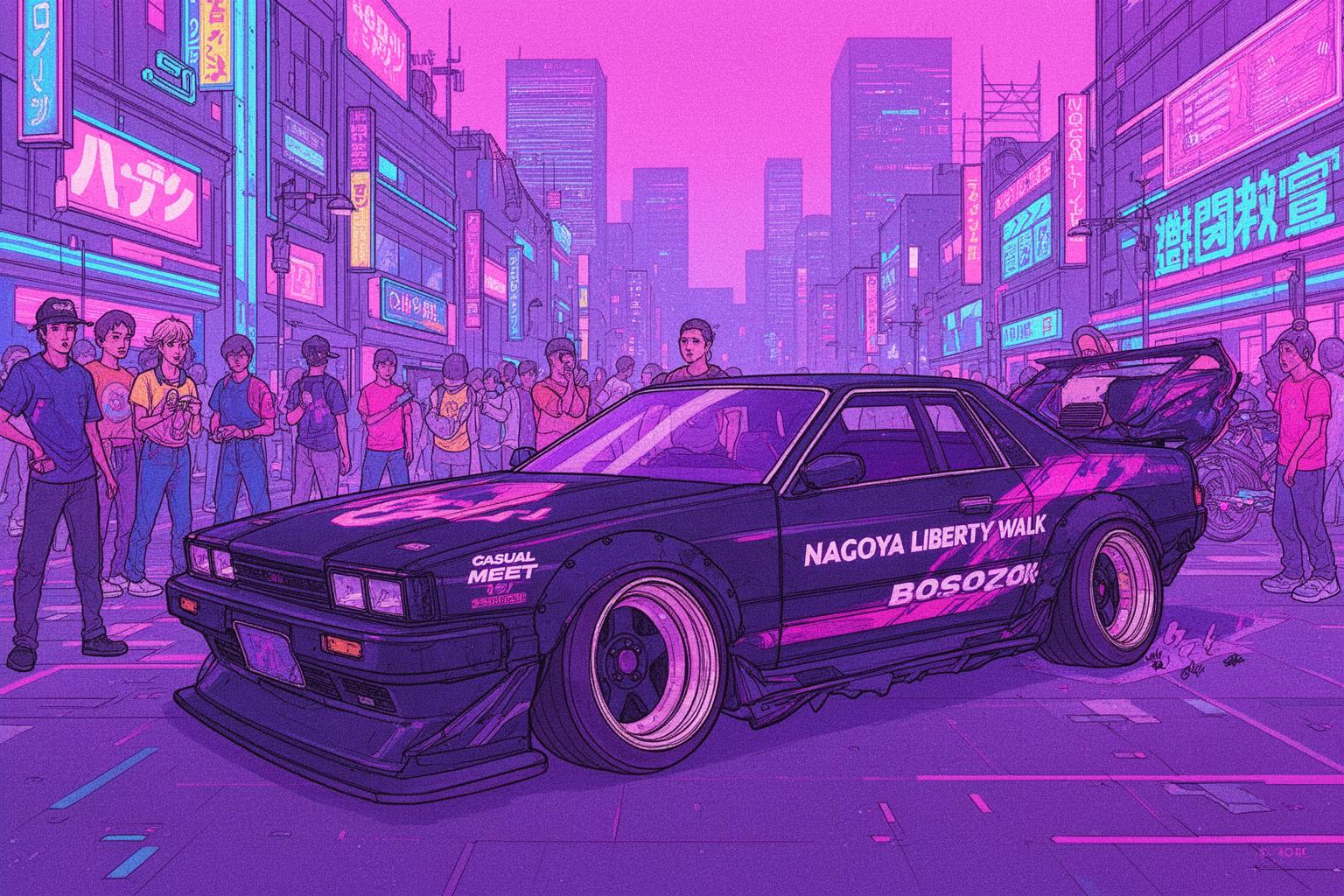
So, you’re convinced—you need to experience this. But how do you go about it? That’s where it gets tricky because these meets aren’t official events with tickets or a website. They’re organic, often spontaneous gatherings, and finding them is part of the adventure. It’s an IYKYK (if you know, you know) kind of thing, but I’m here to share the secret with you.
First, your best tool is social media, especially Instagram. Start by following the official accounts: `@libertywalkkato` and `@libertywalk_media`. Then, explore the hashtags: `#libertywalk`, `#lbwk`, `#daikokupa`, `#tatsumipa`. You’ll find photos and videos from recent meets. Notice who’s posting them—these are often the owners, photographers, and fans on the ground. Follow those accounts. Information about upcoming meets is usually shared via Instagram Stories just hours before they happen, often as a simple post with time and location. You have to be ready to move fast.
The ultimate meet-up spot, the one featured in countless YouTube videos, is Daikoku Parking Area. It’s a huge rest stop on the Shuto Expressway in Yokohama, accessible only by car, and it’s legendary. On most Friday or Saturday nights, you can almost guarantee seeing something amazing. To get there, you’ll need to rent a car—there’s no other way. A word of caution: Daikoku is so well known that it’s heavily policed. If things get too loud, crowded, or out of hand, the police will block the entrance and exit ramps, shutting everything down. This can happen anytime, so if you go, go early (meets generally start ramping up around 9 PM and continue into the early morning) and be prepared that it could end suddenly.
But Daikoku isn’t the only place. Tatsumi Parking Area, closer to central Tokyo, is another popular but smaller spot with an incredible skyline view. Its smaller size creates a more intimate atmosphere but it tends to get shut down sooner. If you’re in the Nagoya area, you’re in Liberty Walk’s home turf. Watch local car scene accounts closely—meets frequently happen in the Aichi region, sometimes even with Kato-san himself showing up. These gatherings can be even more genuine than the bigger Tokyo meets.
Now, about etiquette: this is non-negotiable. The car community in Japan runs on a strong foundation of respect. As a foreigner (gaijin), you may be given some leeway and find people curious and friendly, but don’t abuse that privilege. Here are the golden rules:
- Don’t touch the cars. Ever. Unless the owner invites you, just don’t. These cars are their pride and joy and often worth a lot of money. Admire with your eyes only.
- Ask before photographing. Most owners don’t mind photos, but it’s polite to ask, especially if they’re near their car. A simple “Shashin, ii desu ka?” (May I take a photo?) with a smile goes a long way. Always ask if you want to photograph the owner with their car.
- Stay out of the way. Be mindful of your surroundings. Cars constantly come and go. Don’t block driving lanes trying to get the perfect shot. Respect others’ space.
- Keep it low-key. Don’t be loud or obnoxious. Avoid drawing negative attention. The future of these meets depends on not provoking police interest. No revving engines, no burnouts, no drama. Be a respectful observer.
- Pack it in, pack it out. These are public rest areas; don’t leave trash behind. It’s a basic mark of respect everyone follows.
By sticking to these simple rules, you’ll be welcomed as a respectful guest and enjoy a richer, more positive experience. This isn’t a zoo; it’s a community gathering. Treat it like you’re visiting someone’s home, and you’ll be treated like family.
Beyond the Parking Lot: A Final Word
So there you have it—a journey into the heart of a culture that goes far beyond just cars. Attending a Liberty Walk meet means witnessing the culmination of decades of history, rebellion, and artistic expression. It stands as a vibrant, living testament to the spirit of the bosozoku—that craving to stand out, forge your own identity, and find family in a shared passion—which remains alive and thriving.
It serves as a reminder that, at its best, car culture is a powerful means of self-expression. Every vehicle is a canvas, and every owner is an artist telling their unique story through custom paint, engine modifications, and impossibly wide wheels. Standing in that parking lot, surrounded by the sights and sounds of this extraordinary world, offers a glimpse of Japan that few tourists ever experience. You’ll leave with your ears ringing, the smell of exhaust on your clothes, and a deep appreciation for a culture that dares to be different.
So, if you get the chance, go. Rent a car, stay up late, and make the pilgrimage. It’s more than just a cool travel story; it’s a look into the soul of modern Japan. It’s an experience that’s loud, bold, and utterly unforgettable. No cap.