You see them everywhere in Japan, once you know what to look for. Tucked away in a corner of a train station, laid out on a table at a roadside rest stop, or promoted on a flyer at a local museum. It’s the sutanpu rarī—the stamp rally. The concept is simple: you get a special booklet or card and travel to a series of designated spots to collect unique ink stamps. Fill your booklet, and you might get a small prize, but more often than not, the real reward is the satisfying thump of the final stamp and a completed grid. It’s a national pastime, a gamification of exploration that appeals to a deep-seated Japanese appreciation for collecting, cataloging, and the quiet joy of completion.
Now, imagine that impulse scaled up to a monumental, nationwide quest. Imagine the stamps are mountain summits, scattered from the northern wilds of Hokkaido to the subtropical islands of Kyushu. Imagine the booklet is a personal log, tracked over years, even decades. And the prize? The profound satisfaction of having stood atop the one hundred most iconic peaks in the Japanese archipelago. This is the world of the Nihon Hyakumeizan, or the 100 Famous Japanese Mountains. It is, without a doubt, the greatest stamp rally in Japan.
To see it as just a hiking challenge, a list of peaks to be “bagged,” is to miss the point entirely. The Hyakumeizan is a cultural phenomenon, a subculture that combines Japan’s profound reverence for nature with its methodical obsession with lists and collections. It’s a physical and spiritual curriculum for understanding the Japanese landscape. It’s a project that gives purpose to weekends and shapes retirement plans. Why this specific list? And what does pursuing it reveal about the country’s soul? To understand the pull of the Hyakumeizan, you first have to understand the uniquely Japanese art of the stamp rally and the man whose personal taste became a national obsession.
The dynamic interplay between Japan’s deep-rooted traditions and ever-evolving pop culture is similarly captured in the Sengoku samurai reinvention, underscoring how historical legacy continuously finds fresh expressions in modern society.
The Cultural DNA of the Stamp Rally
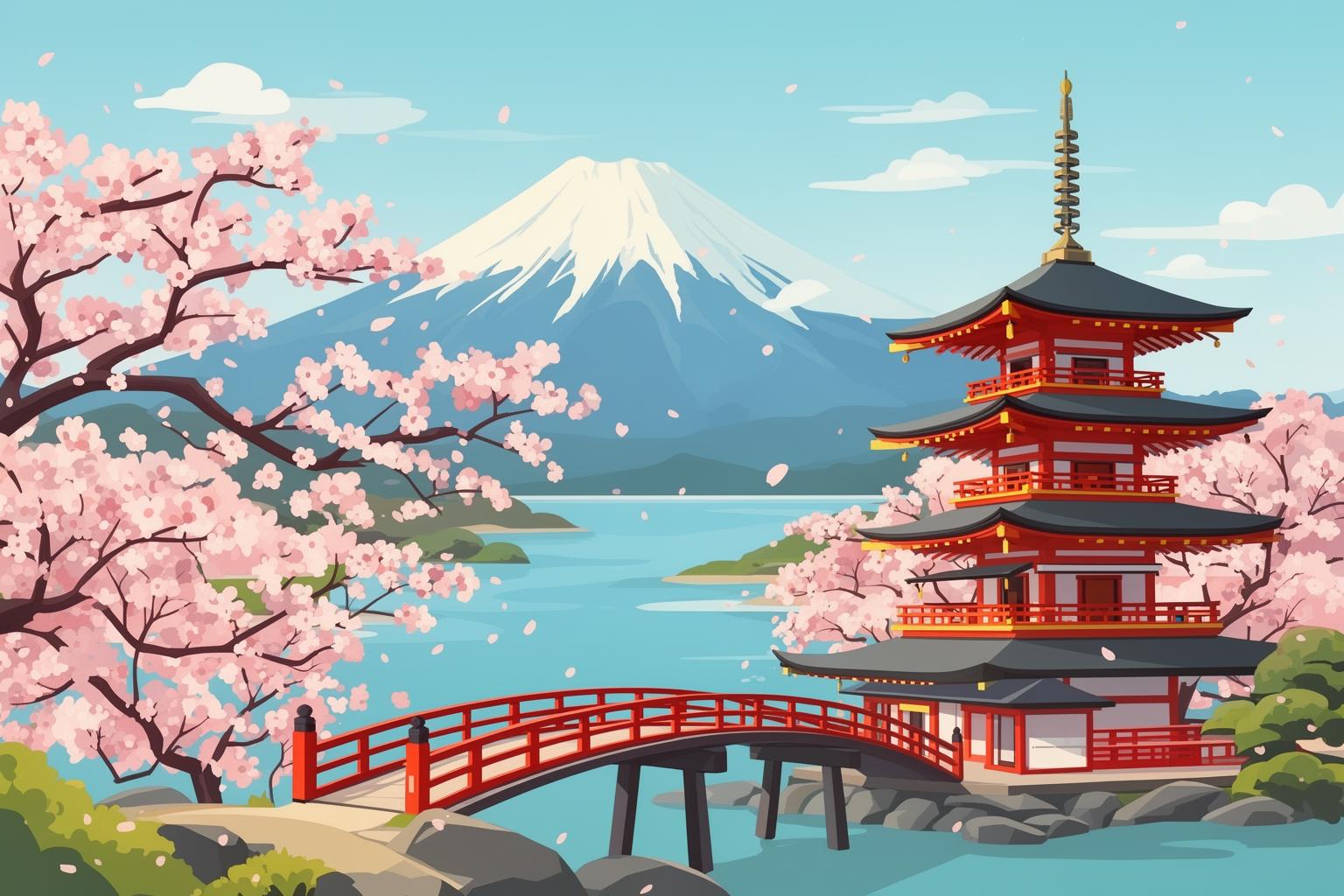
Before discussing the scaling of cliffs in the Japan Alps, we first need to address the experience of waiting in line at a train station. The stamp rally is a deceptively simple yet widespread aspect of Japanese life. It transforms any trip into a treasure hunt. Children collect stamps of their favorite anime characters from 7-Eleven stores. Train enthusiasts, known as tetsu-ota, carefully visit every station along a specific line to gather the unique stamps each one offers. Shinto shrines and Buddhist temples provide a more solemn variation with goshuin—large, calligraphed seals stamped into a special book called a goshuincho. Each seal is a work of art and a tangible record of a pilgrimage.
This is more than just a way to pass the time. It taps into a collector’s impulse that feels especially strong in Japan, a culture fond of categorization, from the “Three Great Gardens of Japan” to the endless rankings of ramen shops. A stamp rally offers a ready-made framework for exploration. It gives you a reason to get off at a station you’d usually skip, to visit a temple you’d never heard of, or to explore a neighborhood just beyond the main street. It provides a clear goal and a measurable sense of progress.
At its core, the stamp rally is about the experience itself. It’s about the journey between the stops and the small discoveries made along the way. The completed book stands as a testament to that journey—a physical representation of time, effort, and movement. It tells a story through ink impressions. This very mindset—a structured quest, a tangible record of progress, and a deep appreciation for the journey—is the cultural foundation from which the Hyakumeizan phenomenon emerged.
The Man Who Curated a Landscape
The list of the 100 Famous Mountains was not handed down by a government ministry or an ancient text. It was the creation of one man: Kyūya Fukada, a writer and passionate mountaineer born in 1903. In 1964, he published a book of essays titled Nihon Hyakumeizan. This is a key point. It wasn’t a guidebook or a sterile list; rather, it was a collection of personal reflections on mountains he had climbed and cherished. The list emerged as a byproduct of his prose, an index to his affections.
Fukada was a literary man, and his criteria for inclusion were therefore poetic and subjective. He wasn’t merely ticking off peaks based on elevation. For a mountain to be included, it had to possess three essential qualities.
First was grace and character (品格, hinkaku). The mountain needed a distinct, memorable shape. It couldn’t be just another random bump on a ridge. It had to captivate the eye and stir the soul. Consider the perfect volcanic cone of Mount Fuji or the rugged, saw-toothed peaks of the Yarigatake spire. These mountains possess true presence.
Second was history and mythology (歴史, rekishi). A mountain needed to be woven into the fabric of human life. It should be a place where people had worshipped, fought, farmed, and told stories for generations. Many of the Hyakumeizan are regarded as sacred, home to ancient shrines and pilgrimage routes. They are figures in folklore and subjects of famous poems and paintings. They had to resonate culturally beyond their physical form.
Third was individuality (個性, kosei). Each mountain on the list had to be unmistakably itself. Fukada sought peaks with unique features—a rare alpine flower, a distinctive volcanic crater, or an unusual geological formation. While he set a general baseline of 1,500 meters in elevation, he was willing to bend his own rule for a mountain with overwhelming character, like Kyushu’s Mount Kaimon (924m), often dubbed the “Fuji of Satsuma” for its exquisite conical shape.
Because Fukada’s criteria were so personal and thoughtful, the resulting list felt curated rather than calculated. He gave Japan a narrative for its own landscape. He wasn’t claiming these were the “best” or “hardest” mountains. Rather, he was identifying 100 of the most interesting, charismatic, and culturally significant peaks. Essentially, he created the ultimate stamp rally itinerary.
The Mountain as the Stamp
Climbing all 100 of Fukada’s selected mountains is a pursuit capable of shaping a lifetime. The resemblance to a stamp rally is clear, only magnified to an epic scale.
Instead of a paper booklet, the climber maintains a personal record—a climbing journal, a spreadsheet, a dedicated blog, or simply a mental checklist. The real “stamp book” is the map of Japan engraved in their memory, filled with personal experience.
The “stamp” itself is the summit. Collecting it is much more demanding than a mere ink stamp. It involves research, planning, physical effort, and often enduring harsh weather. The proof, the modern-day equivalent of an ink impression, is the mandatory summit photo. Each of the Hyakumeizan peaks features a wooden or stone marker indicating its name and elevation. The triumphant photo beside this marker is an essential ritual. It serves as evidence of completion, shared on social media and stored in digital albums—today’s version of a filled stamp card.
And the reward? There is no official certificate from the government. The reward is the title you grant yourself: Hyakumeizan Tasseisha, an achiever of the 100 mountains. This title holds great significance within the Japanese hiking community, symbolizing not only physical fitness but also dedication, logistical skill, and deep, firsthand knowledge of the country’s geography.
More importantly, the challenge encourages thorough exploration of Japan. Like a well-designed stamp rally that motivates you to discover overlooked parts of a city, the Hyakumeizan list leads you far from tourist routes. You find yourself in remote valleys in Tohoku, riding tiny ferries to distant islands, and driving along forestry roads you’d never otherwise encounter. You stay in family-run inns, savor local specialties, and relax in village hot springs. It provides a framework for a slow, deep, and intimate journey through the real Japan—a country most visitors, and even many Japanese people, rarely see.
The Faces on the Trail: Who Attempts This Quest?
If you spend enough time on the trails of the Hyakumeizan, you begin to notice the variety of people drawn to the challenge. It’s a surprisingly diverse subculture, all united by a common goal.
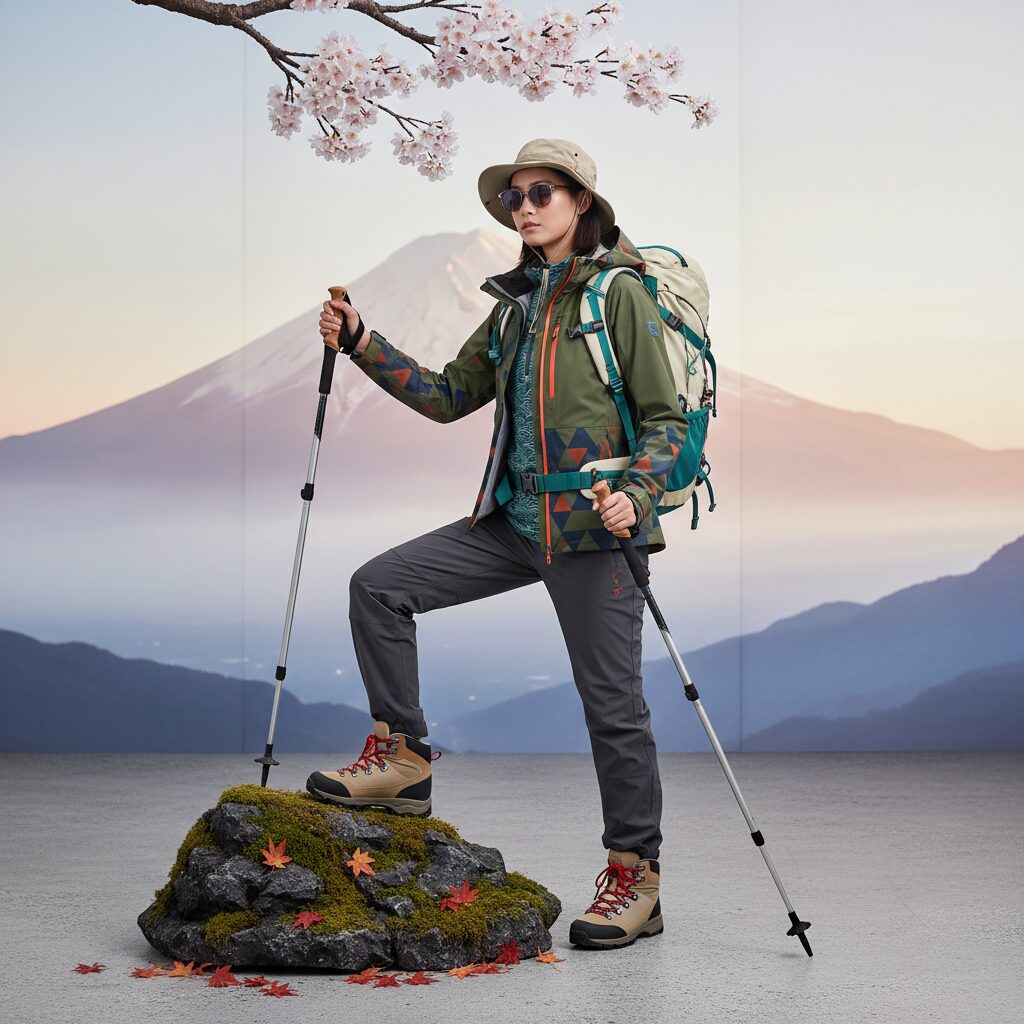
The most obvious group could be called the “Silver Generation.” These are recent retirees who, after a lifetime of hard work, finally have the time and means to undertake a grand project. For them, the Hyakumeizan serves as a perfect second act. It gives structure to their newfound freedom and a strong sense of purpose. They tackle the list with the same careful diligence they once brought to their careers. You often see them on the trails, frequently in groups, equipped with the latest gear, cheerfully progressing through the list, one mountain at a time.
Next, there are the Weekend Warriors. These are younger hikers, ranging from their 20s to 50s, who gradually work through the list over many years. They carefully plan their vacations and three-day weekends around a Hyakumeizan goal. For them, the list is a long-term pursuit, a slow and steady effort. A single peak might serve as the centerpiece of a major trip. They might take a decade or more to finish the list, with each summit representing a different stage of their life—a memory from college, a trip before having children, or a challenging climb to celebrate a 40th birthday.
Finally, there’s the obsessive completist, for whom the list itself is the main motivation. This personality type, known in Japan as risuto-mania or “list-maniac,” is quite common. For them, the Hyakumeizan is the ultimate checklist. They are driven by the deep satisfaction of reducing a list of 100 items to zero. While they love the mountains, their primary psychological drive is the act of completion. It’s the same impulse that compels a video gamer to collect every hidden item or a train enthusiast to ride every subway line in Tokyo.
Beneath all these motivations lie core Japanese cultural values. The pursuit demands doryoku (great effort) and gaman (endurance or perseverance). There is a profound cultural respect for seeing a difficult task through to the end. Completing the Hyakumeizan is not merely a hobby; it’s a testament to one’s character.
The Unspoken Rituals and Realities
Beyond merely walking uphill, the Hyakumeizan journey is imbued with cultural rituals and practical realities that make it distinctly Japanese. The infrastructure is impressive. Unlike the untouched wilderness often found in North America, Japan’s mountains feature trails that are, for the most part, meticulously maintained. A vast network of mountain huts (yamagoya) offers lodging and meals along multi-day routes, allowing hikers to traverse high alpine ridges without needing a tent. This organized approach to nature makes a lengthy endeavor like the Hyakumeizan accessible to a broader range of people.
Certain rituals form part of the shared experience. Upon reaching the summit, many hikers pull out a small gas stove and pot to brew a celebratory coffee or cook instant ramen. This small ceremony transforms the peak from a mere geographical point into a destination for a well-deserved rest. The descent is almost always followed by another essential ritual: visiting a local onsen (hot spring). Soaking tired muscles in geothermally heated water is the ultimate reward, reconnecting you with the volcanic essence of the land you’ve just climbed.
The sense of community is subtle yet strong. You might hike alone, but you belong to a larger, invisible team. When you encounter another hiker on a remote Hyakumeizan summit, a simple greeting of “Konnichiwa” conveys a shared understanding. You both recognize the effort it took to get there and know you are each collecting the same stamps in your own way. Online, a vast community of bloggers and hikers shares detailed trip reports, trail conditions, and transportation tips—a collective intelligence that supports everyone pursuing the same goal.
The Perils of the List
Naturally, there is a potential drawback to this gamified approach to mountaineering. Some critics within the hiking community argue that the list encourages a “stamp collecting” mindset, detracting from genuine mountain skills. The pressure to “tick the box” may prompt people to make risky choices, such as attempting a summit in hazardous weather or hurrying through a stunning landscape without truly appreciating it, focused solely on the goal.
Moreover, the list is far from an easy walk. Several of the mountains pose serious, technical challenges. The peaks of the Northern Japan Alps involve knife-edge ridge traverses and require the use of ladders and chains anchored to the rock. Hokkaido’s Mount Poroshiri is notorious not for its technical difficulty but for its harsh logistics, demanding long treks and multiple river crossings just to reach the trailhead. The list’s vast diversity is both its charm and its difficulty, requiring a broad set of skills—from navigating thick forests to scrambling on exposed rock to kicking steps in snow.
Additionally, there is significant pressure related to time and finances. This pursuit is an expensive hobby. Costs for transportation to remote trailheads, stays in mountain huts, and the constant need for dependable gear quickly accumulate. For the Weekend Warrior, the challenge can feel like a race against time, aiming to summit the northern peaks during the brief summer season before the snows arrive.
A Collection of Memories
Ultimately, what Kyūya Fukada created was much more than a mere list. He offered his country a fresh perspective on itself, providing a narrative framework for the Japanese landscape—a 100-chapter epic accessible to anyone with sturdy boots and a steadfast sense of purpose.
Completing the Hyakumeizan means assembling a personal collection far richer than stamps in a book. It’s a compilation of sunrises above seas of clouds, the taste of wild blueberries on a high alpine plateau, and the relief felt upon seeing a mountain hut’s lights flicker through the fog. It’s a collection of conversations with fellow hikers and the quiet wisdom shared by hut owners who have spent a lifetime in the mountains.
It is the ultimate Japanese stamp rally, one that transforms you both physically and mentally. You don’t merely fill a book; you create a private map of the archipelago within your mind, each of the 100 peaks marking a memory of effort, beauty, and quiet triumph. The true reward is not a completed card but a full heart and a perspective on Japan, earned one step at a time.