Yo, let’s get one thing straight. We’re not talking about your average afternoon tea with scones and clotted cream, nor are we talking about the matcha latte you grab on your way to work. This ain’t that. We’re diving headfirst into the world of chanoyu, the Japanese Way of Tea, and trust me, it’s a whole spiritual glow-up. Picture this: you slide open a paper screen door and step out of the chaotic, neon-lit buzz of modern Japan into a space where time just… hits different. It’s a pocket of pure tranquility, a living, breathing art form that’s been curated over centuries. This isn’t just about sipping green tea; it’s a full-on sensory experience, a masterclass in mindfulness, and a low-key rebellion against the frantic pace of our digital lives. It’s about finding the beauty in the quiet moments, the perfection in the imperfect, and connecting with people on a level that’s, like, soul-deep. For real. This is your exclusive invite to an ancient ritual that’s still got major game in the 21st century. So, if you’re ready to trade your notifications for some next-level zen, you’re in the right place. We’re about to unpack the whole entire vibe, from the sacred architecture of the tea room to the silent language of the ceremony itself. Get ready to understand Japan in a way you never thought possible. It’s a trip, and it starts right here.
While this ancient tradition offers a peaceful escape, it’s worth noting how modern factors like Japan’s tourism recovery can influence access to such authentic cultural experiences.
The Vibe Check: Decoding the Japanese Tea Room (Chashitsu)

Even before you catch a hint of matcha, the experience begins. It begins with a walk through the roji, or “dewy path.” This is more than just a garden path; it’s a gateway. As you step over uneven stones, surrounded by moss and lanterns, you’re both literally and symbolically leaving the dusty, ordinary world behind. It’s designed to make you slow down and notice each step. You’ll come across a stone water basin called a tsukubai, tucked among the greenery. Here, you perform a ritual purification, rinsing your hands and mouth. This physical act washes away your worldly concerns, preparing your spirit for what lies ahead. It’s a moment of quiet reflection, giving you main character energy before the big reveal.
Then you see it: the chashitsu, the tea house itself. Usually a small, rustic hut, it embodies understated elegance. And the entrance? It’s not a grand doorway. It’s a tiny, square opening called a nijiriguchi, or “crawling-in entrance.” So small, you must bow your head and enter on your knees. This is a deliberate gesture of humility. In the past, even samurai had to remove their swords and bow to enter. It acts as a physical equalizer; inside the tea room, everyone—samurai, merchant, artist, you—is simply a human being, equal in the shared pursuit of a beautiful moment. It’s a radical idea, setting the tone for everything that follows.
Inside, the space is a masterpiece of minimalist aesthetics. There are no distractions. The walls are made of natural earth, the ceiling woven bamboo, and the floor covered with soft, fragrant tatami mats. Light filters gently and diffusely through the paper shoji screens. The space soothes your nervous system at once. Your gaze is immediately drawn to the tokonoma, a small, raised alcove serving as the room’s spiritual center. This isn’t a cluttered shelf; it’s a carefully curated display of pure art. You’ll see a hanging scroll, the kakejiku, which might feature calligraphy or a simple ink painting. This scroll sets the mood for the entire gathering. It might depict nature, a poetic line, or a Zen concept. Beside it, in a simple vase, rests the chabana, a flower arrangement that is anything but an elaborate bouquet. Often just a single perfect bud or a wild branch, it’s arranged to appear as natural as if still growing in a field. This pairing of scroll and flower is the host’s way of conveying the day’s atmosphere and honoring the particular season. The entire room is an exercise in intentionality, where every element has meaning and story, and the empty space holds significance equal to that of the objects.
The Glow Up: A Look at the Tools of the Trade (Dogu)
Alright, let’s dive into gear, because the utensils, or dogu, used in a tea ceremony aren’t just tools; they’re genuine works of art. This is where fashion, art, and history truly converge. Each piece is selected with incredible care by the host to reflect the season, the day’s theme, and even the guests’ personalities. It’s a thoughtfully curated collection that tells a story.
The highlight is often the chawan, the tea bowl. Forget your everyday mug—these bowls are pottery masterpieces, each carrying its own history and spirit. They come in various styles, like the earthy, imperfect Raku ware, rooted in Zen philosophy, or the subtly glazed Hagi ware, which evolves in color and character with years of use. Central to the aesthetic is wabi-sabi, the appreciation of imperfection, impermanence, and incompleteness. A tea bowl might have an irregular shape, a crack in the glaze repaired with gold—a technique called kintsugi—or a coarse texture. Holding one, especially a centuries-old piece, feels like shaking hands with history. You sense the energy of everyone who has held it before you. It’s a profoundly personal link to the past.
Then there’s the chasen, the bamboo whisk used to whip the matcha into frothy perfection. It seems simple but is a finely crafted object, carved from a single piece of bamboo, with its tines carefully split and shaped. The number of tines varies, which influences the foam’s quality. It’s delicate, functional artistry. Alongside it is the chashaku, a slender bamboo scoop for measuring powdered tea. Often carved by their owners, these scoops sometimes receive poetic names, or mei, from tea masters or Zen monks, inspired by nature or literature. So the scoop you see might be called “First Snow” or “Cricket’s Song.” IYKYK.
The tea itself is kept in special containers. For usucha (thin tea), a beautiful lacquerware caddy called a natsume is used. For the more formal koicha (thick tea), it’s stored in a ceramic jar known as a chaire, one of the most important utensils, often housed in a custom silk pouch called a shifuku. The patterns and fabrics of these pouches offer another chance for the host to display their aesthetic sense—it’s like a designer handbag for your tea.
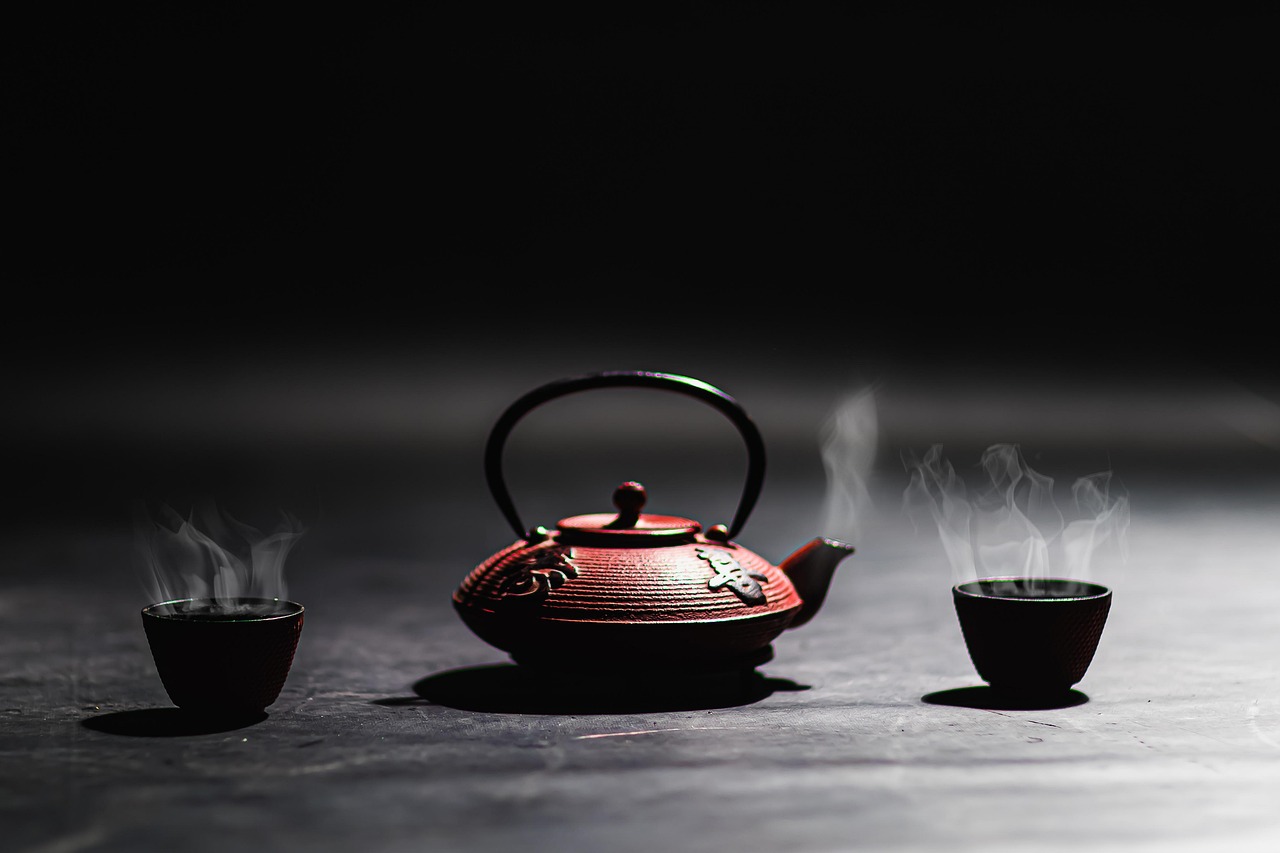
And we can’t overlook the soundscape. The cast-iron kettle, or kama, rests over a hearth—either a portable brazier (furo) in summer or a sunken hearth (ro) in winter. The sound the kettle makes as water heats is a vital part of the ambiance. Known as matsukaze, or “wind in the pines,” it’s a gentle, soothing noise said to calm the mind. It’s the original ASMR, crafted to draw you fully into the present moment. Every single item, from the water ladle to the linen cloth used for purification, is chosen to create a harmonious and beautiful whole. The level of detail is truly mind-blowing.
The Main Character Moment: Walking Through a Full Ceremony (Chaji)
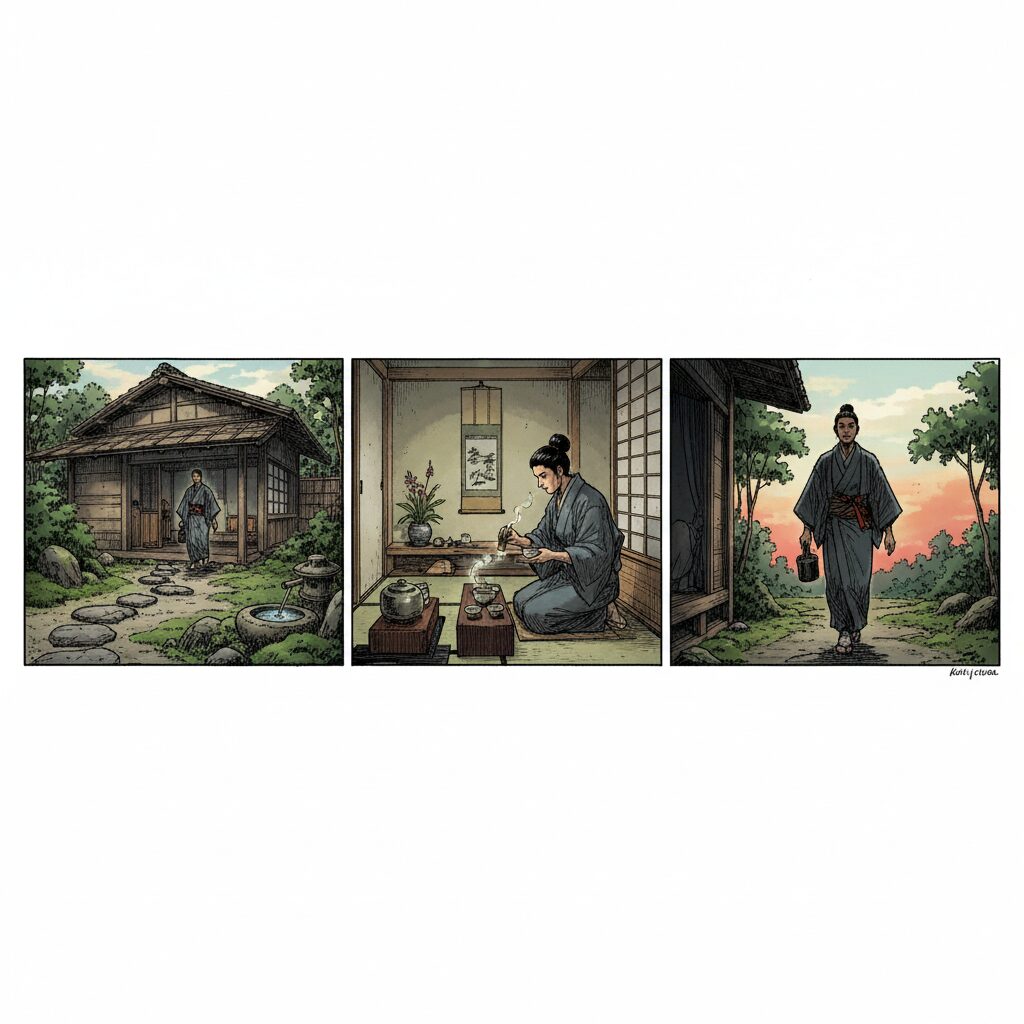
Alright, let’s set the scene. You are the guest. Having passed through the roji, purified yourself, and crawled through the nijiriguchi, you now become the main character in a silent, beautiful play that has been performed for centuries. A full, formal tea gathering, known as a chaji, is not a brief event; it can last up to four hours. It’s a complete experience, typically including a meal and two kinds of tea.
It begins in the machiai, or waiting arbour, where you join the other guests. There’s a quiet sense of anticipation in the air. The host appears, silently bows, and leads you into the tea room. Once inside, you take a moment to appreciate the tokonoma before finding your seat on the tatami.
The first act is the kaiseki, a light, multi-course meal. This is not a feast; it is a culinary prelude meant to prepare you for the tea. The word kaiseki originally referred to the warm stones Zen monks placed in their robes to stave off hunger during long meditations. The meal embraces that spirit: simple, seasonal, and exquisitely presented. Each dish is a work of art, served on carefully selected ceramics and lacquerware. It might include a clear soup, sashimi, a grilled dish, and rice. The flavors are subtle and clean, designed to warm the body and open the palate without overwhelming it.
Following the meal, there’s an intermission called the nakadachi. You return to the waiting arbour while the host completely transforms the tea room. The scroll in the tokonoma is replaced with a flower arrangement, and the utensils for tea preparation are brought in. A gong sounds, inviting you back for the main event.
The second part, the goza-iri, is where the real magic unfolds. The atmosphere grows more formal, more hushed. This is when the koicha, or thick tea, is served. Koicha represents the pinnacle of the tea experience. It’s made from the highest-grade matcha from the youngest tea leaves, with a texture almost like melted chocolate. It is intense, rich, and profoundly savory. The host prepares it with focused, graceful movements resembling meditation. Then, something remarkable happens: a single bowl of this precious tea is prepared and shared among all the guests. Each person drinks from the same spot on the bowl, wipes the rim, and passes it on. This profound act of communion and intimacy symbolizes shared experience and unity. In a world marked by hyper-individualism, this act of sharing feels revolutionary.
After the intensity of koicha, the mood lightens. The host may rebuild the fire and then prepares usucha, or thin tea. This is the frothy, bright green matcha most people know. This time, each guest receives an individual bowl. This part of the ceremony is more relaxed, and light conversation about the utensils or the day’s theme is encouraged. Along with the usucha, you are served wagashi, traditional Japanese sweets. These are not merely sugary treats but edible sculptures, always seasonal, reflecting the current moment in nature through their shape, color, and flavor. A spring wagashi might be shaped like a cherry blossom, while an autumn one could resemble a maple leaf or chestnut. Their delicate sweetness perfectly balances the bitter notes of the matcha.
As the gathering draws to a close, the host cleans the utensils with the same focused grace with which they were used. The guests take one final moment to admire the tools that made this beautiful experience possible. As you depart, bowing one last time at the nijiriguchi, you carry with you a sense of peace and clarity. You have just taken part in something timeless.
The Brain Dump: Unpacking the Philosophy
The tea ceremony is more than just rules and beautiful objects; it is founded on a profound philosophical base that can genuinely transform your perspective on the world. It’s a nourishment for the soul.
The first and most important concept is Ichigo Ichie (一期一会), which means “one time, one meeting.” This idea emphasizes that this exact gathering—with this particular group of people, in this unique setting, on this specific day—will never occur again. It’s a powerful invitation to be completely present. Consider this: in everyday life, we’re often distracted, scrolling on our phones and thinking ahead. Ichigo Ichie counters FOMO by reminding you that the most significant moment is happening right now, right here. Both host and guests devote all their energy to making this single moment perfect and heartfelt, knowing it is fleeting. It encourages you to value every encounter as a one-of-a-kind, irreplaceable treasure.
Next is the aesthetic principle of Wabi-Sabi (侘寂), a concept deeply embedded in Japanese culture, with the tea room as its refuge. Wabi represents rustic simplicity—a richness discovered in a quiet, modest life. Sabi highlights the beauty that emerges with age and imperfection, the patina time leaves behind. Together, wabi-sabi is the art of embracing beauty in things that are flawed, transient, and incomplete. It’s the appreciation of moss-covered stone lanterns, the slightly uneven form of a handmade tea bowl, or the faded hues of an aged scroll. This stands in stark contrast to Western fascination with brand-new, mass-produced perfection. Wabi-sabi teaches you to value authenticity, character, and truth. It’s about accepting the natural cycle of growth, decay, and eventual passing.
Lastly, the whole ceremony is guided by four principles established by the renowned tea master Sen no Rikyu: Harmony (和, wa), Respect (敬, kei), Purity (清, sei), and Tranquility (寂, jaku). Harmony signifies the seamless connection among guests, host, nature, and utensils. Respect extends to everyone and everything involved—you honor your host, fellow guests, and even the tea bowl by handling it with care. Purity is both physical and spiritual; it entails cleaning the space and utensils, as well as cleansing your heart and mind of negativity. Achieving these leads to Tranquility, a deep state of peace and inner calm. These principles are not just theoretical; they are reflected in every deliberate gesture within the tea room.
Your Glow-Up Guide: How to Be the Perfect Guest

So you’re intrigued by the idea but feeling anxious about the etiquette. Don’t worry. The essence of tea is hospitality, and your host will be understanding. However, knowing the basics will help you relax and enjoy the experience more. Here’s your quick guide to shining as a tea ceremony guest.
The Outfit
Your attire should be stylish yet respectful. Think modest and comfortable. For women, a skirt that covers the knees or loose-fitting trousers are ideal since you’ll be sitting on the floor. For men, smart trousers and a shirt are a good choice. Avoid anything overly flashy, loud, or revealing. Neutral, muted colors are always a safe option. The most important part? Socks. You’ll remove your shoes before entering the tatami room, so be sure to wear a fresh, clean pair (white socks are traditional and always appreciated). Going barefoot is a definite no-no.
Leave the Jewelry and Scents Behind
This is crucial. You must remove all jewelry—rings, watches, bracelets. The tea utensils are often priceless antiques, and a stray ring or watch could cause damage. This is considered a serious faux pas. It’s also a gesture of humility, shedding worldly adornments. Likewise, avoid any perfume, cologne, or strongly scented lotions. The ceremony’s subtle aromas, like incense and the tea, would be overwhelmed by heavy scents. Aim for a clean, natural scent.
How to Sit
The traditional posture is seiza—kneeling with your legs folded underneath and your back straight. Honestly, for most Westerners, this can be uncomfortable after a couple of minutes. Don’t stress. Hosts who welcome international guests understand this well. Try to sit in seiza during the most formal moments, such as when receiving the tea. You can discreetly shift your weight or cross your ankles to ease discomfort. If it becomes too painful, switching to cross-legged sitting is perfectly acceptable. Some venues even provide small, low stools (seiza-isu) to assist. The key is to adjust quietly and unobtrusively. Your comfort matters, too.
The Tea-Drinking Ritual
This is probably what you’re most curious about. When served the tea bowl (chawan), there’s a brief ritual to follow. The host will place the bowl before you with its most beautiful side, the “front,” facing you.
- Slightly bow to the person who served you and the guest beside you.
- Pick up the bowl with your right hand and place it into the palm of your left hand.
- Support the side of the bowl with your right hand.
- To show respect and avoid drinking from the decorated front, gently rotate the bowl clockwise twice in your palm.
- Sip the tea. If it’s your last sip of usucha, it’s customary to make a distinct, audible slurp. This is not rude—it signals to the host that you’ve finished and enjoyed the tea, showing appreciation.
- After your last sip, use the thumb and forefinger of your right hand to gently wipe the rim where your lips touched.
- Rotate the bowl counter-clockwise back to its original position so the front faces away from you again.
- Place the bowl down in front of you and take a moment to admire it before the host takes it back.
It might sound complicated at first, but it becomes natural once you see it in action. Just observe others and follow the host’s lead.
Safety Tips for Solo Female Travelers
Japan is very safe, but it’s wise to stay aware, especially as a solo female traveler. When booking a tea ceremony, especially a private one, choose reputable venues with lots of positive reviews. Many ceremonies take place in traditional homes or established cultural centers, which are safe and welcoming. If you’re meeting a private host, it’s a good idea to share your plans and the address with a friend. The world of chanoyu is one of deep respect and kindness, so issues are extremely rare. The environment is designed to be safe and serene for everyone.
Location, Location, Location: Finding Your Tea Tribe
Tea ceremony experiences can be found throughout Japan, but some places truly stand out. The location you choose can greatly influence the overall atmosphere of your experience.
- Kyoto: This is the epicenter, the undisputed heart of traditional Japanese culture, including the Way of Tea. The city hosts the headquarters of major tea schools (Urasenke, Omotesenke, and others). In historic neighborhoods like Gion and Higashiyama, you’ll discover exquisite tea houses hidden along stone-paved lanes. The richness of history and ambiance in Kyoto is unparalleled. Options range from 45-minute sessions perfect for beginners to deeply immersive private chaji ceremonies with renowned masters.
- Tokyo: Don’t overlook the capital. Amid towering skyscrapers and bustling intersections, Tokyo conceals some true treasures. Serene tea houses are nestled within stunning traditional gardens like Hamarikyu Gardens and Shinjuku Gyoen, offering a striking contrast between the calm inside and the city’s vibrant energy outside. Chic department stores such as Mitsukoshi also feature dedicated tea rooms where you can enjoy a high-quality ceremony.
- Kanazawa: Often referred to as “Little Kyoto,” Kanazawa is a gem. It boasts beautifully preserved geisha districts like Higashi Chaya, home to traditional wooden teahouses that provide authentic experiences. It has the traditional charm of Kyoto but with far fewer crowds, making it a more intimate and relaxed choice.
- Uji: For true tea enthusiasts, a pilgrimage to Uji is essential. This small city, nestled between Kyoto and Nara, is Japan’s most famous and historic matcha-producing region. The tea quality here is legendary. Visitors can tour tea plantations, learn about cultivation methods, and participate in ceremonies using the freshest, most vibrant matcha imaginable. It’s the ultimate farm-to-bowl experience.
A Tea for All Seasons

The Way of Tea is intimately tied to the rhythm of nature, with the ceremony transforming significantly through the seasons. A true tea master excels in expressing the essence of each season. This is one of the most captivating qualities of the practice.
- Spring (Haru): The energy centers on new beginnings. The kakejiku (scroll) may display calligraphy reflecting dawn or renewal. The chabana (flower) might be a single flawless camellia or a branch of blossoming cherry. The wagashi sweets are often pink and shaped like sakura blossoms. The entire experience feels fresh, vibrant, and hopeful.
- Summer (Natsu): The focus moves to evoking coolness and refreshment to counteract the heat and humidity. The host may select glassware that appears cool to the touch. The wagashi might be a translucent, jelly-like sweet resembling a drop of water. The portable brazier (furo) is used to keep the heat of charcoal farther from the guests. The overall mood is airy and light.
- Autumn (Aki): This season brings a gentle melancholy and the richness of harvest. Themes often highlight the moon or the changing colors of the leaves. Utensils may feature maple leaf or chrysanthemum designs. The wagashi are shaped like chestnuts, persimmons, or autumn leaves, with earthy flavors. The ambiance is warm and contemplative.
- Winter (Fuyu): During the cold months, the ceremony is intended to foster warmth and intimacy. The sunken hearth (ro), built into the tatami floor, allows guests to gather closer to its comforting heat. Tea bowls tend to be thicker to retain warmth longer. The wagashi may suggest the first snowfall. The atmosphere is cozy and snug, sheltering from the cold outside.
This continual seasonal cycle ensures that no two tea gatherings are alike. It serves as a beautiful reminder to notice the subtle changes in the world around us.
This goes beyond learning a tradition; it is about living a philosophy in motion. The Japanese tea ceremony provides a rare and precious gift in our modern era: a moment of pure, undistracted presence. It offers a chance to silence the noise, to appreciate beauty in its most delicate forms, and to connect with others without the barrier of a screen. It teaches that there is elegance in simplicity and profound meaning in a single, intentional gesture. So, when you are in Japan, step away from the hustle. Discover that hidden garden path, bow at the small entrance, and let the quiet rhythm of the tea room enchant you. It’s more than a cultural experience; it’s a piece of zen you can carry with you long after the final, satisfying sip.