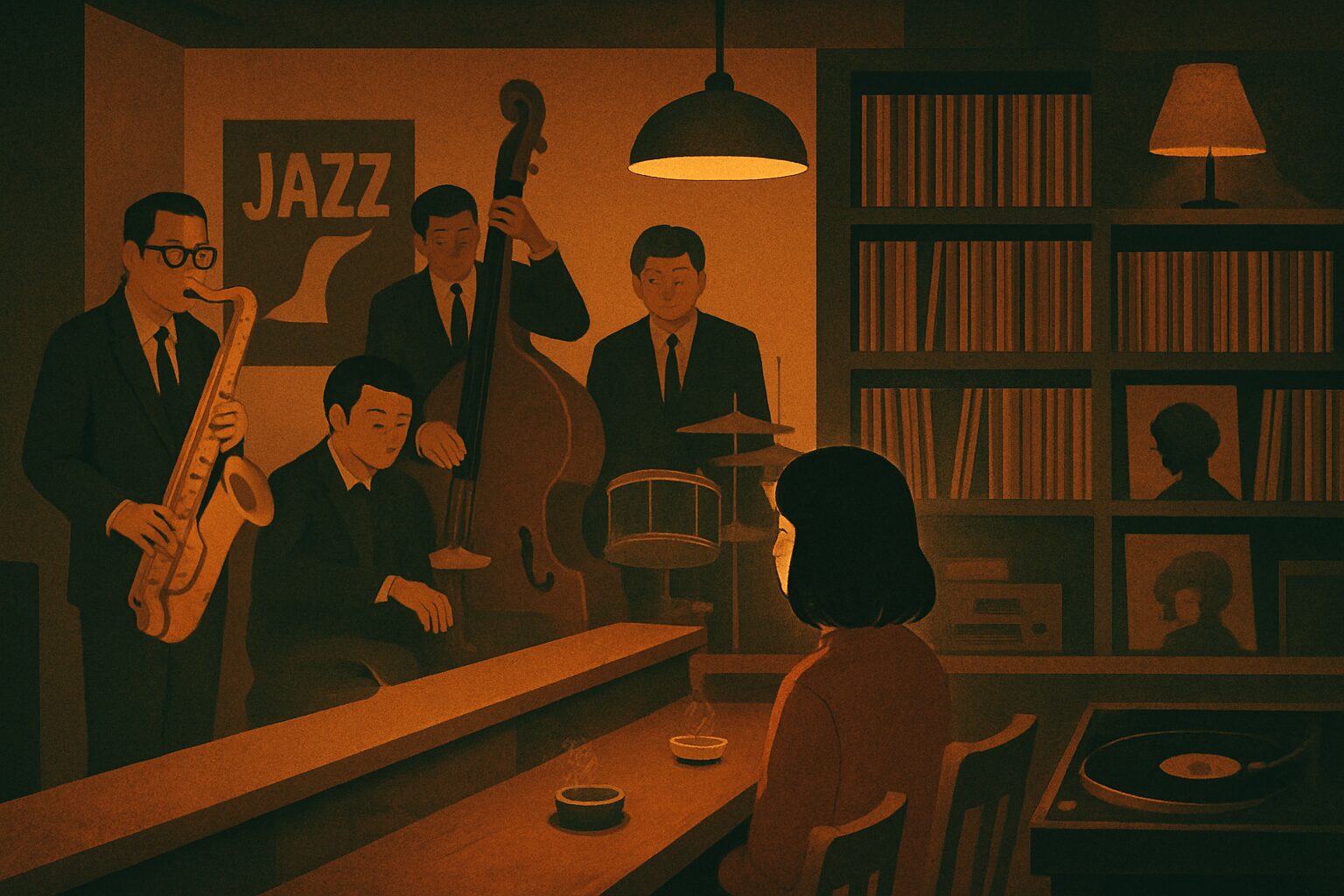
Yo, let’s talk about a Tokyo experience that’s so deeply cool, it’s practically a meditation. Picture this: you find a non-descript door, maybe down a flight of stairs in a buzzing neighborhood like Shinjuku or Shimokitazawa. You push it open, and the city’s electric chaos just… vanishes. It’s replaced by the warm, crackling sound of a vinyl record, the scent of dark roast coffee and old wood, and a silence so thick you could cut it with a knife. You’ve just entered a jazz kissa, and trust me, it’s a whole different universe. This isn’t just a cafe that happens to play jazz. Nah, this is a sanctuary, a listening room, a time capsule dedicated to the almost religious act of appreciating music. It’s a cultural phenomenon that’s quintessentially Japanese, a place where the loudest thing in the room is the music itself, and your own thoughts. For travelers looking to get past the surface-level tourist spots and plug into the real, beating heart of urban Japan, the jazz kissa is an essential pilgrimage. It’s where you go to disconnect from the world and reconnect with sound, in a way that’s basically impossible anywhere else. It’s a low-key, high-fidelity vibe that, once you get it, you’ll never forget. This is the ultimate IYKYK (if you know, you know) cultural deep dive.
For a similarly immersive dive into another uniquely Japanese retro experience, explore the nostalgic world of Japan’s retro candy shops.
A Trip Back in Time: The Birth of the Kissa
To truly capture the jazz kissa atmosphere, you need to understand its origins. These establishments didn’t just appear because someone thought jazz made good background music. Their story runs much deeper, rooted in the grit and creativity of post-war Japan. During the 1950s and 60s, as Japan was rebuilding, energy was high but most people had little money. Imported goods, especially American jazz records from legendary labels like Blue Note or Impulse!, were extremely costly. A single LP could cost a substantial portion of a person’s monthly salary. So for the average student, artist, or intellectual, owning a personal vinyl collection was a distant dream. Yet, the passion for this fresh, improvisational, and rebellious music was genuine and rapidly growing.
Enter the jazz kissa. These venues emerged from a shared need. Entrepreneurs, who were devoted jazz enthusiasts themselves, invested in two key things: a top-notch, high-fidelity audio system and a valuable collection of those rare imported records. They created spaces where, for the price of a single cup of coffee, you could sit for hours and immerse yourself in music you couldn’t afford to own. The coffee was more than a drink; it was your pass to an auditory feast. This concept made jazz kissas hugely popular, especially in student neighborhoods and bohemian hotspots like Shinjuku. They became intellectual and artistic salons, gathering places for future writers, filmmakers, and activists. Patrons would sit in silence, soaking in the intricate solos of John Coltrane or the cool melancholy of Miles Davis, letting the music ignite their own creativity. These were more than cafes; they were classrooms, libraries, and counter-culture sanctuaries all at once. The silence wasn’t about being anti-social; it was a profound show of respect for the art and the communal experience of listening. It was a collective act of deep, focused engagement, a world apart from the passive background noise we’re accustomed to today.
It’s a Whole Mood: Deciphering the Kissa Atmosphere
Stepping into a proper jazz kissa for the first time offers a sensory experience unlike any other. Your eyes take a moment to adjust to the dim lighting. These spaces are often subterranean and windowless, deliberately separated from the outside world. The decor reflects decades of dedication. The walls are invariably covered, floor to ceiling, with towering shelves crammed with thousands of vinyl records. The sheer scale of the collection is awe-inspiring—a tangible library of sound. The spines of the records, adorned with faded English text and iconic cover art, create a sort of wallpaper chronicling a story of passion and devotion. Typically, the only light comes from a few dim sconces and a single spotlight focused on the turntable, elevating the spinning vinyl to the status of a sacred artifact. The album cover of the current selection is usually displayed prominently, so you know exactly what you’re hearing.
The furniture is almost always dark, well-worn wood—marked tables alongside sturdy, often surprisingly comfortable chairs or booths that have hosted generations of listeners. A subtle, comforting aroma fills the air—a complex mixture of dark-roast coffee, a faint trace of aged paper from the record sleeves, and perhaps a whisper of stale cigarette smoke from a bygone era, even in non-smoking venues. It smells like history. Yet the most powerful element is the sound itself. This isn’t just background music; it’s a physical presence. The sound systems here are renowned, and the music is played loud enough to be felt as much as heard. It commands your full attention, filling every corner of the room and your mind, effectively drowning out any internal or external noise. This creates a unique and beautiful paradox: a room full of people sitting in absolute silence, united by an intensely shared auditory experience. It’s a vibe that feels part library, part cathedral, and part secret underground lair. You sense you’ve discovered a secret society devoted to the sacred art of listening.
The Unspoken Rules: How to Embrace the Silence
For a first-timer, the profound silence of a jazz kissa can be a bit daunting. You might wonder if you’re behaving correctly. But the etiquette isn’t about strict rules designed to exclude; it’s a collective understanding aimed at preserving the atmosphere. The music is the star here. The main guideline is simple: keep conversation to an absolute minimum, and if you must speak, do so in a whisper. This isn’t the place to catch up with friends or engage in loud debates. People come here for an immersive audio experience, and loud chatter breaks that delicate bubble. Think of it like being in a cinema or concert hall during a performance. Phones should be on silent, and taking calls inside is strongly discouraged. Even the clinking of cups or the rustle of bags can feel amplified in the quiet, so moving mindfully is part of the experience.
The process is quite simple. Find an empty seat, and the ‘master’—the owner or manager—will bring you a menu or come to take your order. You’re expected to order at least one drink—this is the unspoken admission fee. The coffee is typically strong, dark, and carefully crafted, but it’s the symbolic gesture that counts. By ordering, you’re paying for your seat and your time in this carefully curated space. Don’t rush. Savor your coffee, whiskey, or melon soda. You’re encouraged to stay as long as you like, to listen to a full album side or even several. Some establishments offer a request system, though this varies. At a place like Eagle in Yotsuya, you can fill out a slip with an artist and song you’d like to hear from their vast collection. But don’t be surprised if the master files the request away and plays it an hour later, or not at all. The master is the ultimate DJ, shaping a sonic journey for the entire room, and your request will be woven into that larger flow. The key is to surrender to the experience, let the master guide the session, and simply lose yourself in the sound.
The High Priest of Vinyl: Meet the Kissa Master
The person behind the counter at a jazz kissa is far more than just a barista or manager. They are the ‘master,’ a title that perfectly embodies their role as curator, gatekeeper, and spiritual guide of the space. The master often embodies quiet authority, a stoic presence who may speak little but whose passion for the music is evident in every gesture. They are the heart and soul of the kissa, with the entire establishment reflecting their personal taste and philosophy. Many masters have run their kissas for decades, dedicating their lives to the preservation and presentation of jazz. They serve as living encyclopedias of music history, possessing extensive knowledge of artists, labels, recording sessions, and pressings. Their vinyl collection is no random assortment; it’s a deeply personal library, assembled over a lifetime of careful searching and collecting.
Watching the master at work is a performance in itself. Observe how they handle the vinyl—with a reverence reserved for sacred texts. They slowly slide the record from its sleeve, wipe it with an anti-static cloth, and gently lower the needle onto the groove. This ritual is carried out with practiced, deliberate precision. They know their sound system intimately, adjusting volume and equalization to perfectly suit the particular recording and room acoustics. Their role is that of a DJ in the truest sense of the word. They don’t merely play songs; they craft a mood, tell a story, and guide listeners through a journey of sound. A blistering bebop track may be followed by a mellow cool jazz piece, or they might devote an entire evening to the works of one artist. Their selections are intentional and thoughtfully considered. Although some masters may seem intimidating due to their serious demeanor, this gravity stems from profound respect for the music. If you show sincere interest and respect for their space, you may find them opening up, offering a quiet nod of approval or even a rare smile. Earning that nod feels like a genuine accomplishment, a sign that you have truly understood and appreciated their life’s work.
Next-Level Audio: Why the Sound Hits Different
You might believe you know how your favorite jazz album sounds, but hearing it in a top-tier jazz kissa offers a transformative experience. These venues are sanctuaries of audio fidelity, centered around sound systems born from a lifetime of dedicated collecting and fine-tuning. This isn’t about a couple of speakers connected to a laptop. We’re talking about serious, audiophile-grade equipment, often featuring large, vintage components revered by audio enthusiasts. The focus isn’t simply on volume; it’s on clarity, warmth, depth, and texture. The experts running these kissas pursue sonic perfection, striving to recreate the music as if the musicians were performing live right before you.
The setup typically revolves around a pair of massive, commanding speakers. You’ll often find iconic brands like JBL, Altec Lansing, or Tannoy—large, powerful speakers capable of moving vast amounts of air and faithfully reproducing the full dynamic range of a recording, from the faintest brush on the snare to the most intense saxophone scream. These speakers are driven by equally remarkable amplifiers, often vintage tube amps from brands such as McIntosh or Luxman, celebrated for their warm, rich, and almost liquid sound. The glowing vacuum tubes of the amplifier frequently serve as a captivating visual focal point. Naturally, the source is crucial: a high-end turntable with a precisely calibrated tonearm and a top-tier cartridge, designed to draw every nuance from the vinyl grooves.
This dedication to sound quality creates an experience the Japanese call oto wo abiru, which means ‘bathing in sound.’ And that’s exactly how it feels. You are wholly immersed in the music. You can feel the resonant boom of the double bass in your chest, hear the saxophonist’s breath before a note, and sense the delicate shimmer of a cymbal lingering in the air. You catch details and textures in the music completely lost on earbuds or a standard home stereo. Listening becomes an engaged, physical experience demanding your full focus. This is the primary reason for the silence: to discern this level of detail, a nearly silent environment is essential. The sound system isn’t just for playback; it is an instrument itself, with the master as the one who performs for you.
The Pilgrimage: Legendary Jazz Kissas You Can’t Miss

While hundreds of jazz kissas are scattered throughout Japan, each boasting its own unique charm, a select few legendary spots stand out as essential destinations for any serious music lover. These revered venues are the hallowed grounds, institutions that have shaped the culture for decades. Visiting them feels like undertaking a pilgrimage through the history of jazz in Japan.
Shinjuku’s Underground Legend: Dug
Hidden in a basement just a stone’s throw from the east exit of Shinjuku Station, Dug is an absolute institution. Discovering it is part of the experience; you descend a narrow staircase and enter a dark, cavernous space that seems untouched since it opened in the 1960s. The walls are adorned with iconic black-and-white photographs of jazz legends, many captured by the owner, famed photographer Hozumi Kono. Dug has strong ties to Japan’s literary and artistic circles; it was a known haunt for writers and creatives, and it’s even referenced in the novels of Haruki Murakami, a noted jazz kissa enthusiast himself. The atmosphere is moody, intellectual, and undeniably cool. The powerful sound system fills the stone-walled room with rich, resonant tones. Ordering a whiskey and settling into a corner booth at Dug is like stepping into a classic film noir. This is a place steeped in history, where the echoes of countless conversations and legendary jam sessions seem to float in the air.
Yotsuya’s Grand Cathedral: Eagle
If Dug offers an intimate underground experience, Eagle in Yotsuya is more akin to a grand concert hall. This spot is renowned for two things: its colossal speaker system and its unique request process. Upon entering, you’re immediately confronted by a towering wall of custom-built speakers dominating the room. The sound is immense and exquisitely detailed, providing a truly immersive “bathing in sound” experience. Unlike many kissas where the master has complete control, Eagle invites patrons to make requests. You fill out a small slip of paper with the artist and song title and hand it to the staff. The master then weaves these requests into a seamless and coherent listening session for everyone present. There’s a particular thrill in hearing your chosen track emerge from those massive speakers. The atmosphere is somewhat more formal and focused than other spots, with rows of seats facing the speakers like a congregation before an altar. It is a place for pure, unadulterated, deep listening.
Shibuya’s Hidden Gem: Mary Jane
Amidst the youthful chaos and neon glow of Shibuya, Mary Jane offers a small, tranquil refuge. This intimate kissa feels like stepping into someone’s personal listening room. It has endured for decades, quietly standing against the ever-changing trends of the neighborhood. The space is cozy and warm, featuring a beautifully worn wooden counter and just a handful of tables. The master is often present, a quiet and friendly figure meticulously curating the music. Due to its small size, the sound feels incredibly direct and personal. It’s a perfect place to escape the overwhelming energy of Shibuya for an hour or two, to recalibrate your senses with a perfect cup of coffee and carefully selected vinyl. Mary Jane proves that a jazz kissa doesn’t need to be large or imposing to create a powerful and memorable experience; its charm lies in its intimacy and steadfast dedication to the simple pleasures of good music and good coffee.
Kichijoji’s Timeless Portal: Sometime
Situated in the hip, slightly more laid-back neighborhood of Kichijoji, Sometime offers a distinct jazz experience. Though it operates as a traditional, quiet jazz kissa during the day, it transforms into one of Tokyo’s most beloved live jazz venues at night. The daytime atmosphere is pure classic kissa: a spacious, wood-paneled basement with fantastic acoustics, perfect for losing oneself in a record. However, the space’s design for live performance imbues it with a unique energy. You can almost feel the echoes of countless live sets played on its small stage. Visiting during the day allows you to appreciate the room itself, its history, and its excellent sound system in a peaceful setting; returning at night reveals its vibrant energy as Tokyo’s best jazz musicians come alive. Sometime embodies both sides of the jazz experience—the quiet appreciation of recorded masterpieces and the dynamic, spontaneous energy of live improvisation.
Kyoto’s Scholarly Retreat: Yamatoya
For a change of pace from Tokyo, Yamatoya in Kyoto offers an atmosphere perfectly suited to the ancient capital. Housed in a traditional wooden building near Kyoto University, it exudes a refined, scholarly, and almost zen-like ambiance. The profound silence here resonates amidst the city’s numerous temples and gardens. As one of Japan’s oldest jazz kissas, Yamatoya carries a palpable sense of accumulated history. Its master is a legendary figure, revered for his deep knowledge and uncompromising dedication to the music. The clientele often consists of university professors and students, cultivating an environment of quiet contemplation. Listening to a classic Blue Note record in this space feels like meditation—a way to connect with a deeper, more timeless aspect of Japanese culture. It’s a powerful reminder that the jazz kissa tradition is not solely a Tokyo phenomenon but a vital part of the cultural fabric throughout the country.
Not Just for the Boomers: The Kissa in the 21st Century
It might be easy to glance at these dimly lit, decades-old establishments and dismiss them as relics from a bygone era, bound to fade away along with their aging patrons. For a time, it did seem that way. The rise of digital music, streaming platforms, and the convenience of personal audio devices posed a serious challenge to a business model reliant on costly vinyl and dedicated listening spaces. Many legendary kissas, unfortunately, closed their doors over the years. Yet, something intriguing has been unfolding recently. The jazz kissa is quietly but surely experiencing a revival, drawing a new generation of listeners seeking something more tangible and meaningful than a Spotify playlist.
In a world dominated by digital fleetingness and constant distractions, the jazz kissa offers a powerful counterbalance. Young people, both Japanese and international, are uncovering the unique joy of the kissa experience. They are attracted to the analog warmth of vinyl, the retro atmosphere, and the radical act of single-tasking—simply sitting and listening to music without checking their phones every few seconds. It’s a form of digital detox and mindfulness. This renewed enthusiasm has sparked a new wave of establishments. Some are ‘neo-kissas,’ featuring a somewhat modern design, serving craft beer alongside coffee, or even permitting quiet conversation in designated areas. Others are run by younger proprietors who put their own twist on tradition, perhaps focusing on more contemporary or experimental jazz. This evolution is vital for survival, demonstrating that the core idea—a space for deep, communal listening—is timeless and adaptable to new generations. The kissa is no longer just a nostalgic experience for old-timers; it has become a vibrant, integral part of Japan’s modern cultural landscape.
Your First Listen: A Playbook for the Kissa Newbie
Ready to take the plunge? Great. Here’s a brief playbook to ensure your first jazz kissa experience is smooth and deeply rewarding. First, do a little research. While stumbling upon a spot by chance is magical, some kissas can be a bit particular. A quick search can reveal if a place is known for strict silence rules or if it’s more beginner-friendly. When you arrive, pause just outside the door. Switch your phone to silent and mentally prepare to enter a different kind of space. Open the door quietly and step inside. Let your eyes adjust and take in the scene. The master will usually acknowledge you with a slight nod. You can gesture to an open seat or wait for their direction.
Once seated, a menu will be presented. The classic choice is a blend coffee. It’s typically a dark, rich brew and the quintessential kissa drink. But don’t feel pressured; whiskey, beer, or even cream soda are also common options. The key is simply to order something. Once your drink arrives, your job is done. Just relax and listen. Try to identify the instruments, follow a bass line, get lost in a drum solo, or admire the album art on display. Let the music fuel your mind’s wanderings. Don’t feel obligated to stay for hours—an hour or the length of one or two albums makes a perfect introduction. When you’re ready to leave, catch the master’s eye and make a subtle gesture for the bill. Pay quietly at the counter, offer a small nod or a whispered gochisosama-deshita (thank you for the meal/drink), and slip back out into the modern world. You’ll notice the city sounds differently—sharper, more chaotic—with a new appreciation for the sacred silence you’ve just experienced.
This isn’t just about listening to old music; it’s about immersing yourself in a unique cultural ritual. It’s about finding a pocket of profound stillness in some of the world’s busiest cities. It’s a chance to connect with a history of art, rebellion, and quiet contemplation. So next time you’re in Japan, seek out one of these hidden doorways. Push it open, order a coffee, and let the sound wash over you. It’s a vibe that will linger long after the final note fades.