Ask anyone about karaoke in Japan, and you’ll get a familiar picture. You’ll hear about teams of salarymen loosening their ties after work, belting out classic rock anthems. You’ll hear about groups of friends sharing a tambourine, laughing through pop duets. It’s a scene of collective, often alcohol-fueled, catharsis. A social ritual. And for the most part, that’s exactly what it is.
But there’s another side to karaoke, one that’s quieter, more focused, and happens entirely alone. It’s called hitori karaoke (一人カラオケ), or “solo karaoke,” and it’s become a completely normal, even mundane, part of urban life here. It’s not a sad, lonely activity; it’s a form of personal entertainment and, more importantly for our purposes, a powerful tool.
Beyond the casual hobbyist looking to kill an hour, a specific subculture has discovered that the humble karaoke booth is, in fact, one of the most accessible and affordable private practice spaces imaginable. For aspiring singers, professional musicians, actors running lines, public speakers rehearsing a presentation, or anyone needing to make noise without judgment, the karaoke box is a godsend. It’s a soundproofed room with professional-grade equipment that you can rent by the half-hour. Think of it less as a party room and more as a gym for your voice. This is the ultimate karaoke hack: transforming a space designed for amateur fun into a lab for serious improvement. Forget the group singalongs and the awkward applause. We’re going to explore how you can turn that tiny, neon-lit room into your own personal recording studio.
Just as Shōnen Jump’s global rise reshaped an entire industry’s landscape, solo karaoke is innovatively redefining the way individuals harness private spaces for creative expression.
The Accidental Genius of the Karaoke Booth
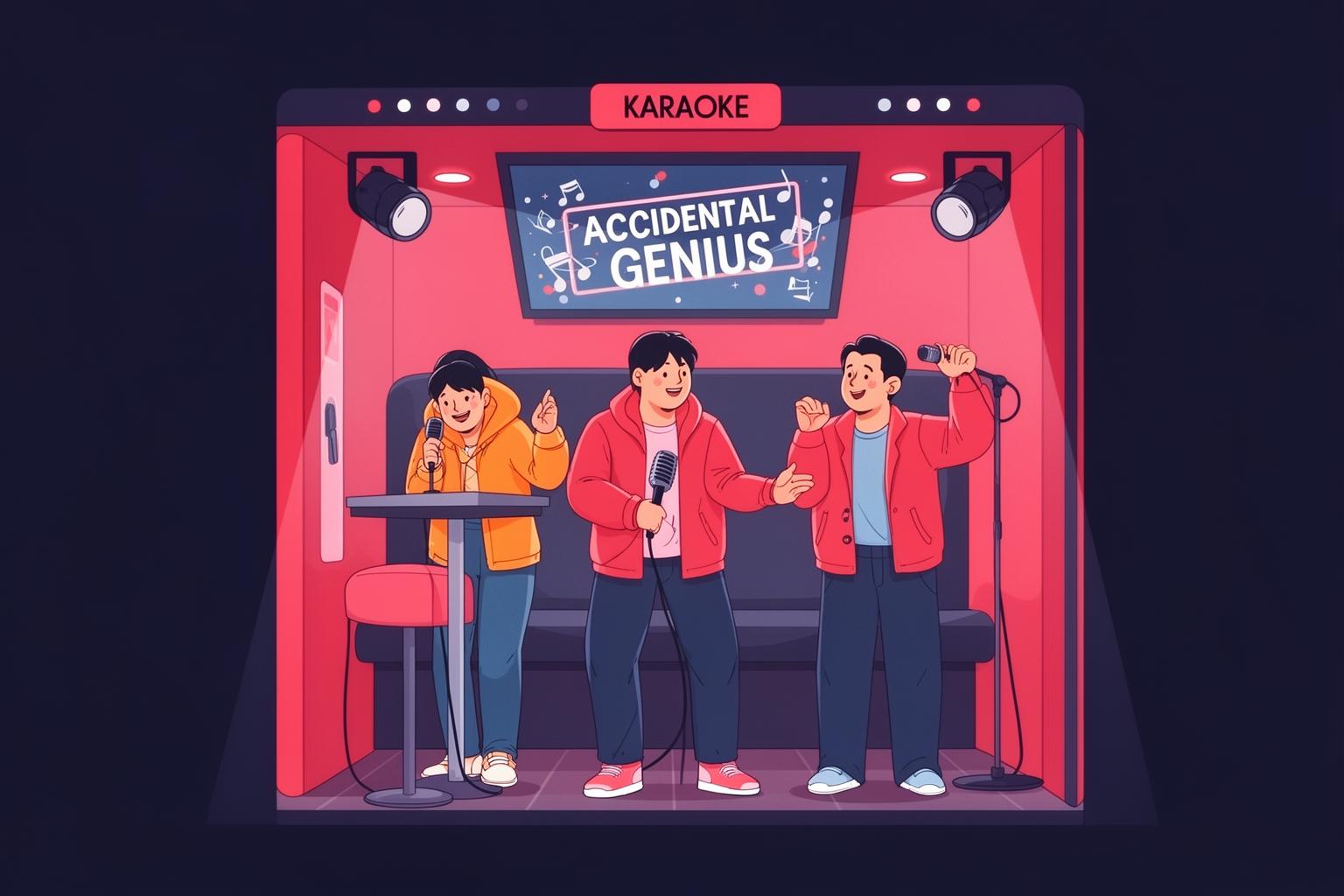
At first glance, a karaoke room appears designed for distraction. There’s the massive screen flashing music videos, the pleather couches, the slightly sticky table for your drinks, and a menu of fried food that seems illogical. But if you look beyond the party-focused decor, you’ll uncover the essential elements of an unexpectedly effective vocal training space. The brilliance of the setup is entirely unintentional, a byproduct of a commercial business that just happens to perfectly serve a different, more serious purpose.
More Than Just a Microphone and a Screen
The most important aspect of any karaoke venue is its architecture. The rooms, or “boxes,” are built to contain the sound of five people belting out off-key rock ballads at two in the morning. This means they must be exceptionally well soundproofed. The walls are thick, the doors heavy, and once inside, the outside world seems to disappear. For anyone who’s tried to practice singing in a thin-walled apartment, this feature is invaluable. Here, you can be as loud as necessary. You can do your ugliest warm-ups, hit your highest piercing notes, and experiment with your voice without worrying about disturbing neighbors.
Then there’s the equipment. The microphone isn’t a cheap toy; it’s a sturdy, professional-grade dynamic mic, the kind used in live music venues. It’s designed to capture the nuances of a voice. The sound system is equally strong, built to fill the room with music without distortion. Most importantly, the karaoke machine itself—that glowing, complex entertainment hub—is a sophisticated piece of audio gear. It grants you god-like control over the sound. You can adjust the microphone volume, the music volume, and, crucially, the levels of echo and reverb. You can transpose any song, raising or lowering the key by semitones to fit your vocal range. You can even tweak the tempo, slowing a song down to master tricky sections.
Put it all together, and what do you get? A private, soundproof room with a professional microphone, a top-quality speaker system, and a console that allows precise audio control. It’s a vocal booth, plain and simple—just disguised as a fun hangout.
The Culture of ‘Me Time’: Why Solo Everything Works
This whole vocal practice ecosystem wouldn’t exist if going to karaoke alone were seen as strange or pitiable. But this is Japan, a country where the concept of the solo customer, or ohitorisama (お一人様), is not just accepted but actively supported. There are solo ramen shops, solo yakiniku grills, and solo hot pot places. Society acknowledges and respects the desire for solitary experiences. Spending time alone isn’t viewed as social failure; it’s recognized as a valid choice.
This cultural acceptance enables hitori karaoke, or hitokara for short. When you approach the reception and say, “Hitori desu” (I’m alone), the staff doesn’t bat an eye. They don’t offer pity or judgment. They simply check their system, find an available small room, and handle your request just as they would for a group of ten. It’s simply business. This absence of social friction is freeing. It removes psychological barriers that might exist in other cultures, allowing you to fully concentrate on your goal.
This trend has become so widespread that some chains have even opened locations exclusively for solo singers. Places like 1Kara (ワンカラ) provide tiny, pod-like booths equipped with high-end condenser microphones, mixing boards, and headphones, offering an experience akin to being in a professional recording studio. While these specialty venues are excellent, the truth is you don’t need them. Any standard karaoke chain anywhere in Japan will give you everything you need to get to work.
Your Private Studio: A Practical Guide
So you’re convinced by the idea and ready to exchange the group atmosphere for a focused solo session. However, stepping into a karaoke chain for the first time can feel somewhat overwhelming. The lobbies are bright and noisy, the pricing structures may seem confusing, and the technology inside the room is full of buttons labeled in Japanese. Here’s how to navigate it all like a seasoned expert.
Choosing Your Weapon: The Major Chains and Their Unique Features
Though most karaoke chains appear similar from the outside, they differ subtly in equipment, pricing, and ambiance—factors that matter to serious singers.
First, it’s important to know the two main karaoke machine platforms: DAM and Joysound. Think of them like the iOS and Android of karaoke. Joysound boasts an enormous song library, including the latest hits, obscure indie bands, anime themes, and meme songs. DAM, meanwhile, is favored by more serious vocalists. Its sound engineering is generally regarded as superior, offering higher-quality backing tracks. More importantly, its vocal analysis and scoring features, like the well-known Seimitsu Saiten (精密採点, “Precise Scoring”), provide detailed visual feedback on pitch, timing, and stability. For pure vocal training, DAM is typically the better option.
With that background, here’s a brief overview of the major chains:
Big Echo (ビッグエコー): One of the largest and most respected chains, known for clean rooms equipped almost exclusively with the latest DAM machines. Though slightly pricier than competitors, you’re paying for quality and reliability. It’s an excellent choice for focused practice.
Karaokekan (カラオケ館): Found in almost every entertainment district, Karaokekan is the reliable workhorse of the karaoke scene. They offer consistent quality, reasonable pricing, and both DAM and Joysound machines. A great all-around option.
Manekineko (まねきねこ): Recognizable by its cute cat logo, Manekineko is the undisputed champion of budget karaoke. Their biggest perk is allowing customers to bring their own food and drinks, a huge advantage for long practice sessions. This lets you stay hydrated and energized without paying high in-house prices. The trade-off is slightly older equipment and more worn rooms. But for pure value, especially with their “Free Time” packages, they’re hard to beat.
Cote d’Azur (コート・ダジュール): Aiming for a more upscale, resort-like vibe, this chain offers spacious, comfortable rooms and an extensive food menu. It’s a great choice if you want a more luxurious practice environment, though prices reflect that.
The Booking Process: How to Navigate the System
After choosing your chain, the booking process is simple. Approach the front desk and they’ll ask how many people are in your group. Simply respond “Hitori desu” (just me). Then, they’ll ask how long you want the room. While bookings are available in 30-minute increments, the best value is usually the “Free Time” (フリータイム) package—a flat-rate deal granting you the room for several hours, typically from opening until early evening on weekdays. For any session longer than 90 minutes, Free Time is almost always cheaper and ideal for extended, uninterrupted practice.
Next, you’ll likely be informed of the “one drink order” policy (wan dorinku sei), standard at most karaoke venues. Even with the Free Time package, you must order at least one drink per person. Some places, like Manekineko, offer a “drink bar” option—a flat fee for unlimited self-serve soda fountain access. For singers needing constant hydration, this is an excellent deal. After payment and ordering your drink, you’ll receive a receipt with your room number and end time—then you’re ready.
Setting Up Your Booth for Optimal Practice
Now it’s time to turn the party room into your personal studio. Start by familiarizing yourself with the remote control, or denmoku (デンモク), typically a tablet-like device. It might seem daunting, but mastering just a few key functions is enough.
Your primary goal is to eliminate all artificial vocal effects. Open the audio settings menu and locate controls for Mic Volume (マイク音量), Music Volume (ミュージック音量), and Echo (エコー). The most crucial step for serious practice is to turn the echo all the way down to zero. Karaoke echo is designed to flatter amateur singers by smoothing imperfections and enriching their sound. But for practice, it’s a crutch—it hides your true pitch and tone. Removing it forces you to hear your raw, unfiltered voice. This can be humbling but is the only honest way to assess your skills.
Adjust the mic and music volumes until you achieve a balance where you can clearly hear yourself over the backing track without strain. Then find the Key Control (キーコントロール) feature. This is essential. If a song sits just outside your comfortable range, you can shift it up or down a few steps to fit your voice perfectly. Don’t strain to hit notes; make the song work for you.
Finally, personalize your space. Set out your water bottle, have a notebook and pen ready to jot down performance notes, and if you plan to record yourself (which you definitely should), position your phone on the table angled toward you. Now your room is ready for prime practice.
The Workout: Structuring Your Practice Session

Simply having the space isn’t sufficient. To get the most out of your hitokara session, you must treat it with the same discipline as a gym workout. You need a structured plan that includes warm-ups, focused exercises, and cool-downs. The karaoke machine serves as your versatile training partner.
More Than Just Singing Along: Exercises and Drills
Don’t dive straight into singing your toughest song. Your voice is a muscle that needs proper warming up. The soundproof room is ideal for this. Spend the first ten to fifteen minutes doing vocal exercises without the microphone. Lip trills, sirens, humming, and gentle scales will prepare your vocal cords for work. Since no one can hear you, feel free to make any odd noises necessary.
Once warmed up, you can use the karaoke machine as a diagnostic tool. This is where the DAM platform shines. Choose a simple, slow song you know well and turn on the Seimitsu Saiten scoring mode. As you sing, a visual guide will appear on the screen, displaying your pitch as a moving line across a musical staff. You receive real-time, objective feedback on your accuracy. Are you consistently flat? Are your sustained notes unstable? The machine will reveal it without mercy. While it can’t judge your artistic expression, it’s an excellent tool for honing intonation and breath control. Use it not as a game to get a high score, but as a biofeedback device for your voice.
Take advantage of the machine’s other functions for various drills. Play a fast-paced song and focus solely on the timing bars to enhance your rhythm and diction. Pick a ballad and practice dynamic control, shifting from a soft whisper to a powerful belt. The aim isn’t just to sing songs, but to use the songs as a framework for targeted vocal training.
Working with Your Own Material
A common misconception about karaoke is that you’re limited to the songs in the machine’s catalog. Here is where truly creative practice begins. Most modern karaoke rooms come with auxiliary inputs. Look for a small panel on the wall featuring HDMI and stereo mini-jack ports. By bringing your own cable, you can connect your smartphone, laptop, or other devices and play your audio through the room’s high-quality sound system.
This opens a world of possibilities. You can play custom backing tracks for original songs you’re writing. You can run through your band’s setlist. You can play instrumental jazz standards to practice improvisation. If you’re an acoustic musician, you can often bring your instrument (it’s always good to check the specific chain’s policy, but it’s usually allowed). The room transforms into a private rehearsal space where you can fine-tune arrangements and practice performing your material at full volume.
This versatility extends beyond musicians. Actors can connect their phone and rehearse lines against a recording of their scene partner. Public speakers can plug in their laptop and practice a presentation, complete with slides on the big screen and a microphone to work on projection and pacing. The karaoke box becomes a blank canvas, a flexible performance space ready for you to shape its purpose.
The Art of Self-Critique
The most powerful, and often most challenging, aspect of solo practice is becoming your own coach. The key to this is recording yourself. Set your phone to record audio or video for the entire session. In the moment, it’s difficult to objectively evaluate your performance. But listening back later reveals details you missed. You’ll hear the tendency to go flat on a particular vowel, notice where your breath support weakens at the end of a long phrase, or identify sections where your diction becomes unclear.
Use the breaks between songs to review your recordings. This immediate feedback loop is invaluable. Did you hit the note you aimed for? Did the emotional delivery come through? Be honest and analytical. Take notes. The cycle of performing, recording, and critiquing is the foundation of effective practice. It helps you spot weaknesses and create a concrete plan to improve in the next song or session.
The Unspoken Rules and Pro-Tips
You now have the technical know-how to use a karaoke box as a practice tool. However, to truly excel at hitokara, it’s important to grasp the subtle etiquette and insider tips that will make your experience smoother, more affordable, and more effective.
The Etiquette of Going Solo
The key piece of etiquette is to stay relaxed. The staff aren’t judging you for being alone—they’re used to it, and a quiet solo customer is far easier to handle than a noisy group. Be polite and efficient, and they will treat you just like any other guest.
As your time draws to a close, you’ll receive a call from the front desk, usually about ten minutes before your session ends. This is your signal to begin wrapping up. Avoid singing right until the last moment. Clean up any mess, gather your belongings, and be ready to leave promptly when your time is up. Being punctual is appreciated and helps the system run smoothly for everyone.
Lastly, respect the equipment. Don’t drop the microphone, avoid spilling drinks on the remote, and treat the room with care. It’s a shared space, and your consideration helps keep it pleasant for the next person.
Hacking the System for Maximum Value
Like most businesses, karaoke chains have peak and off-peak hours, with striking price differences. If your schedule allows, the best time to go is on a weekday afternoon. Prices can be as low as a third or even a quarter of what they are on Friday or Saturday nights. Free Time packages are also longer and cheaper during weekdays, often letting you practice for five or six hours at the cost of just one hour on the weekend.
When visiting a chain for the first time, always ask about a membership card. Most offer a free or low-cost loyalty program that usually grants an immediate discount on your first visit, making it worthwhile from the start. Over time, these small savings really add up.
Finally, take advantage of the drink bar if it’s included. For extended vocal sessions, staying hydrated is essential. Having unlimited access to water, tea, and other soft drinks without needing to call the front desk each time is incredibly convenient. It helps you stay focused on what matters most: practicing.
A Studio in Disguise
The Japanese karaoke box, a symbol of group entertainment, also serves as one of the most unexpectedly brilliant resources for solo performers. Beneath the exterior of flashing lights and party anthems lies a private, affordable, and technologically equipped space ideal for honing one’s craft. It exemplifies a culture that embraces individuality, creating a system that can be ingeniously adapted for personal growth.
So next time you stroll down a street in Japan and notice the glowing, vertical signs for Big Echo or Karaokekan, look beyond the images of smiling groups. Recognize the buildings for what they also represent: a collection of hundreds of small, private studios. See them as a gym for your voice, a stage for your practice, a sanctuary for your art. All you need to do is walk in and request a room for one.