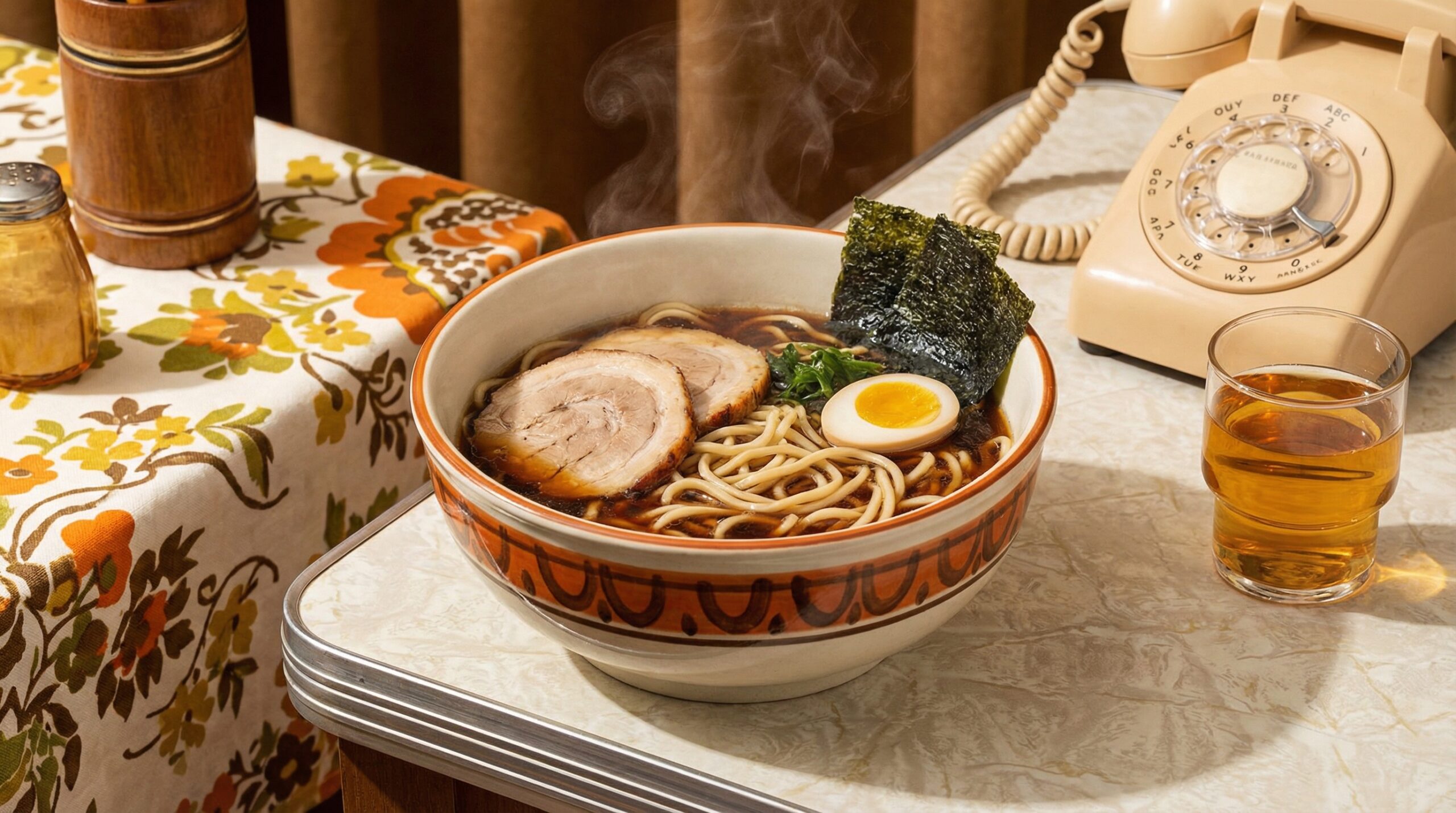
Yo, what’s the move? It’s Shun Ogawa, and we’re about to take a deep dive, a proper immersion into a vibe so specific, so potent, it basically rewired the cultural DNA of Japan. We’re not just talking about food here; we’re talking about a whole mood, a frequency that hums beneath the concrete and neon of modern Japan. We’re time-traveling back to the 1970s, a decade of dizzying economic highs and quiet, personal lows, all illuminated by the steam rising from a humble styrofoam cup. This is the story of late-night instant ramen. It’s a tale of innovation born from desperation, of comfort found in solitude, and of a simple meal that became a high-key cultural icon. Before you could slide into DMs, you could slide the lid off a Cup Noodle. Before life hacks were a thing, the biggest hack was just adding hot water. This isn’t just a history lesson; it’s an exploration of a feeling. It’s the sound of a plastic fork scraping against styrofoam in a quiet apartment at 2 AM. It’s the savory scent cutting through the smell of old books and impending deadlines. It’s the warmth spreading through your chest on a cold night after missing the last train. This vibe, this whole entire aesthetic, was forged in the crucible of 1970s Japan, a period of relentless forward momentum where people needed a quick, reliable anchor. Instant ramen became that anchor. It was the pause button in a world that was constantly pressing play. So, get ready. We’re about to unpack how this simple, dehydrated brick of noodles became the unofficial fuel of a generation and how its echoes are still rippling through the zeitgeist today. It’s a journey into the heart of modern Japanese culture, one slurp at a time. No cap, the story is fire, and it starts right here.
This late-night instant ramen vibe is part of a larger tapestry of uniquely Japanese retro aesthetics, much like the Y2K photo booth culture that would captivate a later generation.
The Genesis of a Culinary Revolution: More Than Just Noodles
To truly capture the 1970s vibe, we need to rewind the tape a bit further. The story of instant ramen isn’t a polished corporate origin tale crafted in a boardroom; it’s a narrative deeply embedded in the grit and resilience of post-war Japan. The stage was set in a nation undergoing immense transformation, where the ruins of World War II were being replaced by the foundations of an economic miracle. Food was scarce, spirits were tested, but the hustle persisted. At the heart of this societal shift was one man, Momofuku Ando, who would become the godfather of this entire movement.
From Post-War Scarcity to a Flash of Genius
Imagine Osaka, right after the war. The streets were a chaotic dance of reconstruction. People were genuinely hungry, and the government was promoting bread made from surplus American wheat as a solution. But Ando, our protagonist, noticed a disconnect. He saw that noodles were what people loved; they were the ultimate comfort food, deeply woven into their culinary culture. The legend goes that he witnessed a long line of people patiently waiting in the cold for a hot bowl of ramen from a black-market stall. That was his lightbulb moment. The demand was clear, but the process was slow. He thought, there must be a better way—a way to create a ramen that was shelf-stable, easy to prepare, and delicious, ready to satisfy hunger instantly. This wasn’t just about convenience; it was a compassionate vision to bring warmth and nourishment to the masses.
He wasn’t a trained scientist or a chef from a renowned restaurant. He was an entrepreneur driven by relentless curiosity, working from a small shed in his backyard in Ikeda, Osaka. For a year, he tinkered, failed, and experimented. He tried every method to preserve cooked noodles, from steaming to smoking, but nothing was quite right. The breakthrough came, as it often does, from a simple observation. He saw his wife, Masako, frying tempura. As she dropped the battered vegetables into hot oil, they sizzled and dehydrated instantly. That was it—the flash-frying method. By flash-frying steamed and seasoned noodles, he could remove their moisture, making them shelf-stable while creating microscopic pores on their surface. These pores were the secret ingredient—they allowed the noodles to rehydrate almost instantly when hot water was added. In 1958, the world’s first instant ramen, “Chikin Ramen,” was born. It was a block of pre-seasoned noodles that you simply broke into a bowl, added hot water, and waited. It was magic. It was a revolution in a packet.
The Cup That Conquered the World
The 1970s, however, demanded another leap forward. Japan was speeding ahead. The Shinkansen bullet train symbolized the nation’s rapid pace. Life was becoming faster, more mobile. While Chikin Ramen was a hit for home consumption, Ando had his sights set on a bigger prize: true, pure, on-the-go convenience. The inspiration for this next step came during a 1966 business trip to the United States. He was demonstrating Chikin Ramen to some American supermarket executives. Lacking ramen bowls, the execs broke up the noodle block, placed it into coffee cups, poured in hot water, and ate it with forks. Another lightbulb moment for Ando. The container was key.
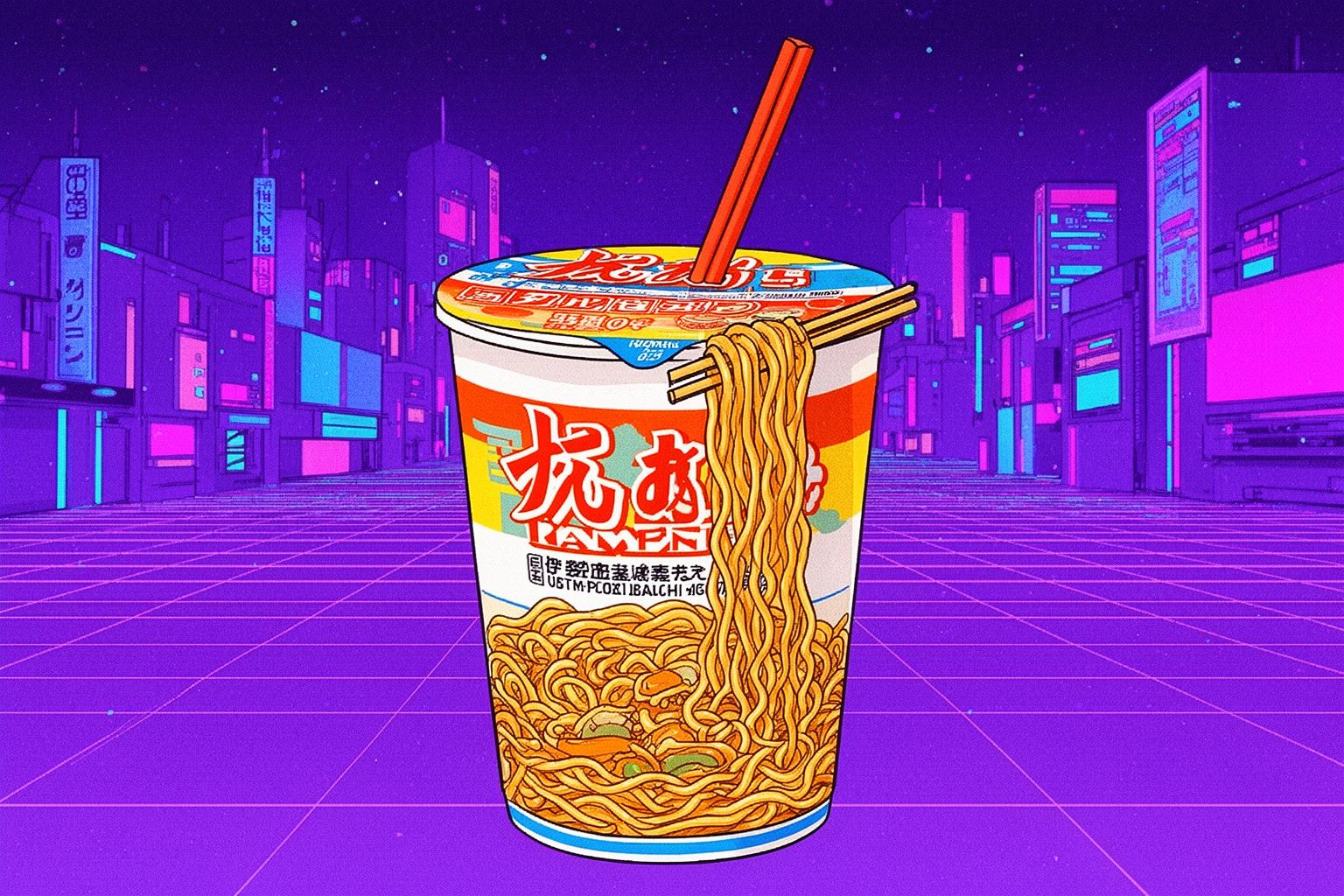
He realized that to make instant ramen truly global and portable, it needed its own vessel. He had to combine the noodles, seasoning, and bowl into a single, elegant package. This sparked intense R&D focused on the container. It had to be waterproof, insulated to keep the contents hot and protect hands, and perfectly shaped for both storage and consumption. The solution was a lightweight, insulated styrofoam cup. He carefully designed the cup to be wider at the top and narrower at the bottom, a clever engineering feat that suspended the fragile noodles in the middle, preventing them from being crushed during shipping. In 1971, Nissin introduced the “Cup Noodle.” This product would define the 1970s. It was the ultimate convenience. No bowl needed, no cleanup—just add hot water, wait three minutes, and enjoy a hot, satisfying meal. This invention didn’t just change how people ate; it transformed where and when they could eat, unlocking a new dimension of culinary freedom that perfectly matched the fast-paced energy of the decade.
The 1970s Soundtrack: Slurping in the Shadow of the Economic Miracle
The 1970s in Japan was a distinct era. It marked the height of the post-war economic boom. Cities like Tokyo and Osaka were growing at a dizzying speed, skyscrapers rising into the sky. The atmosphere was charged with optimism and the constant hum of industry. This period was defined by the “corporate warrior,” the salaryman, whose existence reflected the nation’s strong work ethic. Yet beneath the surface of this rapid expansion, a new lifestyle was taking shape—characterized by long hours, immense pressure, and increasing urban anonymity. It was in these quiet, often solitary moments that instant ramen found its true cultural significance.
The Salaryman’s Sacred Ritual
To grasp the ramen culture of the ’70s, one must understand the salaryman’s life. His day was relentless. He’d leave a modest home in the suburbs early each morning, squeezed into a packed train, then spend ten, twelve, or more hours at the office. The practice of `zangyo`, or overtime, was not only common; it was expected as a sign of loyalty and commitment. After work, the day often continued with obligatory drinking sessions with colleagues and clients, essential for maintaining business ties. By the time he finally got free, often past midnight, most restaurants and eateries had closed.
This is where the magic occurred. Vending machines, glowing like beacons in the night, offered a variety of Cup Noodles. Alternatively, he might stop by a 24-hour kiosk. Returning to his small apartment, where his family was already asleep, he would quietly perform a sacred ritual in his kitchen. The peeling back of the lid, the pouring of hot water, the three-minute wait. That wait was everything—a moment to decompress, a buffer between the demanding public world of work and the private sphere of home. The steam rising from the cup was more than just steam; it was a fleeting escape. Slurping those noodles alone, beneath the dim kitchen light, was an act of self-care—warm, savory, and deeply personal. It wasn’t gourmet, but it was dependable. It was his. This solitary communion with a cup of noodles became a defining, though unspoken, aspect of the salaryman identity.
The Student’s Midnight Oil
On the other side were the students, the next generation shaped by the intense pressures of Japan’s education system. The 1970s saw a rapid expansion of universities, making entry fiercely competitive. This era was infamously known as “examination hell,” or `juken jigoku`. High school students spent their evenings and weekends in `juku`, or cram schools, memorizing facts and formulas. University students faced a similar cycle of exams and term papers.
Their lives revolved around lectures, part-time jobs, and all-night study sessions. Budgets were tight, and living spaces often cramped single-room apartments or dormitories. For them, instant ramen was more than just food; it was a strategic ally. It was incredibly cheap, costing just a few yen. It required no cooking skills and minimal equipment—only a kettle or hot water. They could prepare it right at their desk without leaving their fortress of books. The image of a student at 3 AM, surrounded by stacks of textbooks, a lone desk lamp cutting through the darkness, with a cup of instant ramen as their sole companion, is an iconic trope for good reason. It fueled ambition. The high-carb, salty broth provided the energy boost needed to tackle another chapter or memorize another set of kanji. This shared experience united a generation of students, a silent testament to their collective struggle and determination.
The Birth of a Pop Culture Icon
As instant ramen wove itself into the daily lives of millions, it naturally found its way into the popular culture of the 1970s. It became a powerful visual storytelling tool in manga, anime, and films. When creators wanted to quickly convey a character’s situation, they showed them eating instant ramen. A struggling manga artist racing against a deadline? The room is littered with empty noodle cups. A hardboiled detective staking out in his car? He’s eating Cup Noodles to stay warm. A young person who just moved to the big city, feeling lonely and overwhelmed? Their first meal in the empty apartment is, inevitably, instant ramen.
It became a symbol rich with meaning—signifying independence, struggle, and a particular kind of urban loneliness. Rather than a mark of failure, it was a badge of honor for those hustling and pursuing dreams too busy to cook elaborate meals. It was relatable. Audiences recognized themselves in these characters, having lived those same moments. This constant media reinforcement cemented instant ramen’s status. It was no longer merely a food product; it became a cultural icon, a prop in the grand narrative of Japanese life.
The Soul of the Slurp: Unpacking the Cultural Significance
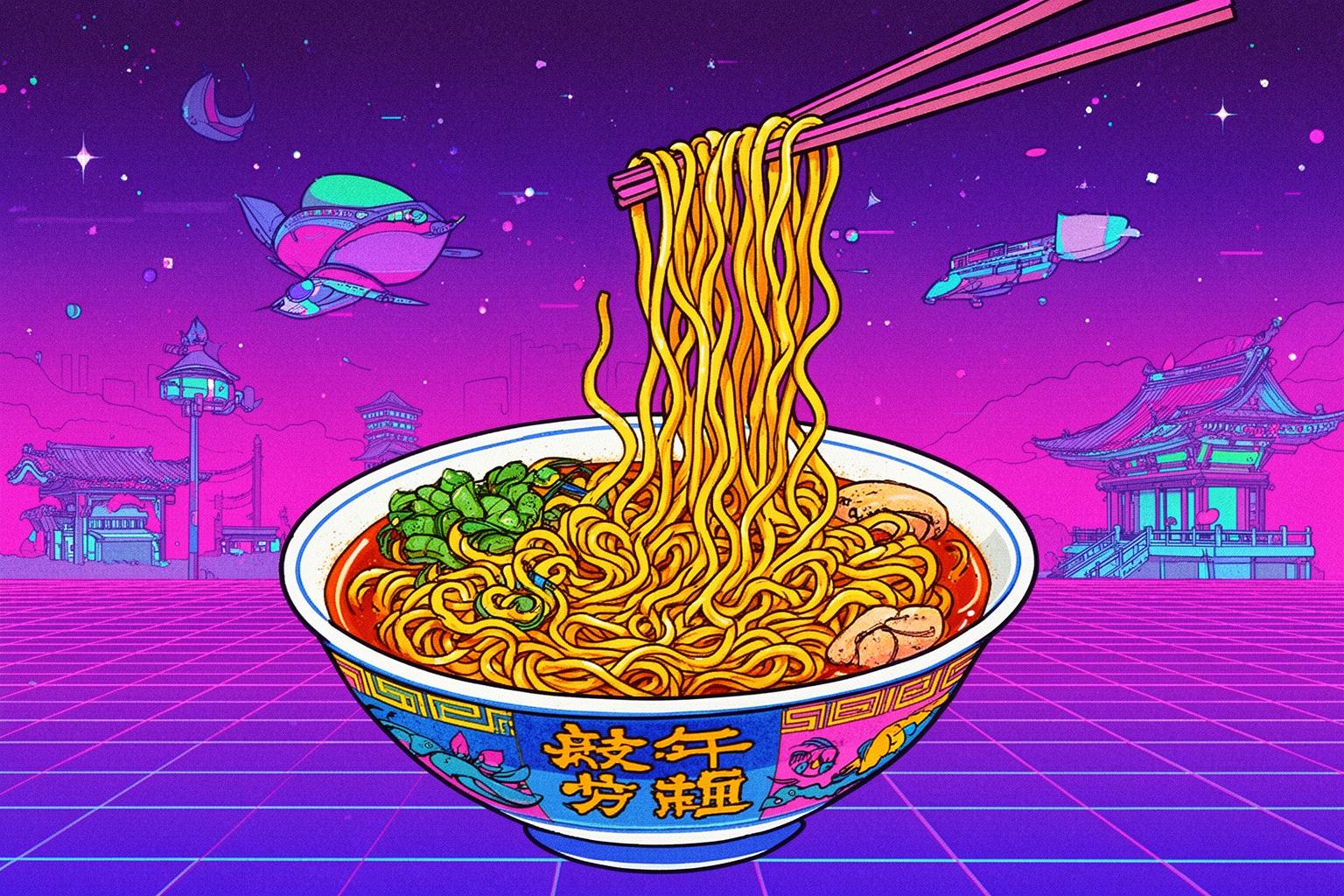
To merely label instant ramen as “fast food” completely misses the point. It’s akin to describing a haiku simply as “a short poem.” The significance of instant ramen goes much deeper, tapping into fundamental aspects of Japanese society and aesthetics. It embodies a distinct culinary philosophy that contrasts sharply, yet not contradictorily, with the refined tradition of `washoku`, or classic Japanese cuisine.
A Taste of the Common Folk: The `Shomin` Spirit
Instant ramen is the epitome of `shomin-teki` food. The term `shomin` refers to ordinary, everyday people—the working class. `Shomin-teki` characterizes things that are unpretentious, approachable, and cherished by the general public. While Japan is renowned for its highly refined and meticulously presented dishes—such as kaiseki or artfully sliced sashimi—there is an equally strong affection for food that is simple, hearty, and grounded. Instant ramen reigns supreme in this realm. Its charm lies in its complete lack of pretension. It requires no special occasion or formal etiquette. You can eat it right from the cup, slurp noisily (a practice encouraged in Japan as a sign of enjoyment), and wear whatever you like as you do so. This democratic quality is its greatest strength. Both a company CEO and a construction worker can find comfort in the very same bowl of noodles. It transcends class and status, offering a shared, universal experience of straightforward satisfaction. It’s a flavor that belongs to everyone.
The Champion of `B-kyu Gurume`
This passion for everyday cuisine is formally recognized in the concept of `B-kyu Gurume`, which means “B-grade Gourmet.” This is not a derogatory term; rather, it is a celebration. B-grade gourmet honors food that is affordable, tasty, and often served in casual settings. It emphasizes pure, unadulterated flavor and enjoyment over fancy ingredients, polished presentation, or trendy venues. Dishes such as ramen, curry rice, yakisoba, and okonomiyaki are the heroes of this culinary style. Instant ramen, in many respects, is the cornerstone of the B-grade gourmet canon. It exemplifies the fundamental idea that a meal’s worth is not measured by its cost. The 1970s, a time when instant ramen consumption surged, helped solidify this philosophy. It encouraged people to embrace simple pleasures and find happiness in a meal that cost less than a train fare. This movement remains hugely popular today, with magazines and TV shows dedicated to discovering the best B-grade gourmet spots. Instant ramen paved the way for the entire B-grade gourmet culture to flourish.
The Three-Minute Zen: Comfort in a Cup
Let’s delve a bit philosophically. The process of making instant ramen is, in its own right, a form of meditation. In the fast-paced, high-pressure Japan of the 1970s, control was often out of reach. One couldn’t control the boss, the economy, or the crowded trains. But this one thing you could command. You controlled the perfect pour of water. You controlled the exact three-minute wait. This small, predictable ritual provided a moment of zen—a brief pause amid life’s chaos. For those three minutes, as the noodles softened and the broth melded, you were fully present. It was a sure outcome in a world full of uncertainties. Then came the reward: warmth. The physical warmth of the cup in your hands and the comforting heat of the broth spreading within. This brought profound psychological solace. It was a small act of self-kindness. In an era when showing vulnerability was not always easy, a cup of instant ramen could offer a moment of quiet emotional relief and comfort. It was, and remains, a hug in a mug.
The Global Shockwave: How 70s Ramen Culture Went Viral
The atmosphere cultivated in the late-night cubicles and dorm rooms of 1970s Japan was too potent to be confined. The modest cup of noodles was destined for worldwide dominance. What began as a domestic fix evolved into a global phenomenon, transforming the eating habits of billions and demonstrating that the attraction of convenience and comfort speaks a universal language.
From Yokohama to the World
From the outset, Nissin and other Japanese companies harbored global ambitions. They started exporting instant ramen in the 1970s, but it was the Cup Noodle that genuinely shattered international barriers. Its all-in-one design was ingenious because it removed any cultural ambiguity about preparation or serving. No special bowl was necessary—the bowl was included. No cooking skills were required; just hot water. The fork, included in some international versions, made it accessible to those unfamiliar with chopsticks. The companies were also masterful at localization. While maintaining the core concept, they adjusted flavors to suit regional tastes. In America, consumers enjoyed creamy chicken; in Thailand, spicy tom yum; in Mexico, lime and habanero. This approach enabled instant ramen to blend seamlessly into various food cultures—not as a foreign novelty, but as a familiar flavor in a convenient, new form. It became the world’s emergency meal, dorm room staple, and backpacking essential. The 70s salaryman’s late-night snack had turned into the global citizen’s go-to fuel.
The Modern Ramen Renaissance
The seed sown in the 1970s has blossomed into a diverse and refined industry today. Instant ramen is no longer just survival food; it has undergone a significant transformation. Walk down any Japanese supermarket or convenience store aisle, and you’ll encounter a dizzying array of choices. This is the evolution of the game. There’s `nama`-type ramen, featuring fresh, vacuum-sealed noodles with a texture rivalling restaurant quality. Premium bowls from renowned chains like Ichiran or Ippudo meticulously recreate their signature broths. Regional specialties let you savor Hokkaido’s miso ramen or Kyushu’s tonkotsu ramen without leaving home. Limited-edition and collaboration flavors drop like sought-after sneakers, fostering a collector’s culture among ramen fans. Toppings have advanced too, with freeze-dried `chashu` pork, corn, and bamboo shoots that come to life with striking realism. This premiumization responds directly to a more discerning consumer who grew up on the basics but now seeks an elevated experience. Although the game has changed, the core appeal—convenience and comfort—remains constant.
The Konbini: The Modern Temple of Instant Ramen
To witness the spirit of 1970s late-night ramen culture thriving today, look no further than the modern Japanese convenience store, or `konbini`. The `konbini` is a 24/7 sanctuary, a brightly lit haven offering everything, yet its instant ramen section is truly remarkable. It’s a library of flavors, a kaleidoscope of colorful packaging. Crucially, every `konbini` features a hot water dispenser— the modern equivalent of the 70s vending machine. At any time, you can see echoes of the past: a student grabbing a cup before a study session, a taxi driver on a late-night break, an office worker in a suit slurping noodles before the last train. The `konbini` provides a space—sometimes with a small seating counter—for this ritual to endure. It is a public expression of that same private moment of comfort. It’s the 1970s vibe, refreshed for the 21st century, proving that the desire for a quick, hot, and satisfying meal is truly timeless.
Your Mission: Experience the Vibe for Yourself
Reading about the 1970s ramen vibe is one thing, but experiencing it firsthand is quite another. For any true Japan enthusiast, connecting with this slice of cultural history is essential. It’s a pilgrimage to the core of what drives modern Japan. Here’s how you can tune into that vibe, whether you’re in Japan or enjoying it from your own home.
The Mecca: The Cup Noodles Museums
For the ultimate immersive experience, you need to visit one of the Cup Noodles Museums, located in Ikeda, Osaka (where it all began) and in the port city of Yokohama. These aren’t dull, static museums. They are vibrant, interactive shrines celebrating the brilliance of Momofuku Ando and his revolutionary invention. The Yokohama museum offers a particularly sleek, modern experience. You can stroll through a visual timeline of instant ramen packages from around the world, a striking pop art display. There’s also a short animated film about Ando’s life. But the main highlights are the hands-on workshops. At the “My CUPNOODLES Factory,” you get to design your own custom Cup Noodles. Starting with a blank cup, you decorate it with colored markers. Then you head to the assembly line, choosing your soup base from several options and selecting four toppings from a vast range, including everything from classic mystery meat to cheese, corn, and garlic chips. It’s a blast, and you get to take home a truly unique, air-sealed souvenir. For a deeper dive, you can reserve a spot at the “Chicken Ramen Factory,” where you experience the entire process — from kneading the flour to flash-frying the noodles — to create the original Chikin Ramen from scratch. These museums celebrate the creativity, persistence, and playful spirit behind instant ramen.
The Hunt for Retro Gold
When in Japan, turn your grocery shopping into a treasure hunt. While the latest, trendiest flavors are tempting, be on the lookout for retro packaging or “reissue” editions of classic 70s and 80s flavors. Companies sometimes release these for anniversaries. Mega-stores like Don Quijote are perfect for this, with their chaotic, floor-to-ceiling shelves crammed with an overwhelming variety of noodles. Finding a packet of original Chikin Ramen or a 70s-style Cup Noodle feels like discovering a vinyl record of your favorite band. It’s a tangible piece of history. Take it back to your hotel or apartment and taste the flavor that started it all. It’s a nostalgic experience, even if it’s your first time trying it.
Curate the Vibe at Home
You don’t need to be in Japan to capture the 70s late-night ramen atmosphere. You can recreate the ritual yourself. It’s all about setting the right mood. First, get your ramen. Most Asian grocery stores offer a good selection. Aim for a classic, no-frills brand like Nissin or Maruchan. Next, set the scene. Wait until late at night. Dim the main lights and use a single desk lamp. Play some 70s Japanese City Pop — artists like Tatsuro Yamashita or Mariya Takeuchi provide the perfect smooth, melancholic urban soundtrack. Maybe stream a classic 70s anime on your laptop. Then, perform the ritual. Prepare the noodles exactly as directed. Pause to appreciate the steam and aroma. And as you eat, be fully present. This isn’t a meal to rush. It’s a moment of quiet reflection, a tribute to the millions of salarymen and students who came before you, finding comfort in that very same experience. To elevate it, try some simple “ramen hacks” popular back then: drop a raw egg into the boiling water to poach it, add a slice of American cheese for creamy richness, or chop in some green onions for a fresh kick. This is your personal symphony of the slurp, a direct connection to the heart of an iconic Japanese vibe.