
The first time you hike a popular trail in Japan, the silence might be the most surprising thing. It’s not the dead silence of an empty wilderness, but a living quiet, punctuated by birdsong, the rustle of leaves, and a steady stream of soft, respectful greetings. As you climb, you’ll pass dozens, maybe hundreds, of other hikers. And nearly every one of them—from elderly veterans with weathered trekking poles to young couples in vibrant technical gear—will catch your eye, offer a slight bow or a nod, and murmur, “Konnichiwa.”
It feels different from the trail chatter you might find elsewhere. There’s a distinct lack of loud conversations, no music blasting from portable speakers, and an almost universal tidiness that feels deliberate. It’s an atmosphere of shared reverence. But who, or what, is being revered? The other hikers? The trail itself? It seems to go deeper than simple trail etiquette. You might see someone pause before a small stone shrine at the trailhead, or notice a group at the summit clapping their hands twice in a brief, almost unconscious prayer before unpacking their onigiri rice balls. This isn’t just about being polite. It’s about being a guest.
You asked me why Japanese hikers have this particular vibe, this quiet sense of respect that permeates the mountain air. The answer isn’t in a guidebook or a set of posted rules. It’s woven into the very fabric of how Japan relates to nature itself. The simple explanation is that for centuries, mountains in Japan haven’t just been seen as geological formations of rock and dirt. They are the domain of the Yama-no-Kami, the mountain deities. And even in this hyper-modern, secularized age, that ancient understanding continues to shape every step a hiker takes.
This deep-seated reverence for nature, which transforms a simple hike into a spiritual dialogue, is also reflected in practices like the Japanese art of forest bathing.
More Than Just a Walk in the Park: The Culture of Japanese Hiking
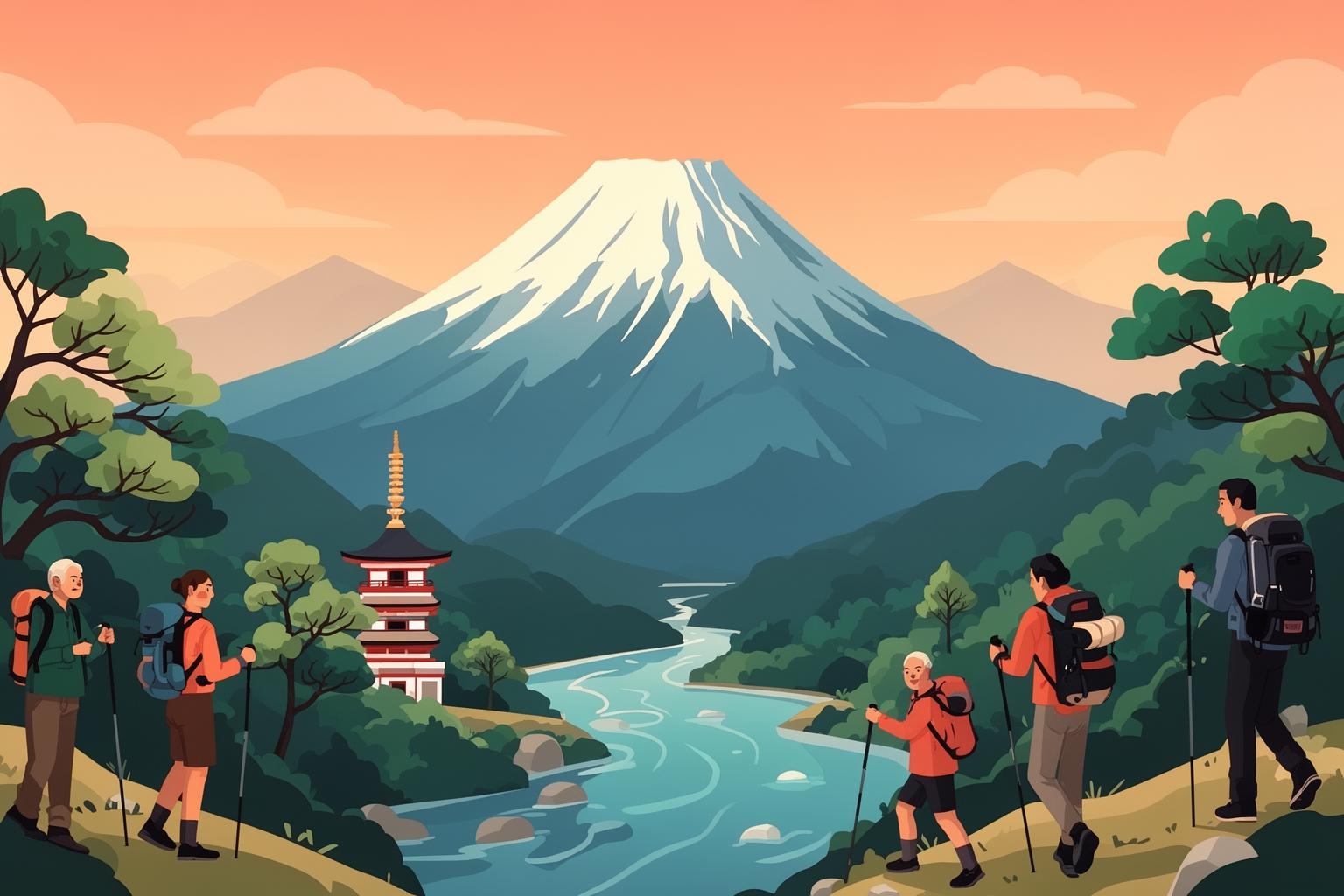
To understand the mindset of Japanese hikers, you first need to recognize that hiking in Japan is rarely seen as an act of conquest. The Western idea of “conquering a peak” or “bagging a summit” doesn’t quite apply. That language suggests a battle between man and nature, a struggle to be won. Here, the feeling is more like being granted an audience. You don’t conquer the mountain; you are allowed to visit it. This fundamental difference in perspective shapes the entire experience.
It begins even before you reach the trailhead. Preparation is essential. Japanese hikers are famously, sometimes almost comically, well-equipped. You might see people on a gentle two-hour trail dressed as if ready for a Himalayan expedition. While part of this reflects a love for high-quality gear and apparel, it also signals respect. The mountain is unpredictable and powerful. Turning up unprepared—without proper rain gear, enough water, a map, and a small first-aid kit—is not only unwise but also disrespectful to the mountain’s inherent dangers. It’s like arriving at a formal dinner wearing beach clothes. You’re not honoring the host.
Once on the trail, this respect is evident in a series of unspoken customs. Greetings, for instance, are more than a simple “hello.” Practically, they act as safety checks. Acknowledging one another confirms both parties are present and accounted for. If someone goes missing later, others can report having seen them. Culturally, it’s a recognition of a shared journey. It quietly expresses, “We are both guests in this powerful place. I see you, and I wish you a safe passage.” It creates a temporary sense of community—a collective of visitors passing through a sacred space.
Additionally, there is the unyielding principle of leaving no trace. Dropping a candy wrapper or an empty bottle on a Japanese trail is virtually unthinkable. The idea of mochi-kaeri (持ち帰り), or “taking it home with you,” is ingrained from childhood. Many trailheads lack trash cans, relying on the assumption that everyone will carry out their own waste. This is more than an environmental mantra; it’s about purity. In Shinto, Japan’s native religion, cleanliness is closely connected to godliness. Leaving trash on a mountain is to desecrate a sacred place, a far graver offense than mere littering.
All of this contributes to an atmosphere that can feel almost meditative. You walk with a quiet awareness, not only of your own steps but also of the surrounding ecosystem. The aim is to move through with minimal disturbance, to be an observer rather than an intruder. The focus shifts from the destination—the summit—to the journey itself: the changing light, the texture of the earth beneath your feet, the sound of a distant stream. It is a walking meditation, an experience grounded in humility.
Entering Another Realm: The Mountain as a Sacred Space
The foundation of this deep respect originates from Shinto, the animistic belief system that predates Buddhism in Japan. Shinto’s core principle is that divinity, or kami, resides in all things. These are not necessarily anthropomorphic gods like those in the Greek or Roman pantheon, but rather spirits, essences, or divine forces inhabiting natural objects and phenomena. An ancient, twisted tree can possess a kami. A waterfall can possess a kami. A uniquely shaped rock can possess a kami. And mountains—vast, ancient, life-giving, and destructive—are regarded as especially powerful dwellings for mighty kami.
These are the Yama-no-Kami. The term does not denote a single deity, but the divine spirit or guardian of a specific mountain. Each major mountain is believed to house its own resident spirit. These deities were regarded as the source of life-giving water that flowed to irrigate rice paddies in the plains below. They provided timber for homes, wild game for food, and medicinal plants. For communities living at their base, the mountain’s health was directly tied to their own survival. The Yama-no-Kami was a provider, a lifeline.
Yet, this relationship was always dual-sided. Mountains in Japan are volcanic, vulnerable to earthquakes, landslides, and violent storms. The same kami that provided water could also unleash a devastating typhoon or a catastrophic eruption. This duality cultivated a profound relationship based on respect and appeasement, rather than love or worship in the Western sense. One did not trifle with the mountain deity. One thanked it for its kindness and strove not to provoke its anger.
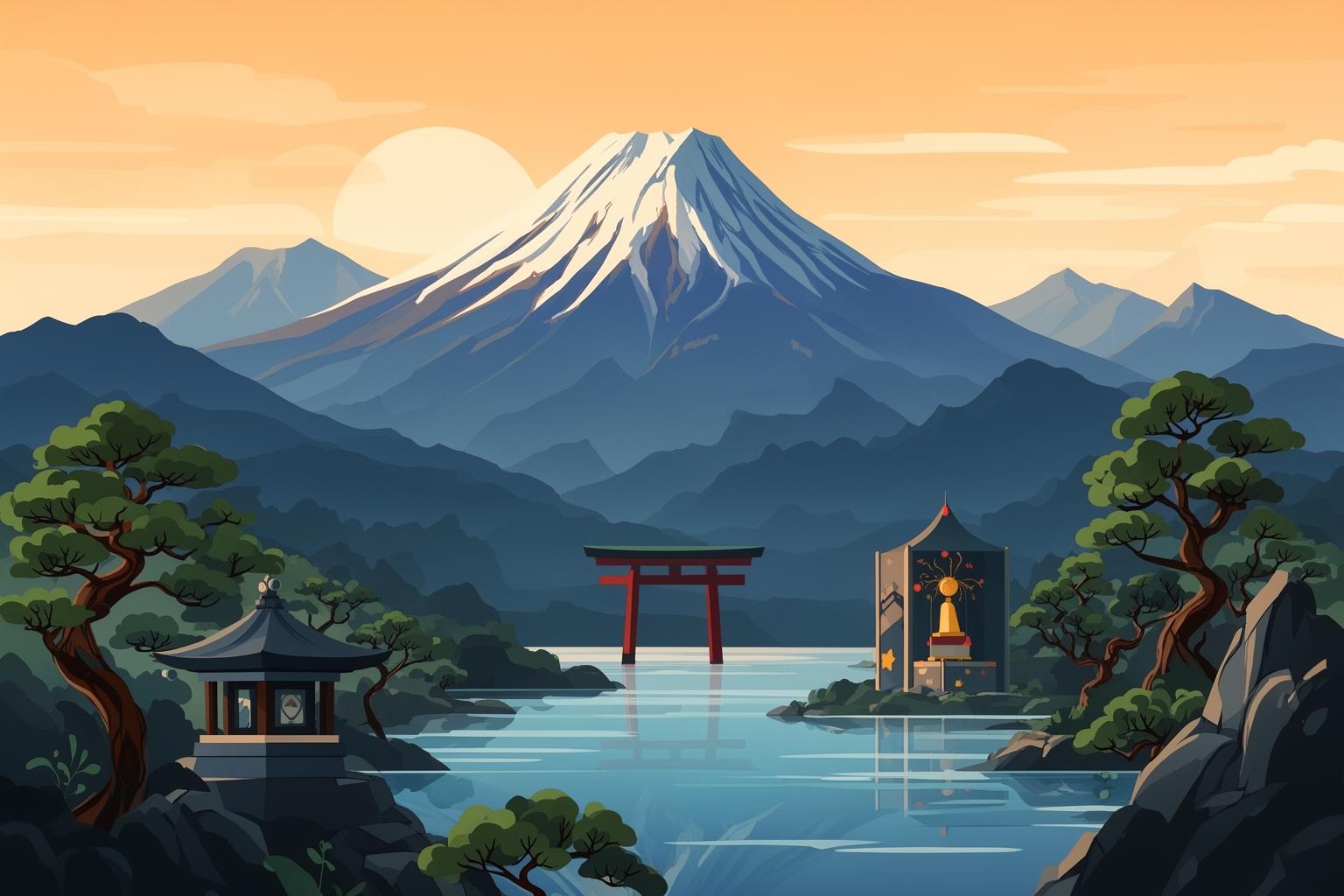
This is why you often find markers of sacred space at the entrance of a mountain trail. A simple red torii gate, the iconic Shinto symbol, marks the passage from the mundane, everyday world to the sacred domain of the kami. Passing through it is a symbolic act of purification and a mental shift. You are now entering the deity’s home. Small stone shrines called hokora are common along trails or at summits. You might see a small offering of a coin or even an unopened can of sake left there. These are not acts of idol worship; they are gestures of acknowledgment and gratitude, small tokens of respect for the spirit of the place.
Even if a modern hiker doesn’t consciously think, “I am entering the realm of a god,” this cultural conditioning runs deep. The landscape itself conveys a sense of power that demands a different code of conduct. You instinctively lower your voice. You walk more carefully. You sense the weight of ages and a force far greater than yourself. The mountain is the temple.
Whispers of the Past: How History Shaped the Hiker’s Mindset
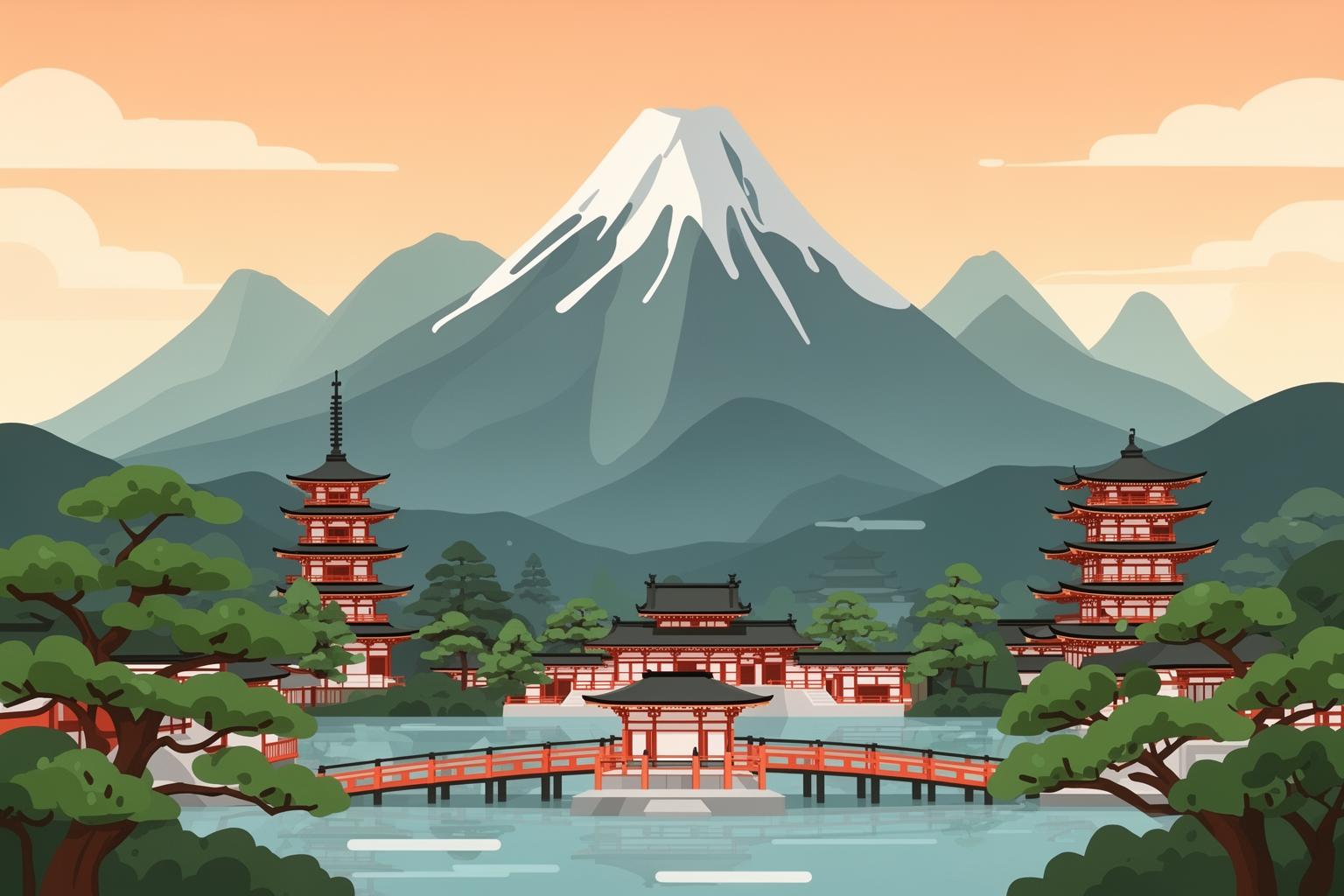
Beyond the fundamental beliefs of Shinto, reverence for mountains was solidified through centuries of ascetic spiritual practices. Chief among these is Shugendō (修験道), a fascinating and uniquely Japanese spiritual tradition that emerged around the 7th century. Shugendō is a syncretic faith, blending elements of pre-Buddhist mountain worship, esoteric Buddhism, and Taoism. Its practitioners, called yamabushi (literally, “those who lie in the mountains”), sought spiritual enlightenment and supernatural powers through rigorous, often punishing, training in the wilderness.
For the yamabushi, mountains were not places for recreation but a natural mandala—a three-dimensional spiritual training ground. They undertook long, arduous pilgrimages, fasting for days, standing beneath freezing waterfalls, and meditating on precarious cliffs. These practices were intended to strip away the ego, purify the spirit, and bring them closer to an understanding of the universe. The mountain was both their teacher and tormentor—a place to confront the raw forces of nature and, in doing so, face their own mortality and limitations.
This tradition, still practiced today, cemented the cultural image of mountains as arenas for spiritual discipline and self-transformation. The peaks were destinations for arduous pilgrimages, not casual weekend outings. Renowned mountains like the Dewa Sanzan in Yamagata Prefecture or Mount Ōmine in Nara became major centers for Shugendō, attracting pilgrims from across the country. These practices infused the landscape with layers of stories, rituals, and spiritual significance.
The impact of these ascetic traditions on the modern Japanese hiker cannot be overstated. Although the average person climbing Mount Fuji today is not training as a yamabushi, the cultural legacy of these practices endures. The idea that mountain climbing is a test of endurance and spirit, a journey of self-reflection, is a direct inheritance from Shugendō. The quiet, focused determination seen in many Japanese hikers echoes the meditative state sought by the mountain ascetics.
This historical context explains why hiking is often approached with such seriousness. It is not merely a sport but a michi or dō (道), a “way” or “path,” akin to other Japanese disciplines such as sadō (the way of tea) or kadō (the way of flowers). There is a proper form, a right mindset, and a deeper philosophy. The goal is not merely to reach the summit but to engage in the process with the correct intention and respect. It is a form of moving Zen, where physical exertion quiets the mind and connects the individual to the natural world in a profound way.
The Language of Respect: Rituals and Gestures on the Trail
When observing Japanese hikers, you can notice this deep-rooted reverence expressed through various small, often subtle, rituals and gestures. These actions create a sort of unspoken language of respect toward both the mountain and fellow hikers.
First, let’s revisit the greeting. When one hiker is ascending and another descending a narrow path, the unwritten rule is that the ascending hiker has the right of way. The person going down is expected to step aside. This practical rule exists in many hiking cultures, as it’s harder to regain upward momentum. However, in Japan, it’s carried out with particular grace. The descending hiker will pause, turn slightly, and wait. The ascending hiker will often offer a small bow and a quiet “sumimasen” (excuse me) or “arigatou” (thank you) as they pass. This brief exchange exemplifies Japanese social etiquette—a fluid dance of mutual consideration and recognition.
At the summit, behavior is also telling. After the effort of the climb, there is seldom a loud, boisterous celebration. Instead, there is a moment of quiet reflection. People find a spot to sit, take in the view, and quietly savor the sense of accomplishment. This is often when the clearest signs of reverence appear. Someone might face the small summit shrine, bow deeply, and clap twice—the traditional Shinto ritual to attract the kami’s attention before silently offering thanks for a safe ascent.
Next is the ritual of the summit meal. Unpacking a bento box or brewing tea on a portable stove is a cherished part of the experience. Yet here too, gratitude is present. It extends from the Japanese custom of saying “itadakimasu” before every meal. The phrase, often translated as “I humbly receive,” expresses thanks to everyone and everything involved in making the meal possible—the farmers, cooks, plants, and animals. On a mountain, this sentiment grows stronger. You are receiving the gift of the view, the clean air, this moment of peace. The meal becomes an act of communion with the place.
Even the way people take photographs feels different. There is less of the performative “look at me” energy, and more of a genuine effort to capture the landscape’s grandeur. The focus is outward, on the mountain, rather than inward, on oneself. The photograph becomes a souvenir of the visit, a memento of the time spent in this special place.
All these small acts—the yielding on the path, the quiet thanks at the summit, the mindful meal, the respectful photography—combine into a consistent behavioral grammar. They form sentences in an ongoing conversation of respect with the Yama-no-Kami.
Modern Peaks, Ancient Beliefs: Is It Still About the Gods?
This leads us to an important question: Do the millions of people hiking in Japan today truly, literally believe they are in the presence of mountain gods? For many, particularly younger generations, the answer is likely no—not in a conscious or theological sense. Japan is largely a secular society where religion tends to be more a cultural practice than a fervent, daily belief.
Nevertheless, the decline of explicit belief does not equate to the disappearance of the underlying cultural framework. Etiquette and reverence endure because they have become ingrained cultural habits, a kind of social muscle memory. It’s similar to how some people in the West say “bless you” when someone sneezes without considering its original purpose of protecting the soul from demons. The practice continues long after its original meaning has been forgotten.
In Japan, the traditions of respect for the mountains are simply deeper and more widespread. The sensation of being a guest in the home of a powerful entity is profound, and one doesn’t need to believe in a literal, sentient deity to feel it. The mountain itself—its enormity, age, raw power, and indifference to human concerns—is sufficient to inspire awe and humility. The concept of Yama-no-Kami offers a fitting cultural framework for that feeling of awe, providing a name and context to an otherwise abstract emotion.
Thus, while a young hiker from Tokyo might not intellectually accept the existence of a mountain god, they have been raised in a culture that teaches them to treat powerful natural places with a particular respect. They know instinctively that you don’t shout in a temple, and you don’t shout on a mountain. They understand that you take your trash home from a festival, and you take it home from a hike. These behaviors remain consistent because the underlying principle—respecting a special space, whether defined by humans or nature—is the same.
Therefore, the reverence is not necessarily for a deity, but for the idea of the mountain. It represents a reality beyond the human-centered, urban world. It is a place where you are small, where nature governs, and where your survival relies on preparation and humility. The Yama-no-Kami stands as the perfect metaphor for this powerful, untamable force. Paying respect to it is another way of acknowledging your own vulnerability and dependence on the natural world.
The Unspoken Agreement
Ultimately, the respectful atmosphere you experience on a Japanese trail isn’t the outcome of a single belief or a written code of conduct. It’s a cultural ambiance, a collective, unspoken understanding. It originates from a Shinto worldview that sees divinity in nature, was shaped by the austere spiritual discipline of the yamabushi, and continues as a deeply ingrained cultural etiquette.
This culture encourages you to view yourself not as the master of nature, but as a small part of it. It values the collective experience over individual expression. The shared silence, the consistent greetings, and the pristine trails all reflect this agreement to be humble, considerate guests in a sacred space.
So, the next time you’re hiking in Japan and another hiker approaching you offers a slight nod and a quiet “Konnichiwa,” you’ll understand what you’re truly witnessing. It’s much more than simple politeness. It is the modern echo of a very old exchange, a quiet acknowledgment shared between two temporary visitors in the vast, silent, and powerful domain of the mountain gods.