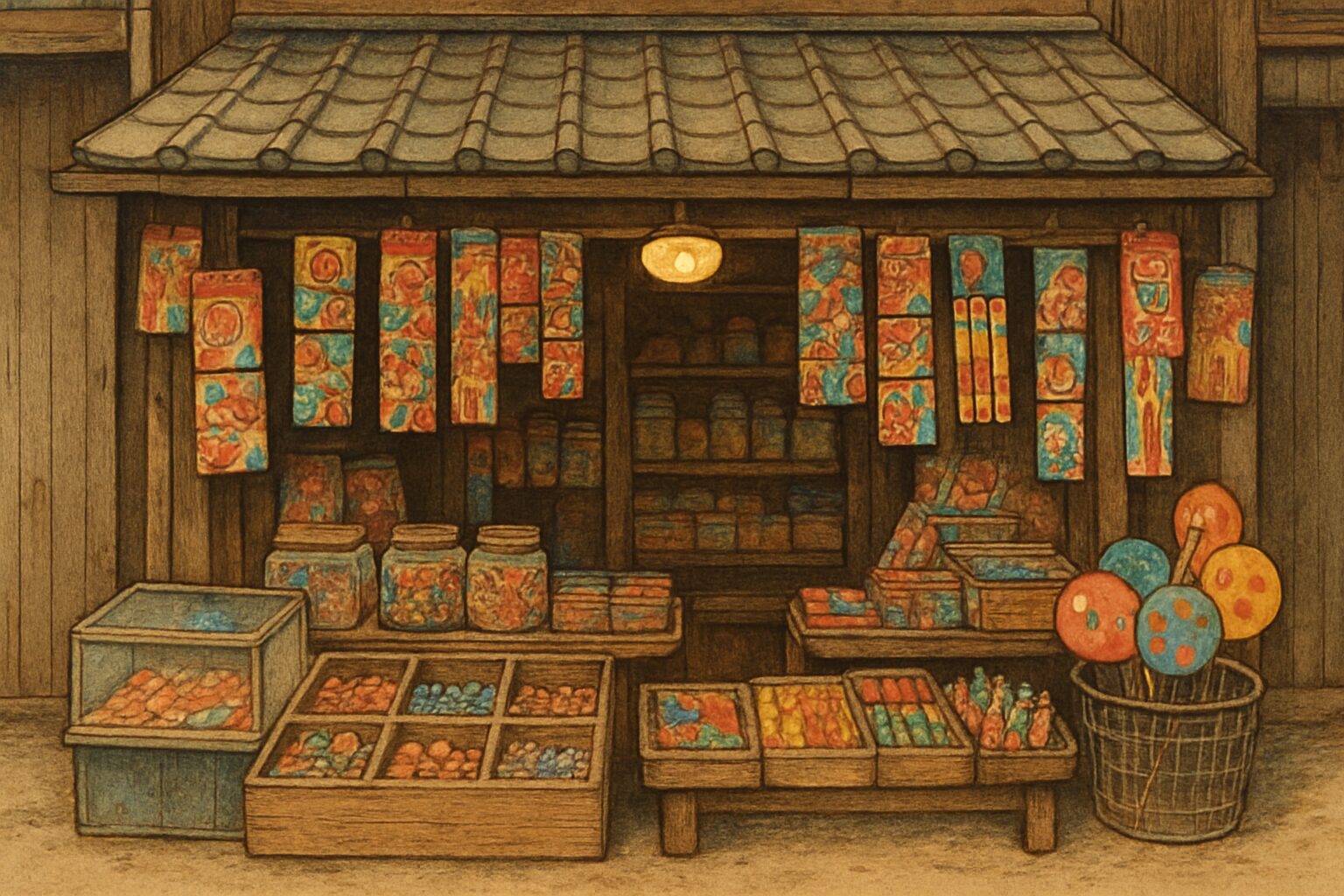
Yo, what’s the deal? Ever feel like you wanna just dip from the 21st century for a hot minute? Like, log off, touch grass, and find a vibe that’s totally analog? If you’re nodding, then say less. We’re about to drop you into one of Japan’s most legit time machines, a place where the clock seems to have stopped ticking sometime around 1975. We’re talking about the one, the only, the legendary Dagashiya. These aren’t your basic, boujee candy boutiques. Nah, a dagashiya is an old-school, mom-and-pop candy shop, a relic from the Showa-era (that’s roughly the 1920s to the 1980s) that’s dripping with a feeling the locals call natsukashii. It’s that warm, fuzzy, kinda bittersweet nostalgia for a childhood you didn’t even have. It’s the scent of cheap candy, dusty wooden shelves, and the sound of kids laughing after school. These shops were the heart of every neighborhood, the ultimate after-school hangout spot where a handful of coins made you feel like a king. Today, they’re rare gems, fading portals to a simpler, more chaotic, and way more colorful time. Getting lost in one isn’t just a shopping trip; it’s a full-on cultural deep-dive, a legit quest to find the soul of Showa childhood. It’s a vibe that’s absolutely bussin’, and we’re about to give you the lowdown on how to find it. Get ready to teleport. For a taste of what’s to come, check out this legendary spot, one of the oldest dagashiya in all of Japan, a place that even got a cameo in a Studio Ghibli flick. It’s the real deal.
If you’re looking for another uniquely Japanese way to experience the country’s culture, you might also appreciate the art of public napping.
The Dagashiya Glow-Up: More Than Just Candy
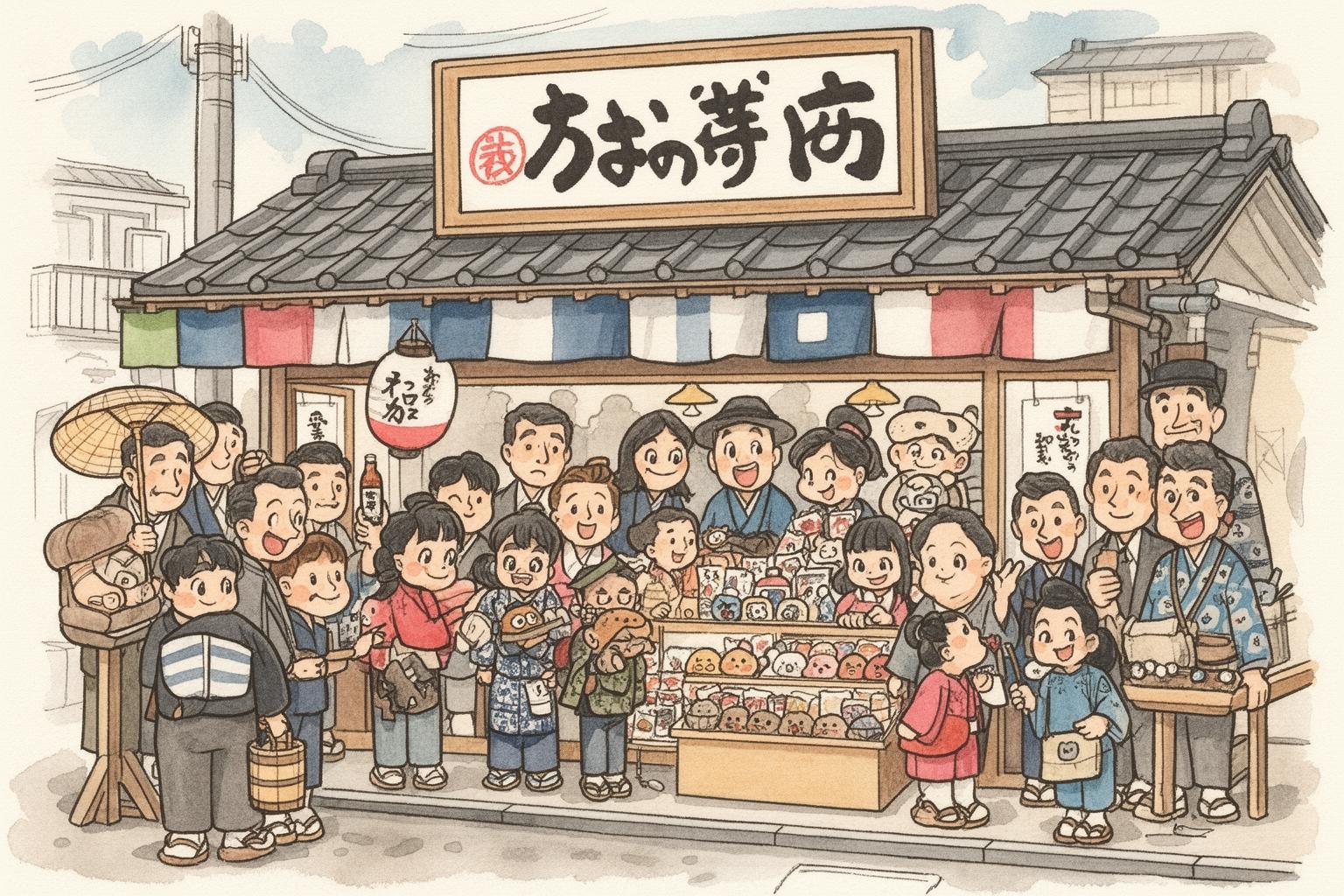
So, let’s get one thing clear. Calling a dagashiya simply a ‘candy store’ is a huge miss. It’s like referring to a skate park as just a slab of concrete. You’re overlooking the entire culture and meaning behind it. These places were the original social networks—the real-life servers where kids met up, swapped stories, battled with spinning tops, and spent their precious pocket money—we’re talking 10-yen coins—on snacks with packaging so loud it could wake the dead. This was the heart of childhood—a world apart from adult supervision—run by a warm, neighborhood ‘obaa-chan’ (grandma) or ‘ojii-chan’ (grandpa) who knew everyone’s name and probably let you slide if you were a few yen short. It’s this human connection, this feeling of belonging, that makes the dagashiya experience truly special. It’s not just a transaction; it’s a tradition.
The Vibe Check: What is Showa Retro?
To really grasp the dagashiya vibe, you need to understand the aesthetic it embodies: Showa Retro. Picture faded movie posters from the 70s, vintage tin signs advertising sodas you’ve never heard of, wooden shelves bowed under the weight of countless glass jars filled with colorful, mysterious treats. The lighting is likely a single, bare fluorescent bulb humming a forgotten tune. It’s a bit cluttered, a little dusty, and utterly authentic. Showa Retro stands in sharp contrast to the minimalist, sleek, modern Japan you see in magazines. It’s warm, lived-in, and unapologetically nostalgic. It’s the visual language of a bygone era—a time of post-war optimism when families gathered around their first black-and-white TVs and kids had the freedom to roam until sunset. Every peeling sticker, every creaky floorboard in a dagashiya tells part of this story. It’s an aesthetic not just seen but felt—a cozy, comforting chaos that envelops you like a warm blanket.
The Community Hub: Where Legends Were Born
Before arcades, before consoles, before the internet, there was the dagashiya. This was the place to be. The shop itself was often tiny, a cramped space packed with snacks and toys, but the real action usually spilled onto the sidewalk outside. This was the battleground for menko, the card-slapping game that was basically the precursor to Pogs. It was the stage for fierce spinning top battles, or bejigoma. It was where you tried your luck at the kuji, a candy lottery where you’d pull a string or paper tab, hoping to win the grand prize—usually an oversized version of a popular snack that earned you bragging rights for a week. The dagashiya was a third space—neither home nor school—where kids learned social rules, how to manage a small budget, and the bittersweet sting of losing a gamble. The shop owner acted as referee, banker, and therapist, calmly overseeing the daily dramas of childhood with a gentle smile. These shops weren’t just businesses; they were vital threads in the community fabric, and many Japanese people deeply mourn their gradual disappearance.
The Ultimate Dagashiya Pilgrimage: Tokyo Edition
Alright, squad up. If you’re ready to feel this vibe firsthand, Tokyo is where our journey begins. The vast metropolis might seem like the last place you’d stumble upon these old-school gems, but tucked away in quiet residential neighborhoods and forgotten shopping arcades, the spirit of Showa thrives. You just need to know where to look. We’re setting out to find the most authentic, soul-stirring dagashiya in the city, from a Ghibli-famous legend to a theme-park-style throwback.
Zoshigaya’s Hidden Treasure: Kami-kawaguchiya, The Ghibli OG
Our first stop is an absolute icon, so legendary it feels like stepping into a folktale. Nestled in the tranquil Zoshigaya neighborhood, right next to the ancient and atmospheric Kishimojin Temple, stands Kami-kawaguchiya. This isn’t just old; it’s ancient—dating back to 1781. Let that sink in. This wooden shack has been selling candy since the Edo period, long before the Showa era came about. It’s said to be Japan’s oldest continuously operating dagashiya. The vibe is immaculate. The building itself is a whisper of history—a weathered, leaning structure that looks as if it sprouted from the roots of the towering ginkgo trees around the temple. Its claim to fame for many international fans is its role in the Studio Ghibli film Only Yesterday, which draws anime pilgrims in droves. But even without that connection, this place is pure magic.
Getting there is part of the adventure. You take the charming Toden Arakawa Line, Tokyo’s last streetcar, to Kishibojimmae Station. The gentle clanging of the tram as it winds through quiet neighborhoods sets the perfect mood. From there, it’s a short walk through the temple grounds, a peaceful oasis that feels far removed from the nearby Ikebukuro hustle. And then you see it. Kami-kawaguchiya is less a building and more a beautiful, orderly collapse of wood and glass. The current owner, a kind elderly woman, is the 13th generation to run the shop. She sits quietly inside, ready to help you count your change. The candy selection is deeply traditional. No flashy snacks here—just hard candies in glass jars, colorful rice crackers, and ramune, the classic marble-capped soda. The experience is calm and reflective. You buy a few small treats, sit on a bench under the trees, and soak it all in. It’s not about a sugar rush; it’s about connecting with a living piece of history. This is a top-tier, S-rank dagashiya experience. No cap.
Yanaka Ginza’s Old-School Cool
Next, we’ll head to a spot with a different energy. Venture north to the Yanaka district, a part of Tokyo that miraculously escaped the destruction of World War II, preserving its pre-war streets and atmosphere. The main thoroughfare here is Yanaka Ginza, a bustling shotengai (traditional shopping street) that embodies Showa-era charm. It’s a 170-meter stretch lined with about 60 small, independent shops selling everything from croquettes and grilled squid to handmade tofu and traditional crafts. The vibe is lively, friendly, and distinctly local. And naturally, there are dagashiya.
Unlike solitary Kami-kawaguchiya, the dagashiya experience in Yanaka Ginza is woven into the fabric of the entire street. You might find a small, dedicated shop, but you’ll also see toy stores with large dagashi sections, or small grocers with corners piled high with nostalgic snacks. One standout is a toy shop called Nakaya, boasting a fantastic selection of classic dagashi and quirky, inexpensive toys. The fun here lies in the treasure hunt. You stroll down the street, grabbing a 70-yen menchi-katsu (fried meat patty) from one spot, then popping into another to pick up a pack of Baby Star Ramen and a bottle of ramune. The entire street feels like your dagashiya. You’ll see local kids doing just that, darting through shops with coins in hand. Tourists appear too, but the area has managed to retain its authentic neighborhood vibe. A pro tip is to visit in the late afternoon as the sun begins to set. The staircase at one end of the street, known as Yuyake Dandan (Sunset Stairs), offers a stunning view of the sun dipping over the shopping street, bathing everything in a warm, golden light. It’s a cinematic moment—the perfect backdrop for enjoying your Showa-era treats.
Odaiba’s Throwback Flex: Dagashi Yokocho
We’ve covered the sacred historic site and the authentic neighborhood street. Now, let’s explore a different kind of dagashiya experience—the curated, theme-park style. Head to the futuristic island of Odaiba, specifically the Decks Tokyo Beach shopping mall. On the fourth floor, you’ll find Odaiba Itchome Shotengai, a full-blown recreation of a 1960s Showa-era street. It’s quite a trip. The entire floor is decorated with retro signs, vintage cars, old-school arcade games, and even a haunted house. At the center stands a massive dagashiya—Dagashi Yokocho.
This place is dagashiya on steroids. It’s huge, brightly lit, and bursting at the seams with every kind of cheap snack imaginable. If you want to see the full spectrum of the dagashi world in one spot, this is it. They have everything from classic Umaibo (puffed corn sticks in dozens of flavors) to bizarre DIY candy kits where you mix powders and liquids to create weird, edible slimes. It’s a sensory overload—in the best way. While it lacks the quiet, dusty authenticity of places like Kami-kawaguchiya, it has its own special charm. It’s fantastic for beginners since everything is clean, organized, and easy to browse. You can pile a small plastic basket high with candy for just a few hundred yen. It’s also a fun place to play, with rows of 10-yen arcade games, vintage pachinko machines, and shooting galleries that offer a blast. It’s a high-energy, family-friendly introduction to Showa pop culture. Is it a “real” dagashiya? Purists might debate that. But is it a ridiculously fun spot that captures the spirit and joy of the era? Absolutely. It’s a different flavor of nostalgia—a polished, produced version—but one well worth experiencing.
Leveling Up: Beyond the Capital
Once you’ve mastered Tokyo, it’s time to elevate your dagashiya adventure. The true essence of this culture often resides beyond the big city, in places where time slows down and traditions are cherished more deeply. We’re setting off for a town renowned for its sweets, exploring the thrill of uncovering hidden gems far from the tourist trail.
Kawagoe’s Candy Alley: Kashiya Yokocho, The Sweetest Street
Just a 30-minute train ride from central Tokyo is Kawagoe, a city in Saitama Prefecture known as “Little Edo.” Famous for its beautifully preserved warehouse district, it features streets lined with traditional clay-walled buildings from the Edo period (1603-1868). The vibe is unmistakable, and one of its top attractions is a narrow, stone-paved lane called Kashiya Yokocho, which literally means “Candy Store Alley.”
This alley has been the center of candy-making in the area for centuries. Legend has it that after a massive fire in the Meiji era, the neighborhood began focusing on producing and selling simple, affordable sweets. At its height in the early Showa period, over 70 candy shops crowded this tiny lane. Today, around 20 remain, but the atmosphere remains captivating. The air is thick with the sweet aroma of roasted rice crackers, caramelized sugar, and cinnamon. Kashiya Yokocho represents dagashiya culture on a grand scale. Instead of just one shop, it’s an entire ecosystem of treats. Here, you’ll find shops specializing in candies you can’t find anywhere else. One iconic sight is the ridiculously long fugashi, a brown sugar-coated gluten snack that resembles a giant edible staff. People of all ages happily munch on these as they stroll. Other local specialties include sweet potato treats (famous in Kawagoe), handmade hard candies in intricate designs, and freshly baked rice crackers. The shops themselves are charming—old wooden buildings with open fronts, showcasing colorful sweets in bamboo baskets and glass jars. Walking down Kashiya Yokocho feels more like joining a festival than shopping. It’s a celebration of simple, handmade confections and a living museum of Japanese sweets. Anyone with a sweet tooth and an appreciation for history must visit.
Rural Legends: Finding Dagashiya in the Wild
This is the ultimate challenge of your dagashiya quest: discovering one on your own in an unfamiliar place. Some of the most magical and memorable dagashiya moments happen when you unexpectedly come across one in a small, rural town—places untouched by time. They won’t appear in guidebooks or on Instagram. They simply quietly serve the three kids still living in the village.
How do you find them? Hop on a local train, get off at a random small station, and start wandering. Look for old, slightly faded Fanta or Coca-Cola signs—that’s a classic marker of a longstanding shop. Spot a sun-bleached awning and windows cluttered with dusty toys and snack boxes. When you find one, the feeling is electric. You push open a creaky door, a little bell jingles, and an elderly owner looks up from their newspaper, surprised to see a newcomer. Inside, the air is still and tinged with old paper and sugar. The selection may be limited, but every item feels precious. This is where you discover the rarest, hyper-regional snacks you’ve never encountered. The experience is quiet, personal, and deeply authentic. You might be their only customer all day. Your 100-yen purchase truly matters. This type of travel is not about checking off sights; it’s about forging genuine connections and appreciating the quiet, everyday charm of a country. Finding a rural dagashiya is proof you’ve truly ventured off the beaten path and uncovered a special piece of Japan’s soul—a definite power move.
The Dagashi Gauntlet: Your Snack Shopping List
Alright, you’ve located the shop and have a handful of 10-yen coins in your pocket, but now you’re faced with a wall of colorful, chaotic packaging that leaves you clueless about what to pick. Don’t worry. We’ve got you covered. Here’s a guide to the absolute must-try, certified-hit dagashi snacks you should toss into your basket. Think of this as your starter kit for exploring the world of affordable Japanese treats.
The Savory Squad: Umaibo, Baby Star Ramen, Katsuo
Not all dagashi is sweet. The savory selection is strong, featuring some of the most iconic snacks. The undisputed champ is Umaibo, which means “delicious stick.” It’s a simple puffed corn tube, but comes in an incredible variety of flavors, from cheese and corn potage to teriyaki burger and takoyaki. At about 10 yen each, they are the staple currency of the dagashi realm. Next is Baby Star Ramen. Just as the name suggests, it’s crunchy, uncooked, seasoned ramen noodles. You simply tear open the bag and enjoy. It’s salty, savory, and insanely addictive. For something a bit more daring, try Big Katsu or Yotchan Ika. These fall under gyokai, or fish-based snacks. Big Katsu is a thin, breaded and fried fish surimi cutlet, coated with a sweet and savory katsu sauce. It tastes much better than it sounds. Yotchan Ika is shredded squid soaked in a vinegary brine. It’s a flavor explosion—a chewy, sour, and savory treat that is quintessentially dagashi.
The Sweet Life: Ramune, Fugashi, Botan Ame
Now, for the sugar fix. The most iconic dagashi drink is Ramune. This carbonated soft drink, typically lemon-lime flavored, is famous for its unique Codd-neck bottle. To open it, you use a plastic plunger to push a glass marble down into the neck, where it rattles as you drink. The whole process is a fun little ritual. For a classic candy, grab a Fugashi. We mentioned the giant ones in Kawagoe, but they come in various sizes. It’s a light, airy, crispy stick made of dried wheat gluten coated with brown sugar. It melts in your mouth and is surprisingly delicate. Another classic is Botan Ame (Peony Candy). This soft, chewy citrus-flavored candy comes wrapped in an edible rice paper. You just pop the whole thing in your mouth. It’s an oddly satisfying textural experience that has delighted generations.
The DIY Drip: Nerunerunerune and Other Mad Scientist Kits
One of the wildest and most entertaining categories of dagashi is the DIY candy kit. These are for kids (and adults) who enjoy playing with their food. The most famous is Nerunerunerune. It comes as a small plastic tray with several powder packets. You add water to one powder, which transforms into a fluffy, colorful goo. Then you add a second powder, and the goo magically changes color. Finally, you dip the goo into some crunchy sprinkles. Does it taste good? That’s debatable. Is it an incredibly fun and delightfully scientific experience? Absolutely. Dozens of these kits exist, from mini gummy sushi makers to foaming candy toilets. Yes, a toilet. The creativity is off the charts, perfectly capturing the playful, quirky spirit of dagashi culture.
The Gamble: Candy Lotteries and Mystery Prizes
Don’t forget to join the fun! A big part of the dagashiya experience is the element of chance. Look for snacks with a lottery component. A common example is a sheet of candies or chocolates attached to a piece of cardboard. You pay your 10 yen, pull one off, and check the back. Most will say hazure (lose), but if you get one marked atari (win), you score a bigger, better prize. There are also gum packs where one piece is super sour, or cigarette-shaped candy boxes that come with a little surprise inside. This gambling element—risking your precious coins for a shot at glory—is a core memory for anyone who grew up with these shops. It teaches the thrill of victory and the sting of defeat, all for the price of a few coins.
Pro Tips for Your Time-Travel Mission
Before you head back to the Showa era, here are a few final tips to ensure your dagashiya experience scores a perfect 10/10. This insider knowledge will make you look like a seasoned pro rather than just another tourist.
The Coin Game: Cash Reigns Supreme
This is the golden rule. Leave your credit cards behind. Dagashiya operate on a cash-only basis, and it’s coins that matter most. Prices are incredibly low—10 yen, 30 yen, 50 yen. Flashing a 10,000 yen bill is a major no-no. The obaa-chan running the shop likely won’t have change, and it disrupts the atmosphere. Before your dagashiya crawl, stop by an arcade or vending machine to break your larger bills into a handful of 100-yen and 10-yen coins. The satisfying jingle in your pocket as you enter is part of the authentic experience. It’s all about the small change.
The Lingo: Easy Japanese Phrases to Impress
Fluency isn’t necessary, but knowing a few key phrases will go a long way and definitely bring a smile from the shop owner. When you enter, a simple “Konnichiwa” (Hello) is perfect. To ask how much something costs, just point and say, “Ikura desu ka?” (How much is it?). When ready to pay, say “Kore kudasai” (This, please) or “O-kaikei onegai shimasu” (The bill, please). Most importantly, when leaving, a sincere “Arigato gozaimashita” (Thank you very much) accompanied by a slight bow shows your respect and appreciation. These small exchanges transform a simple purchase into a meaningful cultural interaction.
The Etiquette: How to Show Respect
Keep in mind, these are not mere museums or tourist spots; they are small, often delicate businesses embedded in a local community. Be respectful. Move cautiously in the tight spaces—you don’t want to be the one who topples a jar of century-old candy. If you want to take photos, always ask first. A polite “Shashin, ii desu ka?” (Is it okay to take a photo?) will suffice. Most owners are happy to agree, especially if you’ve bought something. Don’t haggle—the prices are already very reasonable. If there are local children around, give them their space. You’re a guest in their world. Observe, enjoy, and be a good ambassador for future visitors. The goal is to leave the shop in better shape than you found it, with both you and the owner having a positive experience.
Why Dagashiya Still Slaps Today
In a world constantly racing toward the next big thing—a world defined by hyper-speed, hyper-efficiency, and digital everything—the dagashiya stands as a beautiful, stubborn act of resistance. It’s a place that celebrates the slow, the small, and the simple. It reminds us of an era when community was built face-to-face, when a handful of coins could buy an afternoon’s worth of joy, and when the greatest excitement of the day was drawing a winning ticket in a candy lottery. These shops are more than just a nostalgic escape; they’re a living lesson in the happiness found in simple pleasures. Visiting one offers a chance to reconnect with your inner child and experience a slice of Japanese culture that is both uniquely specific and widely familiar. Who doesn’t recall the magic of their first taste of independence, walking into a store alone with money in hand, ready to make their own choices? That is the universal charm of the dagashiya. Though they are gradually disappearing, the spirit they embody—of community, simplicity, and playfulness—is timeless. So next time you find yourself in Japan, look beyond the gleaming skyscrapers and neon-lit streets. Seek out that worn awning, listen for the jingle of a small bell, and step inside. You won’t just be buying candy; you’ll be reclaiming a little piece of time. And that, truly, is a priceless keepsake.