
You hear it before you see it. A rhythmic, almost percussive chorus of slurps cutting through the steam-filled air of a tiny, ten-seater shop tucked into a Tokyo backstreet. To the uninitiated Western ear, it might sound like a breach of etiquette, a cacophony of bad table manners. But in Japan, this sound is a salute. It’s a standing ovation for the artist standing mere feet away, a silent conductor presiding over his bubbling cauldron of broth.
This isn’t just about noodle soup. This is about a deep-seated cultural philosophy, a way of life that elevates a simple meal into an art form. To understand why a slurp is a compliment and not an insult, you have to understand the spirit behind the bowl. You have to understand shokunin kishitsu (職人気質), the craftsman’s spirit. It’s a term that doesn’t have a clean, one-word English equivalent. It’s more than just being a professional or an expert. It’s a spiritual devotion to mastering a craft, a relentless pursuit of perfection that defines not just one’s work, but one’s very identity. And there is no better classroom for understanding this concept than the humble ramen counter, where every bowl tells a story of obsession, precision, and soul.
This same spirit of meticulous craftsmanship can be seen in other Japanese culinary traditions, such as the art of the ekiben.
The Anatomy of a Perfect Bowl
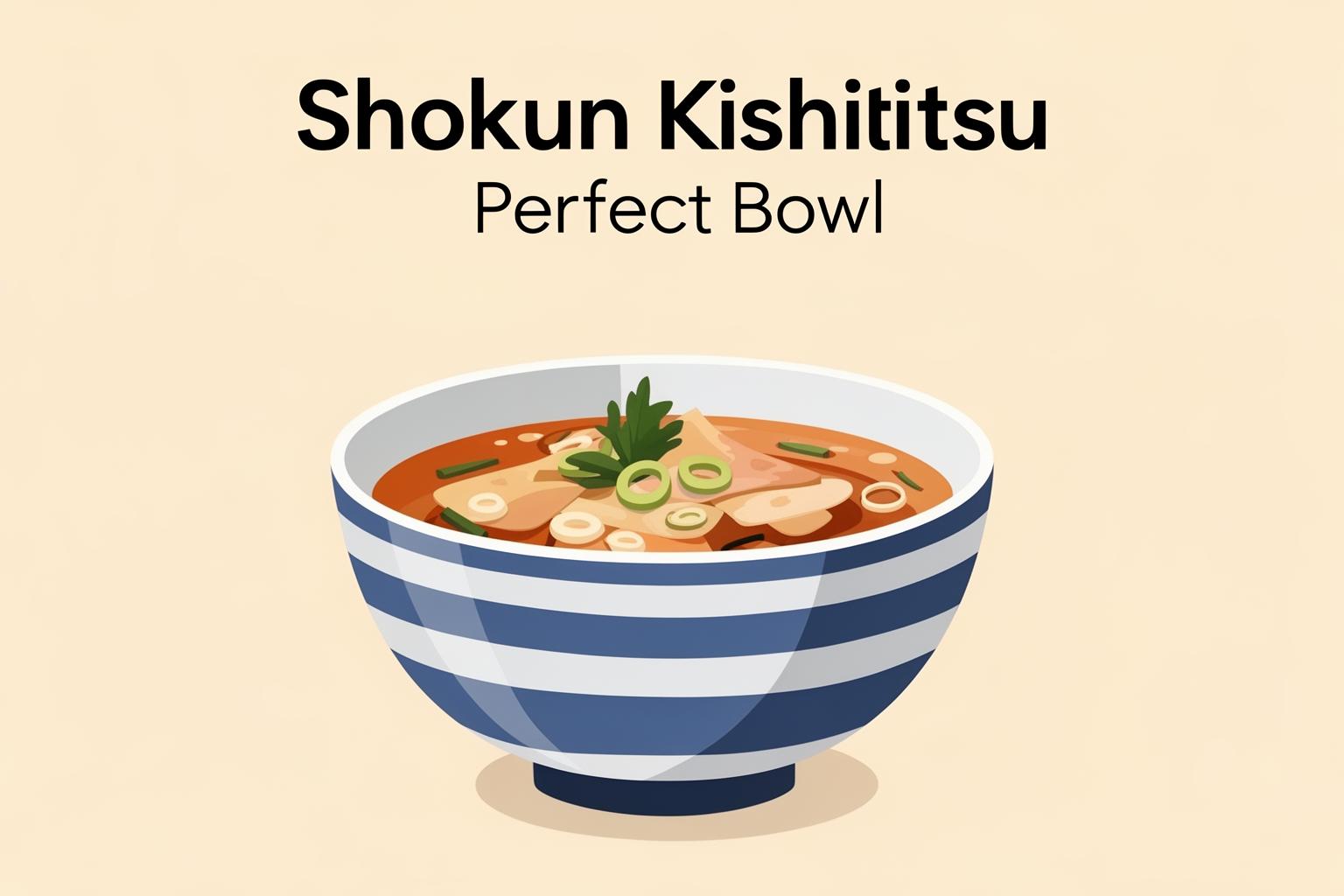
First, let’s clarify one thing: the instant ramen you relied on during college shares about as much with a master’s bowl as a child’s crayon drawing does with a Hokusai print. A true bowl of ramen is not a simple dish; it’s a complex ecosystem of carefully crafted elements, each perfected individually before being combined in a brief, harmonious union. The ramen master, the shokunin, is more than just a cook; he is the designer of this delicate balance, and his entire reputation depends on getting it right, every single time.
The Broth (Dashi & Tare): A Symphony Years in the Making
The heart of any ramen is its broth. This is where the master’s philosophy shines most profoundly. It’s a liquid autobiography, often simmered for days, built from layers of flavor that can take a lifetime to master. It usually consists of two key components: the dashi and the tare.
The dashi is the base stock. For a rich, opaque tonkotsu ramen, this involves painstakingly simmering pork bones for twelve, eighteen, sometimes even forty-eight hours. The master maintains an ongoing dialogue with the pot, skimming impurities, controlling the heat with obsessive precision, coaxing every last bit of collagen and umami from the bones until the broth becomes a creamy, emulsified elixir. For clearer shio (salt) or shoyu (soy sauce) ramen, the dashi might be a more delicate blend of chicken carcasses, kombu (kelp), dried fish, and shiitake mushrooms. The aim is clarity and depth—a deceptively simple-looking liquid that carries profound complexity.
Next comes the tare, the seasoning concentrate ladled into the empty bowl before the broth is poured in. This is the master’s secret signature—his unique fingerprint on every bowl. It might be a blend of several soy sauces aged for varying lengths, a mixture of mirin, sake, and secret spices, or a carefully balanced salt solution infused with oceanic notes. The tare determines the ramen’s primary flavor profile—salty, savory, or sweet—and its recipe is often a closely guarded secret handed down through generations. A master may spend decades adjusting his tare by fractions of a gram to achieve perfect balance.
The Noodles (Men): The Al Dente Ideal
If the broth is the soul, the noodles are the heart. A ramen shokunin doesn’t settle for just any noodles. Many revered masters make their own, or work obsessively with trusted suppliers to create bespoke noodles designed specifically for their broth. The variables are endless: the type of wheat flour, the percentage of water, and most importantly, the amount of kansui. This alkaline solution gives ramen noodles their characteristic yellow color, springy texture, and distinctive aroma. It’s a chemical reaction—a piece of edible science.
The shape and thickness are also crucial. A thick, hearty miso broth from Sapporo calls for thick, wavy noodles that cling to the robust soup. A delicate, lighter Hakata-style tonkotsu works best with thin, straight noodles that cook quickly. The master understands this relationship intimately. The goal is always a perfect al dente bite—a slight resistance signaling freshness and precise cooking. This perfection, however, is fleeting. From the moment the noodles meet the hot broth, the clock starts. They are at their peak for only a few precious minutes.
The Toppings (Gu): A Supporting Cast of Stars
Every component in the bowl serves a purpose; nothing is superfluous. The toppings, or gu, are essential players, each prepared with the same meticulous care as the broth and noodles.
Chashu, or braised pork, exemplifies this. Often cut from pork belly or shoulder, it is rolled, tied, and simmered for hours in a sweet and savory mixture until tender enough to almost dissolve on the tongue. The master slices it to a precise thickness—too thick and it overwhelms, too thin and it falls apart.
Then there’s the ajitama, the marinated soft-boiled egg. Crafting the perfect ajitama is an art in itself. The egg is boiled for an exact duration, often timed to the second, ensuring the white is firm while the yolk remains a molten, custard-like jam. It’s then peeled and steeped in marinade, absorbing flavor without becoming rubbery. When sliced open, the vibrant orange yolk oozes into the broth, adding a layer of creamy richness. It’s a small detail, but in the world of the shokunin, no detail is too small.
Enter the Shokunin: The Master Behind the Counter
Grasping the components is one thing; understanding the person who crafts them is another. The ramen master embodies the essence of shokunin kishitsu. This spirit is defined by several core principles: a social duty to work diligently for the common good, a profound pride and responsibility in one’s craft, and an unwavering pursuit of mastery—not for fame or fortune, but for its own sake. The true shokunin competes with only one rival: himself from yesterday.
The Pursuit of Perfection
The shokunin is not an innovator in the disruptive, Silicon Valley sense. Instead, they are a perfecter. Their journey follows kaizen, or continuous improvement. The aim is not to invent a wildly new ramen variety each month, but to craft the perfect bowl of shoyu ramen and, the next day, make it just slightly better. This might involve changing the soy sauce brand, adjusting the broth’s simmer time by five minutes, or tweaking the noodle hydration by a fraction of a percent. It is a gradual, patient, often invisible refinement process.
Observe a ramen master at work. There’s no frantic energy or wasted motion. Every movement is precise, economical, shaped by thousands of hours of repetition. The flick of the wrist to drain noodles, the careful arrangement of toppings with chopsticks, the graceful pour of broth—each is a form of meditation, a physical expression of intense focus. The master is fully present, completely immersed in the task. His small kitchen is not merely a workplace; it is a dojo, a sacred space where craft is perfected and the spirit refined.
The Silent Theater of the Ramen-ya
This deep concentration creates a distinctive atmosphere in the ramen shop, or ramen-ya. Many of the finest shops are minimalist, practical spaces—no loud music, no distracting decor. The focus is singular: the ramen. The counter serves as a stage, putting the master front and center. He is the performer; customers are the audience. Yet, it is an interactive performance.
The master often remains a quiet figure. While he might greet you with a gruff but sincere “Irasshaimase!” (Welcome!), small talk is rare. His communication happens through the bowl. He observes everything: how you eat, how you respond. The energy is one of mutual respect. He has invested his life’s work into this bowl, and you, the customer, are there to honor it. This shared understanding forms the unspoken contract of the ramen-ya, and your part is to eat with equal focus.
The Slurp: Your Role in the Ritual

This brings us back to the slurp. In this theater of craftsmanship, slurping your noodles is not merely acceptable; it is essential. It serves as your primary form of communication, your way of engaging in the ritual. It fulfills both a practical and deeply cultural function.
More Than Just Manners: A Dialogue with the Chef
Practically speaking, slurping serves two roles. First, ramen is served piping hot. Slurping quickly pulls air into your mouth along with the noodles and broth, cooling them just enough to prevent a burned tongue while preserving the dish’s vital heat. Second, and more crucial for flavor, this aeration atomizes the broth. It disperses a fine mist of the complex, aromatic liquid across your palate and into your nasal cavity, where your sense of smell greatly enhances your sense of taste. Slurping literally improves the ramen’s flavor, allowing you to detect subtle notes in the broth that might otherwise go unnoticed.
Culturally, the slurp acts as your applause. It is a clear, audible message to the master that you are enjoying his creation enthusiastically. In a culture where explicit verbal praise can sometimes seem insincere or disruptive, the slurp is an honest, instinctive expression of appreciation. It communicates, “This is delicious. I am fully immersed in this experience. Thank you.” The chorus of slurps in a ramen shop is the sound of satisfied customers offering the highest respect to the craftsman who is likely just a few feet away, listening.
The Ticking Clock: Respecting the Noodle’s Peak
There is another dimension of respect inherent in slurping: speed. As noted, ramen noodles reach their absolute peak texture for only a brief moment. Allowing them to sit in the hot broth causes them to become soft, bloated, and lifeless—an insult to the shokunin. The chef has perfectly timed everything—the noodles’ cooking, the broth’s temperature, the bowl’s assembly—to present it to you at its finest. Your responsibility is to consume it with that same sense of urgency.
Eating quickly, aided by slurping, shows that you understand and honor this fleeting aspect of the dish. You pay tribute to the craft by experiencing it precisely as the artist intended. In a great ramen-ya, you will see customers put their phones away, lean over their bowls, and focus solely on the meal until it’s finished. It’s not about being antisocial; it’s about being present and respectful—a moment of communion between eater and maker, united by the bowl.
Shokunin Kishitsu Beyond the Bowl
Once you recognize the shokunin kishitsu in a ramen master, you begin to notice it everywhere throughout Japan. It serves as a foundational pillar of the culture, a quiet force driving the country’s reputation for quality, precision, and artistry. It embodies a worldview that values depth over breadth, and mastery over mediocrity.
The Spirit in Everything
You observe it in the sushi chef who may train for three years perfecting the rice before ever being allowed to touch a piece of fish. You find it in the bladesmith in Sakai, whose family has forged knives for centuries, folding steel repeatedly to create blades of unparalleled sharpness and beauty. You see it in the temple carpenter who constructs vast, complex wooden joints that interlock flawlessly without a single nail or screw.
This spirit transcends traditional crafts. It appears in the Ginza bartender, whose precise and elegant movements while stirring a cocktail form a kind of choreography, and who hand-carves a perfect sphere of ice that melts slowly, chilling the drink with minimal dilution. You see it in the Shinkansen station master, whose crisp and exact pointing gestures are part of a system that ensures the world’s most punctual trains run on time, to the very second. It is a shared belief that any job, no matter how humble it may seem, holds the opportunity for mastery if approached with the right spirit.
A Modern Challenge
In a globalized world of fast fashion, disposable goods, and the gig economy, the shokunin path is far from easy. It requires immense patience and a willingness to delay gratification in a culture increasingly obsessed with instant results. It demands singular focus amid endless distractions. The pressure to scale, franchise, automate, and cut costs is enormous. Many fear that this devotion to slow, deliberate perfection is becoming a thing of the past.
Yet, the spirit endures. It may be evolving, but it has not vanished. It lives on in small workshops, family-run restaurants, and specialist boutiques that form the backbone of Japan’s aesthetic and culinary identity. It remains a powerful counterpoint to mass production, a reminder that the human touch, refined by years of dedicated practice, can create objects of profound value and beauty. It is the reason a simple bowl of noodles can become an experience that lingers for a lifetime.
So next time you find yourself before a bowl of ramen, take a moment. Observe the glistening broth, the perfectly arranged toppings, the inviting nest of noodles. See it not merely as food, but as the culmination of a philosophy. It is the product of countless hours of labor, relentless refinement, and a deeply ingrained cultural spirit. Then pick up your chopsticks, lean over the bowl, and slurp. Slurp loudly and without shame. It’s not just noise—it’s the final, essential note in a symphony of craftsmanship, a heartfelt thank you to the master who made it possible.