Whenever I’m deep in the electric canyons of Shinjuku or navigating the human tides at Shibuya Crossing, there’s an undeniable thrill. It’s the pulse of modern Japan, a place of immense energy and ambition. But after a while, another feeling begins to surface—a subtle but persistent hum of exhaustion, the kind that settles deep in your bones. It’s the background radiation of hyper-urban life. On a trip a few years ago, a Japanese friend noticed this in me. She didn’t suggest a spa day or a shopping spree. Instead, she said, “You need some Shinrin-yoku.”
Shinrin-yoku. The term translates literally as “forest bathing.” My first thought was of some rustic hot spring hidden in the woods. But it’s nothing of the sort. It isn’t hiking, nor is it exercise in the traditional sense. There’s no destination to conquer, no peak to summit. It’s simply the act of being in a forest, of immersing yourself in its atmosphere through all five senses. It’s a slow, deliberate process of connection. Now, you might be thinking this sounds like an ancient Shinto ritual or a practice passed down from Zen masters through the centuries. It feels timeless, deeply intertwined with Japan’s well-documented reverence for nature. But here is the fascinating truth: Shinrin-yoku is not ancient at all. It’s a thoroughly modern invention, a piece of public health policy born from a national crisis in the 1980s. It’s the story of how a government, faced with a population on the verge of collapse, looked to its most abundant natural resource not for timber or fuel, but for healing, and then set out to prove its effects with science.
The balance between time-honored nature therapy and modern stress management is further exemplified by the calming influence of Japanese whisky in unlocking a resilient shokunin mindset.
The Birth of a National Prescription: Burnout in 1980s Japan
To understand why “forest bathing” was created, you first need to grasp the intense pressure cooker environment that Japan was in during the 1980s. This period marked the height of the Bubble Economy, a time of unprecedented, almost surreal economic prosperity. The world watched in astonishment as Japan’s industries dominated global markets. Real estate prices in Tokyo reached such staggering heights that the grounds of the Imperial Palace were rumored to be worth more than all the land in California. It was an era of immense national pride and seemingly limitless opportunity. However, this economic miracle was built on a foundation of human sacrifice.
A Nation on the Edge
The typical salaried worker, or sarariman, faced relentless demands. Workdays were exhaustingly long, often followed by mandatory after-work drinking sessions with colleagues and clients known as nomikai, essential for nurturing relationships. Commutes were arduous, hours long in overcrowded trains. The boundary between corporate and personal life nearly disappeared. Loyalty to one’s company was critical, and the pressure to perform was overwhelming. Cities like Tokyo and Osaka expanded into vast concrete jungles, symbols of efficiency and economic power, yet increasingly disconnected from nature.
This high-pressure lifestyle began taking a severe toll. Stress-related illnesses soared. A new, frightening term emerged in the national vocabulary: karoshi, meaning “death from overwork.” Healthy workers in their prime were suddenly dying from heart attacks and strokes caused by extreme exhaustion and stress. This public health crisis revealed the dark underside of the economic boom. The nation was literally working itself to death. Both the government and medical professionals recognized the urgent need for intervention. A remedy was essential—an antidote to the toxic burnout culture consuming the workforce.
The Government Takes Action
Surprisingly, the remedy did not come from the Ministry of Health but from the Ministry of Agriculture, Forestry and Fisheries. In 1982, this agency faced its own challenges. Japan is heavily forested—nearly 70% of its landmass—but its domestic forestry industry was in decline. They had an abundant, underused resource and a population desperately needing a way to relax and reconnect beyond the office environment. Through inspired pragmatic thinking, they addressed both issues simultaneously.
That year, the ministry’s director, Akiyama Tomohide, coined the term “Shinrin-yoku.” It was memorable, evocative, and straightforward. Launched as a public campaign, it encouraged people to leave the cities and visit the forests nationwide to relax and boost well-being. The initial approach was largely intuitive, based on the simple idea that a walk in the woods is beneficial. It tapped into a deep cultural connection to nature, embedded in Shinto beliefs about spirits (kami) inhabiting trees and mountains, and reflected in aesthetic traditions like cherry blossom viewing (hanami). But to establish Shinrin-yoku as a credible form of preventive medicine, intuition alone was insufficient. Concrete data was needed.
From Slogan to Science: The Medicalization of the Forest
For Shinrin-yoku to gain legitimacy as a public health initiative, it needed to evolve from a poetic notion into a practice grounded in evidence-based medicine. The Japanese response was characteristically meticulous and systematic. Beginning in the 1990s and intensifying in the early 2000s, researchers nationwide undertook a focused effort to quantify the physiological and psychological effects of spending time in forests.
Proving the Intangible
How can the healing power of a forest be measured? Scientists like Dr. Qing Li, an immunologist at Nippon Medical School in Tokyo and a leading expert in this field, began crafting experiments. They took groups of people into forest settings and compared them with control groups placed in urban environments. Before, during, and after their visits, a wide range of biomarkers was measured. They collected blood samples, monitored blood pressure, gathered saliva to assess hormone levels, and used psychological questionnaires to evaluate mood and stress. Their findings were striking. The common sense feeling of well-being following a forest walk could be linked to specific, measurable changes within the human body.
The Science of Phytoncides and More
One of the most important discoveries involved phytoncides—antimicrobial volatile organic compounds released by trees and plants as a defense against insects and decay. While walking through a forest, we inhale these airborne substances. Dr. Li’s research showed that breathing in phytoncides significantly boosts both the number and activity of a key type of white blood cell known as Natural Killer (NK) cells. These NK cells play a crucial role in the immune system by combating tumors and viruses. A single day spent in the forest was demonstrated to enhance NK cell activity for more than a week. Essentially, the forest’s immune system strengthens ours.
However, the benefits extended beyond this. The studies consistently revealed other significant physiological changes:
- Stress Hormone Reduction: Levels of salivary cortisol, the main stress hormone indicator, were markedly lower in participants after spending time in the forest compared to those in urban areas.
- Autonomic Nervous System Regulation: Shinrin-yoku was found to shift nervous system activity away from the “fight or flight” response (sympathetic nervous system) toward a “rest and digest” state (parasympathetic nervous system). This was confirmed by heart rate variability measurements, which showed decreases in heart rate and blood pressure.
- Enhanced Mood and Mental Health: Psychological assessments reinforced what most intuitively feel. Participants experienced reductions in hostility, depression, and anxiety, alongside substantial increases in vigor and overall well-being after forest bathing.
The Certified Forest Therapy Base
With this growing scientific foundation, the concept was formalized. The government and affiliated organizations began officially designating “Forest Therapy Bases” and “Forest Therapy Roads” throughout the country. Presently, there are over 60 certified locations. A forest does not receive this certification merely for its beauty; it must be scientifically validated to provide relaxing and stress-relieving effects. Researchers evaluate potential sites by conducting experiments on volunteers to assess the local environment’s impact on cortisol levels, blood pressure, and other health markers. Factors such as air quality, accessibility, and specific tree species are all taken into account.
Moreover, these sites frequently have trained guides available. These are not typical nature guides who identify plants and wildlife; rather, they are certified therapists who help participants slow down and engage their senses mindfully. This official, science-supported framework transformed Shinrin-yoku from a simple marketing phrase into a credible preventive healthcare practice, sometimes even recommended by medical professionals.
The Practice of Shinrin-yoku: What It Actually Looks and Feels Like
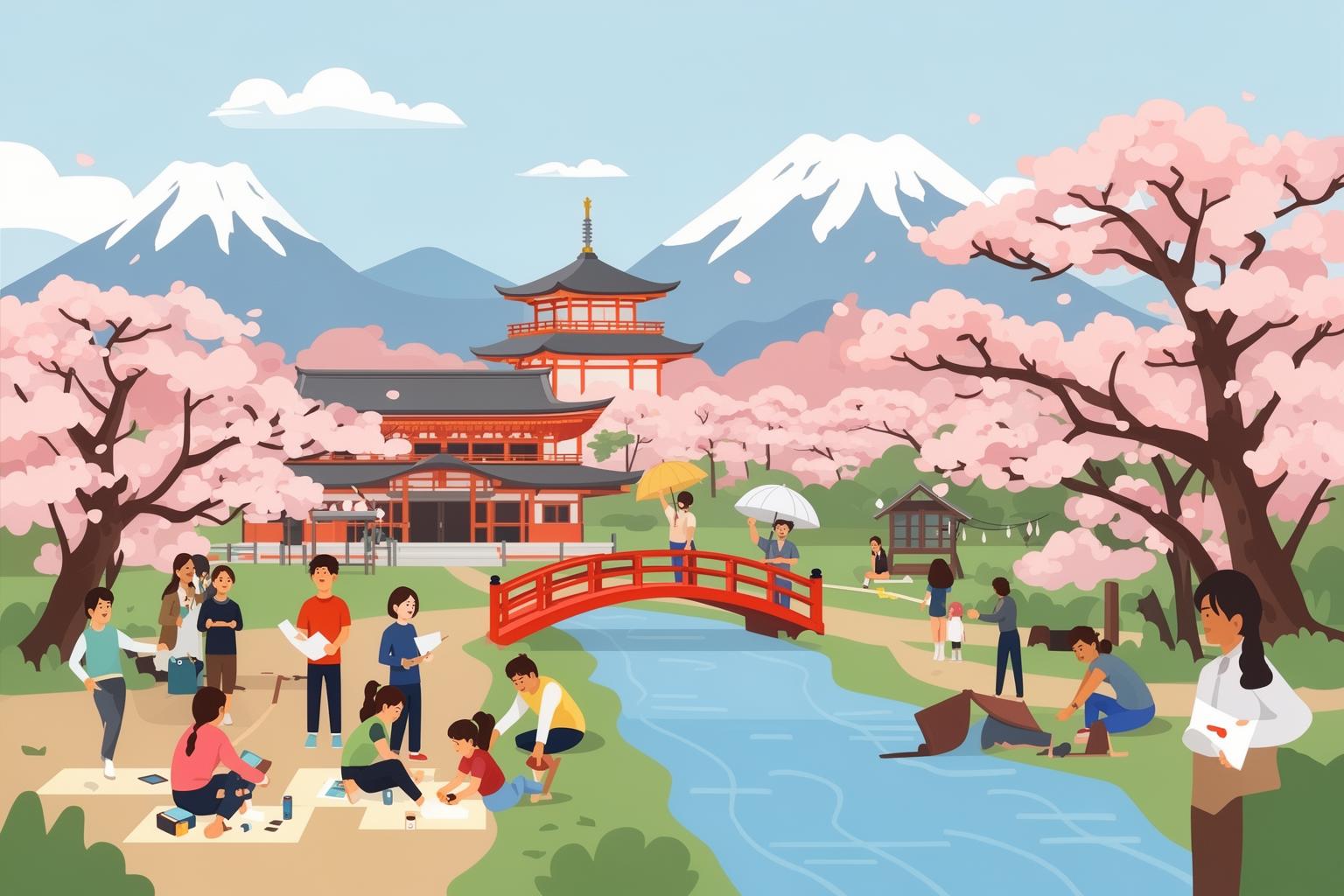
Grasping the history and science is one thing, but truly experiencing Shinrin-yoku is quite another. The first and most crucial point to understand is that this practice is the complete opposite of a workout. It’s about simply being, not doing. The aim isn’t to burn calories or reach a scenic lookout, but to soak in the forest’s atmosphere. It’s a practice of profound presence.
It’s Not a Hike
A typical guided Shinrin-yoku session may last between two and four hours, yet you might only travel a couple of kilometers. The pace is extremely slow, almost meditative. You are encouraged to wander without a fixed destination. You pause often, sometimes for extended periods. You might be invited to sit beside a stream, lean against a tree, or just stand still and observe. This intentional slowness is designed to disrupt our usual urban rhythm, encouraging the mind and body to slow down and harmonize with the gentle cadence of the natural world.
Engaging the Five Senses (and Beyond)
At the heart of the practice is the conscious engagement of all your senses. A guide might provide a series of “invitations” to assist you, but it’s equally possible to practice alone. It is a full-body experience that anchors you in the present moment.
Sight: You’re encouraged to look beyond the obvious. Rather than merely seeing “trees,” you notice the intricate bark patterns, how sunlight filters through the canopy—a phenomenon the Japanese call komorebi—and the many shades of green in moss covering a single rock.
Sound: You close your eyes and listen. Initially, you may hear only silence. Then, the soundscape gradually unfolds: the subtle rustling of leaves in the wind, a distant bird’s call, the gentle babble of a creek, the snap of a twig beneathfoot. It’s about tuning into nature’s sounds and appreciating the striking absence of human-made noise—no traffic, sirens, or notifications.
Smell: This may be the most direct connection to the forest’s chemistry. You take slow, mindful breaths, inhaling the rich, earthy scent of damp soil, the sharp, clean aroma of pine needles, and the woody fragrance of decaying leaves. You are literally breathing in phytoncides, the molecules that actively enhance your immune system.
Touch: You run your hand over the rugged bark of a century-old cedar. You dip your fingers into a cool, clear stream. You feel the soft, spongy cushion of moss. You may even be encouraged to remove your shoes and feel the earth beneath your feet directly—a practice called “earthing” or “grounding.”
Taste: Though less emphasized, some guided walks include a pause for tea made from local forest plants, such as Kuromoji (spicebush), allowing you to taste the forest itself.
The Guided Experience vs. Solo Practice
While a guided session offers a powerful introduction, helping you break free from ingrained habits of rushing and distraction, Shinrin-yoku has also become a deeply personal practice for many in Japan. It doesn’t require a certified forest. A simple, mindful visit to a city park with plenty of trees—like Tokyo’s Yoyogi Park or the Meiji Jingu forest—can serve as Shinrin-yoku. The essential element is the mindset. It’s about shifting from a goal-driven approach to a sensory-driven one. It’s about giving yourself permission to do nothing but absorb your surroundings, allowing the boundary between you and nature to soften.
Shinrin-yoku in Modern Japan: A Cultural Mainstay
What started as a government initiative has become deeply embedded in modern Japanese life. It has transformed into a widespread wellness practice and a common remedy for the pressures of the 21st century. Its success stems not only from scientific validation but also from its resonance with preexisting cultural values.
From Policy to Lifestyle
Shinrin-yoku introduced a new, scientific framework for a cultural ideal that has long existed. The Shinto tradition regards nature as sacred, believing that gods and spirits inhabit ancient trees, waterfalls, and mountains. This fosters a natural respect for the environment. Seasonal aesthetic customs such as appreciating cherry blossoms in spring (hanami) or the vivid hues of maple leaves in autumn (momijigari) serve as popular national pastimes. These involve quiet admiration rather than domination. Shinrin-yoku fits seamlessly within this cultural context, providing a scientific rationale for an intuitive attraction many Japanese already felt.
Today, its impact is visible everywhere. Corporations incorporate Shinrin-yoku into their wellness programs, organizing forest retreats to enhance employee morale and productivity. Physicians may recommend it to patients suffering from hypertension or chronic stress. The tourism sector has embraced it as well, with hot spring resorts (onsen) and traditional inns (ryokan) near forests offering Shinrin-yoku experiences as part of holistic healing packages.
The Commercial and Global Spread
Unsurprisingly, the practice has extended far beyond Japan’s borders. As the world faces growing issues of stress, burnout, and nature-deficit disorder, Shinrin-yoku has been welcomed as an effective remedy. Books on the subject have become international bestsellers. Certified “Forest Therapy” guides, trained in programs modeled after the Japanese approach, now work in countries across Europe, North America, and beyond.
Naturally, as with any cultural export, there are variations and occasional misunderstandings. In the West, Shinrin-yoku is sometimes mixed with mystical or New Age practices, which can dilute its specific, science-based Japanese context. Nonetheless, its core message endures: the universal and profound human need to connect with the natural world, and the understanding that this connection is essential, not a luxury, for our well-being.
Shinrin-yoku exemplifies Japan’s unique talent for blending tradition with innovation. It appears ancient yet offers a modern solution to contemporary challenges. It feels instinctive but is firmly grounded in rigorous science. What began as a clever public policy initiative aimed at addressing a national health crisis and utilizing a natural resource has grown into something far deeper: a simple yet powerful practice reminding us that the best medicine isn’t always found in a bottle, but can be discovered just beyond the city limits, among the trees.