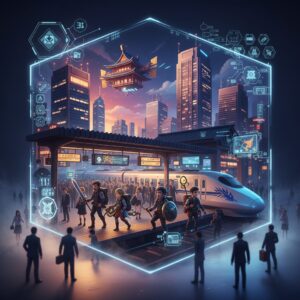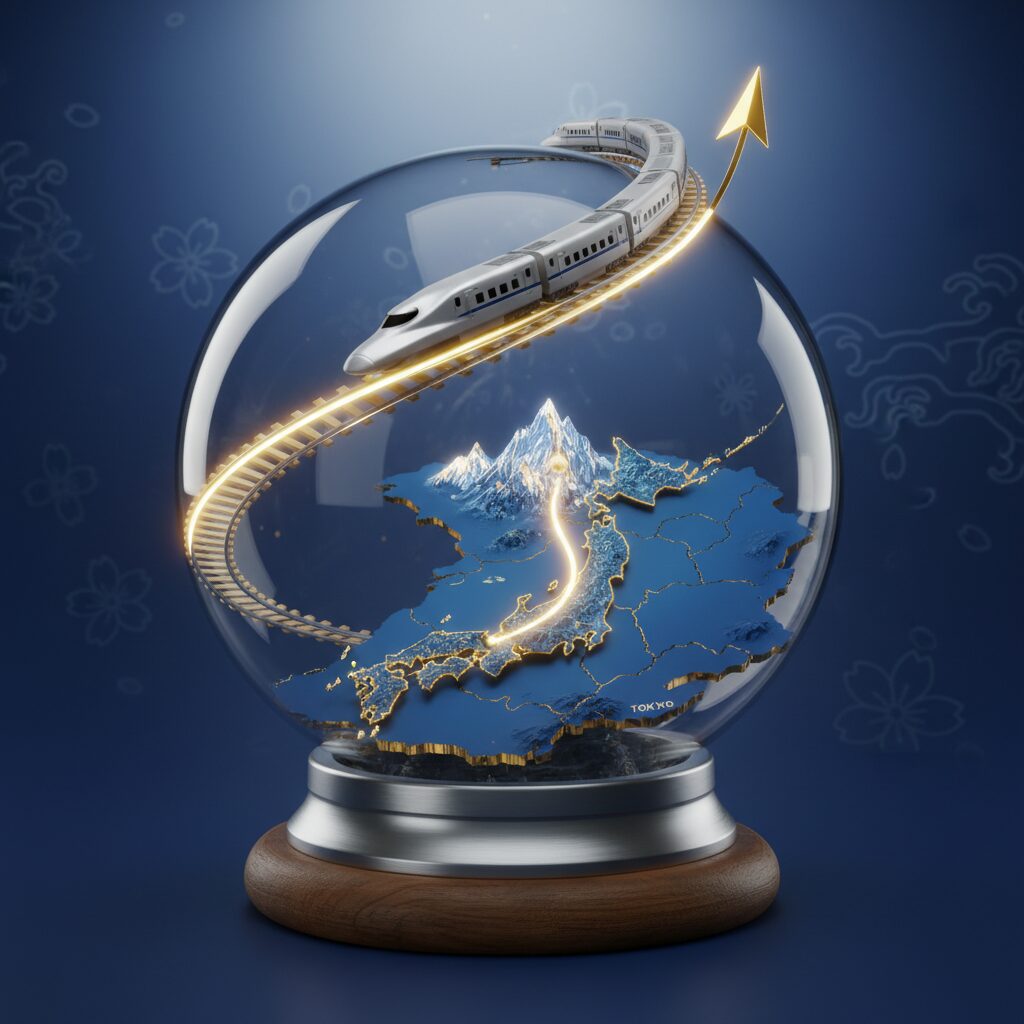
Yo, let’s get real for a sec. You’ve seen the videos. The sleek, white bullet train gliding past Mount Fuji, a perfect tear in the fabric of spacetime. You’ve heard the legends—the zero-second delays, the seats that magically turn around, the almost eerie silence inside. And when you finally get to Japan and hold that Shinkansen ticket in your hand, it hits you. This doesn’t feel like a ticket for a train. It feels… different. It feels like the key item you just got from an old man in a village who told you your real quest is about to begin. It has weight. It has mana. Holding it, you instinctively feel you’re not just about to travel; you’re about to level up. The Shinkansen isn’t just transportation, fam. It’s the tutorial level for the entire, sprawling, beautiful, and sometimes baffling open-world game that is modern Japan. It’s designed to teach you the core mechanics of how this society works before you even step into the wild. It’s a masterclass in precision, social contracts, and the art of moving millions of people without a single ounce of chaos. It’s the first quest, and acing it sets the vibe for your entire adventure. Before we dive into deciphering this real-life RPG, let’s pinpoint our starting location, the Grand Central Terminal of Japan’s questlines: Tokyo Station.
To truly understand this unique rhythm, you should explore the fascinating Shinkansen speed and station culture that defines Japan’s efficient travel experience.
The Quest Scroll: Deciphering the Ticket and the System
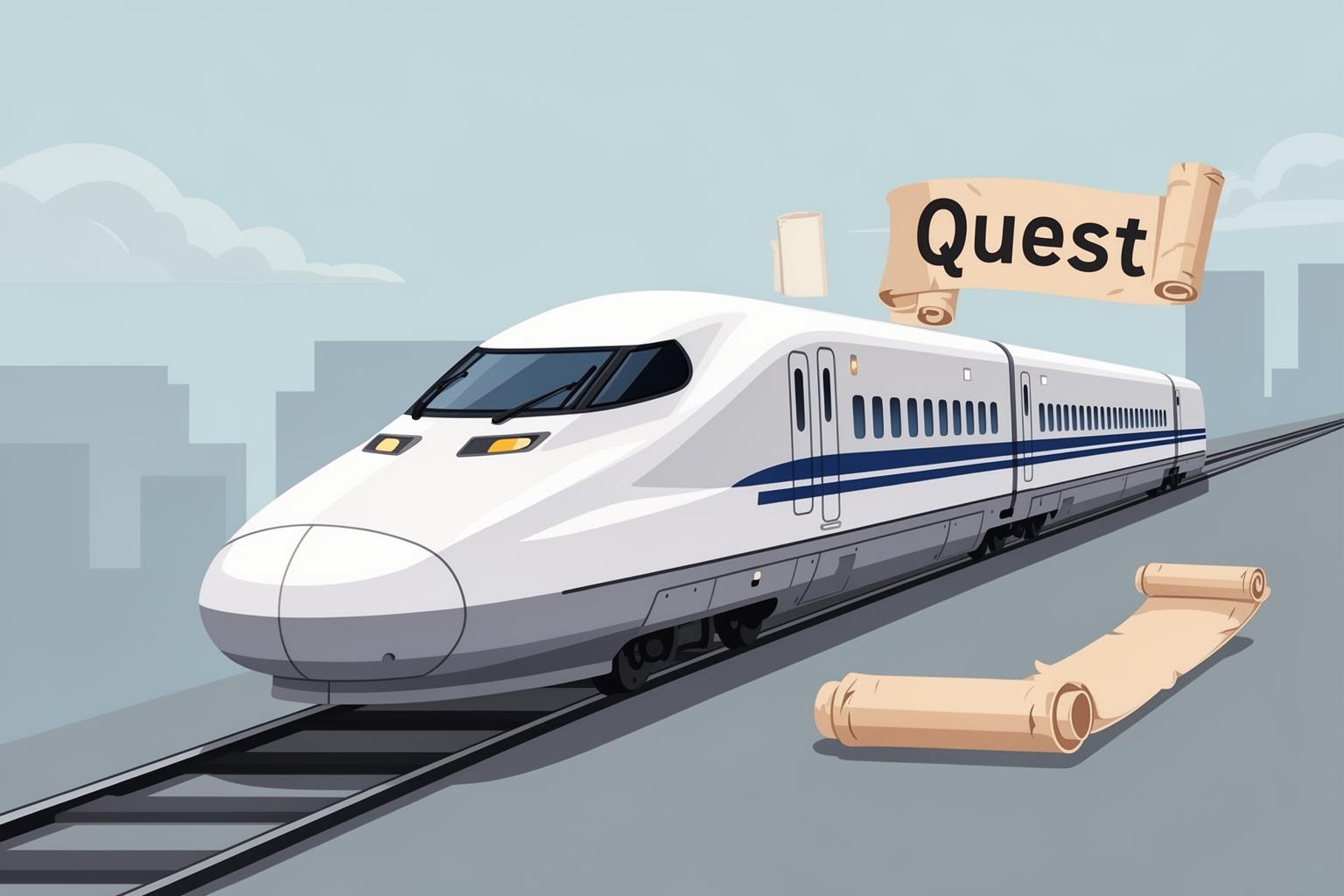
That small piece of cardstock in your hand is the Rosetta Stone of Japanese efficiency. At first glance, it looks like just a jumble of Kanji, numbers, and times. But take a closer look. This isn’t your typical casual ‘platform 9-ish, around 10 a.m.’ type of thing. This is a sacred contract. The departure time isn’t a suggestion; it’s a prophecy. The arrival time isn’t an estimate; it’s a promise. Your car number and seat number aren’t merely coordinates; they are your precise, preordained place in a high-speed ballet. It’s the very first lesson the system teaches you: the system rules.
More Than Just a QR Code
In an era dominated by digital everything, there’s a certain retro-futuristic charm to the physical Shinkansen ticket. It feels tangible. When you insert it into the ticket gate, there’s a satisfying thwump-click as it’s briefly swallowed, stamped, and returned to you. This physical interaction is your first handshake with the system. It’s a concrete confirmation that you’ve been accepted, that you are part of the flow. The dense information printed on it—train name (like ‘Nozomi’ or ‘Hikari,’ each with its own stats and speed), departure track, non-smoking or smoking car (a relic from a past era but still present), and the exact minute your journey starts and ends—reflects a culture dedicated to eliminating ambiguity. Chaos is the enemy. Confusion is friction. Your ticket is your shield against both. The reason for this information overload isn’t to overwhelm you; it’s to empower you. It’s the game presenting you with a detailed quest log. It’s a quiet declaration that if you follow these directions, your journey will be flawless. It’s the system reassuring you, ‘Trust me. I’ve got this.’ This deep-rooted need for predictability is woven into the fabric of Japanese society, from school year schedules planned a year ahead to TV guides followed with almost religious devotion. The Shinkansen ticket is simply a pocket-sized symbol of this national ethos.
Reserved vs. Non-Reserved: Choosing Your Difficulty Setting
When purchasing your ticket, you’re given a choice: shitei-seki (reserved seat) or jiyuu-seki (non-reserved seat). This is your first major in-game decision, brilliantly reflecting a cultural dichotomy. Selecting a reserved seat is like opting to play in ‘Story Mode.’ Your seat is guaranteed. You can stroll onto the platform two minutes before departure, find your car, settle into your seat, and enjoy blissful certainty. It costs a bit more, but it buys you peace of mind. This is the preferred option for most Japanese travelers, especially during peak seasons. Planning equals comfort. Certainty is a luxury well worth paying for.
Then there’s the non-reserved option. This is ‘Normal Mode,’ or during Golden Week, ‘Hard Mode.’ You have a ticket to ride the train, but your seat isn’t guaranteed. You must queue in a designated line on the platform, and it’s first-come, first-served. You might get a window seat, a middle seat, or you may have to stand for part of the trip. It’s a gamble. This option suits the spontaneous, the budget-conscious, or those making last-minute plans. What’s fascinating is how orderly this gamble remains. The queues for non-reserved cars are just as neat and respected as any other. People don’t shove. They don’t cut. They accept the rules of the game. This choice between absolute certainty and managed spontaneity is a core part of navigating Japan. You can book a well-known restaurant six months in advance or line up for two hours at a popular ramen spot. The system accommodates both playstyles, as long as you play by the rules.
The Japan Rail Pass: The Legendary All-Access Amulet
For foreign travelers, there’s a legendary item: the Japan Rail Pass. It’s like discovering an amulet granting unlimited fast travel. For a fixed price, you gain near-limitless access to most of the Japan Railways network, including many Shinkansen lines. On paper, it’s an incredible deal, a cheat code for exploring the country. But like any powerful magical item, it comes with its own set of rules and side quests. You have to buy it outside Japan. You must activate it in person at a designated office by presenting your passport and exchange order. You must decide when to begin its 7, 14, or 21-day validity, a strategic choice that can make or break your itinerary. The Pass itself is a charming, old-school booklet that feels like a prop from a period drama. Having it stamped by a station attendant at a manned gate, rather than passing through automated gates, becomes a small daily ritual. It’s a constant reminder that you are a visitor, a guest playing with a special set of privileges. The JR Pass stands as a fascinating piece of cultural diplomacy. It was created to make Japan more accessible and encourage tourists to venture beyond the well-worn paths of Tokyo and Kyoto. It’s a deliberate, state-sanctioned invitation to explore the entire game map, a sign that says, ‘We built this incredible world. Please, come see it all.’
The Starting Town: Navigating the Cathedral of Transit
Before you even catch sight of the train, you must first conquer its domain: the station. Referring to places like Tokyo Station, Shinjuku Station, or Shin-Osaka Station as mere ‘train stations’ is like calling the Amazon a ‘river.’ These are far more than simple transit points; they are vast, multi-level ecosystems. They serve as the central hubs of the Japan RPG. They function as dungeons and bazaars, cities in their own right, buzzing with a controlled energy that is both thrilling and intimidating. This is where you gather potions, upgrade your equipment, and receive your final briefing before the mission starts. The immense scale can be daunting, an overload of signs, sounds, and rushing crowds. Yet beneath the chaos lies a profound, enduring logic. The signage is a masterclass in user interface design, with colors, numbers, and English translations all harmonizing to guide you seamlessly. The Shinkansen platforms are almost always separated, requiring passage through a second set of ticket gates, creating a ‘station within a station.’ This is by design. It separates the high-speed, long-distance heroes from the local-line NPCs, ensuring smooth management of traffic flow. It’s an ingenious piece of level design, subtly steering you toward your goal.
The Platform Ritual: Syncing with the Hive Mind
After passing through the Shinkansen gates, the atmosphere shifts. The air becomes calmer, more serious. You’ve entered the final staging area. You locate your track number and proceed to the platform. Here, you witness one of the most iconic, silent rituals of Japanese society. Painted on the platform floor are precise markings showing where the doors of each car will stop. In front of those markings, people stand in perfectly straight, single-file lines. There are no velvet ropes. No guards shouting for order. It simply happens. This is your first real-time group quest, and the objective is simple: conform. You find the marking for your car number, find the end of the line, and stand there. This is social contract in its purest form. It’s a collective, unconscious agreement to value order over personal impulse. The underlying principle is `wa` (和), or group harmony. The goal is to make boarding a train filled with hundreds of people as smooth and stress-free as possible. Another concept at play is `meiwaku` (迷惑), meaning the act of bothering or inconveniencing others. Pushing forward, making noise, or taking up too much space would be peak `meiwaku`. By simply standing in line, you show respect for everyone else’s journey. You synchronize with the hive mind, and it feels unexpectedly calming. You’re no longer just an individual; you become a part of a perfectly functioning machine.
The 7-Minute Miracle: The NPC Cleaning Crew
If timed right, you might witness a legendary side quest known as the ‘7-Minute Miracle.’ As your inbound train arrives and passengers disembark, a crew of cleaners in crisp uniforms, often pink, lines the platform. They bow to the train as it pulls in. The moment the last passenger steps off, they board with military precision. In about seven minutes, they sweep through the entire train, cleaning every surface, collecting trash, checking seat pockets, wiping down tray tables, and even manually turning every seat to face the direction of travel. When finished, they exit the train, line up on the platform again, and bow deeply to the waiting passengers. This is more than cleaning. It’s a performance. It’s a demonstration of `omotenashi` (おもてなし), the unique Japanese spirit of hospitality anticipating the guest’s needs. It also showcases the `shokunin` (職人) spirit, the pride and mastery of a craftsman in their work. These are not just ‘cleaners’; they are the ‘Theatrical Cleaning Troupe of the Shinkansen.’ Watching them reveals a fundamental truth about Japan: any job, no matter how humble, can be a stage for perfection and dignity. It’s a world-building detail that reveals so much about the game’s core values even before you’ve pressed start.
Equipping Your Character: The Art of the Ekiben
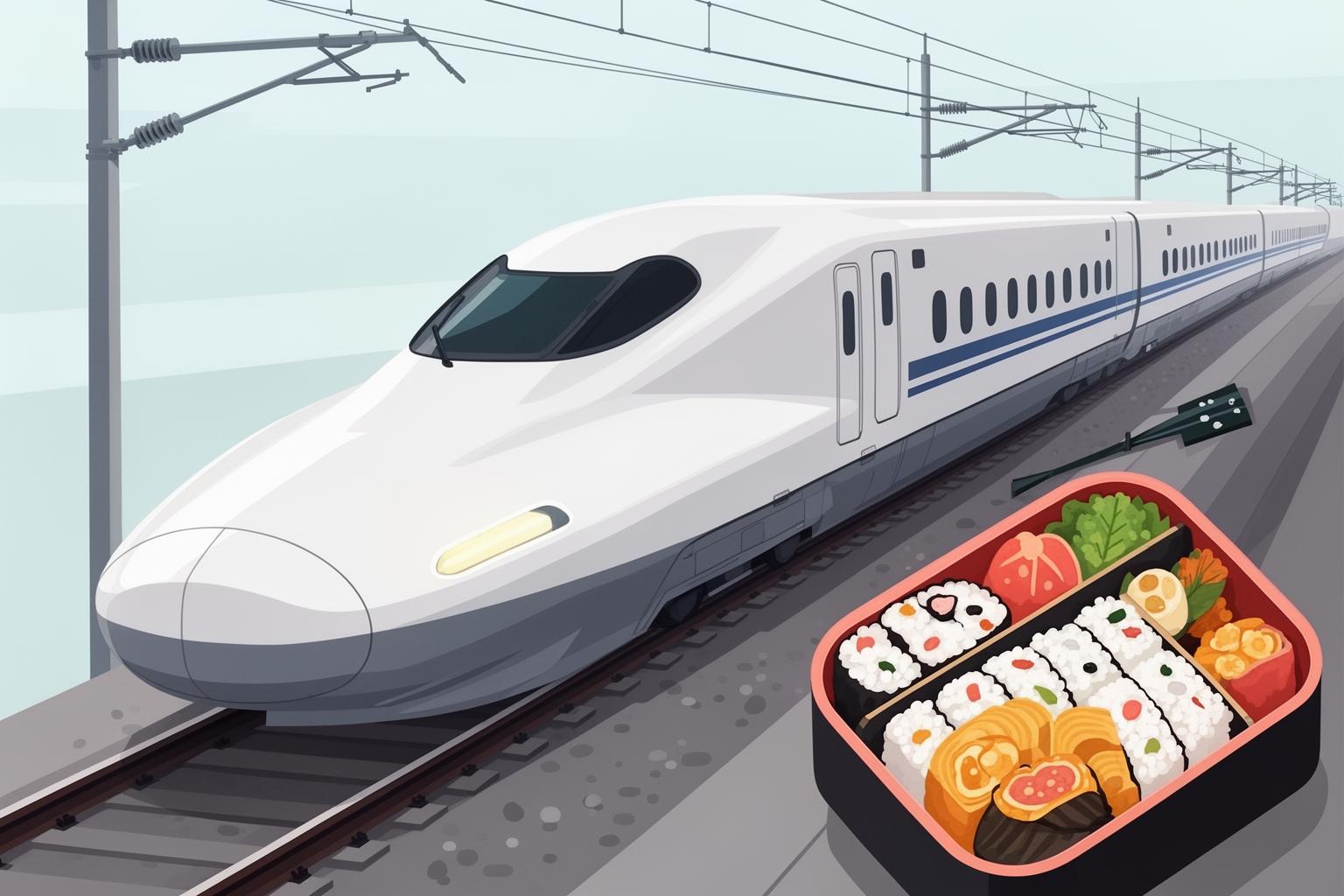
No RPG quest is complete without the right inventory. Before boarding the Shinkansen, a key part of the ritual is to gather provisions for the journey. And in Japan, this doesn’t mean settling for a sad, soggy sandwich. It means embracing the rich culture of the `ekiben` (駅弁), or station bento box. The `ekiben` is more than just food; it’s a collectible item, a portable work of art, and a delicious lesson in history all rolled into one. Every region, and often every major station, offers its own unique `ekiben`, highlighting local specialties and ingredients. The sheer variety is astonishing. You enter an `ekiben-ya` (bento shop) inside the station and are greeted by a wall of vibrant boxes, each one a gateway to a different corner of the country.
The Ultimate Potion: More Than Just a Lunchbox
Selecting an `ekiben` is a quest on its own. Will you choose the Masu no Sushi from Toyama, with its beautifully pressed trout over rice, wrapped in bamboo leaves? Or the Gyu-tan Bento from Sendai, featuring grilled beef tongue, a local delicacy? Maybe the whimsical self-heating bento, where pulling a string triggers a chemical reaction that steams your meal perfectly right at your seat. The packaging is often just as much part of the experience as the food itself. Some boxes mimic the shape of the Shinkansen, while others come in exquisite ceramic pots you can keep as keepsakes. The `ekiben` elevates eating on the train from a simple necessity to a vital part of the travel experience. It’s a celebration of regional diversity in a country that can often feel highly centralized. As the Shinkansen physically shortens the distance between cities, the `ekiben` lets you savor their distinct identities. It’s your primary health potion for the journey, restoring your energy while granting you a boost in cultural appreciation. Every bite is an exploration, a taste of the destination or region you’re passing through. It’s a subtle game-changer that enhances the entire trip.
The Convenience Store (Konbini) Arsenal
If the `ekiben` shop is the specialty boutique for culinary adventurers, the station `konbini` (convenience store) is the all-purpose item shop. And make no mistake—a Japanese `konbini` is worlds apart from similar stores elsewhere. It’s a treasure trove of high-quality, delicious, and sometimes surprisingly innovative goods. This is where you complete your loadout. You pick up a can of Suntory Highball or a Strong Zero (a potent canned cocktail that has become a cultural milestone). You grab an `onigiri` (rice ball) with a clever, multi-layer packaging system that keeps the seaweed crisp until the moment you eat it. You choose a bottle of unsweetened green tea, a hot can of BOSS coffee from a heated display, or a quirky-but-tasty seasonal soda. The `konbini` is a cornerstone of contemporary Japanese life, a reliable beacon open 24/7. Its presence in the station is a safety net, ensuring that no matter how rushed you are, you can board the Shinkansen well-fed, well-caffeinated, and well-hydrated. It’s a tribute to a culture that has mastered the art of convenient quality. The `konbini` is the dependable NPC vendor who always stocks exactly what you need, just when you need it.
The Journey Itself: The Cutscene You Can’t Skip
You’ve done it. You’ve deciphered the ticket, navigated the station, queued with zen-like patience, and gathered your supplies. You settle into your seat, and with a barely noticeable hum, the train begins to move. The acceleration is so smooth and fluid that your inner ear barely senses it. The station fades away, and the journey begins. What follows is more than just a ride; it’s a living, moving diorama of Japan. It’s the essential cutscene that links one part of the game world to the next, filled with environmental storytelling and subtle lessons in social dynamics.
The Silent Sanctuary
The first thing you notice inside the carriage is the sound—or rather, the absence of it. There are no loud phone conversations, no tinny music leaking from headphones, no boisterous groups yelling across the aisle. The Shinkansen is a sanctuary of silence, embodying the core concept of `meiwaku`. Speaking loudly on your phone is seen as the ultimate public space taboo—an intrusion on the collective peace. Even when the train conductor enters or leaves the carriage, they turn and bow to the passengers, a gesture of respect for your time and space. Announcements are soft and melodic, and the iconic ‘ding-dong’ chime preceding them has even been sampled by musicians. This quietude isn’t the result of strict rules; there are no ‘Quiet Car’ signs everywhere. Instead, it’s upheld by a powerful, invisible force: social pressure. Everyone collectively agrees to maintain this calm atmosphere. As a foreigner, you feel this pressure immediately, whispering, switching your phone to silent, and becoming keenly aware of the noise you make. The train subtly teaches mindfulness, encouraging you to consider your impact on the shared environment. It’s a powerful, immersive lesson in social harmony.
The Magic Window: A Perfectly Framed World
Then there’s the view. The Shinkansen window is like a carefully curated cinema screen. As you pull away from Tokyo’s urban sprawl, the landscape shifts with cinematic grace. Dense clusters of apartments give way to tidy suburban homes, which then dissolve into impossibly green rice paddies dotted with traditional farmhouses. Mountains, once distant and hazy, loom larger and sharper. On the Tokyo-Kyoto line, the sudden, breathtaking appearance of Mount Fuji becomes a main character moment, a scripted event prompting everyone to reach for their cameras. Thanks to meticulous track maintenance and advanced engineering, the ride is so incredibly stable that it feels less like a train journey and more like watching a high-definition documentary. This stability reflects `monozukuri` (ものづくり)—the Japanese spirit of craftsmanship and relentless pursuit of manufacturing perfection. The aim isn’t just to build a fast train but to create a flawless travel experience. The seamless glide, gentle sway on curves, and absence of bumps are all intentional, the result of decades of `kaizen` (改善), or continuous improvement. The journey becomes a form of meditation, a chance to watch Japan’s very soul—the delicate balance between its hyper-modern cities and timeless countryside—scroll past your window.
The God-Tier Punctuality
At the heart of the Shinkansen legend is its near-supernatural punctuality. Average delays over a full year are measured in seconds, not minutes. To someone from a country where a 20-minute delay is considered ‘on time,’ this is astonishing. It’s so reliable that people in Japan set their watches by it. But why such an obsession with punctuality? It’s not just about efficiency—it’s a matter of national pride and a fundamental promise that supports the entire society. Japan’s economic and social infrastructure rests on the assumption that events happen exactly when expected. A business meeting is scheduled for 10:00, not ‘around 10.’ A delivery promised between 14:00 and 16:00 will arrive as planned. The Shinkansen stands as the most visible and powerful symbol of this national promise. Thus, a delay is not merely an inconvenience; it’s a crack in the system, a failure to uphold that commitment. This is why, if a train is delayed even a minute, the conductor offers a sincere, heartfelt apology over the intercom. It’s an admission of failure and is taken with utmost seriousness. Riding the Shinkansen lets you experience what it’s like to live in a world where you can completely trust the system—a feeling both incredibly reassuring and, in its own way, slightly intimidating in its perfection.
Reaching the Next Level: Arrival and a New World
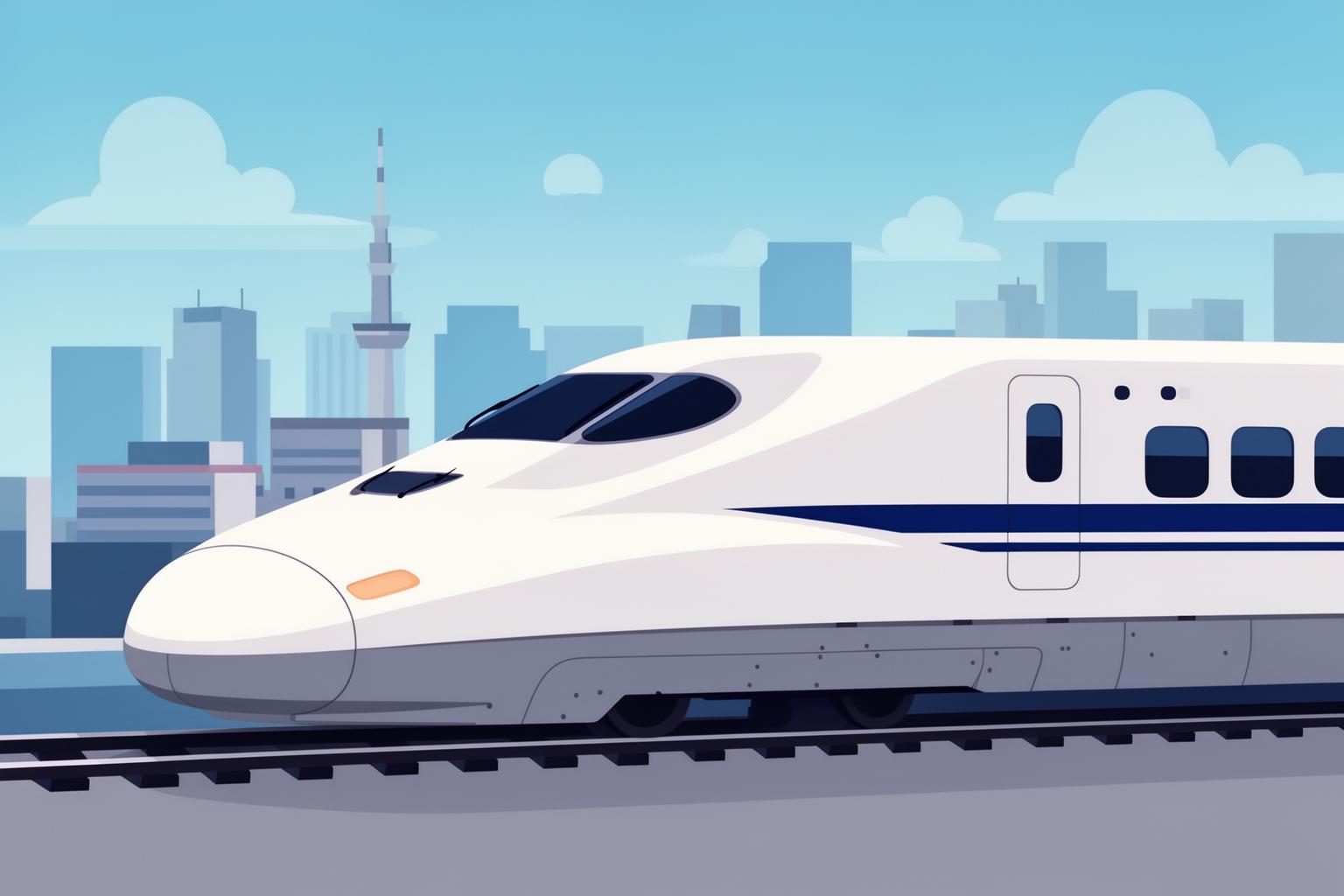
The journey concludes as gracefully as it began. There’s a gentle slowing down, a final melodic chime, and the train glides into the station, stopping with pinpoint accuracy exactly where the platform markings indicated. The doors hiss open in perfect sync with those on the platform screen. The ballet is complete. You gather your belongings, stepping out of the climate-controlled, silent sanctuary into the vibrant energy of a new city—Kyoto, Osaka, Hiroshima. You have been transported not only geographically but also culturally.
The Seamless Transition
Disembarking is as orderly as boarding. People wait patiently for the aisles to clear, collect their luggage, and exit in a calm, unhurried flow. There is no frantic rush for the doors. The system has delivered you and now gently releases you into the next stage of the journey. Walking through the station, you feel transformed. You’ve just spent the last few hours immersed in a concentrated dose of Japanese culture. You’ve been recalibrated. The Shinkansen experience has rewired your mindset, however subtly. You walk with a bit more purpose, become more aware of those around you, and find yourself more inclined to queue. In RPG terms, you’ve completed the tutorial mission and earned a permanent boost to your ‘Cultural Attunement’ skill. You’re better prepared to face the challenges and marvels awaiting you in this new city, because the train has taught you the rules of engagement.
The Lingering Sensation: What Did I Just Experience?
Long after leaving the station, the sensation of the Shinkansen lingers. It was more than just a train ride. It was an initiation. A demonstration of what unfolds when a society collectively prioritizes precision, harmony, and the public good. You begin to compare it to train travel back home—the delays, the noise, the grime, the chaos. The comparison isn’t really about which is ‘better.’ Rather, it reveals that the Shinkansen is the outcome of an entirely different philosophical framework. It embodies a society’s values. It symbolizes a world where technology, social contracts, and a profound sense of aesthetic pride intersect to create an experience of sublime, seamless motion. It can feel reassuring, like the world is a well-oiled machine. It can also feel somewhat sterile, a system so flawless it leaves little space for human imperfection. But whether you love it or critique it, you cannot deny its power as a cultural artifact.
The End Game: Why the Shinkansen is the Perfect Japan Tutorial
Ultimately, the Shinkansen is more than just the sum of its parts. It’s not merely an incredibly fast train. It serves as the ideal introduction to modern Japan because the journey itself is a lesson. It teaches you to trust the system, as it operates with stunning reliability. It encourages mindfulness of others, since public space is a shared responsibility. It invites you to appreciate quiet efficiency and the beauty of order. It prompts you to search for deeper meaning behind surface actions—the conductor’s bow, the artistry of a bento box, the perfect alignment of a queue. Riding the Shinkansen is like downloading an essential software update needed to function smoothly within the Japan OS. It prepares you for everything that follows, from the silent reverence of a temple to the organized chaos at a Shibuya crosswalk. It’s a system designed to eliminate anxiety, a perfectly controlled environment that gently eases you into a culture that can at times feel overwhelming. Once you complete this initial journey, you grasp the basic controls. You’ve learned the unspoken rules. You’ve leveled up. Only then are you truly ready to step out into the world and explore.