What’s up, fellow adventurers and dreamers? Mia Kim here, and I need to ask you something. Have you ever watched a Studio Ghibli movie—think Kiki’s Delivery Service or Whisper of the Heart—and felt this insane urge to just jump through the screen? To live in a world of sun-drenched coastal towns, winding hillside paths, and the kind of quiet, breathtaking beauty that feels both nostalgic and brand new? Well, pack your bags and stretch those legs, because I found the portal. It’s real, it’s in Japan, and it’s called the Shimanami Kaido. This isn’t just a bike ride; it’s a 70-kilometer pilgrimage into the heart of a living, breathing anime landscape. The Shimanami Kaido is a world-famous cycling route that hops across six stunning islands in Japan’s Seto Inland Sea, connecting the main island of Honshu with the island of Shikoku. You start in the impossibly charming port town of Onomichi in Hiroshima Prefecture and pedal your way to the historic city of Imabari in Ehime Prefecture, or vice versa. But honestly, the destinations are just the bookends. The real story, the main character energy, it all happens on the journey in between. It’s the salty air whipping through your hair as you glide over massive, futuristic bridges, the taste of just-picked citrus bursting in your mouth, the quiet kindness of grandmas tending to their gardens, and the panoramic views that literally make you stop and gasp. This is your chance to trade the bustling energy of Tokyo for the serene rhythm of island time, to swap crowded trains for the simple, satisfying hum of a bicycle tire on pavement. It’s a journey of self-discovery, powered by your own two feet and fueled by some of the best food you’ll ever taste. This is where you get to be the protagonist of your own story, with the Seto Inland Sea as your stunning, ever-present co-star. So, let’s get into it. Let’s unlock this real-life Ghibli achievement.
If you’re looking for a more urban cycling adventure after your island journey, consider exploring the nostalgic charm of Tokyo’s Shitamachi district.
The Vibe Check: Why Shimanami Kaido is Straight-Up Anime Main Character Fuel

Let’s be honest, the Shimanami Kaido stands out not just because of its world-class infrastructure, though that definitely plays a role. It’s the vibe. The feeling you get when cycling along a quiet coastal road, with sparkling blue water on one side and lush green citrus groves on the other. It’s the sense of freedom and independence that feels pulled right from Kiki’s journey, swapping her broom for a bicycle. You’re fully in control of your adventure. Want to stop at a tiny, unnamed shrine half-hidden by ancient trees? Go for it. Feel like scrambling down to a deserted beach to dip your toes in the water? The path is yours. This isn’t a guided tour, herding you from one photo op to the next. It’s a choose-your-own-adventure story where every detour, every spontaneous pause adds a new chapter.
The sensory experience is incredible. You’ll hear the rhythmic whir of your bike chain, a sound that becomes a meditative mantra. You’ll catch the distant chug of a fishing boat and the sharp cries of black kites soaring overhead. You’ll smell the briny tang of the sea mingled with the sweet, intoxicating fragrance of mikan blossoms in spring. In the small towns, you’ll catch the savory aroma of okonomiyaki sizzling on a griddle or the subtle, clean scent of tatami mats wafting from an open doorway. You’ll taste the perfect balance of sweet and sour in a freshly squeezed glass of hassaku orange juice and the surprising, addictive flavor of salt-infused ice cream. This place engages every one of your senses, grounding you in the present moment in a way that’s hard to put into words. It’s the opposite of doomscrolling on your phone; it’s life at its most vibrant, analog form.
Above all, it’s a journey that feels deeply nostalgic, even if you’ve never been there before. It taps into that universal Ghibli-esque longing for a simpler, more connected way of life. The sleepy port towns, with their narrow, winding streets and weathered wooden houses, feel like scenes from Ponyo or From Up on Poppy Hill. The overgrown camphor trees and quiet temples might be hiding a friendly Totoro. The effort of pedaling up a hill and the triumphant rush of coasting down the other side perfectly symbolize the personal growth and perseverance seen in characters like Shizuku from Whisper of the Heart. You’re not just witnessing a beautiful landscape; you’re becoming part of it. You earn every view, every experience. It’s this combination of physical effort and profound beauty that lifts the Shimanami Kaido from a simple bike ride to a transformative experience. It’s pure, unfiltered main character energy, and you’re the one in the saddle.
Gearing Up: Nailing the Logistics Like a Pro
Alright, so you’re hooked on the Ghibli dream. Bet. But before you get to your cinematic montage of cycling into the sunset, we need to cover the logistics. Perfecting your prep is what separates a smooth, epic journey from a stressful scramble. Don’t worry, it’s pretty straightforward, and I’m here to break it down for you.
Choosing Your Starting Point: Onomichi vs. Imabari
This is the first major decision you’ll make. The route links Onomichi on Honshu’s main island to Imabari on Shikoku. You can start from either end, and both have solid reasons.
Starting in Onomichi is the classic, more popular option. Onomichi itself is a destination—an incredibly cool, artsy port town with a network of temple-lined hills, a famous cat alley, and an amazing foodie scene. Starting here lets you soak up the vibe, maybe spend a night, and begin your ride refreshed in the morning. The ride from Onomichi to Imabari generally has more downhill stretches overall, which is a nice perk. The views approaching the final, massive Kurushima-Kaikyo Bridge from the north are legendary. It builds up to an epic finale. This route is perfect for those wanting the full, curated aesthetic from start to finish.
Starting in Imabari is the low-key, pro move. Imabari is a more industrial, practical city famous for its high-quality towels. It’s less about romantic pre-ride wandering and more about getting straight to business. The biggest advantage? You tackle the Kurushima-Kaikyo Bridge—the longest and most challenging bridge—right at the beginning when your legs are fresh. Knocking out the biggest climb and most spectacular structure first is a huge psychological and physical win. The rest of the ride can feel more relaxed. This route often has less crowded rental terminals at the start, which is a plus during peak season. It’s the choice for pragmatists who want to front-load the challenge and cruise to the finish.
Honestly, there’s no wrong choice. My personal advice? If it’s your first time, start in Onomichi. It sets a perfect cinematic tone for the adventure ahead.
Your Trusted Ride: Renting the Right Bike
Your bike is your adventure partner, so choose it carefully. You have several options, from the public rental system to high-end private shops.
The official Shimanami Kaido Rental Bike system is the most common and convenient choice. They have terminals at both ends of the route and on multiple islands in between. This is key because you can rent a bike in Onomichi and drop it off at any other terminal, including Imabari. That flexibility is a game-changer. They offer several types of bikes.
First, there’s the ‘mama-chari’ or city bike. It’s a basic, heavy, single-speed or 3-speed bike. I only recommend this if you’re a beast or planning to ride a very short, flat section. Taking on the bridge ramps on one of these is a serious workout. Respect to those who manage it.
Next is the cross bike, which most people choose. These are lighter, have multiple gears, and are perfect for the route. Comfortable enough for a long ride yet efficient enough to get you up the hills without destroying you. This is your reliable, all-around best bet.
Then there’s the e-bike, the electric-assist bicycle. And let me tell you, there’s no shame in this at all. These bikes are a real blessing. They have a small motor that boosts your pedaling, making hills feel like gentle slopes. If you’re not a confident cyclist, worried about fitness, or want to focus more on the views than burning thighs, get an e-bike. They make the entire 70 km route accessible to almost everyone. One catch? They are super popular, so you must reserve them well in advance, especially in peak seasons. Also, e-bikes must be returned to the same terminal where you rented them, so you can’t do the full one-way trip unless you plan a round trip or arrange a private service.
For serious cyclists, private shops like the Giant Store in Onomichi and Imabari offer high-performance road and premium cross bikes. More expensive, but top quality. If you’re used to riding high-end bikes, this might be the way to go. They also have their own one-way drop-off system.
Timing Your Ride: When to Go
Japan’s seasons seriously affect your Shimanami Kaido experience.
Spring (March to May) is peak perfection. Mild sunny weather, low humidity, and vibrant landscapes. You’ll catch the iconic cherry blossoms in late March and early April—a magical, once-in-a-lifetime sight. The downside? Everyone knows this is prime time, so expect crowds. Book accommodation and rental bikes well ahead.
Summer (June to August) is hot—really hot and humid. June is rainy season (tsuyu), so expect occasional downpours. If you ride in summer, start at dawn to beat the midday sun, stay hydrated, and take plenty of breaks. The upside is lush greenery and long daylight hours. Plus, it’s a great excuse to eat ice cream at every chance.
Autumn (September to November) is, in my opinion, tied with spring for the top spot. The brutal summer heat fades into cool, crisp, comfortable weather. Humidity drops, skies clear, and the islands glow with stunning autumn colors. Citrus season also kicks off. It’s an absolutely beautiful and pleasant time to ride.
Winter (December to February) is for the hardcore and those avoiding crowds. It’s cold, especially with the wind on the bridges, so dress in layers. But the weather is often dry and sunny, and you’ll have long stretches of the path mostly to yourself. It’s a serene, peaceful time to see the islands, offering a completely different, starkly beautiful perspective.
The Grand Tour: An Island-by-Island Deep Dive
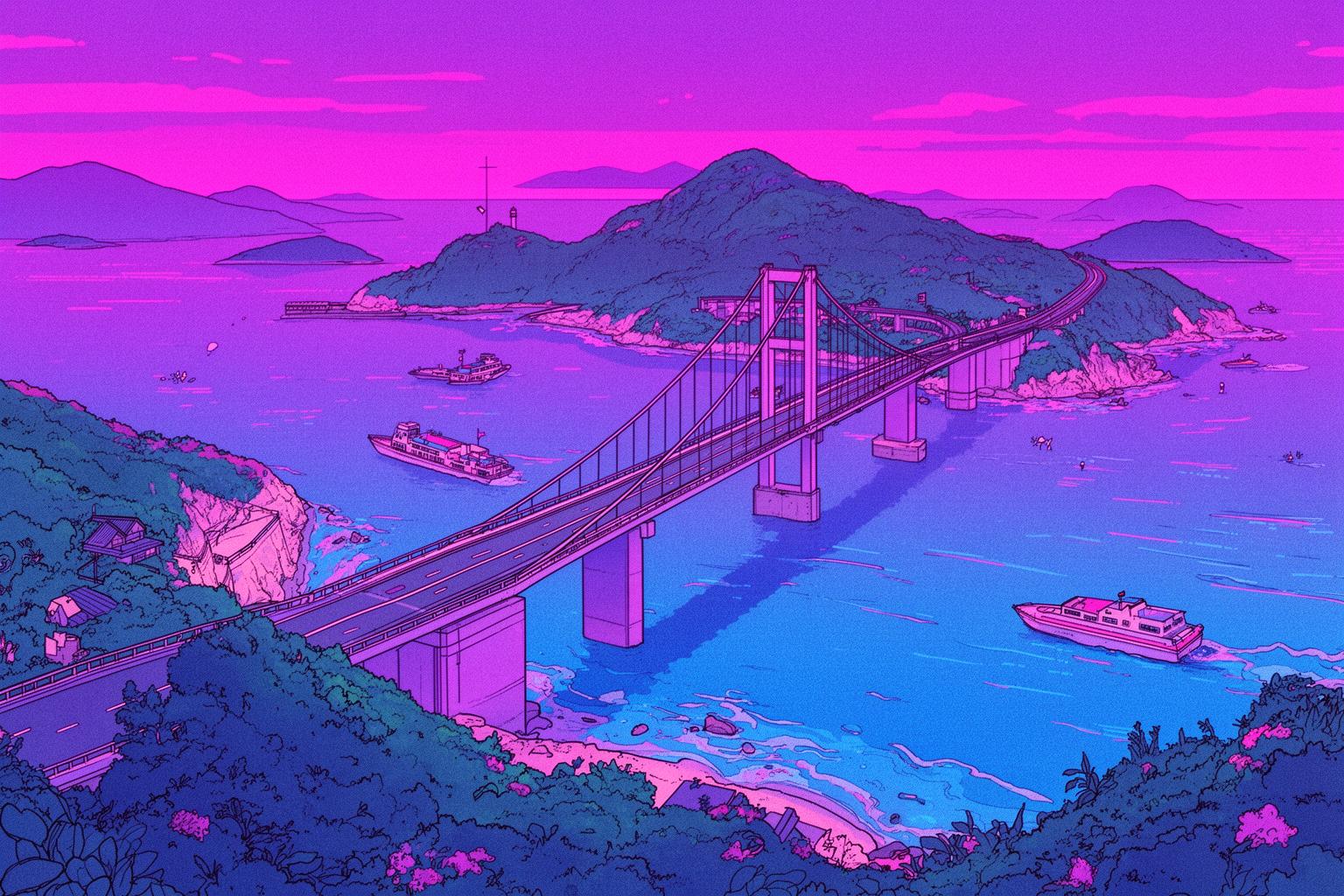
This is it—the heart of the journey. The Shimanami Kaido isn’t merely a long road; it’s a vibrant tapestry of six distinct islands, each with its own character, history, and mysteries. Moving from one island to the next feels like advancing to a new level in a video game, with an immense, breathtaking bridge marking the grand transition. Let’s explore the ride, island by island, beginning with the classic Onomichi route.
Mukaishima – The Prologue
Your adventure doesn’t kick off with a massive bridge but with something far more charming and reminiscent of a Ghibli film: a brief, three-minute ferry ride from Onomichi port. Boarding a small, timeworn boat alongside your bike, local residents, and their scooters is the perfect gentle welcome to island time. As Onomichi’s temple-adorned hillside fades behind you, it truly feels like you’re leaving the mainland.
Mukaishima itself is the warm-up stretch. It’s mostly a residential island, so major tourist spots are scarce—and that’s its charm. The route leads you away from the bustling town and onto peaceful coastal roads. This is your chance to get comfortable on your bike, practice following the famous blue line painted on the pavement—which will faithfully guide you for the next 70 kilometers—and simply breathe. The air already feels different here—cleaner, saltier. The path is mostly flat, winding through small fishing villages, neatly cared-for vegetable patches, and shipyards building massive vessels—a reminder of the region’s industrial roots. Don’t rush through Mukaishima. Stop at a local convenience store for your first on-the-road snack, find a quiet spot by the water, and soak it all in. This is the calm before the breathtaking storm of bridges and vistas ahead.
Innoshima – The Island of Pirates and Flowers
Your first real challenge—and first major reward—is the Innoshima Bridge. This elegant, double-decker suspension bridge offers cyclists and pedestrians their own protected lane on the lower deck, safely separated from traffic above. Pedaling high above the water, with the Seto Sea stretching endlessly around you, is your first taste of the journey’s epic scale. Welcome to the show.
Innoshima has a tougher, more rugged vibe than Mukaishima. Its past is tightly linked with the Murakami Suigun, formidable pirates—or rather, naval lords—who ruled these waters for centuries. You can immerse yourself in this history at Innoshima Suigun Castle, a concrete reconstruction that still commands a sweeping view of the surrounding straits. It’s a fun, slightly kitschy stop that helps you appreciate the islands’ strategic importance.
But Innoshima is not just about pirates and shipbuilding. It’s also renowned for its flowers and citrus fruits. The Innoshima Flower Center bursts with color, especially in spring and summer. The island is also the birthplace of the hassaku orange, a large, slightly bitter citrus that’s incredibly refreshing. The must-try treat here is the hassaku daifuku—a soft mochi rice cake filled with sweet white bean paste and a juicy segment of fresh hassaku. The combination is heavenly, perfectly blending sweet and tangy flavors, and making an ideal fuel stop before heading to the next island.
Ikuchijima – The Citrus and Art Island
Crossing the graceful, cable-stayed Ikuchi Bridge, you arrive on Ikuchijima, where the atmosphere shifts instantly. This island is the vibrant, artistic core of the Shimanami Kaido—a feast for the eyes and the palate, where you could easily spend an entire day.
Ikuchijima is celebrated for two things: lemons and art. The whole island feels like an open-air museum, with 17 contemporary art sculptures dotting the cycling path, turning spotting them into a delightful treasure hunt as you ride. The main artistic highlight is the stunning Kosanji Temple. This is no typical serene, wabi-sabi Japanese temple. Built by a wealthy industrialist to honor his mother, Kosanji is an explosion of color and intricate detail, featuring buildings that replicate some of Japan’s most famous historic structures, such as Nikko’s Yomeimon Gate. It’s dazzling, somewhat overwhelming, and utterly unforgettable. The true showstopper, however, is the Hill of Hope (Miraishin no Oka)—a sprawling hilltop landscape crafted from 3,000 tons of pristine white Carrara marble imported from Italy. Wandering through this gleaming, futuristic art piece under a clear blue sky feels like stepping onto another planet. It’s an absolute must-see.
Following your artistic and spiritual awakening, it’s time to indulge in Ikuchijima’s other claim to fame: citrus. Known as Japan’s lemon capital, the retrocovered Shiomachi Shopping Street offers a great starting point. Here, you’ll find old-fashioned croquette shops, charming cafes, and an abundance of citrus-themed treats. The legendary spot is Dolce, a gelato shop on the waterfront serving dozens of flavors—but your focus is the citrus. The Setoda Lemon and Dekopon Orange sorbets are life-changingly good. You’ll also find lemon ramen, lemon hotpot, lemon everything. Embrace the citrus lifestyle—you won’t regret it.
Omishima – The Island of the Gods
The Tatara Bridge, linking Ikuchijima to Omishima, is a masterpiece of architecture. One of the longest cable-stayed bridges in the world, its soaring white towers radiate elegance. As you cross, be sure to pause at the designated spot to clap or make noise—the bridge’s pillars create a unique acoustic echo known as the “singing dragon,” a charming Easter egg for cyclists.
Omishima feels different—larger, more mountainous, with a palpable sense of history and spirituality. Known as the island of the gods, its heart is Oyamazumi Shrine. Nestled in a grove of ancient camphor trees, some thousands of years old, this is among western Japan’s most important shrines. For centuries, samurai warriors and naval commanders prayed here for victory, offering their swords and armor in gratitude. The shrine’s treasury holds Japan’s most extensive collection of samurai arms and armor—about 80% of the items designated as National Treasures. Viewing these remarkable artifacts up close is a powerful, humbling experience that connects you to Japan’s feudal past. The shrine grounds themselves are deeply peaceful and atmospheric; you can almost feel the weight of centuries here.
Omishima also appeals to art lovers, boasting several excellent museums such as the Tokoro Museum Omishima and the Omishima Museum of Art, both housing modern works in stunning seaside architecture. The ride on Omishima offers variety, with a choice between a flatter coastal route and more demanding inland climbs for those wishing to test their legs.
Hakatajima – The Salt and Shipbuilding Hub
A short ride across the Omishima Bridge brings you to Hakatajima, a small island less about grand sights and more about the quiet, industrious spirit of the Seto Inland Sea. Its main industries are shipbuilding—you’ll see towering cranes dominating the skyline—and salt production. Visiting the Hakata Salt factory is a chance to learn about the process and, more importantly, sample their famed salt-flavored ice cream. It might sound odd, but trust me—the subtle saltiness perfectly cuts through the sweetness of the vanilla soft serve, creating a uniquely delicious and refreshing treat. This stop is non-negotiable.
The real hidden gem on Hakatajima requires a bit of a detour and a significant climb, but the reward is immense. Kirosan Observatory, perched atop a 300-meter peak, offers arguably the best panoramic view of the entire Shimanami Kaido. From this vantage, you can see the magnificent Kurushima-Kaikyo Bridge stretching out in all its glory, with countless Seto Sea islands sparkling like jewels below. It’s a breathtaking 360-degree vista that will linger in your memory. The effort to reach this spot is absolutely worth every drop of sweat.
Oshima – The Final Boss
After crossing the Hakata-Oshima Bridge, you reach the last island on your journey: Oshima. This is the final challenge, the ultimate test of endurance before your triumphant finish. Oshima is rugged and hilly, featuring the most significant climbs of the entire trip. This is where e-bike enthusiasts might chuckle, and where your own training—or lack thereof—becomes clear. But think of it as the character-building climax of your story. The scenery is wild and beautiful, a fitting backdrop for your final push.
Oshima was another key base for the Murakami Suigun, and you can explore their history further at the Murakami Suigun Museum. For a quieter outing, the Yoshiumi Rose Garden is a lovely spot to visit when the blooms are at their peak. But your main focus on Oshima is clear: conquering the hills to reach the ultimate final bridge.
The Kurushima-Kaikyo Bridge is more than just a bridge—it’s a colossal feat of human engineering. It holds the title of the world’s longest series of suspension bridges, spanning nearly 4.1 kilometers and connecting Oshima to Imabari city on Shikoku. The approach involves a long, spiraling ramp that gradually ascends high above the island. The ride across is awe-inspiring. Suspended far above one of Japan’s most treacherous sea channels, famous for powerful tidal currents and whirlpools, the views are endless, the scale staggering, and the sensation of gliding over this magnificent structure—with nearly 70 kilometers behind you—is one of pure, unfiltered triumph. This is the epic finale you’ve been working toward, and it delivers on every level.
Beyond the Blue Line: Pro-Tips for Maxing Out Your Journey
Alright, you know the route and the islands. But to truly elevate your Shimanami Kaido experience from great to legendary, you need the insider tips. These are the pro-tips—the small details that make a big difference.
First, let’s talk about packing. Less is more. You’ll feel every extra kilogram on the hills. A small backpack or a bike-mounted bag is all you need. The absolute essentials are: sunscreen (the sun reflecting off the water is no joke), sunglasses, a reusable water bottle (there are plenty of refill stations), a small towel or tenugui for sweat or quick hand-washing, and cash. Many of the small, family-run shops and food stalls on the islands don’t accept credit cards, so having yen on hand is crucial. A portable battery charger for your phone is also a lifesaver, since you’ll be draining it with photos and GPS.
The Blue Line is Your Best Friend. This is probably the smartest piece of infrastructure along the entire route. For nearly the full 70 kilometers, there is a literal blue line painted on the side of the road, marking the recommended cycling path. It’s incredibly easy to follow. As long as you keep that blue line in sight, you literally cannot get lost. This means you can switch off your navigation worries and fully enjoy the scenery. It’s genius.
But also—Don’t Fear the Detour. While the blue line is your guide, the real magic of the Shimanami Kaido is often found just off the main path. See a sign for a scenic overlook? Take it. Spot a tiny path leading down to a secluded beach? Explore it. That small, unassuming café you just passed? It might serve the best coffee of your life. The route is designed as a framework, not a cage. Give yourself time and the freedom to be spontaneous. The best memories often come from side quests.
Overnighting? Absolutely. While it’s technically possible to ride the entire 70km in a single day, I strongly recommend splitting it into two. A one-day trip turns this beautiful, meditative journey into a grueling race against the clock. By staying overnight on one of the central islands—Ikuchijima and Omishima are popular and excellent choices—you transform the experience. You get to ride at a relaxed pace, take all the detours you want, and truly soak in the island atmosphere. You can enjoy a stunning sunset over the Seto Sea, have a delicious dinner at a local izakaya, and experience the profound quiet of the islands after the day-trippers have gone home. Accommodation options vary from traditional ryokans (inns) and family-run minshuku (B&Bs) to modern guesthouses. Waking up on an island and starting your second day of cycling refreshed is a total game-changer.
And the ultimate pro-tip, the one that makes a two-day trip completely seamless, is the luggage forwarding service. This is pure magic. You can drop off your main suitcase or backpack at a depot in Onomichi in the morning, and it will be waiting for you at your hotel in Imabari (or vice versa) that evening or the next day. This allows you to cycle with just a small daypack, free from the burden of heavy luggage. It’s relatively inexpensive and incredibly efficient. Look for the Sagawa Express counters near the bike rental terminals. This service is an absolute must for overnight trips.
Fueling the Adventure: A Foodie’s Guide to the Shimanami Kaido
Cycling 70 kilometers burns a significant amount of calories, which is excellent news since the Shimanami Kaido is a food lover’s paradise. The journey is as much about the flavors you savor as the sights you take in. The cuisine here is fresh, local, and deeply connected to the land and sea.
Let’s begin with the undisputed star: citrus. The Seto Inland Sea region forms Japan’s citrus belt, with these islands at its center. You’ll find yourself surrounded by groves of mikan (a type of mandarin), hassaku, iyokan, dekopon, and, naturally, lemons. You must try them in every possible form. Kick off your day with a bottle of 100% pure, freshly squeezed mikan juice from a roadside stand—it’s like sunshine in a glass. On a hot afternoon, nothing compares to gelato from Dolce on Ikuchijima; the Setoda Lemon and Salty Dog flavors have legendary status. And you absolutely have to try a hassaku daifuku, a mochi-and-orange sweet from Innoshima. Watch for unmanned farm stands selling bags of fresh citrus for a couple of hundred yen, relying on a simple honor system. It’s the ideal cycling snack.
Next up, seafood. After all, you’re cycling through a chain of islands in a sea famous for its abundant catch. The Seto Inland Sea is renowned for its delicious sea bream (tai), octopus (tako), and prawns. Seek out restaurants serving kaisendon, a bowl of fresh sushi rice topped with an ample selection of sashimi. It’s the perfect protein-packed lunch. In the towns, you might find stalls selling grilled squid on a stick or takomeshi, a savory rice dish cooked with octopus. Near Imabari, try jakoten, a fried fish cake that is a local specialty of Ehime prefecture.
The Okonomiyaki Debate is very much alive here. Hiroshima-style okonomiyaki, a savory pancake layered with noodles, cabbage, pork, and egg, is famous throughout Japan. Onomichi, being part of Hiroshima prefecture, offers its own variations. A popular local eatery serves up a hearty, flavorful pancake that makes the perfect carbo-load before or after your ride. It’s soul food, pure and simple.
Finally, the quirky and delightful snacks that make the trip unforgettable. We’ve mentioned the salt ice cream on Hakatajima, but it’s worth repeating: you have to try it. The salt factory also offers all kinds of salt-flavored caramels and snacks. On Omishima, near Oyamazumi Shrine, you might come across stalls selling “yakimochi,” grilled rice cakes filled with sweet bean paste. Keep an eye out for local specialties—every island has its own unique culinary surprise waiting to be discovered.
The Final Stretch: Arriving in Imabari (or Onomichi)
The moment you roll off the final ramp of the Kurushima-Kaikyo Bridge into Imabari is truly powerful. A wave of accomplishment sweeps over you. You did it. Seventy kilometers, six islands, seven bridges. You’ve crossed from one main island of Japan to another, entirely under your own power. Take a moment to glance back at the colossal bridge you’ve just conquered. It’s a feeling you won’t soon forget. After dropping off your rental bike, it’s time to celebrate and explore.
Imabari may lack the quaint charm of Onomichi, but it offers its own unique attractions. Its most renowned product is high-quality towels, and a visit to the Imabari Towel Museum proves surprisingly fascinating. It’s part art gallery, part factory tour, and part remarkably impressive gift shop. You’ll never look at a towel the same way again. Imabari Castle is also a beautiful sight—a classic reconstruction surrounded by a wide, seawater-filled moat that’s quite distinctive.
If you finish in Onomichi, your reward is one of Japan’s most atmospheric port towns. The best way to experience it is to embark on the Temple Walk, a winding path that snakes up the steep hillside behind the town, connecting 25 different temples. As you climb the stone staircases, you’ll be rewarded with stunning views of the port and the islands you just came from. Be sure to stroll through Neko no Hosomichi, or Cat Alley, a narrow pathway adorned with cat-themed art and inhabited by dozens of friendly feline residents. For a modern take on the town’s industrial past, visit Onomichi U2, a beautifully renovated waterfront warehouse now home to a hotel, restaurant, bakery, and the Giant bike shop. It’s the heart of the town’s cycling culture.
Whether you finish in Imabari or Onomichi, take the time to savor the end of your journey. Find a local restaurant, order a celebratory meal and a cold drink, and reflect on the adventure. You’ve earned it.
A Gentle Closing: Carry the Sea Breeze With You
Some journeys you measure in kilometers, while others you measure in moments. The Shimanami Kaido is emphatically the latter. Yes, you’ll remember the epic scale of the bridges and the burn in your legs during the final climb. But what will truly stay with you long after you’ve returned home are the small things. It’s the genuine smile and wave from an elderly farmer as you cycle past his mikan grove. It’s the shared feeling of camaraderie when you nod at a fellow cyclist coming the other way. It’s the quiet moment of reflection beneath a 1,000-year-old camphor tree, the taste of a perfect lemon gelato by the sea, and the breathtaking view from a hilltop you reached by your own effort.
This isn’t just a bike path; it’s a thread connecting you to a slower, more intentional way of life. It serves as a reminder that the most beautiful discoveries often lie just off the main road, and that the greatest adventures are those that challenge you, surprise you, and ultimately change you, even if only a little. You come to the Shimanami Kaido seeking a world-class cycling route, but you leave with something far more valuable: a heart filled with Ghibli-esque magic and the memory of the sea breeze that you can carry with you wherever you go next.