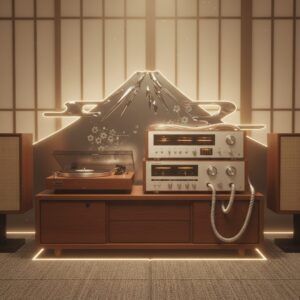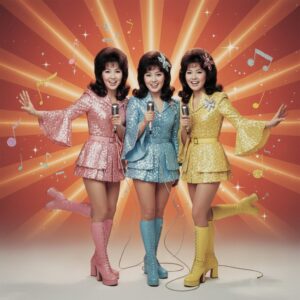
Imagine a party that lasted for a decade and then, almost overnight, the music stops. The lights come on, and everyone realizes the champagne was borrowed and the bill is due. That was Japan at the dawn of the 1990s. The dizzying heights of the 1980s bubble economy—a time of corporate titans, extravagant spending, and unshakeable national confidence—had come to a spectacular, screeching halt. The subsequent era wasn’t just a recession; it was a psychological reckoning, a period that would come to be known as the “Lost Decade.” For the generation coming of age in this new, uncertain reality, the grand narrative of ‘Japan Inc.’ no longer resonated. The promise of a secure corporate job for life suddenly felt like a hollow inheritance from their parents.
So, what do you do when the national dream sputters out? You create your own. And in the fashionable, labyrinthine streets of Tokyo’s Shibuya district, a new generation did just that, not with protests or politics, but with turntables, obscure record imports, and an impeccable sense of style. They crafted a soundtrack for their time called Shibuya-kei. The name literally means “Shibuya-style,” but that simple label belies the complexity of what it represented. This wasn’t just a music genre; it was a subculture, an aesthetic, and a quiet rebellion against the bombastic, mainstream-focused culture of the decade before. It was a retreat into a world of curated cool, a meticulously constructed universe built from snippets of French New Wave cinema, 1960s lounge music, Brazilian bossa nova, and sun-drenched American pop. It was deeply referential, unabashedly intellectual, and yet impossibly catchy. This music wasn’t forged in sweaty rock clubs; it was born in the hushed, encyclopedic aisles of Shibuya’s multi-story record stores, places like HMV and Tower Records, which served as cathedrals of cool for a new kind of cultural consumer. Shibuya-kei asked a different question: instead of aspiring to a corporate identity, what if you could build an identity out of the things you loved? This is the story of how a clique of music-obsessed youths in a single Tokyo neighborhood created a pop-art soundscape that not only redefined Japanese music but also offered a blueprint for navigating the quiet anxieties of a post-boom world.
Embracing a spirit of reinvention that reached far beyond the economic downturn, some individuals also sought to redefine their personal narratives by mastering group dating, paralleling the innovative cultural shifts of Shibuya-kei.
A Soundtrack for the Hangover
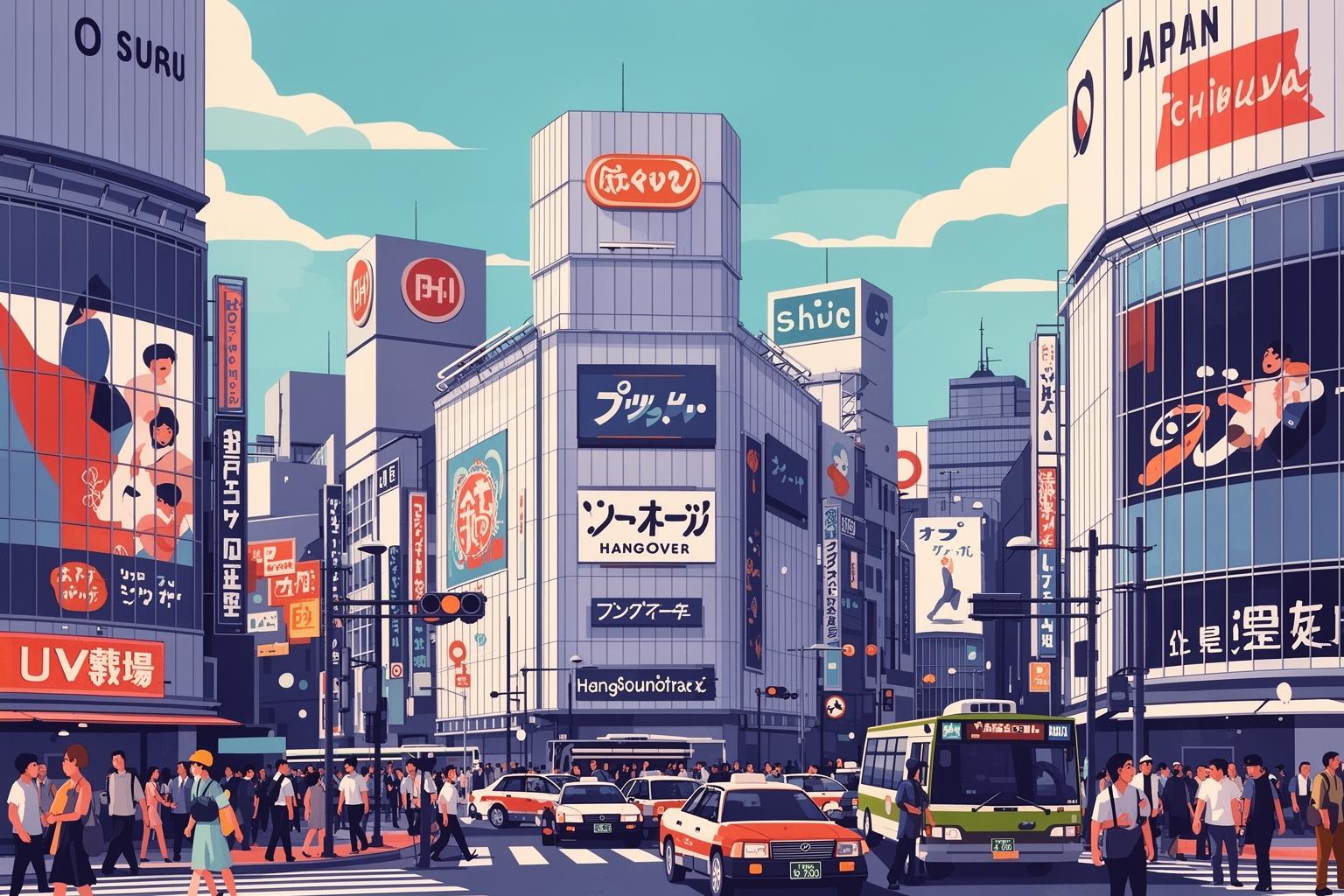
To grasp Shibuya-kei, you need to understand the hangover it was recovering from. The 1980s in Japan were marked by almost absurd economic optimism. The yen was strong, Tokyo real estate was valued higher than all of California, and Japanese corporations were acquiring iconic landmarks in America. The pop music of that era, known as City Pop, perfectly mirrored this mood. It was polished, aspirational, and heavily influenced by American funk, soul, and AOR. It sounded like driving a convertible down a coastal highway at sunset or sipping cocktails in a glamorous skyscraper lounge—a soundtrack for a future that seemed limitless. But when the bubble burst, that soundtrack started to feel naive, even delusional.
The early 90s brought a noticeable shift in the national mood. The term “Lost Decade” described not just the economy but culture as well. There was a sense of stagnation, a future indefinitely postponed. The youth of this time, unlike their parents, could no longer assume growth and stability. They faced a precarious job market and a society that appeared to have lost its forward drive. This disillusionment created a cultural void. The old symbols of success and identity no longer held the same significance. In this space, a new form of cultural currency arose, founded not on wealth or corporate ties but on taste, knowledge, and curation.
The Rise of the Curator-Musician
Shibuya-kei was arguably Japan’s first major music scene fueled by DJs and obsessive record collectors rather than conventional bands. The movement’s pioneers were not just musicians; they were archivists, critics, and connoisseurs. Their primary instrument was not the guitar or piano but the record collection itself. Their creative process was often archaeological—sifting through crates of forgotten vinyl, uncovering an obscure B-side from a French yé-yé singer or a lush string arrangement from a 1960s film score, and envisioning its potential for recontextualization. This practice, known as “crate-digging,” was central to the Shibuya-kei ethos.
Shibuya’s large record stores served as the scene’s laboratories. In an era before the internet offered instant access to every recorded song, these shops were crucial gateways to the outside world. Their import sections were treasure troves of sounds existing far outside the Japanese mainstream. Staff recommendations and in-store playlists fulfilled the role that Spotify algorithms serve today, guiding listeners toward new and unexpected connections. The act of discovery was essential. Knowledge of Serge Gainsbourg, Burt Bacharach, or The Free Design counted as social capital. This knowledge-based culture subtly rejected the mass-market consumerism of the 80s. Rather than buying what was popular, the aim was to unearth what was interesting and overlooked.
The Sonic Palette: A Global Collage
Shibuya-kei’s sound was a sophisticated and playful pastiche. It testified to the idea that combining existing elements in novel ways could create something entirely new. The core ingredients consisted of a mix of international flavors, carefully selected and blended.
Foremost was a deep affection for 1960s European pop, especially from France and Italy. The airy, chic melodies of French yé-yé singers like Françoise Hardy and France Gall, alongside the cinematic and often experimental arrangements of composers such as Serge Gainsbourg and Jean-Claude Vannier, were foundational influences. This was not merely a musical influence but an aesthetic one. It evoked a romanticized, black-and-white vision of Paris—a world of cafés, art films, and effortless style. This European sensibility offered a refined alternative to the pervasive cultural dominance of the United States.
Next came the smooth, intricate sounds of lounge music, bossa nova, and what was often called “soft rock” or “sunshine pop.” Artists like Burt Bacharach, renowned for his complex chord progressions and melancholic-yet-breezy melodies, were revered. The gentle rhythms and lush harmonies of Brazilian bossa nova pioneers Antônio Carlos Jobim and João Gilberto provided a cool, understated rhythmic foundation. American groups like The Free Design and The Beach Boys (especially their Pet Sounds era) were admired for their studio craftsmanship and intricate vocal harmonies.
Sampling was the adhesive that held all these elements together. Artists would lift a drum break from a rare funk record, a string swell from a film soundtrack, or a vocal snippet from a French pop song and weave them into new compositions. This was not the hard-hitting, politically charged sampling of American hip-hop but something more subtle—more like creating a sonic collage. The art lay in the juxtaposition, the clever re-framing of familiar sounds in unfamiliar contexts. It was a celebration of artifice, a recognition that pop music is a construct, and a joyous exploration of that very notion.
The Architects of Style
Although Shibuya-kei was a vast scene with dozens of artists, its identity was shaped by a few key figures who defined not only its sound but also, just as importantly, its visual aesthetic. They served as the movement’s arbiters of taste, and their work established the blueprint that countless others would follow.
The Foundational Trinity
Three groups are nearly universally recognized as the holy trinity of early Shibuya-kei: Flipper’s Guitar, Pizzicato Five, and Original Love. Each embodied a different aspect of the scene, and together they laid the foundation for everything that followed.
Flipper’s Guitar, the duo of Keigo Oyamada and Kenji Ozawa, represented the intellectual core of the scene. Starting with jangly, British-style indie pop, their sound quickly evolved into a dizzying mix of samples and styles. Their 1991 album, Doctor Head’s World Tower, stands as a landmark of the genre. It is a hyper-referential, endlessly clever record that shifts from bossa nova to jazz to psychedelic pop, often within a single track. Listening to it is like channel-surfing through the entire history of 20th-century pop culture. Flipper’s Guitar embodied the obsessive, detail-oriented spirit of Shibuya-kei; they weren’t just making music, but weaving a dense web of cultural references for their audience to unravel. After their split, Oyamada went on to have a successful solo career as Cornelius, pushing the cut-and-paste aesthetic into even more experimental territory, while Ozawa became a major mainstream J-pop star, bringing Shibuya-kei’s musical intelligence to the charts.
Pizzicato Five were the scene’s glamorous, international emissaries. Led by the brilliant DJ and producer Yasuharu Konishi, with the impossibly chic Maki Nomiya as frontwoman, they epitomized the genre’s pop-art sensibility. Their music was a fizzy blend of 60s spy movie themes, big band jazz, and dance-pop, all delivered with a knowing wink. Konishi’s productions were flawless, and Nomiya’s persona—a stylish, globe-trotting sophisticate—served as the perfect visual centerpiece. They were among the few Shibuya-kei acts to find notable success overseas, signing with the American label Matador Records and becoming cult favorites among indie-pop fans in the West. More than any other group, Pizzicato Five grasped that Shibuya-kei was a total package—the music, fashion, and album art all part of a single, unified aesthetic vision.
Original Love, singer-songwriter Takao Tajima’s project, embodied the genre’s more soulful, R&B-inflected side. While sharing the scene’s appreciation for intricate arrangements and sophisticated chords, Original Love’s music drew on funk and soul traditions, giving it a warmth and accessibility that contrasted with the cooler, more cerebral approach of Flipper’s Guitar. Tajima’s smooth vocals and groovy, jazz-tinged compositions brought a fresh energy to the scene, demonstrating that the Shibuya-kei framework was flexible enough to embrace a broad range of styles.
Crafting a Visual Universe
Shibuya-kei was never solely about the music; it was a holistic aesthetic encompassing fashion, graphic design, and a distinct mode of self-presentation. The look was as crucial as the sound, marked by a clean, retro-modernist sensibility.
Fashion took heavy inspiration from 1960s French pop culture—think Jean-Luc Godard films and yé-yé singers. For women, this translated to A-line miniskirts, turtleneck sweaters, and sharp, geometric haircuts. For men, slim-fit suits, turtlenecks, and sunglasses were the norm. The ubiquitous Breton-striped shirt became an unofficial uniform within the scene. The overall style was polished, thoughtful, and slightly bookish, providing a sharp contrast both to the power-suited conformity of corporate Japan and the flamboyant, deconstructed fashions of designers like Comme des Garçons and Yohji Yamamoto. It was a wearable, accessible form of cool.
The graphic design associated with Shibuya-kei was equally distinctive. Album covers and promotional materials drew heavily on the visual languages of 60s pop art, Swiss modernism, and vintage film posters. Typography was often clean and minimalist, color palettes bold and deliberate, and imagery stylized and retro. During the CD era, the album itself became a fetishized object, with packaging integral to the experience—filled with liner notes that carefully detailed every sample and influence. This meticulous attention to visual detail reinforced the idea that this was music for the discerning consumer, someone who valued the complete package.
The Neighborhood as an Ecosystem
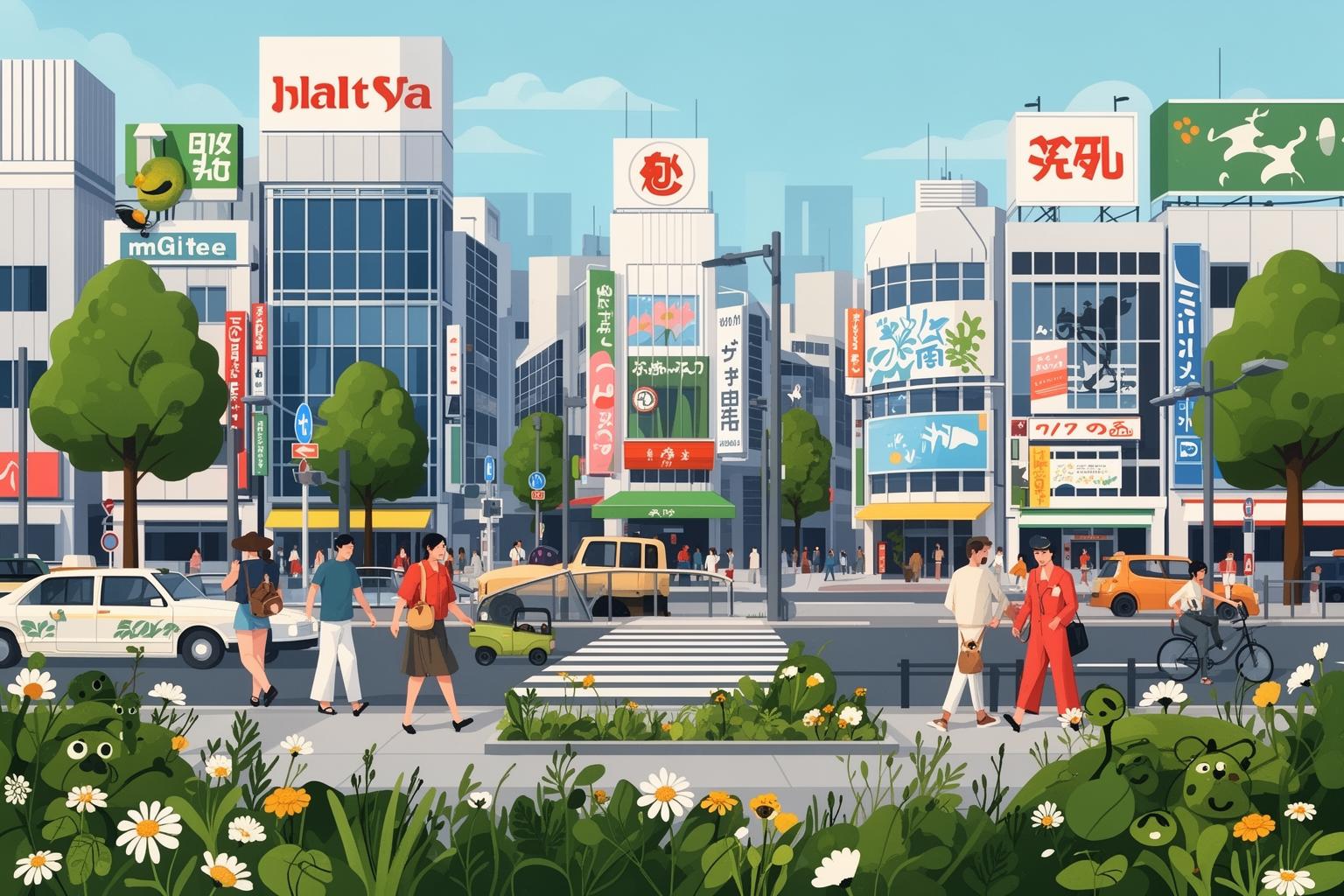
The genre wasn’t named after Shibuya by chance. The physical environment of the neighborhood in the 1990s played a vital role in its growth. It was a distinctive ecosystem that encouraged the exchange of ideas across music, fashion, and design.
Unlike other Tokyo districts like Shinjuku or Ginza, which were dominated by large department stores and corporate headquarters, Shibuya featured a lively network of smaller, independent shops. Its backstreets formed a maze of tiny boutiques, cozy cafes, art-house cinemas, and, most importantly, record stores. This fostered a walkable, human-scale environment where trends could develop naturally.
The record stores served as the scene’s nerve centers. Tower Records and HMV had expansive, multi-floor flagship stores in Shibuya that resembled cultural libraries more than ordinary retail outlets. Their extensive catalogs of imported music were indispensable. Equally important were the smaller, specialized shops catering to collectors and DJs. These stores were not just retail spaces; they were social hubs where fans and musicians could meet, share information, and discover new sounds. Many key Shibuya-kei artists, including Yasuharu Konishi, worked in these record stores, immersing themselves daily in the culture of music discovery, with their art directly reflecting that environment.
This ecosystem was strengthened by a network of magazines that helped codify and spread the Shibuya-kei style nationwide. Publications like Olive, a popular magazine for young women, alongside music and culture magazines such as Takarajima and Quick Japan, regularly featured Shibuya-kei artists and the associated fashion and lifestyle. They created a feedback loop: documenting trends emerging from Shibuya’s streets, they also helped shape and popularize them. This transformed a local Tokyo scene into an aspirational subculture for young people across Japan. You didn’t have to live in Shibuya to embrace the Shibuya-kei sensibility; you could buy the records, read the magazines, and adopt the style.
A New Kind of Japanese Identity
Shibuya-kei’s cultural influence extended far beyond its musical innovations. It signified a fundamental change in how a generation of young Japanese people perceived culture, identity, and their role in the world. It was a subtle revolution in taste.
The Embrace of the Artificial
One of Shibuya-kei’s most radical features was its joyful dismissal of the idea of “authenticity.” In both Western rock music and traditional Japanese arts, originality, emotional rawness, and a sense of organic creation are often highly valued. Shibuya-kei rejected all of that. It was proudly and unapologetically constructed. Its creators accepted that they were assembling something new from existing parts. For them, the artistry lay not in creating from nothing but in the skill, knowledge, and taste needed to curate and reconfigure cultural fragments compellingly. This was a form of pop-modernism, where style was not just a superficial addition but the very core of the work. This mindset fit perfectly with the hyper-consumerist, media-saturated atmosphere of late 20th-century Tokyo.
Connoisseurship as Cultural Capital
The movement also aligned with the rise of otaku culture in Japan. While the term often refers to anime and manga enthusiasts, its broader meaning denotes an intense, obsessive interest in a particular subject. Shibuya-kei was a form of music otaku culture. The ability to recognize an obscure sample or discuss the merits of various French soundtrack composers became a new form of cultural capital. It served as a way to establish status and community outside traditional hierarchies such as school or work. In a society that frequently values group harmony, this kind of niche expertise allowed for a type of individualism grounded in personal taste and deep knowledge. It was a way of expressing, “I am what I like.”
Nostalgia for a Place You’ve Never Been
At its core, Shibuya-kei was a deeply escapist phenomenon. Why were young people in 1990s Tokyo so fascinated by the culture of 1960s Europe and America? Because it offered a gateway to a world vastly different from the bleak economic realities they faced. It was a nostalgia for a past that wasn’t theirs, a carefully crafted fantasy of a more stylish, optimistic, and carefree era. This fantasy provided a powerful alternative to the declining narrative of Japan’s post-war economic miracle. It enabled young people to adopt a cosmopolitan, international identity independent of Japan’s economic position in the world. It was a way to be global on their own terms by selectively importing and reinterpreting cultural touchstones from around the globe.
This creative approach—looking outward for inspiration to shape a new inward identity—anticipated how culture functions in the internet age. The genre’s collage-like form, its celebration of obscure knowledge, and its fusion of global influences seem remarkably foresighted. Long before social media mood boards and algorithm-driven playlists, Shibuya-kei artists were manually crafting their own cultural feeds, filtering the world through their unique sensibilities and sharing their discoveries with a like-minded community.
Fading Out, Lingering Echoes
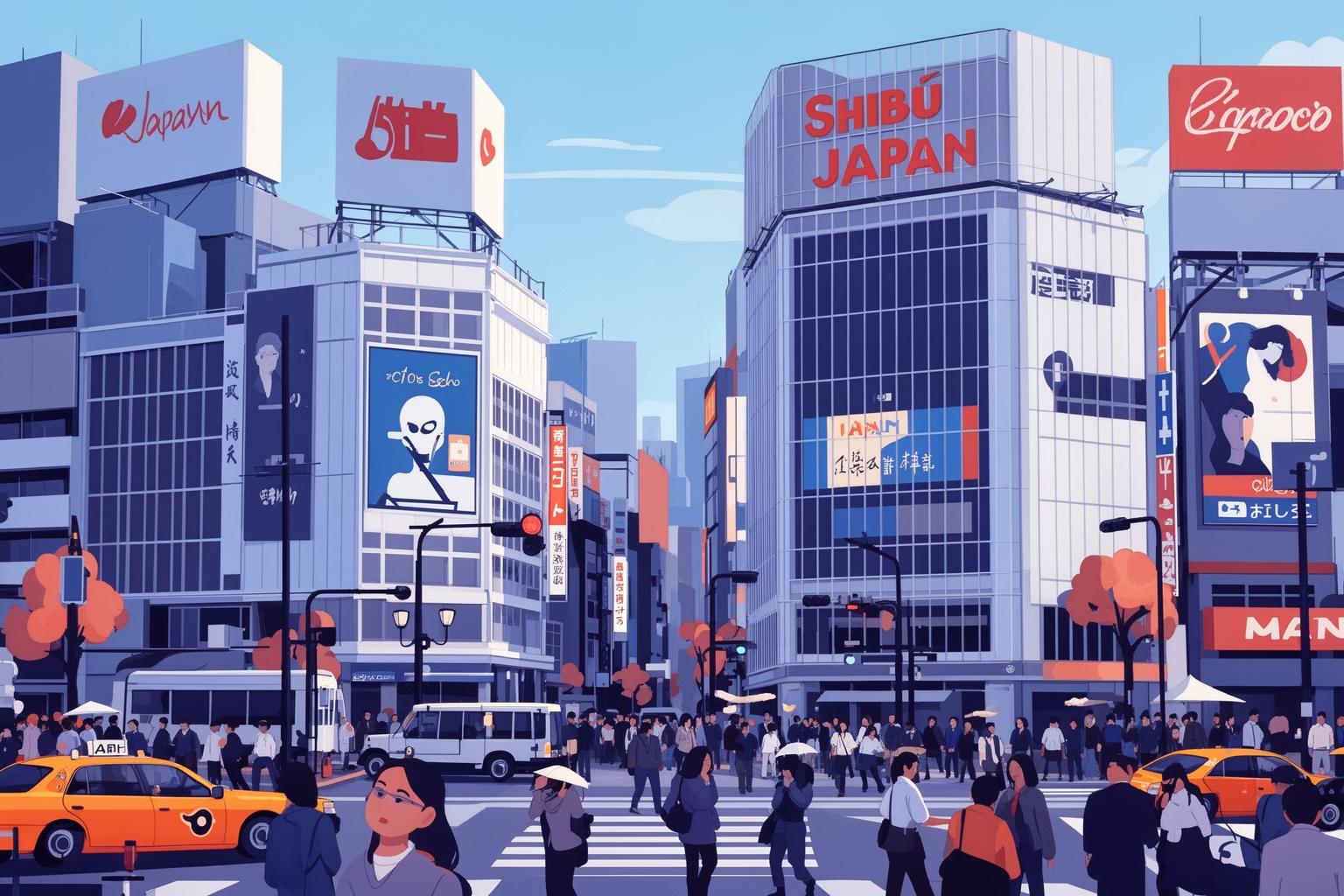
Like all vibrant subcultures, Shibuya-kei eventually experienced a decline in influence. By the late 1990s and early 2000s, the scene’s innovative energy began to fade. Its success invited imitation, and its distinctive sounds and stylistic quirks became clichés, diluted by the mainstream J-pop industry. Meanwhile, key artists started exploring new directions. Cornelius delved deeper into experimental electronica and complex audiovisual projects, while Pizzicato Five disbanded in 2001. The creative force that once centered on Shibuya gradually dispersed.
The internet also contributed to its decline. The element that made the scene special—the excitement of discovering rare and obscure music in a physical setting—was diminished by the growth of file-sharing and online music stores. The encyclopedic knowledge once fiercely guarded by dedicated crate-diggers became accessible to anyone with a search engine. As a result, Shibuya’s unique record store ecosystem lost much of its cultural significance.
Nevertheless, Shibuya-kei’s legacy remains undeniable and far-reaching. Its influence permeates much of the Japanese pop music that followed. Producer Yasutaka Nakata, the genius behind hits from capsule, Perfume, and Kyary Pamyu Pamyu, built his sound on the stylish, electronic-infused pop sensibility established by Shibuya-kei. The global resurgence of interest in City Pop during the 2010s also owes much to the archival, connoisseurial spirit championed by Shibuya-kei.
More widely, Shibuya-kei’s impact is evident in indie-pop and electronic music scenes worldwide. Its playful genre-blending and celebration of pop history resonated with artists weary of rock’s rigid orthodoxies. It helped popularize the concepts of the producer-as-auteur and the DJ-as-curator, roles now fundamental to modern pop music.
Ultimately, Shibuya-kei was more than just a collection of catchy, well-crafted pop songs. It was a sophisticated response to a specific moment marked by cultural and economic uncertainty. It captured the sound of a generation that, facing a future less promising than the past, chose to create a more interesting present from the fragments they could find. Turning away from grand narratives of national identity, they sought meaning in the personal, the particular, and the stylish. Within the quiet, cool confines of a record store, they sifted through the beautiful detritus of global pop culture and, in doing so, assembled an identity uniquely their own.