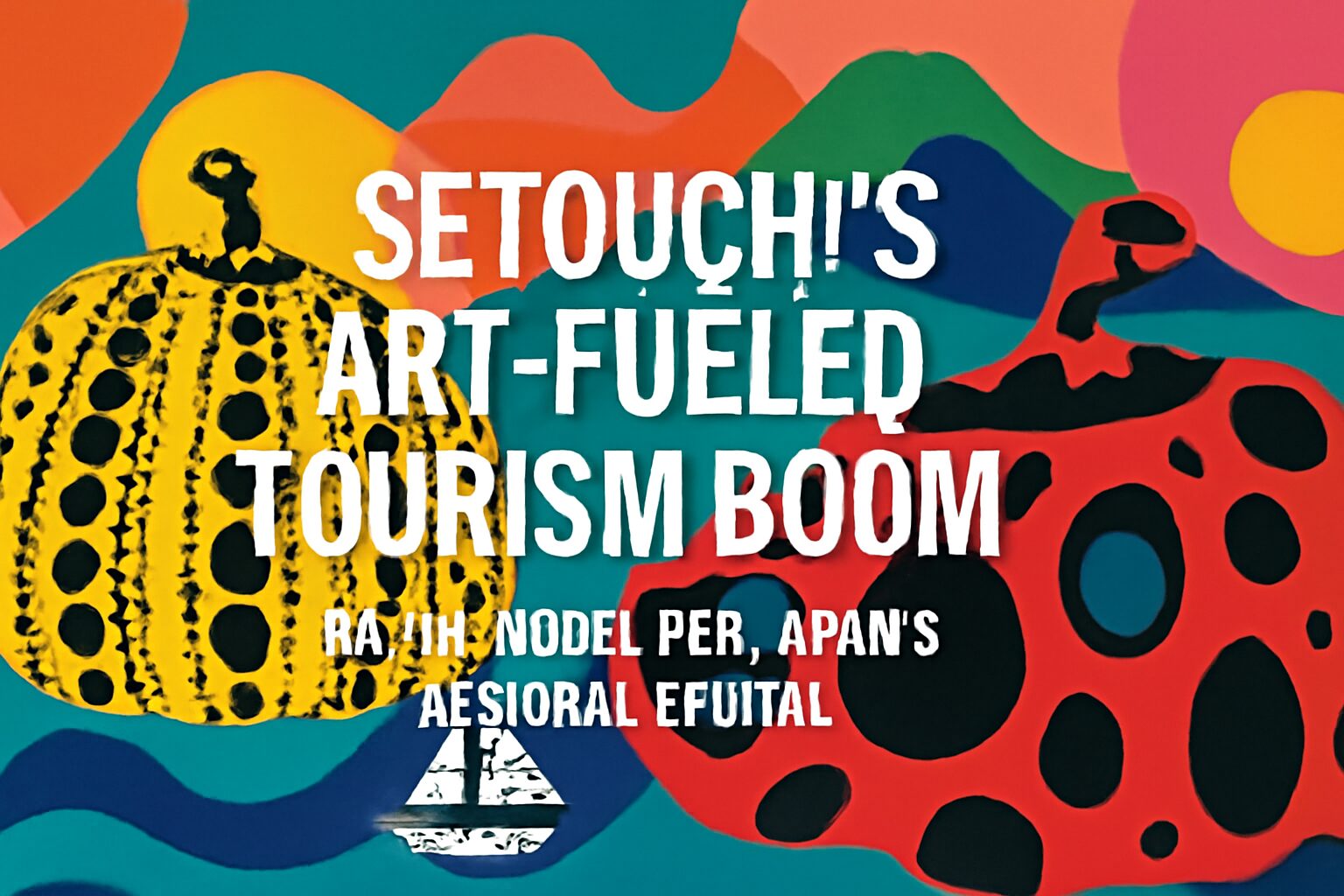
A pioneering, government-backed initiative to transform Japan’s Setouchi region into a world-class art destination is delivering a significant economic windfall. The strategy, which masterfully blends contemporary art with the area’s stunning natural landscapes, is not only attracting a new wave of international tourists but also providing a powerful blueprint for regional revitalization across the country.
The Genesis of an Art Haven
The Setouchi region, encompassing the Seto Inland Sea and its numerous islands, has long been celebrated for its scenic beauty. However, like many rural areas in Japan, it has also faced persistent challenges of depopulation, an aging society, and the decline of traditional industries.
The turning point came with the launch of the Setouchi Triennale in 2010. This contemporary art festival, held every three years, was conceived as a bold solution to these issues. The goal was to use art to rediscover the islands’ value, restore local pride, and create new connections between people and the region. Islands like Naoshima, Teshima, and Inujima, once quiet and overlooked, have been transformed into “art islands” featuring world-renowned museums, architectural marvels, and site-specific installations by celebrated artists. This long-term investment in cultural infrastructure has laid the foundation for the current tourism success.
The Economic Impact by the Numbers
Local officials are now reporting a tangible return on this investment. A key indicator of success is the notable increase in spending by international visitors, which has surpassed pre-pandemic levels. This surge is directly attributed to the appeal of new art installations and the strategic expansion of infrastructure, including enhanced ferry services that improve accessibility between the islands.
To put this growth in perspective, the last pre-pandemic Setouchi Triennale in 2019 drew approximately 1.18 million visitors and was estimated to have an economic ripple effect of over 18 billion yen (around $165 million USD at the time). The current trend suggests that the region is not just recovering but building on this past success, attracting high-value tourism that supports a wide range of local businesses—from small inns and restaurants to craft shops and transportation providers. The initiative is credited with creating new jobs and injecting much-needed vitality into the local economy.
A Blueprint for the Future and Potential Impacts
The Setouchi model’s success is being closely watched as a potential template for other Japanese regions facing similar demographic and economic hurdles. It demonstrates that leveraging unique cultural assets, rather than solely relying on traditional tourist attractions, can create a sustainable and compelling destination.
Looking ahead, the challenge will be to manage this growth sustainably. The focus is shifting towards ensuring that the benefits of tourism are distributed evenly throughout the community and that the influx of visitors does not disrupt the delicate balance of island life or the natural environment. The initiative’s success could encourage further investment in digital infrastructure, sustainable transportation, and programs that encourage longer stays and deeper engagement with local culture.
Furthermore, this art-led revival may have a lasting social impact beyond economics. By creating an attractive, dynamic environment, the Setouchi region could begin to attract new residents—artists, entrepreneurs, and young families—potentially reversing decades of population decline and creating a more resilient and diverse community for the future.
More Than a Vacation, a Cultural Journey
For international travelers, the Setouchi region now offers more than just a picturesque getaway. It provides a unique opportunity to engage with world-class art in an unforgettable setting, witnessing firsthand how creativity can breathe new life into a community. This blend of culture, nature, and community-led revitalization is setting a new standard for what a travel destination can be.