
Walk with me for a moment. We’ve just left the last house of a small Japanese village tucked into a valley. The paved road has given way to a gravel track, and the neatly manicured gardens have been replaced by the slightly shaggier edges of rice paddies, their water reflecting the sky like polished steel mirrors. Ahead, the path climbs into the foothills. The forest isn’t a dark, impenetrable wall of ancient cedars, not yet. Instead, it’s a bright, dappled woodland of oak and chestnut trees, the ground clear of heavy undergrowth. You can hear a stream gurgling in a hand-dug channel, diverting water to the fields below. A little further on, a stand of bamboo rustles with a dry, papery sound in the breeze. This place feels neither entirely wild nor entirely tamed. It’s an in-between space, a zone of transition. You’re in a satoyama.
This word, satoyama, is one of those wonderfully concise Japanese terms that unpacks a whole worldview. It’s a compound of sato (里), meaning village or inhabited place, and yama (山), meaning mountain or hill. So, literally, “village-mountain.” But it’s so much more than that. Satoyama refers to the mosaic of landscapes that have traditionally bordered Japanese rural communities for centuries—the managed woodlands, terraced rice fields, grasslands, irrigation ponds, and bamboo groves that functioned as a crucial buffer and resource pantry between human settlements and the deeper, untamed wilderness. This isn’t nature red in tooth and claw; it’s nature shaped by generations of human hands, a landscape of careful partnership. For centuries, this was the engine of rural life. Today, it’s a landscape in retreat, a quiet casualty of Japan’s post-war economic miracle, and its disappearance says a lot about the country’s shifting relationship with the very land that once sustained it.
This delicate balance of cultivated tradition and nature’s retreat is further echoed by the seasonal allure of cherry blossoms, which symbolically reset Japan’s cultural landscape.
The Anatomy of a Working Landscape
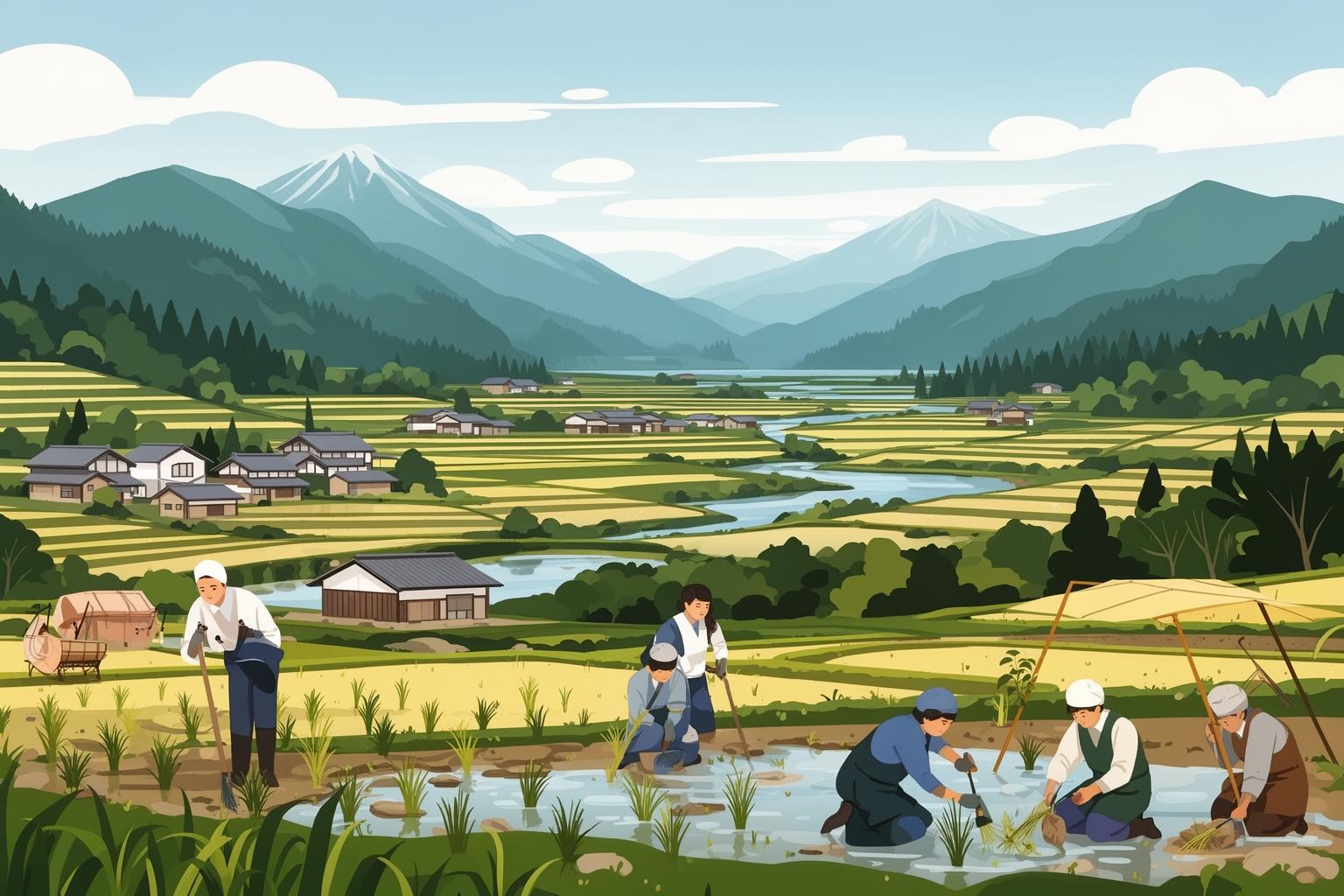
To truly grasp the concept of satoyama, you must dispel the romantic notion of it being a pristine natural environment. It never was that. Satoyama is essentially a utilitarian landscape, a system designed for sustainable production. It wasn’t about preserving nature behind glass; it was about living in harmony with it, using its resources wisely to ensure they remained available for future generations. Every part of this patchwork landscape had a specific and vital function.
First, there are the woodlands, which are perhaps the most crucial element. These aren’t ancient forests but rather coppice forests, or zōkibayashi. Villagers regularly harvested trees like sawtooth oak (kunugi) and konara oak (konara) for firewood and charcoal, the main fuels for cooking and heating. Instead of clear-cutting, they practiced rotational harvesting known as coppicing, cutting trees down to the stump, which then sprouted new shoots ready to harvest again in 15 to 20 years. This cycle ensured a perpetually renewable wood supply.
This constant cutting had a remarkable effect: it allowed sunlight to reach the forest floor, fostering a diverse ecosystem of wildflowers, insects, and fungi. This sunlit environment was ideal for foraging. The spring melt brought forth a bounty of sansai, or edible wild mountain plants. Fiddlehead ferns (kogomi), butterbur scapes (fukinoto), and bracken (warabi) were essential in the rural diet, providing vital vitamins after the long winter. In autumn, the same forests offered a harvest of mushrooms, with the fragrant matsutake being the most prized.
The leaf litter from these deciduous forests, known as ochiba, was another key resource. Villagers collected fallen leaves and transported them in large baskets down to the fields, where they were used as green manure to enrich the soil in rice paddies and vegetable gardens. This closed-loop nutrient cycling was fundamental to pre-industrial Japanese agriculture.
Next, there are the rice paddies (tanbo), often terraced spectacularly on hillsides. These fields are more than simple plots; they are complex, man-made wetlands. The irrigation canals and ponds (tameike) that sustain them provide habitats for frogs, dragonflies, and small fish, which help control insect pests. The ponds also served as a source of fish for the village.
Adjacent to the woodlands, you would often find managed grasslands, or kayaba. These fields were carefully kept to grow tall grasses like Japanese pampas grass (susuki) and cogon grass (chigaya). The grass was harvested annually and used as a primary material for traditional thatched roofs (kayabuki). Regular cutting prevented tree growth, creating an open habitat for certain plants and insects that could not thrive in the forest’s shade.
Finally, there are the ever-present bamboo groves (chikurin). Bamboo is an incredibly versatile plant; its young shoots (takenoko) are a spring delicacy, and mature canes were used for everything from construction materials and fences to baskets, tools, and fishing rods. Like coppice forests, bamboo groves need regular management, thinning old canes to stay healthy and productive.
Together, these elements formed one integrated system. The mountains provided wood, food, and fertilizer for the village, which in turn supplied the labor to manage the mountain, maintaining its productivity and biodiversity. It was a perfect symbiosis—a landscape that was at once a pantry, a workshop, and a home.
A Culture of Coexistence
The satoyama was more than just a physical space; it fostered a distinct mindset. Living so closely with the land nurtured a deep, almost instinctive understanding of natural cycles. People recognized which mushrooms were safe to eat and which were poisonous. They knew the exact week in spring when bamboo shoots were at their most tender. They understood that cutting the forest allowed light to reach the sansai, enabling its growth. This knowledge was passed down through generations, learned not from textbooks but through a lifetime of direct experience.
This relationship encouraged a sense of stewardship rather than ownership. The mountain was not something to be conquered or exploited; it was a partner deserving respect. Often, unwritten rules governed its use. Certain areas were designated as common land (iriaichi), where any villager could gather wood or forage, ensuring resources were shared fairly. There was a collective understanding that taking too much or cutting too greedily harmed not only the forest but the entire community, including future generations.
This worldview sharply contrasts with the Western concept of wilderness, which frequently imagines nature as a pure, untouched realm separate from human influence. In the satoyama model, humans are not intruders in nature but integral elements of the ecosystem. Their activities—regular cutting, raking, and harvesting—are precisely what maintain the landscape’s health and biodiversity. In fact, studies have demonstrated that a well-managed satoyama often supports greater species diversity than an unmanaged, “wild” primary forest because it contains a broader range of habitats, from open grasslands to shady woodlands to sunny wetlands.
This perspective also influenced local culture and spirituality. Mountains were often regarded as the domain of deities (kami), and the seasonal bounty of the satoyama was seen as a gift. Festivals were held to pray for good harvests and to thank the mountain gods. This was not an abstract belief system but a practical expression of the community’s reliance on the land. The sense of place was deeply strong. One’s identity was closely tied to their village and its particular mountain, streams, and fields.
The Great Severing
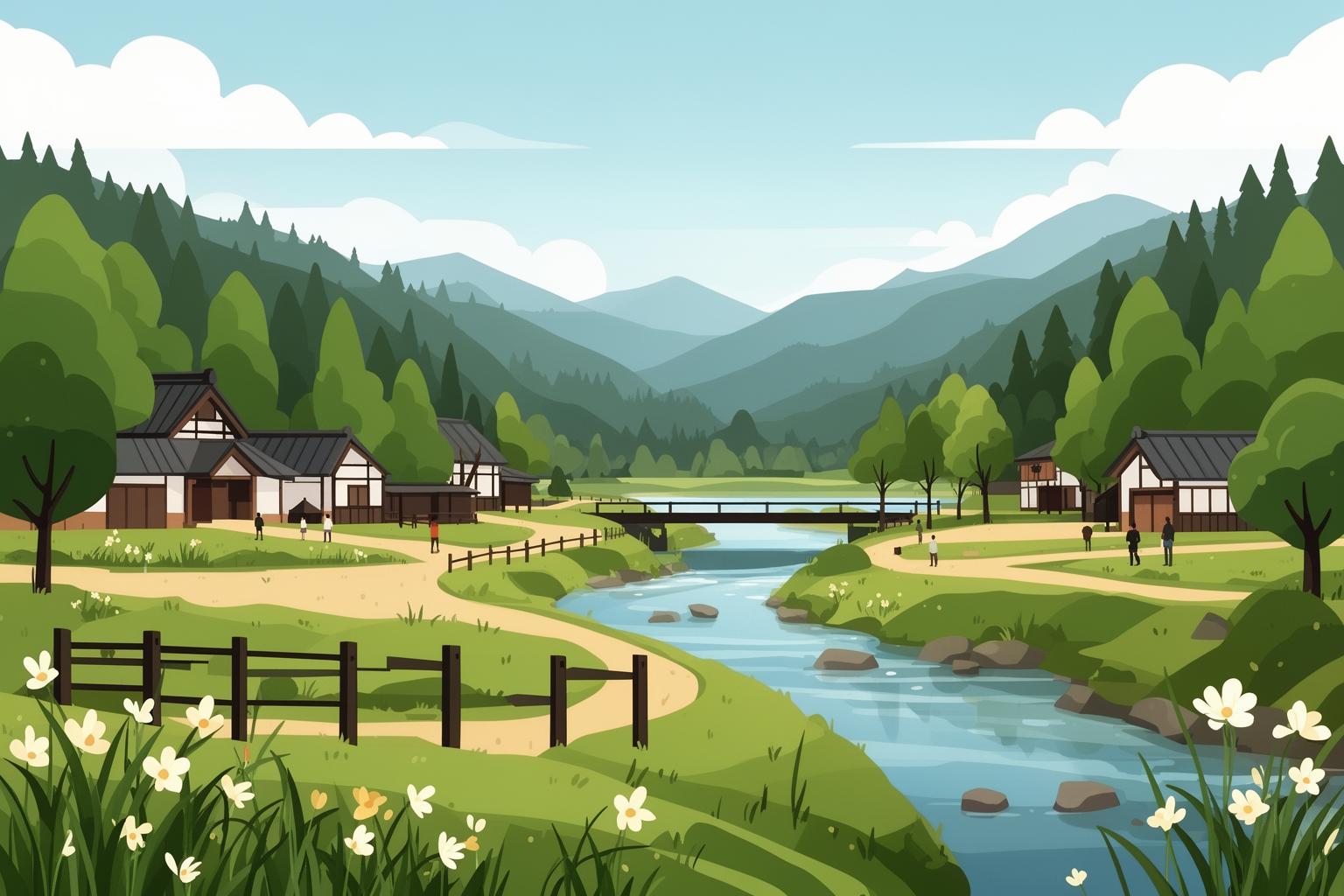
For centuries, this system functioned effectively. It was a model of sustainability born out of necessity. However, in the decades following World War II, the foundations of the satoyama lifestyle began to erode at an astonishing pace. These profound changes were driven by a national push for modernization and economic growth that fundamentally transformed Japan’s relationship with its rural landscapes.
The first major shift was the fuel revolution. During the 1950s and 60s, cheap and convenient fossil fuels such as kerosene, propane gas, and electricity became widespread. Suddenly, there was no longer a need to spend hours gathering firewood or making charcoal in the mountains. The coppice forests, which were central to the satoyama, lost their primary economic function and were abandoned.
At the same time, agriculture experienced a radical transformation. Chemical fertilizers became widely available, rendering the labor-intensive process of collecting leaf litter unnecessary. Small, inefficient rice paddies were merged into larger, rectangular fields that could be managed with machinery. Herbicides eliminated the need for hand weeding. The intricate and intimate relationship between farmer and land was replaced by the harsh efficiency of industrial agriculture.
These technological changes were accompanied by a significant demographic shift. Drawn by jobs in factories and offices, millions of young people left rural areas for the growing cities. Villages emptied out, leaving behind an aging population. Today, the average age of a Japanese farmer is nearly 70. There is simply no one left with the time, energy, or often even the knowledge to carry out the constant maintenance that satoyama demands.
The consequences of this neglect have been severe and widespread. Abandoned coppice forests, no longer thinned by villagers, have grown dark and dense. Sunlight cannot penetrate the thick canopy, causing the diverse undergrowth of wildflowers and edible plants to disappear, replaced by a monotonous layer of leaf litter. The ecosystem becomes impoverished.
Without regular cutting, the kayaba grasslands are overtaken by shrubs and trees, eventually reverting back to forest. The unique habitat they provided vanishes along with the species that depended on it. Irrigation ponds, neglected and no longer dredged, fill with sediment and become overrun with weeds. Untended bamboo groves grow into impenetrable thickets, spreading uncontrollably and shading out other native plants.
Perhaps the most noticeable consequence for those still living in rural areas is the collapse of the buffer zone. The satoyama once served as a gentle barrier between human settlements and the deeper wilderness. As this managed landscape has become overgrown and wilder, animals that once kept their distance have encroached. Wild boar (inoshishi), deer (shika), and monkeys now frequently enter villages, raiding vegetable gardens and causing millions of yen in crop damage. Even bears (kuma) are appearing closer to homes, leading to dangerous encounters. The carefully maintained peace between human and animal worlds has been disrupted.
A New Purpose for an Old Landscape
Is the satoyama destined to become a forgotten relic, a ghostly landscape gradually overtaken by unmanaged wilderness? Not necessarily. In recent years, awareness of what has been lost has grown, along with a dedicated effort to redefine the role of these landscapes in the 21st century. This is not about reverting to a pre-industrial past; it’s about envisioning the satoyama for contemporary Japan.
At the forefront are numerous non-profit organizations and local volunteer groups. Made up of everyone from elderly farmers to young city dwellers seeking a bond with the land, these groups organize workdays to clear undergrowth in neglected forests, restore dilapidated rice terraces, and manage bamboo groves. For many urban residents, these activities provide a tangible way to connect with nature, support environmental conservation, and learn traditional skills.
There is also a growing movement called “Satoyama Capitalism.” The concept is to generate new economic value from the resources of these areas, making their preservation financially sustainable. This takes various forms. Eco-tourism plays a major role, with programs offering city families opportunities to try rice planting, mushroom foraging, or traditional crafts. These experiences are not mere vacations; they are educational opportunities that renew the link between food producers and consumers.
Local communities are discovering innovative methods to market their unique products. Rather than selling rice as a low-cost commodity, they brand it based on its origin, cultivated in terraced paddies nourished by pure mountain streams. They produce value-added goods like artisanal sake, pickles, and sweets made from local ingredients. Wood harvested from thinned forests is promoted for use in biomass energy plants, offering a renewable alternative to fossil fuels. In this way, the satoyama is once more becoming a source of sustainable resources, albeit in a new form.
Importantly, a cultural shift is also in motion. A modest but increasing number of young people, disenchanted with the high-pressure, uniform lifestyle of large cities, are choosing to relocate to rural areas. They are attracted by the promise of a slower pace, stronger community ties, and the chance to undertake meaningful work. These newcomers, known as I-turn migrants, bring fresh energy, new perspectives, and digital skills that can help rejuvenate aging communities and apply traditional knowledge in modern ways.
The View from the Trail
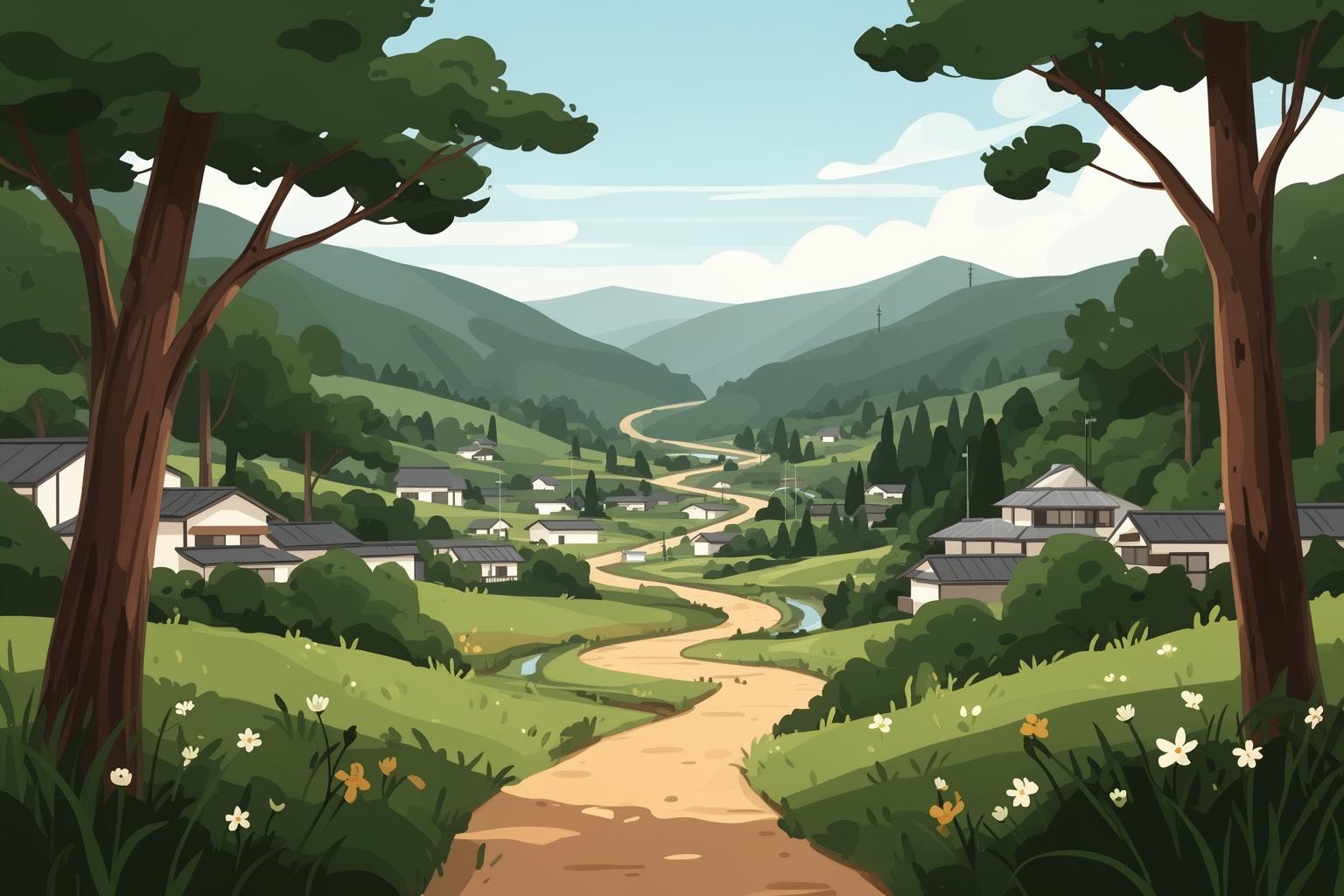
As someone who spends considerable time hiking in the Japanese countryside, the contrast between a vibrant satoyama and a neglected one is striking. Strolling through a well-tended coppice forest is a pleasure. The path is clear, the air crisp, and sunlight filters through the canopy, brightening the forest floor. You experience a sense of safety and balance, as if you’re wandering through a vast, shared garden. Evidence of human care is everywhere—in the neatly trimmed stumps, the stacked firewood, and the clear water running through the irrigation channels. It feels like a welcoming landscape, where people and nature are in dialogue.
In contrast, trekking through an abandoned satoyama can feel oppressive. The trail is often hidden beneath thorny vines and thick, overgrown bamboo. The forest is dark and silent, missing the hum of insects or the flash of birds common in more open habitats. You might encounter the ruins of an old charcoal kiln, its stones cloaked in moss, or a terraced field turned into a swampy marsh of reeds. These places evoke a deep sadness, a sense of a precious legacy being lost. It feels like a landscape that has lost its meaning, its story erased by neglect.
The fate of the satoyama is not just an ecological matter; it’s cultural as well. This landscape embodies a deeply rooted Japanese philosophy of living in harmony with nature. It reflects a time when sustainability was not a trendy concept but a basic necessity for survival. Its decline parallels Japan’s own challenge in reconciling its hyper-modern urban identity with its rural traditions.
However, new efforts to restore it offer a hopeful direction. They show that it’s possible to create a future that honors the wisdom of the past without dismissing progress. The satoyama may never again serve as Japan’s economic engine, but it can hold equal value as a classroom for sustainability, a haven for biodiversity, and a place where people can rekindle their connection to the land and to each other. The gentle rustle of leaves in a managed forest reminds us that the bond between people and nature, once broken, can be healed. It is a borderland worth preserving.