Yo, what’s the deal with Japan? One minute you’re scrolling through pics of Tokyo’s robot cafes and Shibuya’s scramble crossing—a full-on neon cyberpunk fantasy. The next, you see these epic, moody shots of misty mountains, ancient moss-covered stairs, and dudes in traditional robes looking like they just stepped out of a historical flick. It’s a total vibe shift. You’ve probably wondered, like, what’s up with all the mountains? Japan is basically 70% mountain, but it feels like they’re more than just geography here. They’re… a thing. You see them in anime, in old paintings, in the background of every other travel photo. And you hear whispers of these super intense spiritual practices connected to them, something called Shugendo. It sounds hardcore. Is it a religion? A cult? An extreme hiking club? Is it something a regular person, a tourist even, can tap into, or is it strictly for the locals who are in on the secret? Let’s be real, the travel blogs give you the “Top 5 Most Instagrammable Hikes,” but they don’t really spill the tea on why these climbs feel so different, so profound. Why does a walk in the Japanese woods feel less like a workout and more like a spiritual system update you didn’t know you needed? If you’ve ever looked at a photo of a lone torii gate on a mountain peak and thought, “Okay, I see the beauty, but what am I really looking at?”—then you’re asking the right questions. We’re about to go deep, beyond the surface-level stuff, to decode the ancient vibe of Japan’s sacred peaks and figure out why hiking here can be a legit spiritual reboot. This is the lowdown on Shugendo, the mountain ascetics called Yamabushi, and the whole philosophy of finding enlightenment by literally climbing for it. Forget the basic travel guides. We’re about to understand the soul of the Japanese landscape. It’s a journey, for real.
To truly understand this profound connection, consider how the practice of silent hiking embodies the meditative core of the mountain experience.
Beyond the Torii Gate: Mountains as Japan’s OG Shrines
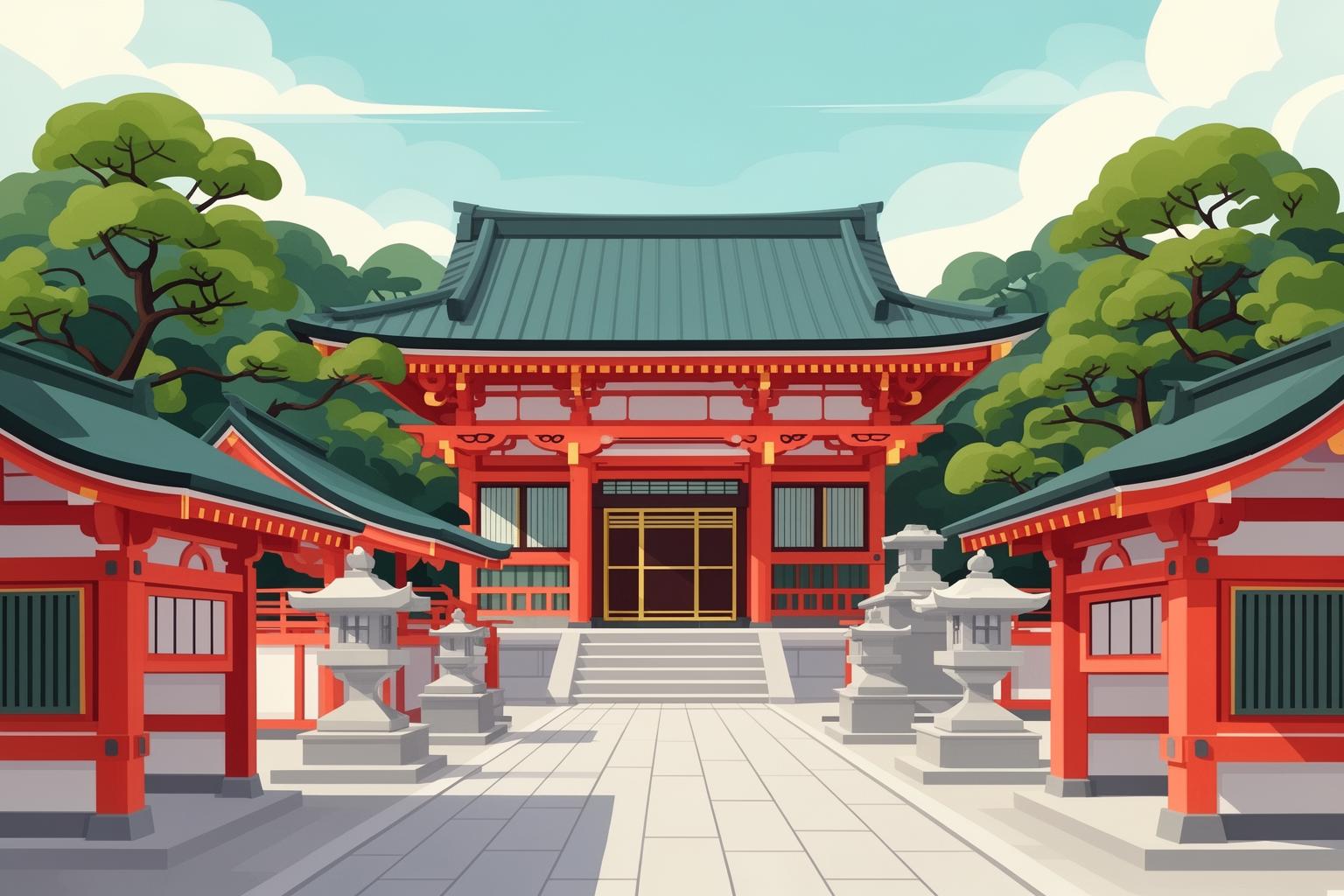
First and foremost, to truly understand Japan’s fascination with mountains, you have to go way back—long before Buddhism arrived, before the iconic red torii gates and grand shrines even existed. We’re talking about Japan’s original spiritual framework: a pure, unfiltered animism. The core belief was elegantly simple: gods, or kami, weren’t residing in some distant heaven. They were right here, in the world around you. They dwelled in the majestic waterfalls, the ancient twisted trees, the oddly shaped rocks, and most importantly, the immense, awe-inspiring mountains dominating the landscape. Mountains were regarded as the actual homes of the most powerful kami, and sometimes, the mountain itself was the kami. This wasn’t merely symbolic; it was a lived reality. A massive, volcano-shaped peak like Mount Fuji wasn’t just a scenic backdrop; it was a deity, an entity with its own personality, power, and tangible presence. These particular mountains, believed to house the divine, were called kannabi. They were natural cathedrals, the original sacred spaces. No church building was needed because you were already standing inside one. This concept fundamentally challenges many Western assumptions about religion. We tend to think of holy places as man-made structures—a building you enter to connect with God. In ancient Japan, this idea was reversed. You didn’t construct a place for the gods; you visited the place where they already existed. That’s why even now, many Shinto shrines are located at the base or along the slopes of mountains. The main shrine building, called the honden, often serves only as a symbolic shelter. The true object of worship, the shintai or “god-body,” is the mountain itself. The shrine acts as a reception area, a welcome lobby to the deity’s vast, natural domain. When you see a shimenawa—a thick braided rice straw rope with white paper zigzags—wrapped around a giant rock or ancient tree on a mountainside, that’s the message being conveyed. It’s a marker signaling, “Hey, this isn’t just a rock. This is sacred ground. A kami is here. Show respect.” This visual language designates parts of the natural world as holy space. So, when you hike in Japan, you’re often not simply walking through a national park; you’re traversing an expansive, open-air temple that has been active for millennia. The atmosphere feels different. The silence carries weight. That sense of reverence isn’t just in your head; you’re tapping into a deep cultural current that perceives divinity not in texts or buildings, but in the very land beneath your feet.
So, What’s the Deal with Shugendo? The Ultimate Spiritual Mashup
Alright, so we’ve established that mountains are the original sacred sites. Now, here comes Shugendo. If ancient mountain worship is the foundational bassline, Shugendo is the intricate, high-energy composition layered on top. It’s not a straightforward, textbook religion. Rather, it’s a dynamic, syncretic spiritual system—a blend, a remix, a fusion of nearly every major spiritual tradition that ever touched Japan. The name Shugendo roughly translates to “the path of training and testing to gain special powers.” This alone indicates it’s an active, experiential journey, not a passive, faith-based one. At its essence, Shugendo is a fusion. It starts with Japan’s native Shinto, with its deep respect for nature and mountain kami. Then, around the 6th and 7th centuries, Buddhism arrived in Japan, bringing with it a vast array of philosophies, rituals, and deities. Particularly influential was esoteric or Tantric Buddhism (mikkyo in Japan), which emphasizes reaching enlightenment in this lifetime through intense, secretive practices. Shugendo practitioners integrated these Buddhist teachings into the existing mountain worship framework. They overlaid Buddhist cosmology onto the landscape of mountains. Suddenly, the peaks and valleys were not just homes for Shinto kami; they became mandalas, symbolic representations of the entire Buddhist cosmos. They also incorporated Taoism, highlighting harmony with nature, yin-yang balance, and the pursuit of longevity and supernatural abilities. The result is a truly unique Japanese spiritual hybrid. In this system, one might pray to a Buddhist deity like Fudo Myo-o (the Immovable Wisdom King, who looks incredibly fierce) for strength, while simultaneously honoring the local mountain kami during the same ritual. The central figures in this tradition are the Yamabushi, literally “those who prostrate on the mountain.” These mountain ascetics and practitioners of Shugendo shouldn’t just be seen as monks—that’s too simplistic. A Yamabushi is part hermit, part shaman, part wilderness guide, and part spiritual warrior. Historically, they were the ultimate mountain experts: knowledgeable about trails, medicinal herbs, and weather patterns. They were also believed to possess supernatural abilities gained through rigorous training—the power to heal, perform exorcisms, and communicate with the spirit world. The legendary founder of Shugendo is En no Gyoja, a semi-mythical 7th-century mystic. His tales are legendary. He was said to fly, command demons, and brew magical potions. Essentially, he was Japan’s original spiritual superhero, a mountain wizard who established the model for all Yamabushi to follow. The Yamabushi don a distinctive uniform, with each element rich in symbolism. The small black pillbox cap (tokin) represents a stupa and the crown of a specific Buddhist deity. Their white or saffron robes symbolize purity. The deerskin or bearskin cloak draped on their backs reflects a primal, shamanic connection to the animal world and serves as a practical mountain seat. And, of course, there’s the horagai, a large conch shell trumpet. The deep, resonant blast of the horagai echoing through the mountains is the iconic sound of Shugendo. It is used for communication, to scare off bears, and most importantly, to signal the presence of the divine and alter the practitioner’s state of consciousness. Shugendo embodies the belief that spiritual truth isn’t discovered by sitting comfortably in a temple; it’s found by venturing out, pushing your body and mind to their limits in the most powerful setting imaginable: the sacred mountain.
The “Death and Rebirth” Hike: This Ain’t Your Sunday Stroll
This is where we reach the heart of the Shugendo experience, and things become intensely serious. The central practice of Shugendo is a ritual pilgrimage into the mountains called mine-iri, or “entering the peak.” However, this is much more than a simple hike. It is a highly structured, deeply symbolic journey representing the cycle of death and rebirth. The mountain itself is viewed as a vast, living mandala—a spiritual map of the cosmos—and also as a womb, a place of transformation. When a Yamabushi enters the mountain, they symbolically die to their old self, their ordinary, ego-driven identity. As they traverse its valleys and ascend its peaks, they move through different spiritual realms, confronting their own inner demons and impurities. By the time they emerge, they are meant to be reborn—spiritually cleansed, empowered, and possessing a new, enlightened perspective. This is not merely a metaphor contemplated while walking; the entire pilgrimage is designed to make this process feel viscerally real. Every step, every landmark, and every ritual carries a specific meaning connected to this profound narrative of transformation.
Entering the Other World: The Gateways and Rituals
The journey does not simply begin at the trailhead with a quick warm-up. It starts with rituals that distinctly separate the profane world of daily life from the sacred mountain space. Before setting foot on the path, practitioners often perform purification rites, such as rinsing their mouths and hands with water or receiving blessings from a senior Yamabushi. They are consciously and deliberately stepping out of one reality and into another. The path itself serves as a timeline of spiritual progression. The route, often one that has been followed for centuries, is believed to optimize the landscape’s transformative power. The lower valleys may symbolize Buddhist hells or the realm of hungry ghosts—places of suffering and attachment. As the Yamabushi climbs higher, they ascend through different realms of existence: the animal realm, the human realm, the realm of heavenly beings, and finally the realms of Bodhisattvas and Buddhas near the summit. Specific rocks, waterfalls, or ancient trees along the way serve as stations, or shukuba, where particular chants are recited and rituals performed. The landscape is not merely passive scenery; it actively participates in their spiritual training. It is their textbook, teacher, and temple all at once. The aim is to perceive the world not as a collection of physical objects, but as a manifestation of cosmic truth. The jagged cliff face becomes a symbol of the fierce deity Fudo Myo-o, while the gentle stream embodies the flow of compassion. This complex layering of meaning transforms the physical act of climbing into a profound pilgrimage through one’s own consciousness.
The Grind is Real: Asceticism on the Trail
Let’s be clear: Shugendo training is intensely demanding, and that hardship is its very purpose. This is not about self-punishment or masochism; rather, it uses extreme physical and mental stress to break down the ego. The ego is regarded as the main barrier to enlightenment—it’s the part of us attached to comfort, self-identity, fears, and desires. To overcome it, one must push beyond the ego’s limits until it can no longer operate. That’s the moment when a deeper state of awareness can arise. This is accomplished through various ascetic practices, or gyo. One of the most renowned is takigyo, or waterfall meditation, where one stands—sometimes for hours—beneath the crushing force of a freezing mountain waterfall, often chanting sutras. The initial shock of the cold is overwhelming; the body rebels and cries out to escape. But the practice is to endure, to breathe through it until the mind transcends the pain and enters intense, focused clarity. It acts as a forced reset of the nervous system, washing away not just physical dirt but spiritual impurities. Another crucial practice is zange, or confession and repentance. This is not a quiet prayer in solitude; it can be physically demanding, with practitioners hanging by their ankles off cliff edges, supported by comrades, forced to loudly acknowledge their past faults and transgressions. The fear of death combined with public confession purges the soul’s burdens, allowing one to release the past and be reborn in the present. The entire pilgrimage often takes place under strict conditions of fasting or minimal food—just enough sustenance to keep going. Sleep deprivation is common, with long hiking days followed by nights of chanting and meditation. Speaking is frequently forbidden for extended periods to promote inner reflection. All these practices—the physical exertion of the climb, the cold water, the fear of heights, hunger, and exhaustion—aim for one goal: stripping away all that is non-essential. When the body is pushed to its absolute limit, concerns about work, social media, or petty worries vanish. All that remains is the raw, present moment: the feel of your feet on the rocks, the sound of your breath, the resounding chant of a mantra. It is in this space of pure, primal existence that the Yamabushi believe a genuine connection with the universe, the mountain’s kami, and Buddhas can be forged. You dismantle yourself to reconstruct a self that is stronger, clearer, and more alive than ever before.
IRL Shugendo: Where to Catch the Vibe Today
So this all might sound like ancient, mystical history, right? But the surprising truth is, it’s very much alive. While Yamabushi aren’t wandering every mountain these days, there are specific sacred ranges where the tradition remains deeply rooted and actively practiced with serious dedication. These locations are the power spots, the spiritual centers where you can most vividly experience the essence of Shugendo, whether you’re a committed pilgrim or simply an intrigued hiker.
Dewa Sanzan: The Sacred Trinity of Yamagata
If there’s one place that stands as the undisputed heart of modern Shugendo, it’s the Dewa Sanzan, or Three Mountains of Dewa, in Yamagata Prefecture. This is far more than just a trio of holy peaks; it’s a living pilgrimage route centered around the profound theme of death and rebirth. It embodies the full narrative of Shugendo laid out across the landscape, and it’s deeply moving. The pilgrimage follows a specific sequence. First is Mount Haguro, representing the present, the realm of earthly desires, and the start of the spiritual journey. Climbing Haguro is well-known for its 2,446 stone steps winding through an ancient forest of towering cedar trees, some over a millennium old. Walking this path feels like stepping back through time. The air is dense, green, and quiet, broken only by the caw of crows. Along the route, you encounter a stunning five-storied pagoda that appears to rise naturally from the forest itself. Haguro is accessible year-round and serves as the administrative center of the Dewa Sanzan faith. Next is Mount Gassan. Majestic and alpine, Gassan symbolizes the past and the realm of the dead. Due to heavy snowfall, the shrine at its summit is only open from July through mid-September. The hike ascends above the treeline, crossing a stark yet beautiful landscape of wildflowers and lingering snow patches. This climb is meant to be a symbolic passage through the afterlife—a cleansing and reflective journey on one’s past life. The final mountain is Mount Yudono, representing the future and the moment of rebirth. Yudono is regarded as the most sacred and secretive of the three. Its inner shrine is strictly off-limits to photography, and visitors are forbidden to speak about what they see inside. You enter barefoot, moving towards the object of worship—a huge, reddish-brown rock over which steaming, iron-rich hot spring waters flow. The experience is raw and deeply sensory. Standing on the warm, wet rock is a powerful, grounding moment that completes the cycle. By visiting these three mountains in order, pilgrims symbolically travel through birth, death, and rebirth, emerging purified and renewed. It is the core philosophy of Shugendo expressed through a physical journey, and its power is felt by believers and non-believers alike.
Kumano Kodo: The Original Pilgrimage Route for Everyone
If Dewa Sanzan is the rigorous Shugendo bootcamp, then the Kumano Kodo is the more approachable yet equally profound university-level course. Located on the Kii Peninsula south of Osaka, the Kumano Kodo is a network of ancient pilgrimage trails walked for over a thousand years by everyone from emperors and samurai to commoners. Although not exclusively a Shugendo route, it has been heavily influenced by Yamabushi who used these paths for ascetic training. The trails connect three grand shrines: Kumano Hongu Taisha, Kumano Hayatama Taisha, and Kumano Nachi Taisha. The region was regarded as a mythical, pure land on earth. The journey itself—walking for days through dense mountainous forests—was seen as a form of spiritual cleansing. The atmosphere here is less about intense, body-testing asceticism and more about a prolonged, meditative immersion in a sacred landscape. You’ll traverse moss-covered cobblestones, pass numerous small oji shrines (subsidiary shrines protecting and guiding pilgrims), and take in breathtaking natural sights, like Nachi Falls, Japan’s tallest waterfall, worshipped as a deity long before recorded history. The Kumano Kodo represents Shugendo’s influence going mainstream, embracing the core idea that the journey through nature is the true destination, and making it accessible to everyone. It’s an ideal starting point for understanding Japan’s deep connection between walking, nature, and spirituality.
Mount Omine & Yoshino: The Hardcore Territory
For the authentic heartland and historical center of Shugendo, you must turn to the mountains of Yoshino and Omine in Nara Prefecture. This is reputedly where En no Gyoja himself trained. The main pilgrimage route here, the Omine Okugakemichi, is a perilous 100-kilometer ridge trail regarded as one of the most demanding and sacred paths in Japan. This is the graduate-level course, the special forces training ground of the Shugendo tradition. Yet this area also involves a significant controversy. The main peak of Mount Omine, Sanjo-ga-take, home to the temple Zao-do, enforces a centuries-old ban on women. A large sign at the trailhead still boldly declares “No Women Admitted.” This starkly illustrates that these ancient customs don’t always align with modern values. The historical reasons for this ban vary and are complex, ranging from the idea that women’s presence could distract monks during severe ascetic practices to traditional beliefs about menstrual impurity (kegare). Many people, both in Japan and abroad, find this practice deeply troubling and outdated. Acknowledging this issue is important. It reveals that Shugendo is not a perfect, romanticized spiritual system—it’s a living tradition with a complex and sometimes difficult history. Engaging with it sincerely means confronting all aspects—the inspiring and the problematic—to understand its place in today’s world.
The Modern Yamabushi: Is This Vibe Still Alive?
So, is this all merely a historical reenactment, a form of spiritual cosplay for a shrinking group of veterans? Or are people still genuinely embracing this intense mountain practice in the 21st century? The answer is a definite yes. Shugendo is not only alive but arguably experiencing a quiet revival, drawing in a whole new generation of seekers, both Japanese and non-Japanese. Naturally, the number of full-time, lifelong Yamabushi living in mountain huts remains very small. However, what has thrived are Shugendo training programs, often called shugyo or yamabushido. These serve as spiritual bootcamps, lasting from a weekend to a full week, offering laypeople the chance to engage in the core practices of Shugendo under a master’s guidance. And the participants are not who you might expect. They include salarymen from Tokyo overwhelmed by corporate burnout, artists from Osaka seeking a creative and spiritual reset, young university students looking for meaning that modern life seems to lack—and increasingly, foreigners in search of a deeper, more authentic experience of Japan than a typical temple visit in Kyoto can offer. So why is this ancient, demanding practice attracting a new audience in our hyper-modern, convenience-driven world? The reasons become clear upon reflection. It serves as a direct antidote to the ailments of modern life. In an era of nonstop digital distraction, Shugendo enforces a radical digital detox. Phones are banned. There’s no email, no social media, no news—only the mountain, your breath, and the chant. It delivers a powerful shock to a system addicted to constant stimulation. In a culture that values comfort and ease, Shugendo honors hardship as a path to strength. The physical and mental trials break you down but also reveal your true resilience. Enduring a night with little sleep or food, or braving the cold of a waterfall, imparts a deep sense of self-reliance and inner power that can’t be bought or downloaded—it’s real because you earned it. Most importantly, in a world growing ever more disconnected from nature, Shugendo offers a profound, unmediated reconnection. It reminds you that you are not separate from nature but an integral part of it. It teaches you to read the language of the forest, sense the mountain’s energy, and understand that the world is alive and sacred. These modern Yamabushi aren’t necessarily pursuing supernatural abilities; they seek clarity, resilience, and purpose. They use this ancient soul technology to reboot their own inner systems, returning to their busy modern lives with fresh insight and a deeper sense of self.
So, Should You Try It? A Reality Check
After all this discussion of death and rebirth, intense asceticism, and spiritual renewal, you might be asking yourself, “Is this right for me?” It’s a fair question. The answer depends entirely on what you want and what you’re ready to face. Let’s be perfectly clear: Shugendo training is not a wellness retreat. There are no yoga mats, no green smoothies, no gentle guided meditations accompanied by soothing music. This is the raw, unfiltered, hardcore experience. If you enroll in a formal shugyo program, expect to be pushed well beyond your comfort zone. The food will be simple and minimal—think rice, miso soup, and pickled vegetables. Sleeping arrangements are communal and basic. The hiking is strenuous and long, no matter the weather. You will be required to strictly follow the rules, which often include periods of silence and complete obedience to the lead guide, the sendatsu. It is physically, mentally, and emotionally demanding—by design. But here’s the good news: you don’t have to become a full-fledged Yamabushi to connect with the spirit of Shugendo. The beauty of this tradition lies in the wisdom embedded in the landscape itself. You can visit places like Dewa Sanzan or the Kumano Kodo and simply hike the trails as a regular tourist. You can walk the same stone steps, breathe the same sacred air, and stand in awe of the same ancient trees. Just by being there with an open mind and a respectful heart, you can tap into the powerful, transformative energy of these places. That experience is 100% valid and deeply meaningful. The mountains are generous; they share their power with anyone willing to listen. Choosing formal training means choosing to go deeper, to take a guided plunge into the core of the practice. So, is it worth it? If you seek an authentic experience that challenges you at your core and offers a unique perspective, then yes, absolutely. The true takeaway from Shugendo isn’t about gaining magical powers or becoming a mountain wizard. It’s about a fundamental shift in understanding—a visceral realization that strength is born from hardship. It’s the clarity that emerges when you strip away all the noise and distractions of modern life. It’s the profound peace found in feeling your place within the vast, living web of the natural world. It’s about grasping, on a cellular level, why for centuries in Japan, a simple glance at a mountain could be a prayer, a challenge, and a homecoming all at once. And that’s a spiritual reboot no app can ever provide. It’s the realest of real deals.