When you picture Japan, what comes to mind? Chances are it’s a high-energy collision of ancient and hyper-modern. You’re probably thinking of the glowing neon canyons of Shinjuku, the serene, raked-gravel gardens of Kyoto, or maybe the polite chaos of Shibuya Crossing. It’s a country that presents itself as a meticulously curated experience, a place where everything is clean, efficient, and intentional. But what if I told you there’s another side to this story? A ghost story, really, written not in folklore but in decaying concrete and rusting steel. Tucked away in the forgotten folds of Japan’s mountainous interior are the skeletons of entire towns—places that once throbbed with life, industry, and the promise of a new era, only to be unplugged and left to the silence. These aren’t the picturesque, preserved post towns of the samurai era. These are the industrial graveyards of modern Japan, the mining towns. They have a specific, potent atmosphere, a vibe that a lot of people who explore abandoned places, or ‘haikyo’ as it’s known here, are chasing. It’s the same heavy, melancholic energy you might feel when looking at pictures of Gunkanjima, the famous ‘battleship island’ off Nagasaki. But Gunkanjima is just the most famous chapter in a much larger, more complex story. The real question isn’t just ‘where are these spooky ruins?’, but ‘why are they even here?’. Why would a country so obsessed with progress, order, and utilizing every square inch of space allow entire communities to simply rot? The answer tells you more about the real, unfiltered story of modern Japan—its explosive ambition, its hidden costs, and its complex relationship with its own past—than any gleaming skyscraper or ancient temple ever could. These places aren’t just empty buildings; they are the physical scars left behind by the nation’s frantic, and often brutal, sprint into the modern world.
This haunting atmosphere, a signature of Japan’s abandoned places or haikyo, is also explored in our look at the melancholy of forgotten anime pilgrimage sites.
The Engine Room of an Empire: The Meiji Restoration’s Thirst for Resources
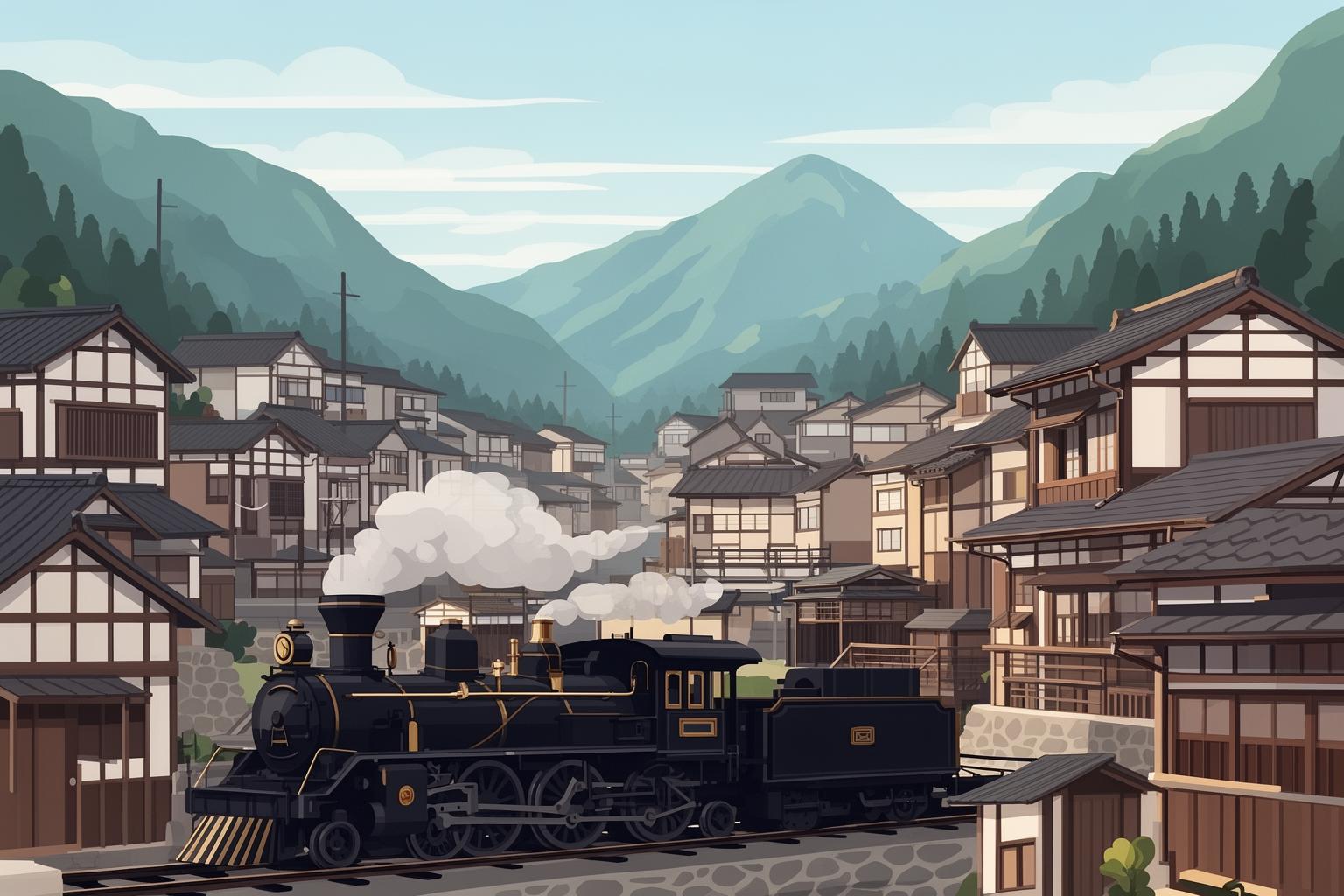
To understand why these towns came into existence initially, you need to go back to the late 19th century. In 1868, Japan emerged from over 250 years of self-imposed isolation. The arrival of American warships, known as the ‘Black Ships,’ served as a harsh wake-up call. The new Meiji government observed the Western powers dividing China and realized they faced a clear choice: modernize or be colonized. This triggered one of the fastest industrialization periods the world has ever witnessed. The national motto was ‘Fukoku Kyōhei’—’Enrich the country, strengthen the military.’ This was not merely a slogan; it was a desperate, all-encompassing national mission. And what is essential to build a modern nation from the ground up? Steel for ships, railways, and factories. Copper for telegraph wires and electrical systems. And coal to power everything. Although Japan is famously poor in many natural resources, it did have these materials hidden in its rugged, volcanic mountains. Thus began a nationwide treasure hunt. Mines that had operated on a small, pre-industrial scale for centuries were suddenly reevaluated. They were no longer just local assets but the fuel for Japan’s survival and aspirations on the global stage. The government, often collaborating with emerging mega-corporations called ‘zaibatsu’—names still familiar today like Mitsubishi, Mitsui, and Sumitomo—invested massive capital into developing these mines. This was not gentle or organic growth; it was a frantic, top-down effort to extract resources from the earth as rapidly as possible. Discovering a rich vein of coal or copper in some remote, inaccessible valley was not just a business venture; it was a patriotic obligation. Hence, deep in the mountains of Hokkaido, Iwate, Tochigi, and Kyushu, the foundations of these future ghost towns were established, born from a national fever dream of progress and power.
Building Worlds from Scratch: The Anatomy of a Japanese Mining Town
When a major mineral deposit was discovered, it was almost always in a remote location. You couldn’t simply hire local farmers to show up for a daily shift. To run a modern industrial mine, a large, dedicated, and permanent workforce was necessary. Thus, mining companies didn’t just excavate a hole in the ground—they constructed entire, self-sufficient communities from scratch, right on the mountainside. These company towns were marvels of centralized planning and social engineering, small-scale representations of the new industrialized Japan they helped to shape. They also functioned as tools of absolute control, designed to keep workers isolated, dependent, and productive. The ruins we see today are the remnants of these self-contained societies, each with its own strict structure and distinct culture, forged in the depths of the mines and under the shadow of the corporation.
The Company as God: Paternalism and Control
The entire existence of these towns centered around a single authority: the company. This system, often referred to as corporate paternalism, meant that the company provided literally everything employees and their families could ever require. The most iconic remnants are the rows of ‘danchi,’ or large, multi-story concrete apartment blocks. These were often state-of-the-art for their era, offering families a modern lifestyle far removed from the traditional wooden farmhouses many had left behind. The company also built and operated the schools where miners’ children were educated, the hospitals where they were born and treated, and the company stores (kobai) where they purchased food and essentials, often using company-issued scrip or credit. For recreation, there were public bathhouses, cinemas showing the latest films, pachinko parlors, and community centers for festivals and events. On the surface, it appeared to be a utopian cradle-to-grave welfare system. But it was a gilded cage. By controlling every aspect of life—housing, healthcare, food, education, and entertainment—the company made sure its workers were fully dependent. There were no other employers, shops, or hospitals for hundreds of miles. To be dismissed from the mine wasn’t just to lose a job; it meant eviction from one’s home, removal of children from school, and exile from the only world they knew. This system guaranteed a stable, compliant labor force in some of the most isolated and demanding environments imaginable. The stark, repetitive, and utilitarian architecture of the concrete apartment blocks, now standing empty, is a direct visual expression of this philosophy: efficiency, order, and the subordination of the individual to the collective corporate machine.
A Community Forged in Darkness
Despite the strict control, a strong and unique community spirit flourished in these isolated towns. Mining was, and remains, extremely dangerous work. The constant risks of tunnel collapses, gas explosions, and long-term health problems forged an intense bond of solidarity among the miners. They relied on each other for survival underground, and this sense of mutual dependence extended into their lives above ground. Everyone knew one another. Families were interconnected, children grew up together, and the entire town’s rhythm was set by the sound of the shift-change siren. These were not quiet, sleepy villages—they were lively, often rough industrial hubs bustling with thousands of people. For many who had come from impoverished rural areas, life in the mining town represented an improvement. They had a steady income, modern conveniences, and access to a vibrant social life they had never experienced before. There were loud festivals, sports days, and a collective pride in the vital work they were performing for the nation. This was their portion of the Japanese dream—a prosperous, modern life carved out of the wilderness. When you walk through the silent, empty corridors of a ruined mining school today or stand in the hollow shell of a community cinema, you are in the heart of this lost world. The silence is overwhelming precisely because these places were once so full of life, noise, and the close-knit camaraderie of a community that worked, lived, and died together.
The Cracks Appear: Pollution, Protest, and the Dark Side of Progress
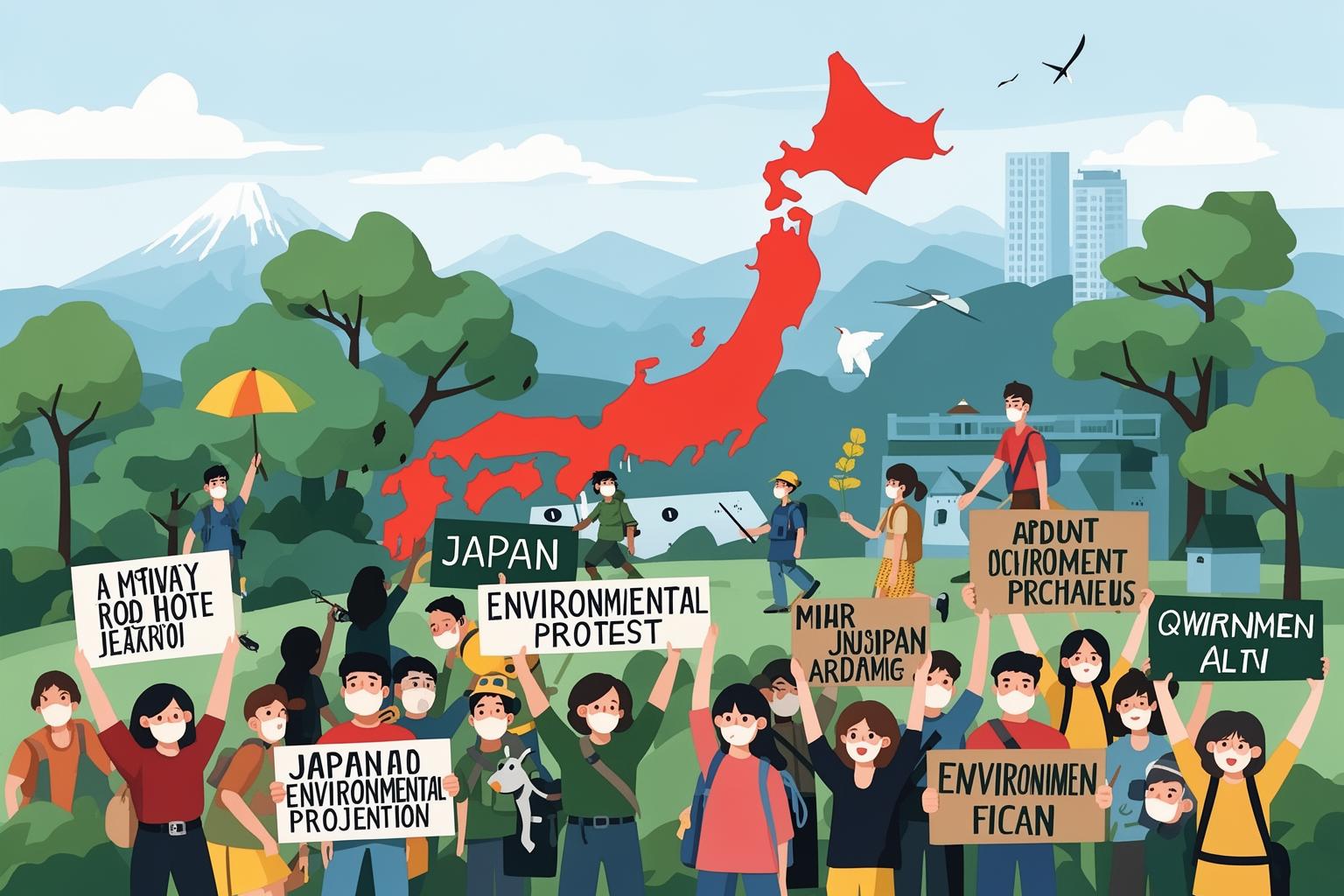
Despite all the talk of national progress and community spirit, this story had a deeply toxic underside. The relentless push to extract resources at any cost resulted in devastating consequences for both the environment and the people powering the industry. The portrayal of Japan as a harmonious, consensus-driven society often overlooks these harsh chapters, yet the history of these mining towns is inseparable from pollution, exploitation, and resistance. These were not simply content communities that quietly disappeared; many witnessed fierce battles between corporations, the state, and the citizens whose lives were being destroyed in the name of modernization.
Case Study: Ashio Copper Mine and Japan’s First Environmental Disaster
The dark side of Japanese industrialization cannot be discussed without mentioning the Ashio Copper Mine in Tochigi Prefecture. In the late 19th century, Ashio was one of the crown jewels of Japan’s modernization, producing a significant portion of the nation’s copper. However, the smelting process emitted vast amounts of sulfuric acid into the atmosphere and, more catastrophically, discharged untreated mining effluent laden with copper and other heavy metals directly into the Watarase River. The results were devastating. The surrounding mountains were stripped bare of vegetation due to acid rain, creating a surreal, barren landscape that endures today. Downstream, toxins accumulated in the riverbeds and rice paddies. Fish died in huge numbers, crops failed, and people relying on the river for drinking water began to suffer from mysterious illnesses. This was Japan’s first, and arguably most formative, large-scale industrial pollution disaster, or ‘kogai.’ But the story did not end there. Local farmers and residents began protesting, led by the passionate Diet member Tanaka Shozo. He devoted his life to challenging the mining company and the government, which protected this vital industrial asset. His struggle was one of modern Japan’s earliest grassroots environmental and social movements, directly opposing the state’s “progress at any cost” ideology. The Ashio saga, with its images of poisoned rivers and defiant protesters, shattered the myth of painless, universally beneficial modernization. It demonstrated that the nation’s wealth was secured at the expense of the health and livelihoods of rural citizens, leaving a legacy of environmental destruction and social conflict that still resonates in Ashio’s silent valleys today.
The Coal Dust in the Lungs: The Human Cost
Beyond spectacular environmental disasters, the everyday reality of mining involved immense human suffering. Working conditions in mines, especially before the war, were dreadful. Accidents were common and often fatal. Yet the more insidious killer was the dust. In coal mines, years of inhaling fine coal dust caused ‘black lung’ disease, while in other mines, silica dust brought about silicosis, a progressive and incurable lung disease that gradually suffocated its victims. For decades, these illnesses were accepted as an unavoidable cost of business—a tragic but necessary sacrifice for the nation’s good. The health of individual miners was subordinate to meeting production targets. Company hospitals, though providing basic care, were often ill-equipped to treat these chronic industrial diseases, and corporations aggressively resisted recognizing them as work-related to avoid compensation payments. This underscores a recurring theme in Japan’s modernization: immense value placed on collective goals—building a strong nation and powerful economy—often at the expense of individual well-being. The ghosts of these mining towns are not merely the spirits of the community; they embody the thousands of men consumed by the very industry they helped build, their bodies sacrificed to fuel the engines of progress.
The End of an Era: Why the Lights Went Out
The decline of Japan’s mining towns, when it occurred, was alarmingly rapid. Communities that had flourished for generations and served as the foundation of the nation’s industrial strength were emptied and deserted within a decade or two. This was not due to a single event but rather a perfect storm of economic, political, and geological factors that rendered them obsolete. The same national policies and global economic forces that initially fostered their growth ultimately sealed their fate. Grasping this swift collapse is essential to understanding post-war Japan’s landscape and the significant social changes that continue to shape the country today.
The Energy Transition: From Coal to Oil
The primary blow to most of Japan’s coal mining towns came with the major energy transition of the 1960s. During the post-war ‘economic miracle,’ the nation’s industries demanded more energy than ever before. However, domestic coal, difficult and costly to extract from deep, narrow seams, could no longer compete with the cheap, abundant, and more efficient crude oil imported from the Middle East. The government strategically chose to shift the country’s main energy source from coal to oil, implementing a cold, pragmatic policy designed to accelerate economic growth. The impact on the coal industry was devastating. One after another, the key coal mines that had sustained entire regions like Hokkaido and northern Kyushu were deemed economically unfeasible. Although the government pursued a gradual phase-out, for towns reliant on a single mine, this ‘gradual’ approach was effectively a death sentence. The government that once championed these towns as national priorities was now deliberately shutting them down.
Depleting Resources
For mines extracting metals such as copper, gold, and silver, the issue was more straightforward: the resources were simply running out. After decades or even centuries of intense extraction, the richest and most accessible mineral veins had been exhausted. While companies could deploy advanced technology to pursue smaller, deeper deposits, this dramatically raised costs. Meanwhile, it became more economical to import refined metals from overseas mines featuring vast open-pit operations. The geological reality combined with global market economics meant many of Japan’s once-prolific mines could no longer turn a profit. Corporate headquarters, located far away in Tokyo, would analyze the numbers and make the decision to close. Once the mine shut down, the town’s very purpose vanished overnight.
The Attraction of the City
Mine closures triggered a severe employment crisis in these isolated communities, with no alternative industries to absorb the workforce. The company that had provided everything packed up and left, creating a void. For the younger generation, the choice was obvious: the future did not lie in the dying mountain towns but in the thriving coastal cities. The 1960s and 70s witnessed a massive wave of internal migration as young people left rural areas for Tokyo, Osaka, and Nagoya to work in burgeoning manufacturing and service sectors. This rural exodus, which remains a major demographic challenge in Japan today, had its roots in the collapse of primary industries such as mining and agriculture. As the youth departed, these towns aged rapidly. Schools emptied, shops shut down, and vibrant communities dwindled. In the end, only a few elderly residents remained, living among the remnants of a once-thriving world until they too left or passed away, leaving the towns to silence and the elements.
The Haikyo Vibe: What’s Left Behind
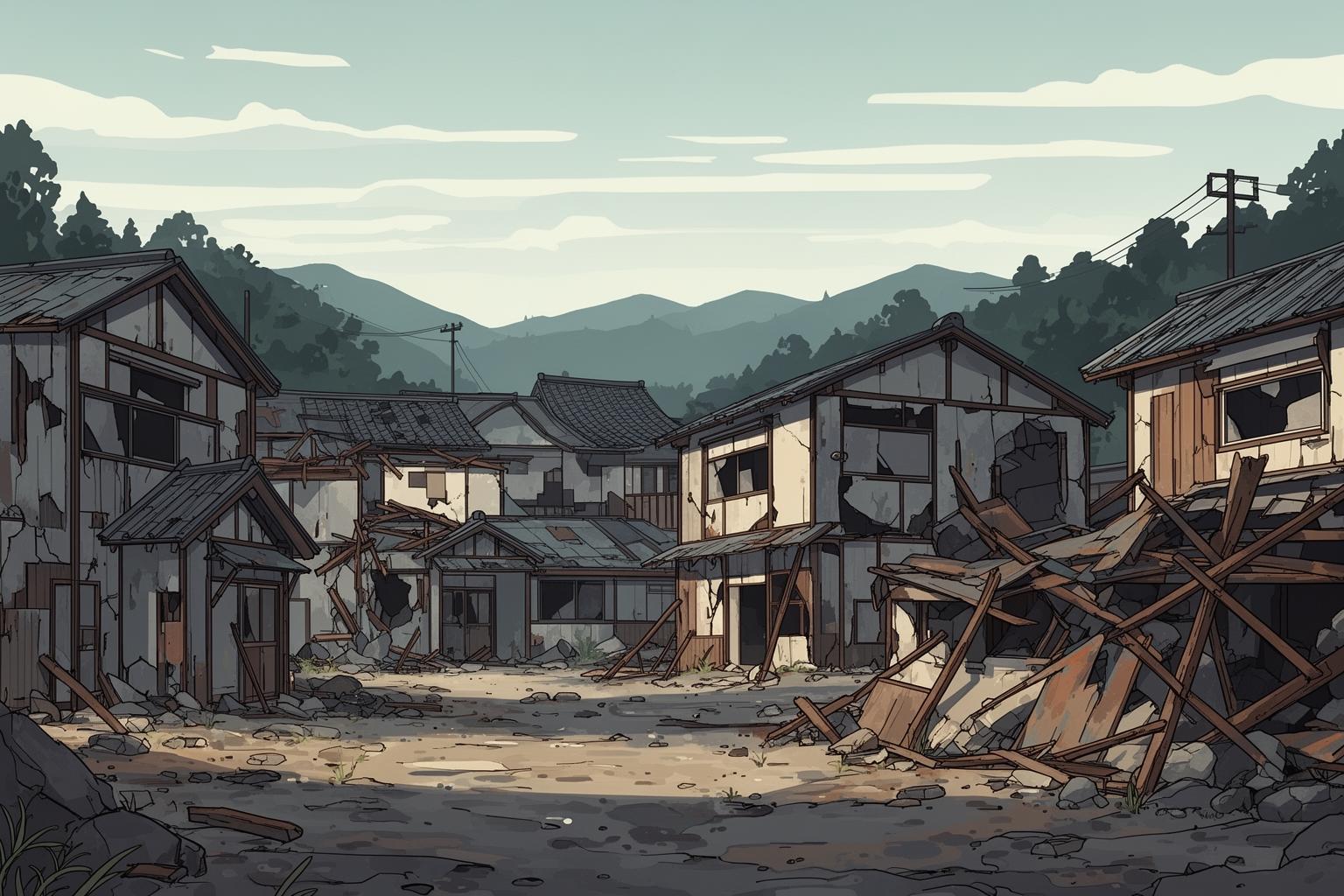
So, what is it really like to stand in one of these places today? It’s more than just sightseeing; it’s a fully immersive experience engaging all your senses in decay and memory. The charm of exploring ‘haikyo’ lies in this raw encounter with a frozen past. These aren’t curated museums—they are unfiltered, atmospheric, and deeply melancholic spaces where the sudden end of an era is vividly felt. The distinctive ‘vibe’ of these mining towns arises from the clash between monumental industrial ambition and nature’s quiet, persistent reclamation.
Concrete Skeletons and Nature’s Reclamation
The first thing that captures your attention is the scale and architecture. The ruins are dominated by massive, brutalist concrete structures. Towering ‘yagura,’ or winding gear towers that once lowered miners into the earth, now stand like skeletal guardians over the valleys. The most imposing of these are the ‘senkōjō,’ ore processing plants—sprawling, multi-level concrete labyrinths built on steep slopes where rock was crushed, sorted, and refined. These industrial cathedrals of decay have vast, sky-exposed halls, with rusted machinery transformed into abstract sculptures. Then there are the apartment blocks: rows of identical eleven-story concrete buildings standing vacant in remote mountain fog, such as those at the Matsuo mine in Iwate. They present a haunting vision of a failed modernist utopia. What makes it visually striking is the slow-motion battle between these man-made structures and the natural world—green moss blankets the concrete floors, vines creep through shattered windows and coil around rusted railings, and entire trees burst from the roofs of collapsed buildings. This tension—between industry’s gray, rigid geometry and nature’s wild, organic chaos—is central to the Japanese haikyo aesthetic.
Whispers in the Halls: Artifacts of a Lost Life
What truly transforms these sites from mere industrial ruins into something more affecting are the personal remnants left behind. Because the towns were often abandoned so abruptly, they were never thoroughly cleared. Inside decaying apartments, schools, and clinics, you find intimate artifacts of daily life frozen in time. A rotary phone sits on a dusty desk. A child’s worn shoe lies forgotten in a classroom corner. Glass medicine bottles still line shelves in a doctor’s office, their contents long vanished. A kitchen wall displays a calendar from 1972, marking the year the mine closed and life ceased. These small, ordinary objects carry immense emotional weight, turning a broad story of economic collapse into a tangible human tragedy. You can almost hear the echoes of those who once used them, the lives once lived in these rooms. This is what distinguishes haikyo from visiting traditional ruins; an ancient castle is a relic of a distant, almost mythical past, while an abandoned mining town captures a snapshot of your grandparents’ era—a modern life abruptly and completely erased, making the sense of loss immediate and deeply personal.
Noteworthy Examples Without Listing
The vast scale of this phenomenon becomes evident when viewed across the country. In Hokkaido, the coalfields of Yubari once formed a sprawling network of interlinked mining towns that produced a significant portion of the nation’s coal. Today, Yubari symbolizes demographic collapse, its population a fraction of its former size, scattered with ruined mining infrastructure. On Sado Island in the Sea of Japan, the Sado Gold Mine operated for nearly four centuries, from the shogunate era until 1989. Its extensive preserved tunnels and crumbling processing plants narrate a history spanning Japan’s transition from feudalism to modernity. The Osarizawa Mine in Akita boasts an even longer history, with parts of its 800-kilometer tunnel network converted into a tourist attraction, while the larger industrial footprint endures slow decay. From fog-covered Matsuo highlands to the polluted valleys of Ashio, each place tells a distinct variation on the same fundamental story: a community built around a single purpose, ultimately abandoned when that purpose was fulfilled.
More Than Just Ruins: The Legacy and Modern Resonance
So why should we care about these crumbling towns in the middle of nowhere? They are more than mere destinations for adventurous photographers or urban explorers. These places serve as vital, albeit uncomfortable, monuments to the path Japan has taken. They carry lessons about industrial heritage, the complexities of memory, and the cyclical nature of progress. In their silence, they offer a profound commentary on the challenges Japan faces today.
A Difficult Heritage
Deciding what to do with these massive, decaying, and often contaminated sites is a significant challenge. Some, like the aforementioned Sado or Osarizawa mines, have been partially preserved and transformed into museums, rebranding themselves as ‘industrial heritage’ sites. This effort aims to salvage history by highlighting the technological achievements and the miners’ hardworking spirit, while sometimes downplaying the darker aspects of pollution and labor exploitation. Other sites are simply too large, too dangerous, or too remote to preserve. They remain exposed to the elements, fenced off but gradually collapsing, their history fading with every passing typhoon. The recognition of this ‘Sangyo Isan,’ or industrial heritage, is a relatively recent concept in Japan, a country that has often prioritized the new over the old. Deciding which parts of this difficult history are worth preserving—and how to tell their stories honestly—is an ongoing debate. These ruins compel us to confront a past that isn’t always heroic or beautiful but is essential to understanding the present.
The Haikyo Explorer’s Gaze
The rising interest in haikyo exploration is a fascinating cultural phenomenon in its own right. Why are so many people, both Japanese and foreign, drawn to these places of decay? It’s more than just seeking an adrenaline rush. In a society often perceived as over-managed, hyper-clean, and conformist, haikyo offers an escape into a world that is wild, authentic, and uncontrolled. It stands as a physical rejection of the polished surface of modern Japan. For many, there is also a deep aesthetic appreciation involved, connected to traditional Japanese ideas like ‘wabi-sabi’ (finding beauty in imperfection and impermanence) and ‘mono no aware’ (a gentle sadness for the transience of things). To stand in a ruined mining hospital and find beauty in the peeling paint and rusting medical equipment is to engage with these concepts in a modern, industrial context. It is a search for a tangible connection to the past—a way to feel the weight of history in a place untouched by tourist sanitization.
A Mirror to Modern Japan
Ultimately, the story of the forgotten mining towns serves as a microcosm of modern Japan’s broader narrative. The cycle of intense, centralized development followed by rapid decline and abandonment is a pattern repeated across the country. The concentration of wealth and population in a few megacities while the countryside empties is a direct legacy of choices made during the post-war economic boom. The challenges of an aging population, the erosion of community bonds, and the search for a new national purpose in a post-industrial world all trace back to the era that created—and then destroyed—these towns. They stand as powerful, physical reminders that the ‘Japanese miracle’ came at a cost. It was a miracle fueled by finite resources, paid for by scarred landscapes and the sacrificed health of workers. These rusting, silent towns are not anomalies; they are a fundamental part of Japan’s landscape and an essential piece of the puzzle you must understand to truly grasp why Japan is the way it is.