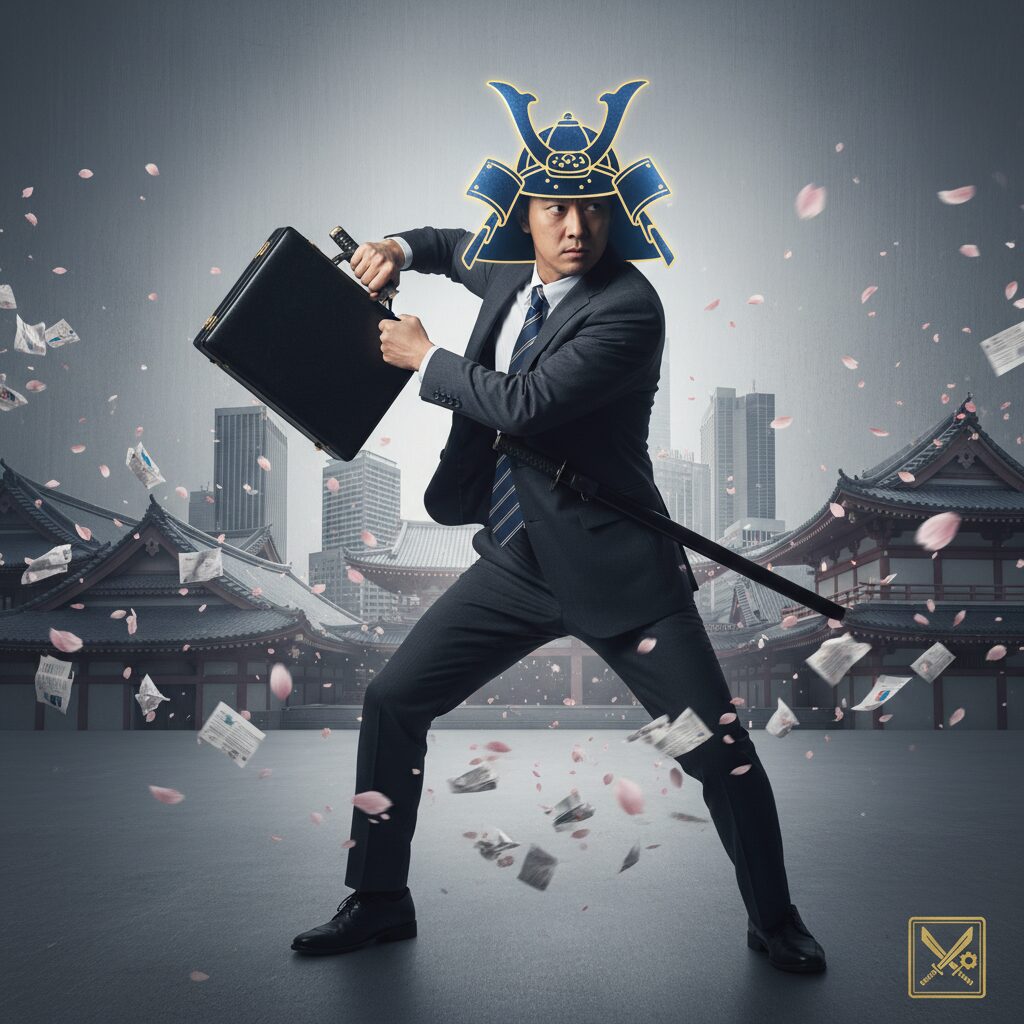
You’re in a business meeting in Tokyo. The proposal is laid out, the numbers make sense, and you’ve made your case with what feels like crisp, American-style logic. You look to your Japanese counterpart, Mr. Tanaka, for a decision. He smiles faintly, tilts his head, and says with practiced calm, “That is a very interesting perspective. We will consider it in a forward-looking manner.” You leave the meeting feeling optimistic. Your colleague, who has been in Japan for a decade, pulls you aside. “That’s a no,” he says flatly. “A hard no.” How could you have missed it? You didn’t hear the word “no.” You didn’t see a frown or a shake of the head. What you missed wasn’t in the words or the gestures. It was in the air.
This is the world of Kuuki wo Yomu (空気を読む), a phrase that literally translates to “reading the air.” It is perhaps the single most important, and most challenging, social skill required to navigate life in Japan. It’s not about etiquette, like knowing which chopsticks to use or how deeply to bow. It’s a deeper, more intuitive sense of social radar. It is the ability to perceive the unspoken feelings, intentions, and power dynamics within a group—the collective mood, the “atmosphere”—and to adjust your own words and actions accordingly to maintain harmony. To a Westerner accustomed to direct communication, it can feel like trying to read minds. But in Japan, it’s not extrasensory perception; it’s the default mode of communication. Understanding this concept is the key to unlocking the logic behind Japanese social interactions. It’s not just about being polite; it’s a fundamental survival skill in one of the world’s most nuanced and group-oriented societies.
By appreciating the unspoken cues that guide Japanese interactions, one can further grasp the communal spirit at work by exploring the connection-focused nature of public baths, which deepens the understanding of societal harmony in Japan.
Beyond “Please” and “Thank You”: The DNA of Japanese Communication
To understand why “reading the air” is so essential in Japanese life, you need to step back from individual interactions and examine the broader cultural framework operating in the background. Western societies, especially those in North America and Western Europe, are largely based on individualism and explicit communication. Japan’s foundation is different, rooted in the group, with communication implicitly designed to protect that group at all costs.
High-Context vs. Low-Context Cultures
Anthropologists distinguish between “high-context” and “low-context” cultures, with Japan being the quintessential example of a high-context society. In a low-context culture, such as the United States or Germany, meaning is primarily conveyed through explicit words. People are expected to say what they mean and mean what they say. Clarity, directness, and transparency are highly valued. If you disagree, you say, “I disagree with that.” If you need information, you ask a direct question.
In contrast, high-context cultures operate differently. The literal words are only a small part of the message; the real meaning lies in the context—the relationship between speakers, their social status, shared history, the setting, and crucially, non-verbal cues. Communication is layered, indirect, and nuanced. The goal is not merely to relay information but to do so while preserving social harmony. Saying “I disagree with that” in a meeting is not viewed as honest but rather confrontational and disruptive. A skilled Japanese communicator might instead say, “I understand your point. Perhaps we could consider another perspective?” This softens disagreement and allows the other party to save face. Kuuki wo Yomu is the active process of interpreting this context.
The Invisible Power of Wa (和)
At the heart of this high-context communication is Wa (和), often translated as “harmony.” Yet it goes beyond simply getting along; it is a fundamental cultural value highlighting the importance of a peaceful and unified group. From ancient farming communities, where cooperation was vital for survival, to today’s corporate settings, the group’s well-being and cohesion have always taken precedence over individual desires. Individualism isn’t celebrated as in the West; it may even be regarded as selfish.
Wa represents the ideal social state, and Kuuki wo Yomu is the key tool used to sustain it. Every group member is expected to be constantly “reading the air” to ensure their behavior supports rather than undermines group harmony. This involves anticipating others’ needs without being asked, sensing when a topic causes discomfort and gently steering the conversation elsewhere, and knowing when it is appropriate to speak or remain silent. It is a continuous, collective effort to prevent social friction before it arises. Disrupting Wa by failing to read the air is considered one of the gravest social mistakes a person can make.
The Mechanics of Reading the Air: How It’s Actually Done
For someone unfamiliar, this can all seem incredibly vague. How does one learn to sense something invisible? While much of it is absorbed through a lifetime of social conditioning, the process can be dissected. It’s a skill founded on paying careful attention to everything except the literal words being spoken.
The Art of Silence and Pauses (間, Ma)
In many Western cultures, silence during conversation feels uncomfortable. It’s seen as empty space that must be quickly filled. In Japan, however, silence is a form of communication. The concept of Ma (間) denotes this negative space—the interval or pause in time and space. It is not empty; it is rich with meaning.
A pause before responding to a question can indicate deep thought and respect for the inquiry. A slightly prolonged silence after you’ve made a suggestion can serve as a clear, non-confrontational signal of disapproval. It allows you, the speaker, to sense the atmosphere, notice your misstep, and backtrack gracefully by saying something like, “…but that’s just one idea, of course.” You’ve been corrected without a single critical word. Becoming comfortable with these pauses and learning to listen to their message is the first step in mastering the art of reading the air. Don’t hurry to fill the silence. Sit with it, and listen.
A Masterclass in Non-Verbal Cues
The Japanese language is a masterclass in subtlety, and the accompanying body language is equally nuanced. A slight, sharp intake of breath through the teeth may signal that the listener finds what you’ve just said problematic or difficult. A slow, contemplative nod might mean “I am hearing your words,” whereas a series of quick, shallow nods is more likely to mean “I understand and agree.”
Then there is the intricate world of aizuchi (相槌), the verbal and non-verbal interjections listeners use during conversation. These include frequent “hai” (yes/okay), “un” (uh-huh), “ee” (yes, more formal), and “sou desu ne” (that’s right, isn’t it) sounds you consistently hear. A common mistake for foreigners is interpreting these as signs of agreement; they are not. Aizuchi signal active listening. They mean “I am following you, I am engaged, please continue.” They act as conversational lubricant, encouraging the speaker and showing respect. The absence of aizuchi is itself a powerful signal—it can indicate the listener is confused, disapproving, or mentally checked out.
The Indirect Dictionary: Tatemae and Honne
Perhaps the most intricate aspect of reading the air involves navigating the twin concepts of tatemae and honne. Honne (本音) refers to one’s true, private feelings and opinions. Tatemae (建前) is the public facade, the behaviors and opinions one displays to maintain Wa and meet social expectations.
Everyone, in every culture, has some version of this public-private split. But in Japan, it is a much more explicit and universally understood social contract. The expectation is not that you will always express your honne. Instead, you are expected to present a tatemae appropriate to the situation, and others will be adept at reading the air well enough to infer your honne without you having to state it explicitly, thereby avoiding friction.
This is why Mr. Tanaka in the opening story didn’t simply say, “No, we’re not interested.” That would have been poor tatemae. His polite, non-committal response was the socially correct public face. The “no” was communicated through the air—by his lack of enthusiastic follow-up questions, his slightly formal tone, and the use of a vague, forward-looking phrase that creates distance. The ability to discern between the polite script of tatemae and the true message of honne is the ultimate test of one’s skill in reading the air.
The Pressure Cooker: When the Air Becomes Suffocating
While this system can facilitate remarkably smooth, empathetic, and efficient social interactions, it does have a significant dark side. The ongoing pressure to constantly gauge and conform to the atmosphere can be mentally and emotionally draining. For many Japanese people, the atmosphere is not a gentle breeze but a heavy, oppressive weight.
The Fearsome “KY” Label
The pressure is so strong that the slang term “KY” arose in the early 2000s. It stands for kuuki yomenai (空気が読めない), meaning someone who “cannot read the air.” Being labeled KY is a harsh judgment of one’s social skills. It brands you as clumsy, selfish, and disruptive—a bull in a china shop socially. It’s the kind of insult that can follow you, murmured in offices and classrooms. The fear of being called KY fuels a strong drive toward conformity, encouraging people to suppress their individuality and follow the safest, most agreeable path to avoid being accused of disturbing the precious Wa.
Groupthink and Suppressed Dissent
This overwhelming pressure to conform has tangible consequences, especially in professional environments. In a setting where harmony is valued above all else, who is willing to be the bearer of bad news? Who dares to challenge a superior’s flawed plan? Expressing a dissenting opinion, even if factually accurate, demands significant social capital and a readiness to be seen as disruptive. This can foster a culture of groupthink, where poor ideas remain unchallenged because no one wants to disrupt the atmosphere by pointing out obvious faults. The emphasis shifts from solving problems to preserving a harmonious process, often at the expense of the final result.
An Invisible Barrier for Outsiders
For foreigners, the reliance on implicit rules can feel like an invisible barrier. Since these rules are unwritten and absorbed culturally rather than explained, they can be used—intentionally or not—to exclude those outside the in-group. You might find yourself excluded from decision-making simply because you failed to pick up on subtle signals during a meeting. You could sense social coldness without ever being told you’ve done anything wrong. This isn’t necessarily ill-intentioned; it’s simply the system working as intended—a closed loop of shared context that is highly efficient for insiders but profoundly opaque to outsiders.
Navigating the Atmosphere: A Practical Guide for Outsiders
So, as a foreigner, are you destined to be forever “KY”? Absolutely not. While mastering native-level fluency in reading the air is a lifelong journey, you can definitely learn to navigate the system effectively and respectfully. The aim isn’t to become Japanese, but to become a mindful and considerate participant in Japanese society.
Observe, Listen, and Wait
This is the golden rule. When you enter a new social setting, resist the urge to break the silence. Your initial role is to be a social scientist. Observe: Who holds the highest status in the room? How do others show deference? What is the overall vibe—is it formal and reserved, or relaxed and lively? Listen not just to what is said, but also to the pauses and silences. By waiting and collecting information, you gain a clearer understanding of the atmosphere before you act, helping you avoid a clumsy entrance. In Japan, the thoughtful, quiet observer often earns more respect than the loud, assertive speaker.
Embrace Ambiguity
In low-context cultures, ambiguity often signals poor communication. In Japan, it is used strategically. Avoid cornering people with direct yes-or-no questions, especially in group settings. Phrasing a request as “Would it be possible to consider…?” is far preferable to “Can you do this?” Likewise, when expressing your own opinion, soften it with phrases like “I feel that perhaps…” or “One possible way to look at it is…” This allows room for others to disagree politely and helps build consensus instead of sparking confrontation. Learning to communicate in shades of gray rather than stark black and white is an essential skill.
The “Gaijin Card”: A Limited-Use Passport
Japanese people are highly aware that their style of communication is unique, and generally do not expect foreigners (gaijin) to grasp all the subtleties. You will be granted some leniency for social missteps, often referred to as the “gaijin card.” However, this is not permission to be oblivious. Overreliance on it marks you as someone who is not making an effort. The most respected and successful foreigners in Japan aren’t those who never err, but those who show a sincere and clear effort to understand and respect the local culture. Your awareness of Kuuki wo Yomu, even if not perfectly executed, will be noticed and deeply appreciated. It shows you care enough to try.
More Than Manners, It’s a Worldview
Kuuki wo Yomu is much more than just a set of social manners. It embodies a worldview that values the collective over the individual and prioritizes harmony over absolute truth. It is the unseen thread that knits together Japan’s social fabric, shaping a society that, to outsiders, can seem both beautifully seamless and frustratingly obscure.
Viewing it merely as a source of pressure and conformity overlooks its deeper elegance. When it functions well, it is a form of social poetry—a quiet, empathetic dance where people anticipate one another’s needs, offer support without words, and move in effortless harmony. It is a system grounded in deep sensitivity to others.
Grasping this concept won’t make you an expert instantly, but it will offer a fresh perspective on Japan. The next time you face a confusing silence, a vague response, or an abrupt change in atmosphere, you’ll know what to do: pause, listen, and try to read the air. The true conversation takes place in the spaces between the words.