Walk into any modern Japanese arcade, or gesen as they’re known here, and you’ll eventually find it. Past the rhythmic clatter of pachinko balls and the frantic digital symphonies of the rhythm games, there’s usually a dedicated floor or a brightly lit corner that feels distinctly different. The lighting is softer, the music is upbeat J-pop, and the space is almost entirely populated by young women and girls, laughing, fixing their hair in front of large mirrors, and moving with a sense of purpose between a fleet of oversized, pastel-colored boxes. This is the world of Purikura.
To the uninitiated, these machines look like simple photo booths, a relic of a pre-smartphone era. But to dismiss them as such is to fundamentally misunderstand a cultural phenomenon that has shaped Japanese youth culture for nearly three decades. Purikura—a portmanteau of Purinto Kurabu, or “Print Club”—is not just about taking a picture. It is a creative studio, a social ritual, a beauty filter made manifest, and a powerful engine for the manufacturing of kawaii, or cuteness. It’s a performative space where you and your friends step inside, pull a curtain, and for a few hundred yen, transform yourselves into idealized, wide-eyed, flawless versions of yourselves, immortalized on a sheet of glossy stickers.
For generations of young Japanese, the act of taking Purikura has been a rite of passage, a fundamental part of friendship and adolescence. It has evolved from a simple novelty into a technologically sophisticated art form, mirroring and often dictating the aesthetic trends of the time. It survived the existential threat of the smartphone camera, adapting and reinventing itself to remain relevant in an age of infinite digital filters. But how did this happen? How did a simple arcade machine become a sacred space for self-expression, and what does its journey tell us about Japan’s relationship with technology, identity, and the relentless pursuit of perfection? This isn’t just the story of a photo booth; it’s the story of how an entire generation learned to frame itself, one sticker at a time.
This dynamic interplay between tradition and innovation extends beyond purikura, inviting us to explore the allure of cyberpunk vending machines that illuminate Japan’s inventive digital culture.
The Birth of a Phenomenon: From Arcade Oddity to Teenage Essential
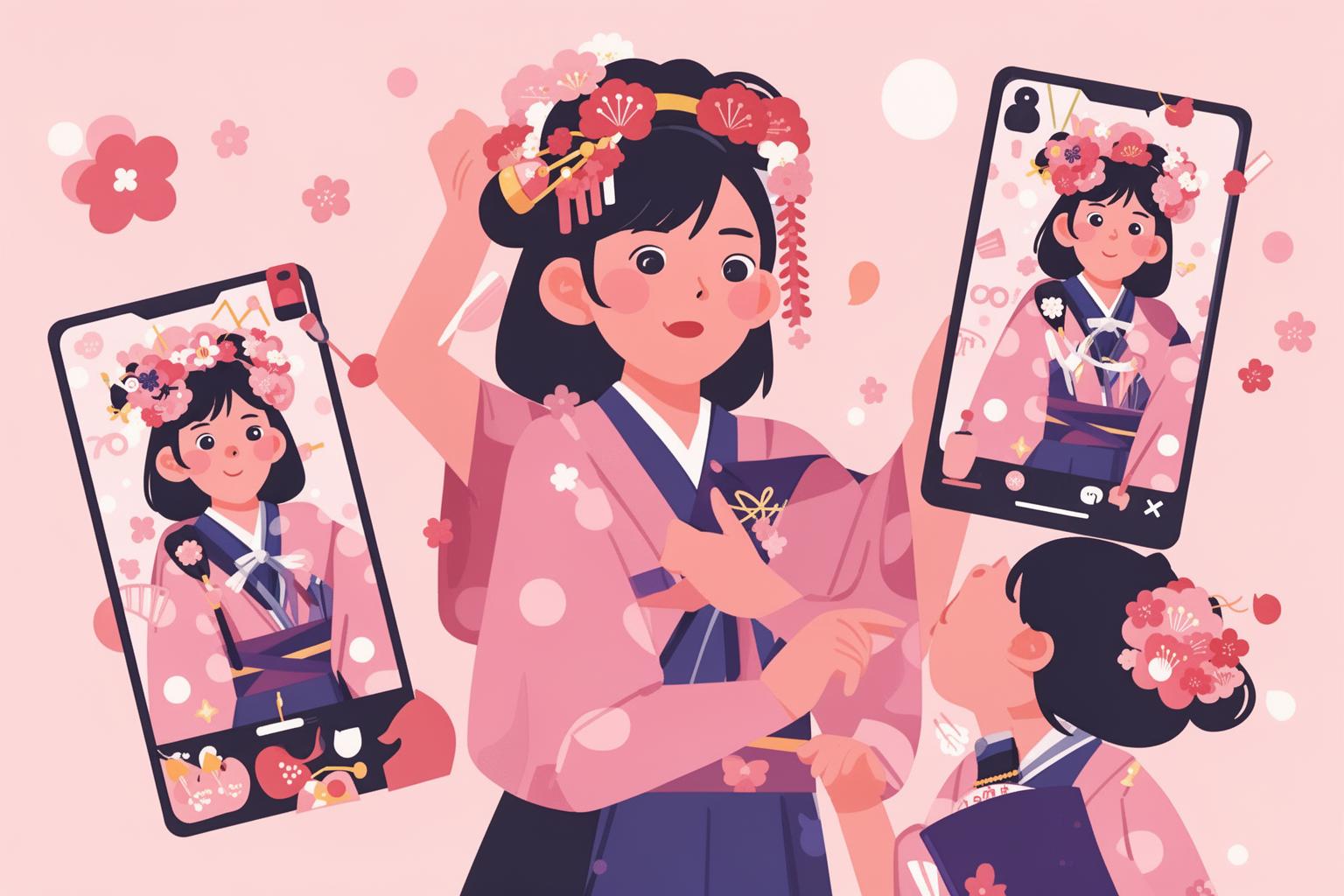
To truly grasp Purikura, you need to transport yourself back to the mid-1990s. Japan was emerging from the aftermath of its bubble economy, a time of cultural transition during which new entertainment forms were rising in popularity. Arcades, once dominated by male gamers, were evolving. It was in this setting, in 1995, that video game companies Atlus and Sega launched a machine called “Print Club.” By today’s standards, the concept was almost laughably simple: it took a low-resolution digital portrait and printed it onto a small sheet of stickers, typically framed with a choice of somewhat cheesy pre-set borders.
At first, the creators hadn’t targeted a specific demographic. Perhaps salarymen might use it to create novelty business cards, or couples might take cute photos on dates. However, the machine ultimately found its true audience in a group that would come to define Japanese youth trends for decades: high school girls, known as joshi kousei or JK. They were the first to recognize its full potential. It was more than just a photo; it was a collectible item, a symbol of friendship, a form of social currency.
The First Wave Boom: Creating Memories One Sticker at a Time
The adoption by schoolgirls was rapid and complete. By 1996, a full-fledged craze had taken hold. Purikura machines began spreading everywhere, from arcades to bowling alleys and karaoke venues. Its appeal lay in its social and tangible nature. Purikura wasn’t something you did alone; it was an activity shared with close friends. The process itself became a bonding ritual: squeezing into the small booth, choosing poses before the unforgiving timer counted down, and bursting into laughter at the results.
But the true magic happened after the photo was taken. The printed sticker sheet turned into a cherished keepsake. This gave rise to the purikura-cho, or Purikura albums. These were not just photo albums; they were carefully curated social diaries. Girls traded stickers among friends, each page forming a mosaic of different faces, dates, and inside jokes. Owning a thick, full purikura-cho was proof of popularity and strong friendships. It physically represented your social network, long before the digital age.
In this initial wave, the technology remained basic. The ‘cuteness’ was mostly self-generated, coming from peace signs, coordinated poses, fashionable outfits, and handwritten notes added afterwards on the stickers. The machine was simply a tool to capture the moment. But soon, a technological arms race began, one that would transform the focus from merely capturing reality to actively creating a new one.
The ‘Gyaru’ Effect and a Fresh Aesthetic
As Purikura’s popularity surged, it became closely linked with another major subculture of the late 90s and early 2000s: gyaru culture. Recognizable by tanned skin, bleached hair, and dramatic makeup, gyaru were the trendsetters of Shibuya and Ikebukuro. They adopted Purikura as a vital means to document their elaborate styles and social lives. The aesthetics of popular magazines like egg and Popteen began shaping what girls wanted from their Purikura photos.
Manufacturers took note and began adding features to meet this demand. Frames grew more intricate, fonts became more decorative, and the first simple digital decorations, or rakugaki, appeared. Users could add sparkling stars, hearts, and basic text directly onto the photos before printing. Purikura had evolved beyond a passive image-capturing device; it was now an active participant in the creative process. This dynamic interplay between technology and users’ aesthetic desires paved the way for a revolution that would forever redefine what made a ‘good’ photo.
The Great Kawaii Arms Race: How Technology Redefined Cuteness
The early 2000s marked a crucial turning point for Purikura. The industry entered an intense period of competition, with manufacturers such as FuRyu, Taito, and Make Software vying for the attention and money of teenage girls. Success no longer depended merely on offering new frames or stamps, but on fundamentally altering how users appeared. The aim shifted from simply capturing a likeness to creating an idealized image. This era ushered in the age of digital enhancement.
The ‘Big Eye’ Revolution and the Quest for Perfection
The most impactful innovation of this time was the launch of automatic retouching features. The first was the bihada (美肌), or “beautiful skin” effect, a software filter that smoothed imperfections and gave skin a glowing, porcelain-like finish. It was an immediate sensation. However, the true breakthrough came with the dekame (デカ目), or “big eye” effect.
This tool digitally enlarged the user’s eyes, making them appear rounder and more doll-like, directly tapping into a long-standing aesthetic ideal in Japanese pop culture, heavily inspired by manga and anime. Suddenly, Purikura became more than flattering; it was transformative. It enabled ordinary girls to capture, in a photo, the features of the models and idols they admired. The effect was striking and, from an outsider’s perspective, perhaps unnervingly artificial. Yet within the culture, it was celebrated as the ultimate expression of kawaii.
This shift carried significant cultural consequences. The beauty standard within the Purikura booth grew increasingly stylized and exaggerated. The goal wasn’t just a photo that looked “good,” but one that achieved a highly specific, technologically enhanced aesthetic. Additional features soon followed: leg-lengthening tools to create a model-like silhouette, face-slimming effects, and options to alter hair color. The Purikura booth had transformed into a kind of digital plastic surgeon’s studio, offering a temporary, playful escape into an idealized form.
Beyond the Face: Full-Body Booths and Dramatic Posing
As facial enhancement technology peaked, manufacturers sought new areas for innovation. The next frontier became the body. Booths expanded from small, head-and-shoulders spaces into roomy studios capable of capturing full-body shots. This advancement unlocked an entirely new dimension of performance.
Posing evolved into a sophisticated, codified art form. Trendy poses shifted seasonally, often inspired by fashion magazines or idol groups. Classic group arrangements, hand gestures, and facial expressions were universally recognized. Green screen backgrounds offered limitless customization, transporting users from dull arcades to fantastical, candy-colored dreamscapes. Studio-quality lighting was carefully calibrated to be as flattering as possible, eliminating shadows and creating a high-key, glamorous effect.
The entire experience was intensified by a sense of joyful urgency. A voice-over guided users, and a relentless countdown timer for each shot encouraged spontaneous, frantic, and often amusing poses. The booth became a stage, and for ninety seconds, users were the stars. This theatricality was central to the appeal. It wasn’t just about the final photo; it was about the fun and freedom of the performance itself.
The Social Ritual: Decoding the Purikura Experience

To understand why Purikura has lasted so long, you need to look beyond the technology and consider the complex social rituals surrounding it. The machine itself is merely a tool; the true significance is found in the shared experience. It’s a subculture centered on friendship, performance, and the creation of collective memories.
The Unwritten Rules of the Booth
Above all, Purikura is a group activity. Although it’s not unheard of to take Purikura photos alone, doing so is uncommon. At its core, it is a ritual of social connection. The process begins even before inserting your coins, starting with friends deciding which machine to choose, often influenced by the specific aesthetic it offers—some promise a “dreamy” effect, others a “model-like” sharpness. This choice is part of the fun, a collaborative decision about how the group wishes to represent themselves.
Inside the curtained booth, a private world is formed. It’s a space free from external judgment, where you can be silly, experimental, and uninhibited with your closest friends. The pressure of the countdown timer encourages teamwork and collective excitement. Yet, perhaps the most important part of the ritual happens after the photos have been taken.
This is the rakugaki (落書き), or decoration phase. Users move to a separate console outside the booth, where they have a few minutes to digitally graffiti their photos. With a stylus, they can add text, draw images, and cover their pictures with a vast array of stamps, glitter, and pre-designed phrases. This is where the photo is personalized and imbued with meaning. You add the date, the event’s name, an inside joke. This act of co-creation turns a generic set of photos into a unique keepsake that tells the story of that specific moment.
Finally, comes the ceremony of the sticker sheet itself. Once printed, the sheet is carefully cut up, and the individual stickers are shared among the group. This act of sharing is the final, essential step. You give a piece of the shared memory to your friends, and they do the same for you. These tiny, glossy squares become physical tokens of your bond, ready to be placed in your purikura-cho or adhered to your phone case—a constant, visible reminder of your friendship.
A Safe Space for Identity Exploration
For young women in Japan, public spaces can often feel restrictive, governed by social norms emphasizing modesty and conformity. The Purikura booth, in contrast, is a deliberately private, female-centered space. The curtain offers protection from the outside world, particularly the male gaze that often dominates arcades. Within this refuge, there is freedom to play with identity.
The transformative technology is not about deception but about aspiration and performance. It allows users to experiment with different versions of themselves, trying on an idealized appearance for a brief moment. This act of creating a perfected image is a form of self-expression, a way to align one’s outward look with inner feelings or a desired persona. It’s a safe and temporary way to explore the limits of identity without any lasting consequences.
This playful self-creation is deeply connected to the culture of kawaii. Kawaii is not simply about being cute; it is an active performance of cuteness. Purikura provides the ideal stage and tools for this performance. It confirms and amplifies the user’s efforts, turning them into a tangible, shareable object that acknowledges their participation in this powerful aesthetic culture.
The Smartphone Challenge and the Digital Rebirth
By the early 2010s, it appeared that Purikura’s dominance was fading. A new technology emerged that threatened its survival: the smartphone. Suddenly, everyone carried a high-quality camera in their pocket. More importantly, apps like Instagram, followed by Snow and BeautyPlus, provided a range of digital filters and retouching tools that mimicked many of Purikura’s signature features—all for free. Why spend 400 or 500 yen standing in a booth when you could achieve similar effects anytime, anywhere?
The impact on the Purikura industry was severe. The market contracted sharply, and many pioneering manufacturers went bankrupt. The once-ubiquitous booths began disappearing from smaller arcades and train stations. For a time, it seemed Purikura would become a nostalgic relic, a charming yet outdated piece of ’90s culture.
Evolving to Survive: The Modern Purikura Experience
But Purikura did not vanish. It evolved. The remaining companies understood they could no longer compete on convenience alone. Instead, they doubled down on what made the experience unique: superior quality and the irreplaceable nature of the ritual itself. The industry reinvented itself for the social media era, cleverly incorporating the very technology that had threatened its existence.
Modern Purikura machines are technological marvels. The lighting is no longer simply bright; it’s professional-grade, multi-point studio lighting designed to erase every unflattering shadow. The cameras are high-resolution DSLRs. The enhancement software far surpasses any phone app, producing impossibly flawless yet naturally realistic images. It smooths skin while preserving texture, brightens eyes without appearing cartoonish, and subtly contours faces with precision. The result is the “ultimate selfie,” a polished perfection that even the most skilled smartphone editor would find difficult to match.
The user experience has also been enhanced. Many arcades now feature large poudā rūmu (powder rooms) next to the Purikura section, equipped with well-lit mirrors, counters, and outlets for hair straighteners and curling irons. The preparation, or moru, has become an official part of the ritual. Friends gather here to perfect their makeup and hair before their photo shoot, transforming the outing into a longer, more elaborate event.
Most importantly, Purikura embraced the digital age. While the physical sticker sheet remains a treasured element of the experience, the primary product is often now the digital file. After a session, users receive a QR code to download their photos directly to their phones, optimized for sharing on Instagram, TikTok, or LINE. Purikura found a new purpose: it no longer serves just as a memory-maker but as a content-creation engine for one’s online persona.
The Enduring Legacy: Why Purikura Still Matters
In a world flooded with digital images, where every smartphone acts as a gateway to an endless flow of filtered selfies, Purikura’s survival and ongoing relevance are remarkable. It endures because it provides something a smartphone cannot fully duplicate: a tangible experience and a physical keepsake.
A Tangible Memory in a Digital Age
The small, glossy sticker you hold after a Purikura session is fundamentally different from a JPEG stored in the cloud. It is a physical item that occupies real space. It can be slipped into a wallet, adhered to a laptop, or placed in an album. This permanence carries weight in an era of fleeting digital content. A photo on a phone is one among thousands, easily lost in a virtual library. A Purikura sticker is a purposeful memento of a particular moment, location, and group of people. It signifies a conscious choice to make a memory physical.
The ritual itself—the visit to a location, selecting a machine, and participating together—cements the memory in a way that a casual selfie cannot. It’s an event, a shared experience. This is why, even for a generation raised with smartphones, Purikura retains a unique appeal.
The Blueprint for Digital Self-Image
Ultimately, Purikura’s greatest legacy may lie in its role as a cultural innovator. Long before the wider world debated the ethics of facial filters on Instagram or employed augmented reality to alter appearances on TikTok, Japanese schoolgirls were experimenting with these ideas in curtained booths in Shibuya. Purikura was the original social media filter. It normalized digital self-enhancement and fostered an aesthetic of curated perfection that has since become global.
The entire culture of carefully crafting and sharing an idealized online persona was born in these machines. The playful exploration of identity, the performance for the camera, and the creation of a visual diary of one’s social life—these are the foundational elements of modern social media, and Purikura served as their testing ground.
Today, Purikura represents a fascinating paradox. It is both a nostalgic relic and a state-of-the-art technology. It celebrates artifice while serving as a tool for genuine connection. It is a small, intimate space that has wielded an outsized influence on global visual culture. It reminds us that sometimes, the most revealing portrait of a culture is found where it goes to create an image of its idealized self.