You asked me what detail of daily life in Japan really gets to the heart of the culture. It’s a great question, because it’s never the big, obvious things like temples or tea ceremonies. It’s the small, unspoken rituals that reveal the most. For me, the answer is found in the metallic screech and gentle sway of a packed commuter train during the morning rush.
Picture it. You’re on the Yamanote Line at 8:30 AM. The air is thick with the scent of laundry detergent, last night’s ramen, and the collective breath of a hundred strangers. You are pressed so tightly against your fellow passengers that personal space has ceased to be a concept; it’s a forgotten luxury. There’s a salaryman’s elbow in your ribcage, a student’s backpack digging into your spine. Movement is impossible. Conversation is unthinkable. It is a state of suspended animation, a human jigsaw puzzle locked in place until the next station.
Yet, in this crush of humanity, something remarkable is happening. All around you, people have erected invisible walls. They are standing, packed like sardines, yet they are utterly, profoundly alone. They have achieved privacy in the most public of spaces. Their tool for this magic trick? Often, it’s a paperback-sized volume, its cover adorned with dynamic, black-and-white characters. It’s a manga.
This isn’t just about killing time on a boring commute. Watching someone read manga on a Japanese train is like observing a master class in social negotiation, a silent agreement enacted by millions every day. It’s the art of creating a personal bubble in a place where none should exist. It is a performance of consideration, a shield against the social friction of the crowd, and a window into how Japanese society manages the tension between the group and the individual. This simple act is a complex social contract written in paper and ink.
In the same way that manga creates private sanctuaries amid the rush of daily commutes, Japan’s distinctive gacha culture recasts everyday life into a vibrant canvas of chance and creativity.
The Train as a Transitional Zone
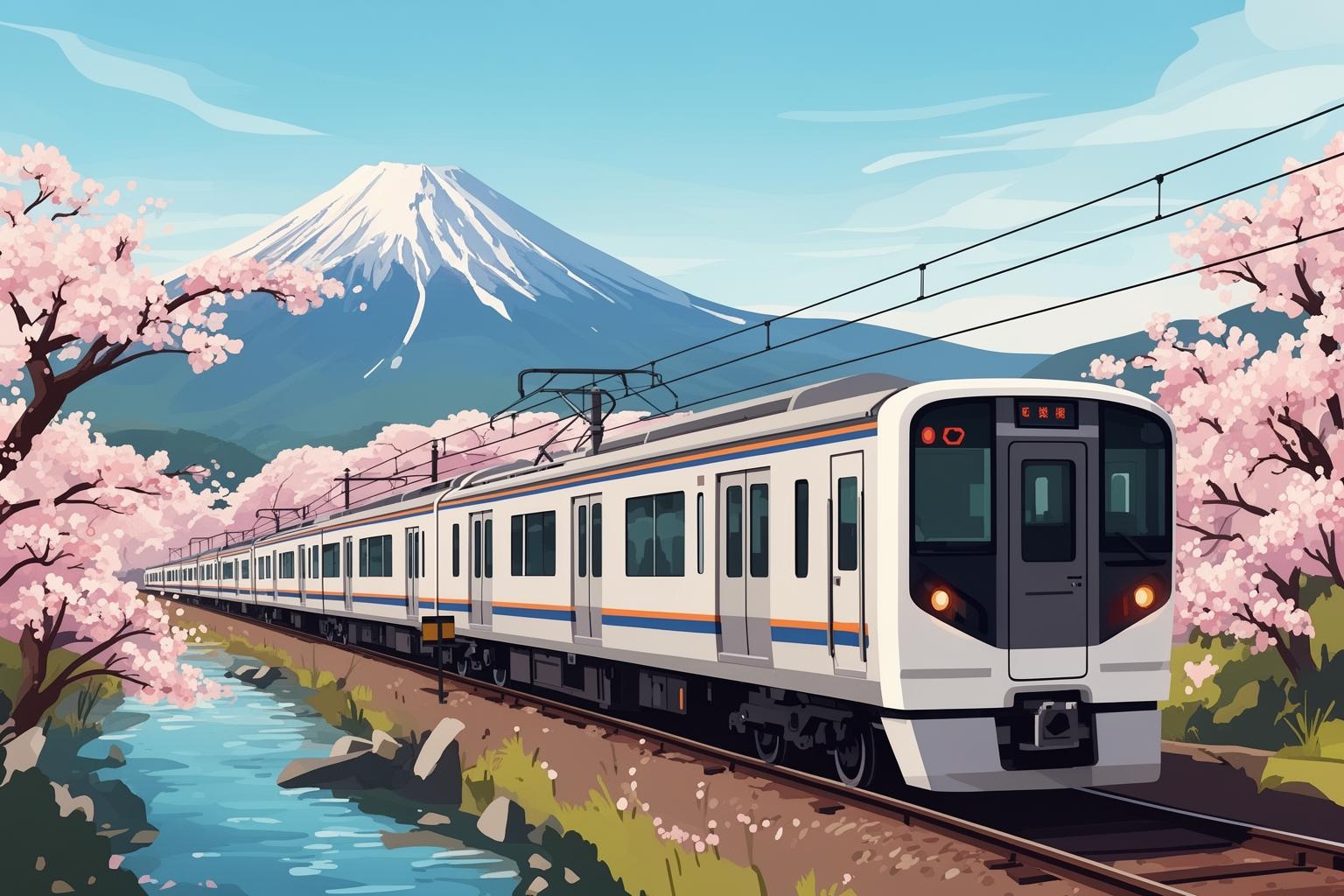
To understand the manga, you first need to understand the train. In Japan, a commuter train is not considered a social space. It is a liminal space, a non-place. It serves as the sterile, functional conduit that carries you from one part of your life (home, the private self) to another (work or school, the public self). It is a transitional space, and the social rules reflect this. The main principle is to minimize your presence and impact on others.
This is why talking on your phone is one of the biggest taboos on public transport. It’s why loud conversations among friends draw cold stares. The train is a shared space, but it is experienced individually. The unspoken agreement is to grant everyone the right to be “alone together.” You are surrounded by people but not expected to interact with them. In fact, the polite thing to do is to actively avoid interaction.
This cultural context creates the ideal setting for solitary activities. People sleep, listen to music through headphones, scroll through their phones, or read. Of all these, reading holds a special significance. It’s quiet, self-contained, and clearly signals that you are occupied. It’s a socially acceptable way to declare unavailability. By reading, you are not being rude or antisocial; you are participating correctly in the shared ritual of the commute. You are respecting the nature of the space.
Into this environment, manga fits perfectly. Its format, cultural ubiquity, and the very act of engaging with it make it the perfect tool for navigating the train’s unspoken rules. It allows a person to completely withdraw into a private world, a portable escape from the physical and social pressure of the crowd.
The Shield of Invisibility
The most obvious role of the manga is as a physical barrier. When someone holds up a book or a phone, they create a small, temporary wall between their face and the outside world. It acts as a shield, however fragile. It disrupts the line of sight between you and the many strangers crowded around you. In a space where you have no control over how close others are to you, you can at least control where you direct your gaze.
This averted gaze is essential. Eye contact in a crowded, enclosed space is deeply uncomfortable. It can be misread as aggression, a challenge, or an unwelcome invitation. It causes social tension. By focusing on the pages of a manga, you eliminate this risk entirely. Your eyes safely explore a private world of your choosing. You signal to those nearby: “I am not looking at you. I’m not a threat. I’m not open to interaction. I am in my own space.”
This action transforms the reader into part of the environment, like a seat or a handrail. Socially, they become invisible. Physically present, of course, but mentally elsewhere. By honoring this act, fellow passengers grant a sliver of psychological privacy. You don’t try to engage someone immersed in their book. You don’t gaze at them. You extend the same courtesy you expect in return. This is the first clause in an unspoken agreement: the manga is a clear, unmistakable “do not disturb” sign, and everyone instinctively understands it.
The Precise Geometry of Public Reading
This performance of privacy is not careless or unconscious. It follows a detailed, unspoken etiquette. It is a physical discipline. The aim is to withdraw into your private world while occupying as little public space as possible. It is a dance of self-effacement.
Observe a seasoned commuter. They hold their manga close to their chest. Their elbows are tucked in tight, pressed against their torso. They avoid flinging their arms outward, preserving the limited centimeters of space belonging to others. When turning a page, especially while standing and holding a strap with one hand, they often use a deft, one-handed flick of the thumb. It is a practiced, efficient gesture designed to be minimally intrusive. Every movement is calibrated to reduce their physical footprint.
The size and format of a standard manga volume (tankōbon) is ideally suited for this. It’s small enough to hold in one hand, light enough to carry easily, and flexible enough to angle comfortably for reading in the awkward position of standing. Compare this to someone attempting to read a full-sized broadsheet newspaper. Fully opening a newspaper is a serious social faux pas on a crowded train. It signals spatial arrogance, a forceful seizure of shared space. By contrast, the compact manga is a gesture of consideration. It says, “I need my private world, but I will keep it as small as possible to honor yours.”
The shift to digital manga on smartphones has refined this geometry. A phone is even more compact. It requires no page turning. The bubble of privacy it creates is smaller but more intense. The glowing screen offers an even stronger focal point for the gaze. The etiquette has naturally adapted. Screen brightness must be controlled to avoid being glaringly obnoxious in a dim carriage. Privacy filters that darken the screen when seen from an angle are increasingly common—a modern technological update to the traditional book cover.
The Silent Language of Content
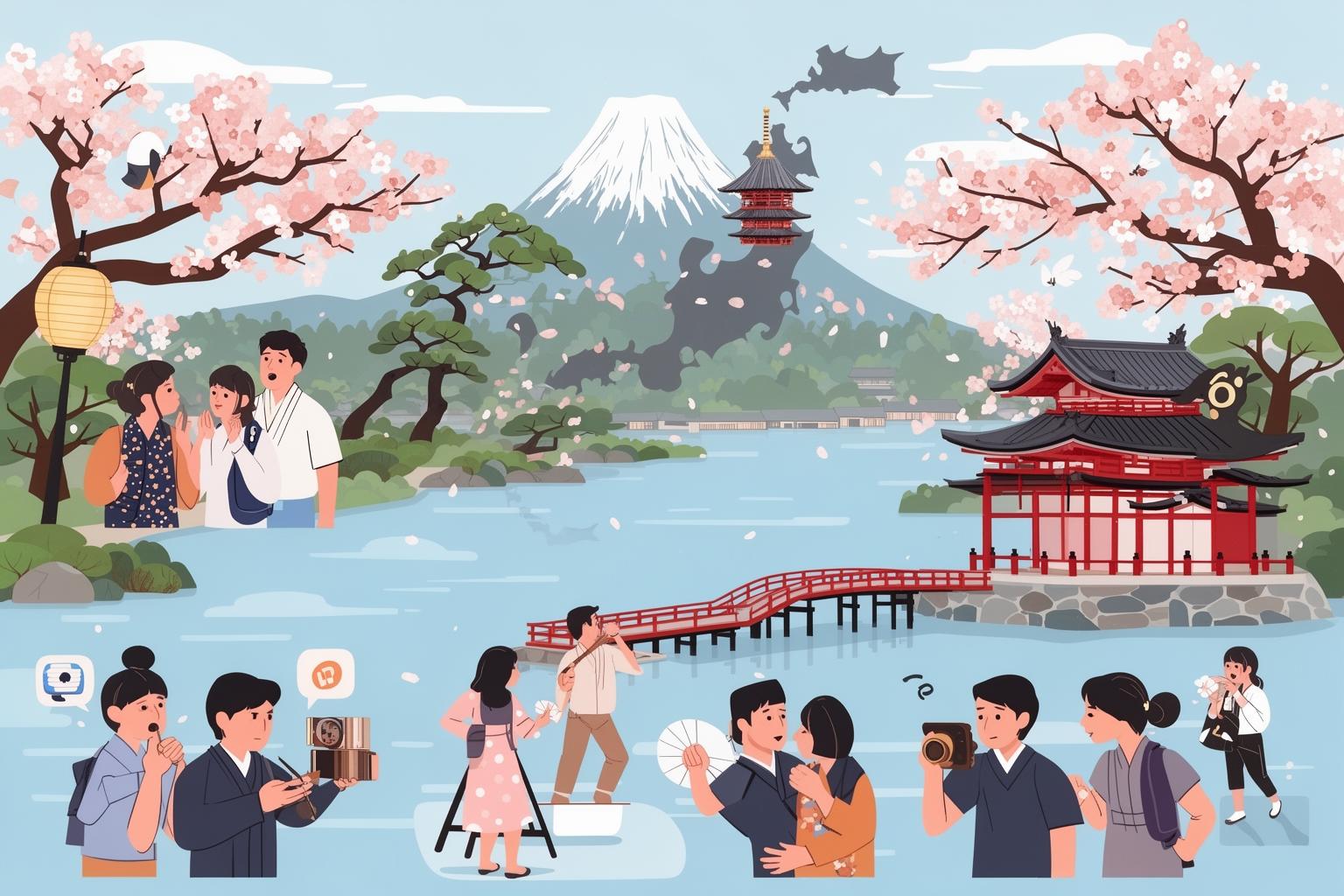
Generally, the social contract holds that the act of reading is what counts, not the content. A fellow passenger’s main concern is that you are quietly engaged in your own mental space. Whether you’re reading a high-stakes sports manga like Haikyuu!!, a classic shojo romance, or an elaborate historical epic makes no difference to the smooth flow of the commute.
However, that’s not the entire picture. Humans are naturally curious, and in a setting with few other stimuli, the cover of your manga serves as public information. It conveys something about you. Reading a popular series like Jujutsu Kaisen or One Piece might create a brief, invisible bond with another fan on the train. Choosing something more obscure or niche might indicate your membership in a certain subculture. An adult reading a children’s manga, or the reverse, might provoke a moment of silent, harmless judgment.
This is where the use of book covers—bukku kabā—comes in. In Japan, when you buy a book, the cashier will almost always ask if you want a cover. They’ll then wrap it in a plain or branded paper cover that completely hides the title and artwork. While this practice is more typical for novels, some people use these covers for manga as well, especially if the content is mature or if they prefer privacy. A book cover is the ultimate declaration of withdrawal. It states, “I am not just unavailable for interaction; I am not even giving you the slightest hint about what lies within my inner world.” It is the final layer of the paper barrier.
This subtle semiotics of choice—whether to display your cover or conceal it—is another dimension of the complex social dance. It represents a quiet negotiation about how much of your personal taste you are willing to disclose, even in an environment where no one will comment on it.
A Contract of Mutual Respect
Bringing all these elements together reveals a sophisticated social system in operation. The contract is mutual and understood by everyone involved. “I will make myself small and quiet, retreating into my own world, so that you can do the same. I will not look at you, and you will not look at me. I will respect the integrity of your paper wall, and you will respect mine.”
This is an ingenious solution to a fundamental challenge of modern urban life: how to maintain a sense of self and sanity within a densely populated, highly structured collective society. It expresses broader cultural values and connects to the concept of wa (和), or social harmony, which is preserved by minimizing friction and emphasizing the smooth operation of the group. It also reflects the interplay between uchi-soto (内 Soto, inside/outside) and tatemae/honne (建前/本音, public face/private feelings).
On the train, you find yourself in a public, soto space. You are expected to display a neutral, considerate public face, or tatemae. Your manga or phone serves as the gateway to your private, uchi world, where your true thoughts and feelings, your honne, are free to roam. The book functions as both a physical and psychological boundary between these two states, enabling you to exist in both at once. You are fulfilling your public role as an orderly passenger while privately indulging in fantasy, drama, or comedy.
Breaches in the Agreement
Because these rules are deeply embedded, breaches are immediately striking and unsettling. They rarely lead to direct confrontation—that itself would violate wa—but instead provoke a palpable sense of collective, silent disapproval.
One of the most frequent violations is someone reading over your shoulder. It is a direct invasion of your private space. The usual response is not to say, “Excuse me, could you please stop?” but rather for the reader to subtly adjust their posture, tilt their book, or simply stop reading and put it away. This passive-aggressive action serves as a non-verbal correction intended to resolve the issue without open conflict.
Another breach involves spatial offenders—those whose elbows protrude, who lean too far, or who neglect the duty of making themselves small. Such behavior is not only physically aggravating but also signals a disregard for the shared social contract. The typical reaction is a symphony of subtle body language: a slight shift of weight away, a deliberately weary sigh, or a series of discreet yet sharp glares.
In the modern age, the greatest offense is noise. Sound leaking from headphones directly assaults the shared silence that underpins the entire system. It disrupts the private worlds of those nearby. This is perhaps the only violation that might sometimes prompt a quiet, polite request from another passenger to lower the volume, though even that is a last resort. More often, public disapproval comes in the form of a conductor’s announcement.
The Unchanging Purpose in a Digital World

The transition from paper volumes to smartphone screens has been smooth because the core purpose of the activity remains unchanged. While the technology has advanced, the social need it fulfills stays constant. In many respects, the smartphone is an even better tool for this task.
It serves as a gateway to an endless library of manga, as well as music, games, news, and private conversations. It functions as a versatile shield, enabling an even more complete and personalized retreat from the public sphere. The etiquette has simply evolved with the new medium. We have learned to adjust screen brightness, use privacy filters, and—most importantly—keep our audio either muted or contained within headphones.
Whether it’s a dog-eared copy of Dragon Ball or the latest webtoon chapter scrolling on a bright OLED screen, the purpose remains the same. It is a tool to carve out a space to breathe amid the stifling closeness of urban commuting. This reflects human creativity in dealing with social and spatial limitations.
So, the next time you find yourself on a crowded Tokyo train, look beyond the sheer density of the crowd. Notice the readers. Observe the subtle way they hold their posture, the focused intensity in their gaze. You’re not just seeing people killing time—you’re witnessing a quiet masterpiece of social choreography, a silent, daily reaffirmation of an unspoken contract that makes life in one of the world’s largest cities not only bearable but peaceful.
The train doors hiss open. The spell breaks. Books snap shut, phones lock and pocket. The paper walls come down. The private worlds dissolve as their occupants return to the anonymous, flowing river of the station, ready to rebuild them all over again on the journey home.