What’s good, fellow travelers? It’s Daniel. So, let’s talk about that moment. The one where you step into a place and your senses just go into overdrive. It’s not just seeing something new; it’s a full-body vibe check. The air gets thick with untold stories, the sounds form a chaotic symphony, and the smells… man, the smells tell you everything you need to know. That’s Omicho Market in Kanazawa. Forget what you think you know about markets. This ain’t your local farmers’ get-together. This is a 300-year-old living, breathing beast, the legendary ‘Kanazawa no Daidokoro’—the Kitchen of Kanazawa. For three centuries, this labyrinth of sights and sounds has been the culinary heart of the entire Hokuriku region. It’s where grandmothers with discerning eyes pick out the perfect daikon, where top chefs source the glistening, ruby-fleshed nodoguro that will grace their menus that night, and where curious souls like us get to dive headfirst into a world of flavor that’s straight-up iconic. This place is the real deal, a chaotic, beautiful, and ridiculously delicious snapshot of Japanese culture that you can taste. It’s loud, it’s crowded, and it’s one of the most authentic experiences you can have in this country. So, lace up your most comfortable shoes, bring an empty stomach, and get ready. We’re going in.
To fully appreciate its 300-year legacy and vibrant atmosphere, you can learn more about the total vibe of Omicho Market.
The Vibe: A Symphony of Organized Chaos
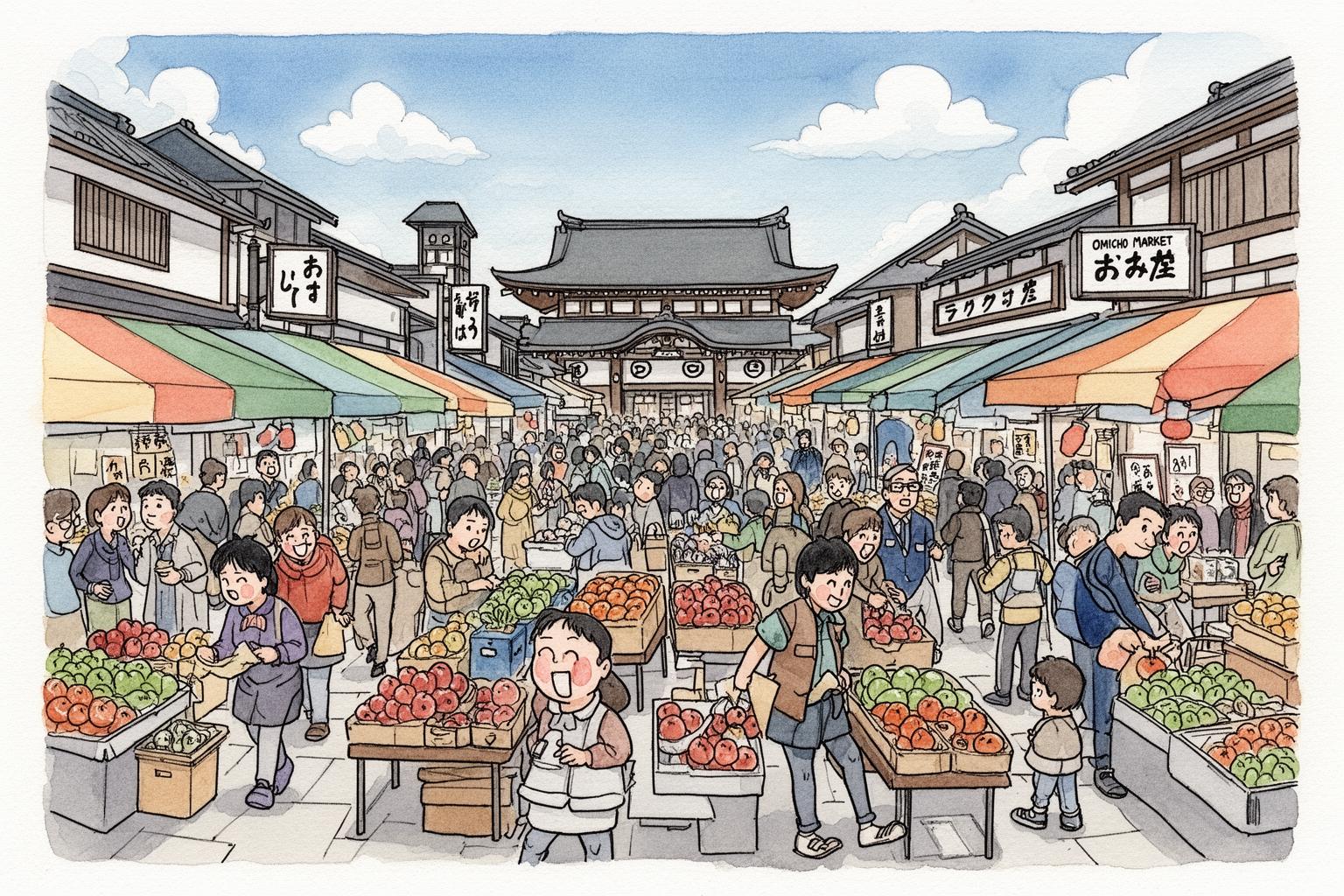
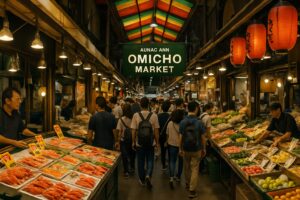
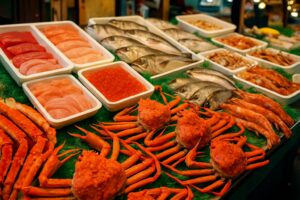
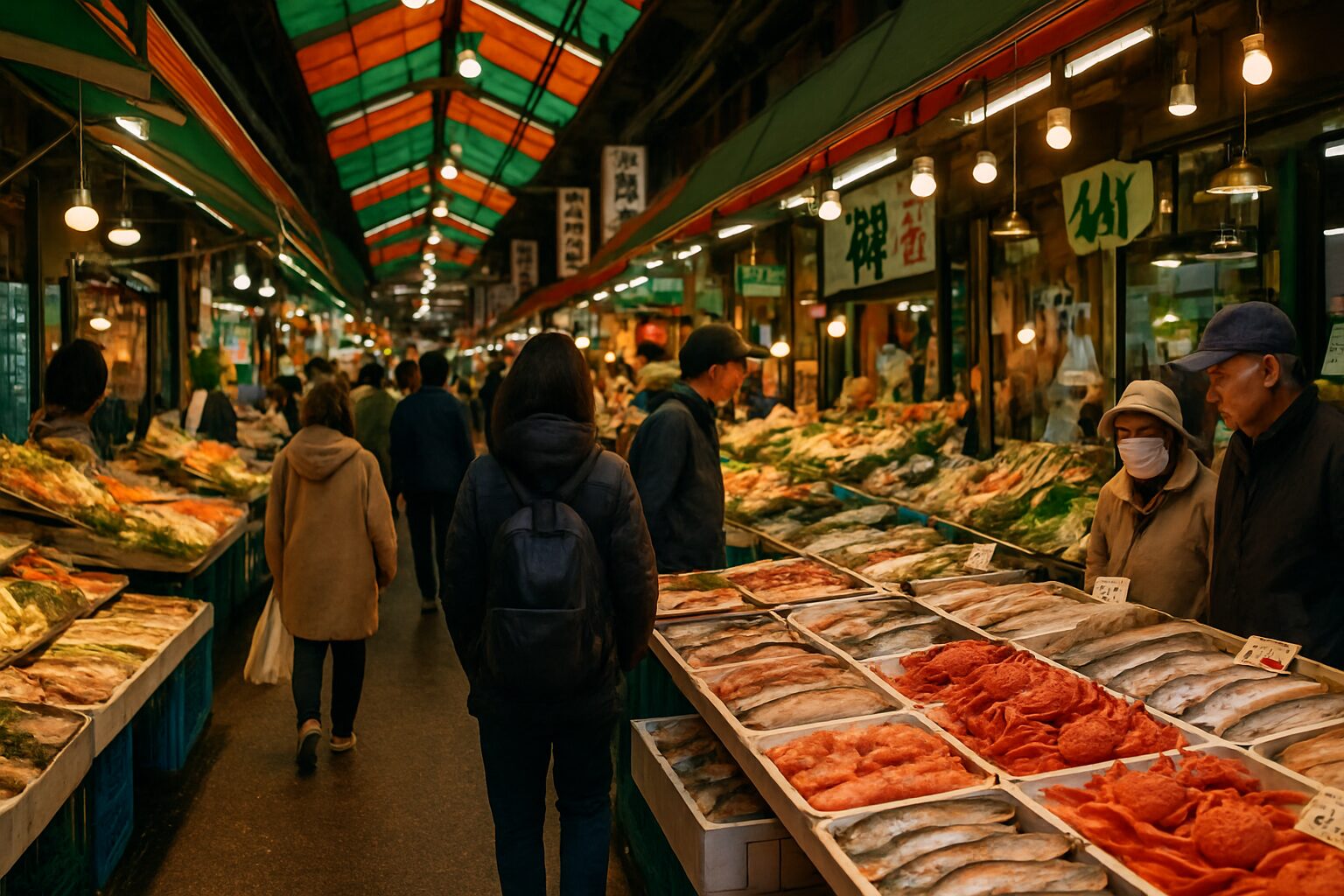
The moment you step through one of the main gates, such as the Musashigatsuji entrance, the world instantly shifts. The gentle murmur of city streets gives way to a chorus of booming voices. “Irasshaimase! Irasshai!” vendors call out, their practiced rhythm crafted to rise above the noise. It’s a welcome, an invitation, a challenge. Your eyes flit from stall to stall, trying to take in the overwhelming abundance of… everything. To your left, a heap of snow crabs, their spiny legs intertwined, forming an alien landscape of crimson and white. To your right, flawless muskmelons rest on velvet cushions, priced like precious gems. Straight ahead, a vendor skillfully shucks an oyster, his knife moving in a slick blur before he presents it to a waiting customer with a flourish. The floor remains constantly damp, a testament to the melting ice in the countless styrofoam boxes brimming with the ocean’s bounty. The air is a wild perfume, a mix of salty sea brine, sweet grilled eel, earthy mushrooms, and the sharp tang of pickles. It’s not overpowering; it’s immersive. You feel the energy of the place seep into you. It’s a controlled frenzy, a dance perfected over generations. People move with purpose, navigating the narrow aisles with unspoken understanding. It’s a place of commerce, yes, but also a community hub. You see vendors chatting with regulars, sharing gossip while weighing out portions of fish. This isn’t a tourist trap; it’s a working market that has graciously offered us a glimpse behind the curtain. The vibe is electric, authentic, and utterly captivating. You don’t just visit Omicho; you experience it with every single one of your senses.
Echoes of History: The Samurai’s Stomach
To truly understand Omicho, you need to look back in history. This market’s story is deeply intertwined with the very fabric of Kanazawa. It dates all the way back to the Edo Period, around the mid-18th century. At that time, Kanazawa was home to the Maeda Clan, one of Japan’s most powerful and wealthy samurai families, second only to the shogun. Their territory, the Kaga Domain, was famously known as ‘Kaga Hyakumangoku,’ meaning ‘Kaga of the Million Koku.’ A ‘koku’ was a measure of rice sufficient to feed one person for a year and served as the standard unit of wealth. Possessing a million koku meant the Kaga Domain was enormously wealthy. With such wealth came refined taste. The Maeda lords were great patrons of the arts and culture, supporting everything from gold leaf craftsmanship to Noh theater. Their patronage extended to cuisine as well. They demanded the finest, and the region—blessed with fertile plains and the rich bounty of the Sea of Japan—delivered. Omicho Market grew naturally out of this demand. It began as a gathering of local vendors near the castle, offering fresh fish, vegetables, and rice to samurai and the expanding merchant class. Initially informal, it soon became the go-to spot for quality ingredients. Over the centuries, it established itself as the city’s pantry. The market has endured fires, modernization, and shifting historical tides, all while preserving its essential identity. The Kaga vegetables you see today, known for their distinctive shapes and intense flavors, are heirloom varieties cultivated for centuries, once served on samurai tables. The seafood, especially winter yellowtail (buri) and snow crab (zuwaigani), were treasured delicacies. When you eat at Omicho, you’re not merely having a meal; you’re tasting a piece of that legacy. You’re engaging in a culinary tradition shaped by samurai sensibilities and agricultural richness, adding an extra dimension of flavor to every bite.
The Main Event: A Deep Dive into the Seafood Saga
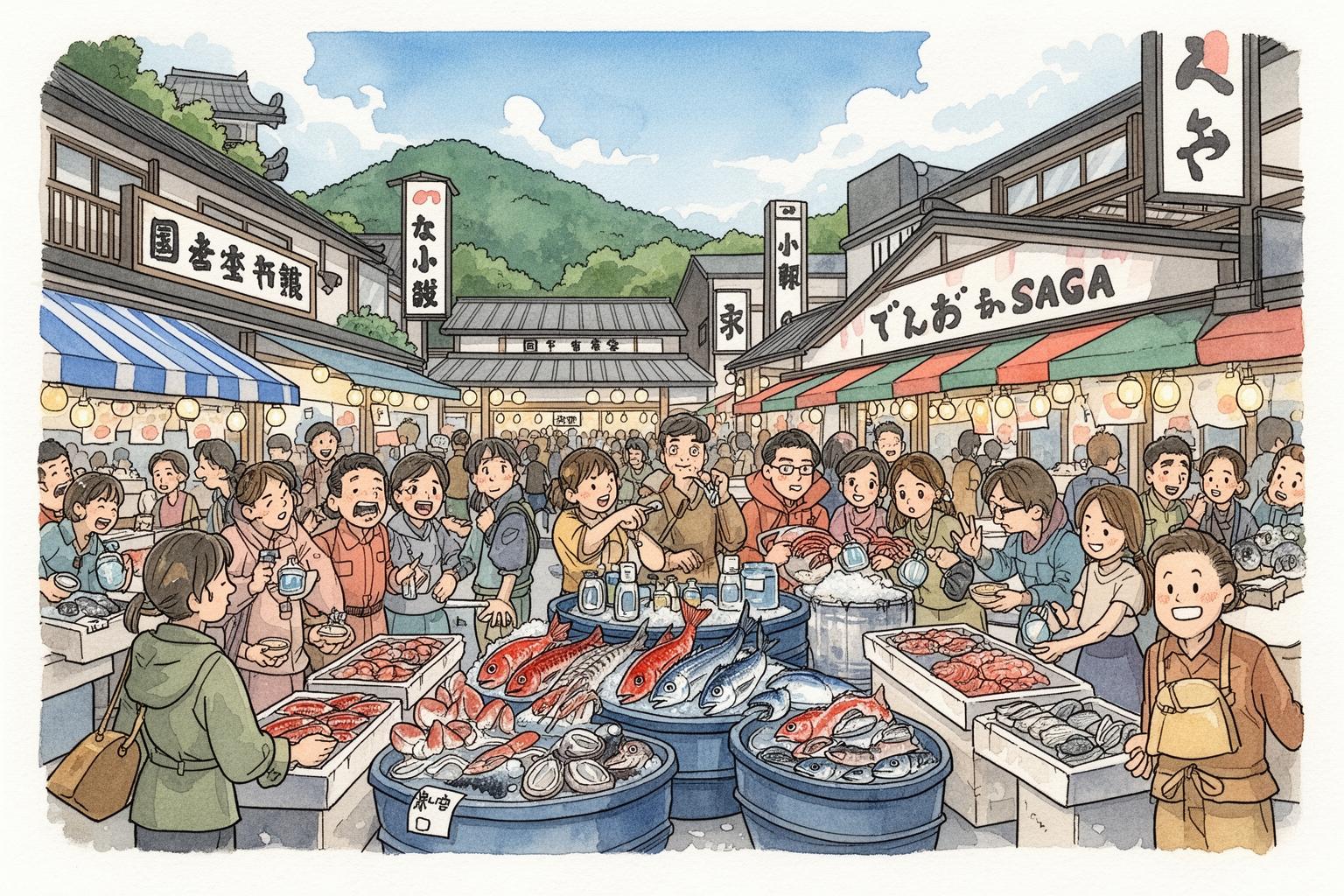
Let’s be honest, you’re here for the seafood. Omicho is a sanctuary devoted to the treasures of the Sea of Japan, with countless admirers. The incredible variety is awe-inspiring, and the freshness is on an entirely different level. This isn’t merely food; it’s a form of art.
Kaisendon: The Ultimate Seafood Bowl
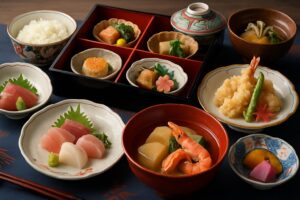
If Omicho has a signature dish, its star is the kaisendon. This bowl consists of perfectly seasoned sushi rice topped with a vibrant assortment of fresh, raw seafood. It’s a feast for the eyes even before you take a bite. Finding the right spot to enjoy one is part of the adventure. Some of the most famous shops are tiny, with lines winding out the door well before opening. Others are hidden gems tucked away in the market’s twisting alleys. Don’t just settle for the first place you see. Stroll around, glance at the bowls others are eating, and follow what draws you in. The toppings are a lineup of Japan’s finest: gleaming pink tuna (maguro), fatty salmon (sake) that melts in your mouth, firm and sweet yellowtail (buri), delicate sea bream (tai), creamy uni (sea urchin), and plump, sweet shrimp (amaebi). But the true Kanazawa pride is a bowl featuring local specialties. Look for nodoguro, the ‘rosy seabass’ or ‘black-throated perch,’ a fatty white fish lightly seared (aburi) to bring out its oils, with a rich, buttery flavor that’s divine. Another local favorite is shiro ebi, tiny white shrimp with a sweet, delicate taste. A proper Omicho kaisendon isn’t haphazardly assembled. Each fish slice is expertly cut and arranged. The warm rice perfectly contrasts the cool fish. A dab of wasabi, a splash of soy sauce, and you’re in paradise. It’s a pure, unfiltered taste of the ocean. My tip? Arrive early. The best spots often sell out of top-tier ingredients by afternoon. It’s a champion’s breakfast that sets the tone for your day.
The Oyster Situation: Freshly Shucked Bliss
You’ll hear them before you see them—the distinct click-clack of an oyster knife prying open a tough shell. Throughout the market, vendors stand behind piles of rugged, rock-like oysters. For a few hundred yen, you can choose one, and they’ll shuck it right there. This is as fresh as it gets. It’s handed to you on the half shell, a glistening, plump morsel resting in its own liquor. You have options—a squeeze of lemon, a dash of ponzu sauce, maybe some momiji oroshi (spicy grated daikon)? Or, for purists, just slide it straight into your mouth, plain. The first taste is an explosion of cold, clean brine—a true essence of the sea. Then comes the creamy texture and a subtle, sweet finish. It’s a fleeting escape, a singular flavor that roots you deep in the market’s heart. It’s not a meal, it’s a moment. And one you’ll want to repeat while exploring the aisles. Don’t hesitate; it’s one of the most approachable and rewarding snacks in all of Omicho.
Winter’s Royalty: The Snow Crab Spectacle
If you’re fortunate enough to visit Kanazawa between November and March, you’ll see the market at its peak. This is the season of the zuwaigani, the male snow crab, a delicacy so revered it bears a special blue tag certifying its Ishikawa Prefecture origin. These crabs reign supreme in the market. They are huge, with long, elegant legs packed with sweet, fibrous meat. Seeing them piled high at fishmongers’ stalls is a spectacle. But be ready for sticker shock; these are luxury items, and their price reflects that. You can purchase them whole to cook at your hotel (if you have the means), or find stalls selling individual legs, either steamed or charcoal-grilled. The taste is sublime—cleaner and sweeter than any crab you’ve had. The kani miso, the rich, savory paste from the crab’s head, is the pinnacle delicacy for connoisseurs. It’s a powerful umami bomb—not for the faint-hearted, but a must-try for adventurers. Even if you don’t splurge on a full crab, simply being in the market during crab season is an experience. The energy changes—more frenetic—as everyone vies for a taste of winter’s finest treasure.
Grilled and Skewered: The Scent of Charcoal
As you wander, follow your nose. That captivating smoky aroma is coming from small grills at various stalls. This is where fire and seafood create magic. Giant squid skewers (ika) are grilled until tender, glazed with a sweet and savory soy-based sauce. The lightly charred edges provide a perfect contrast to the soft flesh. You’ll find scallop skewers (hotate) grilled with a knob of butter and a splash of soy sauce, resulting in rich, decadent bites. Unagi (freshwater eel) is another star—skewered and grilled over charcoal, repeatedly dipped in a dark, sweet tare sauce until beautifully glazed. The result is a smoky, savory, utterly addictive treat. These skewers are perfect for eating on the go. They’re easy to hold, packed with flavor, and give instant satisfaction. It’s a chance to sample various seafood without committing to a full meal. Grab a skewer, find a small spot to stand, and savor the flavor while the market buzzes all around you.
Beyond the Sea: The Earthly Delights of Omicho
While seafood may be the star attraction, Omicho’s supporting cast is equally remarkable. This market celebrates the full bounty of the region, including produce grown in the fertile soil of the Kaga Plain.
Kaga Yasai: Vegetables with a Heritage
Take a moment to appreciate the vegetable stalls. This isn’t your typical produce section. You’re looking at Kaga Yasai, heirloom vegetables certified by the city for their historical and culinary value. There are 15 officially recognized varieties, each with its own unique story. Look for Kaga renkon, a lotus root with a starchy, sticky texture and a mild sweetness, ideal for tempura or simmered dishes. You might spot Gorojima kintoki, a bright reddish-purple sweet potato prized for its deep sweetness and flaky texture when baked. There’s also Kaga futokyuri, a thick cucumber that’s almost comically large. These vegetables serve as a direct link to the region’s agricultural history and offer more flavor than mass-produced varieties. While travelers might not be able to cook them, it’s worth admiring their beauty and understanding their significance in local cuisine. Many restaurants in and around the market feature Kaga Yasai in their dishes, so be sure to look for them on menus.
The Sweet Life: Fruits and Prepared Foods
Japanese fruit culture is on full display at Omicho. The fruit stalls resemble jewelry stores: perfectly shaped strawberries nestled in soft packaging, massive bunches of grapes artfully arranged, and in summer, the famous square watermelons make their appearance. Though often quite expensive, they showcase the precision and care of Japanese agriculture. More affordable options include skewers of fresh fruit or cups of freshly squeezed juice, which make a perfect palate cleanser after savory seafood. Then there are the prepared food stalls, the 惣菜屋 (sozai-ya), a true blessing. Here, you’ll find golden, crispy croquettes (korokke), some filled with creamy potato and minced meat, others with crab cream—cheap, hot, and delicious. You’ll also find stalls selling oden, a classic Japanese comfort food where ingredients like daikon radish, boiled eggs, and various fish cakes simmer for hours in a light, savory dashi broth. It’s especially comforting on a chilly day. Another must-try is tamagoyaki, the Japanese rolled omelet, sometimes sold on a stick—slightly sweet, fluffy, and warm. These stalls are perfect for assembling an inexpensive and incredibly satisfying meal, one delicious bite at a time.
How to Conquer the Market: A Traveler’s Guide
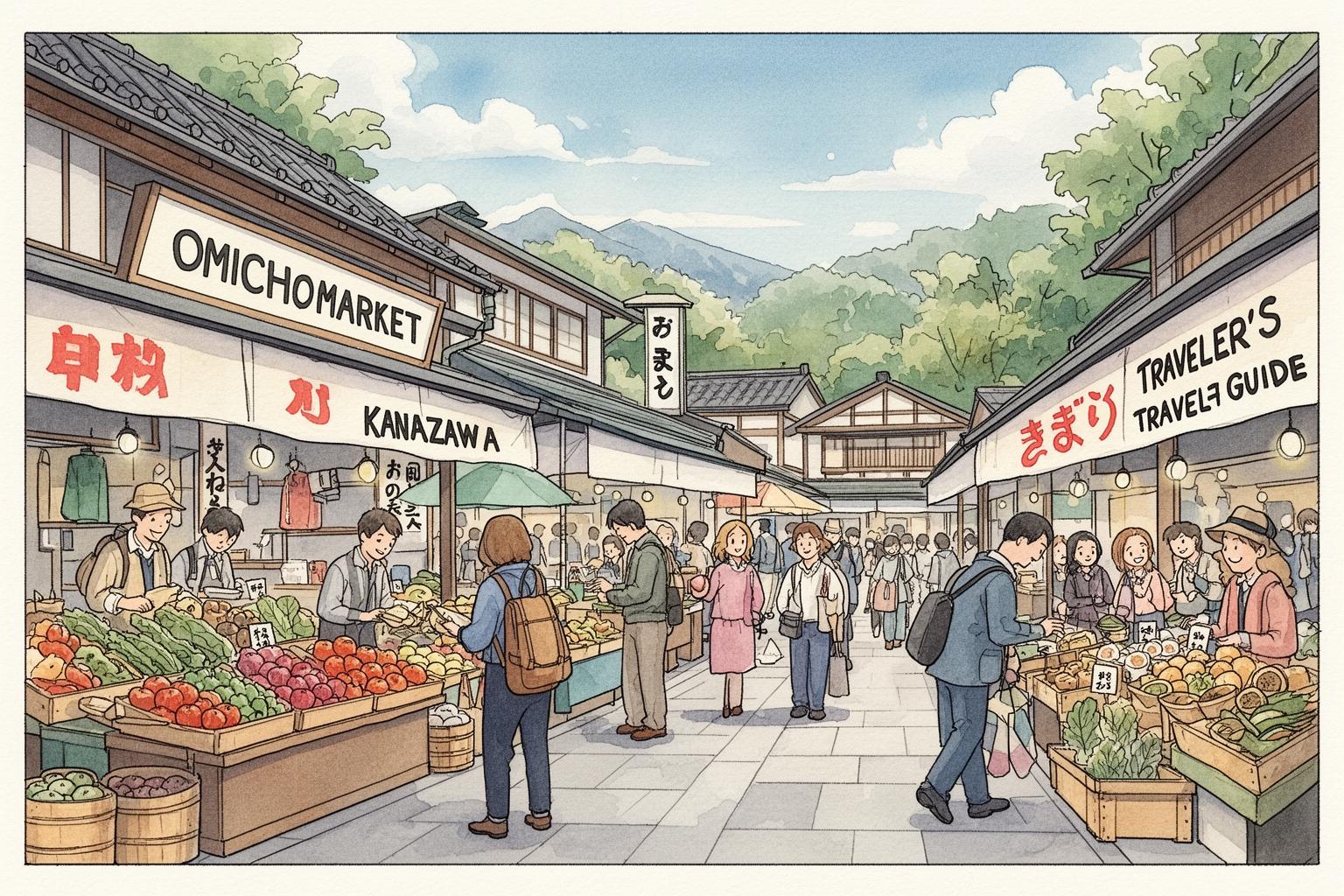
Omicho can be overwhelming for a first-time visitor. However, with a bit of strategy, you can navigate it smoothly like a pro and enjoy an incredible experience. The key is to embrace the hustle and bustle, rather than resist it.
Timing is Everything
The market’s vibe shifts throughout the day. To witness it at its rawest and most energetic, arrive early, around 8:30 or 9:00 AM. This is when locals shop and delivery carts hustle through the aisles. The energy is vibrant, and the seafood is at its freshest. It’s the perfect time for a kaisendon breakfast before crowds build. From mid-morning to around 2:00 PM, the market reaches its peak tourist activity. It becomes crowded, especially along the main pathways. This period is ideal for snacking and sampling, as all stalls are open and grills are firing. By late afternoon, the pace slows down. Many fishmongers start packing up by 3:00 or 4:00 PM. While you might find some end-of-day bargains, the selection will be limited and the lively atmosphere will diminish. Most shops close by 5:00 PM. Also, keep in mind that many stalls are closed on Wednesdays, so schedule your visit accordingly.
Navigating the Maze
Omicho isn’t laid out in a simple grid. It’s a maze of covered streets and narrow alleys leading in unexpected directions. Don’t stress about having a map or following a strict route. The best way to explore is to wander freely. Let your senses lead the way. Follow enticing aromas, head towards a bustling vendor, or slip into a quieter alley. You’ll likely loop around a few times and get a bit turned around, but that’s part of the charm. The main covered street, Ichibagai, houses many major seafood vendors and kaisendon eateries. Yet, some of the most intriguing spots, like tiny pickle shops or specialty tofu makers, are tucked away in the smaller side alleys. For a point of reference, look for the central Musashi Sky Plaza to help orient yourself. Wear comfortable closed-toe shoes, as floors can be wet and slippery, and you’ll be on your feet for quite a while.
A Few Words on Etiquette
Some local tips go a long way. First, cash remains king. While larger restaurants and shops may accept credit cards, most smaller stalls and snack vendors are cash-only. Be sure to carry enough yen. Second, eating while walking is generally discouraged in Japan, and this applies in busy markets too. When you buy a snack on a stick or a freshly shucked oyster, it’s polite to step aside from the stall, finish your food, and dispose of any trash in the bin provided by the vendor. This helps avoid accidents in crowded aisles and shows respect. Lastly, be considerate when taking photos. Omicho is a working market, and people are focused on their jobs. Always ask permission before snapping close-up shots of individuals or their stalls. A friendly smile and a gesture toward your camera usually work well. Most vendors are proud of their goods and happy to be photographed, but politeness is always appreciated.
The Final Bite: More Than Just a Market
Leaving Omicho feels like emerging from a vivid dream. You step back onto the orderly streets of Kanazawa, ears still ringing with the market’s chorus, clothes faintly scented with sea salt and charcoal. Your stomach is full, and your mind buzzes with the sensory overload you’ve just experienced. It’s easy to see Omicho as merely a place to eat or a tourist spot to check off your list. But it is so much more than that. It’s a living museum of Japanese culinary culture—a testament to the pride a region takes in its natural bounty. It’s a community, a workplace, and a stage where the daily drama of life and commerce unfolds. It embodies the raw, unfiltered, and delicious soul of Kanazawa. Every bite tells a story—of fishermen who braved the Sea of Japan, farmers who cultivated the Kaga plains, and generations of vendors who have devoted their lives to this market. It’s a place that connects you, in the most direct way, to the land, the sea, and the people of this extraordinary city. So when you visit Kanazawa, don’t just stop by Omicho Market. Immerse yourself, get lost, be adventurous, and taste everything. Let it become the vibrant, chaotic, and unforgettable heart of your journey.