Yo, what’s up, world-wanderers? Hiroshi Tanaka here, your go-to guide for the Japan that’s off the beaten path and straight into the heart of what’s real. Forget what you think you know about this country. We’re not talking neon-drenched streets or ancient temples today, though they’re cool too. We’re talking about a place that’s on a whole other level, literally. A place where the sky feels so close you could touch it, and the air is so pure it rewires your brain. I’m talking about the Northern Japan Alps in summer, or as we locals call it, the Kita Alps. This isn’t just a mountain range; it’s a pilgrimage. It’s a raw, untamed beast of jagged peaks, emerald valleys, and snow-capped giants that stand guard over the nation. Hiking here is a rite of passage, a full-body, full-spirit experience that’s equal parts grueling and glorious. It’s where you find the Japan of epic paintings, the one that whispers ancient stories in the wind. This is the ultimate detox from the digital world, a place to challenge your limits and find a new kind of quiet. It’s a vibe, a mood, a whole legendary saga waiting for you to step into its first chapter. Ready to get high on altitude and life? Let’s drop a pin on where the adventure begins.
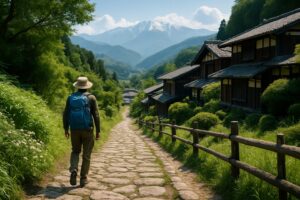
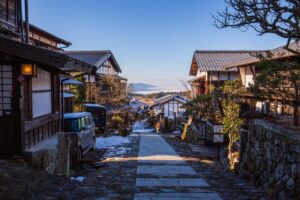
Before you head into the mountains, be sure to experience the local culture and cuisine in the charming alpine city of Matsumoto.
The Vibe of the Alps: It’s a Different Planet

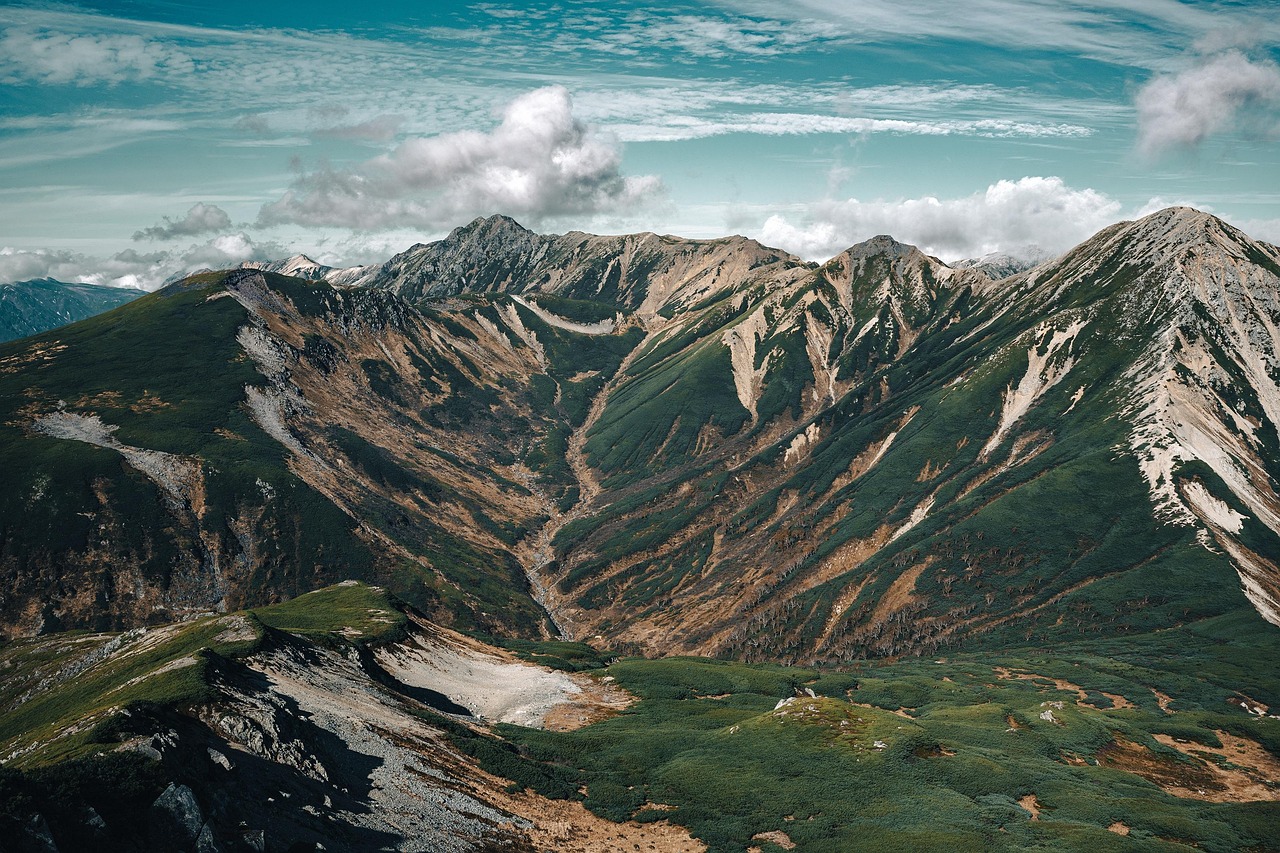
Stepping into the Northern Alps feels like being instantly transported. One moment you’re on a smooth, silent Shinkansen, and the next you’re inhaling air that tastes like mint and melted snow. The scale of this place is simply staggering. These aren’t gentle, rolling hills; they are giants. Peaks such as Yarigatake and the Hotaka giants soar beyond 3,000 meters, their granite faces etched by countless years of wind and ice. In summer, the landscape bursts with life. The valleys are thick with a green so vivid it dazzles your eyes, and the alpine meadows above the treeline bloom with a carpet of delicate, colorful flowers that somehow thrive in this tough environment. It’s a complete sensory overload in the best possible way. You hear the constant rush of glacial streams, the chirping of unseen birds, and the satisfying crunch of your boots on the trail. You feel the sun, intense and unfiltered at this altitude, warming your skin, followed by the sharp chill of a cloud drifting overhead. The atmosphere commands profound respect. You feel small here, and that’s a good thing. It puts everything into perspective. The silence isn’t empty; it brims with the energy of the earth itself. It is a powerful, humbling, and utterly addictive sensation. This is the raw, unfiltered essence of Japan, worlds apart from the curated perfection of a Kyoto garden. It’s wild, unpredictable, and absolutely epic.
Gateways to the Gods: Getting Your Start
Dropping into the heart of the Alps isn’t something done on a whim; it requires a gateway—a portal—that transports you from civilization to the trailhead. The two main access points here are Kamikochi and the Tateyama Kurobe Alpine Route, each offering a unique character and style of adventure.
Kamikochi: The Sacred Valley
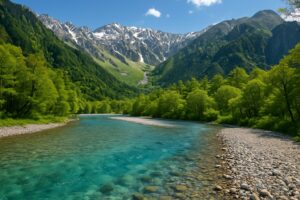
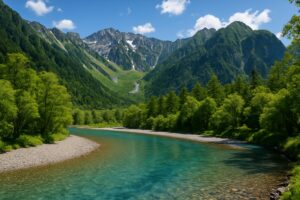
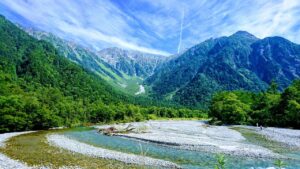
Kamikochi is, without exaggeration, the sacred ground for Japanese hikers. It’s a pristine, flat river valley surrounded by some of the most dramatic peaks in the country. The moment you step off the bus, you feel it. The air is different. The Azusa River’s water is an astonishing shade of turquoise, so clear you can count the pebbles on the riverbed. And the view—wow, the view. From the iconic Kappabashi (Kappa Bridge), you have a front-row seat to the Hotaka mountain range, a wall of rock and ice resembling something from a fantasy film. The atmosphere is one of quiet reverence. Private cars are banned to protect the environment, so arrival is by bus or taxi, enhancing the sense of entering a special, preserved world. For many, Kamikochi itself is the destination. You can spend an entire day strolling along the river, from Taisho Pond with its submerged, skeletal trees to Myojin Pond, a serene Shinto shrine with spiritual significance. But for hikers, Kamikochi serves as the starting point. It’s basecamp. It’s where you take a deep breath, adjust your pack, and eye the jagged ridges, thinking, “Alright, let’s do this.” It’s the ideal spot to acclimatize, get your mountain legs, and mentally gear up for the vertical challenges ahead.
Tateyama Kurobe Alpine Route: The High-Tech Journey to the Wilderness
Tateyama offers a completely different arrival experience. It’s less a gentle walk into nature and more a spectacular, multi-stage adventure using a wild mix of transportation modes. Think of it as an attraction in itself. You ride a cable car up a steep mountainside, then a bus along a high-altitude road, then a trolleybus through a mountain tunnel, followed by a ropeway with breathtaking panoramic views, and finally another cable car down. It’s an engineering marvel. Most hikers aim for Murodo, a high-altitude plateau at about 2,450 meters. Even in early summer, massive snow walls surround this area, remnants of the winter’s epic snowfall. The landscape here is more volcanic and stark than Kamikochi—imagine vast rocky plains, steaming volcanic vents (Jigokudani, or “Hell Valley”), and striking blue crater lakes. It feels more remote, almost lunar. From Murodo, hikers can access peaks like Mt. Tateyama (one of Japan’s three sacred mountains) and the formidable Mt. Tsurugi. The Alpine Route is a statement: it demonstrates how Japan blends cutting-edge technology with a profound respect for its natural environment. It’s an exhilarating ride and an unforgettable way to arrive right in the heart of the high country.
The Legendary Trails: Choosing Your Epic

Okay, so you’ve arrived at the gateway. Now for the main event. The Northern Alps are woven with a network of trails, ranging from moderate ridge walks to daunting traverses that will challenge every nerve. Each peak, each path, has its own unique story and personality. Picking your adventure is part of the excitement.
The Hotaka Range: The Ultimate Challenge
If the Northern Alps had a final boss, it would be the Hotaka range. This cluster of 3,000-meter peaks—Okuhotakadake, Karasawadake, Kitahotakadake—is the third highest in Japan and offers some of the most demanding yet rewarding hiking in the country. The classic route starts from Kamikochi, a long but scenic trek up the valley to Karasawa Col. The Karasawa Cirque is a vast, bowl-shaped amphitheater carved by glaciers, home to a couple of legendary mountain huts. In summer, it transforms into a bustling tent city of brightly colored domes, serving as a basecamp for climbers targeting the surrounding peaks. The atmosphere buzzes with anticipation. From here, the real challenge begins. The trails become steep scrambles over rock and scree. Chains and ladders are fixed into the rock faces to assist with the most exposed sections. The air thins. Your legs burn, your lungs ache, but the views grow increasingly breathtaking. For the truly hardcore, there’s the Daikiretto, a notorious traverse connecting Kitahotakadake and Minamidake. It’s a razor-edge ridge with sheer drops of hundreds of meters on both sides. This route is not for beginners. It demands focus, experience, and a strong measure of courage. Standing atop Okuhotakadake, the range’s highest peak, is a moment you’ll never forget. You’re on the roof of Japan, surrounded by a 360-degree panorama of endless peaks. It’s a feeling of pure, unfiltered accomplishment.
Yarigatake: The Skyward Spear
Yarigatake can be seen from nearly anywhere in the Northern Alps. Its name means “Spear Peak,” and the name fits perfectly. It’s a striking, dramatic pyramid of rock piercing the sky—an unmistakable landmark. Hiking to Yari feels like a pilgrimage to an icon. The final ascent is what makes it legendary. After a long ridge walk, you face a near-vertical scramble up a series of iron ladders and chains bolted to the rock. It’s an adrenaline rush, no doubt. You haul yourself up, with nothing but open air below. Yet it feels surprisingly secure, and reaching its tiny, cramped summit is pure exhilaration. Only a handful of people can fit at once. The view, naturally, is spectacular. You can trace the entire spine of the Alps, including the epic Yari-Hotaka traverse, another expert-level route linking these two giants. Yarigatake is more than a mountain; it’s a symbol of the raw ambition and beauty of the Alps. Reaching its summit feels like you’ve truly arrived.
Shirouma-dake: Alpine Blooms and the Great Snow Valley
Heading north toward the Hakuba area, the character of the mountains shifts slightly. Here stands Mt. Shirouma-dake, a massive peak famous for two features: its vast snow valley and stunning fields of alpine flowers. The approach via Hakuba Daisekkei (Great Snow Valley) is unique. You spend hours hiking up a valley ringed with snow, even in the heat of August. You’ll need to strap on simple crampons (called aizen) for grip, but it’s an incredibly cool and refreshing way to gain altitude. Once out of the snow valley and onto the main ridge, the scenery changes. In July and August, the slopes near the summit burst with a spectacular array of alpine flowers—pinks, purples, yellows, and whites. It reveals a softer, more beautiful side of the Alps, contrasting with the raw granite of the Hotaka range. The Shirouma Sanso hut, near the summit, is one of Japan’s largest and best-equipped mountain huts, almost like a small hotel. Hiking along the ridge from Shirouma to neighboring peaks is a classic route, offering wide-open views and a slightly gentler challenge than the southern peaks. It’s a perfect introduction to the high-altitude world of the Kita Alps.
Tsurugi-dake: The Sword and the Ultimate Challenge
Now we enter legendary territory. Tsurugi-dake, or “Sword Mountain,” has a fearsome reputation. For a long time, it was deemed unclimbable—a needle-like peak from Buddhist hell. Today, it is known as the most technically demanding of Japan’s “regular” hiking routes. It’s no climb for the faint-hearted or inexperienced. The route is a relentless sequence of chains, ladders, and exposed traverses that will test your nerve. The most famous parts are the “Kani-no-tatebai” (The Crab’s Vertical Climb) and the “Kani-no-yokobai” (The Crab’s Sideways Scramble). These names are not exaggerated. You literally cling to the cliffside, moving sideways like a crab, with a dizzying drop below. It demands your full concentration. But the thrill is undeniable. Tsurugi is a mountain that commands respect, and summiting it is a badge of honor among Japanese hikers. It’s a deep dive into the history and spirit of Japanese alpinism, a confrontation with a peak once believed to be the domain of gods and demons alone.
The Yamagoya Life: More Than Just a Bed
One of the most distinctive and remarkable aspects of hiking in Japan is the mountain hut, or yamagoya, culture. These are more than just simple shelters; they represent the heart and soul of the mountain experience, offering both a lifeline and a feeling of community high above the world below. Understanding the yamagoya is essential to fully appreciating the Alps experience.
What Exactly is a Yamagoya?
Picture a cozy, rustic lodge perched on a mountain ridge, thousands of meters away from the nearest road. That’s a yamagoya. They provide the essentials for a multi-day trek: a place to sleep, hot meals, and basic supplies. But they offer much more. They serve as social hubs, weather stations, rescue points, and repositories of mountain wisdom. Sleeping arrangements are usually communal, with occupants given a futon and a blanket, often right next to strangers. It’s a warm, intimate setup that removes all pretense—you’re all just tired hikers sharing the same space. Most huts feature a communal dining hall serving meals at set times, a drying room for hanging wet gear (an absolute lifesaver), and eco-toilets. They stand as a testament to impressive logistics, as supplies are often flown in by helicopter. Staying in one is an experience you’ll never forget.
The Rituals and Vibe of the Hut
Life in a yamagoya follows a certain rhythm. You arrive in the afternoon, weary and sweaty from the trail. You kick off your muddy boots at the entrance, check in (reservations are absolutely essential nowadays), and find your assigned sleeping spot. The first thing to do is usually to buy a cold drink or hot coffee and sit on the deck, taking in the view and your sense of achievement. Dinner is a communal event. You’ll sit at long tables with fellow hikers, all sharing the same hearty meal—often Japanese curry, a fish dish, or ginger pork stir-fry. It’s simple, but after a day on the trail, it tastes like the best meal on earth. This is where stories are swapped, trail tips are shared, and connections form among people from all walks of life. Lights go out early, generally around 8 or 9 PM, and wake-up calls come even earlier. Often, you’re awakened around 4 AM to prepare for an early start. The aim is to be on the trail to witness goraiko—the sunrise from the summit or a high ridge. Watching the sun breaking through a sea of clouds (unkai) from 3,000 meters up is a spiritual moment, pure magic that makes the early alarm well worth it. The yamagoya lifestyle is about simplicity, community, and a shared passion for the mountains.
Pro-Tips for Hut Stays
A few important notes: book well in advance, especially for popular huts on weekend nights during peak season. Bring cash, as credit cards are not accepted here. A headlamp is essential for navigating dark dorms and early morning departures. Earplugs and an eye mask can greatly improve your sleep quality. Most importantly, follow the ‘pack-in, pack-out’ rule. There are no trash bins—you must carry out everything you bring with you. This is a fundamental mountain ethic here. A sleeping bag liner is also recommended for comfort and hygiene. Respect the rules and the space, and you’ll have an unforgettable experience.
Gear, Grub, and Getting Real: Prep Talk
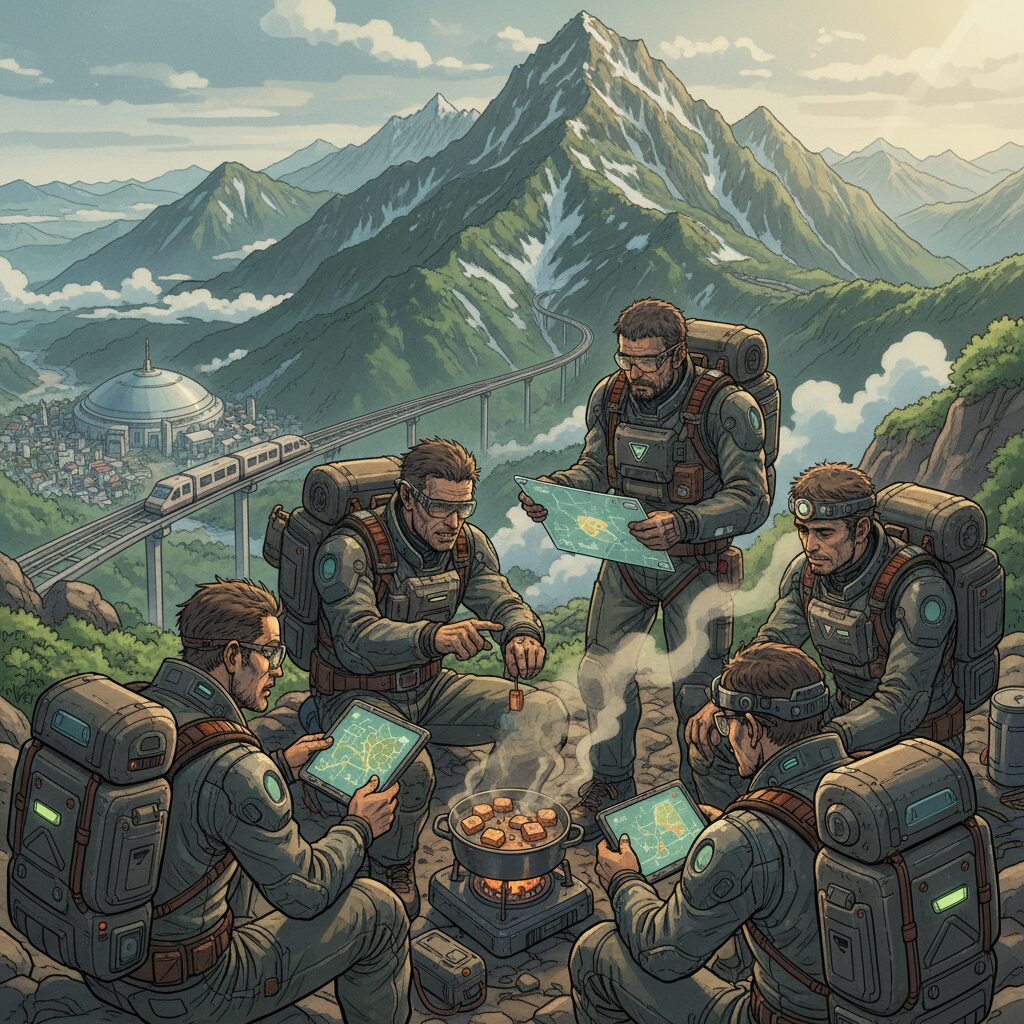
Heading into the Alps unprepared is a sure way to have a bad experience—or worse, a dangerous one. The weather is notoriously unpredictable, so you must be ready for anything. Let’s cover the essentials.
What to Wear and Pack
Layering is key. Temperatures can change drastically from warm and sunny to cold and rainy in just minutes. Start with a moisture-wicking base layer, add a fleece or mid-layer for insulation, and carry a high-quality waterproof and windproof shell jacket and pants. This is absolutely essential. Even if the forecast looks perfect, always bring your rain gear. Proper hiking boots with good ankle support that are well broken-in are a must—your feet will thank you. Sun protection is vital at high altitudes, so pack a wide-brimmed hat, sunglasses, and high-SPF sunscreen. Trekking poles can be incredibly helpful, especially on descents, to save your knees. Also, bring a basic first-aid kit, a headlamp with extra batteries, and a map and compass (and know how to use them, even if you rely on GPS). It’s all about being self-sufficient and prepared.
Mountain Fuel and Trail Treats
Hiking burns a ton of calories, so it’s important to keep your energy up. Japanese convenience stores offer a fantastic selection of trail snacks. Stock up on onigiri (rice balls), CalorieMate energy bars, nuts, and chocolate. Staying hydrated is equally important. You can often refill your water bottles at yamagoya (sometimes for free, sometimes for a small charge), but always carry enough water to get you comfortably between sources. One of the greatest joys of hiking in Japan is the treats you can find at the mountain huts. Many sell hot bowls of ramen, udon, or even cake and coffee. And absolutely nothing—nothing at all—is better than arriving at a hut after a grueling 8-hour trek and rewarding yourself with an ice-cold beer while gazing out over the mountains you just conquered. It’s a rite of passage and a moment of pure bliss.
Cultural Cues and Mountain Manners
In Japan, there’s an unwritten code of conduct on the trails focused on respect, safety, and community. Knowing a few essentials will make your experience more enjoyable and help you connect with the local hiking culture.
The Essential Greeting
On the trail, you greet everyone you pass. A simple “Konnichiwa” (hello) during the day or “Ohayo gozaimasu” (good morning) in the early hours is customary. This goes beyond politeness; it serves as a safety check, acknowledging each other’s presence in a remote setting. It creates a sense of shared community and makes the trail feel warm and welcoming.
Yielding on the Trail
The general guideline is that the person hiking uphill has the right of way. Since they are exerting more effort and have momentum, it’s polite for the downhill hiker to step aside and let them pass. On narrow or exposed sections, using common sense and clear communication is essential. A simple nod or gesture usually suffices.
Respecting Nature’s Sanctuary
This is the most important aspect. Mountains in Japan are regarded as sacred and are treated with profound respect. Always stay on designated paths to protect the delicate alpine environment. A single step can damage beautiful flower fields. The ‘leave no trace’ principle is vital—carry out everything you bring in, including food scraps. Don’t pick flowers or disturb wildlife. Many hikers wear a kuma-suzu, or bear bell; while bear encounters are rare, the bell alerts animals to your presence to prevent startling them. It’s about moving through this remarkable landscape lightly and respectfully.
Beyond the Peaks: The Ultimate Post-Hike Reward

The adventure doesn’t end when you leave the trail. In fact, some of the best experiences are just beginning. The regions surrounding the Alps are renowned for two hiker’s delights: hot springs and exceptional food.
The Onsen Culture: Soothing Your Soul
After days of taxing your muscles, nothing feels more rewarding than slipping into a natural hot spring, or onsen. Japan’s volcanic geography means these onsen are plentiful, and the towns near the Alps boast some of the finest. Picture yourself soaking in an outdoor bath (rotenburo), steam rising into the cool mountain air as you gaze at the peaks you’ve just conquered. It’s pure bliss. Places like Hirayu Onsen in Okuhida or the onsens in Hakuba are ideal spots for this. For first-timers, keep in mind the etiquette: thoroughly wash yourself at the shower stations before entering the communal bath. And yes, you enter completely nude. It may feel strange at first, but you’ll soon get used to it once that volcanically heated, mineral-rich water begins to soothe your aching body.
Local Eats: Refueling with Flavor
The mountainous areas of Nagano and Gifu prefectures boast a rich culinary heritage. Here’s your chance to savor some incredible local specialties. Nagano is famous for soba (buckwheat) noodles, best enjoyed cold with dipping sauce after a hot day on the trail. You’ll also discover oyaki, savory dumplings stuffed with ingredients like mountain vegetables (sansai) or sweet bean paste. Freshly grilled river fish, such as iwana or yamame, are considered delicacies. Finding a local izakaya (Japanese pub) or a traditional minshuku (guesthouse) and indulging in these dishes is the perfect way to conclude your alpine adventure. It completes the circle, connecting the challenge of the trail with the warmth and hospitality of local culture.
So there you have it. The Northern Japan Alps in summer offer more than just a hike. It’s a challenge, a meditation, and a deep love affair with some of the most breathtaking scenery on earth. It’s a place that will test your limits and then reward you with moments of beauty so profound they’ll be etched in your memory forever. It’s an opportunity to witness a side of Japan that is wild, raw, and utterly soul-stirring. So pack your bag, break in your boots, and get ready to level up. The mountains are calling.