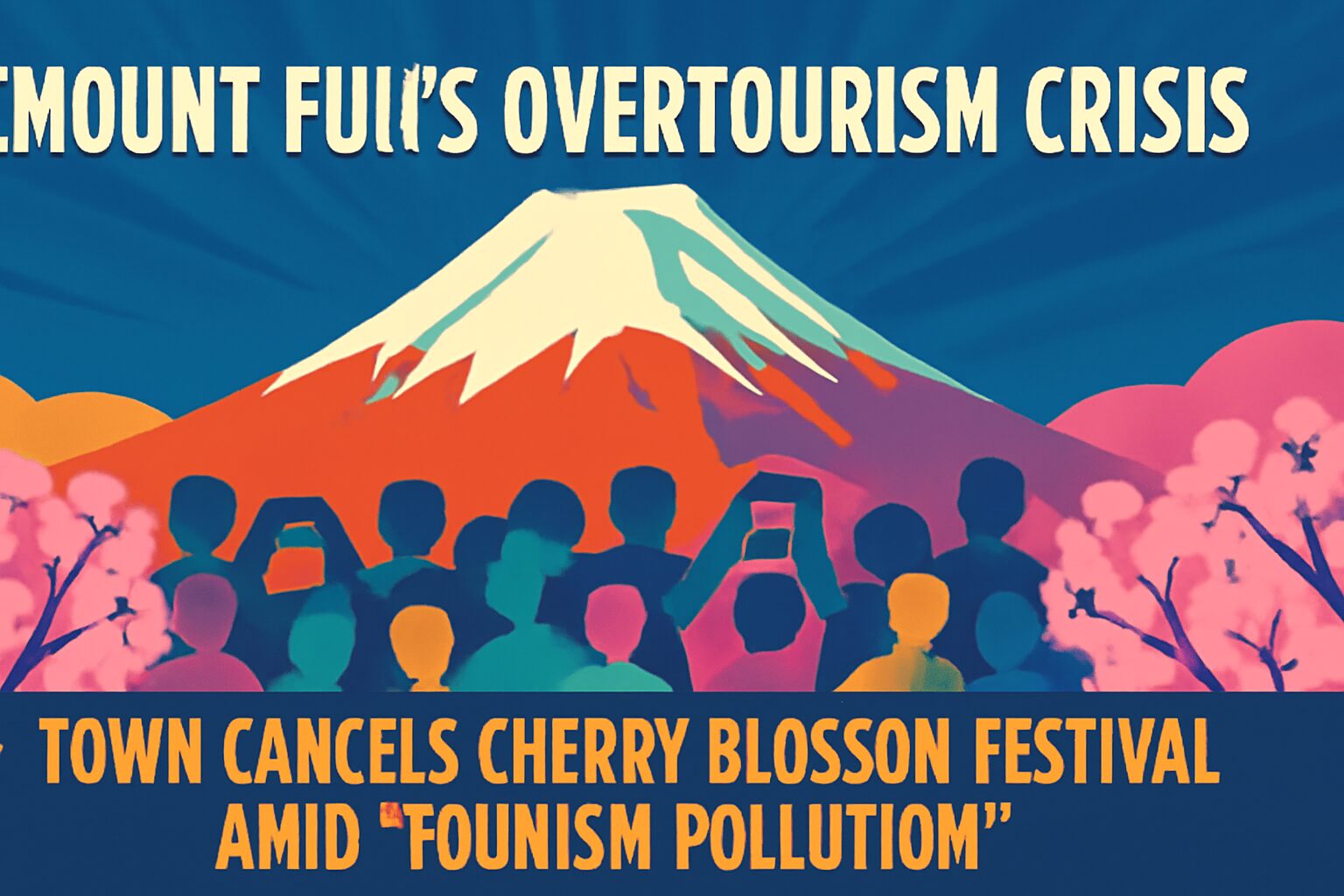
The picturesque town of Fujiyoshida, long cherished for its stunning views of Mount Fuji, has made the difficult decision to cancel its annual cherry blossom festival. This move comes as a direct response to an overwhelming surge in tourism that has strained local resources and disrupted the daily lives of residents, a phenomenon they have dubbed “tourism pollution.”
The Viral Photo That Sparked a Crisis
The root of the issue can be traced to a single, now-famous photo spot. A photograph capturing a majestic view of Mount Fuji seemingly rising above a local Lawson convenience store went viral on social media, turning a once-quiet street into a global tourist magnet.
This sudden fame, amplified by a weak yen that makes Japan an incredibly affordable destination, has led to an unprecedented influx of international visitors. Japan as a whole has witnessed a record-breaking tourism boom, with the Japan National Tourism Organization (JNTO) reporting that over 3 million foreign tourists visited in March 2024 alone, a record for a single month. While beneficial for the national economy, this surge has created immense pressure on specific, unprepared regional destinations like Fujiyoshida.
Life Disrupted: The Reality of “Tourism Pollution”
For the residents of Fujiyoshida, the consequences have been severe. The narrow street leading to the photo spot is now plagued by chronic traffic jams and illegal parking. Tourists, eager to capture the perfect shot, often ignore traffic rules, walk into the busy road, and trespass on private property. Reports of visitors climbing onto rooftops, leaving litter behind, and harassing locals have become commonplace. The constant crowds and noise have transformed a peaceful residential area into a chaotic tourist zone, severely impacting the community’s quality of life.
More Than Just a Cancellation: Drastic Measures Underway
Canceling the cherry blossom festival is just one of several drastic measures the town is taking to regain control. In a more direct and controversial move, local authorities have begun installing a large black screen to completely obstruct the view of Mount Fuji from the viral photo spot.
The opaque mesh screen, measuring 2.5 meters high and 20 meters wide, is a physical barrier designed to deter crowds from congregating. While some see it as a necessary evil, others lament the loss of a beautiful vista. This action underscores the desperation of the local government to protect its citizens from the negative impacts of overtourism.
A National Challenge: What’s Next for Japan’s Tourist Hotspots?
The situation in Fujiyoshida is not an isolated incident. It is a microcosm of a growing challenge faced by popular destinations across Japan, from the crowded streets of Kyoto’s Gion district to the packed trains heading to Kamakura. As Japan continues to attract record numbers of tourists, the clash between a thriving tourism industry and the preservation of local life is becoming more acute.
This incident is likely to accelerate discussions around sustainable tourism management. We may see other municipalities implement stricter regulations, such as:
- Designated Photo Zones: Creating controlled areas for photography to manage crowds.
- Local Tourist Taxes: Introducing small levies to fund infrastructure improvements and crowd-control measures.
- Reservation Systems: Requiring advance bookings for entry into particularly popular or sensitive areas.
For travelers, the events in Fujiyoshida serve as a powerful reminder of the impact tourism can have on local communities. It highlights the growing importance of responsible travel—respecting local rules, culture, and private property.
The cancellation of a beloved festival is a stark warning. As Japan navigates its post-pandemic tourism boom, finding a sustainable balance between welcoming the world and protecting its own communities has become the most critical challenge for its future.