Imagine this. You’re in Akihabara, Tokyo’s electric town, a neighborhood that feels like the internet decided to build a city. Towers of manga, arcades beeping and chiming on every floor, and everywhere you look, the bright, doe-eyed faces of anime characters stare down from billboards. You’ve decided to dive into one of the area’s most famous subcultures and have found yourself in a maid cafe. The interior is a pastel explosion of frills and bows. A young woman in an elaborate French maid costume greets you not as a customer, but as ‘Goshujin-sama’—the master of the house. You’re seated, you’ve ordered a simple parfait, and it arrives looking almost too perfect to eat, decorated with chocolate sauce hearts and a smiling strawberry. But before you can pick up your spoon, the maid clasps her hands together. She smiles, looks you directly in the eye, and asks you to join her. You are to make a heart shape with your own hands, aim it at your dessert, and chant along with her: “Moe… Moe… Kyun!” It’s a moment of delightful absurdity. You’re a grown adult casting a ‘cute spell’ on your ice cream. What on earth is going on? This isn’t just a quirky gimmick; it’s a fundamental ritual, the key that unlocks the entire purpose of the maid cafe experience. It’s a performance, a password, and a perfectly distilled expression of a subculture built on fantasy and affection. To understand this strange little chant is to understand the heart of what makes this niche corner of Japan tick.
After experiencing the enchanting ritual of a maid cafe, consider exploring how Japan transforms its everyday surroundings into a real-life RPG adventure that blurs the line between fantasy and reality.
Welcome, Master: Setting the Stage for Performance
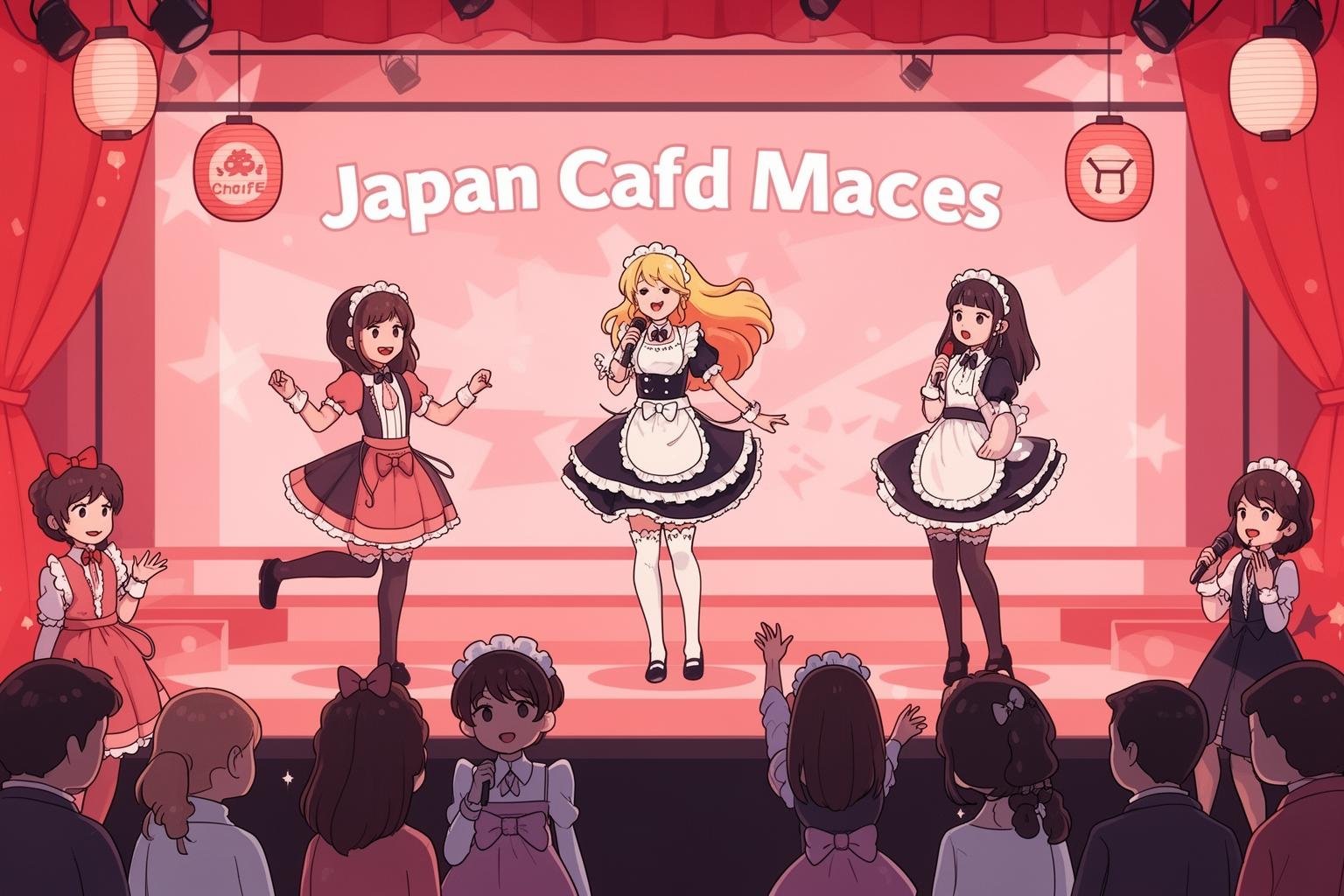
First, you need to understand that a maid cafe is not truly a restaurant. It’s more like a stage, and you have just been cast in a leading role. The moment you step inside, you cease to be an ordinary passerby; you become ‘Goshujin-sama’ (Master) or ‘Ojou-sama’ (Princess), the esteemed head of a grand estate who has finally returned home after a long journey. The maids are your faithful, devoted servants, delighted by your arrival. Every interaction is seen through this narrative perspective.
This framework is crucial. It transforms the entire experience from a simple commercial exchange into a live-action role-playing game. You’re not just buying coffee; you’re being served coffee by your personal staff. You’re not simply paying a bill; you’re contributing to the maintenance of your household. This carefully crafted fantasy is the true product. The food and drink serve only as props in the play you are helping to bring to life.
The decor supports this illusion, often styled to resemble a whimsical, idealized Victorian mansion parlor. The language is polite and deferential. The maids don’t merely act as servants; they embody specific character archetypes familiar from anime and manga—the clumsy but sincere one, the cool and graceful one, the bubbly and lively one. This allows regular patrons to develop affection for particular ‘characters,’ much like fans of a TV series. Within this theatrical setting, ordinary actions must be elevated. A simple dish cannot just be set on the table; it must be presented with ceremony, transforming its everyday nature into something magical. This is where the enchantment happens.
The Anatomy of a Magical Chant
The phrase “Moe Moe Kyun” may sound like playful gibberish to those unfamiliar with it, but each part carries distinct cultural significance rooted deeply in otaku (geek) culture vocabulary.
Analyzing “Moe Moe Kyun”
At the core of the phrase is the word moe (萌え), a term notoriously difficult to translate directly into English. While “cute” is often used as a shorthand, it falls far short of capturing its meaning. Moe doesn’t describe an object; rather, it describes an emotional response within the viewer. It signifies a specific, intense, and often sudden wave of affection, adoration, and protective instinct toward a fictional character. Imagine the feeling you get when watching a clumsy but determined anime heroine giving her all despite frequent mistakes. That surge of affection, the urge to cheer her on and shield her from harm—that is moe.
The character’s kanji, 萌, literally means “to bud” or “to sprout,” like a young plant. This symbolizes the essence of the feeling: a fresh, blossoming, and pure form of affection. It’s not inherently romantic or sexual; it’s more akin to a strong emotional bond a fan might develop for an idol or character. Chanting “Moe Moe” aims to summon and amplify this feeling, like stoking a flame.
Next is kyun (キュン), a Japanese onomatopoeia, or giongo, that imitates a sound or sensation. Kyun represents the tightening or squeezing feeling of the heart during a powerful emotional moment. It’s the physical pang you experience when unexpectedly seeing your crush or witnessing overwhelming cuteness, such as a kitten stumbling clumsily. It’s the emotional jolt, the gut punch of adorable-ness—a bodily reaction to the emotional state of moe.
Altogether, “Moe Moe Kyun” is far more than a random collection of cute syllables. It functions as a verbal incantation roughly meaning: “Let’s evoke that feeling of blossoming, protective affection… let’s do it again… and may it strike your heart!” It distills a very specific emotional energy into a powerful, cuteness-focused expression.
The Hand Motions: A Visual Spell
The phrase is only part of the enchantment. The accompanying physical gesture is equally essential. The maid instructs you to form a heart shape with your hands and direct it like a beam of affection toward your food. This gesture serves several important purposes.
First, it concentrates the ‘magical’ energy. In anime and manga, characters frequently use distinct hand signs to unleash special powers. This gesture draws from that visual lexicon, making participants feel as though they are casting a real spell. It elevates a playful moment into something ritualistic and meaningful.
Second, and more significantly, it demands active involvement. You cannot remain a passive observer. The maid is not performing for you; she is performing with you. By joining in—making the heart shape and chanting along—you break down the usual barrier between server and customer. It makes you vulnerable and a little silly, but you are sharing the silliness together. This mutually embarrassing moment acts as a powerful icebreaker, transforming you from a detached consumer into a willing participant in the fantasy, complicit in creating the ‘magic.’
Why Magic? The Function of the Ritual
So, why go through all this effort for a simple dish like omurice (an omelet over fried rice)? Because the ritual itself matters. The aim is to transform an ordinary item into something special, giving it significance that far exceeds its basic ingredients.
From Mundane to Magical
Let’s be honest: the food at many maid cafes is often average. It’s not about culinary mastery. The omurice serves as a medium for the experience. Before the chant, it’s just eggs and rice with ketchup. But after the maid draws a cute animal on it with ketchup and you both perform the “Moe Moe Kyun” spell, it changes. It becomes food that’s been made ‘delicious’ through your shared ‘love.’
The chant is an act of co-creation. The maid sets the stage and provides the script, but the magic doesn’t ‘work’ unless the Master or Princess participates. By joining in, the customer affirms the fantasy. They agree, for a brief moment, to live within this whimsical world where affection holds real power. This mutual investment in the illusion creates a temporary bond between maid and customer. It’s no longer just a service; it’s a memory being created. You’re not simply eating a parfait; you’re enjoying the parfait brought to life by you and your maid’s love spell.
The Psychology of Participation
From an outsider’s perspective, especially a Western one, the act may seem awkward. Yet inside the cafe, almost everyone takes part. This reflects a core aspect of Japanese social dynamics: the ability to understand the context and play the expected role. At a maid cafe, the expected role is that of an eager and engaged Master. Refusing the chant would break the fantasy and reject the entire premise of the place. It would be socially uncomfortable, like refusing to sing ‘Happy Birthday’ at a party.
For regulars, this ritual is reassuring. It provides a familiar, positive interaction in an often isolating and uncertain world. They know the script, understand their role, and receive a reliable dose of cheerful, non-threatening affection. The chant is part of the service they pay for—a key element of the ‘iyashi’ (healing or emotional comfort) the cafe delivers.
For tourists and first-timers, the attraction lies in novelty. It’s a strange and memorable story to share back home, a perfect photo moment that captures the ‘weird Japan’ they came to experience. The mild embarrassment adds to the fun—a low-risk way to step out of one’s comfort zone and engage with another culture on its own terms. It’s a playful surrender to the absurd, and in that surrender lies a unique kind of joy.
The Origins and Evolution of Moe
The “Moe Moe Kyun” phenomenon did not emerge out of nowhere. It is the result of decades of otaku subculture centered in Akihabara, which transformed from a district for electronic parts into the global hub for anime, manga, and gaming.
From Akihabara’s Niche to Global Phenomenon
Maid cafes first appeared in the early 2000s as a way to bring to life the fantasy worlds and character dynamics popular in anime and ‘bishoujo’ (beautiful girl) video games. The concept of moe was reaching a peak within otaku circles, with character designs and personalities carefully crafted to evoke this specific emotional response from fans. The maid cafe was the natural outcome: a place where fans could engage with a real-life embodiment of a moe character archetype.
The maids are not just servers in costumes; they are performers playing roles meant to be objects of moe. The chant, the games, and the entire master-servant dynamic are all designed to evoke these feelings in customers. It was a niche service created for a niche audience, a physical ‘safe space’ where fans could enjoy their hobbies without judgment.
Moe Moe Kyun Beyond the Cafe
For years, this ritual remained confined to the subculture that created it, until the breakthrough success of the 2009 anime series “K-On!”. In a famous episode, the main characters take part-time jobs at a maid cafe. One of them, the ditzy but lovable Yui Hirasawa, is taught to cast a spell on omurice and performs a now-iconic, endearingly clumsy version of “Moe Moe Kyun.”
This single scene propelled the phrase into mainstream Japanese pop culture. Suddenly, everyone recognized it. It became a meme, a shorthand for the entire otaku and maid cafe experience. It was referenced and parodied across other anime, TV shows, and by comedians. This widespread exposure had a dual effect: it demystified the ritual for the general public while solidifying it as the signature maid cafe activity in the minds of potential visitors, especially those from overseas. It became the cafe’s most famous and sought-after attraction.
Who Is This For? Understanding the Customer
The typical image of a maid cafe customer is a lonely, socially awkward man. While that group is certainly part of the clientele, the reality today is much more diverse. The concept’s success and mainstream acceptance have significantly expanded its appeal.
The Regulars: This core audience is often, though not always, composed of men deeply involved in otaku culture. For them, the cafe serves as a ‘third place’—neither home nor work—where they can unwind and enjoy a comfortable, predictable form of companionship. They develop parasocial relationships with their favorite maids, purchasing merchandise and paying for ‘cheki’ (instant photos) with them. For this group, the ritual is a treasured aspect of the interaction they seek.
The Hobbyists: These customers are fans of anime, idols, and cosplay culture. They value the performance element, the character play of the maids, and the immersive fantasy. They aren’t necessarily lonely; this is simply their hobby, similar to someone who enjoys attending Renaissance fairs or sci-fi conventions. They understand the language and codes of the subculture and enjoy participating fully.
The Curious and the Tourists: This is now a substantial segment of the customer base. They visit in groups of friends, as couples, or as solo travelers. Having seen maid cafes on YouTube or in travel guides, they seek the quintessential Akihabara experience. For them, “Moe Moe Kyun” is the highlight—something they will film on their phones and share on social media. They come for the spectacle and novelty.
Women and Couples: It’s increasingly common to find groups of young women or couples in maid cafes. The strong emphasis on ‘kawaii’ (cuteness) has wide appeal. Many cafes have fostered a brighter, more wholesome, and less intimidating atmosphere to draw in this demographic. For them, it’s a fun, themed cafe experience, much like visiting a cat cafe or a character-themed pop-up restaurant.
Ultimately, the experience is for anyone willing to suspend disbelief and join in the play. It’s for those who can appreciate the earnest absurdity of casting a love spell over their lunch.
When viewed more broadly, the “Moe Moe Kyun” chant is a fascinating piece of cultural engineering. It acts as a password granting entry into a temporary fantasy world. It’s a shared joke that instantly creates rapport. It’s a ritual that transforms a simple exchange into a memorable interaction. It turns a plain plate of food—something utterly mundane—into a magical gift made just for you. In three simple, silly-sounding words, it perfectly captures the entire appeal of the maid cafe: a sincere, performative, and slightly bizarre expression of affection that, for a brief moment, makes the world feel a little brighter and far more magical.