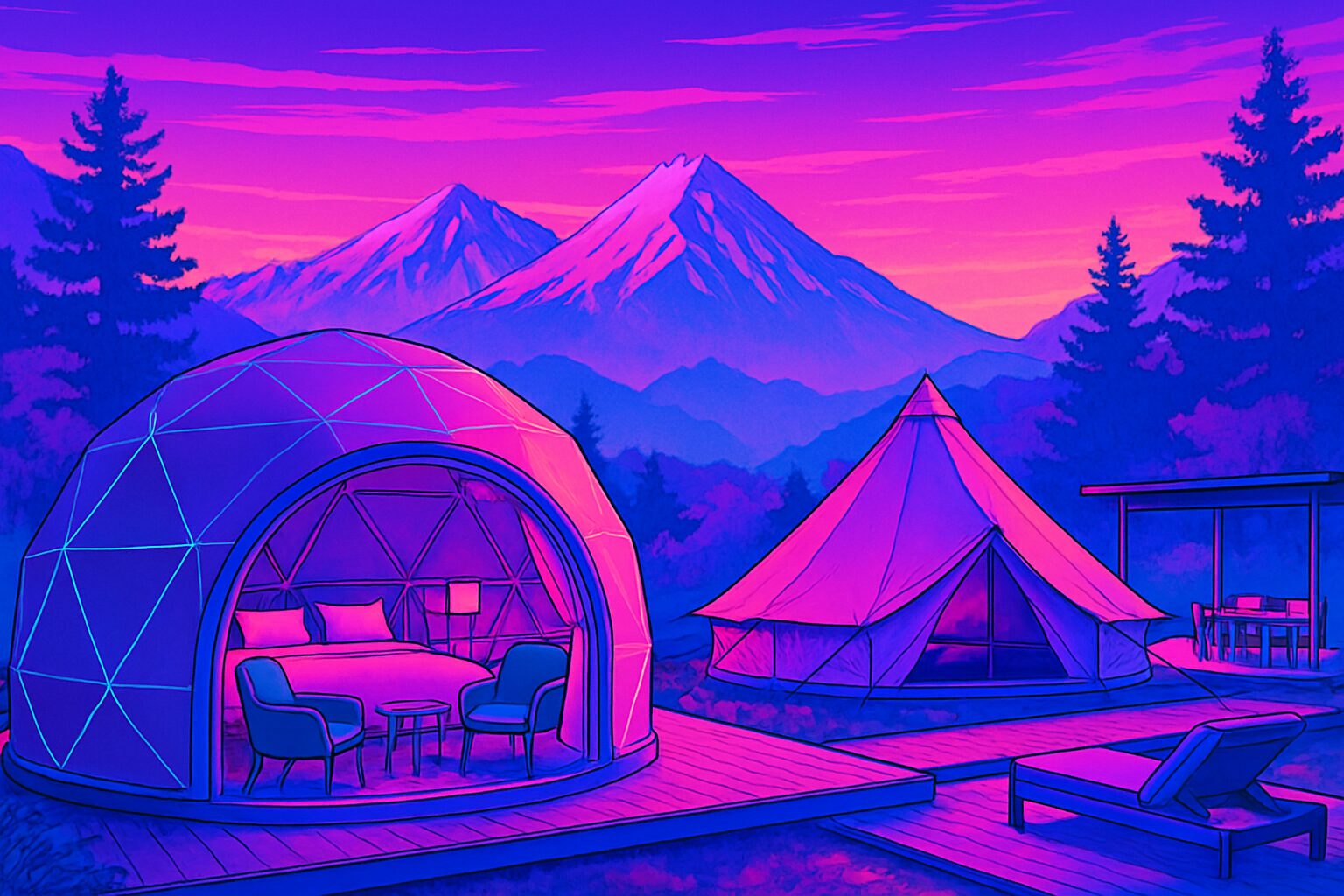
There exists a profound and ancient dialogue between the Japanese people and their dramatic, often unforgiving, landscape. For centuries, the soaring peaks and volcanic cones that define this archipelago have been subjects of reverence, artistic inspiration, and rigorous spiritual pilgrimage. To stand in the presence of these mountains was to connect with the divine, a pursuit that often demanded arduous journeys and physical austerity. Today, however, a new chapter is being written in this relationship, one that harmonises this deep-seated reverence for nature with an equally refined appreciation for comfort, aesthetics, and culinary excellence. This is the world of Japanese glamping, an experience that transcends the simple portmanteau of ‘glamorous camping’ to become a curated immersion into the sublime, offering front-row seats to nature’s grandest theatre, no hiking boots required.
This is not merely about avoiding a strenuous climb. It is about a paradigm shift in how we experience wilderness. It is the belief that the profound stillness of a mountain dawn, the sight of a sea of clouds filling a valley below, or the majestic silhouette of a volcano against a star-strewn sky can be appreciated with a level of comfort that sharpens, rather than dulls, the senses. It is about waking in a bed dressed in the finest linens to see Mount Fuji perfectly framed by a floor-to-ceiling window, a private bonfire crackling on your terrace as you sip a world-class local whisky. This article is your guide to a rarefied tier of travel, an exploration of Japan’s most exclusive glamping destinations where the pinnacle of luxury is matched only by the elevation of the views. We shall journey from the iconic slopes of Fuji to the mystical shores of Awaji Island and the alpine heights of Nagano, discovering how architects, chefs, and visionaries are redefining the mountain retreat. This is Japan’s majestic landscape, presented effortlessly.
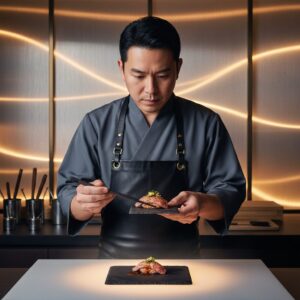
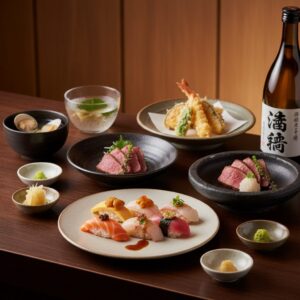
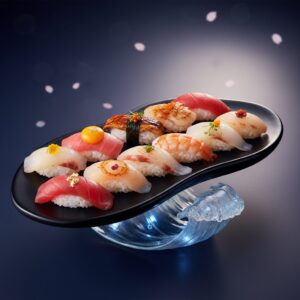
This curated immersion into the sublime extends beyond the mountains to include other pinnacles of Japanese luxury, such as the exclusive experience of Ginza’s Michelin-starred omakase.
The Allure of Effortless Vistas: Why Glamping Reigns Supreme
The very essence of glamping in Japan lies in the subtle art of framing. It is the thoughtful curation of an experience where nature serves as the masterpiece and the accommodation acts as the elegant, unobtrusive frame. This idea is deeply embedded in Japanese aesthetic principles like `shakkei`, or ‘borrowed scenery,’ where a garden or building’s design incorporates the surrounding landscape into its composition. These glamping sites embody the ultimate expression of `shakkei`, borrowing entire mountains and coastlines to become part of your private living environment. It marks a departure from both the rugged individualism of traditional camping and the insulated luxury of a typical hotel. Instead, it offers a third approach: a permeable boundary between the wild and the comfortable, enabling a profound connection to the environment without compromising an ounce of sophistication.
In contrast to a ryokan, a traditional Japanese inn that often envelops its guests in the beauty of manicured gardens and elaborate interior design, these glamping spots focus squarely outward. The architecture tends to be minimalist and respectful, using vast panes of glass, natural wood, and clean lines to ensure nothing detracts from the sweeping views. Here, luxury is not measured by the thread count of sheets or the brand of toiletries, but by the silence, the space, and the overwhelming beauty of the surroundings. Luxury can mean having a ‘Glamping Master’ at Hoshinoya Fuji who teaches you how to smoke your own food with cherry wood chips, or a private chef at Snow Peak Hakuba preparing a multi-course meal on your terrace as the sun sets over the Japan Alps. This is not passive viewing; it is a fully immersive sensory engagement with the landscape, enhanced by flawless service and design.
Hoshinoya Fuji: The Quintessential View of an Icon
When picturing a mountain view in Japan, one inevitably envisions a single, flawless, snow-capped cone: Mount Fuji. For centuries, this stratovolcano has stood as the nation’s most sacred and enduring symbol, inspiring artists such as Hokusai and Hiroshige, and serving as a pilgrimage destination for both shoguns and commoners. Crafting a hospitality experience worthy of such an icon demands not just luxury, but a profound, almost reverential, appreciation of its presence. Hoshinoya Fuji, situated on a slope of red pine forest overlooking Lake Kawaguchi, perhaps represents the most skillful realization of this challenge anywhere in Japan.
A Theatre for Mount Fuji
Arriving at Hoshinoya Fuji feels less like checking into a hotel and more like being welcomed into a private nature observatory. The journey begins not at the lodging itself but at a sleek reception building at the hill’s base. Here, guests choose a stylish backpack filled with essentials for their stay, such as a water bottle, binoculars, and a headlamp—a playful homage to the camping theme. From this point, a dedicated jeep carries you up the winding forest path to the resort. The ‘cabins’—minimalist concrete cubes cantilevered from the hillside—are revealed one by one. This is no rustic charm; it is brutalist elegance, a deliberate material and design choice meant to fade into the vibrant forest colors and let the majesty of Fuji dominate the scene.
Each cabin acts as a private stage for the mountain. One wall consists almost entirely of glass, opening onto a spacious terrace. Here, you don’t merely observe a view; you live within it. The interior is sparse yet exceptionally comfortable, with a low sofa and bed oriented toward the window, ensuring Fuji is the first sight upon waking and the last before sleep. The terrace is the true centerpiece, featuring a bio-ethanol fireplace you may light on request, creating a primal feeling of warmth and comfort under the stars. The sensation is one of deep tranquility and solitude. The only sounds are those of the forest—the leaf rustling, birds calling, and the crackle of your personal fire. The air is crisp and pure. You feel both completely isolated from the world and intimately connected to this iconic landscape.
Immersive Activities Without the Ascent
Hoshinoya Fuji’s philosophy is to offer a profound connection with the Fuji Five Lakes region without requiring strenuous hiking. The experiences are curated by resident ‘Glamping Masters,’ knowledgeable guides who help facilitate your interaction with the environment. One of the most iconic activities is early morning canoeing on Lake Kawaguchi. Gliding across the still, mirror-like water as the sunrise illuminates Fuji delivers a moment of pure magic. There is no engine noise, only the gentle dip of your paddle and the breathtaking reflection of the volcano on the water.
For those wishing to explore nearby forests, guided walks are offered through Aokigahara, the ‘Sea of Trees.’ Far from its dark reputation, this forest, formed atop ancient lava flows from Fuji, presents serene, otherworldly beauty, with moss-covered ground and uniquely shaped trees. The Glamping Masters lead gentle hikes, explaining the unique geology and ecology of the area. Other activities might involve outdoor pizza-making sessions using a wood-fired oven, chopping your own firewood, or private food-smoking experiences on your terrace. The day’s rhythm is guided by nature and your preferences—whether reading in a hammock on the ‘Cloud Terrace,’ a series of wooden platforms connected by elevated walkways, or simply sitting on your balcony watching the ever-changing interplay of light and clouds on Fuji’s slopes.
Practicalities and Passage
Accessing this secluded retreat is surprisingly simple. From Tokyo’s Shinjuku Station, a direct express train or highway bus takes approximately two hours to reach Kawaguchiko Station. From there, a pre-booked taxi or the resort’s shuttle completes the journey. While Fuji is a breathtaking sight year-round, the clearest, unobstructed views typically occur in autumn and winter, from October to February, when the air is colder and less humid. Spring offers the added charm of cherry blossoms framing the lake, while summer brings lush greenery, albeit with Fuji often shrouded by clouds.
For discerning visitors, a crucial tip is to be specific when booking. The hillside cabins are tiered, all with magnificent views, but some are superior to others. Request a cabin on one of the higher levels for the most expansive, panoramic outlook. The ‘F’ type cabins, situated at the very top, are particularly sought after. Reservations should be made months, if not a year, in advance, especially for peak seasons like autumn foliage. This experience is not a spontaneous trip but a carefully planned pilgrimage to the altar of Japan’s most sacred mountain.
The Grand Chariot Hokuto Shichisei 135°: Mysticism and Panoramas in Hyogo
Leaving behind the singular focus of Mount Fuji, our journey heads west to a place rich in Japan’s oldest myths, aligned with the very energy of the Earth. On Awaji Island’s northern coast, nestled within a vast prefectural park, stands The Grand Chariot Hokuto Shichisei 135°. Its name provides insight into its distinctive nature: ‘Hokuto Shichisei’ is the Japanese term for the Big Dipper constellation, and ‘135°’ marks its exact position on the 135th degree of east longitude. This meridian is more than just a map coordinate; in esoteric traditions, it’s regarded as a potent ley line, a channel of planetary energy. This glamping experience aspires not only to offer stunning views but also to achieve celestial and spiritual harmony.
Where Ancient Energies Meet Modern Luxury
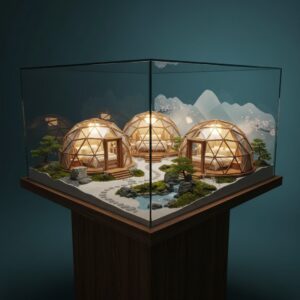
Awaji Island holds a fundamental place in Japanese mythology. According to the `Kojiki`, Japan’s oldest chronicle, Awaji was the very first island created by the deities Izanagi and Izanami, the divine ancestors of the Japanese archipelago and its gods. Staying here means dwelling at the mythological origin of the nation. The Grand Chariot embraces this profound heritage. Instead of tents or cabins, guests stay in 23 individual ‘cocoons’—gleaming white pods scattered across the hillside. Each pod is named after a star or constellation, and their sleek, rounded design strikingly contrasts with the ancient surroundings.
The interiors blend comfort with clever design. A large circular window offers sweeping views, while a skylight directly above the bed enables private stargazing. The mood combines playful futurism with deep serenity. The pods are surprisingly roomy, featuring luxurious bathrooms and all modern conveniences. Yet the ultimate luxury is the strong sense of place. Perched atop a hill, you gaze out over the lush island landscape toward the sea. In the distance, the magnificent Akashi Kaikyō Bridge—the world’s longest suspension bridge—spans the strait, linking the island to Kobe city. By night, the bridge and distant city lights form a glittering, man-made constellation reflecting the stars above.
A Feast for the Senses and the Soul
The culinary program at The Grand Chariot is as integral to the experience as the mythology. Awaji Island is celebrated across Japan for its exceptional produce, benefited by a mild climate and fertile soil. It is especially known for its sweet, flavorful onions, tender Awaji beef, and fresh seafood from the nearby Seto Inland Sea. The restaurant, led by Chef Haruyuki Yamashita, a master of innovative Japanese cuisine, transforms these local treasures into exquisite culinary creations.
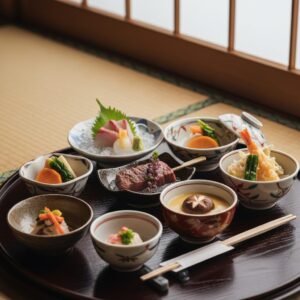
Meals honor the island’s bounty. Dinner might start with delicate sea bream sashimi, proceed to a slow-cooked Awaji onion soup with an almost impossible sweetness, and conclude with a perfectly marbled steak of Awaji beef. The experience is enhanced by the dining room’s panoramic views. It offers a holistic approach—nourishing the body with the finest local ingredients while feeding the soul through the powerful landscape and celestial connection. This is not merely dining; it is a communion with the `terroir` and spirit of Awaji Island.
Reaching the Celestial Sphere
Access to Awaji Island is typically via the Akashi Kaikyō Bridge from Kobe on the mainland. From major transport hubs such as Shin-Kobe or Sannomiya stations, frequent highway buses cross the spectacular bridge and arrive at the Awaji Interchange in about an hour. A short taxi ride then takes you into the park and up to the resort. The location within Nijigen no Mori park is another unique attraction. This ‘2D Forest’ is a large-scale anime theme park featuring attractions dedicated to famous series like Naruto and Godzilla. While it might seem an unusual contrast to the serene, spiritual glamping experience, it provides a fascinating glimpse into another side of modern Japanese culture. Guests at The Grand Chariot often receive special access to these attractions, creating a surreal yet uniquely Japanese fusion of ancient myth, natural beauty, and ultra-modern pop culture.
Nordisk Village Goto Islands: Scandinavian Simplicity on Japan’s Western Frontier
Our next stop takes us to the far western edge of Japan, to an archipelago of islands drifting in the East China Sea. The Goto Islands, part of Nagasaki Prefecture, feel worlds apart from the bustling cities and famous landmarks of the mainland. This place boasts rugged coastlines, emerald waters, hidden coves, and a quiet, profound history. Here on Fukue Island, the largest in the chain, you will discover Nordisk Village—a stunning blend of minimalist Danish design and tranquil Japanese island life.
An Unspoiled Coastal Panorama
Nordisk Village offers a unique kind of ‘peak view.’ It is not the sharp peak of a volcano but the elevated, sweeping sight of coastline meeting the sea. The village is centered around a beautifully restored former elementary school, its wooden structure now hosting a stylish reception, a shared lounge, and a restaurant. Guests stay in classic, cream-colored cotton tents from the renowned Danish outdoor brand Nordisk, spread across the old school grounds. These tents are design icons, with simple, bell-shaped forms that embody ‘hygge’—the Danish idea of cozy contentment.
Inside, the Scandinavian style continues with simple wooden furniture, comfortable beds, and soft lighting. The atmosphere is one of understated rustic elegance—quiet except for the wind and distant seabird calls. The view is not framed by a single window but unfolds from the entrance of your tent, overlooking green fields and the crystal-clear waters of Tao beach. The beauty here is gentle and vast, inviting you to slow down, breathe deeply, and simply be present. At night, the absence of light pollution reveals a spectacular canopy of stars—a celestial display both immense and intimately close.
History and Serenity by the Sea
The Goto Islands are more than a place of natural beauty; they are a UNESCO World Heritage Site, recognized for their unique history with Japan’s ‘Hidden Christians.’ For over 250 years, during a period of national isolation and Christianity’s proscription, communities on these remote islands kept their faith alive secretly, blending Christian, Buddhist, and Shinto practices to avoid detection. Exploring the islands today reveals this legacy in the form of simple yet beautiful churches—some wooden and traditional, others surprisingly European in style—often set in stunning, secluded locations.
Nordisk Village makes an ideal base for exploring this moving history. Visitors can rent bicycles to cycle along quiet coastal roads, discovering chapels and nearby villages. The experience is deeply touching, a testament to faith’s resilience in the face of persecution. This historical depth enriches the peaceful landscape, where every quiet cove and forest seems to hold a story, a secret whispered on the sea breeze. Beyond history, activities are easy and restorative: swimming or kayaking in clear waters, fishing from the shore, or simply enjoying coffee and a book in the old schoolhouse lounge.
Journey to a Secluded Paradise
Getting to the Goto Islands is an adventure itself—a deliberate step off the beaten path. The most common way is to fly from Fukuoka or Nagasaki to Fukue Airport on the main island. For a more scenic route, ferries and high-speed jetfoils run from Nagasaki Port. Once on Fukue Island, Nordisk Village is a short drive from either the airport or port. This relative remoteness is key to its appeal, protecting the islands from over-tourism and preserving an authentic, slow-paced island life. The best times to visit are spring and autumn, when the weather is mild and perfect for exploring. Summer suits swimming and water sports, though it can be hot and humid. A stay at Nordisk Village is more than a luxury retreat; it offers immersion into a soulful, unique corner of Japan where Scandinavian design provides a fresh way to appreciate a landscape rich in history and natural beauty.
Snow Peak Field Suite Hakuba Kitaone Kogen: Alpine Majesty in the Japan Alps

For the ultimate, pure mountain peak experience, we ascend to the rooftop of Japan: the Northern Alps in Nagano Prefecture. This region, host of the 1998 Winter Olympics, is celebrated for its dramatic, jagged peaks, deep powder snow, and world-class ski resorts. However, in the green season, when the snow melts to reveal lush slopes and alpine flowers, a truly extraordinary adventure unfolds. At an altitude of 1,200 meters on a highland plateau, accessible only by a resort gondola, lies the Snow Peak Field Suite Hakuba Kitaone Kogen. This is more than glamping; it is a pursuit of sublime exclusivity and high-altitude luxury.
Above the Clouds in Nagano
The journey to the Field Suite offers the first hint of its uniqueness. Guests park at the base of the Hakuba Happo-one Ski Resort and are then whisked up the mountainside in a private gondola, leaving the world behind as they ascend into the clouds. The site itself is breathtakingly intimate, with just a handful of accommodations ensuring an atmosphere of utter serenity. There are seven luxurious tented suites, designed by the renowned Japanese outdoor brand Snow Peak, and one remarkable ‘JYUBAKO’—a mobile home created by the celebrated architect Kengo Kuma. This wooden box is a marvel of minimalist design, its simple form concealing a warm, beautifully crafted interior that opens to the mountain panorama.
The view is simply unmatched. You are not looking at the mountains; you are within them. The suites perch on the edge of the Kitaone Kogen plateau, offering a 180-degree, jaw-dropping vista of the Hakuba three peaks: Shirouma, Shakushi, and Hakuba Yari. One of the most magical phenomena here is the `unkai`, or ‘sea of clouds.’ Waking up in the morning, it is common to see the entire valley below draped in a thick blanket of white cloud, with only the highest peaks piercing through like islands in a vast, ethereal ocean. Witnessing this from your private deck, a warm cup of coffee in hand, borders on a spiritual experience. It serves as a profound reminder of nature’s scale and grandeur.
Haute Cuisine at High Altitude
Matching the splendor of the view is the culinary experience, a central pillar of the Field Suite’s philosophy. A dedicated team of chefs from a renowned local restaurant crafts exquisite meals using the finest seasonal ingredients from the Shinshu region. The dining is theatrical and intimate. Chefs prepare dishes in an open-air kitchen, and meals are served either at a communal table beneath the stars or on your private suite’s terrace. The cuisine is a refined blend of Japanese and Italian influences, designed to highlight the freshness and quality of local produce—mountain vegetables, Shinshu beef, river fish, and locally made cheeses.
Dinner is a multi-course event, perfectly timed to coincide with the setting sun, which bathes the mountain peaks in hues of pink and gold. This is followed by a convivial gathering around a large central bonfire, where guests can enjoy a digestif and share stories beneath a sky ablaze with stars. The service is impeccable—attentive yet unobtrusive—creating the feeling of being a cherished guest in a private mountain lodge. The entire experience is curated to foster a deep sense of well-being and connection to the magnificent alpine environment.
Practical Considerations for an Elevated Escape
This level of exclusivity and unique location means that a stay at the Snow Peak Field Suite requires careful planning. It operates only during the ‘green season,’ typically from July to October, and with so few rooms, it is often fully booked a year in advance. Access is via the town of Hakuba, reachable from Tokyo by taking the Hokuriku Shinkansen to Nagano Station (about 90 minutes), followed by an express bus to Hakuba (about 60 minutes). Given its price, which is at the very top end of the luxury market, it is an investment in a once-in-a-lifetime memory. The package is all-inclusive, covering gondola transport, all meals, drinks, and guided activities like morning yoga sessions on the plateau or gentle treks to scenic viewpoints. It is a destination for those seeking the absolute pinnacle of mountain scenery, delivered with unparalleled luxury and a profound sense of peace.
A Note for the Discerning Traveller
Setting out on a trip to one of these outstanding glamping sites is an investment in an experience, and a few practical tips can help make it as smooth as it is unforgettable. First, booking ahead is essential, not optional. Due to the exclusivity and popularity of these destinations, peak season dates—and even weekday stays—are often booked six months to a year in advance. Be ready to plan early to secure your preferred dates.
Next, familiarize yourself with the pricing structure. These are premium, often all-inclusive packages. Although the initial price may seem steep, it generally covers not only accommodation but also elaborate multi-course meals, a selection of drinks, and a variety of curated activities. When comparing costs, consider what you would typically spend on fine dining and guided tours separately. It’s also smart to verify the details of what’s included, such as transportation from the nearest train station, as this can differ. Lastly, pack appropriately for the setting. Even during summer, mountain nights can be chilly, so layering is important. While these luxury sites offer comfort, practical footwear for uneven terrain and suitable outerwear will improve your comfort and ability to fully enjoy the natural environment.
The Landscape Within Reach

Japan’s mountains have long been sources of awe and inspiration, their peaks standing as separate realms, accessible only to devoted pilgrims or seasoned mountaineers. These extraordinary destinations now offer a new form of access—not merely a physical route, but an emotional and sensory journey. They reveal that it is possible to connect with the raw, untamed beauty of the Japanese wilderness while surrounded by refined comfort and thoughtful design.
Staying at one of these locations is more than just a holiday; it is a recalibration of the senses. It means tasting food grown in the very earth you overlook, feeling the crisp mountain air on your skin as you watch the sunrise from your bed, and experiencing the profound silence that lets you hear the forest’s subtle sounds. These places are not simply accommodations; they are destinations that actively shape your perception of the landscape, framing, curating, and presenting it in its most stunning form. They offer a powerful reminder that sometimes the deepest connection with nature comes not from the challenge of ascent, but from the stillness of exquisite, luxurious contemplation.