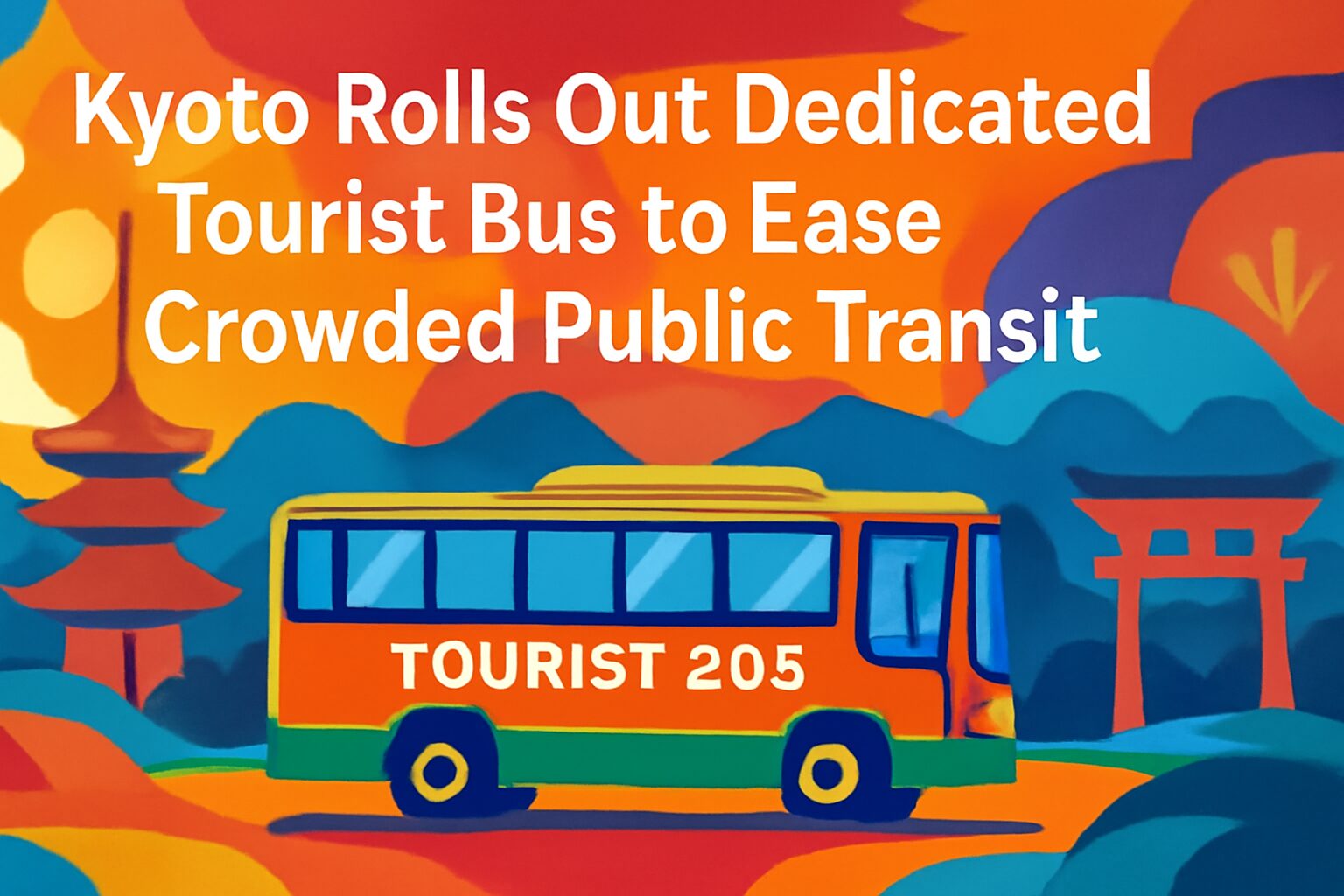
Kyoto, the heart of traditional Japan, has launched a new double-decker tourist bus line in a strategic move to combat the severe effects of overtourism. The new service, officially known as the “Tourist Express Bus,” is designed to provide a dedicated transportation option for visitors, aiming to separate them from local residents and alleviate the immense pressure on the city’s public bus network.
The Strain of Success: Kyoto’s Overtourism Challenge
For years, Kyoto has struggled to balance its status as a world-class destination with the daily needs of its 1.46 million residents. The problem reached a critical point after Japan’s post-pandemic reopening. With the country welcoming a record-breaking 3 million international visitors in both March and April 2024, Kyoto’s infrastructure, particularly its bus system, has been pushed to its limits.
Local buses, essential for residents commuting to work, school, and appointments, became excessively crowded with tourists and their luggage. It was common for locals to be unable to board buses during peak hours, leading to significant frustration and disruption to their daily lives. This situation prompted the city to take decisive action. Earlier this year, in a move to encourage subway use, the city discontinued its popular one-day bus pass, which was heavily favored by tourists. The new express bus is the next major step in this strategy.
A Dedicated Route for Visitors
The new tourist bus service offers a direct and comfortable alternative for visitors navigating the city. The route is specifically designed to connect major tourist hubs, including Kyoto Station, the Gion district (near Yasaka Shrine and Kiyomizu-dera Temple), and the area around Kinkaku-ji (Golden Pavilion).
Key features of the new service include:
- Direct Routes: The buses operate on express routes, minimizing stops to provide faster travel between key attractions compared to local buses that serve every neighborhood stop.
- Increased Capacity: The use of double-decker buses significantly increases passenger capacity per vehicle, offering more space and a more comfortable journey.
- Visitor-Focused: The service is tailored to tourist needs, with considerations for luggage space and potentially multi-lingual guidance, making it a more convenient option for international travelers.
By offering this attractive alternative, city officials hope to divert a significant number of tourists away from the local bus lines, thereby freeing up space for residents who rely on them for their daily transportation needs.
Future Projections and Global Impact
The success of this initiative will be a critical test for Kyoto’s sustainable tourism strategy. If a large number of tourists adopt the new express bus, residents should experience a noticeable improvement in their daily commute. For visitors, it promises a less stressful and more efficient way to see the city’s famous sights.
However, potential challenges remain. The fare for the tourist bus is higher than a standard local bus ride, and its success will depend on whether visitors are willing to pay a premium for convenience. Furthermore, while the initiative addresses bus crowding, it does not solve the issue of overcrowding at the tourist sites themselves.
This move by Kyoto is being watched closely by other historic cities around the world grappling with similar overtourism issues. From Venice’s introduction of an entry fee to Amsterdam’s restrictions on tourism, cities are experimenting with new models to manage visitor flows. Kyoto’s solution of separating tourist and local transit infrastructure could become a new blueprint for achieving a more harmonious balance between a thriving tourism economy and the well-being of local communities.