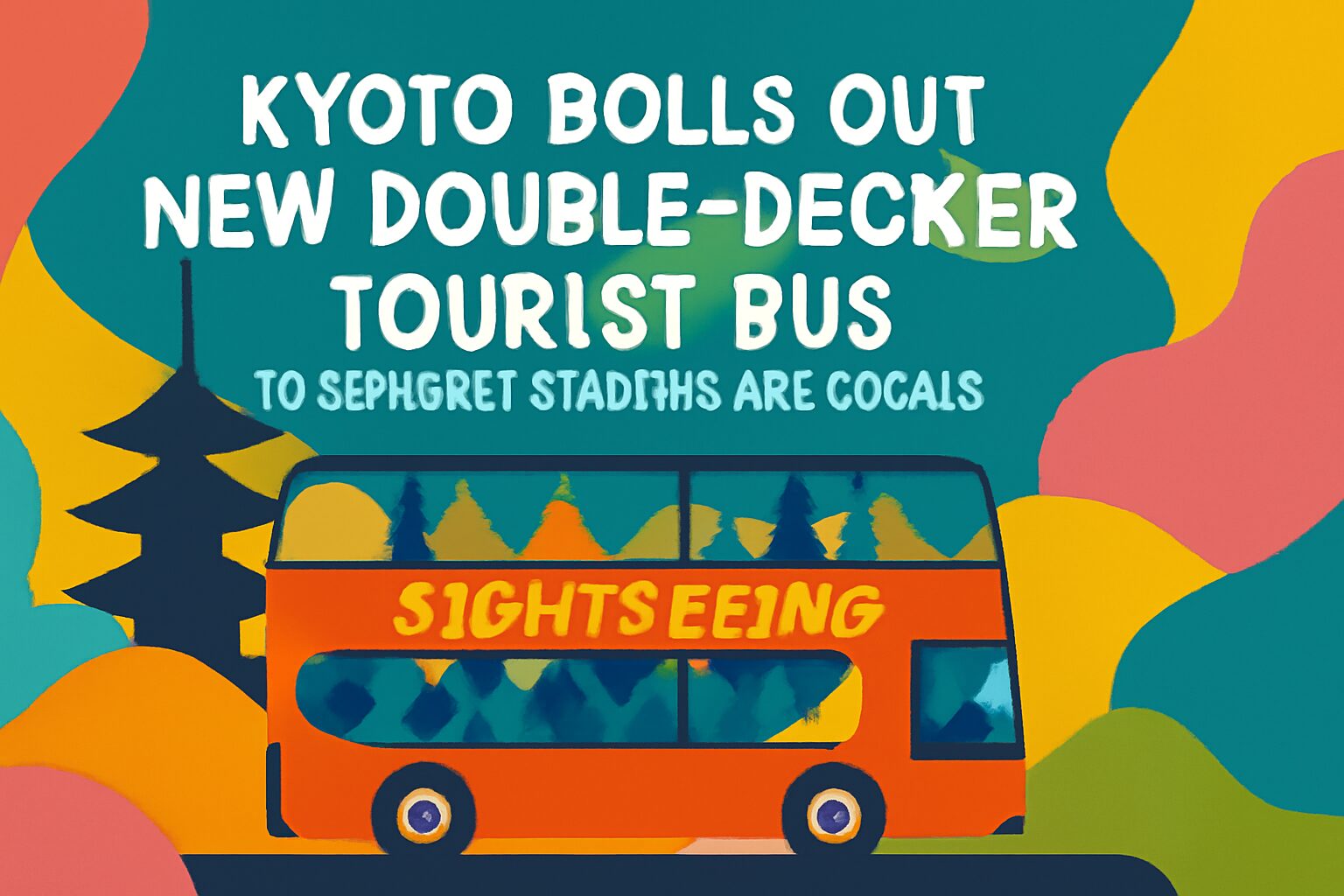
Kyoto, Japan’s ancient capital famed for its temples, gardens, and geishas, has introduced a new dedicated double-decker bus line for tourists. This strategic move aims to tackle one of the most pressing issues of overtourism: the severe congestion on public city buses, by separating the flow of sightseers from local residents.
The Backstory: Overtourism’s Strain on Kyoto’s Public Transit
For years, Kyoto has been a top destination for international and domestic travelers. Before the pandemic, in 2019, the city welcomed over 53 million visitors. With the rapid recovery of tourism, this number is on the rise again, bringing with it the familiar challenge of overtourism.
One of the most significant pain points has been the city’s public bus system. The buses, essential for the daily life of Kyoto’s citizens for commuting to work, school, and hospitals, became overwhelmed with tourists. Visitors, often carrying large luggage, would crowd the buses, frequently leading to situations where local residents, especially the elderly, were unable to board. This created considerable friction and diminished the quality of life for the local community, sparking widespread calls for a solution.
A Dedicated Route for a Seamless Journey
In response, the new tourist bus line offers a practical solution. The service is designed to connect major tourist hubs, such as Kyoto Station, the Gion district, Kiyomizu-dera Temple, and Kinkaku-ji (the Golden Pavilion). By providing a convenient and direct route between these key attractions, the city encourages tourists to use this dedicated service instead of the regular municipal bus lines.
The use of double-decker buses is also a key feature. They not only offer a greater capacity to accommodate a large number of visitors at once but also provide an enhanced sightseeing experience with panoramic views from the upper deck. The service is expected to feature multilingual support and information tailored to travelers, making it an attractive and stress-free option for navigating the city.
Projected Impacts and the Road Ahead
The anticipated effects of this initiative are twofold, benefiting both residents and visitors.
For Residents
The primary goal is to alleviate the pressure on the public bus system. With a significant portion of tourists opting for the new line, local residents can expect less crowded buses, more reliable timetables, and a return to normalcy in their daily commutes. This measure is a direct response to their concerns and a step towards improving urban livability.
For Tourists
Visitors can look forward to a more comfortable and efficient way to explore Kyoto. The new bus eliminates the confusion of navigating a complex local bus network and reduces travel time between popular sites. This improved experience is likely to lead to higher visitor satisfaction.
Looking to the future, while this bus line is a significant and positive development, it is viewed as one part of a broader strategy to manage tourism sustainably. The success of this initiative will depend on effective promotion to ensure tourists are aware of and choose this new option. Kyoto will likely continue to explore other measures, such as promoting off-the-beaten-path destinations to disperse crowds and implementing smart tourism technologies to manage visitor flow.
This new tourist bus line marks a crucial step in Kyoto’s ongoing effort to strike a delicate balance between being a world-class tourist destination and a comfortable home for its citizens. It represents a tangible commitment to creating a more sustainable and harmonious model for tourism in one of Japan’s most cherished cities.