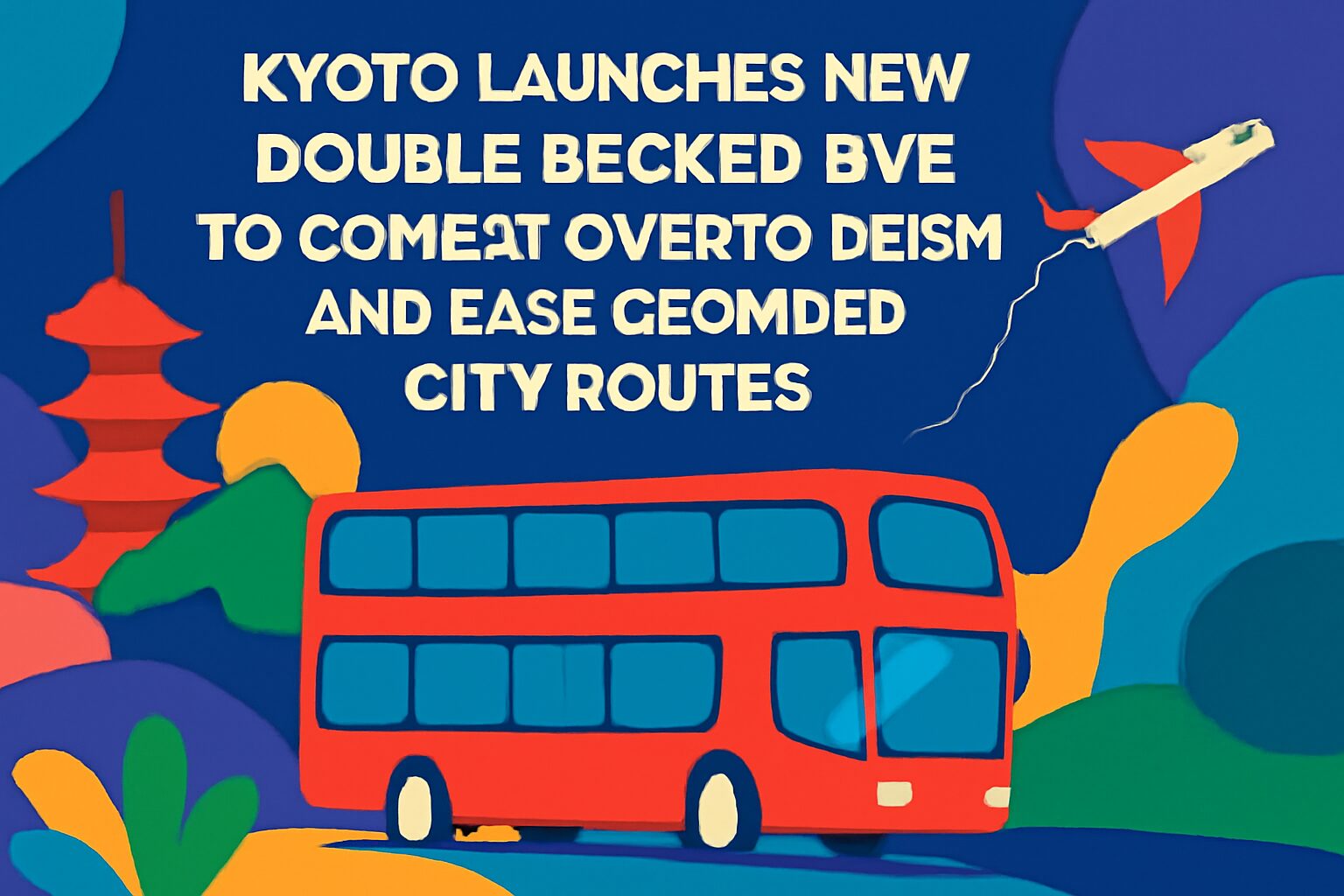
Kyoto, Japan’s ancient capital, has unveiled a new double-decker tourist bus line as a strategic measure to alleviate the city’s long-standing struggle with overtourism. This initiative aims to separate the flow of tourists from local residents by providing a dedicated transportation option for visitors, thereby easing the severe congestion on public city buses.
Background: The Strain of Overtourism on Kyoto’s Public Transport
For years, Kyoto has been a top destination for international and domestic travelers, drawn by its stunning temples, traditional gardens, and historic Gion district. The surge in tourism, however, has placed an immense strain on the city’s infrastructure. Before the global pandemic, the situation reached a critical point. In 2019, Kyoto welcomed an astounding 53.5 million tourists, a figure that overwhelmed its public transportation system.
The city’s bus network, an essential lifeline for local residents going about their daily lives, became a symbol of this challenge. Buses on popular routes were frequently jam-packed with tourists, often carrying large luggage, making it difficult or impossible for citizens to board. This led to significant delays, disruptions to daily commutes, and growing frustration among the local community, sparking a city-wide debate on how to balance a thriving tourism economy with the well-being of its residents.
A New Solution on Wheels: The Dedicated Tourist Bus
In response to these challenges, the new double-decker bus line has been designed exclusively for sightseers. The service is intended to be a more comfortable, convenient, and attractive alternative to the regular city bus network.
Key Features and Route
The new bus line connects Kyoto’s most iconic landmarks, including Kyoto Station, the bustling Shijo-Kawaramachi shopping area, the historic Gion district, Kiyomizu-dera Temple, and Heian Jingu Shrine. By linking these key spots directly, it offers an efficient way for visitors to navigate the city’s main attractions.
The use of double-decker buses not only provides greater capacity but also enhances the sightseeing experience, offering panoramic views from the upper deck. This dedicated service aims to siphon tourist traffic away from the essential local bus routes, effectively creating two parallel systems: one for residents and one for visitors.
Expected Impacts and Future Outlook
The introduction of this tourist-centric bus line is expected to have a multifaceted impact on the city.
For Local Residents
The primary goal is to reclaim the city buses for the local community. With fewer tourists on board, residents can expect less crowding, more reliable and punctual service, and a significant reduction in the daily stress associated with their commute. This move is seen as a crucial step in improving the quality of life for the people who call Kyoto home.
For Tourists
Visitors stand to gain a more pleasant travel experience. They can avoid the struggle of navigating a crowded and complex local bus system and instead enjoy a service tailored to their needs. With features like hop-on-hop-off flexibility and potential multilingual audio guides, the new line promises a smoother and more enjoyable journey between sights.
For the City of Kyoto
For the city administration, this initiative is a tangible demonstration of its commitment to sustainable tourism. It is a proactive strategy to manage the negative effects of overtourism rather than simply restricting visitor numbers. If successful, this model of separating tourist and residential transport flows could serve as a blueprint for other historic cities around the world facing similar pressures.
The road ahead will involve carefully monitoring ridership and ensuring tourists are effectively guided toward this new option. However, this bold step represents a critical effort by Kyoto to forge a more sustainable path forward, ensuring it remains both a world-class travel destination and a livable city for its citizens.