Walk into any Japanese arcade, past the rows of crane games with their plush captives and the percussive thunder of rhythm games, and you’ll likely find a dedicated corner where the energy is different. The lighting is softer, the music is exclusively high-tempo J-pop, and the space is dominated by a fleet of large, brightly decorated booths. This is the realm of Purikura. From the outside, you see groups of friends, mostly young women, poring over touch screens, laughing as they use digital styluses to draw on their own faces. You hear the muffled countdowns and cheerful, high-pitched instructions emanating from behind closed curtains. It looks like a simple photo booth, a relic from a bygone era given a futuristic facelift. But that assumption would be a profound misunderstanding of what’s really going on here.
Purikura—a portmanteau of purinto kurabu (print club)—is not just about taking a picture. It is a deeply ingrained social ritual, a communal act of transformation, and a temporary escape into a carefully engineered reality. It’s a high-tech playground where participants collaboratively craft an idealized version of themselves and their friendships, then print the evidence on a sheet of glossy stickers. To understand Purikura is to understand something essential about performance, aesthetics, and social bonding in modern Japan. It’s a phenomenon that has weathered the storm of the smartphone revolution, not by competing with the selfie, but by offering something a phone never could: a sacred, shared experience. Forget what you think you know about photo booths; we’re stepping behind the curtain into a world where every flash is part of a carefully choreographed play.
This exploration of digital self-expression in Purikura mirrors the spirited reinvention of public spaces, as seen in the bicycle tsunami phenomenon, where Japan’s train stations transform into lively communal hubs.
The Anatomy of a Purikura Session: More Than Just a Photo
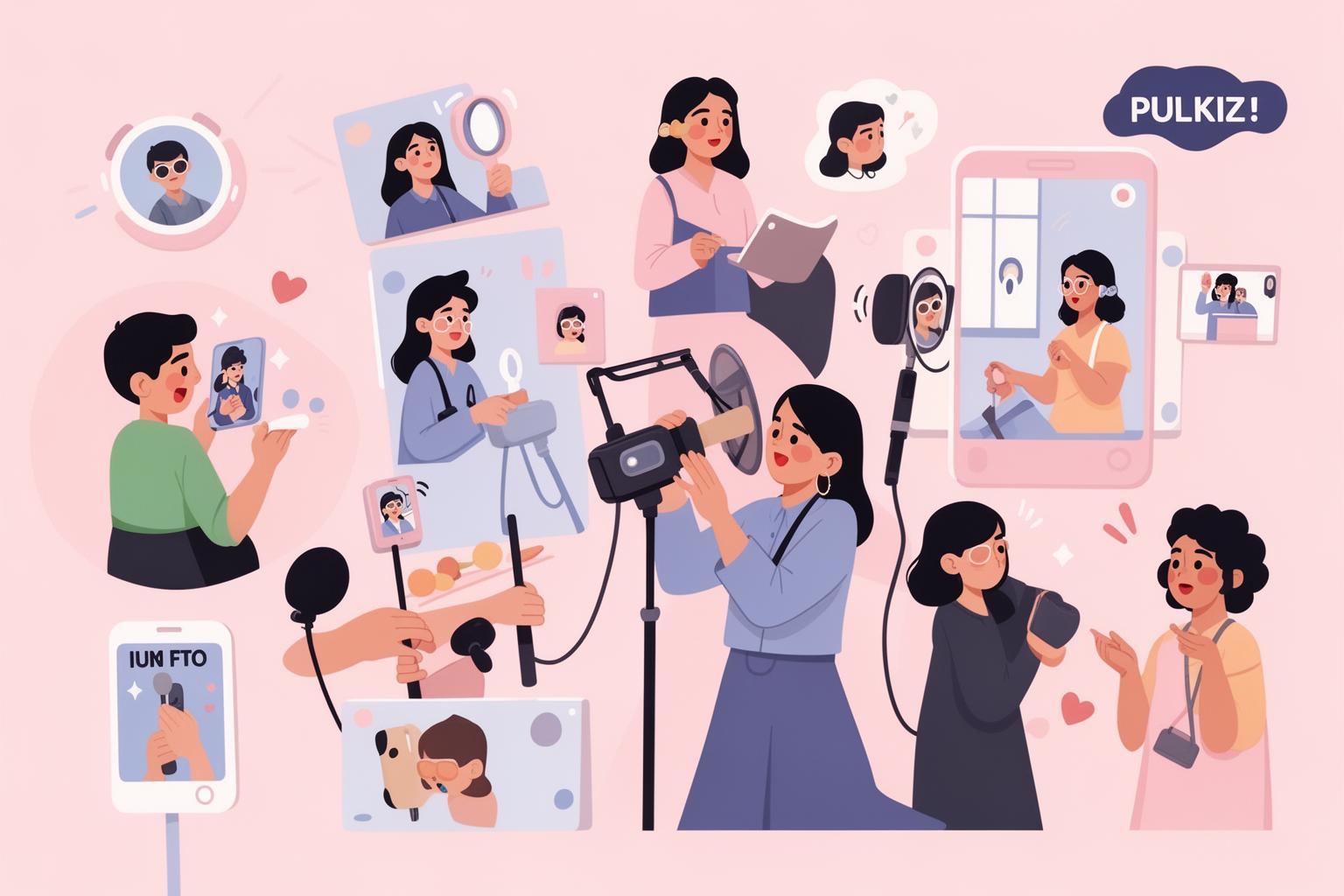
The entire Purikura experience unfolds as a carefully structured performance, divided into distinct acts. It does not start when you insert your coins but with the important choice of selecting your stage. Each booth represents a brand, a specific model from manufacturers such as FuRyu or Atlus, each promising a unique aesthetic result. One might focus on a dreamy, soft-focus effect, while another highlights sharp, doll-like features. A third could be renowned for its leg-lengthening technology. Friends gather, debating the strengths of each machine based on the sample photos displayed outside. This choice marks the initial act of collaboration, a mutual agreement on the shared fantasy you are about to create.
The Booth as a Private Stage
After paying the fee, usually around 400 or 500 yen, you step behind a curtain into the booth itself. This simple act of drawing the curtain is crucial. It transforms the space from a public arcade corner into a private, in-between zone. The outside world, with its noise and judgment, fades away. Inside, you stand on a brightly lit stage, facing a large screen and a high-quality camera. A cheerful, synthesized female voice acts as your director, enthusiastically guiding you through the process. The atmosphere is tightly sealed, an incubator for fun and uninhibited self-expression. Props such as animal ears, silly glasses, or seasonal items are often available but remain secondary to the main event.
The booth is a surprisingly advanced piece of technology. The lighting isn’t the harsh, flat flash of an old passport photo machine; instead, it uses diffused, flattering studio lights designed to eliminate shadows and create a smooth, porcelain-like canvas for your face. The camera captures high-resolution images, preserving details that will later be digitally altered. This phase is focused on collecting the best raw material before the real transformation begins.
A Choreography of Friendship
The timer starts, displaying an unyielding countdown for each shot on the screen, generating a frantic, game-like energy. The machine’s voice commands: “Three, two, one, pose!” This isn’t a moment for quiet or candid shots but a rapid-fire performance of culturally recognized poses. The screen often shows examples, illustrating the exact angle for a peace sign, the proper way to cup your face to appear smaller (the kogao pose), or how to form a heart with your hands.
This is a shared gesture language. There’s the classic peace sign held near the cheek, and the “toothache” pose, where a hand rests on the jawline. More complex poses involve friends coordinating to form a large heart together or spell out letters with their bodies. The aim isn’t spontaneity but the precise execution of familiar routines. It’s a dance where everyone knows the steps. You squeeze in close, twist your bodies to fit the frame, and laugh at the silliness while racing against the clock. This artificial urgency adds to the fun; it pushes you past self-consciousness into pure, reactive play. Each pose successfully struck before time runs out feels like a small victory—a point earned in the game of making memories.
The Art of Digital Metamorphosis: Crafting the Ideal Self
After the whirlwind of the photoshoot, you are directed to the second key area: the rakugaki (doodling or graffiti) station. This separate console outside the main booth is where the post-production magic unfolds. Two styluses are provided, enabling multiple people to work on the images simultaneously. Here, the raw photos are transformed into artifacts of idealized beauty and friendship.
Rakugaki Corner: The Post-Production Playground
The screen shows the photos you just took. A new timer starts, usually lasting a few minutes, adding an extra layer of playful pressure. This is a collaborative design session. The tools available are extensive: digital pens in various colors and thicknesses, a vast library of stamps featuring everything from glittering hearts to cute animals, pre-written phrases like “BFFs” (zッ友 – zuttomo) or “We Love” (大好き – daisuki), and decorative frames.
This stage is not only about adding playful decorations; it’s about captioning the memory. You write the date, the location, and the reason for the outing. You add inside jokes, draw cat whiskers on one friend, and devil horns on another. The process is a negotiation: “You decorate this one, I’ll do the next.” “Should we use the sparkly pen or the rainbow one?” Every choice is a small agreement that reinforces the group’s shared aesthetic and experience. The frantic rush to finish before the timer ends ensures the decoration remains instinctive and energetic rather than overthought. It captures the emotional tone of the moment.
The “Moru” Effect: Engineered Cuteness
Alongside the manual rakugaki, your faces and bodies undergo automatic, algorithmic transformation. This lies at the heart of the Purikura aesthetic, a concept known as moru (盛る). The verb literally means “to pile on” or “to fill up,” but here it refers to enhancing, embellishing, and exaggerating to the point of beautiful unreality. Purikura machines are engines of moru.
Before you begin decorating, the machine has already been at work. Skin is smoothed to an impossible flawlessness, erasing blemishes, pores, and even stray hairs. The most striking feature is the eye-enlargement effect, or deka-me (デカ目). Eyes become significantly larger, rounder, and more luminous, often with a sparkle added to the pupil. This aesthetic is influenced by the visual language of anime and manga, where large, expressive eyes symbolize youth and beauty. Jaws are slimmed, noses subtly reshaped, and chins sharpened into a desirable V-line shape.
Modern machines go even further. Some offer leg-lengthening functions for full-body shots, creating the illusion of supermodel proportions. You can adjust the intensity of these effects, but the default is far from natural. The goal is not to look like yourself but to appear as the ultimate kawaii version of yourself—a perfected, doll-like avatar aligned with a very specific and widely recognized Japanese beauty standard. It’s an explicit rejection of authenticity in favor of a shared fantasy. While Western photo apps often aim for subtle enhancement and a “I woke up like this” vibe, Purikura revels in its artifice. The visible manipulation is the whole point.
A Social Currency: The Life of a Purikura Sheet

Once the rakugaki timer expires, your creation is sent to the printer. After a minute or two, a warm, glossy sheet of stickers appears from a slot. But the ritual is far from complete. This final stage is arguably the most socially meaningful.
The Ritual of Cutting and Sharing
The machine area always has a small counter space equipped with pairs of scissors. The group gathers around the single printed sheet, and the careful process of dividing the treasures begins. The sheet is usually marked with perforated lines or clear boundaries, but the act of cutting and handing out the photos is a final, tactile expression of friendship.
This is a moment of communal appreciation and negotiation. “Oh, you look so cute in this one, you should have it!” “Let’s make sure everyone gets a group shot.” The physical act of cutting the stickers and giving them to your friends turns the digital image into a tangible token of shared experience. It is a gift, a keepsake of the time you just spent together in that private, curtained space. It solidifies the memory in physical form. In a world of infinite digital copies, this finite, physical artifact carries special significance. Each person leaves with a piece of the whole—a reminder that they belong to the group.
From Sticker Books to Smartphone Screens
During the golden age of Purikura, from the late ’90s through the 2000s, these stickers had a specific home: the purichō (プリ帳), a dedicated Purikura album. These books were carefully curated personal museums of friendship. Pages were filled with stickers, annotated with handwritten comments and decorations. Flipping through someone’s purichō was like viewing a map of their social life. The stickers also served as currency, decorating flip phones, pencil cases, and student ID cards. They were public declarations of one’s social circle.
Today, the role of the physical sticker has shifted. While many still treasure the tangible object, the digital file has gained equal or even greater importance. Most modern machines offer the option to download photos directly to your smartphone via a QR code. These images are then instantly used as social media profile pictures, posted on Instagram, or shared through messaging apps. The function remains the same—a declaration of friendship and an expression of an idealized self—but the medium has changed.
Even so, the digital version retains the unmistakable Purikura style. It is instantly recognizable. The oversized eyes, flawless skin, and digital graffiti form a visual signature that signals not just a photo of friends, but a picture commemorating the act of taking Purikura together. The medium remains the message.
The Evolution of an Icon: From Novelty to Nostalgia
Purikura first burst onto the Japanese scene in the mid-1990s and quickly became an unstoppable cultural phenomenon. For an entire generation of young women, it was an indispensable part of social life. It served as a gathering spot, a reason to meet. It perfectly embodied the spirit of a culture fascinated by technology, cuteness, and group identity. The booths grew increasingly sophisticated, prompting a competitive surge in beautification technology. The gyaru (gal) subculture, known for its bold fashion and makeup, elevated Purikura to an art form, developing a complex language of poses and decorative styles.
Surviving the Selfie Apocalypse
With the rise of smartphones and apps like Instagram, many predicted Purikura’s demise. Why pay 500 yen when you could take a free selfie and apply a filter? Yet, Purikura has persisted. Although the industry has consolidated and booths are less widespread than before, they remain a vibrant and relevant part of youth culture. Their survival hinges on what they offer that smartphones cannot.
A smartphone selfie is often a solitary or spontaneous act at best. Purikura is a deliberate, planned event. It is an activity in itself. The booth is the destination. The purpose is the shared ritual of creating something together. A phone cannot replicate the privacy of the curtain, the excitement of the frantic countdown, or the collaborative fun of the rakugaki station. The experience is the product, not just the image.
Moreover, the technology inside a Purikura booth still far surpasses that of a phone’s front-facing camera and filter apps. The studio lighting, the powerful camera, and proprietary software algorithms designed solely to achieve the moru effect create a result that is qualitatively different. It’s the difference between a home recording and a professionally produced album. Everyone can tell the difference, and for a special occasion or a dedicated hangout with close friends, the “studio version” is worth it.
Beyond the Kawaii Facade: What Purikura Really Means
On the surface, Purikura may appear to be a frivolous, even vain, activity. It’s easy to write it off as a reflection of a culture fixated on a narrow and unrealistic ideal of beauty. While that criticism holds some truth, it overlooks the deeper social purpose at its core.
Purikura provides a space for identity exploration. In a society that often values conformity and restraint, the booth offers a temporary zone of permitted transformation. It enables young people to experiment with an idealized version of themselves, to imagine themselves as flawless, wide-eyed characters from a story. This form of escapism is both creative and empowering.
More significantly, Purikura serves as a powerful tool for social bonding. The entire experience is designed to encourage collaboration, communication, and intimacy. From selecting the machine to coordinating poses, from decorating the screen together to cutting and sharing the final stickers, every step acts as a ritual that strengthens friendships. It’s a device that turns a group of people into a tangible symbol of their affection for one another.
Ultimately, a Purikura sticker is more than just a photograph. It’s a memento of a shared experience. It’s proof that you were there together, laughing in a brightly lit booth, racing against the clock to create a perfect, sparkling memory. It stands as a testament to a genuine friendship, even if the faces in the picture are a beautiful, crafted fantasy.