What’s up, fellow wanderers? Ryo Kimura here, hitting you up from the heart of Japan’s creative core. Today, we’re ditching the usual Tokyo hustle and Kyoto’s tranquil temples to vibe with something real, something raw, something that absolutely slaps your taste buds into another dimension. We’re talking about Kanazawa, a city that’s pure art, and its legendary stomach—Omicho Market. Forget everything you thought you knew about fresh fish. Omicho isn’t just a market; it’s a 300-year-old living, breathing institution, the certified ‘Kitchen of Kanazawa,’ where the city’s culinary soul is on full display. And the undisputed main character of this epic story? The kaisendon, or seafood bowl. This isn’t just a meal; it’s a technicolor dreamscape of the freshest catches from the Sea of Japan, piled high on perfectly seasoned rice. It’s a flavor bomb that redefines what seafood can be. This is where local grannies, top-tier chefs, and curious travelers like us all collide in a beautiful, chaotic symphony of sound, smell, and, most importantly, taste. So, get ready to dive deep, because we’re about to explore the spot that’s the gold standard for seafood lovers. No cap, this place is legendary.
To truly understand the depth of Kanazawa’s food scene, you should also explore the rich history of Kaga cuisine, which has its roots in the region’s samurai heritage.
The Vibe Check: Stepping into a Different Reality
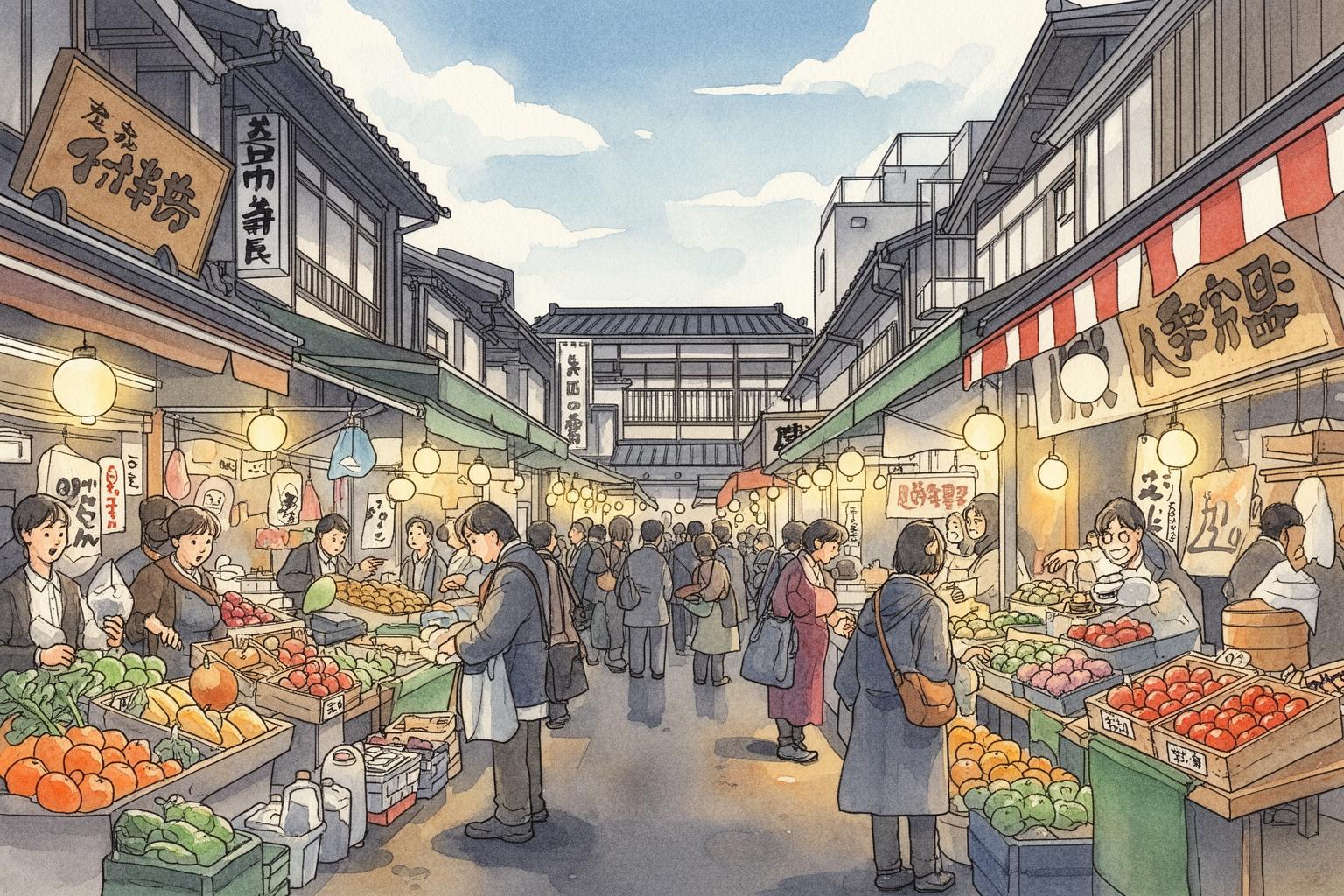
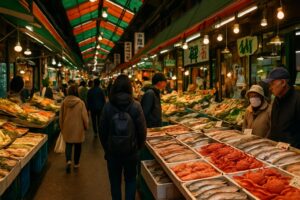
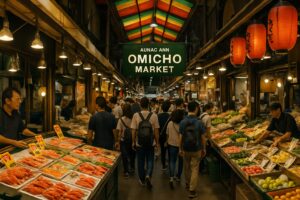
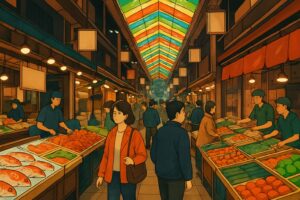
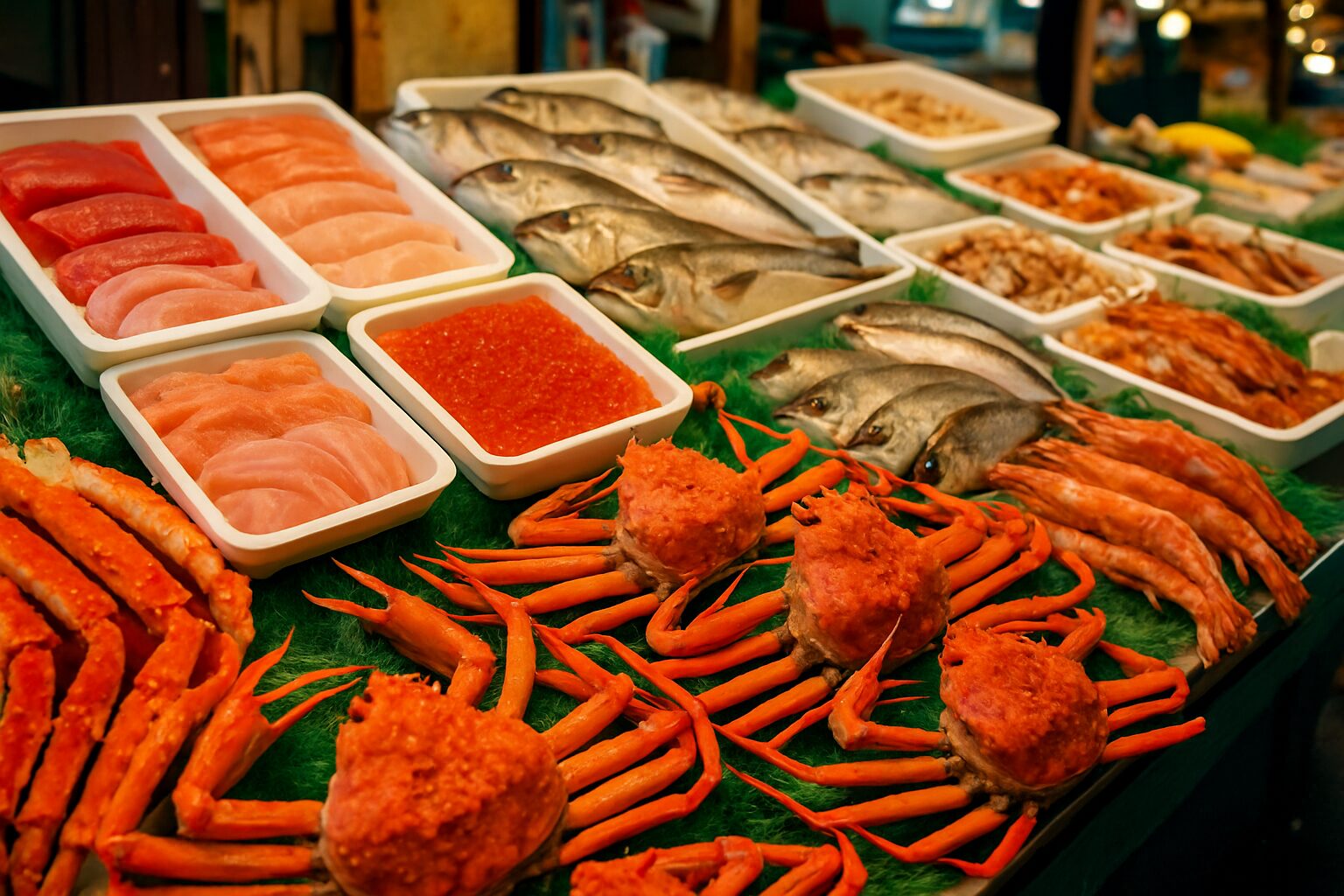
The moment you step under the covered arcades of Omicho Market, the outside world simply fades away. It’s a complete sensory overload in the most delightful way. The air is heavy with the fresh, salty scent of the sea, blended with the sweet aroma of grilled eel and the earthy smell of local Kaga vegetables. It’s not a quiet spot; it’s a vibrant soundscape. You hear the rhythmic calls of vendors, loud and proud, shouting “Irasshaimase!” (Welcome!) with booming voices honed over generations. Their rapid-fire banter with regular customers in the local dialect offers an authentic glimpse of life you won’t find in any guidebook. You catch the scrape of ice being shoveled into styrofoam boxes, the sizzle of scallops hitting a hot grill, and the constant, lively hum of a focused crowd. It’s a labyrinth of over 170 stalls, each a world unto itself. One moment, you’re admiring massive snow crabs, their legs stretching across the table; the next, you’re captivated by rows of gleaming fish, their scales sparkling like jewels under fluorescent lights. The floor remains perpetually damp, a testament to the market’s constant activity and freshness. It’s not polished or sanitized for tourists; it’s a genuine working market, and that’s what makes it so remarkable. The atmosphere is electric—a high-energy dance of commerce and community that’s been alive since the Edo period. You feel as if you’ve tapped into the city’s main artery, the place where its true lifeblood flows.
Decoding the Kaisendon: The Anatomy of Perfection
Alright, let’s dive into the main attraction—the kaisendon, the very reason we’re all here. Calling it just a ‘seafood bowl’ doesn’t do it justice. It’s a meticulously crafted masterpiece, a tribute to the sea where every single ingredient plays an essential role. To fully appreciate it, you need to break it down. It’s an entire ecosystem in a bowl, a subtle harmony of textures and flavors that represents the pinnacle of Japanese seafood culture. This isn’t simply piling fish on rice; it’s an art form, a culinary tradition honed over centuries, with Omicho Market as its grand stage. Every element, from the rice to the toppings, is chosen and prepared with extraordinary care and precision. Understanding this is key to unlocking the full, mind-blowing experience of an Omicho kaisendon.
The Foundation: It’s All About the Rice
First up, let’s highlight the unsung hero of the kaisendon: the rice, or shari. Any experienced sushi chef will tell you that rice is even more important than the fish, and that applies here as well. This isn’t just plain steamed rice. The grains are usually high-quality, locally grown rice from Ishikawa Prefecture, prized for its perfect balance of stickiness and distinct grain separation. It’s cooked to perfection, then seasoned with a delicate blend of rice vinegar, sugar, and salt. This seasoning elevates the dish by cutting through the richness of fatty fish and enhancing the sweetness of shellfish. Temperature plays a crucial role too. A top-notch kaisendon will be served with the rice at or near body temperature, creating a sublime contrast with the cool, fresh toppings. When you take a bite, the warmth of the rice gently coaxes out the oils and flavors of the fish, creating a melt-in-your-mouth sensation that’s pure magic. Cold, clumpy rice is a rookie mistake you simply won’t find at the best spots in Omicho. They understand rice is the canvas, and a masterpiece demands a flawless one.
The Stars of the Show: The Neta (Toppings)
Now, for the part that grabs all the Instagram attention: the neta, or toppings. This is where Omicho really shines. Positioned right on the Sea of Japan, the market has access to some of the world’s finest seafood. The variety is staggering and changes with the seasons, so every visit brings a new discovery. You’re not just getting tuna and salmon here; you’re presented with a carefully curated selection of the region’s best.
Nodoguro: The White Fish King
If you spot Nodoguro (Blackthroat Seaperch) on the menu, don’t hesitate. This fish is the undisputed king of white-fleshed fish in the Hokuriku region. Often called the ‘white toro’ because of its incredibly high fat content, when lightly seared (aburi style), the oils render and the skin crisps just enough to release an intoxicating aroma. The flesh is so tender and buttery it practically melts on your tongue, leaving behind a wave of rich, clean umami. It’s a luxury indulgence, for sure, but an unforgettable experience.
Shiro Ebi: Jewels of the Sea
Look closely and you might notice bowls topped with what looks like a delicate, pinkish-white cloud. Those are Shiro Ebi, or white shrimp, a specialty from nearby Toyama Bay. These tiny, translucent shrimp pack a subtle yet intense sweetness. Their creamy, melt-in-your-mouth texture is unlike any shrimp you’ve tried before. Painstakingly peeled by hand, a single serving in your bowl might contain dozens of them. Eating them is like tasting the pure, sweet essence of the deep sea. They are a true delicacy and a testament to the treasures of these local waters.
Buri: The Winter Powerhouse
Visiting in winter? You’re in for a treat. The season’s star is Kan-buri, or winter yellowtail. As the Sea of Japan chills, yellowtail accumulate fat for insulation, resulting in a fish that’s unbelievably rich and flavorful. The flesh is firm yet juicy, marbled with luscious fat that lends a deep, complex flavor. A thick slice of Kan-buri belly is so oily it practically shimmers. It’s a powerful, satisfying taste that perfectly captures the harsh yet bountiful character of a Japanese winter.
Uni and Ikura: The Orbs of Ocean Gold
No premium kaisendon is complete without the dynamic duo of Uni (sea urchin) and Ikura (salmon roe). Omicho’s uni is often a vibrant sunset-orange, with a firm texture that yields to a creamy, briny custard-like interior. It tastes of the sweet, mineral-rich kelp it feeds on—pure, unfiltered ocean flavor. The ikura, in contrast, provides a completely different sensation. These large, glistening salmon roe pop in your mouth, releasing a burst of salty, savory liquid that floods the palate. The creamy uni paired with the popping ikura creates a textural and flavorful indulgence that’s next-level.
More All-Stars: Amaebi, Hotaru Ika, and Beyond
And of course, the lineup continues. You’ll find Amaebi (sweet shrimp), served raw to savor their sticky, sweet flesh. In spring, there’s Hotaru Ika (firefly squid), tiny squid boiled whole with a distinct, deep savory flavor. Then there’s an incredible range of tuna (maguro), from lean akami to fatty chu-toro and o-toro, along with squid (ika), octopus (tako), and various clams and shellfish. Each bowl is a carefully crafted adventure, a snapshot of the day’s freshest sea bounty.
How to Conquer Omicho: Finding Your Perfect Bowl
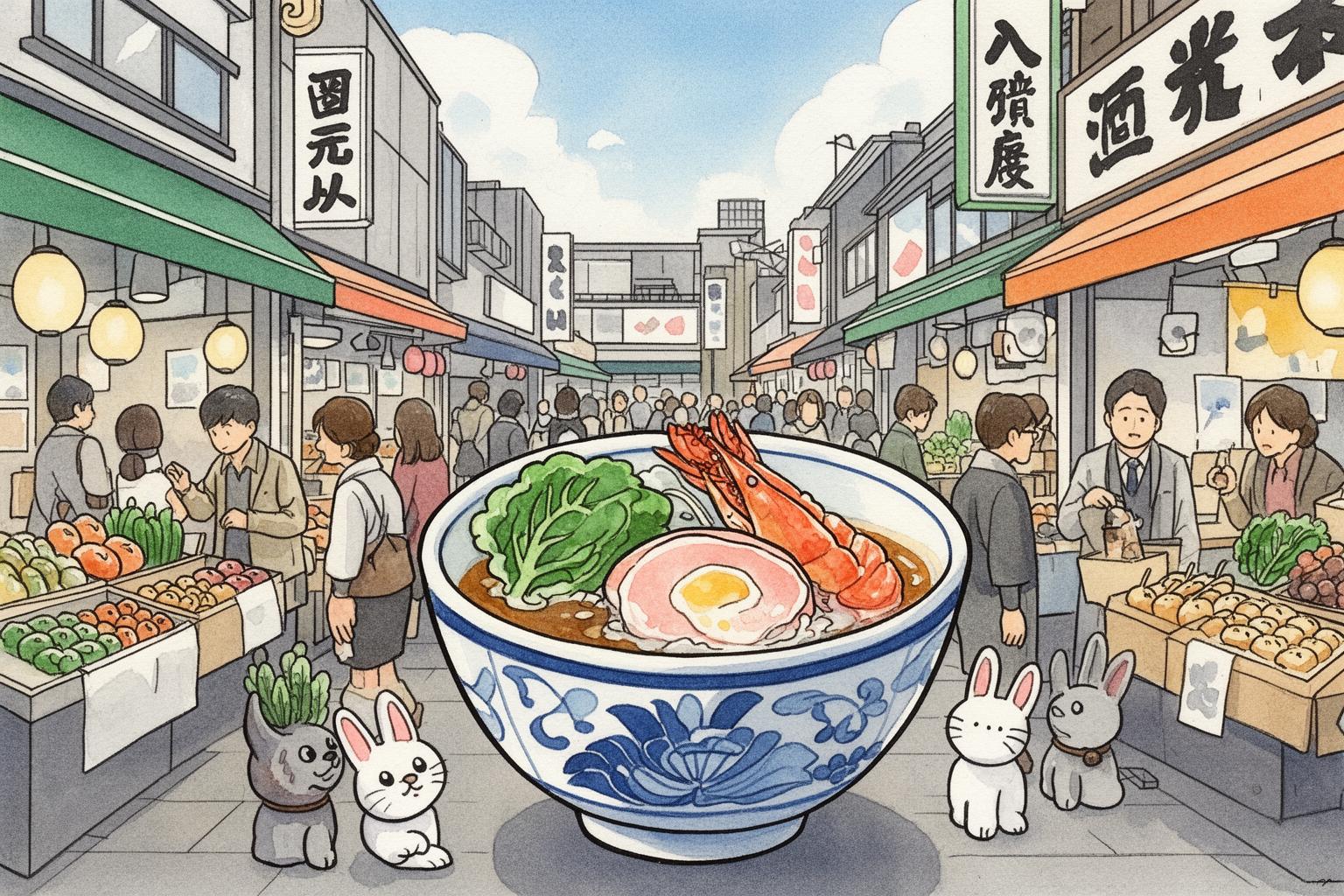
Alright, so you’re excited. You’re ready to eat, your stomach is growling, and you’re surrounded by countless choices. It can definitely feel a bit overwhelming. But don’t worry. Finding your ideal bowl is part of the adventure. The trick is knowing what to look for and trusting your instincts.
Getting Oriented: Restaurants vs. Stalls
In Omicho, there are two main ways to enjoy your kaisendon. First, there are the dedicated restaurants. These are sit-down places, often found on the ground or second floor of the market building. They provide a more relaxed setting with proper tables and extensive menus. These spots are perfect if you want to take your time, order some sides and a beer, and really savor your meal. The second option, a classic Omicho experience, is to eat at one of the small counters inside a fishmonger’s stall. Here, you’re literally eating right next to the seafood source. The menu may be smaller, often just a few daily specials written on a board, but the freshness is undeniable. You’ll be sitting close to other diners, pointing at what you want, and watching the experts prepare your meal just inches away. It’s a more raw, immediate, and arguably more authentic experience.
A Universal Language: Point and Order
Don’t speak Japanese? No problem. The language of food is universal, and Omicho is very welcoming to international visitors. Most restaurants have picture menus or realistic plastic food models displayed, so you know exactly what you’re ordering. You can simply point and say “Kore o kudasai” (This one, please). Many kaisendon spots offer a few classic bowls: a basic one with a mix of the day’s catch, a premium bowl featuring uni and ikura, and sometimes a specialty bowl focused on tuna or local Hokuriku fish. If you’re feeling adventurous, try the “omakase” or “chef’s choice,” where the chef selects the best of the day’s catch for you. Trust the experts—they know what’s fresh and tasty.
Dining Etiquette
When your beautiful bowl arrives, what next? First rule: don’t just pour soy sauce all over it—that’s a big no-no. The chef has already balanced the flavors carefully. The right way is to pour a small amount of soy sauce into the little dish provided. You can mix a tiny bit of wasabi into the soy sauce, or for a more refined approach, dab a small amount of wasabi directly onto a piece of fish before dipping it lightly into the soy sauce. This keeps the unique taste of each topping intact. As for how to eat, there are no strict rules. Some people pick off the toppings one by one with their chopsticks and eat them with rice. Others prefer to take a piece of fish and a bite of rice together. Just avoid mixing everything up like a bibimbap—that blurs the distinct flavors and textures the chef worked so hard to create. Simply eat, enjoy, and let the flavors speak for themselves.
It’s Not Just Kaisendon: Exploring Omicho’s Other Flavors
While kaisendon is the star attraction, assuming Omicho is just about seafood bowls is a rookie error. The market is a treasure trove of street food and culinary delights you absolutely have to explore. Pace yourself because you’ll want to sample everything. Think of it as a food festival where every stall serves a hit.
Straight from the Grill
Follow your nose, and you’ll inevitably discover stalls grilling seafood to order. The scent of sizzling scallops brushed with butter and soy sauce is irresistible. You can enjoy giant oysters, grilled until plump and juicy, served with a squeeze of lemon. Or try skewers of eel (unagi) or squid (ika) glazed in a sweet and savory sauce. These snacks are perfect for nibbling as you stroll through the bustling market lanes. They’re simple, fresh, and packed with umami that will keep you coming back.
Fried Goodness and Local Produce
Watch for stalls selling korokke (croquettes). The crab cream korokke is a must-try, with its golden, crispy panko coating giving way to a decadently creamy filling loaded with sweet crab meat. It’s ultimate comfort food. The market is also a great place to discover the region’s unique produce. Look for Kaga vegetables, a brand of traditional, locally grown crops. You’ll find items like Kaga renkon (lotus root), known for its starchy, sticky texture, and Gorojima kintoki sweet potatoes, which are incredibly sweet and flavorful. Many stalls offer fresh fruit juices and smoothies, perfect for a refreshing boost. White peach or melon juice in the summer is pure bliss.
The Soul of the Market: A 300-Year Legacy
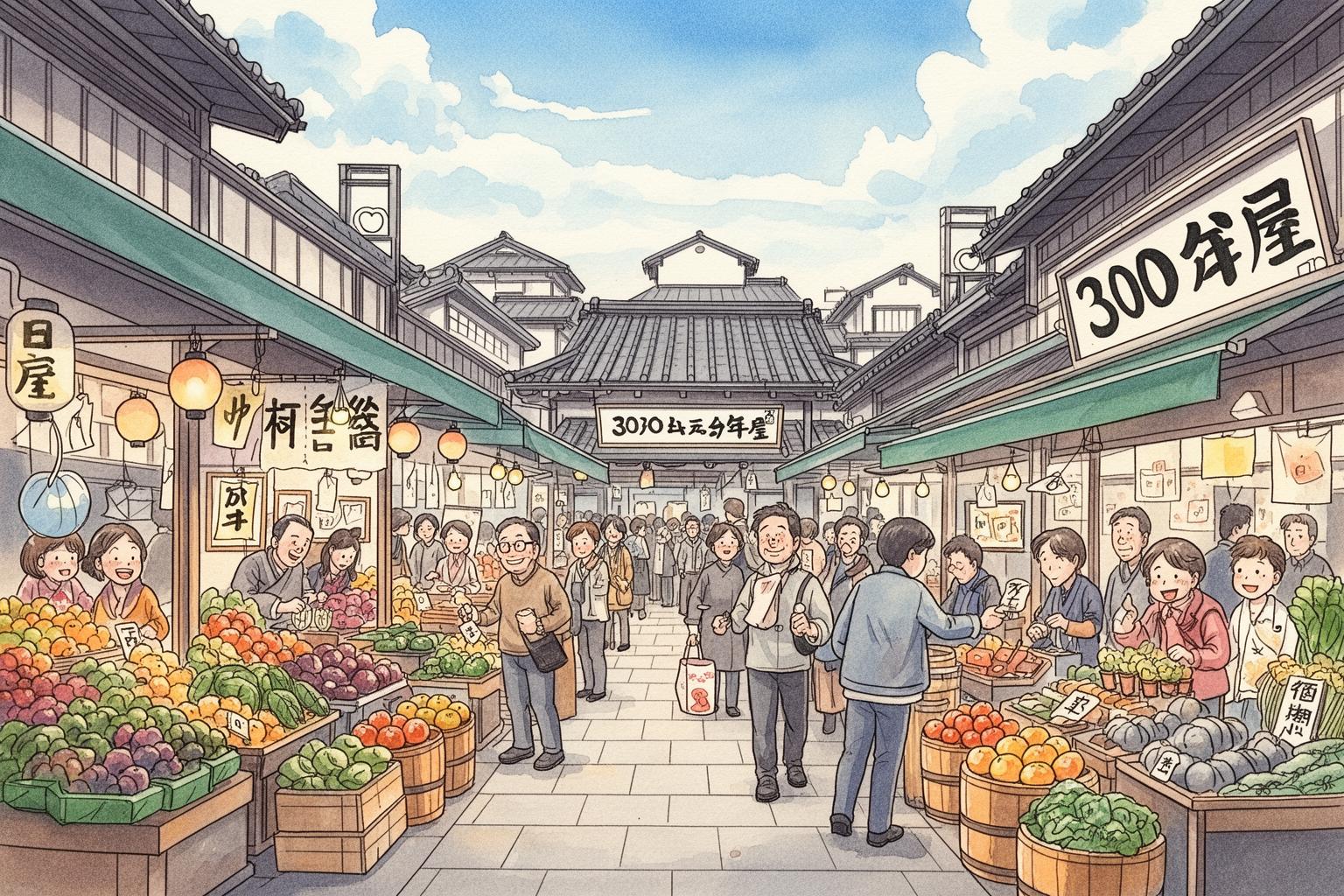
Omicho Market is not a new, trendy food hall. This place carries genuine history—real history. It has been the culinary centerpiece of Kanazawa for over 300 years, dating back to the mid-Edo period. Its story is closely connected to the history of Kanazawa itself, a city that prospered as the seat of the Maeda clan, one of Japan’s most powerful and wealthy feudal domains. The Maeda lords were avid patrons of arts and culture, including gastronomy. They nurtured a refined food culture that demanded the finest ingredients, and Omicho Market emerged to fulfill that need. It became the key gathering place where fresh seafood from the Sea of Japan and farm produce from the Kaga plains came together. For centuries, it has provided the ingredients for everything from the simple home-cooked meals of Kanazawa’s residents to the elegant kaiseki dishes served in the city’s top restaurants and teahouses. Walking through its aisles means walking through a living piece of history. While the faces of the vendors may have changed, the energy, purpose, and dedication to quality remain just as strong as they were hundreds of years ago. It stands as a direct, tangible connection to Kanazawa’s rich cultural heritage.
Your Game Plan: Making the Most of Your Visit
Ready to dive in? A little planning can go a long way in making your Omicho experience smooth and unforgettable. Here are the practical details you need to know.
Getting There
Omicho Market is extremely accessible. It’s situated right in the heart of Kanazawa, about a 15-20 minute walk from Kanazawa Station. If you’d prefer not to walk, numerous local buses, including the Kanazawa Loop Bus, will drop you off close to the market’s main entrance. Just hop on a bus heading towards Korinbo or Kenrokuen Garden, and you’ll arrive in no time. It’s a central landmark, so it’s hard to miss.
The Golden Hour: Best Time to Go
Timing is key at Omicho. Although the market officially opens around 9:00 AM, the real buzz begins early. For the most vibrant and authentic experience, aim to visit between 9:00 AM and noon. This is when the fishmongers are busiest, the selection is at its freshest, and the energy is at its peak. It’s also the ideal time to enjoy a kaisendon for breakfast or an early lunch, as some of the most popular spots can develop long lines later in the day. By late afternoon, many fresh fish stalls start to close up, and the market’s lively atmosphere begins to fade. While some restaurants remain open later, you’ll miss the true market vibe. So, be an early bird—it’s definitely worth it.
A Market for All Seasons
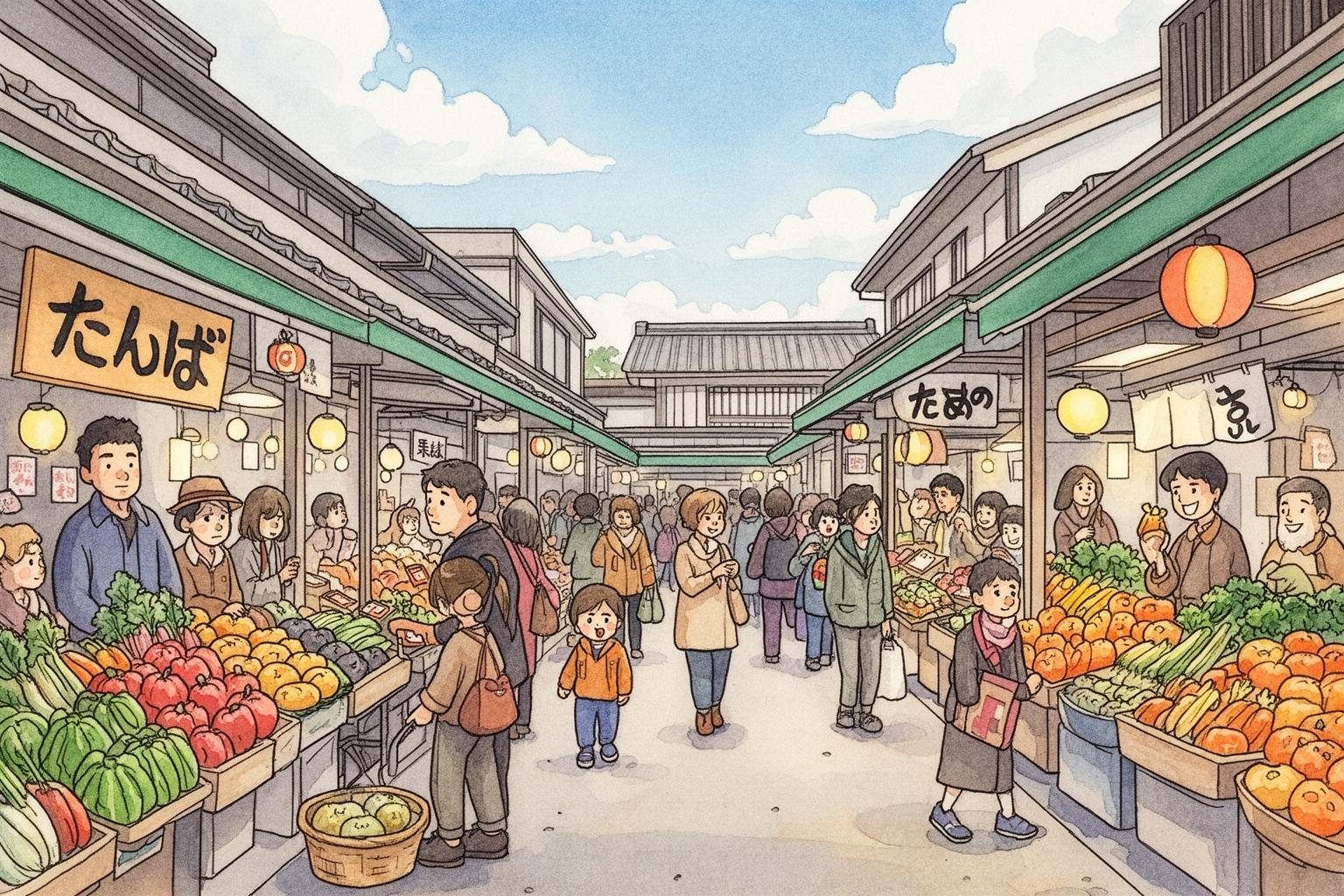
One of the most remarkable aspects of Omicho is how it changes with the seasons. The variety of seafood and produce reflects the time of year, making each visit a distinct experience. Japan’s culinary tradition is deeply tied to seasonality, and Omicho exemplifies this philosophy masterfully.
Spring (March – May)
Spring brings a feeling of renewal. The waters are alive with new life. This is the prime season for Hotaru Ika (firefly squid), usually served boiled with a side of sumiso (vinegar and miso) sauce. You’ll also find an abundance of fresh shellfish and tender young seaweed. It’s a season of subtle, refreshing flavors that shake off the chill of winter.
Summer (June – August)
Summer in Japan is hot and humid, and the food reflects a craving for light, refreshing flavors. This is the peak time for Uni (sea urchin) in many areas, offering incredibly sweet and creamy varieties. Rock oysters (iwagaki) are another summer favorite—they are large, meaty, and boast a complex, mineral taste that is truly remarkable. Fish tend to be leaner, while the vibrant summer vegetables bring a colorful contrast to the market.
Autumn (September – November)
Autumn marks the harvest season, characterized by abundance and rich, robust flavors. Fish begin to build up fat in preparation for winter, making their taste more intense. This is an excellent season for Nodoguro (blackthroat seaperch) along with various mackerel and sardines. The market also overflows with mushrooms, chestnuts, and freshly harvested rice, creating a warm and plentiful atmosphere.
Winter (December – February)
Winter is undisputedly the premier season for seafood in the Hokuriku region. The cold Sea of Japan waters yield seafood with unmatched richness and flavor. This is the season of legends. You have the mighty Kan-buri (winter yellowtail), at its peak of fatness and taste. And then there’s the ultimate indulgence: snow crab (zuwaigani). They’re everywhere, large and impressive. A kaisendon topped with fresh, sweet snow crab meat is sheer decadence. The sweet shrimp (amaebi) also shine this season, bursting with blue-green roe. For serious seafood lovers, a winter pilgrimage to Omicho Market is essential. It’s a culinary journey that will transform your life.
Final Pro-Tips from Your Boy, Ryo
Before you embark on your culinary journey, here are a few final tips to take your Omicho experience from great to legendary. First, while the ground-floor stalls are fantastic, don’t overlook the restaurants on the second floor. They often provide a quieter, more comfortable dining atmosphere with a stunning bird’s-eye view of the bustling market below. Second, be bold. If you encounter something unfamiliar on the menu, ask about it or just give it a try. Vendors are passionate about their offerings and usually happy to explain, helping you discover a new favorite dish. Lastly, take a moment to pause and soak it all in. Observe the interactions, listen to the sounds, and appreciate that you’re standing in a place that’s much more than a market. It’s the living, breathing, flavorful heart of Kanazawa—a place that honors its past while nourishing its future, one incredible bowl of seafood at a time. So go ahead, dive in, and let Omicho Market show you what true flavor means. You won’t regret it. Bet.