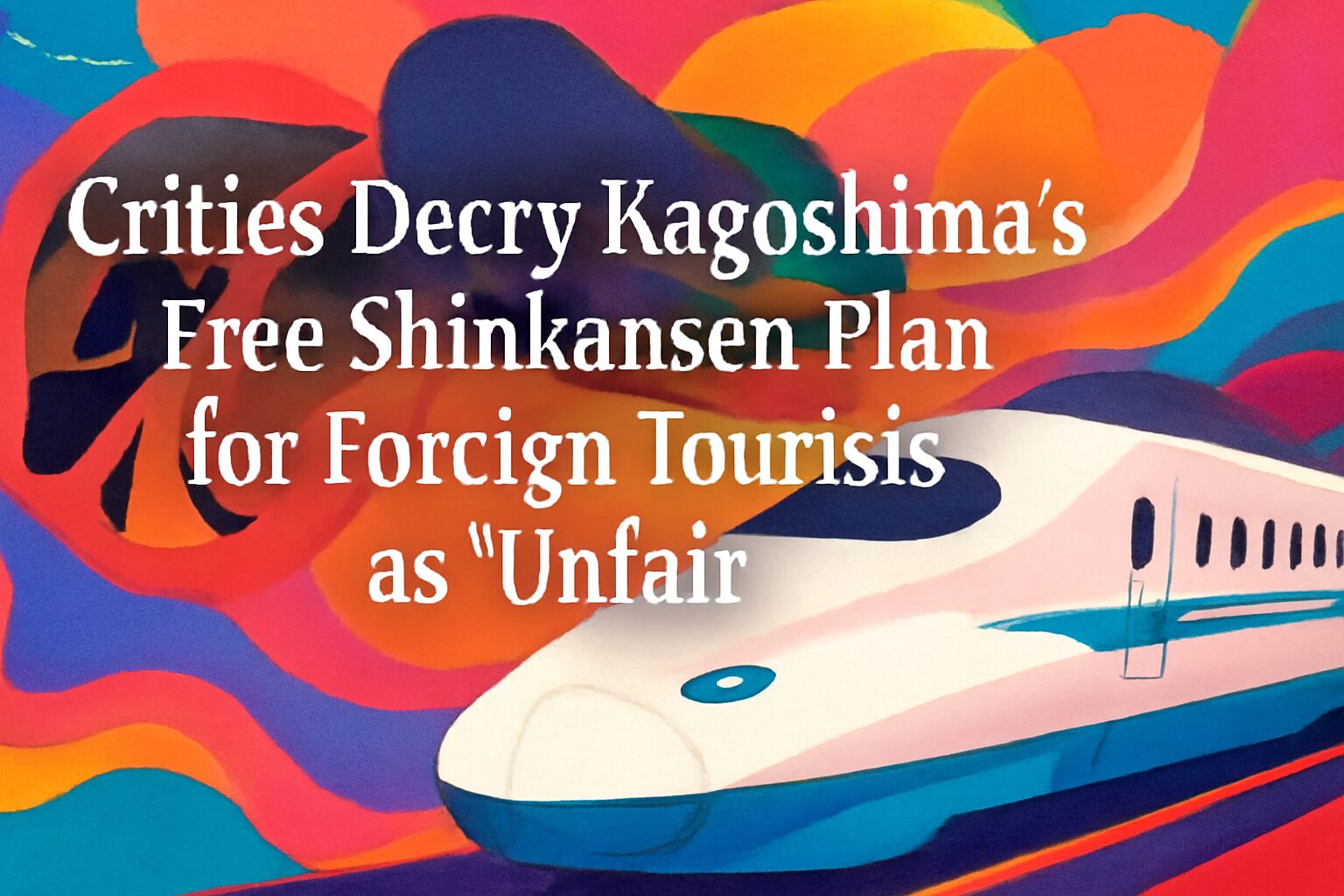
Kagoshima Prefecture, located on the southern tip of Japan’s Kyushu island, has unveiled an ambitious plan to offer free shinkansen (bullet train) tickets to foreign tourists, igniting a heated debate across the nation about fairness and the future of Japan’s tourism strategy. While the prefecture aims to stimulate its local economy, critics are questioning why Japanese nationals are being excluded from the generous promotion.
The Proposal: A High-Stakes Bet on Inbound Tourism
The proposed campaign is a direct attempt to capitalize on the booming post-pandemic travel market. Under the plan, Kagoshima would cover the cost of shinkansen travel for a targeted number of international visitors traveling to the prefecture.
Prefectural officials have high hopes for the return on investment. They estimate the program could generate approximately ¥1.7 billion (around $11 million USD) in local tourism spending. This calculation is based on a key piece of data: foreign visitors spend significantly more than their domestic counterparts. According to the Japan Tourism Agency, the average expenditure per international tourist in 2023 was over ¥210,000, whereas the average for a domestic tourist’s trip is often less than a third of that amount. Proponents argue that this spending power justifies the targeted incentive, as the influx of foreign cash would benefit hotels, restaurants, and local attractions, ultimately boosting the regional economy.
Background: Luring Tourists Beyond the Golden Route
This plan doesn’t exist in a vacuum. It reflects a wider national strategy to alleviate overtourism in major hubs and disperse visitors to Japan’s lesser-known regions. For years, the majority of inbound tourists have concentrated on the “Golden Route”—Tokyo, Kyoto, and Osaka—leaving many other beautiful prefectures struggling to attract international attention.
With the yen at multi-decade lows, Japan is a more affordable destination than ever for foreign travelers. The government sees this as a golden opportunity to encourage exploration of rural and regional Japan. Kagoshima, known for its active volcano Sakurajima, unique cuisine, and rich history, is precisely the type of destination authorities want to promote. Before the pandemic, in 2019, the prefecture welcomed a record number of foreign guests, but numbers have yet to fully recover, making bold initiatives like this seem necessary to regain momentum.
The Controversy: A Question of Fairness
Despite the potential economic benefits, the proposal has been met with a wave of criticism from within Japan. The central point of contention is the issue of fairness. On social media and in local news commentary, many have voiced their frustration, asking why Japanese taxpayers should fund free travel for foreign visitors while they themselves must pay full price for the same shinkansen ticket—a journey that can cost over ¥10,000 one-way from a major hub like Fukuoka.
The sentiment is that the plan creates a two-tiered system, rewarding foreign guests at the expense of domestic travelers who form the stable backbone of the nation’s tourism industry. Critics argue that a more equitable approach would be to offer discounts to all visitors, or to invest the funds in improving local infrastructure and services that benefit everyone.
Future Outlook and Potential Impact
The future of Kagoshima’s plan remains uncertain. If implemented and successful, it could set a precedent for other prefectures to launch similar aggressive campaigns, potentially reshaping Japan’s tourism landscape by creating more competition for international visitors. It could successfully put Kagoshima on the map for a new wave of travelers and deliver the projected economic boom.
However, the risk of a public backlash is significant. If the perception of “unfairness” intensifies, it could force officials to revise or even scrap the plan. It also raises long-term questions about sustainability. While such promotions can provide a short-term boost, they may not build the lasting appeal needed for sustained tourism growth. Furthermore, it could risk alienating the domestic market, which has supported regional economies through thick and thin.
Ultimately, Kagoshima’s free shinkansen proposal is a fascinating case study of the challenges Japan faces as it navigates its tourism boom. It highlights the difficult balancing act between maximizing economic gain from the lucrative inbound market and maintaining social equity for its own citizens. The outcome of this debate will be watched closely by other regions grappling with the same dilemma.