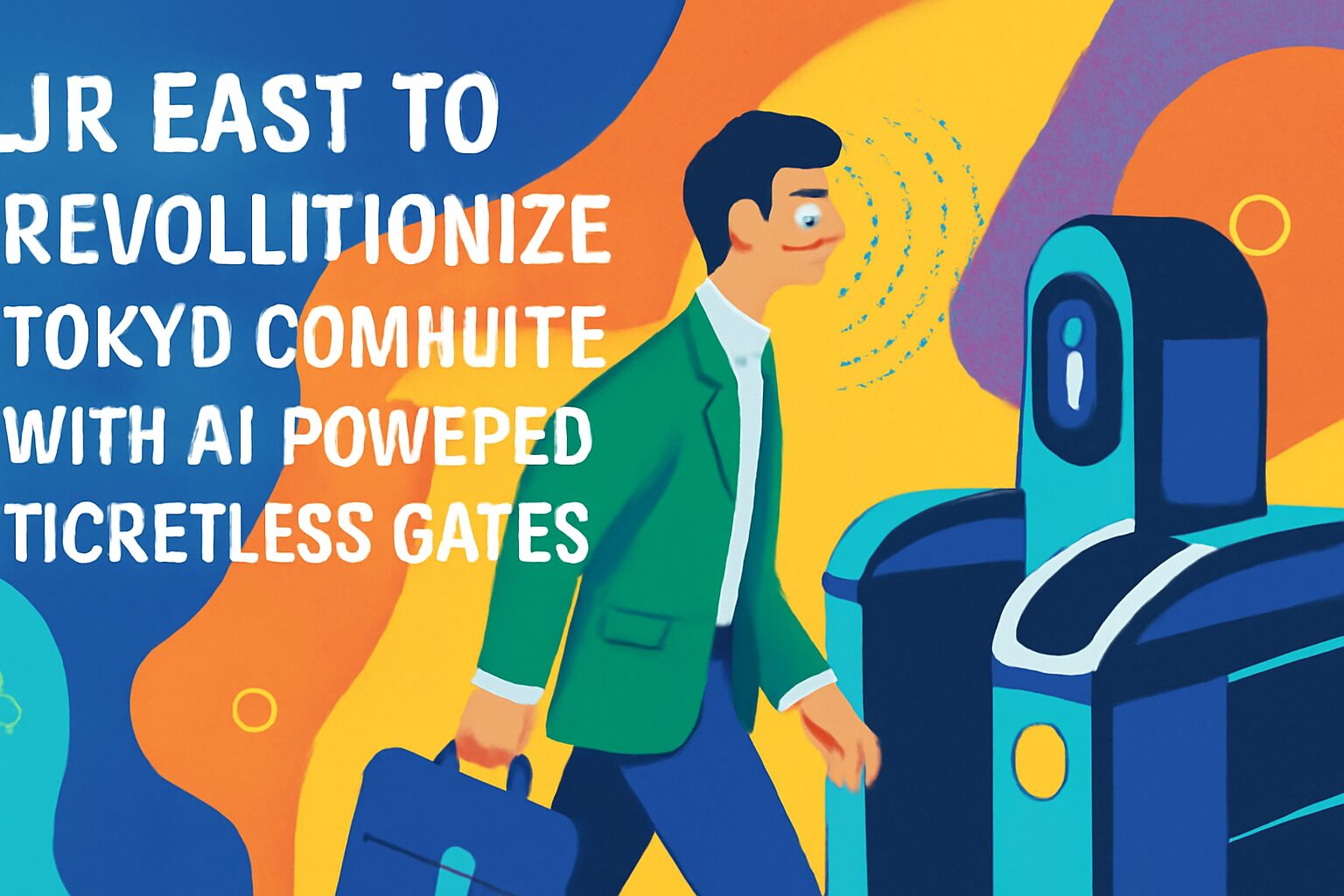
East Japan Railway (JR East), one of Japan’s leading railway companies, has announced it will begin trials for a new generation of AI-powered smart gates. Set to be tested at select stations in Tokyo, this futuristic system aims to create a completely ticketless and seamless travel experience by using facial recognition technology, potentially marking the next major evolution in urban public transport.
How the AI Smart Gate Works
The proposed system will replace the familiar tap-and-go IC card readers with a more advanced, open-gate setup. As a passenger approaches, a combination of cameras and high-precision sensors will identify them through pre-registered facial data. The system will automatically calculate the fare for their journey and charge a linked account, allowing travelers to walk through the gates without ever needing to pull out a ticket, IC card, or smartphone. The goal is to eliminate the slight pause that currently occurs at every gate, thereby dramatically improving passenger flow and reducing congestion, especially during peak hours.
Background: Tackling Tokyo’s Unprecedented Congestion
Tokyo’s railway network is arguably the most extensive and busiest in the world. Stations like Shinjuku hold the Guinness World Record for being the busiest transport hub, handling an average of over 3.5 million passengers per day. While the Suica IC card system, with over 95 million cards in circulation, has been incredibly successful in streamlining fare collection since its introduction in 2001, the sheer volume of people means that even minor delays at ticket gates can lead to significant bottlenecks.
This initiative also comes as Japan faces long-term societal challenges, including a declining birthrate and a shrinking workforce. Automation and efficiency-boosting technologies like these AI gates are seen as crucial solutions for maintaining high-quality public services with a smaller labor pool. For JR East, this represents a strategic move towards a more sustainable and technologically advanced operational model.
Future Prospects and Potential Impacts
The successful implementation of this technology could have a wide-ranging impact on travel in Japan and beyond.
For Commuters and Tourists: A Frictionless Journey
For daily commuters, the primary benefit will be a faster, more stress-free journey. The need to search for a wallet or phone, especially when carrying luggage or with children, will be eliminated.
For international tourists, the system could be a game-changer. It would bypass the often-confusing process of purchasing tickets or figuring out how to obtain and top up an IC card. By linking facial data to a credit card upon arrival, visitors could navigate the entire JR East network with unprecedented ease, making travel in one of the world’s most populous cities significantly more accessible.
For the Railway Industry: A Data-Driven Future
Beyond passenger convenience, the AI gates offer JR East a wealth of data. By analyzing passenger flow with greater accuracy, the company can optimize train schedules, manage crowd control during major events, and even improve station layouts and retail offerings. This could lead to a more efficient and responsive railway network. If the trial proves successful, this technology could set a new standard for public transportation systems globally, with other railway operators in Japan and around the world likely to follow suit.
Challenges and Considerations
However, the path to a fully ticketless future is not without its hurdles. The most significant concern is data privacy and security. The management of sensitive biometric data like facial scans will require robust security measures and transparent policies to earn public trust. Furthermore, the system’s accuracy in a crowded, fast-paced environment will be critical to its success, as any errors could cause more disruption than they solve. The initial investment cost and the process of integrating the new system with existing infrastructure will also be major considerations.
JR East’s trial is more than just a technological experiment; it’s a bold vision for the future of urban mobility. As Tokyo continues to grow as a global hub, initiatives like this will be essential in ensuring its public transport remains a world-class model of efficiency and convenience.