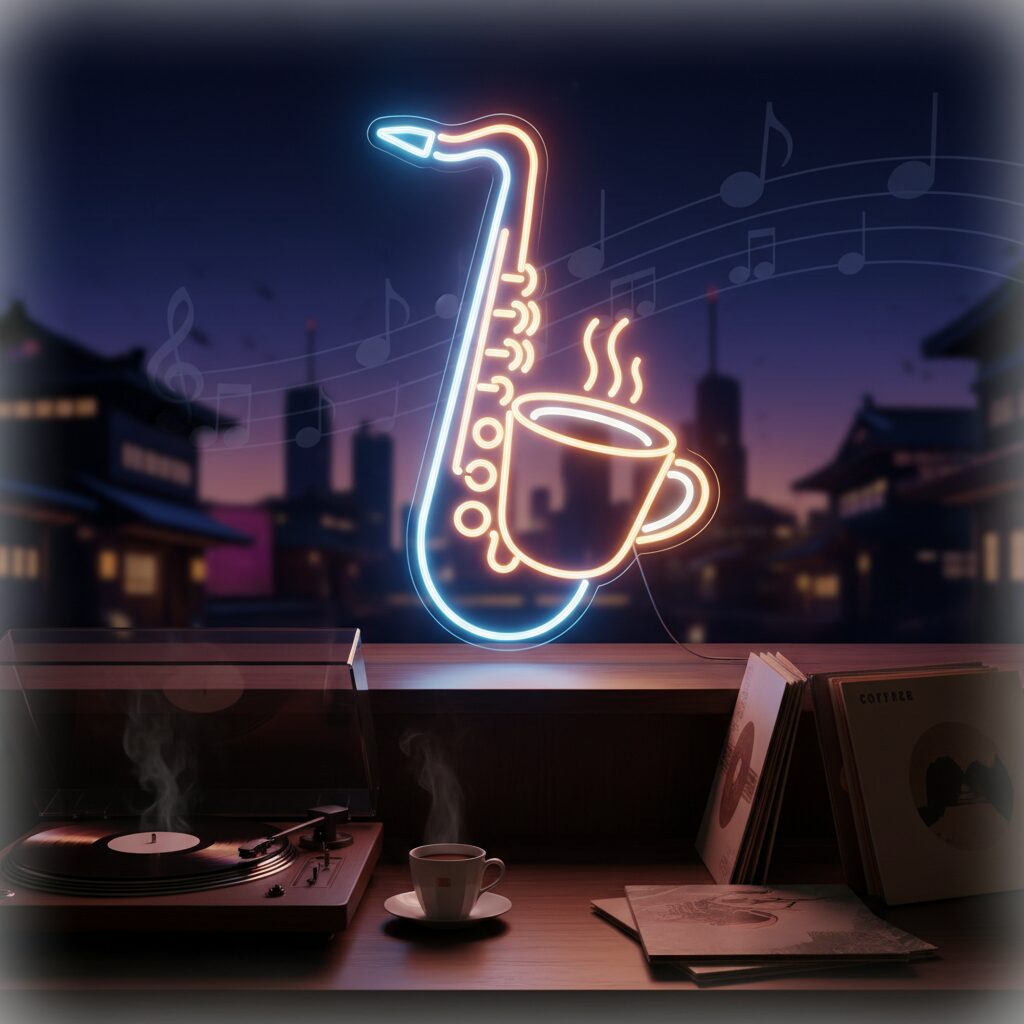
Yo, what’s the deal with Japan? You scroll through your feed and see these insane, vibe-heavy cafes. Dark wood, moody lighting, walls stacked high with vinyl records. You think, ‘Sick, gotta check that out.’ So you’re in Tokyo, maybe ducking into a basement spot in Shinjuku, expecting a chill spot to grab a coffee and chat with your friends. You push open the heavy wooden door, and BAM. The vibe shift is real. It’s dead silent. A sound, massive and warm, is washing over the room from speakers the size of refrigerators. A few solitary figures are dotted around, heads bowed, eyes closed, in what looks like deep meditation. The guy behind the counter—the ‘Master’—gives you a look that could curdle milk. You whisper to your friend, and a dozen pairs of eyes laser in on you. The message is clear: shut up or get out. You’re left standing there, totally confused. Is this a café? A library? Some kind of weird cult? For real, what even is this place?
Welcome, my friend, to the world of the jazz kissa, or jazz café. And no cap, your confusion is valid. This isn’t your average coffee shop with a curated Spotify playlist in the background. This is a sanctuary, a temple dedicated to the sacred act of deep listening. It’s a cultural phenomenon born from a very specific moment in Japanese history, and it’s one of the most misunderstood and genuinely profound experiences you can have here. These spots are a rebellion against the modern world of noise, distraction, and passive consumption. They demand your full attention, offering a kind of spiritual communion with music in return. It’s not about being anti-social; it’s about a different kind of social contract, one where the shared experience is silent, internal, and intensely personal. Before we dive deep into the why, let’s pinpoint one of these legendary spots so you can get the lay of the land. This is the kind of place where the vibe is everything, a true time capsule.
To truly understand this unique culture of silent appreciation, you should explore the broader world of Japan’s audiophile kissaten culture.
The Birth of the Listening Cult: What Even IS a Jazz Kissa?
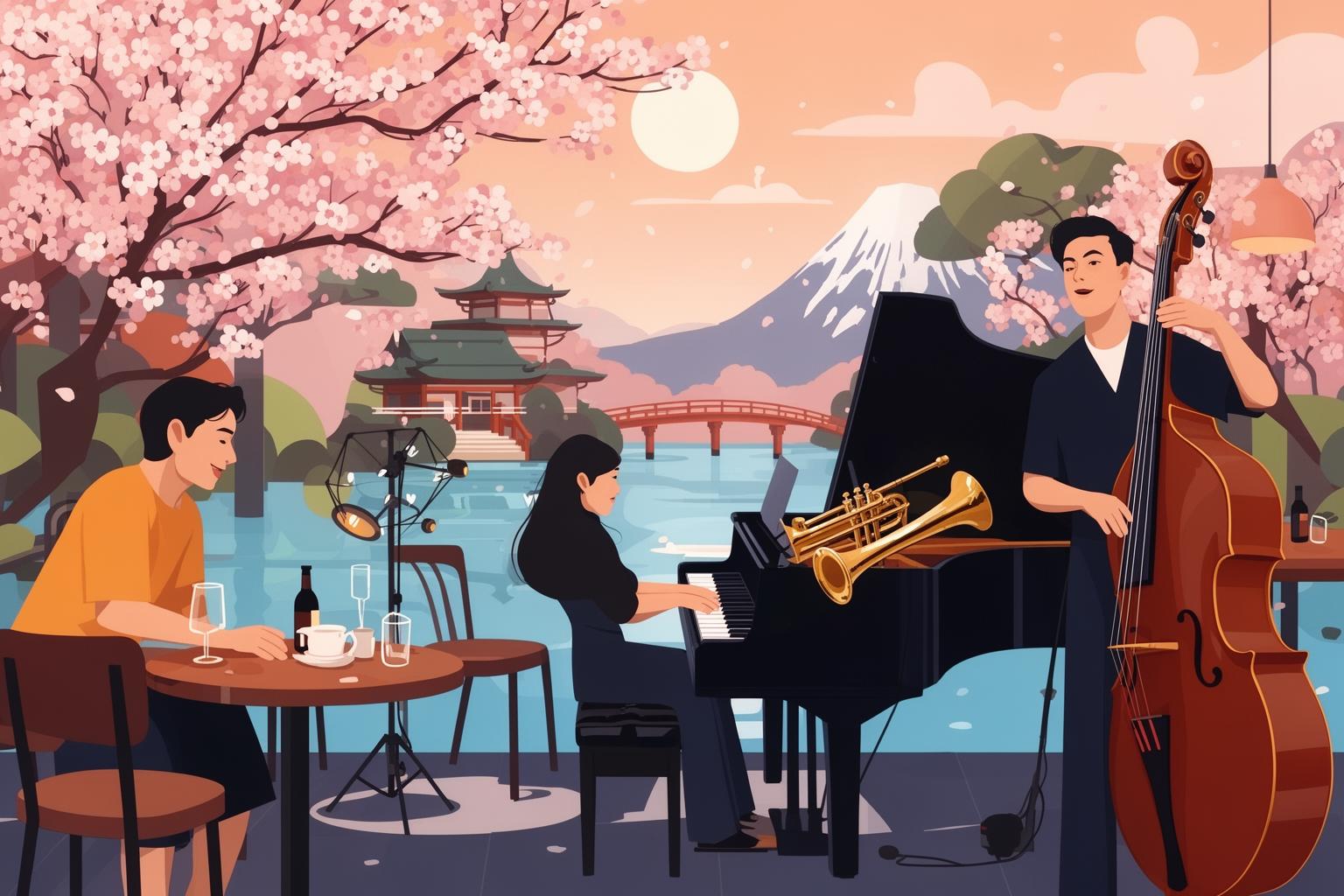
To understand why these places are the way they are, you have to rewind the clock. We’re talking about postwar Japan, a country rising from ruins, eager for culture, and deeply captivated by the West, especially America. Jazz was more than just music; it was a symbol. It embodied freedom, sophistication, intellectualism, and a raw, untamed energy that contrasted sharply with the rigid social structures of old Japan. It was the epitome of cool. But there was a significant catch. Imported goods were considered luxuries, including vinyl records. A single LP from artists like Miles Davis or John Coltrane could cost a substantial portion of an average person’s monthly income. And the audio equipment needed to play it? That was simply out of reach. A decent stereo system was a dream, completely unaffordable for students, artists, and the working class, who were the biggest fans of this music. The jazz kissa was a brilliant and necessary solution to this problem. It was a business model born from scarcity and passion. For the price of a single, often strong and bitter, cup of coffee, you could gain access. You could sit for hours, listening to a vast and ever-growing library of rare and expensive records, played on a sound system far superior to anything you could afford at home. It democratized the listening experience. It wasn’t merely a café that happened to play jazz; it was a public listening room where coffee was served to justify its existence.
Not Your Typical Coffee Shop Atmosphere
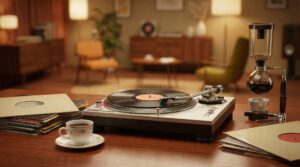
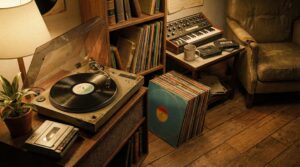
Let’s paint a clearer picture of the scene. You descend a flight of stairs into a basement where the air is thick with the ghosts of countless cigarettes from decades past, now mingled with the rich aroma of dark-roast coffee and old paper from record sleeves. The lighting is dim, provided by a few strategically placed sconces that cast long shadows. As your eyes adjust, you see them: the records. Thousands of them. They cover every wall from floor to ceiling, their spines forming a chaotic mosaic of names and labels: Blue Note, Impulse!, Verve, Prestige. They are the wallpaper, the insulation, the very soul of the room. The furniture is functional, not cozy—simple wooden tables, straight-backed chairs, or worn-out leatherette booths—all positioned for one purpose: to face the altar. And what an altar it is. At the front of the room stands the sound system. This isn’t a sleek, modern setup; it’s a Frankenstein’s monster of vintage audio gear, a towering mass of wood, metal, and glowing vacuum tubes. The speakers are enormous, sometimes custom-built horn systems that resemble industrial machinery more than home electronics. This is the heart of the kissa, the reason everyone is here. The rule of the place, often posted on a small, faded sign but more powerfully enforced by the atmosphere itself, is shigo genkin (私語厳禁) — strictly no private conversations. You don’t come here to socialize; you come to listen. The patrons are a mix. In one corner, an old man who has probably sat in that very seat since the 1970s, nursing a single coffee for hours, eyes closed, lost in a Coltrane solo. Nearby, a university student who appears to be studying a textbook, but whose pen hasn’t moved in twenty minutes, captivated by the music. It’s a shared solitude, a communal experience where the only interaction is the collective focus on the sound waves moving through the air. The silence between songs is as important as the music itself, thick with anticipation for whatever the Master will choose next.
The Post-War Quest for Sound
The cultural soil from which the jazz kissa grew was incredibly rich. During the 1950s and 60s, Japan was undergoing a profound transformation. The ‘economic miracle’ was underway, but alongside this material progress came massive cultural and political upheaval. University students led these changes, protesting the US-Japan Security Treaty and challenging the foundations of Japanese society. These kissas became their unofficial clubhouses—affordable places to spend hours, with the intellectual, countercultural vibe of jazz providing the perfect soundtrack for their revolutionary ideals. It was a space to read, think, debate (quietly, or in specially designated ‘talking rooms’ some kissas offered), and absorb a culture that felt more modern and free than their own. This connection to intellectualism and literature is profound. You can’t discuss jazz kissas without mentioning authors like Haruki Murakami, whose novels are steeped in their atmosphere. For his characters—and for a generation of real-life Japanese youth—the jazz kissa was a formative space, a university beyond the university where one received an education in aesthetics, mood, and cool. The owners of these establishments were not merely businesspeople; they were missionaries of sound. They went to great lengths to acquire records, navigating complex import channels or buying from American GIs stationed in Japan. They built libraries of foreign culture, one record at a time, sharing it with a public desperate for it. The high coffee prices weren’t just for the beverage; they were an admission fee to this library, a contribution toward maintaining the audio equipment and acquiring new, mind-blowing sounds from across the ocean.
The Master, The System, and The Sacred Records
At the heart of the entire universe of jazz kissa is the ‘Master.’ This figure is essential for truly grasping the essence of the phenomenon. The Master is far from an ordinary shopkeeper, barista, or modern DJ. They serve as a curator, gatekeeper, sound technician, and the high priest of the establishment. Their personality shapes the character of the kissa. Some are notoriously grumpy and strict, enforcing the ‘no talking’ rule with unwavering authority, while others are more approachable, open to quiet, respectful conversations about the music with patrons who show sincere interest. Universally, however, they possess an immense, almost intimidating encyclopedic knowledge of jazz and a fanatical commitment to its flawless reproduction. Their seemingly stern demeanor is not meant to be harsh but stems from intense concentration. They are constantly attuned—to the music, the room, and the equipment—ensuring a perfect experience. They conduct a live performance, but their instrument is the turntable, and their orchestra is the record collection. Their ‘set’ for the day or evening is a thoughtfully crafted journey through various moods, artists, and eras, telling a story through sound.
Meet the ‘Master’: The High Priest of Hi-Fi
The Master’s daily routine is a ritual that begins long before the first customer arrives, starting with warming up the amplifiers. Vintage tube amps, central to many setups, require time to reach their ideal temperature to deliver their characteristic warm, rich sound. They meticulously clean each record, dusting it with a special brush before carefully lowering the needle into the groove. Every movement is intentional and reverent toward the medium. Watching a Master at work is like watching a craftsman in flow, fully absorbed in their task. They are the ultimate tastemakers. In most traditional kissas, requests are not entertained; visitors submit to the Master’s curation. Trusting their taste often leads to discovering new artists or albums. This sets the experience apart from listening at home—you surrender control and let an expert guide you. It’s a journey through a lifetime’s carefully curated collection, reflecting one person’s deep love for the music. Over years, regulars develop a silent rapport with the Master—a nod of recognition or a shared glance after a moving solo, built on mutual respect for the sanctity of the space and the music.
The Altar of Audio: Vintage Gear Worship
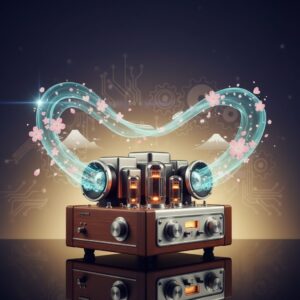
Now, about the gear. The sound systems in these establishments are legendary among audiophiles worldwide. This reverence isn’t mere nostalgia; it reflects a distinct audio philosophy. The goal is not just to play music but to resurrect the original performance, creating the illusion that the musicians are present in the room. Achieving this requires very particular equipment, much of it vintage and highly prized. The speakers often make the strongest visual impression. Iconic models like the JBL Paragon—a massive, curved wooden loudspeaker resembling futuristic mid-century furniture—or the Altec Lansing A-series, known as the ‘Voice of the Theatre’ because they were designed for cinemas, feature prominently. These speakers often use horn-loaded drivers, which are incredibly efficient and produce sound with a dynamic range and lifelike presence that can be startling on first listen. They don’t just reproduce bass; they move the air, letting you physically feel the pluck of a double bass string. Driving these speakers are the amplifiers, with vacuum tube amps considered the holy grail in many kissas. Brands like McIntosh, notable for their blue-lit meters, or Japanese Luxman and Sansui are common sights. Tube amps deliver a sound described as warm, rich, and harmonically intricate—a stark contrast to the often perceived ‘cold’ or ‘clinical’ sound of contemporary solid-state gear. The soft glow of the tubes adds to the warm, womb-like ambiance of the room. This obsession with audio equipment exemplifies Japanese kodawari—the relentless, almost spiritual dedication to perfection in a chosen craft. The Master is not only a connoisseur of music but also a virtuoso of acoustics, electronics, and synergy—masterfully matching the amplifier, speakers, and turntable to produce a sound greater than the sum of its parts. It is their lifelong pursuit, an ongoing experiment to attain the perfect sound.
Surviving the Digital Age: Why Do These Places Still Exist?
In a world overflowing with endless options, where every song ever recorded is accessible at our fingertips via Spotify or Apple Music, the jazz kissa should be a relic of the past. Its fundamental concept—limited selection curated by a single individual in a carefully controlled setting—appears completely contrary to contemporary consumer culture. And yet, they endure. Some have closed, certainly, victims of aging proprietors and soaring rents. But many legendary establishments remain vibrant, and new ones are even emerging, managed by a younger generation that has inherited the passion. Their survival lies in offering something the digital realm cannot: a tangible, immersive, and profoundly human experience. They serve as the ultimate counterbalance to the algorithm. A Spotify playlist, no matter how expertly curated by AI, is designed for passive listening—background music for work, driving, or exercise. The jazz kissa is its exact opposite. It demands active listening, urging you to put down your phone, quiet your mind, and dedicate a portion of your time to engaging with a piece of art on its own terms. You listen to an entire album side, in the sequence the artist intended, without skipping tracks. This act of sustained focus is a rare and valuable experience in our distraction-filled lives. It acts as a form of meditation and a digital detox that can leave you feeling more centered and refreshed than an hour of yoga.
An Antidote to the Algorithm
The element of curation is crucial. In an age dominated by AI-driven recommendations, we increasingly find ourselves trapped in filter bubbles, fed only what we already enjoy. The jazz kissa breaks that bubble. The Master’s selections can be eclectic, challenging, and enlightening. You might enter expecting to hear Miles Davis’s Kind of Blue for the thousandth time, but instead, you’re introduced to a fiery free-jazz album by Pharoah Sanders or a sublime piano trio record by a little-known Swedish artist. The Master functions as a human recommendation engine, drawing on decades of deep listening to create connections and weave a musical narrative that is both personal and universal. It’s a process of discovery, of trusting an expert to broaden your horizons. This approach is increasingly attractive to younger generations growing tired of the superficiality of online culture. They yearn for authenticity, and you can’t get more authentic than a room preserved almost unchanged for fifty years, managed by someone devoted to their craft. It’s a real place, rich in history, offering an unmediated experience. That authenticity holds strong appeal in a world that often feels artificial.
The Showa Vibe as a Time Capsule
Beyond the music, the jazz kissa serves as a living museum of the Showa Era (1926-1989). This period, especially the post-war decades, carries a potent mystique in modern Japanese imagination. It was a time marked by immense struggle but also explosive creativity, optimism, and social transformation. The aesthetic of that era—the dark wood, the warm lighting, the distinctive design of the chairs, the typography on the menus—is now celebrated as ‘Showa retro.’ For many young Japanese people and culturally curious travelers, stepping into a well-preserved jazz kissa is like entering a portal to another time. It’s not a retro-themed bar crafted to seem old; it’s the genuine article. The scratches on the tables, the patina on the brass fixtures, the faint scent of smoke absorbed into the walls—these are all artifacts of a bygone era. It offers a tangible connection to the past, to the worlds portrayed in Murakami’s novels or the films of the Japanese New Wave. It’s a way to feel the kuuki (空気), the unique ‘air’ or atmosphere of that time. This nostalgic allure is a major part of its lasting charm. It provides an escape not only from the clamor of modern life but from modernity itself, offering a temporary refuge in a world that felt slower, more deliberate, and perhaps more meaningful.
How to Vibe in a Jazz Kissa Without Getting the Stink Eye
So, you’re convinced—you want to experience this uniquely Japanese culture. Yet, it’s natural to feel a bit intimidated. How do you navigate this silent, serious realm without making a major faux pas and drawing the ire of the Master? It’s actually quite simple once you realize that every rule exists to preserve the listening experience for everyone. It’s all about respect: respect for the music, for the Master, and for the other patrons. Follow these guidelines, and not only will you be fine, but you’ll also have a profound and memorable experience.
The Unspoken Etiquette
First and foremost, read the room. Before you sit, take a moment to soak in the atmosphere. If it’s completely silent and everyone is intently focused, then that is the code of conduct. Find a seat—preferably facing the speakers—and settle in quietly. Your phone should be on silent, not vibrate, and remain in your pocket or bag. The glow of a screen is just as distracting as noise in these dimly lit spaces. You’re expected to order at least one item per person; this is your admission fee. The coffee may seem pricey (typically around 700-1000 yen), but remember, you’re not just paying for a drink—you’re paying for your seat, the curation, and the privilege of listening to a world-class sound system. Think of it like a concert ticket. Order your drink quietly, and when it arrives, savor it slowly. Avoid slurping or clinking your spoon against the cup, as every little sound is amplified in the silence. Photography is generally discouraged, especially with a flash. If you must take a photo, be extremely discreet—turn off all sounds and flashes—and do it quickly. Never photograph other patrons or the Master without permission. The best policy is to put your camera away and use your eyes and ears instead. Above all, do not talk. If you’re with someone and must communicate, keep it to a short, quiet whisper or a written note. Embrace the silence—it’s part of the experience. It’s a rare chance to just sit and be, without the pressure of constant social performance.
Legendary Spots That Are Still Kickin’ It
While part of the joy lies in discovering your own local hidden gem, some legendary kissas are practically institutions. Visiting them is like a pilgrimage for jazz fans, each with its own unique character and history.
Chigusa (Yokohama)
Often cited as Japan’s oldest existing jazz kissa, founded in 1933. This place is sacred ground. Though the original building was destroyed during the war, it was rebuilt and carries the spirit of its founder, Mamoru Yoshida. The sound system is unique, featuring custom-made speakers Yoshida helped design. It’s less a commercial venture and more a living archive, deeply tied to Japan’s jazz history. Visiting Chigusa is a profoundly historical experience—a direct connection to the origins of this culture.
Dug (Shinjuku, Tokyo)
Located in a Shinjuku basement, Dug epitomizes Tokyo cool. It was a famed hangout for artists, writers, and photographers during the counter-cultural ferment of the 60s and 70s and was immortalized in Haruki Murakami’s novel Norwegian Wood. The vibe is effortlessly cool, with stone walls and a slightly more relaxed atmosphere than some of the more austere spots. It’s a great introduction to the jazz kissa world, perfectly balancing historical weight with metropolitan accessibility.
Eagle (Yotsuya, Tokyo)
For serious audiophiles, Eagle is a must-visit. This place is all about sound, boasting an awe-inspiring JBL speaker system that delivers music with incredible power and clarity. The room was designed for optimal acoustics. Eagle operates a slightly unusual system where you submit music requests on slips of paper, which are played occasionally. The vibe is serious and scholarly. People come here for a pure, unadulterated high-fidelity listening session. It’s truly a temple of sound.
Mary Jane (Shibuya, Tokyo)
Representing diversity within the genre, Mary Jane near the chaos of Shibuya offers a cozier, more relaxed atmosphere. While still dedicated to vinyl and quality sound, the ‘no talking’ rule is less strict here, especially when it’s not crowded. It feels more like a comfortable living room, making it a perfect ‘starter’ kissa for those intimidated by more rigid venues. It proves the jazz kissa spirit can adapt and evolve without losing its essence.
Ultimately, the jazz kissa is far more than a retro café. It’s a living cultural artifact—a testament to a time when music was a precious commodity, something to be sought out, cherished, and given one’s full attention. It embodies a uniquely Japanese approach to art appreciation, valuing dedication, focus, and the creation of a perfect environment for contemplation. In a world that’s constantly accelerating, overflowing with endless content and shrinking attention spans, the jazz kissa offers a radical proposition: slow down. Stop scrolling. Stop talking. Just sit. And listen. Truly, in today’s noisy world, that might be the most punk rock, most genuinely lit experience you can have.