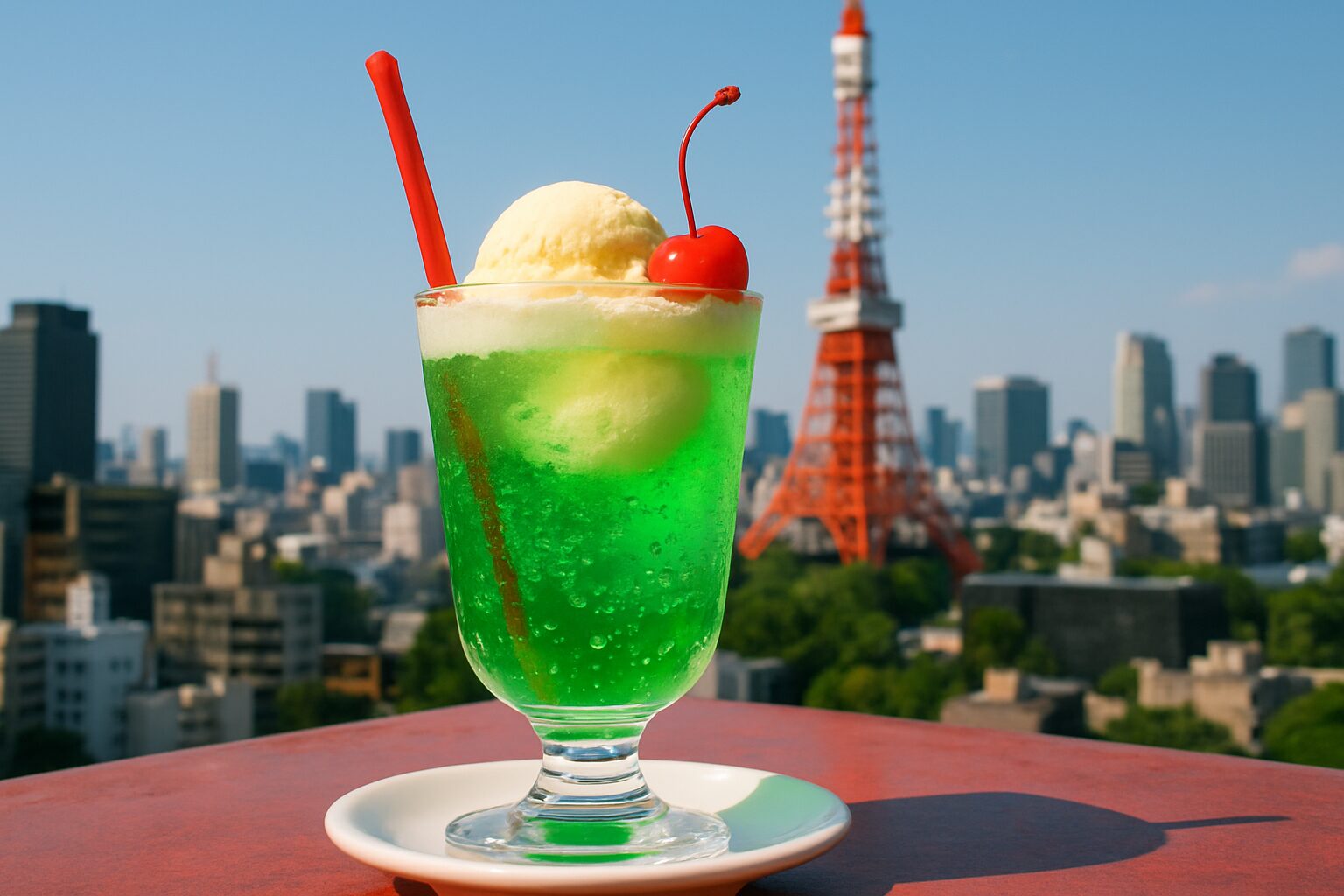
There is a particular kind of magic that exists only in Japan, a magic woven from nostalgia, precision, and an almost reverential appreciation for transient beauty. It’s a feeling you might find in the fleeting cherry blossoms or the quiet dignity of an ancient temple. But sometimes, this magic is captured in something far more unexpected, something that fizzes and glows with an otherworldly light from within a tall, elegant glass. I’m speaking of the Japanese cream soda, a beverage that is so much more than its humble ingredients suggest. It is not merely a drink; it is a portal to another time, a liquid jewel that holds within its carbonated depths the very soul of Japan’s Showa Era. To the uninitiated, it might look like a simple confection—a brightly colored soda, a scoop of vanilla ice cream, a solitary cherry perched on top. But to those who look closer, it is a meticulously constructed piece of art, a symbol of a bygone optimism, and an experience that continues to captivate hearts and cameras across the nation. This isn’t just about quenching your thirst. This is about taking a seat, slowing down, and sipping on a tangible piece of cultural history, a vibrant, sweet, and utterly charming relic that has refused to fade away. It is the star of the kissaten, Japan’s treasured retro coffee houses, and a sparkling testament to the nation’s ability to adopt, perfect, and cherish an idea until it becomes something uniquely its own.
For a different kind of nostalgic journey into Japan’s cherished past, consider exploring the world of Showa-era dagashiya candy shops.
The Anatomy of a Japanese Cream Soda: More Than Just a Drink
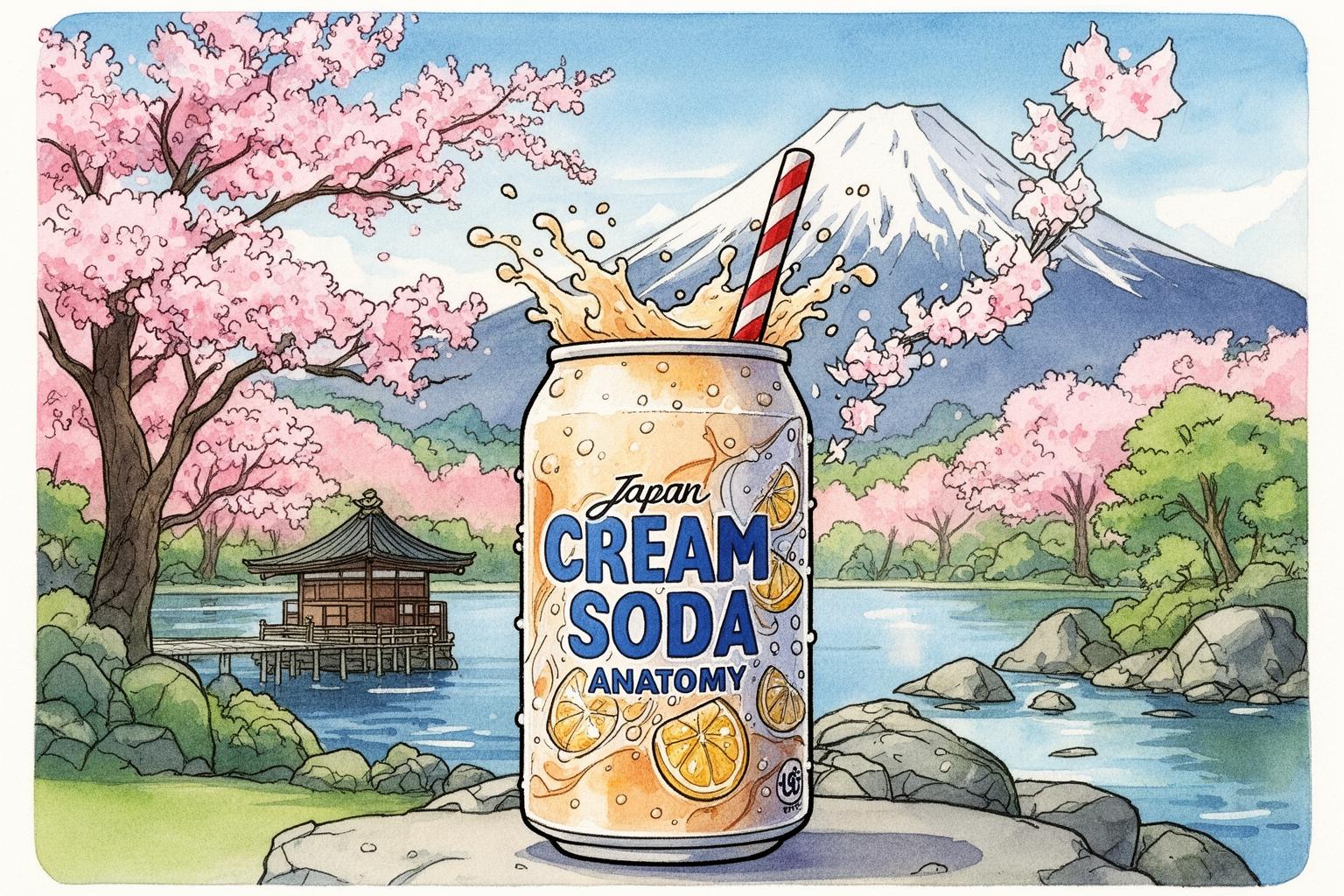
To fully grasp the cultural significance of the Japanese cream soda, one must first understand what it contains. It consists of three simple components, yet their combination produces a harmonious blend of texture, flavor, and, most importantly, visual appeal. Each element is carefully selected and arranged with a precision that borders on ritual. It’s a performance in a glass, where every part plays a crucial role in the stunning final presentation.
First, there is the soda itself. The undisputed star and emblem of cream soda is melon soda. Its color is a shade of green rarely found in nature—a vibrant, almost electric jade that seems to glow from within. This isn’t the subtle, earthy flavor of a ripe melon; it is an entirely artificial, unapologetically sweet confectionary taste that is instantly recognizable and deeply nostalgic for generations of Japanese people. The carbonation is usually fine and gentle, a soft effervescence that tickles the palate without overpowering it. While melon dominates, it is certainly not the only option. Enter any reputable kissaten, and you might find a spectrum of flavors. There is the romantic pink of strawberry, the sunny yellow of lemon, the deep violet of grape, and the exotic blue of “Blue Hawaii,” a flavor as mysterious and enticing as its name suggests, often evoking pineapple or the citrus notes of curaçao. The color promises delight, acting as the opening act that sets a mood of joyful anticipation.
Next, resting serenely atop this vibrant base, is a scoop of ice cream. It is almost always vanilla, typically a simple, clean vanilla flavor. This isn’t the place for intricate, artisanal varieties infused with Tahitian vanilla beans. Its role is not to dominate but to complement. The scoop is a perfect sphere, gently placed into the soda, instantly beginning a slow, magical transformation. The cold ice cream interacts with the carbonation, forming a frothy, bubbling crown of foam that rises just above the glass rim. This is the essence of the “cream” in cream soda. It’s a delightful mingling of textures—the crisp fizz of the soda, the velvety smoothness of melting ice cream, and the airy lightness of foam. The quality of the ice cream is vital; it must be firm enough to hold its shape but soft enough to yield gently to the spoon, slowly releasing streams of white into the colorful liquid below.
Lastly, the crowning touch, the centerpiece of the entire composition: the cherry. A single, shining maraschino cherry, complete with its stem, is carefully placed atop the ice cream or sometimes nestled in the foam. Its bright crimson gleam starkly contrasts with the cool tones of the soda and the pure white of the ice cream. This is far more than a mere garnish; it is the punctuation mark, the final flourish that completes the masterpiece. For many, there is a small ritual involving the cherry. Is it the first bite, a sweet prelude to the main event, or is it saved for last, a treasured conclusion? Its presence is essential. A Japanese cream soda without its cherry feels unfinished, like a story without an ending. Together, these three elements, presented in a tall, often footed glass that displays their beauty, create an experience beyond taste. It’s a visual celebration, a journey of textures, and a nostalgic work of art.
A Sip Through Time: The History of Cream Soda in Japan
To grasp why this seemingly simple drink holds such a cherished place in Japanese culture, we must travel back in time to the Showa Era (1926-1989). Although the idea of an ice cream float existed in the West, its introduction and development in Japan are closely linked to the country’s post-war history. In the years following World War II, Japan experienced remarkable economic growth and rapid modernization. This boom sparked a strong fascination with Western culture—its fashion, music, films, and, naturally, its cuisine.
Department store dining halls and newly opened coffee shops called kissaten became icons of this aspirational lifestyle. They were viewed as sophisticated, modern venues where one could savor the glamorous world portrayed in foreign movies. It was in these places that the cream soda truly found its place. For a society still familiar with traditional flavors, cream soda was an exotic and luxurious delight. Its bright, artificial hues and sweet, fizzy taste were entirely novel, a stark contrast to the subtle elegance of classic Japanese sweets. It was an affordable indulgence, a small taste of prosperity accessible to the growing middle class. Taking the family to the department store on a Sunday and ending the day with a parfait or cream soda became a treasured ritual.
At the heart of this story is the culture of the kissaten. These were much more than mere coffee shops. They acted as vital “third spaces” in Japanese life, separate from home and work. Each kissaten had its own distinct personality. Some were grand and refined, featuring classical music and velvet seats, catering to businessmen and affluent ladies. Others were smoky, dimly lit retreats where writers, artists, and students debated philosophy over endless siphon coffee. Still others were bright, cheerful spots that served as the setting for countless first dates. Across all these diverse environments, cream soda was a menu favorite. It was a drink of celebration, relaxation, and special moments. A young man would buy it for his date, a sweet promise in a glass. It was the treat a child would plead for, eyes wide with wonder at the glowing green liquid and perfect scoop of ice cream.
However, time was not entirely kind to the kissaten. The rise of large international coffee chains in the 1980s and 90s introduced a new cafe culture focused on speed, efficiency, and uniformity. The slow, atmospheric charm of the kissaten began to feel outdated. Many beloved spots, unable to compete, sadly shuttered. For a while, the classic cream soda seemed destined to vanish along with them. Yet culture is cyclical. Recently, a strong wave of nostalgia has swept Japan. A longing for the aesthetics and perceived simplicity of the past—known as “Showa retro”—has captivated especially younger generations who never lived through the era. They embraced city pop music, vintage fashion, and old films. With this revival came renewed admiration for the kissaten and its iconic menus. The cream soda, once a symbol of post-war modernity, was reborn as an emblem of retro cool. Its photogenic appeal made it a social media star, and a new generation started to seek out these historic spots not just for drinks, but to connect with a past they found deeply enchanting.
The Aesthetics of Nostalgia: Why Cream Soda is “Insta-bae”
The modern revival of the Japanese cream soda is closely tied to one compelling idea: “Insta-bae.” This slang term, blending Instagram and “haeru” (meaning to shine or be attractive), refers to anything highly photogenic and worthy of sharing on social media. The cream soda is, in every sense, the ultimate Insta-bae subject. Its visual charm is unmistakable and seems almost tailor-made for the digital era, despite its nostalgic, analog roots.
The allure starts with its color. The vivid, jewel-toned liquids are a photographer’s dream. When set by a window, the light filters through the glass, giving the soda an inner glow. The iconic melon green, romantic strawberry pink, and cool ocean blue—all these shades pop on screen, grabbing attention amid a crowded social feed. The arrangement is a lesson in visual harmony. The tall, slender glass conveys elegance, while the perfect sphere of white ice cream offers a soft, pleasing contrast to the soda’s sharp hue. The finishing touch, a bright red cherry, serves as a striking focal point, drawing the eye and completing the scene with a playful flair. The sparkling bubbles rising through the liquid add movement and life, making it captivating to watch and photograph.
Beyond its immediate visual appeal, the cream soda connects to a deeper sentiment—the powerful charm of nostalgia. In Japanese, “natsukashii” expresses a warm, bittersweet longing for the past. It’s a feeling of gentle yearning for days gone by. The cream soda embodies this exact emotion. Even among young people who never experienced the Showa period, the drink evokes a sense of a simpler, more hopeful time. It is intrinsically linked to the popular “Showa retro” aesthetic. It pairs perfectly with the warm, grainy style of film photography filters, 80s city pop music, and fashion from a past era. Sharing a photo of a cream soda is more than just showing a drink; it’s signaling an appreciation for this whole cultural movement—a way of saying, “I value the beauty of things that are slow, intentional, and steeped in history.”
This connection to a wider cultural narrative is central to its lasting appeal. The cream soda feels like a prop from a cherished classic movie or a panel from a vintage manga. It evokes memories of summer days, first loves, and quiet moments of reflection increasingly rare in today’s fast-paced world. It represents a pause, a small act of self-care. The ritual of finding a traditional kissaten, ordering the drink, and capturing the perfect photo before the ice cream melts is an experience in itself. It has become a modern pilgrimage for fans of Japanese culture, a quest to seize a perfect, sparkling moment of retro beauty. The drink has become iconic, its image shared millions of times, each photo a personal homage to its timeless allure.
The Kissaten Experience: The Soul of Cream Soda
One cannot truly grasp the essence of a Japanese cream soda without first understanding its natural setting: the kissaten. Consuming a cream soda from a plastic cup at a contemporary fast-food outlet misses the point completely. The experience is as much about the surroundings as it is about the drink itself. The kissaten is a sanctuary, a time capsule preserving the ambiance of the Showa Era, and it is this backdrop that transforms the cream soda from a mere indulgence into a meaningful cultural experience.
When you push open the often heavy, wood-framed door of a traditional kissaten, you step into a different world. The air inside feels distinct—cooler, quieter, and infused with a unique blend of scents. The predominant aroma is, naturally, coffee, often brewed with care using a siphon—a device of glass globes and burners reminiscent of a science experiment. Beneath the coffee’s fragrance, one might detect the sweet scent of toasted bread and, in older establishments, the faint, lingering trace of cigarette smoke—a remnant from the era when indoor smoking was common. The lighting is usually dim and warm, casting a soft glow over the well-worn interior. The décor frequently includes dark wood paneling, plush velvet or cracked leather seats in deep burgundy or forest green, and perhaps a stained-glass lamp or two. The outside world, with its noise and bustle, feels miles away.
At the core of the kissaten is the “Master,” the proprietor who is often the sole figure behind the counter. Typically an older man or woman dedicated to this one establishment, they work with quiet, practiced efficiency, their hands memorizing every step of the coffee-making ritual. There is no hurried service here. Your order is taken with a polite nod, and your drink is prepared with a deliberate care that is both soothing and captivating to witness. The Master is the guardian of the kissaten’s spirit, a living connection to the decades of stories and conversations that have unfolded within its walls.
Enjoying a cream soda here is a ritual. It arrives at your table like a jewel. The first moments are devoted entirely to admiration. You take in the color, the perfect scoop of ice cream, and the bubbles clinging to the glass’s interior. Then comes the essential question: how to start? There is no right answer. Some go for the ice cream first, savoring its cool creaminess before it melts into the soda. Others use the long spoon to gently press the ice cream down, encouraging it to melt and blend, crafting a sweeter, creamier drink. Many alternate—taking a sip of soda followed by a spoonful of ice cream—delighting in the contrast. The cherry is a personal delight, a final treasure to enjoy at one’s own pace. This is not a drink to be gulped but a companion to quiet reflection, conversation, or the turning of pages. It urges you to slow down, be present, and appreciate the simple, profound joy of a beautifully made treat in a serene, inviting setting.
A Rainbow of Flavors: The Modern Evolution of Cream Soda
While the classic melon soda remains the unquestioned symbol of the cream soda world, the story goes beyond that. Japan’s culinary culture is a captivating mix of deep respect for tradition and an unyielding passion for innovation. The modest cream soda, cherished as a cultural icon, has become a canvas for this very duality. Traditional kissaten still serve the timeless classics, while a new wave of cafes and drink artisans are reimagining cream soda in exciting and delicious forms.
Beyond melon, the classic lineup forms the foundation of the cream soda repertoire. Strawberry soda offers a sweet, nostalgic taste, its vibrant pink color conjuring images of summer festivals and childhood treats. Lemon soda provides a zesty, slightly tart contrast, its bright yellow a cheerful burst of sunshine in a glass. The mysterious Blue Hawaii, with its tropical blue hue, remains a favorite, offering a mini-vacation in a glass with a flavor often blending pineapple and citrus. These flavors are the old standards, the familiar melodies played in kissaten for decades.
In recent years, however, a craft revolution has taken Japan’s food and beverage scene by storm, and cream soda has gladly joined the wave. Modern cafes, especially in trendsetting cities like Tokyo and Kyoto, are deconstructing and reinventing cream soda using high-quality, natural ingredients. The artificially flavored syrups of the past are being replaced by house-made cordials and purees crafted from seasonal, local fruits. Imagine a cream soda sweetened with syrup made from fresh Amaou strawberries from Fukuoka, or a tangy, aromatic version infused with yuzu from Kochi Prefecture. Early summer might bring a delicate ume (Japanese plum) soda, while autumn offers a rich, purple cream soda made from Kyoho grapes.
Innovation extends to other elements as well. Standard vanilla ice cream is often swapped for premium gelato or artisanal ice cream. A yuzu soda may be paired with honey-ginger ice cream, or a peach soda with creamy mascarpone gelato. The possibilities are endless, limited only by the creator’s imagination. Even the soda water can serve as a point of distinction, with some venues opting for specific brands of mineral water prized for their superior carbonation or flavor profiles.
Presentation has reached new artistic heights. Some cafes craft stunning visual themes. A “hydrangea” cream soda in June might showcase differently colored jellies suspended in clear soda to mimic flower petals. A “starry night” version could use deep blue butterfly pea flower tea soda, silver dragees as stars, and lemon-flavored ice cream as the moon. These are not just drinks; they are edible installations, designed to be as breathtakingly beautiful as they are delicious. This modern evolution highlights the cream soda’s remarkable versatility. It can be a simple, nostalgic comfort or a sophisticated, gourmet creation. It is a testament to the drink’s strong foundation that it can support such a wide range of creative interpretations, ensuring its continued relevance and beloved status for generations to come.
The Cream Soda Pilgrimage: Where to Find Japan’s Best Fizzy Jewels
For travelers eager to savor the enchantment of Japanese cream soda, the journey itself is part of the adventure. This quest will take you through bustling commercial streets, quiet residential neighborhoods, and the storied halls of historic department stores. Almost every region, city, and town boasts its own cherished local kissaten, each with a distinctive ambiance. Here are a few legendary places to start your pilgrimage.
In the dazzling center of Tokyo, Ginza offers two quintessential yet contrasting experiences. First is Kissa YOU, a modest spot tucked away on a side street, perpetually renowned for its heavenly, wobbly omurice (omelet rice). However, overlooking their cream soda would be a mistake. It is a flawless, classic rendition—a vibrant green melon soda served in a tall, fluted glass, with a quiet efficiency refined over decades. The atmosphere is lively and unpretentious, a true slice of everyday Ginza life. Just a short stroll away is the Shiseido Parlour Salon de Café, a symbol of elegance and history. Here, the cream soda experience is elevated: served in a custom-designed goblet, made with the highest quality ingredients, beautifully presented, and enjoyed in an atmosphere of refined luxury overlooking Ginza’s grand boulevards. It’s a taste of Showa-era high society glamour.
For a glimpse into a more bohemian past, head to Jimbocho, Tokyo’s famous book town. There you’ll discover Saboru, a legendary kissaten that feels more like a mountain lodge or a mysterious cave. The interior is a maze of dark wood filled with folk art and decades of accumulated history. Finding a seat in its dim, cozy corners is part of the delight. Their cream soda, sipped amid this rustic chaos, feels like a hidden treasure— a bright gem uncovered in the shadows.
Kyoto, a city rich in tradition, offers its own unique cream soda magic. The most famous is undoubtedly Kissa Soiree, near the Kamo River. Stepping inside, you are bathed in an ethereal, otherworldly blue light. The entire café is illuminated by blue lamps, creating a dreamlike, almost underwater ambiance. While celebrated for their multi-colored “jelly punch,” their cream sodas, glowing in the surreal blue light, are unforgettable. It’s a deeply photogenic and truly unique experience. For a more stately setting, visit François Kissa Shitsu, a designated Tangible Cultural Property designed to evoke a luxurious European cruise liner from the 1930s. Enjoying a cream soda amidst stained glass, domed ceilings, and classical music here feels like traveling through time.
In the vibrant and energetic city of Osaka, the kissaten culture is thriving and full of character. In the lively Sennichimae district, Marufuku Coffee stands as an institution. Founded in 1934, its interior is a rich blend of dark wood, aged leather, and ornate details—perfectly capturing mid-Showa design. Renowned for its rich, strong coffee, their classic melon soda offers a sweet and refreshing contrast. In Dotonbori, American is another beloved spot, famous for its impressively large and delicious egg sandwiches. The interior exudes pure Showa glam, with red velvet chairs and sparkling chandeliers, making it an ideal backdrop for savoring a tall, cool cream soda after a day exploring Osaka’s vibrant streets.
This is just the beginning. From Nagoya’s rich morning coffee culture to the seaside cafés of Kamakura, countless other treasures await. The true joy of the cream soda pilgrimage lies not only in visiting well-known spots but in stumbling upon a family-run kissaten tucked away on a quiet corner, pushing open its door, and discovering your own perfect, fizzy jewel.
How to Order and Enjoy: A First-Timer’s Guide
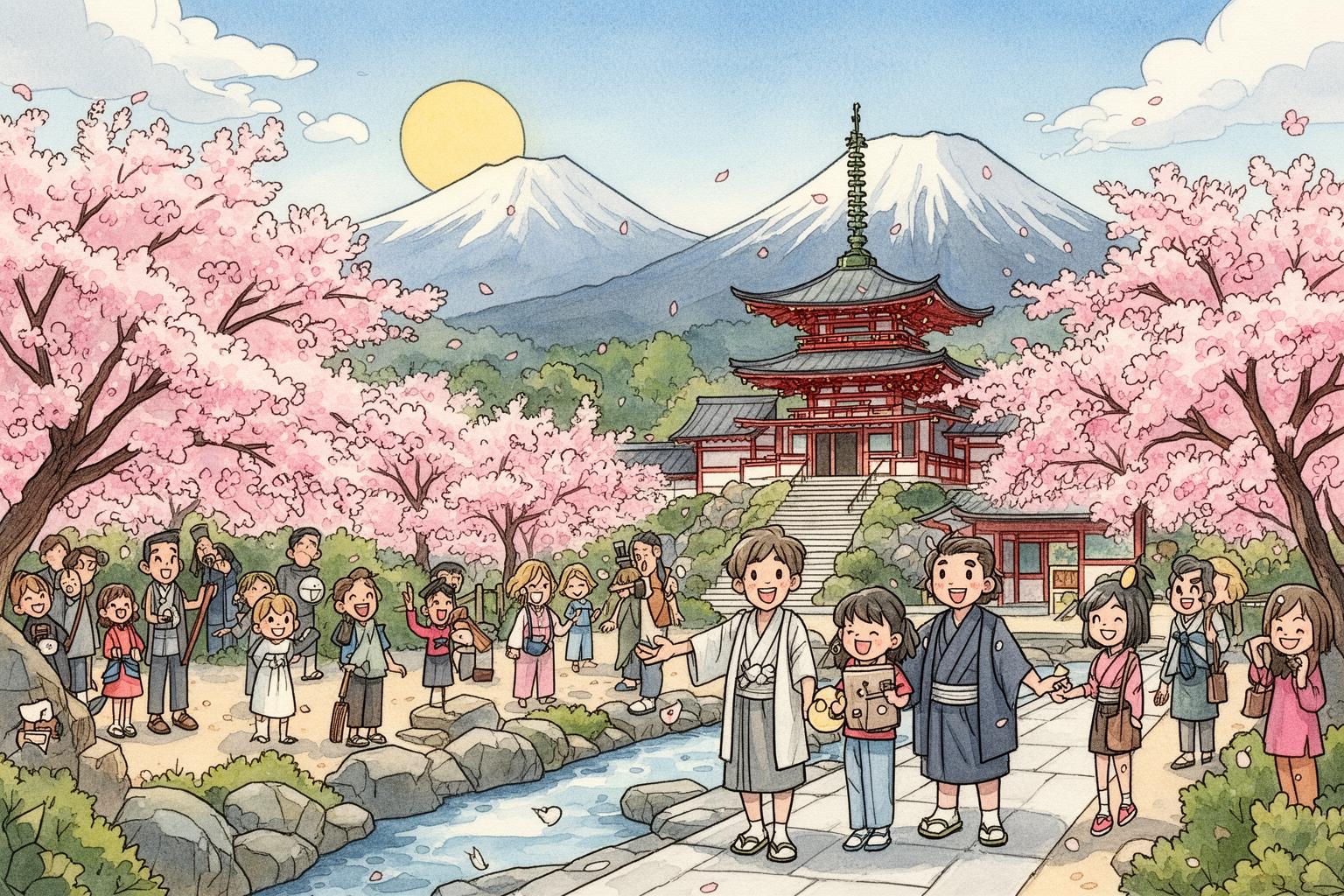
Exploring the world of kissaten and cream soda is delightfully simple and enjoyable, even for those without any Japanese language skills. The drink itself is so visually distinctive that merely pointing to a picture on the menu or a plastic food model in the window will effectively convey your order. Still, knowing a few key phrases can enhance the experience.
“Cream Soda” is a borrowed term from English, pronounced in a way that’s easy to recognize: kurīmu sōda (kuh-reem-soo-soh-da). If you want the classic green version specifically, you can ask for meron sōda (meh-ron-soh-da). To order, a straightforward and polite phrase is “Kurīmu sōda o kudasai,” which means “Cream soda, please.” Many kissaten menus, especially in larger cities, include English translations, and staff are generally welcoming and accustomed to serving international visitors with a friendly smile.
When the beautiful creation arrives, questions about etiquette naturally come up. Fortunately, there is no strict formal etiquette for drinking cream soda. It’s a leisurely drink meant for personal enjoyment. The long spoon and straw are your tools, and how you use them is entirely your choice. This has sparked a lighthearted, unspoken debate among fans: Do you eat the ice cream first, savoring its solid, frozen texture before it melts? Do you sip the soda from the bottom with the straw to enjoy its pure, fizzy flavor? Or do you stir everything together with the spoon, creating a creamy, frothy milkshake-like treat? Each approach has its supporters and offers a slightly different experience. The best advice is to try a bit of each—start with a spoonful of ice cream, then a sip of the soda, and notice how the flavors and textures evolve as the ice cream melts into the drink.
As for the cherry, it’s your trophy. Some pick it off immediately as a sweet appetizer, but most save it for last—a final burst of concentrated sweetness to conclude the delightful ritual. Cream soda is perfect as a mid-afternoon indulgence, an ideal way to rest your feet and escape the heat or cold during a day of sightseeing. It’s a pause button for your travels. Regarding price, a classic cream soda at a typical kissaten usually costs between 600 and 900 yen. While this may be slightly more expensive than a simple soft drink, remember you’re paying not just for the ingredients but also for the atmosphere, the craftsmanship, and the experience of sitting in a living museum of Japanese culture. It’s an affordable and utterly charming investment in a beautiful travel memory.
The Cultural Resonance: Cream Soda in Japanese Media
The lasting importance of the Japanese cream soda is firmly established by its frequent and symbolic appearances in Japanese popular culture. In manga, anime, and film, the cream soda rarely serves as just a background prop. Instead, it acts as a powerful narrative tool, a visual shorthand employed by creators to evoke specific emotions and themes. Its presence on screen immediately conveys youth, innocence, summer, and above all, a sweet, gentle nostalgia.
Picture a classic scene in a slice-of-life anime: two high school students, perhaps on their first awkward date, sitting opposite each other in a kissaten. Between them sits a pair of glistening cream sodas, condensation tracing streaks down the glasses. The vibrant hues of the drinks reflect the blossoming, vibrant feelings of the characters. The sound of their spoons clinking against the glass might be the only noise in a moment of shy silence. Sharing the drink becomes a symbol of their connection, a sweet and memorable milestone in their relationship. Here, the cream soda embodies pure, uncomplicated young love.
It is also closely tied to the theme of summer. When a story aims to capture the sensation of a long, hot, and languid Japanese summer afternoon, a cream soda is the ideal visual. It symbolizes a cool, sweet relief from the oppressive heat. Characters are often shown enjoying them during a seaside day trip or as a treat following a summer festival. The bright green of the melon soda can mirror the lush greenery of the Japanese countryside in summer, while the fizzing bubbles mimic the constant buzz of cicadas. It is the flavor of a carefree summer vacation, of days that seem endless.
Moreover, the cream soda frequently represents a longing for the past or a connection across generations. A character might return to their hometown and visit a childhood kissaten, ordering a cream soda that tastes just as they remember. That first sip can unleash a flood of memories—a montage of summers gone by and friendships long forgotten. It acts as a bridge linking the character’s present self with their younger, more innocent self. In present-day stories, a character seeking out a cream soda in a retro kissaten can signify their appreciation for the past and a desire to connect with an older, simpler era.
This recurring appearance in media strengthens the cream soda’s role as a cultural icon. For viewers and readers both in Japan and abroad, it becomes a familiar, beloved symbol. It enriches the narrative by adding layers of emotional and sensory detail. The next time you see a glistening cream soda in a Japanese film or anime, know that it is more than just a drink. It is a carefully chosen symbol—a fizzy, sweet, and colorful piece of storytelling that conveys profound meaning without a single word.
So, when you find yourself in Japan, the search for a cream soda becomes more than a quest for a refreshing beverage. It is an invitation to partake in a living cultural tradition. It offers a chance to step through a doorway into the warm, nostalgic embrace of the Showa Era, to find a quiet corner in a historic kissaten, and watch the world go by from a velvet-cushioned seat. As the ice cream slowly melts and the bubbles dance to the surface, you are not merely drinking. You hold a piece of Japanese history in your hands—a fizzy, sparkling jewel capturing the sweet, optimistic, and enduring spirit of a nation. Seek one out, take your time, and savor not just the flavor, but the beautiful, fleeting moment it represents.