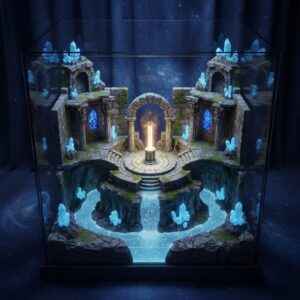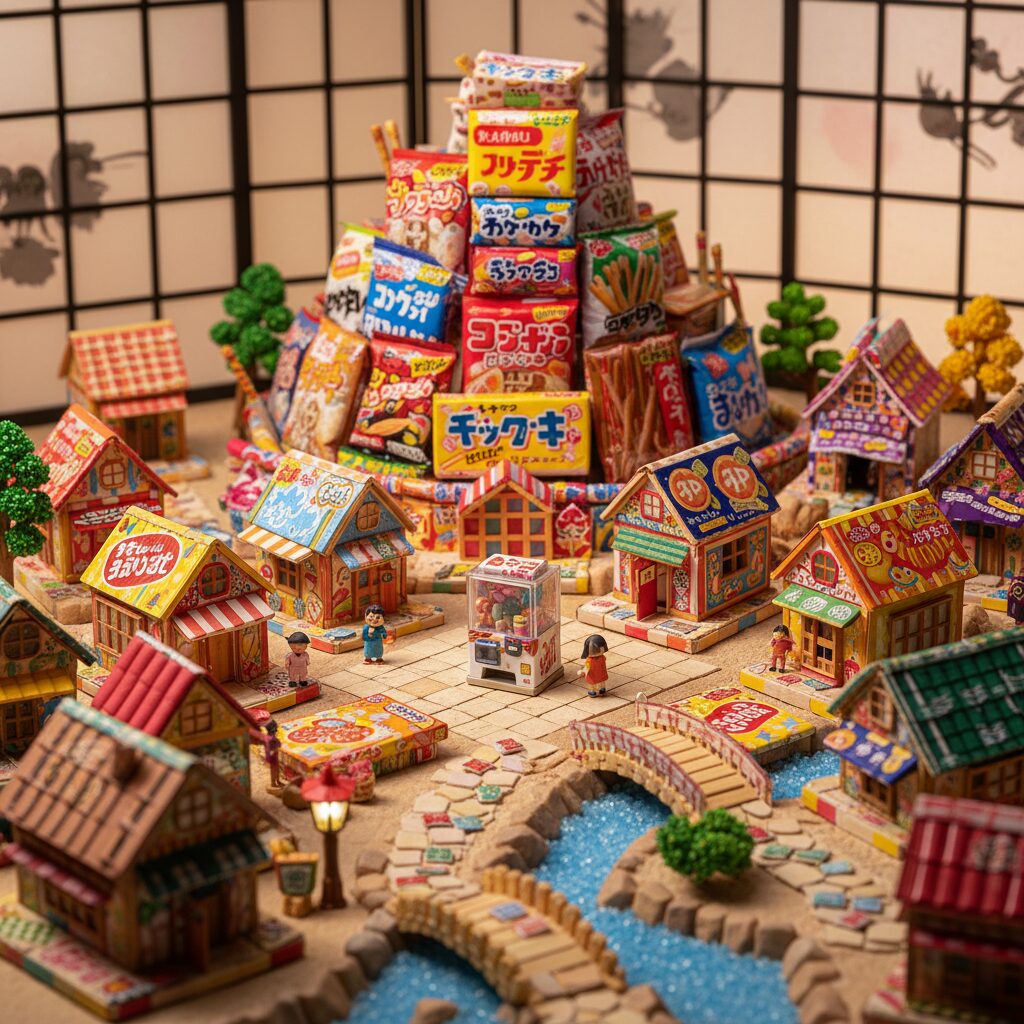
Hey, besties! Sofia here, coming at you straight from the heart of Japan’s most vibey backstreets. So let’s spill the tea. You’ve seen it on your feed, right? Tucked between sleek, futuristic buildings and minimalist cafes, you spot it: a tiny, almost impossibly cluttered shop. It looks like a time capsule from another era, overflowing with colorful, chaotic packages of things you can’t quite identify. The sign is faded, an elderly woman is peering over a counter, and the whole scene feels like a glitch in the hyper-modern matrix of Tokyo or Osaka. You might’ve walked past, snapped a quick pic for the ‘gram, and wondered, “What even is this place? And how is it still in business?” Bet. What you’ve stumbled upon, my friends, is a dagashiya—an old-school candy shop. But calling it just a “candy shop” is some low-key slander. It’s so much more. This isn’t just a place to buy cheap snacks; it’s a cultural institution. It’s a living museum of childhood. And for anyone who’s ever poured hours into a Japanese RPG, the vibe is unmistakable: you’ve just found the Starting Village. This is Level 1. This is where your adventure into understanding the real Japan begins. It’s the tutorial zone that teaches you the unwritten rules of community, economy, and social interaction before you step out into the sprawling, high-stakes world of modern Japanese society. It’s the cozy, low-poly-count town where you get your first quest, meet your first friendly NPC, and equip your first, slightly useless, wooden sword. Except here, the sword is a puffed corn snack, and the health potion is a fizzy soda you have to solve a puzzle to open. Intrigued? You should be. Let’s log in and explore.
If you love this JRPG starting village vibe, you’ll definitely want to check out the cozy fantasy feel of Japan’s old-school coffee shops.
What Exactly Is a Dagashiya? Spilling the Tea on Japan’s OG Candy Shop
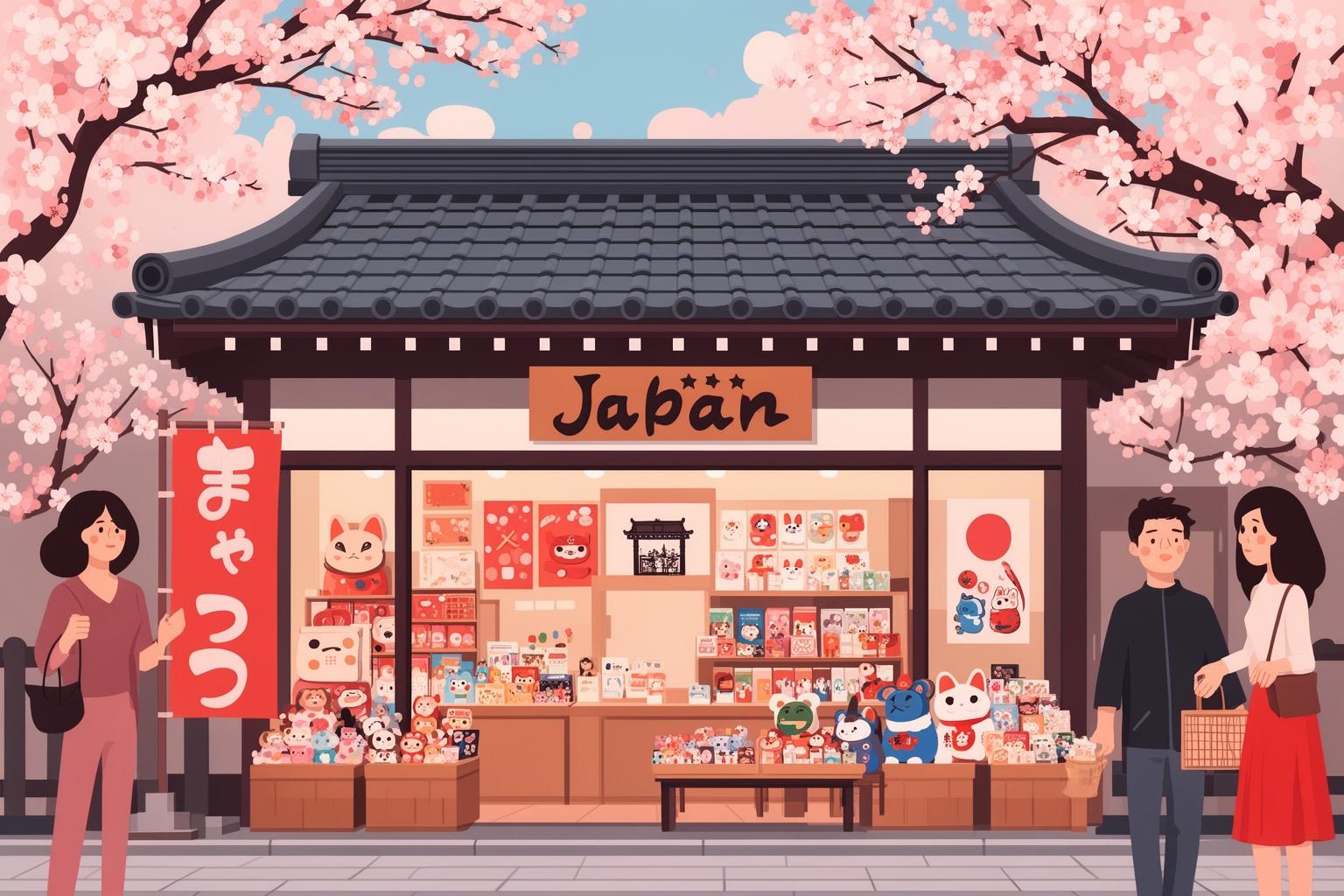
Before we delve into the intricate lore, let’s cover the basics. What exactly is this place? A dagashiya (駄菓子屋) is a store specializing in dagashi (駄菓子). The name itself offers a big hint. The character ‘da’ (駄) means something like ‘futile,’ ‘low-quality,’ or ‘cheap,’ while ‘kashi’ (菓子) means sweets or snacks. So, these are ‘cheap snacks.’ This isn’t an insult; it’s the essence of what they are. This instantly distinguishes them from their refined cousins, the ‘wagashi’ (和菓子), which are elegant, artisanal sweets often served during tea ceremonies and typically quite expensive. Dagashi are their complete opposite. They are the people’s snacks, designed especially for children clutching a 100-yen coin from their weekly allowance. This economic foundation explains everything: why the packaging is bright and bold, why the flavors are simple and strong, and why the shops feel humble and unpretentious. They’re not trying to be stylish or gourmet—they proudly embrace being cheap and cheerful. They embody grassroots capitalism, a small-scale economy created by and for the community’s youngest members. This distinction is essential for understanding Japanese consumer culture. While one side obsesses over perfection, exquisite packaging, and premium ingredients (like those thousand-dollar melons or meticulously crafted wagashi), the other celebrates simplicity, affordability, and accessibility. Dagashiya champion the latter. They prove that joy doesn’t need to come with a high price tag—a concept nearly revolutionary in today’s world of curated, high-cost experiences.
More Than Just Snacks: The Vibe Check
Stepping into a genuine, old-fashioned dagashiya is an overwhelming sensory experience with an impeccable vibe. It transcends language. First, the smell strikes you—a unique, irreplaceable blend of aged wood from the shelves, dusty cardboard from boxes, and a faint, sweet aroma from sugar, chocolate, and artificial flavors. It’s not an overly sweet, candy-shop scent; it’s earthy and lived-in. It smells like nostalgia—even if it’s not yours. Then your eyes adjust to the sheer abundance of items. There are no clean lines or minimalist designs here. It’s organized chaos. Every inch of wall space is filled. Wicker baskets overflow with snacks. Plastic tubs brim with treats. Colorful packages dangle from the ceiling like edible garlands. It’s a maximalist feast for the eyes, a defiance against the Marie Kondo-driven minimalism of modern Japan. The lighting is often dim, sometimes just a single humming fluorescent bulb, casting long shadows and making the already cramped space feel like a secret treasure trove. You find yourself squeezing past other customers, brushing against shelves packed with goods. There’s an intimacy here that modern, spacious convenience stores completely lack. At the heart of this charming chaos is the shopkeeper, usually an elderly figure—an ‘obaa-chan’ (grandma) or ‘ojii-san’ (grandpa). Sitting on a small stool behind a simple wooden counter, perhaps watching an ancient TV or reading a newspaper, they are the quiet guardians of this small universe, keepers of its history. They’ve witnessed generations of children grow up, all making the same calculations with their pocket money. Their presence is calming—a steady anchor amid the bright colors and sugary excitement. This entire atmosphere serves as a direct portal to the Showa Era (1926-1989), a time of rapid post-war economic growth cherished by many Japanese as ‘natsukashii’—a bittersweet nostalgia. The dagashiya is a living embodiment of that feeling, a place where time stands still, preserving the hopes and simple joys of a bygone era. It starkly contrasts with the sleek, efficient, and often impersonal service of modern Japan, offering a glimpse into a warmer, more communal past.
The Price is Right: A Coin-Clutching Paradise
Let’s talk numbers because the economics of a dagashiya are truly remarkable and central to its cultural significance. Every item’s defining feature is its price—10 yen, 20 yen, 50 yen. For perspective, 10 yen is less than ten cents in US currency. It’s practically negligible. This isn’t a special discount; it’s the normal price. The whole business model revolves around pocket money. Imagine being seven years old with only a 100-yen coin (roughly one dollar) in your pocket. At a modern convenience store, that might buy just one onigiri if you’re lucky. But in a dagashiya, that 100 yen makes you a king. You can get ten different 10-yen items or two 30-yen items and four 10-yen items. The math possibilities are an exciting challenge. Dagashiya teach the first lesson in budgeting and money’s value. It’s an interactive math class. Kids linger for ages, little baskets in hand, carefully picking and recounting their choices to maximize their haul. The shopkeeper waits patiently, aware this is a crucial rite of passage. This system originates from post-war Japan when life was tough and luxuries scarce. Dagashi were created to provide children a small, affordable moment of happiness—a tiny spark of joy amid hardship. Manufacturers competed to make the most appealing snacks at the lowest prices, sparking a surge in creative packaging and flavors. This history is woven deep into every dagashi. They symbolize resilience and the pursuit of simple pleasures. Even as Japan rose to economic power, the dagashiya and its price points remained—a delightful and stubborn anachronism. They consciously resist inflation and modern retail logic. Profit margins are tiny. Shopkeepers aren’t in it to get rich—that ship sailed long ago. They run the stores for other reasons: to maintain a community hub, preserve tradition, and find a reason to get up each morning. For outsiders, it may seem baffling—how does such a business survive on minuscule transactions? The truth is, it’s less a business and more a public service, a living part of cultural heritage in retail form. When you spend your coins here, you’re not just buying candy; you’re casting a vote to keep this wonderfully illogical, human-scaled world alive for another day.
The JRPG Starting Village Analogy: Unlocking the Lore
Alright, now that we’ve clarified the what, let’s explore the why. Why does this entire experience feel so familiar and resonant, even to someone who isn’t Japanese? If you’ve ever played games like Dragon Quest, Final Fantasy, or Pokémon, you already understand the answer. The dagashiya is essentially the real-life equivalent of a JRPG starting village, beat for beat. This isn’t just a charming analogy; the similarities run deep and offer insights into how Japanese society organizes learning and community. Consider this: in a JRPG, you always begin in a small, safe town. The stakes are low, the music calming, and the villagers kind, offering simple guidance. This is where you learn the basic mechanics—how to talk to NPCs, open menus, and buy your first item. The dagashiya serves precisely this role. It’s the first place a child in Japan visits alone, their initial independent interaction with commerce and society. It’s their life’s tutorial level. The low prices and straightforward options serve as the game’s easy mode, designed to build confidence. The friendly shopkeeper acts as the tutorial NPC, guiding you through the process. Other kids in the shop are like fellow players, learning alongside you. This shared experience forges a bond, laying the foundation of a community. The entire setting is a controlled, safe space for trial and error. Make a mistake with your money? The cost is just a few yen, not your life savings. Say the wrong thing? The obaa-chan will kindly correct you. This approach to learning—safe, structured, and communal—is a cornerstone of Japanese culture, with the dagashiya as one of its purest manifestations. It readies you for the broader, more complex ‘overworld’ of Japanese society, with its intricate rules of etiquette, high-pressure academic and professional arenas, and complex social hierarchies. The dagashiya equips you with foundational skills and offers a nostalgic comfort as a mental ‘home base’ you can return to throughout your life. It reminds you of a simpler time when your biggest worry was choosing between a chocolate stick or sour powder.
The Shopkeeper as Your First Quest-Giver (and Tutorial NPC)
At the heart of every JRPG starting village is a pivotal Non-Player Character (NPC)—perhaps a village elder, a friendly innkeeper, or the weapons shop owner who assigns your first quest. In the dagashiya, this role is perfectly embodied by the elderly shopkeeper. They are much more than a cashier. They are the quest-giver, guide, and guardian of the safe zone, all rolled into one. Their unofficial duties are impressive. They function as a part-time banker, helping kids count their coins; a mathematician, swiftly tallying with an old-school abacus (soroban); a community watchdog, ensuring neighborhood kids are safe and well-behaved; a therapist, listening patiently to childhood dramas; and a historian, the living link to the neighborhood’s past. Their main quest for each child is simple yet profound: “Here’s a small amount of resources (your allowance). Make a choice. Find happiness within these limits.” This mirrors adult life. The shopkeeper doesn’t choose for you but creates a framework allowing you to exercise free will. Their presence teaches respect for elders (keigo)—kids naturally learn to be polite, wait their turn, and say ‘please’ (kudasai) and ‘thank you’ (arigatou). The shopkeeper’s responses—a warm smile, a gruff nod—serve as immediate feedback. Though unspoken, the social contract is learned and reinforced with every transaction. They also uphold the game’s unwritten rules—knowing which child favors which snack, noticing when a regular hasn’t appeared for days, and mediating occasional disputes over the last piece of popular candy. They transform the space from merely a store into a vibrant community hub. In an increasingly automated world dominated by self-checkouts and faceless online transactions, the dagashiya shopkeeper symbolizes a different mode of being. They embody a society where commerce intertwines with community, turning transactions into opportunities for connection rather than mere exchanges. They are the heart of the starting village, the friendly NPC who makes it feel like home, preparing you for the greater challenges ahead.
Your Inventory: Grinding for Your First Potion (aka Ramune)
No JRPG is complete without its items—potions, swords, shields. The dagashiya is an arsenal of edible treasures, each with unique traits and special effects. Exploring the shelves is like opening a treasure chest for the first time. Let’s examine some legendary-tier items you’ll find. First, the Umaibo (うまい棒), meaning ‘delicious stick.’ It’s the wooden sword of the dagashi world—a cheap, reliable, and iconic puffed corn stick available in countless flavors, from cheese and corn potage to more adventurous ones like natto or beef tongue. At 10 yen, it’s the best deal in the shop and the cornerstone of any good dagashi haul. Next, Ramune (ラムネ), the health potion. This lemon-lime soda is famous not only for its flavor but also for its unique Codd-neck bottle sealed with a glass marble. Opening a Ramune is a mini-game—a puzzle—you push a plastic plunger to release the marble into the bottle, where it rattles as you drink. The ‘pop’ it makes is the sound of summer festivals and pure joy. It’s both a drink and a toy. Then there are the lottery candies, or kuji (くじ), the JRPG’s random loot drops. You might buy a small chocolate or gummy and discover from the wrapper if you’ve won a prize—usually a larger version of the same snack. This is a child’s first thrilling encounter with RNG (Random Number Generation)—the excitement of grinding, hoping for a rare drop, the disappointment of a miss, and the determination to try again tomorrow. This teaches risk, reward, and fate’s fickle nature for about 20 yen. Also, there’s Fugashi (麩菓子), a puffy, airy stick made of dried gluten coated in brown sugar. It’s huge but light, dissolving in your mouth like a sweet cloud—a ‘buff’ item offering a quick sugar rush. Don’t forget the savory options like Big Katsu (ビッグカツ), a ‘cutlet’ made not from pork but surimi (fish paste) and breadcrumbs, topped with tonkatsu-like sauce. It’s a surprisingly satisfying savory hit that complements the sweeter snacks perfectly. Each of these treats is part of a bigger puzzle, designed to be mixed, matched, traded, and debated. Choosing your inventory is a strategic act of self-expression. What you buy reveals something about who you are. Are you savory-minded? A chocolate fan? A gambler? The dagashiya supplies the items, but you create your character.
The Safe Zone: A Community Hub Before ‘Community Servers’
Every great game has a safe zone—a town, castle, or sanctuary where you can’t be attacked. It’s where you rest, regroup, and interact with other players. In the pre-internet era, the dagashiya was this safe zone for Japanese children. It was the original ‘third place’—a space outside the primary two (home and school/work) where community and social bonds are built. It was the neighborhood’s real-life Discord server. After the final school bell, kids didn’t head straight home; they rushed to the local dagashiya. It was the designated hangout. Here, freed from the structured oversight of parents and teachers, they had their own rules. They pooled money to buy bigger snacks to share, sat on benches outside trading manga, showed off toys, or dueled with trading cards. This is where friendships were forged, plans hatched, and a kid’s social universe mapped. This role was crucial for social skill development. In this unstructured setting, kids learned to negotiate, share, resolve conflicts, and read social cues independently. It was a low-stakes training ground for human relationships’ complexities. The shopkeeper provided loose, benevolent supervision, but mostly, kids managed themselves. This fostered a sense of independence and responsibility often missing from the highly scheduled, adult-supervised lives many children live today. This sense of belonging, of having a space that was theirs, is a major reason the dagashiya holds such nostalgic power for many Japanese adults. It recalls a time of freedom, community, and face-to-face interaction, increasingly rare in a digitally mediated world. The dagashiya was more than a store; it was the social adhesive of the neighborhood, the physical hub of a generation’s shared childhood. Visiting one today, you might still find kids hanging out—a faint echo of its former glory. It’s a poignant reminder of the vital importance of these simple, unpretentious community spaces. They are the breeding grounds for the ‘party members’ you’ll journey with for life.
The Decline and the Glow-Up: Why Are They So Rare Now?
So if these places were once so important and cherished, where did they all disappear to? Strolling through Japan today, you’re far more likely to encounter a gleaming 7-Eleven or a sprawling Aeon supermarket than a quaint, dusty dagashiya. The story of their decline mirrors the story of modern Japan itself—a narrative shaped by economic transformations, demographic shifts, and changing lifestyles. It’s reminiscent of the classic JRPG trope where a tranquil starting village faces the threat of a rising, formidable empire. Yet, like any compelling tale, a new chapter is unfolding—a surprising revival or “glow-up” that keeps the spirit of the dagashiya alive in fresh and unexpected ways. Grasping this evolution is essential to understanding the tensions between tradition and modernity that define contemporary Japan. The simple truth is that the world that gave rise to the dagashiya no longer exists. They are beautiful fossils from a vanished ecosystem, and their struggle to persist in today’s landscape is poignant. However, their legacy is proving far more resilient than their original business model, inspiring creative adaptations that ensure future generations can still enjoy a piece of this unique cultural magic. The question now is not just about survival, but transformation.
The Big Bosses: Convenience Stores and Supermarkets
The biggest rivals to the humble dagashiya were the dominant forces of the modern retail world: convenience stores (konbini) and supermarkets. Their emergence in the latter half of the 20th century changed the game, and the dagashiya simply lacked the attributes to compete. The konbini—brands like 7-Eleven, FamilyMart, and Lawson—were especially formidable. Bright, clean, and open 24/7, they offered an impressive variety of goods, from snacks and drinks to complete meals, magazines, and bill payment services. Strategically located in high-traffic areas with sophisticated supply chain systems, they rarely ran out of stock. While they too sold snacks, the level of convenience and polish they provided far surpassed what the old-fashioned dagashiya could offer. They were the modern, upgraded version of a provisioner’s shop. Supermarkets attacked from another angle: price and scale. By purchasing goods in huge bulk, they could sell family-sized bags of chips and candy at per-gram prices often lower than individually sold dagashi. Why buy a small chocolate bar when mom could purchase a giant bag for the whole family? The economic logic was unavoidable. The dagashiya’s core strength—the micro-transaction model—became its greatest vulnerability. The profit on a 10-yen sale is just fractions of a yen. To make a living, shopkeepers needed a large customer base, which they enjoyed when they were the only option. But as children and parents gravitated toward the bright lights and vast selections of konbini and the bulk discounts of supermarkets, that customer base dwindled. The dagashiya couldn’t compete on convenience, variety, or bulk pricing. Its once-perfect business model became nearly obsolete in the face of relentless economic progress.
The ‘Changing World Map’: Urbanization and Shifting Lifestyles
It wasn’t simply new competitors that spelled trouble for the dagashiya. The entire “world map” of Japanese society was being redrawn. Several powerful social and demographic trends weakened the dagashiya’s role as a community hub. First, Japan’s declining birthrate. Fewer children exist today compared to the golden era of the dagashiya. The core customer base has been shrinking for decades. Many neighborhoods that once echoed with the laughter of children playing after school are now quiet, home to an aging population. Fewer kids mean fewer customers, and eventually, no business. Second, childhood itself has changed dramatically. The unstructured, free-range play that fueled the dagashiya’s life has been replaced by a highly scheduled, supervised lifestyle. After school, children are often rushed to juku (cram school), sports practice, or music lessons. Their free time is limited and often indoors, spent playing video games or socializing online. The idea of a group of kids simply “hanging out” in the neighborhood has become rare, partly due to parental safety worries and partly because of academic pressures. The digital world has also supplanted much of the physical “third place.” Why go to a dagashiya to trade manga when you can read it online? Why meet up for card games when you can play multiplayer games from home? The community role the dagashiya once played has largely been overtaken by virtual spaces. Lastly, there’s the issue of succession. The original generation of shopkeepers who launched these businesses in the post-war era are now in their 80s and 90s. As they retire or pass on, there is seldom anyone to take over. Their children often live in cities and work modern office jobs. The prospect of inheriting a business with long hours and thin margins is not appealing. This story repeats across Japan in many traditional, family-owned businesses. Without successors, when the old obaa-chan closes her shop for the final time, another piece of living history disappears forever.
The Nostalgia Quest: The Dagashiya Renaissance
Just when it seemed that dagashiya were doomed to become forgotten relics—a final boss in this story—something remarkable occurred. A new quest emerged: the nostalgia quest. The generation of children who grew up with dagashiya are now adults with disposable income, eager to reconnect with their childhoods. This powerful wave of “natsukashii” has sparked a surprising and creative renaissance. The dagashiya has undergone a glow-up. This revival takes several forms. First, there are “Dagashi Bars.” These izakaya-style pubs offer, for a flat fee (usually around 500 yen), access to an all-you-can-eat buffet of classic dagashi. It’s a brilliant concept. Adults can relive their childhood fantasies of unlimited candy, now paired with alcohol. It’s a space explicitly designed for nostalgic adults, blending childhood delight with grown-up indulgence. Second, the retro aesthetic of the Showa Era has become wildly popular. In an age of sleek minimalism, the loud, colorful, and cozy vibe of a dagashiya is a visual treat. It’s highly photogenic, making it a hotspot for social media influencers and tourists seeking an “authentic” Japanese experience. This has led to curated, theme-park-like dagashiya appearing in tourist spots and shopping malls. While often cleaner and more orderly than the originals, they carefully reproduce the atmosphere, selling pre-packaged bags of nostalgic favorites. Finally, the spirit of dagashi has infiltrated mainstream retail. Many convenience stores and supermarkets now feature dedicated “dagashi corners” with selections of popular classic snacks. Though lacking the warmth and community feel of a true dagashiya, this keeps the snacks alive and introduces them to a new generation who may never have a real dagashiya in their neighborhood. This renaissance exemplifies how culture preserves its traditions. The original form may be fading, but the core idea—the joy of simple, affordable snacks and the nostalgia they evoke—has been adapted and repackaged for a new era. The dagashiya has evolved from a humble shop into a powerful cultural symbol, a story Japan is eager to continue telling.
So, Is It Worth Visiting a Dagashiya? The Final Verdict
We’ve covered the lore, mechanics, and history. Now we arrive at the big question you’re likely wondering: as a traveler, is it truly worth your time to seek out one of these places? You have a packed itinerary, a JR Pass to make the most of, and countless temples and neon-lit crossings to explore. Is a dusty little candy shop really a must-see? The answer, wholeheartedly, is a definite YES. But—and this is important—you need to approach it with the right mindset and realistic expectations. A visit to a dagashiya isn’t a flashy, high-energy tourist attraction. Rather, it’s a quiet, subtle, and deeply human experience. It’s a side quest, not the main story mission. Yet seasoned gamers know that side quests often reveal the most interesting characters and profound stories. It’s where you find the soul of the game. Visiting a dagashiya offers a chance to discover the soul of a community—a small, beating heart of authenticity not found in any guidebook’s top ten lists. It’s a chance to step off the beaten path into a world gradually disappearing, to engage in a living tradition, and to gain a much deeper understanding of Japan’s cultural DNA. It’s absolutely worth it if you want more than just a pretty picture.
Managing Expectations: It’s Not a Theme Park
First, let’s be clear. If you’re fortunate enough to find a truly authentic, old-school dagashiya, it likely won’t be a polished, tourist-ready experience—that’s exactly the charm. This isn’t Disneyland’s Main Street Candy Palace. The shop will probably be small, cramped, and a bit dusty. Some packaging might be faded from the sun. The shopkeeper, the obaa-chan or ojii-san, might not greet you with a loud, cheerful “Irasshaimase!” but rather a quiet nod. They may come off as a little gruff or reserved at first. This isn’t rudeness; it’s the result of having sat on that same stool for fifty years, not running a show for tourists. They’re simply being. And they almost certainly won’t speak English. There will be no English signs or explanations for the items. You’ll be on your own, navigating a sea of kanji and katakana. For some, that might feel intimidating. But try to reframe it—this is not a flaw, it’s a feature. It’s authenticity. You’re stepping into a real place, a genuine piece of local life. It hasn’t been sanitized or curated for your convenience. The absence of English invites you to engage with the place on its own terms, using your eyes, curiosity, and perhaps a bit of pointing and smiling. Don’t expect a grand spectacle. The magic of a dagashiya is subtle—in the quiet hum of the old fridge, the crinkle of candy wrappers, the slow, deliberate movements of the shopkeeper. It’s a lesson in mindfulness, in appreciating the small, overlooked details of everyday life. So, leave your theme park expectations behind and come with an open heart and a curious spirit.
Your Mission, Should You Choose to Accept It
Ready to embark on this side quest? Here’s a mini-guide to get the most out of it. First, bring cash—and coins. Never try to pay 80 yen of candy with a 10,000 yen bill; you’ll create a small, polite logistical crisis. A pocketful of 10-yen and 100-yen coins is ideal. This is a cash-only world. Second, grab one of the little plastic baskets or bowls near the entrance. This is your inventory. Take your time, wander the aisles, and let your eyes guide you. Pick items that seem interesting, odd, or delightful. The packaging itself is often a piece of art, filled with quirky mascots and striking typography. Part of the fun is not knowing exactly what you’re getting—is it sour? Fish-flavored? Chocolate? It’s a delicious mystery. After your selection, bring your basket to the counter. The shopkeeper will tally your items, often with surprising speed. It’s a great chance to try some Japanese—a simple “Konnichiwa” (hello) when you arrive and a heartfelt “Arigatou gozaimasu” (thank you very much) upon leaving will be warmly received. A smile is a universal language. Don’t hesitate to point and ask, “Kore wa nan desu ka?” (What is this?), even if you don’t understand the answer. Asking is a form of connection. Be respectful; the shop is small and someone’s livelihood. Avoid being loud or disruptive. If local kids are in the shop, watch how they interact with the space and each other—you’re a guest in their world. Finally, take your treasures outside, find a nearby park bench, and enjoy your haul. This final ritual—unwrapping and tasting your mysterious snacks—is the reward, the XP at the end of your quest.
Why It Hits Different: The Real Treasure
In the end, you’re not just buying cheap candy—you’re buying a story. The true treasure of the dagashiya isn’t the sugar rush; it’s the profound connection to a deeper layer of Japanese culture. Visiting a dagashiya helps you grasp the concept of community on a local, human level. It reveals the importance of “third places” in nurturing social bonds. It offers a tangible taste of “natsukashii,” the powerful nostalgia influencing much of modern Japanese art, media, and consumer habits. Most importantly, it links everything back to that JRPG starting village. It helps you understand the foundation beneath the complex, often stressful adult Japanese world. For many Japanese people, memories of the dagashiya form a mental safe zone—a reminder of a simpler time with clear rules, simple choices, and supportive community. It was where they learned essential life skills in a society that values group harmony, indirect communication, and social obligation. The dagashiya taught them how to manage resources, interact with others, and find small joys within a structured system. By visiting one, you experience the emotional and cultural resonance of that starting point and glimpse a shared national memory. So when you encounter one of these little time capsules, don’t just pass by—step inside, spend a few coins, and be part of the story. It’s a small act but one of the most authentic and meaningful travel experiences you can have in Japan. This is the moment you stop being a tourist and begin truly adventuring. You’ve completed the tutorial—and now, the real journey begins.