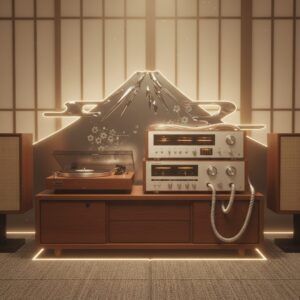
You push open a heavy wooden door, unmarked save for a small, faded sign, and step out of the frantic rhythm of a Tokyo street into a different decade. The air is thick with the scent of dark-roast coffee, old paper, and the faint, warm smell of vacuum tubes. Your eyes adjust to the gloom, and the first thing you see are the walls. They aren’t walls, not really. They are libraries, floor-to-ceiling shelves crammed with thousands of vinyl records, their spines a chaotic tapestry of names and titles. In the center of the room, like an altar, sits a sound system—turntables, gleaming silver amplifiers, and speakers the size of refrigerators. A handful of patrons are scattered at the counter or in worn leather armchairs, nursing their drinks. No one is talking. No one is looking at their phone. All eyes are either closed or fixed on a point in the middle distance, lost in the sound washing over them. This is a kissaten, but not just any kind. This is a vinyl kissa, a record bar, and you’ve just stumbled into one of Japan’s most fascinating and misunderstood subcultures.
It’s easy to dismiss this as simple nostalgia, a retro fad for hipsters who think analogue is automatically cooler. But that’s a surface-level reading that misses the point entirely. The vinyl kissa isn’t just about the music; it’s about the act of listening itself. It’s a deliberate, almost monastic retreat from the noise and distraction of modern life. In an age where every song ever recorded is available at the tap of a screen, these spaces pose a radical question: what if we chose not to have everything at once? What if, instead, we chose to sit in a quiet room and give one album, one artist, our complete, undivided attention? This isn’t about collecting records or romanticizing the past. It’s a cultural practice of deep, undistracted immersion, a sanctuary built for the singular purpose of hearing music as it was meant to be heard—physically, intentionally, and without interruption.
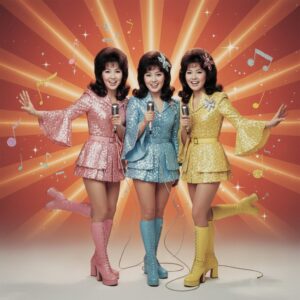
The vinyl kissa’s analog sanctuary offers a serene escape, yet a taste of Japan’s bold creative era can also be found in the vibrant digital excess of late 90s J-POP videos.
The Unwritten Code of Listening

Step into a typical café, and you’re greeted by a chorus of chatter, clinking cups, and a generic background playlist meant to be ignored. A vinyl kissa operates on an entirely different principle. Here, the music takes center stage. Everything else falls into the background. In many of the most traditional venues, conversation is not merely discouraged; it is prohibited. A small sign might politely ask for silence, but more often, the rule goes unspoken, upheld by the solemn intensity of the owner—the “master”—and the focused presence of the regular patrons.
This is not rudeness; it is a mutual social agreement. Everyone present has come for the same purpose: to listen. Talking would breach the sanctity of the experience, not only for yourself but for everyone else in the room. The same principle applies in a concert hall or cinema. The performance is the main event, and conversations can wait. Here, the performance is the album playing from start to finish. You become part of an audience, sharing a collective experience in respectful solitude.
Even in more casual vinyl bars where conversation is allowed, it remains subdued and respectful of the music. You don’t shout over the track. You lean in, you whisper. The sound system holds ultimate authority. This reverence cultivates a unique atmosphere. It’s not the forced, awkward silence of a library, but a comfortable, meditative quiet. It recalibrates your senses. Freed from the need to engage in social formalities, your ears open wider. You begin to notice the subtle textures of the music: the resonant decay of a cymbal, the soft rasp of a singer’s breath between notes, the precise stereo separation of instruments. It’s an active, immersive form of listening that the fragmented attention demanded by the digital world has made nearly impossible to find elsewhere.
A Sanctuary from the Digital Storm
The persistence and recent revival of vinyl kissas can be seen as a direct reaction to the psychological strain of the digital era. We exist in an attention economy, where every app, website, and platform is designed to capture our focus for commercial purposes. Our listening habits have been similarly reshaped. Streaming services, with their algorithm-driven playlists and endless libraries, promote a kind of passive, seamless consumption. We skip tracks we don’t immediately enjoy, listen on shuffle, and let the algorithm decide the next selection. The album as a unified artistic work is often lost, fragmented into a series of isolated data points.
Choosing to visit a vinyl kissa is a deliberate act of resistance against this model. It represents a commitment to intentionality. You cannot skip a track on a turntable with a swipe of your finger. You cannot instantly switch to another artist. You are engaged in the roughly forty-minute journey the musician intended. This restriction is not a downside; it is the essence of the experience. By removing the paradox of limitless choice, the kissa allows you to fully engage with what is playing, freeing mental capacity normally spent on choosing what to listen to next and redirecting it toward the act of listening itself.
This practice of deep listening connects with a cultural appreciation in Japan for focused, mindful disciplines. It echoes the spirit of the tea ceremony or shodo (calligraphy), where a simple act is elevated through ritual and intense concentration. The master of the kissa is, in his own right, a kind of artisan—a shokunin of sound. His craft involves not just playing records but crafting the ideal setting for appreciating them. He has devoted his life to mastering the subtleties of his collection and the capabilities of his equipment. Entrusting yourself to him is an act of trust, allowing a curator to shape your experience rather than relying on an algorithm.
From Post-War Necessity to Modern Refuge

To truly understand the vinyl kissa, one must first know its history. These spaces did not arise from a recent fascination with analogue coolness. Their origins trace back to the immediate post-war era, particularly with the emergence of the jazz kissa. During the 1950s and 60s, as Japan was recovering from war devastation and experiencing rapid economic growth, a young generation craved culture—especially American jazz, which represented freedom and modernity. However, imported records and high-fidelity audio equipment were prohibitively expensive, making personal collections unattainable for most.
The jazz kissa filled this gap. They were semi-public venues where, for the cost of a single coffee, patrons could spend hours listening to rare, costly records on top-tier sound systems. These places became informal music schools. Visitors brought notebooks to record song titles and personnel, studying liner notes thoroughly. Spots like Dug in Shinjuku, Chigusa in Yokohama, and hundreds more became legendary hubs for musicians, intellectuals, and passionate fans. They were more than cafes; they served as archives, classrooms, and community centers built around a common love for music.
As Japan grew wealthier and records and stereos became more accessible, the original mission of the kissa faded, and many closed. Yet the concept survived, evolving to meet new demands. Its role shifted from providing access to creating a distinct experience. While some iconic jazz kissa remain, new vinyl bars now specialize in classic rock, soul, funk, techno, or ambient music. The essence, however, stays the same: a dedicated space for the serious appreciation of recorded music. What began as an economic necessity has been reborn as a modern psychological and spiritual refuge.
The Master and the Machine
Two key elements lie at the heart of every great vinyl kissa: the owner, called the “master,” and the sound system. These two are inseparable. The master is more than a proprietor or bartender; he embodies the spirit of the place. Often a man of few words, his personality shines through his record collection and the sound he curates.
He is a devoted curator who has devoted his life to acquiring, organizing, and understanding his music. His collection represents his life’s work. He knows every pop, each scratch, and the story behind every album. Watching him work is an act of reverence. He handles records with surgical precision, meticulously cleans them before each play, and gently lowers the stylus into the groove. His role is to serve as a conduit between artist and listener. Although some kissa accept requests, many esteemed masters prefer to read the room, choosing albums based on time of day, weather, or the patrons’ unspoken mood. Receiving a nod of recognition for appreciating a deep cut he’s selected is one of the experience’s quiet joys.
This carefully chosen music flows through the second essential element: the machine. The sound systems in these venues are often magnificent, formidable feats of audio engineering. You’ll find vintage horn speakers from JBL or Tannoy, some towering taller than a person. These are paired with powerful, warm vacuum tube amplifiers and meticulously maintained high-end turntables. This is no background noise; it is a tangible presence. The goal is sonic purity and emotional resonance. The sound is rich, detailed, and immersive in a way earbuds or laptop speakers cannot replicate. You don’t just hear the bass; you feel it in your chest. You sense the air shifting in the room. This obsession with audio perfection lies at the core of the kissa’s existence. It argues that the medium matters and that the quality of the system fundamentally alters the experience of art.
The Community of Solitude
At first, a room full of people sitting silently might seem isolating, yet the vinyl kissa cultivates a unique form of community. It is a community not built on interaction but on shared experience. You sit alone with your thoughts and music, surrounded by others engaged in the same intimate ritual. There is a quiet solidarity in this.
This shared solitude offers a powerful counterpoint to the performative social pressures of typical third spaces like bars and cafes. Here, there is no demand to be witty, charming, or conversational. You can simply exist. This makes the vinyl kissa a genuine refuge for a broad range of people. You’ll see a salaryman loosening his tie, unwinding after a tough day. You’ll find a university student who appears to be studying but is really absorbed in a classic album. You’ll meet older regulars who have visited for decades, for whom the kissa is a vital part of daily life. It’s a space where introverts can feel at ease, a place to be part of the public without the exhausting effort of social performance. It’s a sanctuary to recharge, reset, and reconnect with a part of oneself lost amidst daily noise.
More Than Just Sound: The Aesthetics of Analogue
The appeal of the vinyl kissa goes beyond just sound. It represents a full-sensory defiance against the intangible, dematerialized nature of our digital age. The experience is deeply physical, beginning with the records themselves. These are tangible objects with weight and presence. The large-format album cover stands as a piece of art, something to hold and study, serving as a visual gateway to the music inside. The liner notes provide a closer connection to the recording process, the musicians, and the artist’s intentions.
The ritual of the host selecting and playing a record unfolds like a piece of theater. The physical actions of removing the vinyl from its sleeve, carefully placing it on the platter, and lowering the tonearm all create a sense of anticipation entirely missing when clicking a link. This physicality anchors the experience in reality, reminding us that music is not merely a stream of data in the cloud but a product of human craftsmanship, etched into a spiral groove on a piece of plastic.
This aesthetic extends to the space itself. The dim lighting, wood-paneled walls, and worn furniture form a design language that encourages slowing down and paying attention. The kissa is a purpose-built environment, carefully designed to eliminate distractions and heighten sensory awareness. It stands as a testament to the idea that our surroundings deeply influence our internal state.
Ultimately, the vinyl kissa is not about nostalgia. It’s not a rejection of technology, but rather a recalibration of how we relate to it. It reminds us of what we lose when convenience and quantity are prioritized over quality and intention. It upholds the belief that deep engagement requires limits, that focus is a precious resource to guard, and that the most fulfilling experiences often demand effort from us. It is a quiet, determined insistence that in a world clamoring for our attention, the most radical act can be simply to sit down, be still, and truly listen.