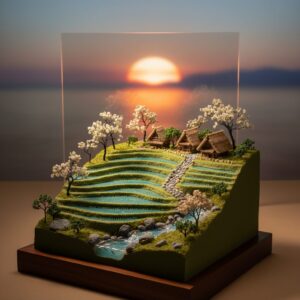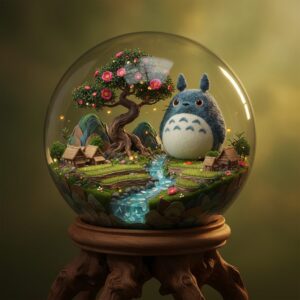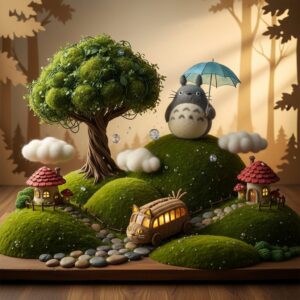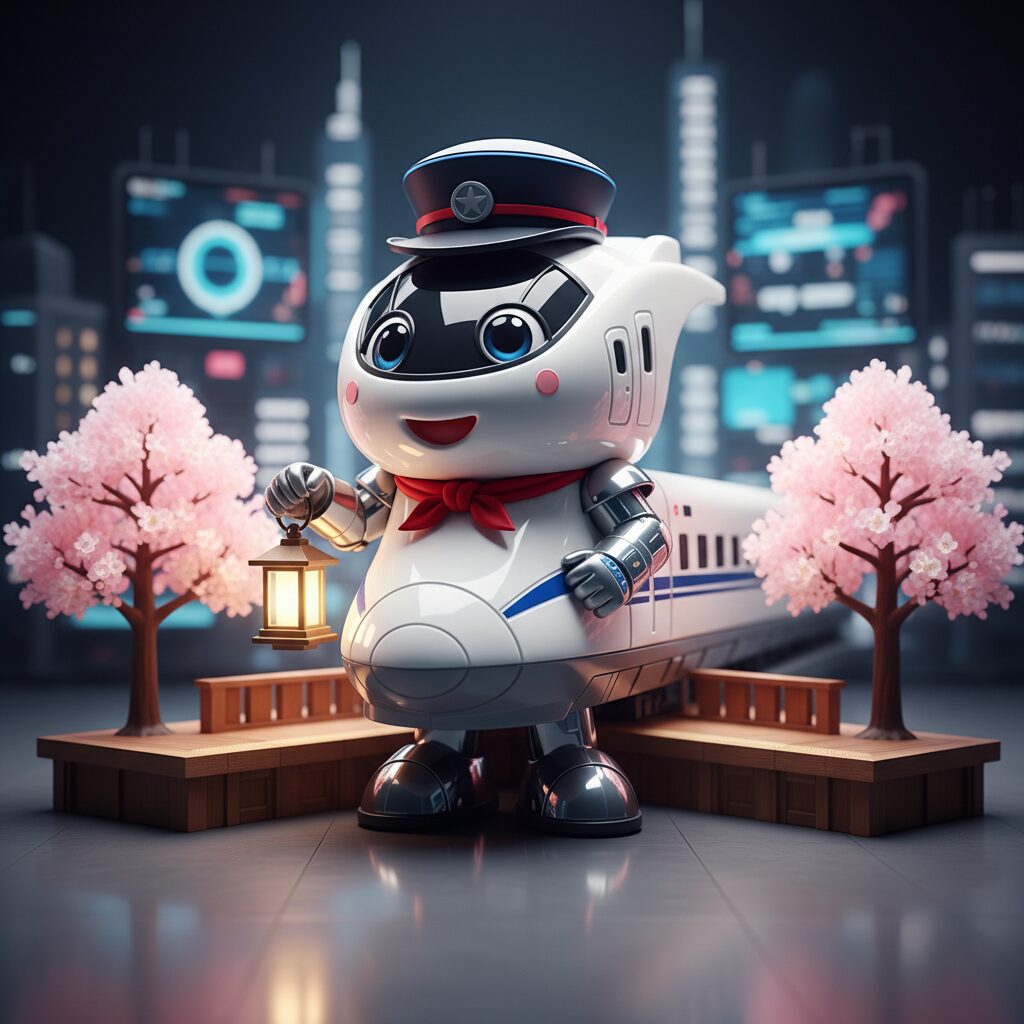
Yo, what’s the deal? It’s Megumi, coming at you live from the neon jungle of Tokyo. As an event planner, my life is basically a calendar of controlled chaos, organizing festivals where tradition smacks right into hyper-modern pop culture. And let me tell you, there’s one thing that shows up at every single event, no matter how serious or wild: a giant, fluffy, probably slightly clumsy mascot. For real. You’ve probably seen them on your Insta feed. A giant, unnervingly cheerful red bear. A pear-shaped creature that moves with the unhinged energy of a toddler on three espressos. A… thing… with a bowl of noodles for a hat. You see them on posters, on snack packages, on the side of buses, and then you see them in real life, wobbling through a crowd, giving out high-fives. And your first thought is probably, “Okay, cute, but… why is this a thing? Why does the tax office have a mascot? Is this a prank?” Nah, it’s not a prank. It’s peak Japan. You’re looking at a Yurukyara, and you’re seeing something way deeper than just a marketing gimmick. You’re seeing a modern-day Totoro, a local spirit brought to life, not in a mystical forest, but right in the middle of Shibuya Crossing. It’s this wild, Ghibli-esque spirit hiding in plain sight, making the everyday world feel just a little more enchanted. It’s a whole vibe, and honestly, once you get it, Japan starts to make a whole lot more sense. But to get it, you gotta look past the fluff. Let’s get into it.
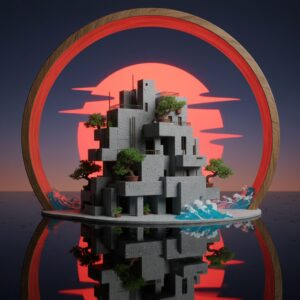
This Ghibli-esque spirit isn’t just found in mascots; it also infuses the very architecture of Japan’s concrete danchi housing complexes.
What Even Is a Yurukyara? The Unspoken Rules of Cuteness
Before we dive headfirst into Japanese cultural psychology, let’s first unpack the name itself. “Yurukyara” (ゆるキャラ) combines two words: “yuru-i” (ゆるい), which holds the key to the concept, and “kyarakutā” (キャラクター), the Japanese adaptation of the English word “character.” Simple enough. However, “yuru-i” carries a lot of weight. It’s a vibe, an entire aesthetic, and isn’t easy to translate precisely. It can mean “loose,” “gentle,” “laid-back,” or “slow.” But when it comes to a Yurukyara, it implies something closer to “adorably amateurish,” “slightly unsophisticated,” or “endearingly imperfect.” A true Yurukyara shouldn’t look like it was crafted by a top-tier, slick marketing team in a skyscraper. Instead, it might seem like it was drawn by a talented uncle or created by someone who won a community center contest. This intentional roughness makes them approachable. They’re not intimidatingly perfect like Mickey Mouse, nor are they aggressively athletic like pro sports mascots. They’re just… there. Relaxed. And that easygoing, low-key energy lets everyone—from toddlers to grandparents—embrace them wholeheartedly.
Deconstructing “Yuru-i”: It’s All About the Vibe
The entire “yuru-i” concept quietly pushes back against the pervasive pressure for perfection found throughout Japanese society. From impeccably packed bento boxes to flawless customer service, high standards are constantly expected. A Yurukyara stands in direct contrast to that, finding charm in its flaws. Maybe its head is a bit too large for its body, causing it to wobble unsteadily. Maybe its facial expression is perpetually blank or confused. Perhaps its backstory is utterly nonsensical. This imperfection is intentional, not accidental. It’s a collective breath of relief embodied in a character, signaling, “Hey, being a little weird or clumsy is perfectly fine. You don’t have to have it all figured out.” This gentle, accessible quality distinguishes them from the high-energy, flamboyant mascots common in the West. A Yurukyara won’t perform backflips or shoot t-shirts into the crowd. It’s more likely to attempt a slow, shuffling dance, stumble over its own feet, and then need assistance from its handler. And the audience adores it for that. Celebrating the gentle, awkward, and slightly pitiful is what makes them so deeply endearing. They are the embodiment of a lazy Sunday afternoon.
The Three Commandments of a Genuine Yurukyara
The phenomenon became so popular that Miura Jun, a pop culture critic and illustrator who actually coined the term “Yurukyara,” created an informal manifesto—the “Yurukyara Sanjō” or “Three Articles of Yurukyara.” These aren’t rigid rules but guiding principles aimed at achieving the perfect balance of charming imperfection. These commandments distinguish authentic local heroes from corporate imitations.
First, the character must radiate a deep, unwavering love for their hometown or region. They serve as vessels of local pride. Their design should be rich with local symbolism—perhaps shaped like a famous regional vegetable, wearing a hat resembling a local castle, or holding a specialty product from the area. They are cute, walking billboards for their community, whose primary purpose is to inspire affection for their distinct, often overlooked, part of Japan.
Second, their movements and overall behavior must be unstable, awkward, and distinctly clumsy. This is essential. A polished, professional act breaks the illusion. The magic lies in the struggle—the subtle wobble, the slow turns, the difficulty navigating a few steps. All these nuances convince observers that they are seeing a genuine creature, not simply a person in a costume. This awkwardness often tips into “kimo-kawaii,” a blend of “kimochi warui” (creepy) and “kawaii” (cute). It’s that perfect zone where something is so strange it loops back to being charming.
Third—and perhaps the most important—the character must be “yuru-i,” fundamentally simple and unrefined. The design should feel straightforward, unpretentious, and perhaps even a bit naïve. Overly complicated or slick, anime-style designs miss the essence entirely. A true Yurukyara has a homespun, handmade quality. This deliberate lack of corporate gloss makes them feel genuine and trustworthy, as though they belong to the community rather than a marketing team. That’s why some of the most adored characters look like doodles come to life.
Imperfection in Practice: Funassyi vs. Kumamon
To understand the range of Yurukyara styles, consider two iconic figures: Funassyi and Kumamon—two wildly different but equally successful approaches to giant, fluffy mascots.
First, there’s Funassyi, the chaotic pear spirit from Funabashi City in Chiba. Funassyi is an agent of anarchy who breaks nearly every rule. Not officially endorsed by Funabashi, he was a rogue creation, a self-proclaimed “pear fairy.” Unlike most Yurukyara, Funassyi talks—a lot—in a high-pitched screechy voice. He’s wildly energetic, with head-banging and high-jumping that defies the usual “yuru-i” mellow vibe. Ending sentences with “nassyi!” (a pun on “nashi,” the Japanese word for pear), he’s known for his signature vigorous shaking. He’s pure chaotic energy—and beloved for it. Funassyi represents the punk-rock, rebellious fringe of the Yurukyara world. His charm lies in his raw authenticity—an untamable spirit resisting bureaucratic control. He proves that sometimes the most cherished characters are those who defy expectations.
On the opposite end is Kumamon, the undisputed mascot king and the Michael Jordan of Yurukyara, from Kumamoto Prefecture. His design is deceptively simple: a black bear with rosy cheeks, a slight potbelly, and a look of mild, permanent surprise. He embodies the “yuru-i” aesthetic perfectly. Kumamon remains silent, moves with endearing clumsiness, and captures the gentle, welcoming nature of his region. What truly propelled Kumamon to global fame was a brilliant marketing move: Kumamoto Prefecture made his image and likeness completely free for anyone promoting local goods and services, with no licensing fees. This sparked a phenomenon. Kumamon’s image appeared everywhere—from instant ramen to high-end sake and even airplane liveries. He became more than a mascot; he turned into a regional brand ambassador, generating billions of yen in economic impact. Kumamon demonstrated that “yuru-i” isn’t just a cute trend but a powerful economic force.
The Cultural DNA: Where Did These Critters Come From?
Alright, we’ve identified what Yurukyara are. But the key question is why. Why did this phenomenon take off in Japan and nowhere else? To truly grasp the Yurukyara boom, you have to trace it far back, beyond modern marketing, into the deep foundations of Japanese culture. These fluffy mascots are not just a recent trend; they represent the modern embodiment of some very ancient ideas. They connect to a cultural worldview that has persisted for centuries, where the spiritual and the everyday are closely intertwined.
Echoes of Shinto: Contemporary Yokai and Kami
At the heart of Japanese culture lies Shintoism, the indigenous religion. A fundamental aspect of Shinto is animism—the belief that everything, literally everything, holds a spirit or deity known as a “kami.” Mountains, rivers, ancient trees, even rocks possess kami. The world is alive with unseen spirits. This notion of a spirit tied to a place, a kind of guardian presence, is deeply embedded in the Japanese mindset. Now, jump forward to the 21st century. What is a Yurukyara if not a modern, commercialized incarnation of a local kami? Kumamon isn’t merely a bear; he is the friendly, approachable spirit of Kumamoto, embodying the region’s essence. Yuzukomachi, a yuzu-themed mascot for a town famed for its citrus fruit, acts as the kami of the local yuzu harvest. In a very real way, these characters serve as new local deities — secular gods for a consumer era, transforming abstract ideas like “regional pride” and “local products” into tangible, lovable figures.
This also ties into the long-standing tradition of “Yokai,” supernatural monsters, spirits, and demons from Japanese folklore. Yokai are diverse, ranging from terrifying to mischievous, quirky, or even comedic. Some are animated sandals or haunted umbrellas. This tradition fostered a cultural acceptance of the supernatural coexisting with daily life, of a world inhabited by bizarre and enchanting creatures. Yurukyara are essentially the friendly, non-threatening Yokai of today. They are the odd beings that inhabit train stations and city halls instead of remote mountain trails. They make our sterile modern world a bit more magical and enchanting, much like the Yokai stories have for generations. Spotting a strange mascot with a turnip for a head? That’s a direct heir to a folklore tradition that has personified the weird and wonderful for over a thousand years.
The Kawaii Revolution: From Hello Kitty to Local Icons
Discussing anything cute in Japan means acknowledging the empire of Sanrio and its iconic figure, Hello Kitty. The post-war economic boom gave rise to a distinct youth culture and with it, the rise of “kawaii” (cute) as a dominant aesthetic. Hello Kitty, launched in the 1970s, revolutionized the idea that a simple, mouthless character could become a global sensation and commercial juggernaut. Sanrio and similar companies made it clear that cuteness wasn’t just for kids—it became a highly desirable aesthetic for adults, too. Women filled their offices with cute stationery, men added adorable keychains to briefcases. This national obsession with all things kawaii laid fertile ground for the Yurukyara movement to thrive. The public was already ready to embrace characters as meaningful forms of expression and branding. The social groundwork was set. Yurukyara took the national “kawaii” sensibility and localized it, democratizing the Sanrio model and granting every small town, no matter how remote, its own beloved character—a little piece of the cute culture.
The Government’s Strategic Soft Power
There’s also a practical, bureaucratic reason behind the Yurukyara surge: demographics and economics. From the 1990s into the 2000s, Japan struggled with an aging and shrinking population, especially in rural areas. Young people left for major urban centers like Tokyo and Osaka, leaving local economies in decline. The central government responded with “chiiki okoshi,” or regional revitalization policies. Local governments faced intense pressure to boost tourism, attract residents, and promote regional products uniquely. Most communities lacked big advertising budgets and couldn’t afford flashy TV campaigns. What they could manage was hiring a local designer to create a mascot. Yurukyara offered an ideal, low-cost, high-impact solution. If a mascot caught public attention, it could spark nationwide media coverage and a flood of free publicity. That’s why you find mascots representing even the most mundane or serious government bodies. The police use a mascot to appear friendlier and community-focused. The Ministry of Defense has mascots for its Self-Defense Forces to ease its image. The tax office has one to make the daunting task of taxes feel slightly less intimidating. These mascots act as instruments of soft power, a spoonful of sugar helping the sometimes hard medicine of bureaucracy go down.
The Yurukyara Ecosystem: It’s a Whole Scene, For Real
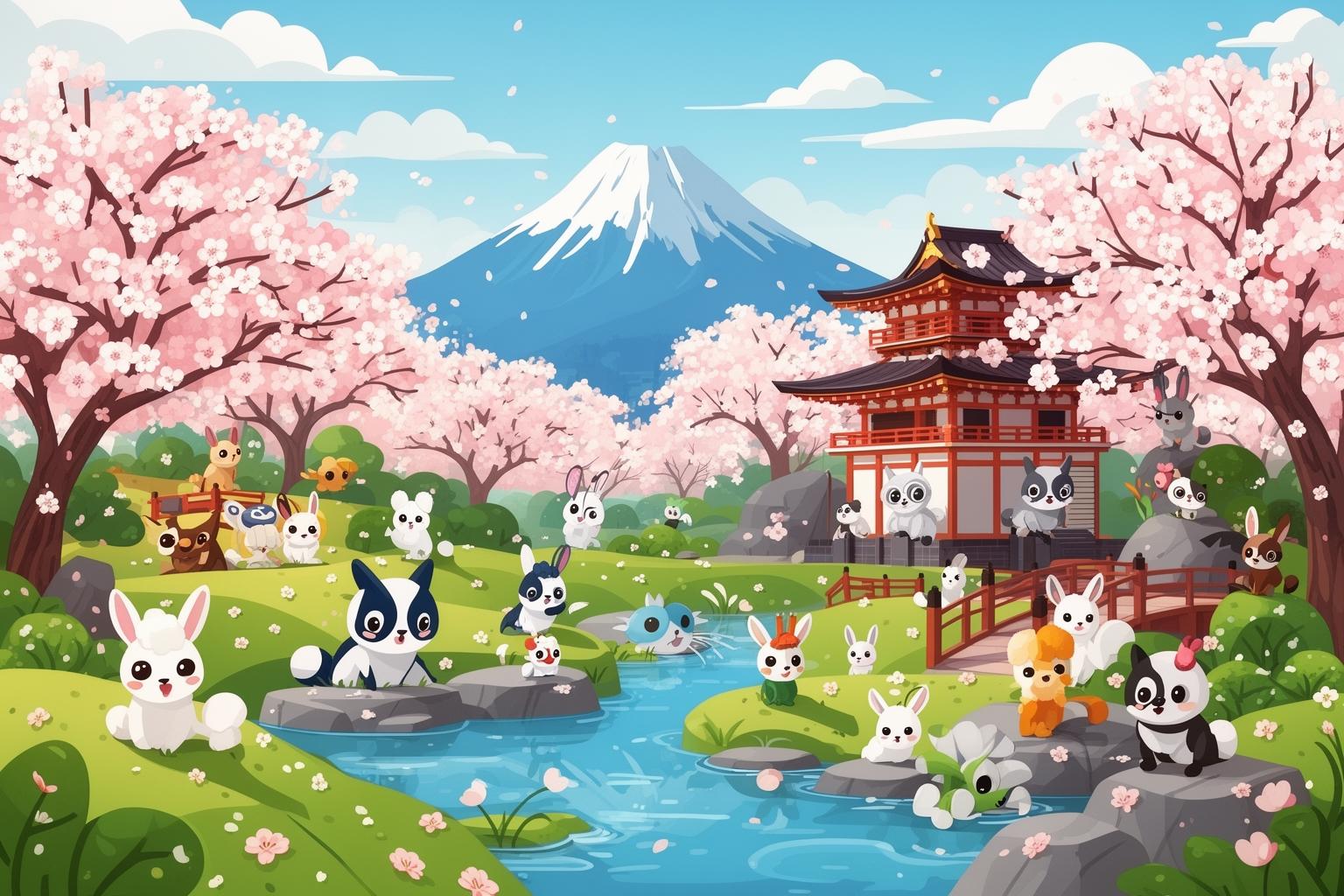
This isn’t simply a random assortment of characters; it’s a fully developed subculture complete with its own events, celebrities, drama, and devoted fanbase. It’s a whole ecosystem that functions with the intensity and enthusiasm of a major sports league, except the competitors are large, fluffy animals and vegetables. To outsiders, it may appear completely bizarre, but once you’re part of it, the internal logic is utterly captivating.
The Grand Prix: The Super Bowl of Fluffy Mascots
For ten years, the pinnacle of the Yurukyara calendar was the Yurukyara Grand Prix. This annual online voting contest determined the most popular mascot across Japan. And it was a massive event. This wasn’t some casual online poll; it was a fiercely fought contest for regional pride. Local governments launched full-scale campaigns. You’d see posters in city halls encouraging residents to cast their daily vote. Mayors held press conferences alongside their mascots, appealing for public support. The characters themselves toured widely, appearing on TV shows and at events to rally their fans. It was treated with the seriousness of an actual political election. The competition grew so heated that scandals arose, with claims of municipalities buying bulk SIM cards to cast fraudulent extra votes for their mascots. The Grand Prix perfectly embodied how seriously this world is regarded. Winning didn’t just mean bragging rights; it brought a huge boost in tourism, media exposure, and merchandise sales to the mascot’s hometown. It was the fluffy, felt-covered forge where legends were born.
Beyond the Costume: The Life of a “Naka no Hito”
One of the most important—and most strictly upheld—rules in the Yurukyara world is that the characters are real. They are not just people in costumes. Therefore, the identity of the person inside the suit, the “naka no hito” (中の人), remains a closely guarded secret. Asking “who’s inside?” is a major faux pas that breaks the magic. The “naka no hito” is simultaneously a performer, an athlete, and a silent actor. They must bring the character to life through body language alone while enduring the intense physical demands of the suit. The costumes are often extremely hot, heavy, and severely limit visibility. Yet, the performer must remain in character at all times, patiently engaging with throngs of excited children and adults, posing for countless photos, and executing the character’s signature walk or gesture flawlessly. They are always supported by a handler or attendant who acts as their eyes, ears, and voice, often “translating” the mascot’s gestures for the audience. This unwavering dedication to preserving the illusion is essential. When you meet Kumamon, you meet Kumamon. The person inside is irrelevant. They are the anonymous spirit giving form to the local deity, and their anonymity is part of the profound respect accorded to the character itself.
The Merch Machine: From Keychains to Themed Cafes
Let’s be honest: at its core, this is also about business. A successful Yurukyara is an economic powerhouse. They are ultimate brand ambassadors, with the goal of converting their popularity into real revenue for their region. Merchandise, or “goods” as it’s known in Japan, is where this ecosystem truly thrives. It far surpasses the usual keychains and plush dolls—though there are millions of those. You can find Yurukyara-branded everything. There’s Kumamon-labeled soy sauce, Funassyi-themed instant noodles, and Melon-kuma (a fiercely aggressive bear-melon hybrid) phone cases. The variety is astonishing, and it’s not just aimed at tourists or children. Adults form a huge market. Office workers use Yurukyara stationery, drivers adorn their cars with mascot decals, and you can even purchase high-end, locally brewed sake bearing the town mascot’s label. This merchandise serves a dual function: it directly generates income and acts as a constant, low-key advertisement. Every time someone uses a pen featuring your town’s mascot, it’s a small reminder that your town exists. It’s a clever, self-sustaining cycle of promotion and profit, all powered by cuteness.
The Dark Side of the Cuddle? When Cuteness Overloads
Certainly, no boom lasts forever, and the Yurukyara phenomenon was no different. For a time, the success of characters like Kumamon sparked a gold rush mentality, with seemingly every organization in Japan—no matter how small or obscure—rushing to create its own mascot in hopes of hitting the jackpot. This resulted in extreme oversaturation, a period some referred to as the “Yurukyara bubble.” Along with this bubble came inevitable issues and a fair share of oddities.
Mascot Saturation and the “Yurukyara Restructuring”
At its height, thousands of official and unofficial Yurukyara existed throughout Japan. Every prefecture, city, ward, and even the smallest village had one. Then each government department within that village had one, as did local bus companies and banks. The market became completely flooded. For every standout design, there were hundreds that were forgettable, uninspired, or outright poor. Many were funded by taxpayer money, and when they failed to gain popularity, citizens began to question whether this was an appropriate use of public funds. This led to the amusing but genuine phenomenon known as “Yurukyara risutora,” or mascot restructuring. Much like a bloated corporation cutting redundant staff, prefectures and cities began consolidating their mascot lineups. For instance, Osaka’s government famously reduced its dozens of mascots to just one primary character, Mozuyan. This was a watershed moment, signaling the end of the boom and affirming that only the most popular and enduring characters would survive. The era of producing mascots for everything was officially drawing to a close.
The “Kimo-Kawaii” Dilemma: Cute or Just Creepy?
The Western concept of “cute” is generally straightforward: large eyes, soft features, and overall fluffiness. However, Japanese “kawaii” covers a broader—and sometimes darker—spectrum. Enter the notion of “kimo-kawaii.” It describes an aesthetic that is simultaneously creepy or gross yet somehow endearing and cute. The Yurukyara sphere is filled with striking examples. One of the most well-known is Okazaemon, the mascot of Okazaki City. He is a ghostly white humanoid figure with a minimalist, unsettling face that simply displays the characters for “Okazaki.” He’s objectively terrifying, yet became a national sensation. Another notable example is Sento-kun, created for a festival in Nara. He’s a cartoonish boy with deer antlers (a symbol of Nara) sprouting from his head and the calm visage of a Buddha statue. His debut was met with widespread public protest, as many found him creepy and disrespectful. Over time, however, people came to appreciate his distinctive strangeness, and he became a beloved—if still controversial—figure. These “kimo-kawaii” characters challenge simplistic notions of cuteness and reflect a deep-rooted Japanese cultural appreciation for the grotesque, the uncanny, and the bizarre. They harken back to the strange and fascinating appearances of Yokai in traditional woodblock prints. This proves that to be loved, a character doesn’t need to be conventionally cute; sometimes it just needs to be unforgettable.
So, Are They Just Modern Totoros?
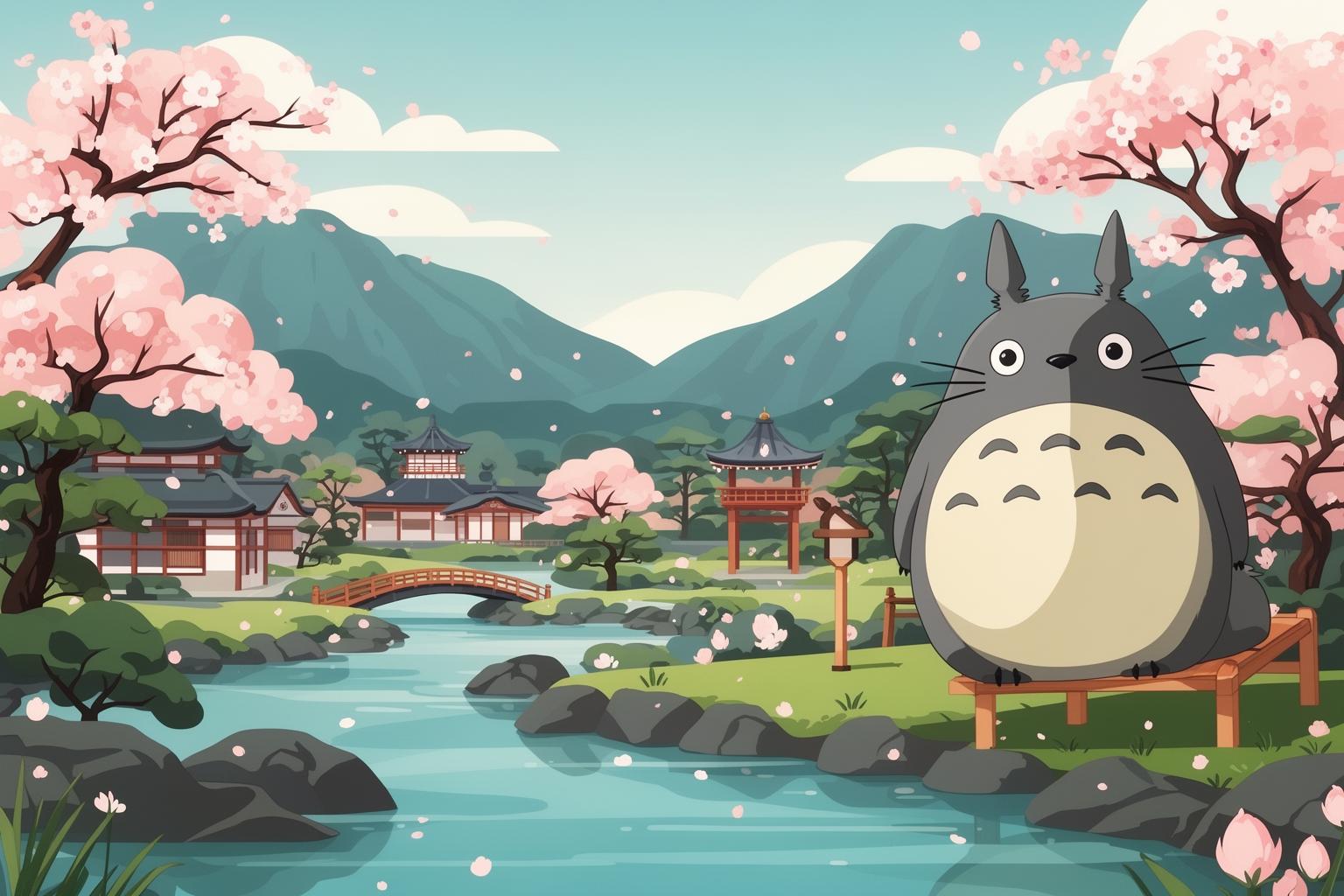
This brings us full circle, back to that Ghibli-esque feeling. While it’s easy to write off Yurukyara as merely a silly marketing trend, that perspective misses the deeper point. Their strong appeal lies in tapping into the same cultural source as Hayao Miyazaki’s masterpieces. In their own quirky, commercialized way, they are the Totoros of the 21st century.
The Totoro Connection: Guardians of a Place and a Feeling
Consider Totoro. He isn’t a character with a rich backstory or dramatic development; he is simply the spirit of the forest—a kami. A giant, fluffy, benevolent presence watching over a particular place. He doesn’t do much, but his presence makes the world feel safer, more magical, and wondrous. This is precisely the psychological role that a good Yurukyara fulfills. Kumamon isn’t just a bear; he is the guardian spirit of Kumamoto. His presence embodies the region’s mood—warm, friendly, and a bit sleepy. He transforms a mere administrative boundary into a place with a soul. When locals see their mascot, they experience comfort, pride, and connection. The Yurukyara is the Totoro of the built environment—a friendly spirit guarding not a camphor tree, but a train station, city hall, or shopping arcade.
The Big Difference: Commerce and Intent
Of course, there is a huge difference. Totoro is a piece of art, born purely from imagination and storytelling. A Yurukyara, at its core, is a tool—created with a specific commercial or administrative goal: to promote tourism, sell local products, or encourage tax payments. Their commercial nature is undeniable. But this doesn’t diminish their cultural significance; it may actually enhance it. The fact that contemporary Japan’s approach to branding, marketing, and public relations is to create a pantheon of local guardian spirits is deeply revealing. In a world dominated by aggressive advertising and slick corporate messaging, Japan’s solution is to invent clumsy, friendly, huggable creatures. Instead of a polished slogan devised in a focus group, they create a friend.
Why It Makes Sense in Japan: Reading the Air and Personification
Ultimately, the Yurukyara phenomenon is the perfect convergence of key Japanese cultural traits. First, “gijinka”—the art of personification or anthropomorphism—is widespread in Japanese pop culture, from anime where countries are portrayed as handsome boys to video games where historical swords have personalities. Giving human form and character to inanimate objects or abstract ideas is natural and commonplace.
Then there’s the nature of Japanese communication, known for being high-context and indirect. People are expected to “read the air” (“kuuki o yomu”) and grasp the unspoken mood. Yurukyara excel at this. A police mascot holding a sign about traffic safety delivers its message in a softer, friendlier, less confrontational way than a stern officer. It conveys a feeling—we’re here to help, we’re on your side—without stating it outright. They are a potent tool for emotional, nonverbal communication.
Finally, it’s about “asobi-gokoro,” or the “spirit of play,” a cultural appreciation for finding fun, whimsy, and humor in everyday life. It’s the willingness not to treat everything with crushing seriousness. Why does the Japanese military have a cute mascot? Asobi-gokoro. Why did a prison adopt a strange-looking character to promote its annual fair? Asobi-gokoro. It’s the recognition that life is better when you leave room for the silly, playful, and absurd.
So, that goofy-looking turnip costume you saw at the airport isn’t just a person in a strange outfit. It’s a local god, a marketing device, a piece of performance art, and a manifestation of a thousand years of cultural inheritance. It’s the spirit of the town, given a face and stubby arms. Next time you see one, don’t just stare—wave, give it a high-five, and take a photo. You’re not just encountering a mascot; you’re meeting the real, weird, wonderful soul of modern Japan. It’s a whole vibe. Mad respect.