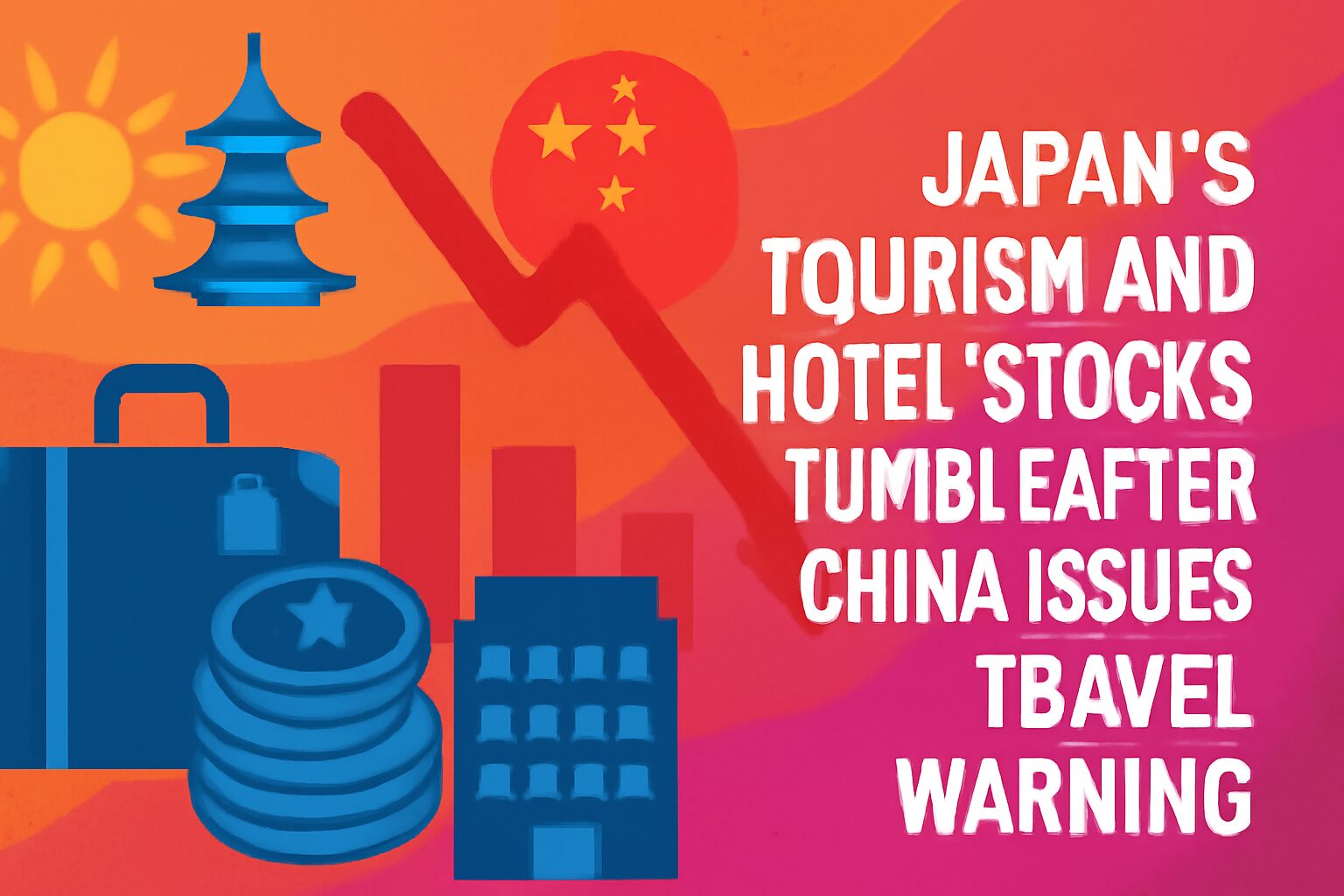
A travel advisory issued by Beijing has sent shockwaves through the Japanese stock market, causing a sharp decline in shares of tourism-related companies. This move, rooted in escalating diplomatic tensions, poses a significant threat to Japan’s hospitality and retail sectors, which have been banking on a robust post-pandemic recovery driven by international visitors.
Immediate Market Reaction
The impact on the market was immediate and widespread. Shares in major hotel chains, airlines, department stores, and cosmetics companies experienced a significant downturn. Investors reacted swiftly to the news, selling off stocks with high exposure to Chinese tourism. The advisory has cast a shadow of uncertainty over the short-term profitability of a sector that was just beginning to regain its footing after years of pandemic-related restrictions.
The Bigger Picture: China’s Crucial Role in Japanese Tourism
To understand the magnitude of this development, it is essential to look at the numbers. Before the pandemic, Chinese tourists were the backbone of Japan’s inbound tourism industry.
In 2019, Japan welcomed approximately 9.59 million visitors from mainland China, which accounted for roughly 30% of all international arrivals. More significantly, their economic contribution was immense. Chinese tourists spent an estimated 1.77 trillion yen (approximately $12 billion USD at current rates), representing nearly 37% of the total expenditure by foreign visitors that year. This spending was not limited to accommodation and travel but was a major driver for retail outlets, particularly department stores and drugstores in popular areas like Ginza and Shinsaibashi.
The Context: Escalating Diplomatic Tensions
The travel warning did not emerge from a vacuum. It is the latest development in a period of strained relations between the two nations. Recent diplomatic friction, including disputes over the release of treated radioactive water from the Fukushima Daiichi nuclear power plant, has fueled anti-Japanese sentiment in China. This advisory is widely seen as a retaliatory measure, leveraging economic pressure to make a political statement.
Future Outlook and Projected Impact
Short-Term Consequences
The immediate future looks challenging. The industry is bracing for a wave of cancellations from Chinese tour groups and individual travelers, especially ahead of upcoming holiday seasons. Regions and businesses that have heavily tailored their services to Chinese tourists are expected to be the hardest hit. This sudden drop in demand will likely lead to a significant revenue shortfall for airlines, hotels, and retailers who had anticipated a strong inflow of Chinese tourists following the recent lifting of group travel bans.
Long-Term Strategy Shift
This event serves as a stark reminder of the risks associated with over-reliance on a single market. In the long term, it may compel the Japanese government and tourism industry to accelerate efforts to diversify their inbound market. There could be a renewed push to attract more visitors from North America, Europe, Southeast Asia, and the Middle East to mitigate the economic impact of geopolitical volatility. For businesses, this may mean adapting marketing strategies and services to cater to a wider range of cultural preferences and spending habits.
Ultimately, the duration of this travel advisory will determine the severity of its impact. While the Japanese tourism sector has proven its resilience in the past, this politically charged challenge introduces a new layer of complexity to its path to a full recovery.