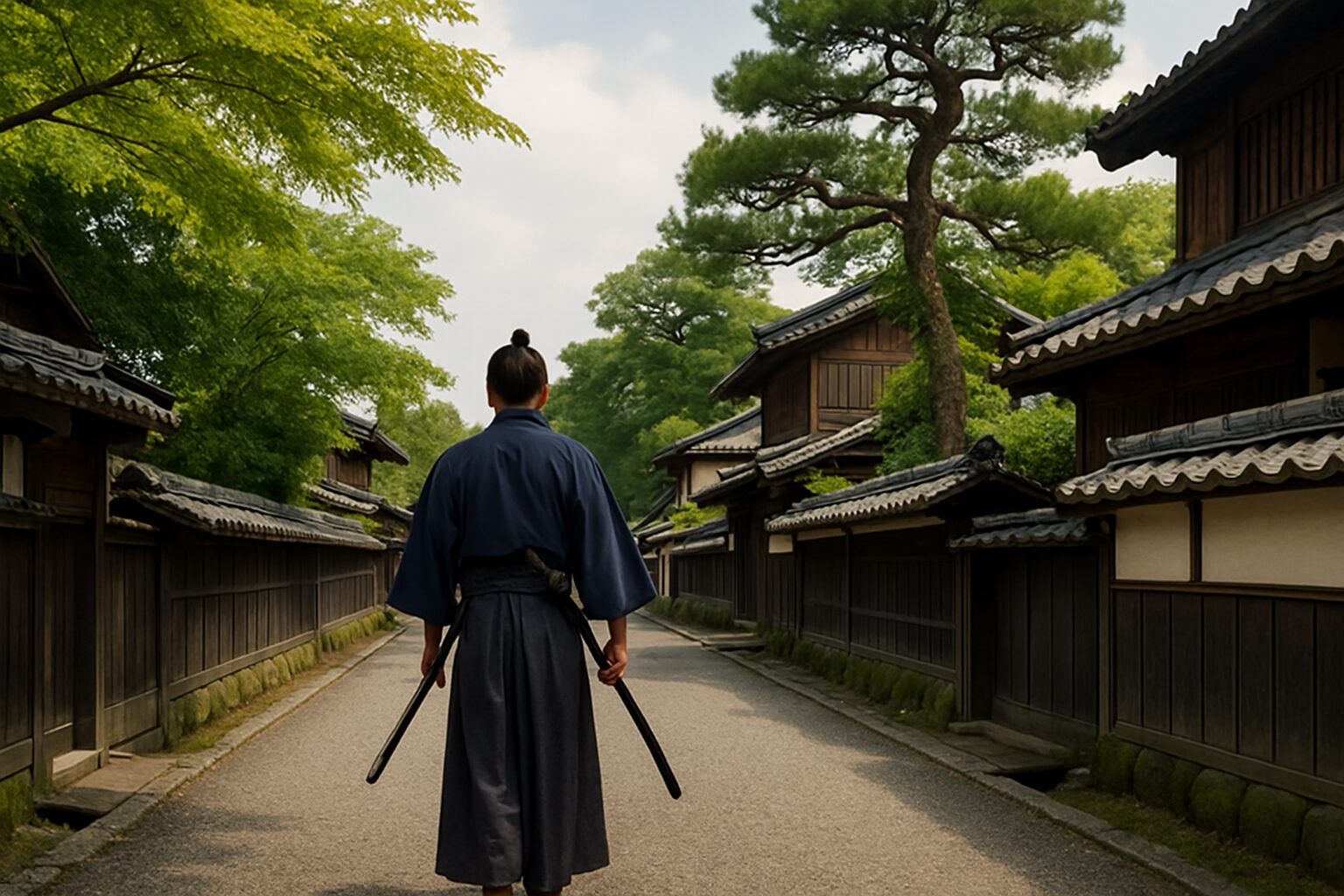
Yo, what’s the deal? Ever scroll through your feed, see those pics of Japan with the epic wooden houses and glowing lanterns, and think, “Is that even real?” It feels like a movie set, a fantasy world dropped into modern life. Well, lemme tell you, it’s 100% real, and it’s a whole mood. We’re talking about Japan’s samurai and geisha districts, these preserved pockets of the past where the vibes of old-school warriors and elegant artists are still straight-up palpable. This isn’t just about looking at old buildings, fam. It’s a full-on time-slip experience. You’re literally walking the same stone paths where disciplined samurai plotted in hushed tones and where the faint sound of a shamisen once drifted from a geisha’s teahouse. These districts, especially in cities like Kanazawa and Kyoto, are the living, breathing soul of a Japan that’s all about aesthetics, discipline, and a low-key, mysterious flex. They are the keepers of stories, the stages for a culture that has refused to fade away. Getting lost in these alleyways is like finding a secret level in the game of life, a place where every corner has a story and every shadow holds a secret. It’s where the past isn’t just history; it’s an atmosphere you can feel in your bones. So, if you’re ready to ditch the neon glow of Tokyo for a minute and dive into something deep, something with legit character, you’ve come to the right place. This is your all-access pass to understanding, exploring, and truly feeling the enduring legacy of the samurai and the geisha. Let’s get it.
For a truly immersive stay that complements this historical journey, consider booking one of the new luxury hotels in Japan set to open soon.
The Samurai Aesthetic: Unpacking the Buke Yashiki Vibe

Alright, let’s set the scene. Before you even step foot into a samurai district, you need to get the right mindset. These aren’t just quaint, old-fashioned neighborhoods—they’re carefully designed environments, created with a purpose that melded defense, administration, and a profound cultural statement. The entire layout, from the height of the walls to the width of the streets, reflects the samurai mindset—a philosophy of control, readiness, and quiet power. Walking through a buke yashiki (samurai residence) district feels like entering a physical embodiment of the Bushido code. It’s calm, orderly, and carries a weighty seriousness that easily earns your respect. The atmosphere here feels different—heavier with history, calmer, and charged with the energy of centuries of discipline. It’s a place that demands you slow down, observe, and appreciate the incredible thought behind every detail.
Who Were the Samurai, Though? The Real Story
When you hear “samurai,” your mind probably jumps to warriors with topknots and katanas engaged in epic battles like in anime. While that’s part of their story, it’s just a small slice of the whole picture. The samurai were a full social class—the ruling military nobility of feudal and early-modern Japan for roughly 700 years. For much of that time, especially during the peaceful Edo Period (1603-1868), they were less about frontline fighting and more about bureaucracy, administration, scholarship, and patronage of the arts. Think of them as a blend of knight, government official, and cultural tastemaker rolled into one. They ran the show, and their castles and districts were the power centers of their domains.
Their entire existence was guided by Bushido, “the way of the warrior.” But Bushido wasn’t merely about combat skills; it was a complex ethical code emphasizing loyalty, self-discipline, honor, and respect. This philosophy influenced everything they did and built. Their homes were more than shelters; they were statements. Clean lines, natural materials, seamless integration with gardens—all reflected a Zen-inspired aesthetic valuing simplicity, harmony with nature, and constant readiness. They fostered a culture where true strength wasn’t loud or flashy but found in quiet confidence, meticulous detail, and an unwavering sense of duty. Understanding this is key to grasping the true spirit of a samurai district. You’re not just seeing where warriors lived; you’re witnessing the world they created as a reflection of who they were.
Decoding the Samurai District (Buke Yashiki)
Now, let’s get into the details of the architecture. A typical samurai district is a masterclass in subtle intimidation and practical design. The first thing you’ll notice are the walls. These aren’t ordinary walls; they’re often dobei—imposing earthen walls filled with clay and topped with roof tiles to protect against rain. Tall, windowless, and solid, they create a sense of absolute privacy and security. These walls form long, twisting streets, sometimes with blind corners and T-junctions. This wasn’t for show; it was a strategic defense mechanism designed to confuse invaders, forcing them into kill zones and blocking a direct charge toward the castle or key residences.
Another key feature is the entrance to a samurai residence. You’ll often see a nagayamon, a long gatehouse combining the main gate with living quarters for lower-ranking retainers and servants. The size and complexity of the gate signaled status—a high-ranking samurai might have a large, ornate gate, flaunting his importance to all who passed by. Once inside, you wouldn’t simply enter the main house. Usually, there was a courtyard and formal entrance (genkan) that separated the outside world from the private inner sanctum. The house itself was a study in functional elegance. Sliding paper screens (fusuma and shoji) allowed flexible room layouts, tatami floors promoted a floor-based lifestyle, and a tokonoma alcove showcased a single scroll or flower arrangement—a focal point for contemplation and a sign of refined taste. The entire layout functioned as both fortress and serene home, perfectly embodying the samurai’s dual identity as warrior and aesthete.
Spotlight on Nagamachi, Kanazawa: The Ultimate Samurai Showcase
To experience this vibe at its most authentic, you need to visit the Nagamachi district in Kanazawa, Ishikawa Prefecture. This place is one of the best-preserved samurai districts in all Japan. It’s not a theme park—people still live here, and the sense of history is palpable. As you wander the narrow lanes bordered by signature ochre-colored mud walls, you’re literally walking in the footsteps of the Maeda clan’s samurai retainers, among the wealthiest and most powerful in the country.
What makes Nagamachi especially unique is the water. The Onosho Canal, a network of waterways diverted from the nearby Sai River, runs throughout the district. These canals are crystal clear and gently babble as you walk alongside them. Originally practical—used for transporting goods, fire prevention, and water supply—today, they add an incredible layer of beauty and tranquility. The sound of running water provides a soothing soundtrack to your exploration. In winter, the district embraces a special tradition called komo, where delicate earthen walls are covered with straw mats to protect them from snow and ice. It’s a truly unique and beautiful sight, demonstrating the city’s dedication to preserving its heritage.
The absolute must-see in Nagamachi is the Nomura-ke Samurai Residence. This isn’t just a restored house—it’s a stunning glimpse into the life of a high-ranking samurai family. The moment you step inside, the artistry hits you. The main rooms feature exquisite fusuma (sliding doors) painted by an artist from the Maeda clan’s official painter’s studio. The woodwork—from intricate transoms to polished wooden ceilings—showcases exceptional craftsmanship. But the real highlight is the garden. Compact yet breathtaking, it includes a miniature waterfall, ancient stone lanterns, a 400-year-old Japanese bayberry tree, and a tranquil pond filled with colorful koi carp. Every element is perfectly arranged. You can sit on the veranda, sip some matcha (sometimes offered), and soak it all in. It’s a moment of pure Zen and a direct connection to the aesthetic ideals the samurai treasured. The house also displays artifacts like armor and swords, grounding the artistic beauty in the martial reality of its former residents.
For a first-time visitor, the best way to experience Nagamachi is early in the morning. Before the tour buses arrive, the streets are nearly empty, and the only sounds are the canal and birds. It’s pure magic. You can feel the quiet dignity of the place. Access is easy—a short bus ride or pleasant walk from Kanazawa Station. Just be ready to be fully transported to another era. It’s not merely a historic site; it’s an entire vibe, and Kanazawa delivers it perfectly.
The World of Flowers and Willows: The Geisha District Glow-Up
Alright, let’s change direction. Instead of focusing on the stoic, disciplined samurai, let’s explore a world that’s equally disciplined yet cloaked in a different kind of allure: the geisha districts, or hanamachi (flower towns). This is the realm of silk kimonos, the soft strains of the shamisen, and an artistry and social grace that is truly astounding. These districts, especially in cities like Kyoto and Kanazawa, are not mere relics; they are vibrant, living cultural ecosystems. The atmosphere here exudes exclusivity, elegance, and ephemeral beauty. As dusk falls and paper lanterns begin to glow, the streets of a hanamachi take on a cinematic air. The atmosphere buzzes with anticipation. You might hear the gentle clack of wooden sandals (geta) on stone or catch a fleeting sight of a geisha, her face flawlessly painted, gliding quietly to her evening engagement. This is a world that doesn’t demand attention; it murmurs, inviting you to savor its subtle charms and deeply rooted traditions.
Clearing Up Confusion: What Exactly Is a Geisha?
First, let’s address some widespread misunderstandings. The Western perception of “geisha” has been skewed for a long time. To be absolutely clear: geisha are not prostitutes. They are highly trained professional artists and entertainers. The word “geisha” literally means “art person.” Their lives are devoted to mastering traditional Japanese arts through years of intense training, starting from a young age. They study classical music, perfecting instruments like the three-stringed shamisen, bamboo flute, and drums. They learn traditional dances (buyo), characterized by slow, graceful movements that convey complex stories. They are also experts in conversation, wit, and hospitality, able to engage guests on topics ranging from politics to sumo wrestling.
In Kyoto, geisha are referred to as geiko, while apprentices are called maiko. You can usually distinguish them by appearance. Maiko, typically in their late teens, are apprentices whose look is more elaborate to draw attention. They wear brightly colored, ornate kimono with long, flowing obi (sashes) and wear iconic white makeup with red and black accents, painting only their lower lip red during their first year. Their natural hair is styled into intricate traditional coiffures, decorated with seasonal, dangling flower hairpins called kanzashi. Geiko, conversely, are full-fledged senior artists. Their attire is more understated and elegant. They wear more subdued kimono with shorter tied obi, typically wear wigs for formal events, and their makeup is lighter. Both maiko and geiko embody a living tradition of female artistry and empowerment within a highly structured and exclusive society. They are businesswomen, cultural custodians, and epitomes of grace.
Inside a Hanamachi (Flower Town)
A hanamachi is far more than just a collection of charming buildings. It is a complex, self-contained community with its own rules, hierarchy, and infrastructure. The focal points are the ochaya, or teahouses. But these aren’t your typical coffee spots. An ochaya is an exclusive entertainment venue where geiko and maiko host guests in private tatami rooms. You can’t simply walk in; entry requires a trusted introduction, governed by a system called ichigen-san okotowari (no first-timers). This ensures trust, privacy, and exclusivity for their high-profile clientele.
The ochaya’s architecture is designed with this purpose in mind. From the outside, you see elegant dark wood facades adorned with delicate latticework known as kimusuko or mushiko-mado. This lattice allows those inside to see out, while preventing outsiders from peering in, guaranteeing utmost privacy. These buildings are typically two stories tall, with guest rooms situated upstairs. Inside, the decor exemplifies Japanese aesthetic mastery, featuring immaculate tatami mats, painted screens, and a small stage for performances.
Geiko and maiko usually don’t live in the ochaya. Instead, they reside in lodging houses called okiya, managed by an “oka-san” (mother) who oversees their careers, training, and finances. The hanamachi’s entire operation, including appointment scheduling and geiko management, is coordinated by a central office known as the kenban. This sophisticated system preserves tradition and keeps the business running smoothly. So when strolling through a hanamachi, you’re witnessing a carefully maintained world behind those refined wooden facades.
Gion, Kyoto: The Star of the Show
When considering geisha districts, Gion in Kyoto reigns supreme. It’s the largest and most renowned hanamachi in Japan, and it exudes an electrifying energy, especially at dusk. Gion itself is divided into sections, with the most famous being Gion Kobu. The main street here is Hanamikoji Street, running south from Shijo Avenue. Lined with exquisite 17th-century machiya (traditional wooden townhouses), many are now high-end restaurants, antique shops, and, of course, exclusive ochaya. Walking down Hanamikoji feels like stepping onto a perfectly preserved film set. The dark wood, red paper lanterns, bamboo blinds—all evoke a timeless ambiance. Here you have the best chance of spotting a geiko or maiko, generally between 5:30 PM and 6:30 PM, as they hurry from their okiya to their first engagement of the evening. It’s a magical moment, accompanied by a serious need for respect (which we’ll cover later).
For a quieter, more serene atmosphere, visit Gion’s Shirakawa area. This picturesque spot features a canal lined with weeping willow trees, stone bridges, and elegant restaurants. It’s breathtakingly romantic, especially at night when the lights shimmer on the water. Less crowded than Hanamikoji, it offers a more peaceful way to experience Gion’s charm. Nearby, across the river, is the Pontocho alley, another geisha district. Although narrower, it is renowned primarily for its dense concentration of restaurants and bars, many with outdoor seating overlooking the Kamo River in summer. Gion remains the heart of Kyoto’s traditional entertainment world, fiercely guarding its customs. While it may seem somewhat impenetrable to outsiders, its sheer beauty makes it a pilgrimage worth making.
Kanazawa’s Chaya Districts: A Unique Flavor
Though Kyoto’s Gion is the most famous, Kanazawa offers its own extraordinary—and in many ways more accessible—version of the geisha world. During the Edo Period, Kanazawa was a major cultural and economic rival to Kyoto and Edo (Tokyo), and its geisha neighborhoods, known as chaya districts, flourished under the patronage of the wealthy Maeda clan. Today, Kanazawa boasts three beautifully preserved chaya districts: Higashi Chaya, Nishi Chaya, and the smaller, more intimate Kazue-machi.
Higashi Chaya is the largest and most striking. It’s a stunning grid of two-story wooden teahouses designated as a National Important Architectural Preservation District. What makes Higashi Chaya especially great for visitors is that several of these teahouses have been converted into museums, cafes, and upscale craft shops, allowing you to step inside and experience these exclusive worlds firsthand. Two standout locations are the Shima Teahouse and the Kaikaro Teahouse. Shima is recognized as an Important Cultural Property and has been preserved exactly as it was in the 19th century. Visitors can explore guest rooms, see the steep, narrow staircases used by geisha, and view the performance stage. Kaikaro remains an active teahouse but is open to the public during daytime hours. It is lavishly decorated, featuring a famous golden tatami tea room and exquisite collections of lacquerware and Kutani pottery, offering a vivid glimpse of chaya opulence and artistry. Higashi Chaya also serves as a center for Kanazawa’s renowned gold leaf craft, and it’s impossible to walk even a short distance without encountering a shop selling gold leaf products, including the iconic—and Instagram-worthy—gold leaf soft-serve ice cream. This delicious treat is a wonderful way to engage with a local craft deeply tied to the district’s historic patrons.
How to Vibe Respectfully: Your Guide to Time-Traveling Like a Pro

Exploring these historic districts is an incredible privilege, and with that privilege comes the responsibility to be a respectful guest. These areas aren’t typical tourist attractions; they are living communities and active business hubs. The attitude you bring makes a difference. Being a considerate, attentive traveler will not only earn you good karma but will also genuinely enrich your experience. Here’s how to navigate these timeless streets with the poise of a modern cultural ambassador.
The Unspoken Rules of the Game
This is crucial, especially in Gion. In recent years, issues related to over-tourism and disrespectful behavior—particularly toward maiko and geiko—have become significant problems. Locals even coined the term “maiko paparazzi” to describe tourists who aggressively pursue and photograph them. Please, do not be that person. The guidelines are simple but firm.
First, never touch a maiko or geiko. Don’t grab their kimono sleeve for a photo, block their path, or follow them down the street. They are on their way to work, often on a tight schedule, and your interference can cause them great stress or trouble. Maintain a respectful distance. If you’re lucky enough to see one, observe quietly from afar. Use a zoom lens if you must take pictures, but absolutely no flash photography, as it can be startling and disorienting. Many streets in Gion now have official signs explicitly banning photography of geiko and maiko, with fines for violations. Respect these rules—they exist to protect a delicate and precious culture.
Beyond this, general etiquette applies. These are residential neighborhoods where people live and work. Keep your voice low, especially in the evening. Don’t trespass on private property to get better photos. Avoid eating or drinking while walking, and never litter. Treat the streets and buildings with the reverence they deserve. By being a respectful observer, you help ensure these beautiful districts can be enjoyed by future generations.
Timing is Everything: The Golden Hour Sesh
Timing is key to fully appreciating the experience. For samurai districts like Nagamachi in Kanazawa, the best time to visit is early morning. Set your alarm, grab a coffee, and arrive around 8 AM. The streets will be quiet and nearly empty except for a few locals. Morning light filtering through the trees and reflecting off canals is breathtaking. You can take photos without crowds and truly soak in the tranquil, disciplined atmosphere. Historic residences open around 9 AM, so be first in line to enjoy them peacefully before visitors arrive.
For geisha districts such as Gion or Higashi Chaya, the magic unfolds at dusk. This “golden hour” is ideal not only for photography but also for ambiance. As the sun sets, paper lanterns in teahouses and restaurants cast a warm, inviting glow on dark wooden facades. The streets transform, becoming mysterious and romantic. Typically between 5 PM and 7 PM, you might glimpse a geiko or maiko heading to an engagement. It’s a matter of luck, so don’t expect a guaranteed sighting. Find a comfortable spot—perhaps on a side street off Hanamikoji or near a famous ochaya’s entrance—and wait patiently. Even without a sighting, the atmosphere of the district coming alive at night is rewarding in itself.
Getting the Full Experience: Beyond Just Walking Around
While wandering these districts is amazing, you can deepen your experience by engaging more actively. Don’t just observe from the outside. Many stunning historic buildings welcome visitors inside, so make a point to explore them. Visiting a preserved samurai residence like Nomura-ke or a historic teahouse such as Shima allows you to appreciate intricate interior details and sense how people once lived and worked.
Another wonderful way to immerse yourself is to rent a kimono or yukata for the day. Strolling the historic streets in traditional attire feels very special and creates memorable photos. It also helps you connect with the area’s aesthetic. Rental shops are abundant in Kyoto and Kanazawa, offering a variety of styles.
Take time to relax and absorb the atmosphere from a fixed spot. Find a charming café inside a renovated machiya and enjoy a traditional sweet and a cup of matcha. This offers a chance to rest your feet while observing street life from a comfortable vantage point. In Kanazawa, don’t miss the local crafts. The city, a UNESCO City of Crafts and Folk Art, boasts chaya districts filled with shops selling exquisite Kutani porcelain, Wajima lacquerware, and all things gold leaf. Purchasing a small locally made item supports artisans preserving these traditions.
Pro-Tips for the Savvy Traveler (IYKYK)
A few final tips. First, wear comfortable shoes—seriously. You’ll walk a lot, often on uneven cobblestone streets, and your feet will thank you. Second, while Japan is increasingly credit card-friendly, many smaller shops, cafés, and entry booths in historic areas still prefer cash, so carry some yen with you. Third, pay attention to small details. Notice family crests (kamon) on samurai house roof tiles, the different wooden lattice patterns of teahouses, and tiny shrines tucked in alleys. These details tell deeper stories.
Finally, if you’re passionate about history and culture, consider hiring a local guide. A knowledgeable guide brings the districts to life, sharing stories and highlighting details you might miss alone. They explain complex social histories and provide context that elevates your visit from a pleasant walk to a meaningful cultural experience. Although it’s an investment, it pays off with a richer understanding and appreciation of these incredible places.
These districts are more than mere backdrops for vacation photos. They represent a direct, tangible connection to Japan’s soul—a testament to the enduring power of tradition, discipline, and a uniquely Japanese sense of beauty. Walking these streets is a journey back in time, allowing you to feel echoes of the past in the rustle of a willow or the distant trill of a wooden flute. It’s an experience both humbling and inspiring, a reminder that even in today’s fast-paced world, there are places where history remains alive. So go ahead, get that time-slip ticket. The past is calling, and trust me, it’s a total vibe. You won’t regret the journey.