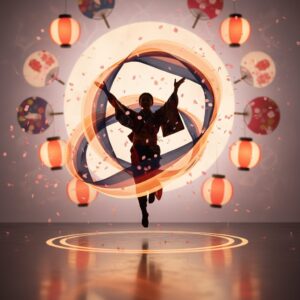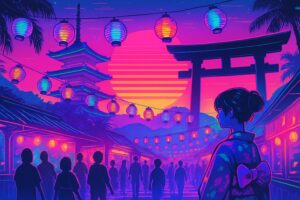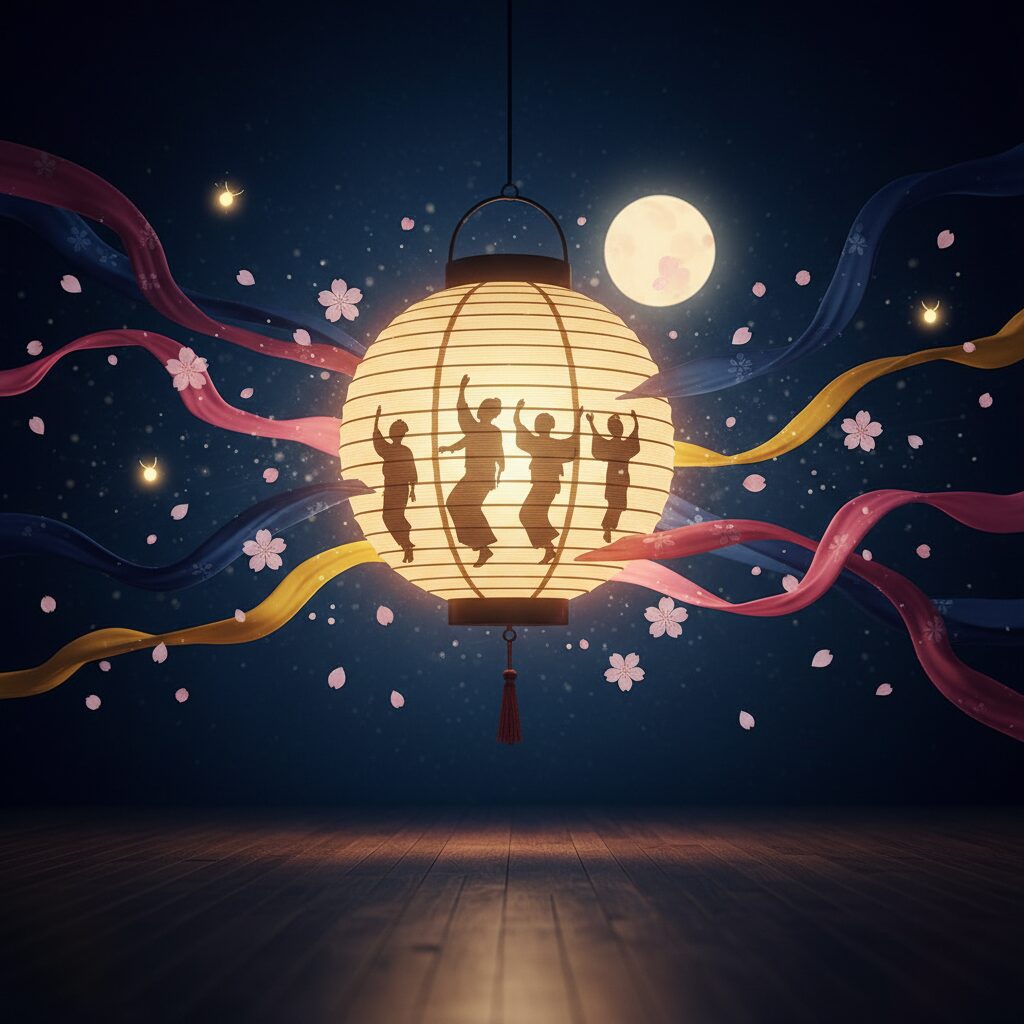
Yo, what’s up. So you’ve probably scrolled past it on your feed. A video from a sweltering Japanese summer night. A sea of people in breezy yukata, moving in a massive, hypnotic circle. Paper lanterns glow, casting this warm, almost surreal light. You hear a beat, a deep, thumping rhythm from a taiko drum that seems to shake the ground, overlaid with a high, winding flute melody and chants. Everyone’s doing these simple, repetitive hand gestures, clapping, and stepping in unison. It looks like a chill, super organized, and kinda mysterious festival. You’re probably thinking, “Okay, cool vibe, but what’s the actual deal? Is it just a traditional dance party?” And that’s a solid question, for real. Because the truth is way deeper, way weirder, and way more lit than you can imagine. This isn’t just Japan’s version of a summer music festival. This is Bon Odori, and at its core, it’s a dance for the dead. Yeah, you heard that right. It’s a massive, joyous, community-wide rave to welcome the spirits of your ancestors back to the world of the living for their annual vacay. It’s an ethereal block party where the guests of honor are ghosts. Wild, right? But it’s this wild mix of solemn family duty and explosive celebration that makes Bon Odori one of the most legit, must-experience cultural moments in Japan. It’s the ultimate bridge between the past and the present, the living and the dead, all vibing together under the summer moon. Bet. To get a sense of where this all goes down, check out a spot like Gujo Hachiman, a town famous for its epic, all-night dance sessions.
The electrifying energy of Bon Odori is just one facet of Japan’s vibrant summer nights, which also come alive with the raw, hands-on spectacle of Tezutsu fireworks.
The Ghostly Groove: Why We Dance for the Dead
So, let’s get this clear. Why is everyone so excited to dance for ghosts? In many cultures, ghosts are somewhat scary and best avoided. But in Japan, the connection with ancestral spirits is different. It’s less about horror and more like a family reunion. To understand this, you need to know the main event that Bon Odori is part of: Obon. This is the spiritual core driving the entire festival, and it’s a concept that’s crucial to grasping the Japanese mindset, no exaggeration.
Obon 101: The Original Family Reunion
Obon, or simply Bon, is a time, usually in mid-August, dedicated to honoring the spirits of one’s ancestors. Think of it as a mix of Thanksgiving, Memorial Day, and Mexico’s Día de los Muertos, but with a distinctly Japanese touch. The central belief, rooted in Buddhism but blended over centuries with Japan’s native Shinto traditions, is that during these few days each year, the spirits of the departed get permission to return to the living world and reunite with their families. It’s a major occasion. For many Japanese people, it’s one of the three most important holidays, prompting a mass return from big cities like Tokyo and Osaka to their hometowns and family graves in the countryside.
In preparation for Obon, there’s a whole list of tasks. The key one is called ohaka-mairi, which means visiting and cleaning the family grave. This visit isn’t brief or solemn—it’s an involved event. You pull weeds, scrub the headstone until it gleams, arrange fresh flowers, burn incense, and offer food—perhaps fruit, sake, or the deceased’s favorite snack. Pouring water over the stone is a purifying act, then you put your hands together and speak to them. You share updates about your life, your work, your relationships. It’s a moment of connection, a status report to the spiritual leadership of your family. Back at home, a special altar called a shoryodana is set up. This is like a temporary lodging for the spirits, adorned with food, flowers, and charming decorations called shoryo-uma—little cucumber horses and eggplant cows. The cucumber horse symbolizes a swift ride home for the spirits, and the eggplant cow, a slower return to the spirit world at Obon’s end, loaded with offerings and love. It’s symbolic, yes, but also endearing and reflects the warm, welcoming spirit of the festival.
Obon officially begins with mukaebi, or “welcoming fires.” Families light small fires or lanterns outside their homes to guide the spirits so they won’t get lost on their journey back. It’s like a spiritual lighthouse. Then, for several days, the focus is on family. People gather to share large meals and simply spend time together, with the unspoken understanding that their invisible ancestors are present too. At the close of Obon, they perform okuribi, or “sending-off fires,” to guide the spirits safely back to their realm. The most famous instance is the Gozan no Okuribi in Kyoto, where huge bonfires shaped like kanji characters blaze on the mountainsides—a breathtaking, bittersweet farewell. So, how does dancing fit into this? That’s the crucial part.
Bon Odori: The Welcome-Back Celebration for Spirits
If Obon is a multi-day family reunion with your ancestors, Bon Odori is the big party you throw for them. It’s the entertainment. The name means “Bon Dance.” The tradition is said to have started with a Buddhist monk named Kuya, who danced and chanted to spread Buddhist teachings. But it also draws from pre-Buddhist folk harvest festivals and rituals to appease spirits. These traditions merged over time into what we see today. The essence is simple: the spirits have traveled far to visit, so you welcome, entertain, and celebrate their return. The dance is an offering of joy and energy.
That’s why Bon Odori feels overwhelmingly joyful, not sorrowful. The music is lively, the mood festive, and everyone’s smiling. It’s a celebration of life and continuity, acknowledging that the family line is unbroken from the distant past to today. The circular dance formation is essential. There’s no front or back, no leader or audience in the usual sense. Everyone participates equally, moving as one. You find a spot in the circle and join in. This creates a powerful sense of community and unity. You’re dancing beside elderly grandmas who’ve practiced these steps for decades and little kids just learning. You’re all part of the same circle, literally and symbolically. The circle represents the cycle of life, death, and rebirth, and the ongoing flow of generations. It’s a deeply communal experience that connects you physically to your town’s people and spiritually to all your ancestors. For one night, the whole community, living and dead, becomes a single, breathing entity, moving together to the primal rhythm of the taiko drum. And that feeling? It’s absolutely electric. No exaggeration—it’s one of the most powerful and inclusive experiences you can have in Japan.
Deconstructing the Dance Moves: More Than Just Waving Your Arms
At first glance, the dance moves of Bon Odori might appear almost absurdly simple. A step here, a clap there, a wave of the hand. It’s not intricate choreography. But that’s exactly the point. The dance is designed to be easy enough for anyone—young, old, or complete novice—to join in right away. Yet don’t be deceived by its simplicity. Woven into these repetitive, easy-to-master movements is a rich fabric of history, labor, and local identity. The steps are far from random; they tell a story, serving as a physical archive of the lives of the ancestors you honor through dance. It’s as if your body becomes a history book for one evening.
Echoes of the Everyday: The Choreography’s Hidden Meaning
Many of the most iconic Bon Odori songs and their accompanying dances feature movements that directly imitate traditional work from specific regions. This is where it becomes truly fascinating. The dance celebrates not only the ancestors but their daily efforts, hardships, and contributions to their communities. You’re not simply dancing; you’re re-enacting the very tasks that built your town and sustained your family across generations. It’s a profound act of embodied memory. For instance, one of the most famous and widespread Bon Odori songs, “Tanko Bushi,” or “The Coal Miner’s Song,” originates from Fukuoka Prefecture, a significant coal mining area. The dance moves mimic miners’ actions: digging with a shovel, pushing a cart, and holding a lantern. When performing Tanko Bushi, you physically honor the grueling labor of the miners. You feel the weight of the shovel and the effort of the cart’s push, connecting with that history in a way that mere reading never could.
Another classic is “Soran Bushi,” a sea shanty from Hokkaido. This dance centers on fishermen, with strong, dramatic movements that imitate hauling fishing nets from the rough northern seas and pulling ropes. The powerful, low-stance dance demands real energy. You can almost sense the ocean’s spray and the burn in your muscles. In other regions, dances may represent rice farming—planting seedlings, harvesting grain, or offering it to the gods—or depict spinning thread, tending fires, or rowing boats. Each dance is a kinetic snapshot of a region’s spirit. This is what makes Bon Odori far more than just a celebration. It’s a living museum of Japanese folk life. By participating, you keep these traditions alive, passing on the muscle memory of your culture to future generations. For a few hours, you become a coal miner, a fisherman, a farmer. You walk—or rather, dance—a mile in your ancestors’ shoes, forging a profoundly deep connection.
The Sound of Summer: Taiko, Flutes, and Min’yo
The soundscape of Bon Odori is as essential as the dance itself. It’s an immersive, full-body experience, with the music drawing everyone into its orbit. The songs are typically min’yo, Japanese folk songs, each region boasting its own cherished repertoire. These songs tell stories of local heroes, famous landmarks, love, and labor. The singing style is often powerful and evocative, featuring unique vocal ornamentation that can sound almost haunting to the untrained ear. The melody is usually carried by a bamboo flute, the fue, whose high, piercing notes hover above the festival grounds like a guiding spirit.
Yet, the undeniable heart of Bon Odori’s sound is the taiko drum. You usually hear its deep, resonant boom before seeing anything else. It’s the festival’s pulse, a primal heartbeat felt deep in your bones. The taiko drummers, performing with remarkable athleticism and theatrical flair, do more than keep time; they summon energy, propel the dancers, and create a sacred space through their sound. The rhythm, often simple and repetitive, is hypnotic, helping you move out of your head and into your body, losing yourself in the circle’s collective movement. This beat has echoed through Japanese summers for centuries, linking today’s festival to every Bon Odori that came before. Interspersed with the music are kakegoe—shouts and calls from musicians and dancers alike. Phrases like “Sore!” (That’s it!), “Yoi, yoi!” (Good, good!), or “A dokkoisho!” (a heave-ho shout) inject raw, human energy into the music. They act as the ultimate hype track, motivating dancers and sustaining the energy as the night progresses. The blend of soulful vocals, soaring flute, powerful taiko, and energetic kakegoe produces a sound uniquely Japanese and utterly unforgettable.
The Yagura: Center Stage for the Spirit World
At the physical and spiritual center of nearly every Bon Odori stands the yagura. This tall wooden tower or stage, typically built just for the festival, is adorned with red and white banners and hung with dozens of glowing paper lanterns. It serves as command central. Musicians—the taiko drummers, flute players, and singers—perform atop the yagura, where they can see the entire circle of dancers and project their music outward. Often, a few expert dancers, or ondo, stand on the yagura too, leading the crowd and demonstrating dance moves for newcomers. The yagura acts as both a visual and auditory anchor for the event. Wherever you are in the swirling circle, looking toward the yagura helps you find your bearings and follow the steps.
But its role goes beyond practicality. Symbolically, the yagura is a beacon. Just as mukaebi fires guide spirits home, the brightly lit, music-filled yagura draws both the living and the spirits together. It is the axis around which the entire community revolves for the night. Dancing in a circle around the yagura physically enacts the idea of a community united around a central, life-giving force. It’s the campfire around which the entire tribe, both visible and unseen, gathers. Standing in the middle of that swirling vortex of people, looking up at the musicians silhouetted against the lantern-lit sky, is a truly awe-inspiring moment. The yagura is the epicenter connecting worlds, the stage where the living offer their joyful tribute to their ghostly guests of honor.
Not All Bon Dances Are Created Equal: The Regional Remix
While the basic idea of a circular dance to welcome ancestors is common across Japan, Bon Odori is far from uniform. This is where Japan’s strong regional pride and deeply rooted local traditions truly stand out. Nearly every prefecture, town, and even tiny village has its own distinctive Bon Odori, complete with unique music, choreography, and atmosphere. Traveling around Japan in the summer feels like browsing through a collection of various dance styles, each one a unique reflection of its local identity. Some dances are slow and graceful, while others are energetic and boisterous. Exploring these regional differences reveals the incredible diversity of Japanese folk culture. Let’s delve into three of the most famous and uniquely outstanding examples.
Awa Odori (Tokushima): The “Fool’s Dance” That’s Truly Wild
If you think Bon Odori is just a laid-back, gentle circle dance, you’ve never experienced Tokushima in August. The Awa Odori is less a communal circle and more a high-energy street parade that takes over the city for four days. It is one of Japan’s largest and most renowned festivals, drawing over a million spectators. The atmosphere is pure, infectious chaos—in the best sense. Energy is the name of the game here. The music speeds up, the rhythm becomes more complex, and the dancing is a show to behold. The festival is famous for its chant: “Odoru ahou ni miru ahou, onaji ahou nara odoranya son, son!” which means, “The dancers are fools, and the watchers are fools. Since both are fools, you’d be a fool not to dance!” This captures the spirit of Awa Odori perfectly—it celebrates letting go, embracing foolishness, and completely losing yourself in the beat.
Groups of dancers called ren rehearse for months to perform at the festival. They dress in stunning costumes and parade through the streets in choreographed groups. Two distinct dance styles appear here. The onna odori, or women’s dance, is elegant and precise. Dancers wear matching yukata, geta sandals, and distinctive folded straw hats known as amigasa. They move in tight, graceful formations, their hands and arms flowing in delicate, synchronized motions. Conversely, the otoko odori, or men’s dance, is wild, athletic, and close to the ground. These dancers often wear short happi coats, carry fans or paper lanterns, and their movements are vigorous and individualistic, full of leaps and playful gestures. The striking contrast between the refined femininity of onna odori and the raw, untamed energy of otoko odori is what makes Awa Odori visually spectacular. Despite being a parade, the “fool’s” spirit means that eventually, everyone gets pulled in. There are spots where spectators can join the dance, and by night’s end, the whole city feels like one huge, pulsating dance floor.
Gujo Odori (Gifu): The Endurance Dance Marathon
In the mountainous Gifu Prefecture lies the charming castle town of Gujo Hachiman, home to a Bon Odori festival known for something unique: stamina. Gujo Odori is no quick evening event. It’s a dance marathon. The festival stretches over 30 nights from July to September, with its peak during the four nights of the Obon season in mid-August. On those nights, the dancing begins around 8 PM and keeps going until 4 or 5 AM. No exaggeration—they dance through the night. It’s a true test of endurance and devotion, and the locals take great pride in it.
What makes Gujo Odori special is its focus on participation. Recognized as a Significant Intangible Folk Cultural Asset of Japan, its core ethos is that it’s a dance meant to be danced, not just watched. The steps for the ten different songs are simple and easy to learn. The yagura drum platform stands in the middle of the narrow old-town streets, with the circle of dancers winding through the historic district. The atmosphere is warm and welcoming. It doesn’t matter if you’re a skilled dancer or a complete novice—the point is to join in. As the night advances and tourists head home, the real magic starts. Only locals and the most dedicated visitors remain, dancing under the stars as the sky begins to lighten. There’s a surreal, almost transcendent feeling that comes from dancing through exhaustion, fueled by music and collective energy. Everyone shares this unique, somewhat wild experience. When sunrise breaks over the mountains and the final song plays, you’re utterly worn out yet completely exhilarated. Completing the entire night is a proud badge of honor.
Nishimonai Bon Odori (Akita): The Ethereal, Anonymous Spirit
For a Bon Odori entirely unlike the raucous Awa Odori, visit the small town of Ugo in northern Akita Prefecture. Nishimonai Bon Odori is considered one of Japan’s three most beautiful and elegant Bon dances. Its mood is not one of joyous celebration but of profound, mysterious, almost haunting beauty. The atmosphere is deeply ethereal and otherworldly. What immediately distinguishes it are the costumes. The dancers remain entirely anonymous, their faces fully hidden. Many wear gorgeous, multi-colored patchwork kimonos called hanui, crafted from scraps of old silk. But the most striking feature is the headwear. Some dancers sport a deep, crescent-shaped straw hat called an amigasa, similar to Awa Odori’s but worn lower to conceal the face completely. Others don the festival’s iconic item: the hikosa-zukin, a long black hood that covers the entire head and face, leaving only two tiny eye holes.
The sight is striking and somewhat eerie. The dancers become anonymous figures, their individual identities erased. They move with a fluid, ghostlike grace, their movements precise and polished. The dance is accompanied by ohayashi, a traditional ensemble of taiko drums, flutes, and shamisen, with songs that carry a melancholic, mournful tone. The blend of anonymity, elegant motion, and sorrowful music creates a truly magical atmosphere. It feels as though you’re watching spirits themselves dance. By hiding their faces, the dancers are believed to draw closer to the spirits they honor, blurring the boundary between the living and the dead. The performance displays incredible artistic discipline and spiritual depth. Watching Nishimonai Bon Odori on a dark street lit only by bonfires is an experience that will send chills down your spine. It’s a powerful reminder that Bon Odori is more than just a celebration—it’s a profound, beautiful spiritual ritual.
The Modern Spin: Is Bon Odori Still Relevant or Just a Vibe?
So, we’ve established that Bon Odori is a deeply rooted, ancient tradition rich in ancestor worship and local history. But this is 21st-century Japan we’re talking about—a land of bullet trains, skyscrapers, and anime. How does a ritual like this endure? Is it still a genuinely spiritual event for most people, or has it simply turned into a retro-themed summer festival, a form of cultural nostalgia? The answer, like much in Japan, is complex and lies somewhere in between. It’s a classic example of a tradition adapting to survive, resulting in a fascinating blend of old and new.
From Spiritual Ritual to Summer Festival
Let’s be honest. For many younger Japanese, especially those living in urban areas, the direct, conscious connection to honoring specific ancestors during Bon Odori may have weakened. For many, it’s primarily a community summer festival—a natsu matsuri. It’s an opportunity to gather with friends and neighbors, a reason to wear a stylish yukata (the casual summer kimono), and a place to enjoy classic festival foods from the rows of stalls (yatai) that always appear. The scents of takoyaki (octopus balls) and yakisoba (fried noodles) permeate the air from afar. It’s a perfect setting for a summer date, a family outing, or simply hanging out on a warm evening.
The spiritual aspect hasn’t disappeared, not at all. It’s simply become part of the event’s ambient presence. People might not be consciously thinking, “I’m dancing for my great-great-grandfather right now,” but the cultural essence remains. The Obon season itself still inspires a feeling of family and remembrance. The atmosphere of Bon Odori—the lanterns, the yagura tower, the traditional music—naturally evokes a connection to the past. So, even if the main motivation is social, the spiritual context remains unavoidable. It has become a multi-layered event where participants can engage at whatever level they choose. You can seek a profound spiritual connection or just enjoy candied apples and try to win a goldfish. Both are valid ways to experience the festival, and that flexibility is a key factor in its continued vitality.
New Beats, Old Steps: The Evolution of Bon Odori
One of the clearest signs that Bon Odori is a living tradition and not a museum relic is its openness to change. While classic min’yo folk songs remain central to most festivals, you’ll increasingly find new, sometimes surprising additions to the playlist. In a move some traditionalists might find shocking, certain Bon Odori celebrations—especially those aimed at children or located in newer neighborhoods—have incorporated dances set to contemporary music. This includes J-pop hits, theme songs from popular anime like Doraemon or Anpanman, and even Disney tunes. There’s even a genre called Bon-ba-cise that combines Bon Odori dance moves with aerobics.
This reflects a classic pattern in Japanese culture: embracing the new, but layering it over the old without fully replacing it. It’s a practical approach. To get children excited about Bon Odori, you need to speak their language. Dancing to familiar songs draws them in, introduces them to the joy of communal dancing, and makes the festival feel theirs—not just their grandparents’. Naturally, there’s debate. Some argue this waters down the tradition and weakens its historical significance; others say this very adaptability is what keeps Bon Odori alive. A tradition unwilling to evolve is a tradition already dead. By integrating new music, Bon Odori secures its future as a vibrant part of summer for generations ahead.
So, What’s the Real Takeaway?
So we return to the original question. You watch people dancing in a circle and wonder, “Why?” There’s no simple, tidy answer. Bon Odori perfectly illustrates the Japanese ability to hold multiple, seemingly contradictory ideas simultaneously. It is a solemn spiritual ritual to commune with ancestors AND a lively, joyful celebration with friends. It is a carefully preserved tradition with centuries-old movements AND a flexible, evolving festival incorporating anime theme songs. It is a deeply personal family observance AND a broad, inclusive community event. It’s not one or the other—it’s both.
That’s the magic of it. It bridges the gap between sacred and everyday, ancient and ultra-modern, the living and the dead. For a few nights every summer, all these aspects coexist in the same space, in the same mesmerizing, shuffling circle. It’s a physical embodiment of cultural memory, a communal embrace, and a spiritual rave rolled into one. And that’s why, if you have the chance, you absolutely must join the circle. You don’t need to master every step. Just feel the taiko’s beat, follow the dancer ahead, and let yourself become part of that endless, turning wheel. Only then will you truly understand it.