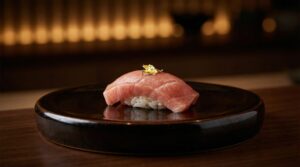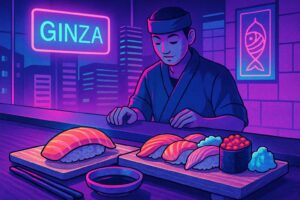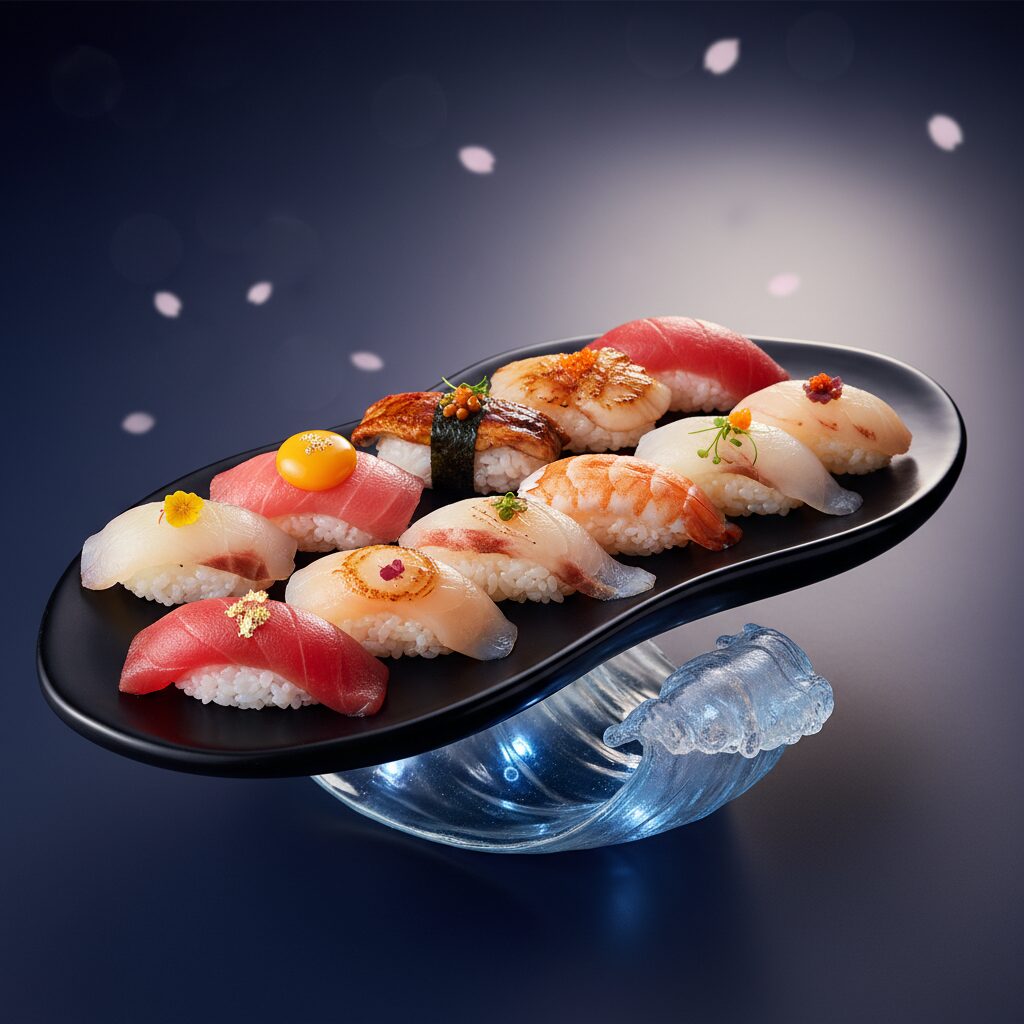
You’ve seen it. That reel on your feed. A hushed, minimalist counter. A stoic chef with laser-focus. A single, perfect-looking piece of fish draped over a small mound of rice. The price tag flashes in the caption: $300, $500, even more. And you’re thinking, low-key, is this a joke? It’s fish. On rice. I get that it’s high-quality, but what are we really doing here? Is this the biggest hype train in the culinary world, or is there something deeper going on? The confusion is real. You see the reverence, you see the price, but the ‘why’ is a total mystery. It looks so simple, almost aggressively so. What justifies the cost of a mortgage payment for a meal that lasts 90 minutes?
The answer isn’t just about the chef’s knife skills or the rarity of the fish, though that’s part of it. The real answer, the core of this whole experience, is a concept so deeply woven into the fabric of Japanese culture that most people don’t even think to explain it. It’s a single word: Shun (旬). And no, the basic translation of ‘seasonality’ doesn’t even begin to cover it. That’s like calling a symphony ‘some sounds.’ Shun is the secret operating system behind Japanese cuisine, a philosophy that dictates what is eaten, when it is eaten, and why it is considered the ultimate luxury. It’s an obsession with a specific, fleeting moment in time. What you’re paying for at that Omakase counter isn’t just food; you’re paying for access to a perfect moment, curated from nature and delivered to your plate. It’s the most exclusive drop imaginable, and it happens every single day. Forget the hype. Let’s get into the real, the raw, the reason why this concept of Shun is the ultimate flex. It’s the IYKYK of Japanese culture, and once you get it, you’ll never look at a piece of sushi the same way again.
This obsession with capturing nature’s fleeting perfection is now extending beyond the sushi counter, as seen in the rise of immersive experiences like starlit omakase under glamping domes.
Deconstructing ‘Shun’: More Than Just ‘In Season’
Alright, let’s break it down. When you hear ‘seasonal’ in a North American or European context, you probably think of a fairly broad timeframe. We associate it with ‘strawberries in summer,’ ‘pumpkin spice in fall.’ It’s about general availability, a window that can last for months. For instance, you can get ‘in-season’ asparagus from March through June. It’s a laid-back, relaxed concept. That is absolutely not what Shun is about. Shun is intense. It’s precise. It’s a level of specificity that might seem almost absurd until you grasp the philosophy behind it.
The Vibe Check of Nature: What ‘Shun’ Actually Means
Shun doesn’t refer to the entire season during which an ingredient is available. It identifies the exact, microscopic window of time—sometimes just a week or two, occasionally mere days—when that ingredient is at its absolute, undeniable peak. We’re talking peak flavor, peak aroma, peak texture, peak nutritional value. It’s the ingredient’s defining moment. Think of it like this: a musician’s tour might last six months, but Shun is the one specific night when they gave the performance of a lifetime. Everything else was just a warm-up or a cool-down. Japanese cuisine is obsessed with capturing only that peak performance.
To truly understand the vibe, you need to know that true food connoisseurs in Japan break Shun down even further into three distinct phases. This isn’t just niche foodie talk; it’s a widely recognized cultural rhythm that guides menus, conversations, and even market prices.
Hashiri: The Hype Drop
Hashiri (走り) means ‘running’ and refers to the very first appearance of an ingredient at the start of its season. This is the ‘new drop,’ the limited edition release. It’s the first bonito of spring, the first batch of shinmai (new harvest rice) in autumn. The flavors tend to be lighter, fresher, more delicate, and vibrant. Eating hashiri isn’t necessarily about tasting the deepest, most complex version of the ingredient. It’s about the excitement of arrival. It’s a celebration, a way of welcoming the new season and bidding farewell to the old. It carries immense prestige. You’re paying a premium for the novelty, the story, the chance to be the first to taste what’s coming. It’s the ultimate ‘I was there when’ foodie brag.
Sakari: The Main Event
Sakari (盛り) is the peak, the core of the season. This is the GOAT moment. The ingredient is now at its most abundant, often more affordable, and its flavor is fully developed, robust, and complex. This is shun in its most quintessential form. The summer uni is creamiest and sweetest. The winter yellowtail is fattiest and richest. The autumn mushrooms are most aromatic. If hashiri is the exciting trailer, sakari is the blockbuster movie in all its glory. This is when the ingredient is at its most powerful and expressive. An Omakase chef working with an ingredient in its sakari phase has the best possible material to showcase their craft. This is the taste that defines the season, the one that endures in memory.
Nagori: The Bittersweet Encore
Nagori (名残) translates roughly to ‘relic’ or ‘vestige,’ and refers to the very end of an ingredient’s season. It’s the farewell tour. Eating nagori is an act of nostalgia, a bittersweet goodbye to a flavor you won’t experience again for another year. The flavors and textures often differ from the peak. A fish might have a deeper, more mature taste. A fruit might be intensely sweet, almost on the verge of spoiling. There’s a wistful, poignant beauty to it—a concept deeply rooted in Japanese aesthetics called mono no aware—the gentle sadness of transient things. It’s a flavor weighted with memory, a final lingering note of a season past. It’s a subtle flex, reserved for true connoisseurs who appreciate the full story of an ingredient, from its bright beginning to its rich end.
The Historical Drip: Where Did This Obsession Come From?
This intricate system isn’t a modern foodie invention. It’s ancient, embedded in the geography and history of the nation. Japan is a long archipelago stretching from the subarctic north of Hokkaido to the subtropical south of Okinawa. This creates a remarkable diversity of climates and ecosystems, all experiencing four very distinct and dramatic seasons. The transition from frozen winter to blossoming spring, humid summer, and crisp autumn is anything but subtle. It’s a powerful, all-encompassing force that has shaped the national consciousness for centuries.
Before refrigeration and global shipping existed, people had no choice but to eat what was available right then and there. Survival depended on keen awareness of nature’s subtle shifts. This necessity wasn’t seen as a restriction; it evolved into a philosophy, an art form. Shinto, Japan’s indigenous faith, is animistic, believing gods and spirits (kami) inhabit natural objects—in mountains, rivers, trees, and even certain foods. Eating something at its peak shun was a way to honor that spirit, to partake in the purest life force of that ingredient. It was a spiritual act, a way to align your body with the universe’s rhythms.
This philosophy was amplified during the Edo Period (1603-1868), a long era of peace and internal stability. Cities like Edo (modern Tokyo) grew rapidly, and a vibrant merchant class emerged with money to spend and a hunger for cultural refinement. They couldn’t flaunt status by owning land like samurai, so they did so through culture: kabuki theater, woodblock prints, and most importantly, food. The ultimate status symbol became eating the hatsu-mono, the first goods of the season. Famous poems and stories tell of people pawning belongings just to afford the hatsu-gatsuo, the year’s first bonito. It wasn’t about hunger; it was about being a connoisseur, a person of taste and culture who grasped the deep meaning of the seasons. This cultural DNA persists today, underpinning the entire framework of Japanese gastronomy, from humble bento boxes to Michelin-starred Omakase counters.
The Omakase Counter: A Stage for the Drama of Shun
Now, imagine that quiet, spot-lit Omakase counter once more. It’s not merely a restaurant; it’s a theater. And the performance unfolding every night is the drama of Shun. The chef, the itamae, acts as the director, with the ingredients as the stars. When you say ‘Omakase,’ you’re not simply ordering food; you’re purchasing a ticket to this show.
‘I Leave It Up To You’ – The True Meaning of Omakase
The literal meaning of Omakase (お任せ) is ‘I leave it up to you.’ This profound phrase carries weight in a culture that values control and precision. It signifies a pact of absolute trust. You’re not merely relying on the chef to prepare a delicious meal; you are entrusting them to guide you through that specific day in the natural calendar. You trust their entire philosophy, their relationships, their judgment, and their lifetime of accrued wisdom.
The itamae’s day doesn’t begin when they don their crisp uniform; it starts in the cold, dark hours before dawn at a market like Toyosu. This is where the pursuit begins. The chef isn’t just ‘buying fish’; they engage in a complex social and economic ritual. They share deep, multi-generational bonds with particular vendors who understand their exacting standards. These vendors reserve the finest catches for them, hiding exceptional boxes of uni or uniquely marbled tuna away from other buyers. The chef examines the fish with an intensity bordering on spiritual. They assess the clarity of the eyes, the color of the gills, the firmness of the flesh, interpreting the story of that fish—where it swam, what it ate, how it lived. They seek the single best example of its kind, caught only hours earlier. This is a fierce daily competition for perfection, and access to the top 0.1% of the catch is a large part of what you’re paying for.
The Micro-Seasons on Your Plate
An Omakase meal is a story, a journey through micro-seasons. The sequence of dishes, the kosei, is carefully designed to take your palate on a journey. It usually begins with lighter, more delicate flavors, builds to richer, more intense ones, and finishes with something clean and satisfying, like a sweet tamago (egg omelet). Let’s explore the year with real, tangible examples that illustrate just how specific Shun can be.
A Taste of Spring
Spring Omakase focuses on freshness, vibrancy, and a bittersweet note signaling the earth’s awakening. The meal might open with a small appetizer of Hotaru Ika (firefly squid). These tiny squid, harvested from Toyama Bay, are available only from March to May. At night, they illuminate the bay with an eerie blue glow. Their flavor is unique and intense—a burst of briny, rich guts unlike anything else. Served simply boiled with a miso-vinegar sauce, they epitomize early spring. Next could be Kisu (Japanese whiting), a delicate white fish whose clean, sweet taste peaks before the summer spawning season. The chef might serve it as pristine nigiri or lightly cure it with kelp (kombujime) to enhance its subtle umami. The highlight of spring sushi is Kasugo-dai (young sea bream), the juvenile version of the celebratory red sea bream. Its flesh is incredibly tender, almost melting, with delicate sweetness. Chefs handle it with utmost care, often marinating it briefly in vinegar and salt to firm the flesh and deepen the flavor. The season is brutally short, and its appearance on the menu signals the chef’s dedication to Shun. For a vegetable note, you might enjoy grilled Takenoko (bamboo shoot) from Kyoto, dug that very morning. Fresh bamboo shoot is remarkably sweet and crisp before it quickly turns starchy and bitter—a literal race against time, a taste of the earth itself.
The Vibe of Summer
Japanese summers are hot and humid, and the Omakase meal adapts accordingly. Flavors become a blend of clean, refreshing notes and richer, oilier fish storing energy. The meal may begin with Ayu (sweetfish), a river fish famed for its watermelon-like aroma. It’s often grilled whole over charcoal, salt-crusted, and eaten head to tail, with slightly bitter guts providing a perfect contrast to the sweet flesh. For nigiri, attention shifts to hikarimono (silver-skinned fish). The undisputed monarch of summer is Shinko, juvenile gizzard shad. This fish is one of the most challenging for an itamae to master. The fish are tiny—sometimes three or four are needed for a single nigiri—and their brief season lasts maybe two weeks in late July or early August. Each fish is meticulously deboned, salted, and marinated in vinegar; timing is critical, as a few seconds too long can spoil the delicate flesh. For sushi lovers, the arrival of Shinko is a major event, a benchmark for a chef’s skill. Another summer favorite is Aji (horse mackerel), peaking in oiliness and flavor in this season. Served with a dab of grated ginger and spring onion, its rich umami is perfectly balanced by the spicy kick—a fitting match for a warm evening. Naturally, summer is the prime season for Uni (sea urchin) from Hokkaido’s cold waters. The kelp beds there are at their most nutritious, producing uni that is sweet, creamy, and bursting with the essence of the sea. A flawless piece of murasaki or bafun uni from this season is pure, unadulterated luxury.
Autumn’s Deep Notes
As the air turns crisp, the Omakase menu shifts toward deeper, richer, and more complex flavors. Autumn heralds the harvest, and the food reflects this abundance. The signature taste of autumn is Sanma (Pacific saury). Its kanji name (秋刀魚) literally means ‘autumn sword fish.’ When grilled, its skin crisps and its oily, intensely flavored flesh fills the air with a smoky aroma that epitomizes the season in Japan. Served as nigiri, it is often lightly seared (aburi) to release its oils and topped with grated ginger. Another autumn star is Katsuo, the same bonito featured in spring, now returning south. Known as Modori-gatsuo (‘returning bonito’), after a summer feasting in rich northern waters, it becomes fatty and rich, with a deep, almost bloody flavor contrasting sharply with its spring counterpart. This contrast is a textbook lesson in Shun: the same fish but a completely different experience depending on the season. Salmon roe, Ikura, also enters season. A top chef never uses pre-cured, overly salty roe; they select raw egg sacs (sujiko) and cure them themselves in a proprietary blend of soy sauce, mirin, and sake. The resulting ikura resemble glistening jewels, each orb bursting in the mouth, releasing savory, umami-rich liquid. And mushrooms, especially the prized Matsutake, play a key role. Foraged from red pine roots, their spicy, earthy aroma is so revered that fine specimens command astronomical prices. A simple clear soup (suimono) with thin slices of Matsutake can be one of the year’s most profound culinary experiences.
Winter’s Powerful Embrace
In winter, when the ocean is at its coldest, fish accumulate fat to survive, resulting in bold, deep, and deeply satisfying flavors. The undisputed winter champion is Buri (adult yellowtail), particularly Kan-buri (‘cold yellowtail’). Those caught in the icy Sea of Japan during this time are richly marbled with fine fat that melts on the tongue. It’s so rich it can feel like eating fatty pork, yet it finishes clean. The belly portion, buri-toro, is a true delicacy. Winter is also synonymous with tuna. Although high-quality tuna is available year-round thanks to modern fishing, wild Bluefin tuna (hon-maguro) caught in frigid waters between Aomori and Hokkaido, especially from Oma port, is considered the best worldwide. The cold intensifies fat content and deepens flavor. A piece of otoro (the fattiest belly) from an Oma tuna in January is the pinnacle of the sushi experience for many—its marbled flesh dissolving instantly, releasing a wave of sweet, oceanic umami that fills the mouth and silences the room. Winter is also prime time for shellfish. Oysters (kaki) are plump and sweet, Hokkaido scallops (hotate) thick and luscious, and various crabs (kani), like snow crab (zuwaigani) with delicate, sweet leg meat, and hairy crab (kegani) with intensely flavorful tomalley (kanimiso), become meal centerpieces.
It’s Not Just the Fish: The Supporting Cast of Shun
This intense dedication to peak moments extends to every element of the meal, making it a full production. Rice, or shari, is the soul of sushi, and its preparation is a closely guarded secret. In autumn, the chef uses shinmai (new harvest rice) with higher moisture and fresher fragrance, requiring adjustments in vinegar blend and cooking time to achieve the perfect texture. The wasabi is never the green paste from a tube; it’s hon-wasabi (real wasabi), grated fresh on a sharkskin grater. Its flavor is complex—a quick, bright heat that fades to subtle sweetness—and it, too, has a Shun, best in spring. The citrus brightening a fish changes seasonally: a squeeze of bright green Sudachi in autumn yields to the fragrant, floral Yuzu in winter. Even the dishes themselves—ceramic plates, lacquer bowls, sake cups—change with the season. Summer meals may be served on cool, refreshing glassware, while winter calls for warm, rustic, earthy pottery. The flower arrangement in the corner, the scroll hanging in the alcove—everything aligns with the season. It’s a fully immersive experience designed to harmonize all your senses with the present moment.
The Price of a Moment: Is Omakase Actually Worth It?
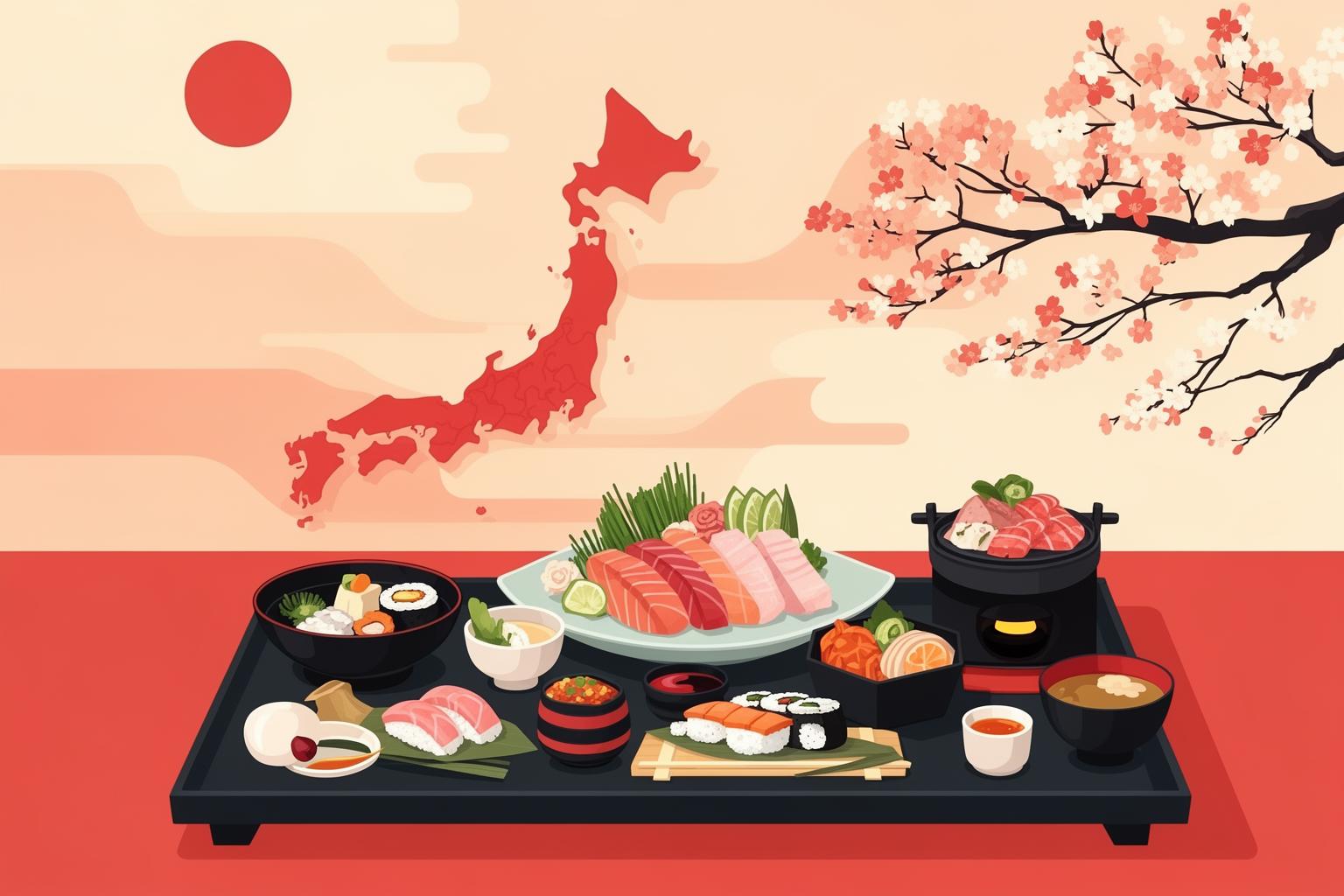
So, we return to the original question: the $500 price tag. It may seem less outrageous now, but let’s be perfectly clear. You’re not just paying for a meal. You’re paying for the culmination of an entire system of philosophy, craftsmanship, and logistics.
The Economics of Fleeting Perfection
Let’s trace the money. That perfect piece of otoro didn’t just appear out of nowhere. The chef probably paid a staggering price for it at the morning auction, outbidding competitors for the finest part of the prime fish. To obtain that single flawless, beautifully marbled slice, a large portion of the tuna loin may be judged unfit for that specific nigiri course. It might be reserved for maki rolls, staff meals, or simply trimmed away. In a way, you are paying for the fish that was discarded as much as the fish served. This quest for perfection is inherently wasteful and, consequently, expensive.
Then there is the invisible labor—the shikomi (preparation). This encompasses the massive amount of work done before any customer arrives. It means hours spent deboning hundreds of tiny shinko. Days carefully curing a block of tuna to develop its umami. Slowly simmering conger eel (anago) until it is tender enough to melt in your mouth. The constant, patient attention to maintaining the rice, sauces, and garnishes. The chef may work an 18-hour day, with only a handful of those hours in front of customers. You are paying for their entire day, not just the 90 minutes you sit at the counter.
Finally, you are paying for the skill. This is not a craft learned in culinary school over a couple of years. It is a lifelong apprenticeship. Decades are spent mastering how to properly wash and cook rice, then how to clean fish; only after years of observation do you handle the fish and shape a piece of nigiri in front of guests. The chef’s hands move with a precision and grace born of tens of thousands of repetitions. They know how to slice fish not only for visual appeal but to optimize texture. They understand exactly how much pressure to use when forming nigiri, crafting a perfect pocket of air in the rice so it dissolves simultaneously with the fish. This level of craftsmanship is comparable to that of a master watchmaker or a concert violinist. The price reflects the value of that rare and devoted human skill.
The ‘Real vs. Expectation’ Vibe
Let’s be honest, though. Is it for everyone? Probably not. If your idea of a luxury meal means huge portions, rich sauces, and a loud, buzzing atmosphere, a traditional Omakase might come off as sterile, skimpy, and absurdly expensive. The enjoyment here is not about sensory overload; it’s about attunement.
Can you truly taste the difference between fish at its peak shun and one that’s just “pretty good”? Absolutely. But it demands your attention. It’s like the difference between a generic supermarket apple and a Honeycrisp you picked yourself on a crisp September morning. Both are apples, but one is a life-affirming experience, while the other is just a snack. Shun is that life-affirming bite. It’s the subtle shift in oil content of aji from June to August. The clean, non-fishy sweetness of sayori (needlefish) in spring. It is a quiet, thoughtful pleasure.
The luxury of Omakase isn’t about gold leaf or foie gras. It’s the luxury of access. Access to a flawless ingredient at its perfect moment. Access to a craftsman who has dedicated their entire life to understanding and presenting that moment. You are not just eating raw fish; you are tasting a philosophy. You are consuming time itself. Whether that is “worth it” is a personal judgment, but it’s essential to understand exactly what you are paying for.
So, Now You Get It? Shun is the Operating System of Japanese Cuisine
By now, the picture should be clearer. That seemingly simple piece of fish on rice is anything but ordinary. It represents the culmination of a deep cultural obsession with the fleeting beauty of nature. Shun is the guiding principle, the core philosophy that governs the entire practice of Japanese gastronomy. It is a worldview shaped by geography, history, and a Shinto-Buddhist respect for the cycles of the natural world.
The Omakase counter is the ultimate manifestation of this philosophy, where a master curator carefully crafts the finest moments of the day into a unique, unrepeatable experience for a select few guests. The high price is not a mark-up for show; it reflects the genuine cost of the immense effort, skill, and resources needed to capture and present these ephemeral moments of perfection.
So, the next time you see that reel, reconsider the question. Don’t ask, ‘Why is this piece of fish so expensive?’ Instead, ask, ‘What convergence of events—what season, what ocean current, what fisherman’s fortune, what vendor’s connection, and what chef’s lifetime of dedication—had to align for me to experience this exact taste, at this precise moment?’ The answer to that question reveals the true meaning of Omakase. This passion for transient perfection, whether in a cherry blossom blooming for a week or a fish peaking for a fortnight, is not a trivial detail. It’s the essence of the Japanese aesthetic. And Omakase, founded on the principle of Shun, is its most exquisite, intimate, and profoundly luxurious expression.