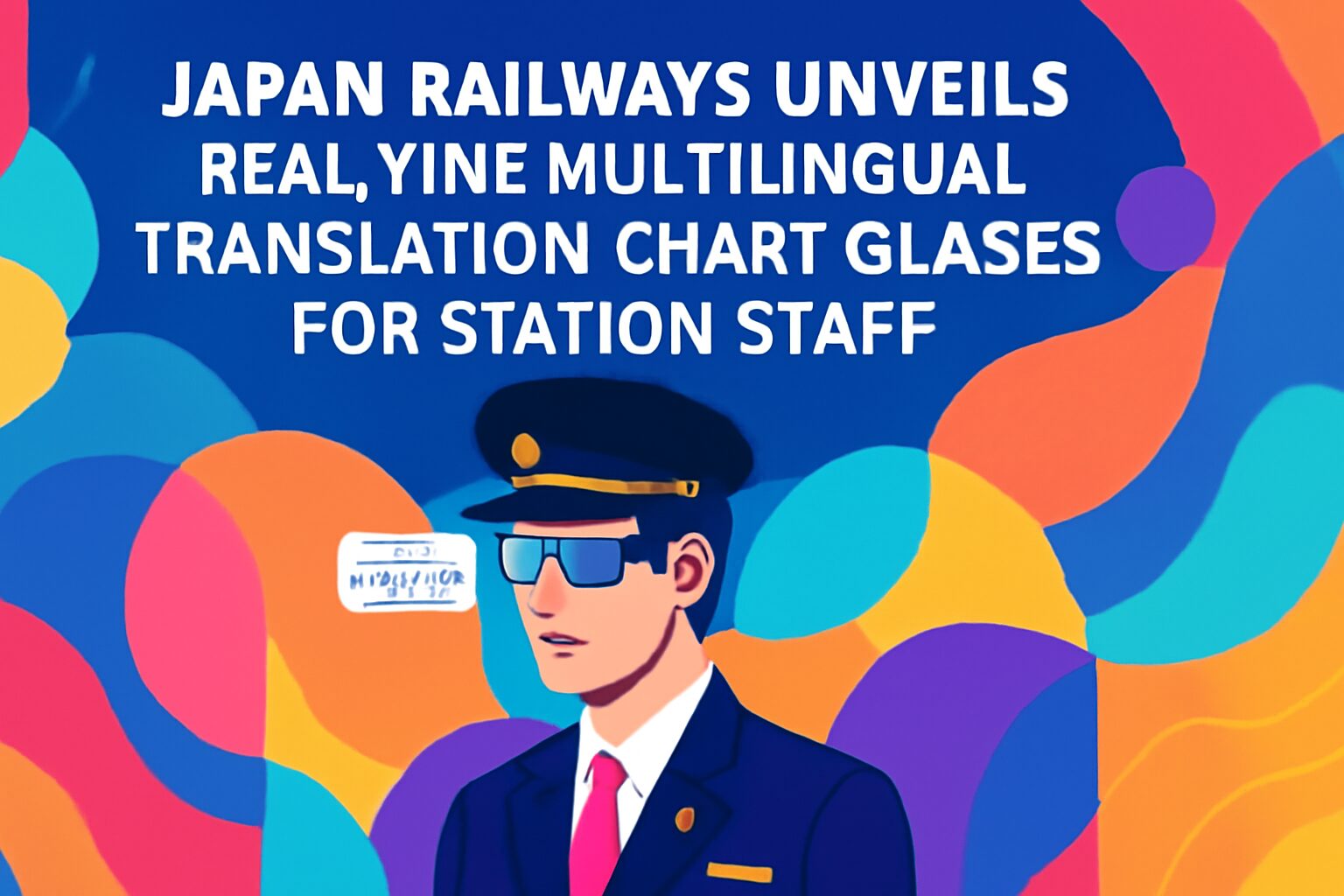
JR East is set to revolutionize communication at its busiest stations with the trial of cutting-edge smart glasses. This new device, equipped with real-time translation capabilities, aims to instantly break down language barriers between station staff and the growing number of international tourists visiting Japan.
A High-Tech Solution to a Long-Standing Challenge
The smart glasses, worn by station employees, will provide on-the-spot translation for conversations with foreign visitors. The technology currently supports over 12 languages, including English, Chinese, Korean, and French. When a tourist speaks, their words are translated and displayed as text on a small screen within the staff member’s field of vision, allowing for seamless and natural communication without the need for a separate device.
This trial will be implemented at several major stations in the Tokyo metropolitan area, which serve as key hubs for both daily commuters and international travelers. The initiative is a direct response to the challenges posed by language diversity in a fast-paced environment, aiming to improve service quality and efficiency.
Background: A Resurgence in Tourism and the Road to Expo 2025
Japan is currently experiencing a remarkable recovery in its tourism sector. According to the Japan National Tourism Organization (JNTO), the number of international visitors exceeded 25 million in 2023, recovering to approximately 80% of pre-pandemic levels seen in 2019. The Japanese government has set an ambitious goal to surpass the 2019 record of 31.88 million visitors by 2025.
However, the language barrier remains a significant hurdle for many travelers. While major tourist spots have improved multilingual support, navigating complex train systems, purchasing tickets, or asking for directions can still be a daunting task. This technological leap by JR East addresses this critical pain point, directly enhancing the travel experience.
This initiative is also part of a broader national strategy to bolster Japan’s technological and hospitality infrastructure ahead of the Osaka-Kansai World Expo in 2025. The event is expected to attract millions of visitors from around the globe, making smooth communication an absolute necessity.
The Future of “Omotenashi”: Tech-Infused Hospitality
The introduction of these smart glasses signals a significant shift in the concept of Japanese hospitality, or omotenashi. It represents a move towards blending traditional politeness and meticulous service with advanced technology to create a more inclusive and accessible environment for everyone.
Potential Impacts and Future Outlook
- Enhanced Tourist Satisfaction: By enabling quick and accurate communication, this technology will significantly reduce stress and confusion for travelers, leading to a more positive and memorable experience in Japan.
- Improved Staff Efficiency: Station staff will be able to assist foreign visitors more effectively, reducing wait times and resolving issues faster. This is particularly crucial in a country facing labor shortages in the service industry.
- Wider Adoption Across Industries: If the trial proves successful, this technology could see widespread adoption beyond the railway network. Airports, hotels, retail stores, and tourist information centers are all potential candidates for similar solutions, fundamentally changing how Japan interacts with its international guests.
JR East’s trial is more than just a technological experiment; it is a forward-thinking step towards a future where language is no longer a barrier to travel. As Japan continues to welcome the world, innovations like this will be key to cementing its reputation as a premier global destination.