Someone asked me recently what the most intimidating cultural experience in Japan is for an outsider. It’s a good question. Many might guess it’s navigating the beautiful but bewildering formalities of a tea ceremony, or perhaps the pressure of a multi-course kaiseki dinner where you’re not sure which tiny dish to touch first. But the real answer, for many, is something far more primal: the public bath. It’s the act of getting completely, unreservedly naked with a group of total strangers. In the West, this level of exposure is usually reserved for locker rooms or very specific kinds of parties. In Japan, it’s a national pastime, a cherished ritual woven into the fabric of daily life, known as sento (neighborhood bathhouse) or onsen (natural hot spring).
This isn’t just about getting clean. It’s a form of social reset, a ritual of purification for both body and mind. The heart of this experience is a concept called hadaka no tsukiai, which translates loosely to “naked communion” or “naked socializing.” It’s the idea that when stripped of our clothes, we are also stripped of our titles, our ranks, and our societal masks. In the steam and mineral-rich water, a corporate CEO and a construction worker become, for a short while, just two people soaking. This article is your guide to navigating that space. It’s not just about the rules—it’s about understanding the logic behind them, the silent language of mutual respect that makes this unique form of vulnerable community possible.
This exploration of Japan’s raw communal practices finds a complementary perspective in the subtle art of meditative stamp collecting, which invites a deeper understanding of the country’s revered cultural rituals.
Before You Even See the Water: The Ritual of Preparation
The journey starts in the datsuijo, or changing room. Once you pass through the noren—the fabric curtain, typically blue for men (男) and red for women (女)—you enter a distinct social space. Rows of simple lockers or, more traditionally, stacked wicker baskets line the area. This is not a high-security gym; the system relies on trust. Here, you undress and store all your belongings. This marks your first step in shedding the outside world.
At this point, you pick up your one essential item: a small washcloth, often called a tenugui or simply a “modesty towel.” This tiny fabric exemplifies Japanese subtlety. It’s not meant for modesty in the Western sense of hiding the body out of shame. While its main function is washing, as you move from the changing room to the bathing area, it serves as a minimal, almost symbolic gesture of social grace. People hold it in front of themselves as they walk—a non-verbal sign that says, “I respect social norms and am being considerate.” It is a fascinating psychological tool—a small shield that paradoxically makes the experience of nudity feel more comfortable and orderly.
The Cardinal Rule: Wash First, Soak Later
If you remember only one thing, let it be this: the large, steaming tubs of water are meant for soaking, not washing. This is the absolute, non-negotiable essence of public bath etiquette. The bath is a shared, communal resource, and the collective aim is to keep it pure. Treating it like your personal bathtub is the gravest mistake a visitor can make.
Before you even consider dipping a toe into that sublime heat, you must go to the washing area. This consists of rows of low plastic or wooden stools placed in front of faucets with handheld shower wands and buckets. You do not stand and shower; you sit. This prevents splashing your neighbors and is another subtle act of communal respect. Take a stool, sit down, and begin thoroughly scrubbing yourself with soap and shampoo. You must be meticulous. Every trace of soap must be rinsed from your body and hair before you proceed. This act of purification is deeply embedded in Japanese culture, connected to Shinto beliefs about cleansing oneself of physical and spiritual impurities (kegare) before entering a sacred space. And a perfectly clean, steaming bath is indeed a kind of everyday sanctuary.
Entering the Sanctuary: Bath Etiquette and the Art of Soaking
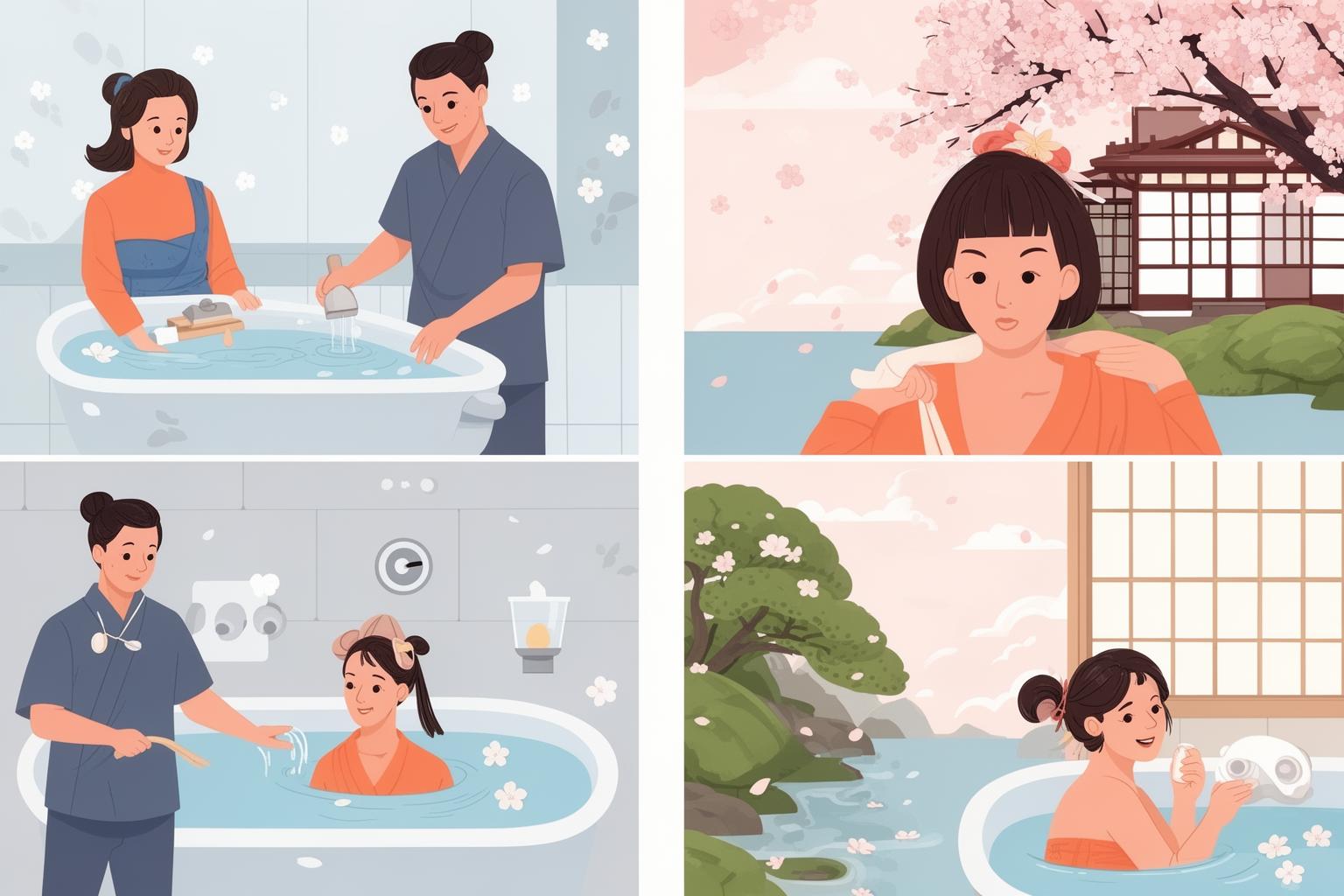
Now that you are clean and rinsed, you are ready to enter the bath. Do so slowly and with grace. There should be no cannonballs or dramatic splashes. Gently ease yourself into the water, allowing your body to adjust to the often-intense heat. Disturbing the calm surface of the water is like shouting in a library; it breaks the shared tranquility.
What about that small towel? It must never enter the bath water. It is considered unclean. Most people either fold it neatly and place it on their head—a classic image that also helps prevent dizziness from the heat—or set it on the tiled edge of the tub. Wearing it on your head marks you as an experienced bather; it signals that you understand the customs.
The social dynamics within the tub are subtle and intriguing. Much of the time, “socializing” is entirely non-verbal. It is the shared experience of enduring the heat, the quiet sigh of relaxation, the steam rising around you in a companionable silence. You are together, yet each in your own world. It is a profound state of simultaneous solitude and community.
The Silent Conversation
Often, no words need to be spoken. You might exchange a slight nod with someone as you enter the water, a brief, mutual acknowledgment. Communication happens through shared experience. Everyone is there for the same reason: to escape, heal, and relax. In this shared vulnerability, a bond forms without words. You are all equals, reduced to your most basic human form. There is no need to perform, impress, or keep up appearances. This silent communion can be deeply restorative in a society that often demands constant social performance.
When Words Do Flow: Hadaka no Tsukiai
Sometimes, conversations do arise. This is the essence of hadaka no tsukiai. With social status made invisible, the conversations that emerge are grounded and egalitarian. An elderly man might ask where you’re from. Two women might chat about the unusually warm weather. Topics are almost always light and impersonal—the quality of the water, a local festival, or the beautiful view from the outdoor bath. It is the opposite of networking. It is connection for connection’s sake.
This is where the true cultural magic happens. A junior employee might find himself soaking next to his company’s president. In the office, their interaction would be governed by strict hierarchical language and customs. Here, in the bath, they are simply two men. They might share a brief, gentle conversation about baseball or the changing seasons. The next day at work, the formal hierarchy is restored, but a subtle human connection has been formed. The bath acts as a social safety valve, a space where the rigid structures of society can temporarily melt away.
Navigating the Space: More Than Just a Hot Tub
Most bathhouses feature more than just a single pool. They serve as aquatic playgrounds for adults, offering a range of experiences aimed at wellness and relaxation. Moving between the different baths is an integral part of the ritual.
A typical layout might include:
- Atsu-yu & Nuru-yu: A very hot bath (atsu-yu) and a lukewarm one (nuru-yu). Alternating between them is thought to enhance circulation. The atsu-yu often acts as a test of quiet endurance.
- Rotenburo: An outdoor bath. This is often the most cherished feature, providing the exquisite contrast of a hot body submerged in water with cool air on your face. Soaking in a rotenburo during a gentle snowfall or surrounded by autumn leaves is a quintessential Japanese experience.
- Denki Buro: The electric bath. This bath delivers a literal shock to the uninitiated. Low-voltage electric currents flow between two plates submerged in the water, creating a tingling, muscle-contracting sensation. It’s an acquired preference, but many older Japanese swear by its therapeutic benefits for stiff shoulders and backs.
- Mizuburo: The cold plunge. Positioned next to the sauna, this bath is essential to the hot-cold cycle. Etiquette is strict: you must rinse sweat from your body with a shower or bucket before entering the cold water, to maintain cleanliness for all.
When moving between these baths, especially after using the sauna, a quick rinse at the washing station is customary. This full circuit—wash, soak, sauna, plunge, relax—can be repeated, transforming a simple bath into a two-hour journey of rejuvenation.
The Afterglow: Post-Bath Rituals and Social Space
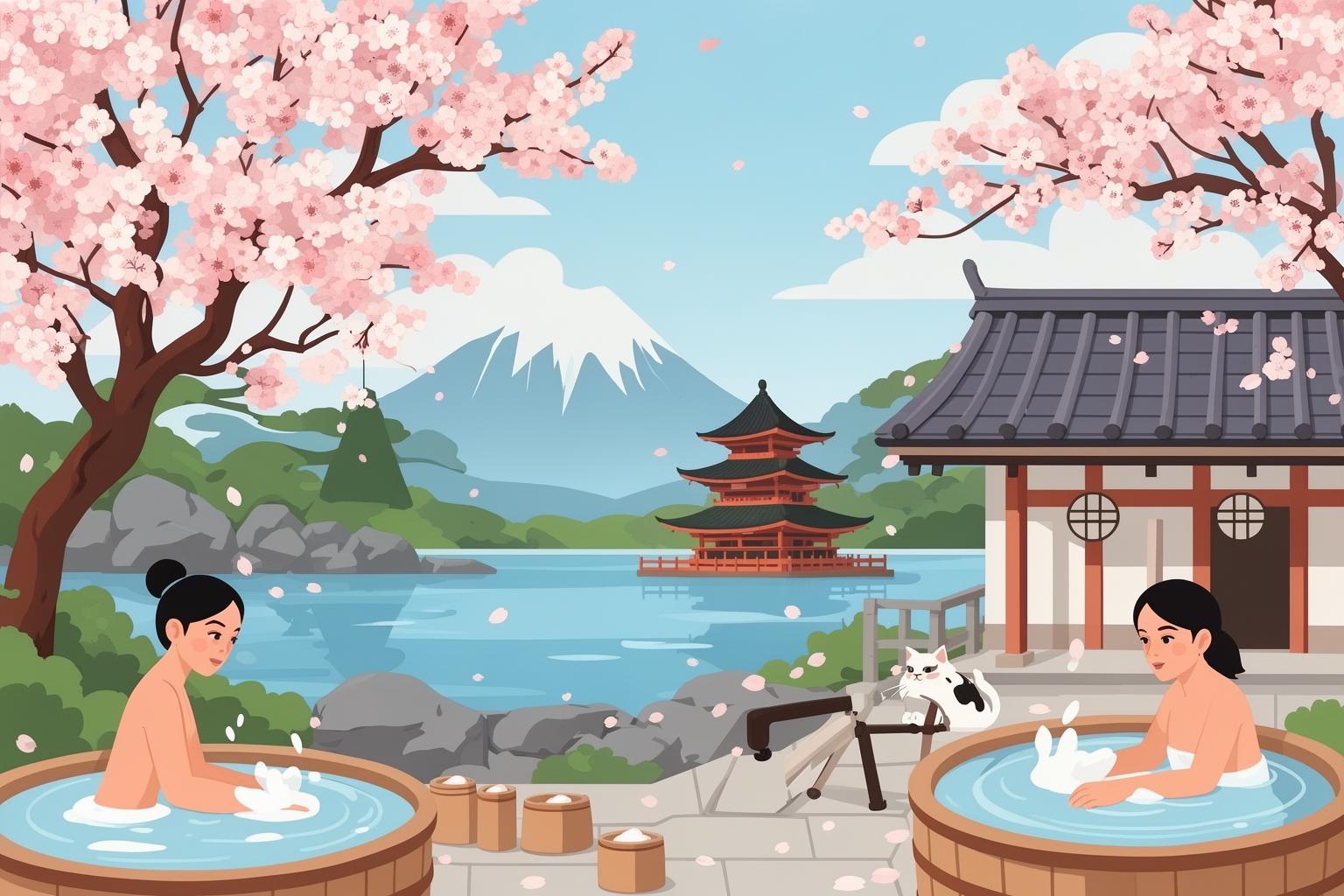
The experience doesn’t end when you leave the water. Before stepping back into the datsuijo, you are expected to dry off as much as possible with your small towel in the bathing area. This important step helps keep the changing room floor dry and comfortable for the next person. It’s another small, almost unseen act of collective responsibility.
Once inside the changing room, you can use your larger, dry bath towel. Afterward, you’ll often find a relaxation area that is just as essential as the baths themselves. These spaces may have tatami mat floors, large reclining chairs, or massage chairs designed to soothe your newly softened muscles. This marks the second part of the social experience.
You’ll notice people lounging in their yukata (light cotton robes), reading manga, or watching television. A common feature is the vending machine, famously stocked with small glass bottles of milk—coffee milk (kōhī gyūnyū) and fruit milk (furūtsu gyūnyū) are the classic post-bath beverages. There’s something deeply nostalgic and satisfying about drinking a cold bottle of sweet coffee milk after being warmed to your core. It completes the ritual. Here, conversations that began in the bath might continue, or new ones may start. It’s a space to linger, allowing the deep warmth to settle into your bones before stepping back into the outside world.
A Note on Tattoos and Timidity
No guide to Japanese baths would be complete without discussing the tattoo issue. Traditionally, elaborate tattoos were linked to the yakuza, or Japanese organized crime. To prevent gang members from entering, many establishments enforced a strict “no tattoos” policy. This rule is gradually evolving as Japan grows more accustomed to international visitors and domestic fashion tattoos, but it remains firmly in place in many locations. Some baths will permit entry if you cover your tattoo with a waterproof patch, while others now explicitly welcome those with tattoos. The best advice is to check the facility’s policy online in advance to avoid an awkward situation.
And for the shy? For those unfamiliar with public nudity, the first moments can feel intimidating. But the single most important thing to remember is this: nobody is staring at you. Truly. Everyone is focused on their own relaxation routine. The nudity soon feels clinical and ordinary. Any self-consciousness you experience is entirely internal. After a few minutes, the soothing warmth of the water takes over, and you forget everything else. Embracing that initial vulnerability is the price for experiencing one of Japan’s most authentic and rewarding cultural traditions.
In the end, the Japanese public bath is a reflection of the culture itself. It is based on unspoken rules designed to enhance collective harmony. It emphasizes cleanliness, consideration for others, and the belief that there is a proper, ritualized way to do things. But beneath these rules lies a deep humanism. It is a place that offers a rare and genuine form of connection, showing that sometimes you have to strip everything away to truly see each other.