Hey fam! Sofia here. So, let’s get real. You’ve been scrolling through the wilder side of the internet, and you’ve seen them: those unbelievable Japanese hotel rooms. We’re talking a room that’s a literal spaceship, one with a carousel in the middle, or a Hello Kitty explosion that’s almost too cute to be real. And you’re thinking, “Wait, what is even happening here?” These, my friends, are the legendary love hotels. Your first thought might be that they’re just seedy, slightly sketchy places for cheating spouses, the kind of spot you see in a noir film. And yeah, that’s part of the lore, but it’s not the whole story. Not even close. The reality is a whole lot more fascinating, a little bit wacky, and honestly, a super Japanese solution to a very Japanese set of problems. It’s a cultural phenomenon that’s so much deeper than just a place for a secret rendezvous. It’s about privacy, fantasy, and the quiet art of escaping reality for a couple of hours. Forget what you think you know, because we’re about to dive deep into the neon-lit, velvet-covered world of Japan’s love hotels. This isn’t just about kitsch and crazy decor; it’s about understanding a core piece of modern Japanese life that happens, quite literally, behind closed doors. We’re going to unpack why these places exist, who really uses them, and how they’ve evolved from gaudy castles into something else entirely. It’s time to spill the tea on one of Japan’s most misunderstood and iconic institutions.
For another fascinating and uniquely Japanese solution to urban living, check out our guide to the country’s ubiquitous vending machines.
Not What You Think: Deconstructing the ‘Love’ in Love Hotel
First and foremost, let’s set the record straight. The term “love hotel” is a direct translation of rabu hoteru (ラブホテル), which can immediately evoke some very specific—and often inaccurate—images for those unfamiliar with Japan. In the West, the equivalent that typically comes to mind is the no-tell motel off a dusty highway, known for being cheap, somewhat rundown, and primarily catering to illicit activities. However, this is a huge oversimplification of what a love hotel represents in Japan. You need to discard that mental picture because it simply doesn’t apply. The main purpose of a love hotel isn’t necessarily to facilitate affairs—although that can happen—it’s about offering one essential, incredibly valued commodity in modern Japan: privacy. Complete, total, and uninterrupted privacy.
Consider the living circumstances of many young—and not-so-young—Japanese individuals. It is very common for adults to live with their parents until marriage, sometimes even into their thirties. Homes and apartments, especially in major cities like Tokyo and Osaka, are notoriously small. Walls are often thin. Space is limited. Now, picture a couple in their twenties—they’re dating, in love, but both still live with their families. Dad is watching TV in the next room, grandma is brewing tea, and little brother is playing video games. The atmosphere isn’t exactly romantic. There’s simply no private space for intimacy. This isn’t an unusual situation; it’s the reality for a large segment of the population. So, where do you go? This is where the love hotel arrives like a superhero. It’s a socially accepted, specially designed neutral space. It’s a sanctuary where a committed, long-term couple can go just to be alone, to have the privacy and freedom that their home environment doesn’t offer. It’s less about a shady secret and more about a practical solution. For many couples, visiting a love hotel is as typical a date night activity as going to the movies or dining out. It’s the final stop of the evening, a way to enjoy quality time together without interruptions or awkward family moments.
Even for married couples, the love hotel plays an important role. Japanese homes are often arranged with family life, rather than couple time, as the main focus. Children might share a room with their parents for years. The concept of a “master bedroom” as a private adult retreat isn’t as deeply rooted as it is in Western culture. So, for a married couple seeking to reconnect and spend a night of intimacy away from the kids and daily stresses, a love hotel provides an ideal, hassle-free getaway. It’s an oasis. The design of these establishments centers on creating a bubble of separation from the outside world. It functions as a temporary autonomous zone for two people. So while the name might sound a bit risqué, the reality is far more practical. It’s a service industry that recognized a profound social need and met it with creativity, efficiency, and plenty of neon lights.
A History of Hidden Spaces: The Why Behind the Walls
To truly understand why love hotels became such a thing, you need to take a step back and examine the broader context of Japan’s modern history. This whole phenomenon didn’t simply emerge overnight with a revolving bed and karaoke machine. Its origins run deep, rooted in the social and architectural landscape of post-war Japan. The story begins in the years following World War II. Cities were being rebuilt, and the nation was undergoing a vast transformation. One major challenge was housing. There was a serious shortage, and the traditional living arrangement was the multi-generational household. Grandparents, parents, and children all lived together under one roof. This wasn’t just about saving money; it was the cultural norm. Privacy, as we understand it today, was a luxury few had or even expected.
In this context, a new type of establishment began to appear—the forerunner to the modern love hotel. These were called tsurekomi yado (連れ込み宿), literally meaning “take-in inns.” They were simple, discreet places offering rooms by the hour. Their main clientele were couples seeking a private space away from the crowded family home. There was also a connection to the changing social norms of the time and licensed prostitution districts, but their appeal soon expanded to the general public. These establishments weren’t yet places of fantasy; they were purely practical. They provided a room, a bed, and a locking door. That was sufficient. It was a straightforward, functional response to a widespread social need.
Then came the 1960s and 70s, a period of extraordinary economic growth in Japan. The country was modernizing rapidly. The 1964 Tokyo Olympics marked a pivotal moment. With the world watching, the government aimed to polish the country’s image. They passed an anti-prostitution law that, among other things, targeted the tsurekomi yado. But social needs can’t be simply legislated away. The demand for private spaces for couples remained. So the industry adapted. It became creative. It rebranded. To circumvent new regulations aimed at venues connected to sex work, these inns began to be designed and registered as legitimate hotels. And to hint at their specific purpose without stating it openly, they adopted romantic, foreign-sounding names like “Hotel Milan” or “Chateau Briand.” They started resembling European castles, Venetian palaces, or tropical resorts. This period saw the emergence of the love hotel’s distinctive visual identity. The term rabu hoteru became common around this time—a soft, catchy, and slightly playful expression that perfectly captured the new vibe.
This evolution accelerated during the “Bubble Economy” of the 1980s. Money was abundant, optimism soared, and extravagance ruled. The love hotel industry embraced this spirit wholeheartedly. Competition intensified, and owners had to find ways to make their establishments stand out. That’s when fantasy rooms were invented. It was no longer enough to provide a clean room and a bed; you had to offer an experience, an escape. Why settle for a room when you could stay in one designed like a UFO, a pirate ship, or a high school classroom? Designs grew increasingly elaborate and theatrical. Revolving beds, mirrored ceilings, private pools, slides connecting two floors of a suite—nothing was off-limits. It became a kitschy, extravagant arms race in interior design. This era solidified the love hotel image many people still hold today: a wild, over-the-top palace of pleasure. Yet, even at its most outlandish, the core purpose remained unchanged: to provide a private, judgment-free space where couples could retreat from the pressures and restrictions of everyday life in Japan. The history is not just about changing laws and economic booms; it’s a tale of a society constantly balancing public propriety with private desires.
The Vending Machine for Fantasy: How the System Actually Works
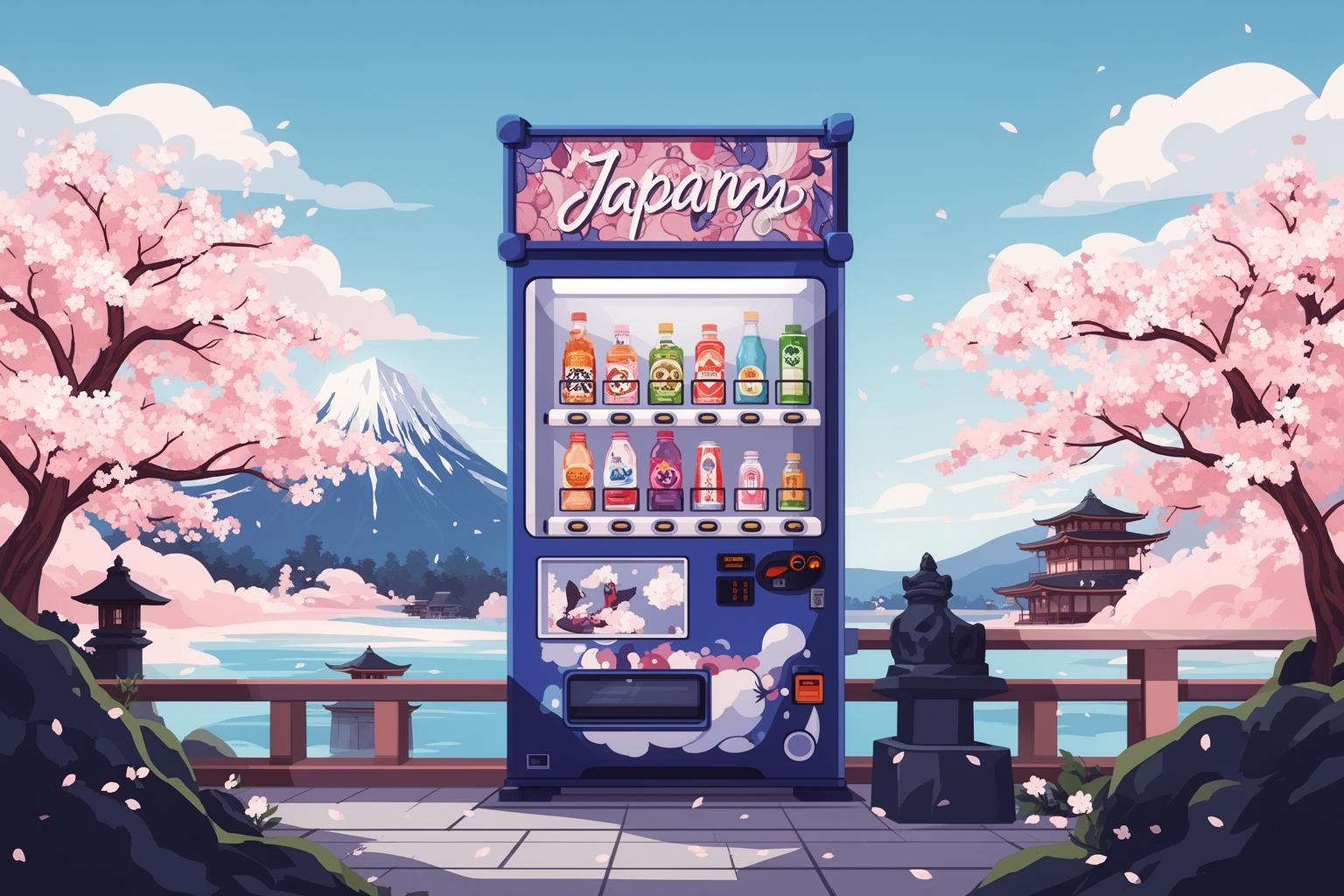
Alright, the concept is becoming clearer. But what is it actually like to visit one? For a first-timer, the experience can feel like stepping into a science fiction film. The entire setup is designed for maximum discretion and minimal human contact. It’s a brilliant example of anonymous service design, quietly ingenious. Let’s walk through the process, as this really reveals the cultural priorities at work.
First, the entrance. You won’t usually find a large, inviting lobby with a friendly receptionist. In fact, you’ll likely try your best to avoid seeing anyone at all, and the hotel is built to facilitate that. Many love hotels have two entrances: one for cars and one for pedestrians. The car entrance often leads to a private, covered garage where you can park your vehicle, sometimes with a curtain lowering behind you to conceal your license plate. Anonymity is paramount from the moment you arrive. The pedestrian entrance tends to be somewhat hidden, tucked away from the street, often featuring a curtain or discreetly angled door so you can slip inside unseen by passersby.
Once inside, no one greets you personally. Instead, you’re welcomed by a screen. This is the core of the love hotel experience: the room selection panel. It’s a large, glowing board resembling a futuristic vending machine menu. Here, you’ll see photos of all available rooms, each paired with a button. Occupied rooms appear dark, while available ones glow brightly. This is where you shop for your fantasy. You can view the room’s theme—whether it’s the spaceship room, the jungle-themed room with a waterfall, or a sleek, modern room with a giant jacuzzi. The pictures show it all. Next to each image, you’ll find prices listed for two main options: “Rest” (kyūkei, 休憩) and “Stay” (shukuhaku, 宿泊).
This pricing structure is crucial. A “Rest” is a short-term rental, usually for a two to three-hour block. This is the famous pay-by-the-hour option that love hotels are known for, ideal for a quick escape during a date. A “Stay” is an overnight rental, with check-in generally starting late in the evening (around 9 or 10 PM) and continuing until the next morning. You simply press the button for your chosen room, a key or card is dispensed from a slot, and you receive your room number. No names, no registration, no small talk at a front desk. You take the key and head straight to your room. In some older hotels, the key might be delivered through a pneumatic tube, which adds its own unique vibe. The whole process is automated and anonymous; you might not interact with a single human during your visit.
Once inside the room, it’s your private sanctuary. You lock the door, and the outside world fades away. As for payment, that’s handled discreetly as well. In many hotels, you pay at a small machine inside the room or by the exit door when you’re ready to leave. In others, you might call a number, and someone will come to the door to collect money through a small, discreet slot, so you never see their face. Some older establishments still use pneumatic tubes to send cash to a hidden office. It’s all about creating a seamless, frictionless, and thoroughly private experience. The system is designed to eliminate any chance of awkwardness or judgment, making it a comfortable and accessible option for everyone from curious teenagers to long-married couples.
From Tacky to Techy: The Evolution of Escapism
Like any other industry, love hotels have had to evolve to survive. Over the decades, both their aesthetics and the experience they offer have undergone significant transformations. What was once the epitome of tacky-chic has now expanded into a surprisingly wide array of styles. The range spans from vibrant retro kitsch to sleek, contemporary luxury. Essentially, you can tailor your own experience, and the evolution of these designs reflects the shifting tastes and desires of Japanese society.
The Bubble Era Bonanza: Castles, UFOs, and Revolving Beds
Let’s begin with the classic—the archetype etched into the collective memory: the Bubble Era love hotel. The 1980s were marked by immense economic prosperity, mirrored in the wildly extravagant designs of the love hotels constructed during this time. The philosophy was straightforward: more is more. Many exteriors resembled European castles, Greek temples, or even cruise ships, standing out like fantastical mirages amid the urban sprawl. These were not just hotels; they were monuments to glorious bad taste.
The true enchantment, however, was inside. This period was the golden age of themed rooms. The objective was pure, unfiltered escapism. You weren’t merely renting a room; you were renting a fantasy. You could spend a few hours in a room painstakingly designed to resemble a doctor’s office, complete with an examination table. Or perhaps a high school classroom with a chalkboard and desks. There were replicas of train carriages, featuring rumbling sound effects and video screens showing passing landscapes. Pirate ships with treasure chests and rope rigging, spaceship cockpits with flashing lights and control panels. And naturally, iconic features emerged: heart-shaped revolving beds, mirrored ceilings, and personal karaoke machines. Bathrooms were often vast, equipped with multi-person jacuzzis that included rainbow lights and built-in TVs. The aim was to create a playful, theatrical environment far removed from the mundane reality of a small apartment. While some of these delightfully kitschy old hotels still remain, they are increasingly rare, cherished relics of an era defined by extravagant indulgence.
The Modern Glow-Up: Boutique Stays and Designer Vibes
Following the burst of the Bubble and shifts in taste, the love hotel industry adapted. The once-extravagant, gaudy style began to feel outdated. A new generation of guests sought something different: more stylish, sophisticated, and comfortable. This sparked the rise of the modern “boutique” or “leisure” hotel. These newer venues are worlds apart from the castles and UFOs of the 1980s. Many have replaced garish exteriors with sleek, minimalist façades that could easily be mistaken for trendy design hotels. They are clean, chic, and highly technological.
The emphasis has moved from theatrical fantasy to accessible luxury. Rooms tend to be spacious, decorated with a modern, tasteful aesthetic. Massive beds remain, but they’re now more likely to feature high-quality, comfortable mattresses rather than revolving gimmicks. The highlight of these modern hotels is often the amenities, which are cutting-edge. You might encounter a 100-inch projector screen with surround sound, an extensive on-demand movie library, and connectivity for all your devices. Bathrooms function as private spas with large jacuzzis, saunas, rainfall showers, and an impressive selection of premium toiletries and skincare products. Complimentary bath salts, face masks, and lotions more than suffice for one night’s use. While service remains anonymous, its quality has been enhanced. Room service can be ordered from a comprehensive menu via tablet and delivered through a discreet hatch, eliminating the need for direct staff interaction. These hotels are so comfortable and well-appointed that they are beginning to attract a broader clientele beyond couples.
Beyond the Bedroom: The Unspoken Rules and Culture
The world of love hotels functions according to a set of unspoken rules and cultural understandings. It represents a subculture with its own etiquette and logic, all aimed at preserving harmony and discretion. Grasping these subtleties is essential to understanding why the system works so effectively and what it reveals about broader Japanese society. It’s not just about the rooms themselves; it concerns the entire cultural framework that enables their existence.
Anonymity is Queen: The Art of Being Invisible
This has been mentioned before, but it cannot be emphasized enough: discretion underpins the entire love hotel industry. The whole experience revolves around the principle of not being seen, recognized, or having to justify oneself. This reflects a core aspect of Japanese culture: the division between public and private life. There’s a clear contrast between tatemae (the public façade or persona) and honne (one’s true feelings and desires). Love hotels firmly occupy the realm of honne, providing a private space where social expectations and obligations fade away.
That’s why the architecture and systems are so carefully crafted. Covered parking, discreet entrances, and automated check-ins are all parts of a social agreement. The hotel guarantees absolute privacy, and in return, guests abide by the unspoken rule of invisibility. You don’t linger in hallways or make eye contact with passing guests. There’s a shared, silent understanding that everyone is present for personal reasons, and respecting that privacy is essential. This attitude doesn’t stem from shame but from a deeply ingrained cultural preference for avoiding awkwardness and preserving social harmony (wa). By making the entire experience anonymous and seamless, love hotels eliminate any chance of social discomfort. It’s a finely tuned system for private encounters.
Is It… Safe? A Vibe Check for First-Timers
Considering the anonymous nature and hourly payment model, outsiders often wonder whether these establishments are safe and clean. This is a legitimate concern, but generally, the answer is a confident yes. Legally licensed love hotels in Japan must follow the same health and safety standards as any other hotel. In fact, many maintain an exceptional level of cleanliness. Due to frequent room turnover, with multiple “Rest” sessions daily, the cleaning staff work efficiently and thoroughly, mastering the process. Rooms are fully sanitized after each use, and it’s common to find remote controls wrapped in fresh plastic or toilet seats sealed with paper indicators to signal cleanliness.
Moreover, the amenities often surpass those found in typical business hotels. The variety of complimentary toiletries tends to be impressive, including multiple shampoo and conditioner options, face wash, moisturizer, face masks, bath salts, hair products, and even contact lens solution. Many rooms feature vending machines stocked not only with snacks and drinks but also fancy lingerie and adult toys, all obtainable anonymously. The aim is to provide everything guests might need so they never feel the need to leave their private sanctuary. Naturally, like any sector, quality varies. Some older, less maintained locations remain, but the modern, popular love hotels—especially in competitive districts like Shibuya or Shinjuku—are generally very safe, clean, and well-kept. Fierce competition drives them to uphold high standards.
Not Just for Couples Anymore? The New Clientele
One of the most intriguing developments in recent years is how the function of love hotels has broadened. The combination of privacy, excellent amenities, and affordability has drawn new kinds of customers. A prominent trend is the joshi-kai (女子会), or girls’ party. Groups of female friends rent upscale love hotel rooms for an afternoon or evening to celebrate birthdays, hold parties, or simply hang out. Why? Because they get a large, private space equipped with a massive TV, high-quality sound systems for karaoke, luxurious bathrooms, and room service—all at a fraction of the cost of a comparable suite in a regular hotel. Guests can be as loud as they want without worrying about disturbing others. It’s an ideal private party setting.
Cosplayers are also fond of love hotels. Themed rooms offer instantly elaborate backdrops for photoshoots without the expense of renting a studio. Want a futuristic environment? Rent the spaceship room. Need a traditional Japanese setting? There’s a room for that too. Even solo travelers and tourists are starting to appreciate this option. If you want a spacious, comfortable room with a giant bathtub and king-sized bed at a reasonable price—and don’t mind a slightly quirky atmosphere and late check-in—a night’s “Stay” in a modern love hotel can be an excellent value. This trend highlights the versatility of these spaces. They are evolving beyond purely romantic retreats into multi-purpose entertainment venues, demonstrating that the fundamental desire for a private, affordable escape in a densely populated city is universal.
The Love Hotel in the Wild: Spotting Them and What to Expect
So, you’re in Japan and feeling curious. How do you actually locate these places? Unlike in some countries where such establishments are confined to specific, well-known districts, love hotels in Japan are often clustered openly, frequently right next to major train stations and entertainment areas. They create their own vibrant, neon-lit ecosystems. Spotting them becomes part of the fun, like a little urban exploration game.
The easiest way to spot a love hotel is by its flashy appearance. While modern ones are growing more subtle, the classic love hotel is anything but discreet. Look for gaudy, fantastical architecture. If you see a building shaped like a European castle, a Greek temple, or a giant pink boat in the middle of Shinjuku, chances are you’ve found one. The names provide another clear clue. They often feature romantic, exotic, or simply quirky English, French, or Italian words. Names like “Hotel OZ,” “Casanova,” “Hotel St. Tropez,” or the more straightforward “Hotel Fuki” (iykyk) are common. They’re designed to sound glamorous and transportive, evoking a sense of fantasy even before you step inside.
The most definitive indicator, though, is the pricing board displayed prominently outside. This is an essential feature. You will always see a sign listing the rates for “Rest” (休憩, kyūkei) and “Stay” (宿泊, shukuhaku), often with different prices for weekdays and weekends. This dual-pricing system is the hallmark of a love hotel. No regular hotel posts its hourly rates out front like this. These signs are practical and transparent, letting you know exactly what you’re paying for and how much, emphasizing the straightforward, transactional nature of the service.
Some of the most well-known love hotel hotspots are in Tokyo. Shibuya’s Dogenzaka area is famously called “Love Hotel Hill,” a twisting maze of streets packed with dozens of options, ranging from old-school establishments to stylish modern boutiques. Shinjuku’s Kabukicho district, Tokyo’s largest red-light district, is another major center, housing some of the most extravagant and famous hotels. Uguisudani, a quieter station on the Yamanote line, is also renowned for its dense love hotel concentration. In Osaka, the Namba and Umeda districts feature similar clusters. Exploring these neighborhoods, especially at night when the neon signs glow brightly, offers a unique cultural experience in itself. It’s a dazzling, slightly surreal journey through a world designed purely for pleasure and privacy.
So, Why Is It Still a Thing? The Modern-Day ‘Why’
After all this, we return to the central question: In a country as seemingly reserved and orderly as Japan, why is this flamboyant, eccentric industry not only surviving but thriving? It’s because the love hotel is not an anomaly; it perfectly reflects modern Japanese society. It acts as a cultural pressure valve—a brilliant, if unusual, solution to a complex blend of social, economic, and cultural forces. The need for such spaces is woven into the very fabric of daily life.
The primary and most significant reason remains space. Japan is densely populated, with homes, especially in urban areas, often quite small. The dream of a spacious home with private bedrooms for everyone is simply unattainable for many. Multi-generational living remains common, driven by both tradition and economic necessity. Within this context, the love hotel is not a luxury but a utility. It fulfills a basic human need—private space for intimacy—that the home environment frequently can’t provide. It serves as a third space, distinct from home and work, where normal rules and expectations are put aside.
Secondly, there is a cultural focus on privacy and the division of social spheres. The anonymous, automated system of a love hotel embodies Japanese service culture, which prioritizes efficiency and avoids any potential social discomfort. The absence of human interaction isn’t perceived as cold or impersonal; rather, it’s regarded as a sign of respect for the customer’s privacy. This allows people to use the service without judgment or complication, reinforcing the cultural boundary between public life and private desires. The system operates on mutual, unspoken understanding.
Lastly, the love hotel reflects a deep-rooted appreciation for escapism and curated experiences. From elaborate tea ceremonies to immersive anime worlds, Japanese culture has a long history of creating carefully controlled, aestheticized environments that provide a temporary escape from the ordinary. A love hotel is simply a more adult, and sometimes kitschier, version of this. It offers a gateway to another world for a few hours. Whether that world is a medieval castle, a spaceship, or a sleek, minimalist suite with a giant bathtub, the objective is the same: to step out of reality and into fantasy. So, the next time you see a photo of a crazy carousel-themed hotel room, don’t just dismiss it as “weird Japan.” Recognize it as what it truly is: a creative, playful, and profoundly practical response to the enduring human desire for a room of one’s own.