Imagine this. You’re in a room no bigger than a walk-in closet, bathed in the synthetic glow of a flatscreen TV and the faint, sticky-sweet smell of spilled melon soda. The air is thick with anticipation. In your hand is a hefty, slightly damp remote control, a tablet-like device displaying a universe of musical possibilities. Outside, the neon-soaked streets of Tokyo hum with life, but in here, in this soundproofed sanctuary, a different kind of social drama is about to unfold. This is the Japanese karaoke box, an institution as central to modern Japanese life as the convenience store or the train station. To the uninitiated, it looks simple enough: you pick a song, you grab the mic, you sing. But you’re about to learn that it’s not simple at all. What seems like a casual, alcohol-fueled singalong is, in fact, a deeply intricate social ritual, a high-stakes performance where the lyrics you choose are far less important than the social cues you obey.
Karaoke in Japan isn’t merely about vocal talent. In fact, being too good can be as awkward as being terrible. It’s a meticulously choreographed dance of social obligation, a microcosm of Japanese society itself, with all its emphasis on group harmony (`wa`), hierarchical respect, and the all-important skill of `kuuki wo yomu`—reading the air. Every song choice is a statement. Every tap of the tambourine is a gesture of support. Every moment of silence is freighted with meaning. This isn’t a stage for the individual; it’s a testing ground for the group. Forget everything you know about belting out Bon Jovi in a crowded Western bar. Here, the rules are unwritten, the stakes are social, and your ability to navigate the evening will say more about you than your ability to hit a high note. This is a guide to that hidden code, the invisible architecture of etiquette that governs the art of the Japanese karaoke night.
The intricate social dance of karaoke mirrors the unexpected rise of Hatsune Miku as a digital pop icon, highlighting how modern Japanese culture transforms individual expression into a shared performance.
The First Song: A Calculated Sacrifice for the Group
The session starts not with a bang, but with a moment of tense, polite negotiation. The remote control rests on the table like a talking stick, an object both coveted and feared. Who will claim it first? Who will perform the inaugural song, the `ippatsume`? This is no trivial choice. The first song is a vital, tone-setting offering. It acts like a canary in the coal mine, sent out to check the atmosphere and ensure it’s safe for everyone else.
A clear, though unspoken, hierarchy governs the process. The highest-ranking person in the room—the department head, the seasoned `bucho`—almost never sings first. Doing so would be seen as an assertion of authority, a grab for the spotlight. Similarly, the most junior member, the fresh-faced `shinnyu shain`, is unlikely to start either, as it might seem overly presumptuous. The honor, or rather the burden, typically falls to a mid-level employee, someone respected enough to command attention but not so high up that they are exempt from ice-breaking duties. They are the designated party-starter, trusted to set things in motion.
If you are the guest of honor, you might be offered the first turn as a mark of respect. The correct response involves a delicate dance of humility. You must initially decline, perhaps with a hand wave and a modest, “Oh no, please, after you.” This isn’t false modesty; it’s a necessary gesture of deference. After your host insists once, twice, or even a third time, you may graciously accept. Accepting immediately would seem arrogant; refusing repeatedly would be awkward and uncooperative.
So, what do you sing for this crucial first song? The answer is nearly always the same: something safe. This isn’t the moment for your experimental indie obsession or that nine-minute progressive rock opera you’ve perfected in the shower. The first song must be a piece of shared cultural currency. Think of a massive, universally loved J-pop hit from the ’90s or early 2000s, a song so familiar that even those with no musical skill can hum along. Artists like SMAP, Dreams Come True, or Mr. Children set the gold standard. Their music is the soundtrack of a generation, a shared memory woven into the national consciousness.
The song should be upbeat and mid-tempo, lively enough to energize the room but not so intense as to overwhelm. Its role is purely functional: to warm things up, signal that this is a space for fun, and lower the barrier for everyone else. You’re not trying to impress with your vocal abilities. You’re performing a social lubricant. You sing it with a smile, encourage others to join in with tambourines, and when finished, accept the polite applause with a slight bow. You have successfully sacrificed your turn for the group’s benefit. The ritual has begun.
Reading the Room: Crafting the Collective Playlist
Once the ice is broken, the session naturally falls into its own rhythm. This marks the true test of your social intelligence. A karaoke night is not merely a random assortment of songs; it forms a collaborative narrative with a clear beginning, middle, and end. Your main task is to recognize your place in that story and select your next song accordingly. This is `kuuki wo yomu` at its purest.
The Ebb and Flow of Energy
Picture the evening as a waveform. It begins with the gentle, rolling cadence of the first few warm-up songs. As drinks flow and inhibitions loosen, the energy builds, rising toward a peak filled with high-energy anthems and lively singalongs. This is the heart of the party—the height of collective excitement. Yet this peak can’t last indefinitely. Inevitably, energy dips into a softer, more reflective trough. This is the moment for ballads, soulful crooners, and a shared, somewhat sentimental pause. After this break, the energy needs to climb again for the grand finale—a final burst of celebratory, unifying songs that bring the night to an emotional close.
Your role is to ride this wave, not disrupt it. If the previous performer energized the room with a fist-pumping anime theme, it’s unwise to follow with a slow, sorrowful ballad about lost love. That will instantly kill the mood. The silence afterward won’t be awe, but awkwardness, signaling a broken flow. Conversely, if the atmosphere has settled into a mellow, thoughtful vibe, don’t suddenly cue a death metal track. The key is to match or gently escalate the current energy. Observe the room: Are people leaning back, listening attentively? Or are they on their feet, shaking maracas enthusiastically? The room will guide you on what it wants next.
The song selection device—once a bulky, book-like remote, now usually a sleek tablet—is a sacred tool. You don’t simply grab it and queue up five favorite songs at once. This is a cardinal sin known as `renkyoku`, or consecutive song booking, viewed as extremely selfish and monopolizing a communal resource. Proper etiquette is to add one song at a time, wait your turn, and watch what others pick. Allow their choices to inform yours. The playlist isn’t yours; it belongs to the group.
Genre Etiquette: The Unspoken Categories
Within this energetic flow exists an unwritten catalog of accepted genres, each with its own rules and expectations. A skilled karaoke participant moves fluidly between them, choosing the right style for the moment.
First, the J-Pop Classics serve as the foundation of any successful karaoke night. These songs have embedded themselves deeply into Japanese culture, played in every department store and featured in countless TV dramas. This canon includes artists like Southern All Stars, Spitz, Yumi Matsutoya, and Hikaru Utada. Selecting a song from this repertoire is always a safe move—an invitation for everyone to join in and a sign that you appreciate the shared cultural landscape. Even if you don’t know every verse, the chorus will be familiar, uniting the room in a powerful chorus.
Next comes the essential category of Anime Songs, or `anisong`. While peripheral in the West, anime is mainstream in Japan, and its theme songs carry strong nostalgia and excitement. A well-timed `anisong` can inject pure energy into the room. Still, you must read the crowd: Is this a group of hardcore fans who will enjoy an obscure 80s mecha anime opening? Or is it a more general audience of coworkers who recognize only major hits from blockbusters like Demon Slayer, Your Name, or the iconic Neon Genesis Evangelion theme? Choosing the latter is inclusive; the former can alienate, turning your set into a lecture on personal taste.
Then there’s the Token Western Hit. Singing in English is perfectly acceptable and often welcomed as a novelty, but the choice is crucial. This isn’t the time to flaunt your knowledge of obscure indie folk. The goal remains shared experience. Pick from the global karaoke canon: Queen’s “Bohemian Rhapsody,” Bon Jovi’s “Livin’ on a Prayer,” ABBA’s “Dancing Queen.” These songs transcend borders and languages; they are global landmarks. Choosing a song known only to you, in a language most in the room might not fully understand, contradicts the karaoke spirit by building barriers instead of bridges.
Lastly, the wildcard: the Enka Ballad. Enka, a traditional Japanese popular music style, is known for its dramatic, sentimental, and vocally demanding nature. It evokes tales of heartbreak from snowy northern port towns, resonating deeply with an older generation. For that crowd, an enka song can spark profound nostalgia; for younger listeners, it can become a humorous, ironic performance. However, it’s a high-risk, high-reward choice. In the wrong setting, an enka ballad can stall the party abruptly. It’s a power move that requires caution and keen self-awareness.
The Generational Tightrope
Often, gatherings—especially work-related ones—include a mix of ages. A successful participant is a social chameleon, tailoring their selections to the diverse demographics in the room. This subtle act expresses respect. For example, a young employee in their twenties might deliberately pick a well-known song from the 1980s to please a fifty-something manager, signaling, “I see you, I respect your culture, and I’m trying to connect.” In return, a considerate manager might choose a recent chart-topper, even if they stumble over the lyrics, showing they’re not stuck in the past and willing to meet younger colleagues halfway. The karaoke playlist becomes a map of the office’s social dynamics—a negotiation of taste and hierarchy played out through a soundtrack of pop hits.
The Art of Participation: Performance Off the Mic
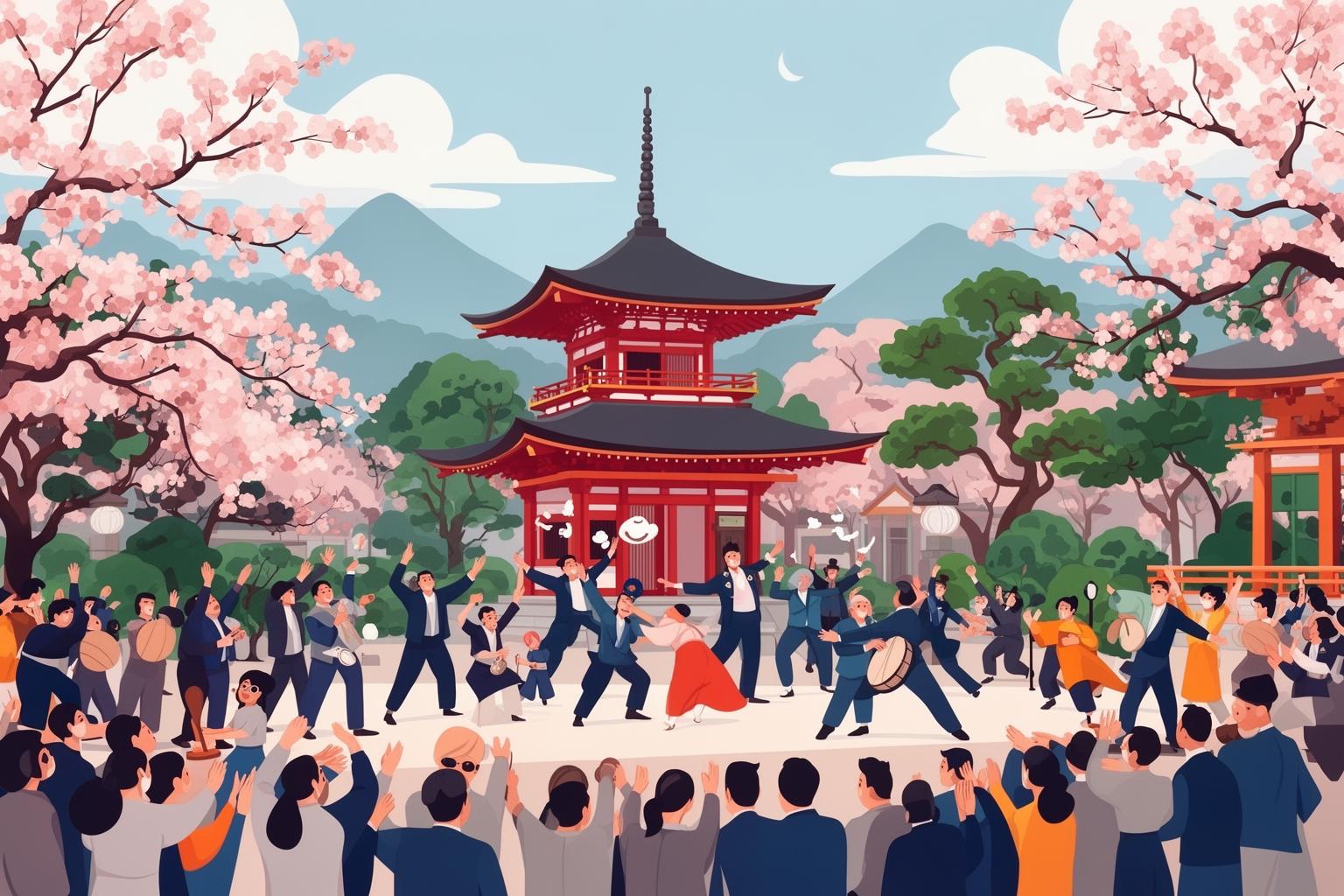
What you do when you are not holding the microphone is arguably more important than what you do when you are. A karaoke session is not merely a series of solo performances; it is a continuous, collective event. Your role is to be an active, engaged, and supportive audience member at all times. To sit back passively is to neglect your social responsibility.
The Supporting Cast: Tambourines, Maracas, and Mandatory Fun
On the table in every karaoke room, you will find a basket of percussion instruments: tambourines, maracas, and sometimes even small hand drums. These are not optional extras. They are tools for mandatory participation. When a song starts, you are expected to pick one up. Your role is to provide a rhythmic backbone for the singer, becoming part of their backing band. It doesn’t matter if you lack rhythm; the effort is what counts. A gentle, steady tap is all that’s required. It serves as a physical sign of your support, signalling that you are present and invested in the performance.
The greatest offense is to ignore the singer and retreat into your phone. This is the social equivalent of turning your back on someone. It declares disinterest and seriously disrupts the collective atmosphere. You are in the room together, and your attention must be focused on the person performing. The glowing screen of your phone creates a barrier between you and the group, breaking the fragile social contract of the karaoke room.
The Hype Squad: The Culture of `Moriageru`
The concept of `moriageru` is central to Japanese group activities. It means “to liven things up,” “to build excitement,” or “to get the party going.” In karaoke, everyone shares the responsibility of being the hype squad. This is an active, vocal role.
During instrumental breaks in a song, it is customary to provide encouragement through interjections known as `aizuchi`. The most common are simple, rhythmic shouts of “Hai! Hai! Hai! Hai!” in time with the music. For more energetic songs, you might hear chants like “Fuwa fuwa!” or other playful, nonsensical calls. These are not random outbursts; they are structured ways to fill the sonic space and show the singer that you are with them.
Additionally, you are expected to sing along, especially during the chorus of a popular song. This is not seen as upstaging the singer but as supporting them. It transforms a solo performance into a collective anthem, reinforcing a sense of unity. It says, “You are not alone up there; we’re all in this together.”
When the song ends, regardless of the performance’s quality, you must applaud. The feedback is always positive. You offer praise such as “Umai!” (Skillful!), “Saiko!” (The best!), or a simple, effective “Great song choice!” Karaoke is not a competition. It is an exercise in mutual vulnerability. Someone has put themselves out there, and the group’s responsibility is to validate their effort, not to critique their pitch. It is a space of unconditional positive regard.
Drinks, Snacks, and Social Duties
Karaoke is almost always accompanied by `nomihoudai`, the all-you-can-drink course. But even this is not just about personal consumption. It’s another chance to show social awareness. Part of your role is to be the group’s quartermaster. Keep an eye on the table: is the pitcher of beer empty? Is your boss’s glass running low? Be the one to pick up the in-room phone and order the next round. Be the one who pours drinks for others, always starting with the most senior person at the table. These small acts of attentiveness are not chores; they are the threads that weave the social fabric of the evening.
The Minefield: A Guide to Karaoke Faux Pas
While the aim is to foster a harmonious atmosphere, there are numerous ways to unintentionally disrupt it. Navigating the karaoke landscape requires keen awareness of what not to do.
First and foremost, avoid being a Mic Hog. The microphone is a shared resource. Singing two songs consecutively without being explicitly and enthusiastically invited is a serious breach of etiquette. Moreover, queuing up an extended list of your own songs is the height of selfishness. You must wait your turn patiently, showing that you respect others’ participation as much as your own.
Be cautious not to become The Show-Off. While genuine singing talent is appreciated, there is a fine line between an impressive performance and one that alienates the group. Picking an obscure, technically challenging song that no one else recognizes is not a display of skill; it’s a display of ego. It shifts attention from the group to the individual. The objective is to entertain everyone, not to give a solo recital. Humility is essential. Even as a great singer, it’s often better to hold back slightly and perform with a spirit of fun rather than seriousness.
Never, under any circumstances, act as The Critic. Karaoke is meant to be a judgment-free zone. Offering unsolicited feedback on someone’s pitch, tempo, or song selection is a major social faux pas. You’re there to cheer on, not to critique. People often sing songs they love, so criticism targets not just their voice but their taste and vulnerability. Every performance, no matter how off-key, deserves applause and encouragement.
Avoid being The Song Repeater. If a particular song has already been sung that night, consider it off-limits. Singing it again, even if it’s your favorite, sends the unspoken message that you believe you can do it better. This comes across as a challenge—an act of one-upmanship—within what should be a non-competitive setting.
Similarly, resist the urge to be The Premature Stopper. If you pick a song then realize you don’t know the lyrics or it’s out of your vocal range, see it through to the end. Ending the song halfway by pressing the `ensou chuushi` (stop performance) button is highly disruptive. It draws awkward attention to your failure and wastes the group’s time. You must endure your mistake with grace. This reflects the value of `gaman` (endurance)—stoically persevering through difficulties. Your struggle becomes part of the entertainment.
The Grand Finale: The Unifying Last Song
Just as the opening song is rich with meaning, so is the final one. The shime no kyoku, or closing song, serves as the emotional climax of the evening. Its purpose is to solidify the connections formed over the past few hours and to send everyone off on a high note of unity and shared catharsis.
Choosing the last song is often a more openly collaborative process than selecting the earlier ones. With time running out—the flashing ten-minute warning on the screen signaling urgency—someone inevitably asks, “Okay, last one, what should it be?”
The closing song must be an anthem. It has to be a tune that nearly everyone knows by heart, featuring a grand, swelling chorus that invites universal participation. Typically, it’s a song about friendship, hope, or the beauty of a shared moment. Popular picks include SMAP’s “Sekai ni Hitotsu Dake no Hana” (The One and Only Flower in the World), a gentle yet powerful tribute to individuality within a group, or GReeeeN’s “Kiseki” (Miracle), an uplifting anthem celebrating youthful possibility.
When the final song begins, the energy in the room transforms. Everyone rises to their feet. Those who have been sitting throughout the night now stand, arms draped around each other’s shoulders. Microphones circulate so everyone can sing a line. This is the culmination of the night’s social dynamics. Hierarchies, anxieties, and careful calculations all dissolve into a single, joyful, slightly hoarse collective voice. This shared musical moment is the essence of the evening—it is when the group truly comes together as one.
As the last notes fade and the screen displays your score—a meaningless figure that everyone politely ignores—a feeling of accomplishment fills the room. You’ve done it. You’ve survived. More than that, you’ve participated, supported, read the atmosphere, and contributed to creating a fleeting but vital moment of harmony. You have not merely sung songs; you’ve successfully played your part in one of modern Japan’s most important social rituals.
In the end, karaoke is a workout—a training session for the muscles of social fluency. It’s a space where the rigid structures of daily life are temporarily suspended, only to be replaced by a different, more fluid set of rules. It teaches you how to balance individual expression with collective responsibility, how to share the spotlight with grace, and how to foster an environment where everyone feels included and valued. The ultimate goal is not to be the best singer in the room but to be the best group member. And in Japan, that skill is far more valuable than perfect pitch.