
Walk into any Japanese supermarket, and you’ll notice it. It’s not just the pristine stacks of produce or the bewildering variety of tofu. It’s the subtle shift in the air as the seasons change. In spring, the entrance is a riot of pink and green, celebrating strawberries and tender bamboo shoots. Come autumn, the warm oranges of persimmons and deep purples of sweet potatoes take over. A convenience store bento, a meal designed for speed, still feels balanced and thoughtfully composed. A school lunch, often a dreaded affair elsewhere, is treated with a seriousness that borders on ritual. You start to get the feeling that none of this is an accident. You start to wonder about the invisible operating system running underneath it all.
That system has a name: Shokuiku (食育). The direct translation, “food education,” is criminally understated. It sounds like something you’d find in a dry health textbook, a chapter on food pyramids and calorie counting. But that’s not it at all. Shokuiku is a deeply embedded national philosophy, a lens through which the Japanese view the entire cycle of food—from the soil to the table and back again. It’s a framework for understanding not just what to eat, but how and why. It’s about gratitude, community, seasonality, and our fundamental connection to nature. It’s the reason that in Japan, a meal is rarely just a meal. It’s a lesson, a celebration, and an expression of a worldview. To understand Shokuiku is to grasp one of the most essential, yet often unspoken, pillars of modern Japanese life.
The pervasive spirit of shokuiku also shapes daily practices, as shown by the Japanese kissaten morning service where even breakfast serves as a mindful ritual.
The Roots of Shokuiku: From Meiji Modernization to a National Law

Unlike timeless and ancient concepts such as wabi-sabi or ikigai, Shokuiku is a surprisingly modern creation, emerging from a period of intense national anxiety. It wasn’t imagined by a Zen monk in a remote temple; rather, it was developed by a medical doctor concerned that his country was losing its direction. To truly grasp its significance today, one must look back to its origins in a rapidly transforming Japan and its recent revival as a matter of national policy.
A Prescription for a Nation
The term itself was coined in the late 19th century during the Meiji Restoration, a time when Japan was opening its doors to the West after centuries of isolation. The country hurried to modernize, importing everything from industrial technologies and military strategies to Western clothing and, importantly, Western food. Bread, meat, and dairy, once rare, began appearing on dining tables. While this diversification brought benefits, it also introduced new challenges.
Sagen Ishizuka, a military doctor and pharmacist, witnessed the effects firsthand. He noticed rising rates of new diseases and believed they stemmed from a disconnection from traditional Japanese dietary principles. He wasn’t merely a Luddite rejecting foreign foods; he was a scientist formulating a comprehensive health theory centered on diet. His fundamental concept was shindofuji (身土不二), meaning “body and land are not two.” It reflects the deep conviction that humans are inseparable from their local environment. The foods that grow in the soil around you, during the current season, are best suited to nourish your body and sustain health. Eating strawberries in winter, flown from halfway across the globe, made no sense to him—not only for ecological reasons but also physiological ones.
Ishizuka’s philosophy advocated a diet of whole grains, local vegetables, and seasonal produce. He emphasized balance and cautioned against the excesses of a rich, Westernized diet. He didn’t just prescribe medicine; he prescribed meals. His work provided the intellectual foundation for Shokuiku, framing food not simply as fuel but as the essential connection between human health and the natural world.
From Philosophy to Policy: The 2005 Basic Law
For nearly a century, Ishizuka’s ideas simmered quietly, influencing nutritionists and households but remaining a general philosophy rather than an official program. That changed in the early 2000s. Japan was confronting a new set of dietary challenges, familiar to many developed countries. Although obesity rates remained low by global standards, they were rising. Lifestyle diseases such as diabetes and heart disease were increasing. More concerningly, the structure of Japanese society itself was shifting.
The traditional family dinner, with multiple generations gathered around a table filled with homemade dishes, was becoming rare. More people lived alone, worked longer hours, and relied on convenience foods. Children grew up unaware of where their food originated, sometimes unable to recognize common vegetables. A growing sense of nutritional disorder and fear of losing vital cultural knowledge took hold. The government decided to intervene.
In 2005, the Japanese Diet passed the Basic Law on Shokuiku (食育基本法). This landmark legislation officially elevated food education from a private issue to a national priority. The law did not dictate what people should eat. Instead, it sought to establish a nationwide system encouraging citizens to engage actively with their food. Its aims were broad and holistic: promoting healthy, balanced eating habits; fostering deep gratitude toward food and its producers; preserving and transmitting Japan’s rich food culture; and ensuring food safety and knowledge about the food system. The law required cooperation among government, schools, communities, and private businesses to promote these values. The philosophy of a 19th-century doctor had, at last, become the guiding blueprint for Japan’s 21st-century diet.
The Classroom Cafeteria: Shokuiku in Action
The systematic implementation of Shokuiku is most evident and impressive within the Japanese public school system. The school lunch, or kyushoku (給食), stands as the program’s centerpiece. It elevates the midday meal from a mere break to refuel into a fundamental component of the educational curriculum. Each day offers a hands-on lesson in nutrition, culture, cooperation, and responsibility. For many outsiders, witnessing the Japanese school lunch system in detail for the first time is truly eye-opening.
More Than Just Lunch: A Lesson in Every Bite
The process begins well before the food arrives at the table. Menus are not randomly assembled by cost-cutting catering companies but are carefully planned monthly by registered dietitians and nutritionists employed by the school or local board of education. Every meal is crafted to exemplify nutritional balance, providing a precise portion of the daily required calories, vitamins, and minerals. The meals are almost always prepared from scratch, either in an on-site kitchen or a centralized local lunch center serving multiple schools. Processed foods and sugary drinks are nearly absent.
When the lunch bell rings, the classroom undergoes a transformation. There’s no chaotic line in a crowded cafeteria. Instead, a team of students assigned as that day’s lunch monitors (toban) dons white coats, hats, and masks. They collect the class’s food from the kitchen or distribution point in large shared containers—a pot of soup, a large bowl of rice, trays of main and side dishes. Back in the classroom, they serve their classmates, carefully portioning each meal onto trays. The teacher doesn’t oversee from afar; they share the same meal alongside the students, turning the classroom into a temporary dining room. This act of students serving one another fosters equality and shared responsibility. It’s a communal experience from start to finish.
A Curriculum Plated
The meal itself serves as an educational tool. The menu often aligns closely with topics students are studying in other classes. A social studies lesson about a specific prefecture might be accompanied by a lunch featuring that region’s specialty dish. A lesson on international culture could be followed by a meal inspired by that country, thoughtfully adjusted to meet nutritional standards. History lessons might include a re-creation of meals from certain historical periods.
Seasonality is a continual theme. Nutritionists often provide materials or visit classrooms to discuss the day’s menu. They explain the local farmers who cultivated the vegetables or the fishermen who caught the fish. Children learn about concepts such as the “three food color groups”—red foods (meats and fish) that build the body, yellow foods (rice and potatoes) that provide energy, and green foods (vegetables) that regulate the body’s condition. The plate becomes a tangible, edible lesson in biology, geography, and culture.
Beyond the Meal: Cleaning and Gratitude
The Shokuiku lesson doesn’t end once the last grain of rice is eaten; what follows is equally important. The meal begins and concludes with formal expressions of thanks. Before eating, everyone clasps their hands and says Itadakimasu (頂きます). Often translated as “Let’s eat” or “Bon appétit,” its meaning runs much deeper. It literally means “I humbly receive” and expresses gratitude to all who made the meal possible: the plants and animals sacrificed, the farmers, fishermen, cooks, and everyone involved in production and preparation.
After eating, the ritual is completed with Gochisousama deshita (ご馳走様でした), a phrase conveying appreciation for the meal and acknowledging the effort behind it. The “chisou” (馳走) originally referred to running about to prepare a meal for guests, and saying this honors that dedication.
Next, students immediately begin cleaning up. They scrape their plates, sort leftovers, and organize trays and dishes. They diligently separate recyclables, rinse and flatten milk cartons before placing them in the correct bins. They wipe down desks and sweep the classroom floor. There are no janitors waiting to clean up afterward; the responsibility lies wholly with the students. This practice fosters a strong sense of ownership and respect for their environment and resources. It completes the cycle: from preparation and serving to eating and cleaning, the meal imparts a comprehensive lesson in life skills.
The Pillars of a Shokuiku-Minded Diet
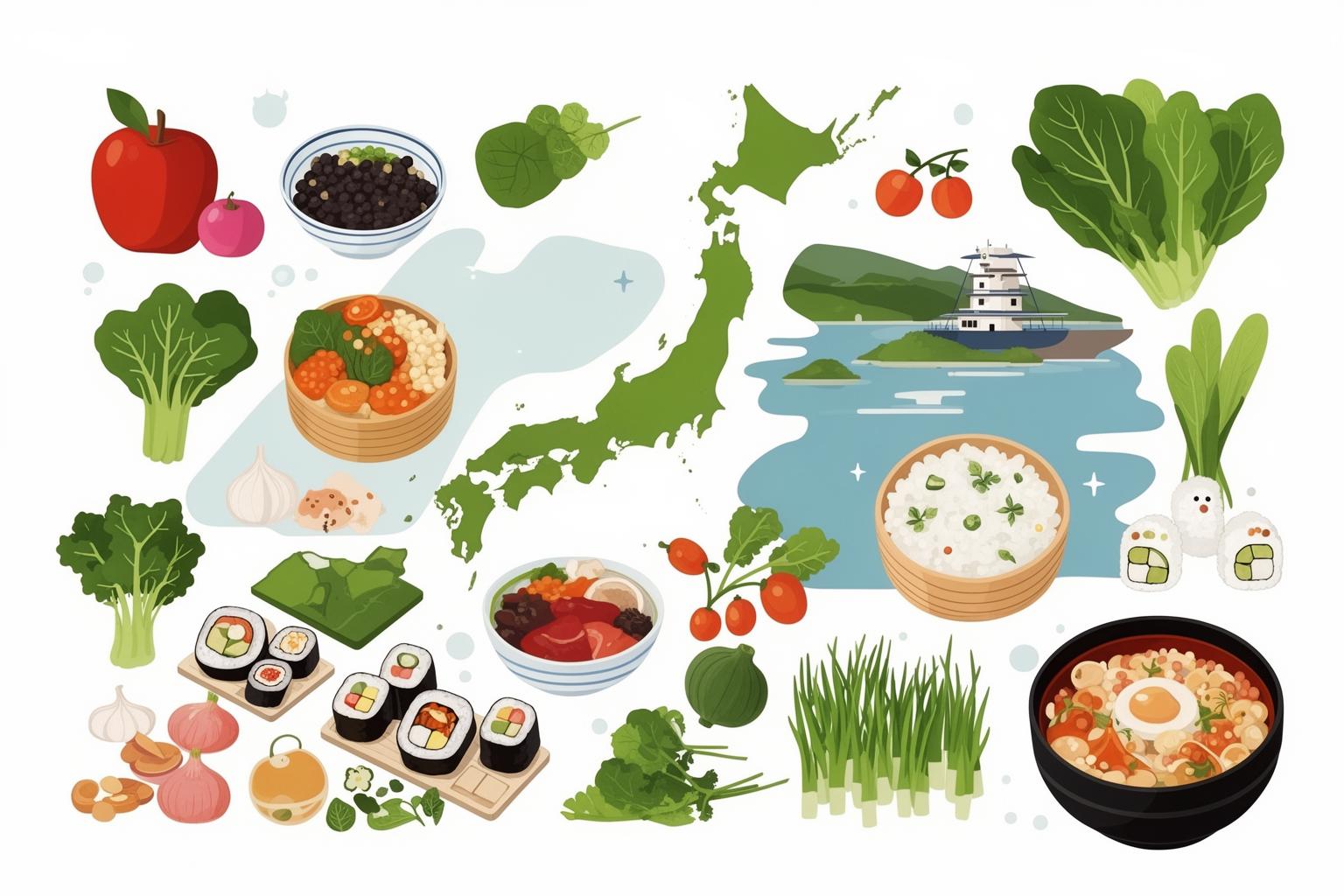
While school lunches provide the most structured example of Shokuiku, its principles reach far beyond the classroom, forming the foundation of the ideal Japanese meal, whether at home or in a restaurant. These core concepts guide the way a meal is planned and enjoyed, transforming an abstract philosophy into a practical, everyday experience.
“Ichiju Sansai”: The Blueprint for a Balanced Meal
Traditional Japanese home cooking is built around a framework called Ichiju Sansai (一汁三菜), meaning “one soup, three sides.” Rather than a strict recipe, it serves as a flexible guide for creating a complete and balanced meal. Central to this is a serving of rice, the staple (shushoku), which serves as the main carbohydrate source.
This is complemented by:
- One Soup (Ichiju): Usually miso soup or a clear broth (sumashijiru), often with tofu, seaweed, and seasonal vegetables, providing hydration and minerals.
- One Main Side Dish (Shusai): The primary protein source, typically grilled fish, a meat dish, or tofu-based item.
- Two Smaller Side Dishes (Fukusai): These add variety in vitamins, minerals, and flavors, generally featuring vegetable-based dishes such as simmered vegetables (nimono), vinegared salads (sunomono), or dressed greens (aemono). A small serving of pickles (tsukemono) is also commonly included.
This structure naturally encourages variety and balance by mixing food groups, cooking techniques (grilling, simmering, steaming, pickling), colors, and textures. It also promotes portion control, as dishes are served in small, individual bowls and plates, creating a sense of abundance and satisfaction without relying on large quantities of any one item. It’s a mindful and holistic method of meal preparation that has been practiced for centuries.
Shun (旬): The Religion of Seasonality
To truly grasp the essence of Japanese cuisine, one must understand Shun (旬), which refers to the peak season of any ingredient—the time when it is most flavorful, nutritious, and abundant. In Japan, seasonality is not simply a trendy notion for food enthusiasts; it is a fundamental principle underpinning the entire food culture.
Eating something in its shun means living in harmony with the natural cycles of the year. This philosophy is evident everywhere, from supermarket displays changing dramatically with the seasons: spring brings takenoko (bamboo shoots), delicate fava beans, and strawberries; summer offers juicy tomatoes, cucumbers, and sweet watermelon; autumn features sanma (Pacific saury), mushrooms, chestnuts, and sweet potatoes; and winter provides hearty daikon radish, napa cabbage, and tart yuzu citrus.
This emphasis on seasonality ensures ingredients are enjoyed at their absolute best. An August tomato tastes distinctly more like a tomato than one found in February. But shun goes beyond taste—it embodies the wisdom of shindofuji, the idea that the body requires different nutrients at different times of year. Cooling, water-rich summer vegetables help the body cope with heat, while dense, starchy winter root vegetables provide energy to endure the cold.
This respect for seasonality extends to the highest levels of cuisine. A high-end kaiseki meal becomes a poetic journey through the current season, with each dish highlighting peak ingredients. Even a simple home-cooked meal or an onigiri from a convenience store often features seasonal fillings. Following shun means paying attention, being present, and appreciating the fleeting gifts that each season offers.
Mottainai (もったいない): The Art of Not Wasting
The third key pillar is a powerful cultural concept that applies beyond food but finds its deepest expression in the kitchen: Mottainai (もったいない). This word is difficult to translate directly into English but conveys a profound sense of regret over waste. It’s the feeling that arises when something valuable—whether time, potential, or resources—is not used properly or fully.
In the context of Shokuiku, mottainai serves as the ethical foundation linking respect for producers to respect for the ingredients themselves. Wasting food is considered an insult to the entire chain of effort that brought it to your plate. It disrespects the farmer who worked the fields, the animal that gave its life, and the earth’s resources. This is not merely about saving money—it is a moral stance.
This philosophy appears in numerous culinary practices. Japanese cooking embraces “root-to-leaf” and “nose-to-tail” approaches as a matter of principle. For example, when preparing a daikon radish, the white root may be simmered, the green tops chopped into miso soup, and the thick peels stir-fried into a dish called kinpira. Fish bones are not discarded but used to make a rich broth. Vegetable scraps and kombu used in dashi (broth) can be repurposed into furikake (rice seasoning). This mindset fosters creativity and resourcefulness, challenging cooks to find a use for every part of an ingredient and thereby honoring the life it embodies.
Shokuiku in the Modern Kitchen and Society
It’s easy to idealize these principles, but how well do they withstand the realities of 21st-century Japan—a country of bustling mega-cities, demanding work cultures, and the constant appeal of convenience? The answer is nuanced. Although the challenges are tangible, Shokuiku continues to influence daily life in both traditional and unexpectedly modern ways.
The Bento Box as a Daily Ritual
The modest bento box is perhaps the most common everyday expression of Shokuiku principles. For millions of Japanese people, from schoolchildren to office workers, the bento serves as the standard midday meal. Far from being a random collection of leftovers, a carefully prepared bento is a microcosm of a balanced meal, a portable ichiju sansai.
Great attention is given to ensuring a bento is not only nutritious but also visually attractive. The various components are packed tightly yet neatly, using dividers to prevent flavors from mixing. There is a focus on color—a splash of red from a cherry tomato, yellow from a rolled omelet (tamagoyaki), green from boiled broccoli or spinach. This visual appeal is seen as important for stimulating the appetite and making the meal enjoyable. A bento prepared by a parent for their child is viewed as a tangible expression of love and care, a way to provide nourishment and the comfort of home even when apart.
Navigating Convenience Culture
Of course, not everyone has the time to prepare an elaborate bento every morning. Japan is the undisputed capital of convenience stores, or konbini, which offer a wide variety of ready-to-eat meals. Yet, even here, the influence of Shokuiku remains. Compared to convenience foods in many other countries, the quality and variety in Japan are remarkable.
You can enter any 7-Eleven, Family Mart, or Lawson and assemble a surprisingly well-balanced meal. There are dozens of types of onigiri (rice balls) with seasonal fillings, a broad selection of salads, pre-packaged grilled fish, and small side dishes of simmered vegetables, seaweed, and tofu. The bento boxes available are designed with balance in mind. Food labeling is precise, providing detailed calorie counts and nutritional information, enabling consumers to make informed decisions. The cultural expectation of quality, freshness, and balance, cultivated by decades of Shokuiku, has pushed the convenience industry to uphold higher standards.
The Lasting Significance of the Family Table
While eating alone (ohitorisama) is becoming more common, Shokuiku continues to emphasize the importance of shared meals, a concept called kyoshoku (共食). The law itself promotes communal eating as a vital way to encourage communication, strengthen family and community bonds, and transmit food culture and table manners across generations. The school lunch, where everyone eats the same meal together, is an example of kyoshoku.
The ideal of family members gathering around the dinner table remains strong, even if it occurs less frequently than before. Shared meals are regarded as the primary setting for social education. It is where children learn to eat what is served, use chopsticks properly, and express gratitude. It is a time to connect and share the day’s experiences. This social aspect of eating is considered just as essential to a person’s well-being as the nutritional value of the food itself.
The Deeper Meaning: More Than Just Health

If you take away just one lesson about Shokuiku, let it be this: it is fundamentally about nurturing a mindset. It involves a deliberate effort to resist the modern habit of viewing food as merely a commodity and eating as a simple mechanical act of refueling. It is a philosophy that encourages you to slow down, pay attention, and recognize that you are part of a much larger system.
Through its principles, Shokuiku cultivates a deep sense of connection. It links you to the earth and the cycle of the seasons through the practice of shun. It connects you to the people who grow, catch, and prepare your food by expressing gratitude in itadakimasu. It ties you to your own body by teaching the values of balance and moderation through ichiju sansai. And it unites you with your family and community through the shared experience of kyoshoku.
In this context, eating becomes an act of mindfulness. It offers a chance to appreciate beauty, show respect, and engage in a culture refined over centuries. It’s about understanding your place in the world, one thoughtful bite at a time. While Japan undoubtedly faces its own dietary challenges, this foundational philosophy serves as a powerful cultural anchor, reminding us that food is intended to nourish not only the body but also the mind and spirit.