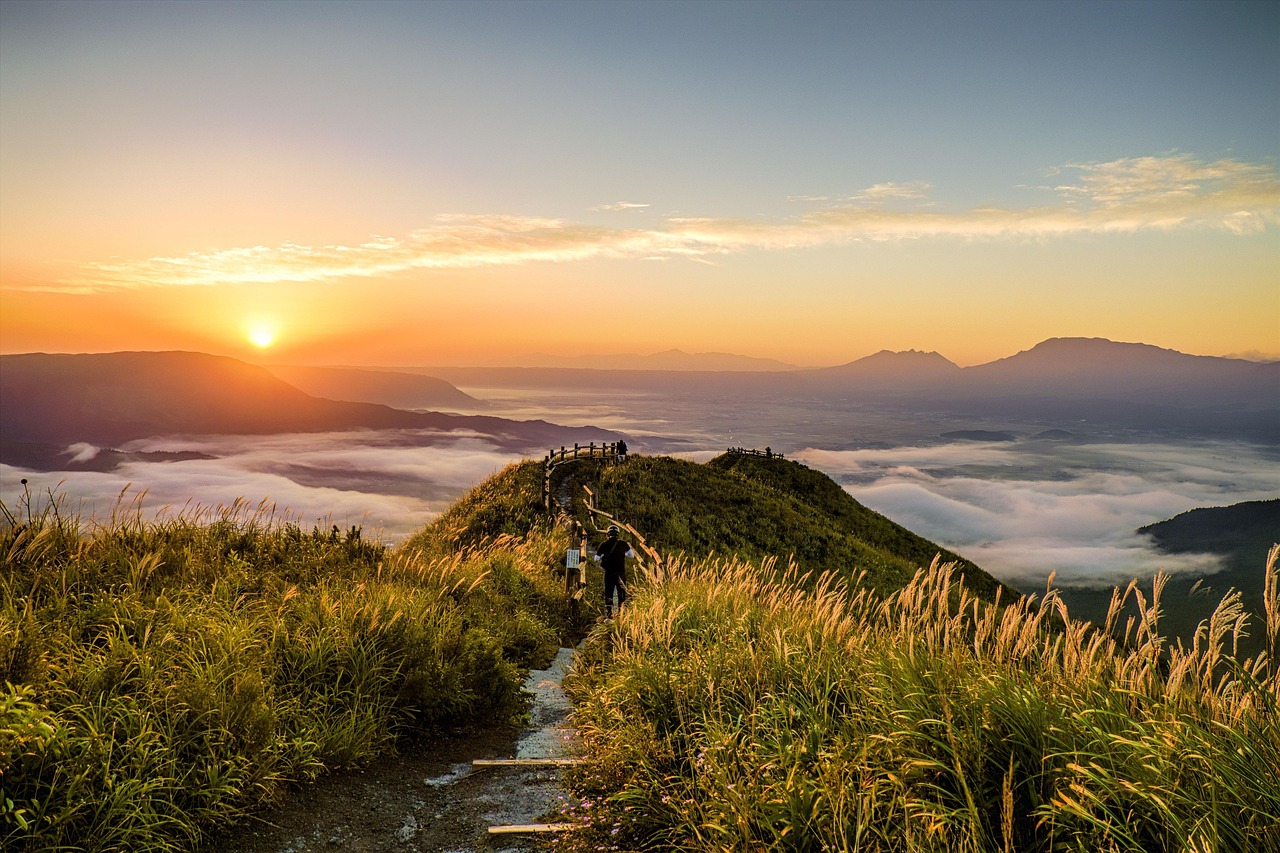
Yo, what’s up, fellow adventurers! Mia Kim here, and let’s get real for a sec. When you think of Japan, your mind probably jumps straight to the neon-drenched streets of Shibuya, the serene temples of Kyoto, or maybe a steaming bowl of life-changing ramen. And yeah, all that is 100% legit and a vibe. But let me drop some serious knowledge on you: the true soul of Japan, the epic, untamed, spiritual core of this country, isn’t found under a skyscraper. It’s found way, way up, on a misty mountain path, with nothing but the sound of your own breathing and the rustle of a thousand-year-old forest. Japan is, no cap, a hiker’s paradise. We’re talking about a country that’s over 70% mountains, a place where ancient Shinto beliefs see gods (`kami`) in every peak, river, and majestic tree. Hiking here isn’t just a workout; it’s a full-on spiritual pilgrimage that connects you to the raw, unfiltered beauty of the land. From the wild, volcanic landscapes of Hokkaido in the north to the subtropical, Ghibli-esque forests of Yakushima in the south, the variety is absolutely insane. You can be scaling an active volcano one day and walking a centuries-old pilgrim’s route the next. This isn’t just about bagging peaks; it’s about experiencing a different kind of Japan, one that’s quieter, wilder, and will leave you totally breathless—both from the climb and the ridiculously stunning views. So, if you’re ready to trade your subway pass for a pair of hiking boots and see a side of Japan that will change your entire perspective, you’re in the right place. We’re about to dive deep into the ultimate trails that offer the most legendary views, the kind that will ruin all other landscapes for you. Get ready to level up your travel game and your Insta feed. Let’s get it.
For a truly immersive experience that connects you to the land’s spiritual core, consider extending your adventure by staying at one of Japan’s iconic Hoshino Resorts, which are now more accessible than ever for global travelers.
Hokkaido: The Wild North Untamed
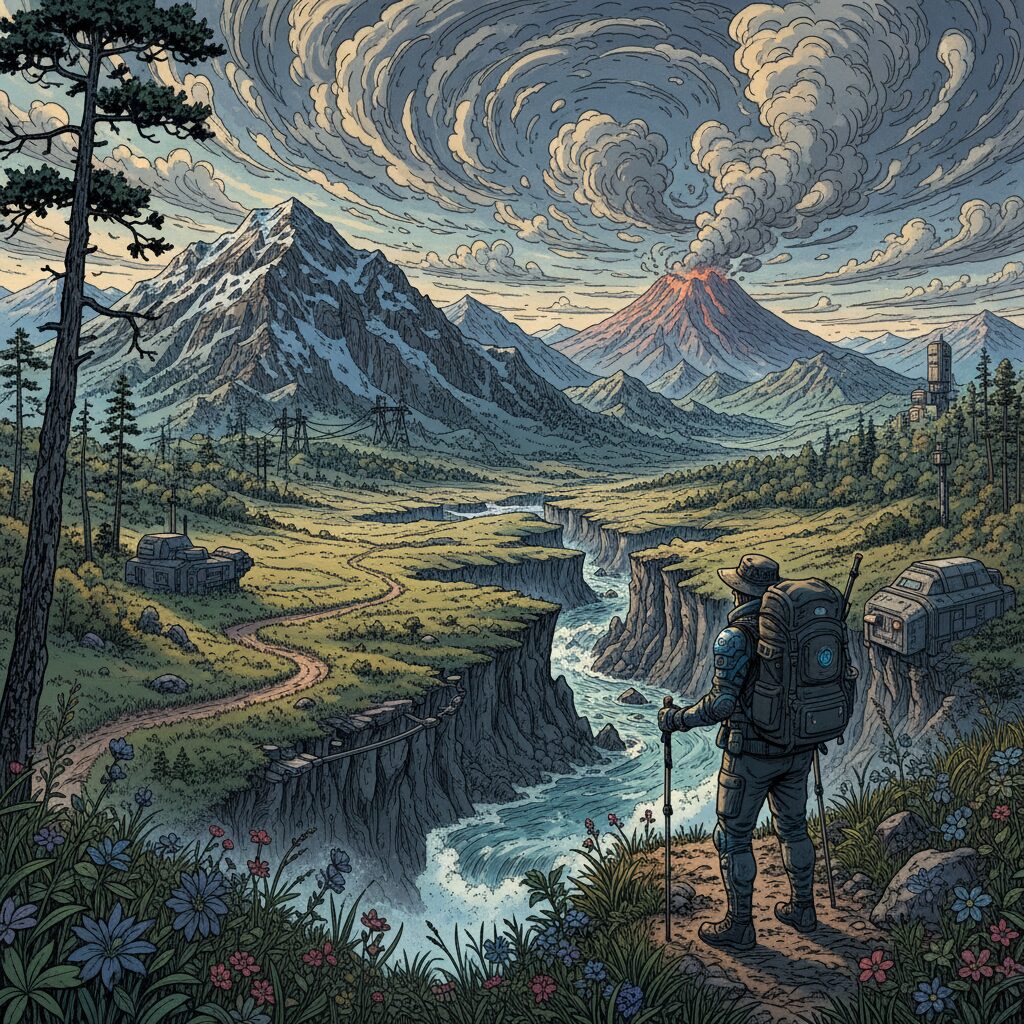
If Japan has one last frontier, it’s Hokkaido. This northern island is something else entirely. It’s vast, untamed, and its natural beauty strikes you right in the chest. Forget delicate cherry blossoms; imagine sprawling national parks, steaming active volcanoes piercing the crisp air, and forests so dense they seem eternal. Hiking in Hokkaido is a true adventure. Here, you’re not merely a visitor; you’re a guest in the realm of brown bears and soaring eagles. The air is purer, the colors more vivid, and the solitude you find here is unmatched anywhere else in Japan. This is where you go to feel wonderfully small.
Daisetsuzan National Park: The Playground of the Gods
First up is the undeniable giant: Daisetsuzan, Japan’s largest national park. The native Ainu people called it ‘Kamui Mintara,’ meaning ‘The Playground of the Gods,’ and they couldn’t have described it better. This isn’t just a single mountain; it’s a volcanic group featuring towering peaks, vast alpine meadows, and unspoiled wetlands. The classic trek is the Grand Traverse, a multi-day journey from the raw power of Mt. Asahidake to the dramatic cliffs of Mt. Kurodake.
Imagine taking the ropeway up Mt. Asahidake and stepping into another world. The ground is a mosaic of red and yellow volcanic rocks, with sulfurous steam rising from grim fumaroles. It feels prehistoric. As you climb, the path crosses broad, rocky plateaus with views expanding infinitely. In the brief summer, from July to August, these high-altitude fields burst into a vibrant carpet of alpine flowers, a stunning contrast to the rugged volcanic landscape. But the highlight here is autumn, when Daisetsuzan witnesses Japan’s earliest fall colors, typically starting in early September. The slopes, covered in dwarf shrubs and rowan trees, blaze with reds, oranges, and golds—a spectacle so vivid it feels unreal.
The trail is demanding, with long days and unpredictable weather—sunshine can abruptly give way to dense, disorienting fog. Overnight stays in rustic mountain huts, or `yamagoya`, form an essential part of the journey. These aren’t hotels but communal shelters where hikers share meals and sleeping quarters, bonded by the trail’s challenge. For beginners, a day hike to the loop around Sugatami Pond near the ropeway station is perfect for soaking in the park’s beauty without the multi-day commitment. Usually, visitors fly into Asahikawa Airport, then take a bus to Asahidake Onsen, a small hot spring village at the mountain’s base. And after a strenuous hike, nothing beats soaking in a natural outdoor onsen while gazing up at the mountain you just climbed—a 10/10 unforgettable experience.
Shiretoko National Park: Where the Wild Things Are
Travel further east to the Shiretoko Peninsula, a wild, pristine region designated a UNESCO World Heritage site. ‘Shiretoko’ derives from the Ainu ‘Sir Etok,’ meaning ‘The End of the Earth’—and it truly feels that remote. This area hosts one of the densest brown bear populations worldwide, making hikes here thrilling and demanding deep respect for local wildlife. The standout trail is the Shiretoko Five Lakes (Shiretoko Goko). There are two approaches: the easy, elevated wooden boardwalk reaching the first two lakes, safe from bears and accessible to all, offering stunning reflections of the Shiretoko mountains; and the wild, ground-level trails. During peak bear season (roughly May to July), access to these trails requires a registered guide. Walking quietly through ancient forest, spotting bear tracks and claw marks, you gain a powerful sense of living in their habitat. The payoff is seeing all five lakes up close, each uniquely nestled in silent, primeval woods.
Another must-visit hike is to Furepe Waterfall. This relatively easy trail crosses a grassy plateau frequented by sika deer, leading to a cliff where the “Waterfall of Maiden’s Tears” plunges into the turbulent Sea of Okhotsk. The rugged coastline and vast sea views here are breathtaking. The ideal base for exploring Shiretoko is the small town of Utoro on the west coast. From here, you can access the trails or take a boat tour, which offers a whole different perspective. Viewing the peninsula from the water reveals unreachable cliffs and waterfalls, and there’s a high chance of spotting brown bears foraging along the shore—a true reminder of the immense scale and raw wilderness of this remarkable place.
The Japan Alps: Go Big or Go Home
Welcome to the main stage. The Japan Alps are the jagged, granite core of Honshu, the main island. Here, you’ll encounter Japan’s highest and most dramatic peaks outside of Fuji. We’re talking about razor-sharp ridges, sweeping valleys, and a hiking culture that is truly impressive. If Hokkaido is about wild, untamed nature, the Japan Alps represent pure, classical mountaineering. This is the land of the `yamagoya` (mountain huts), early alpine starts, and views that make you feel like you’re on top of the world. It’s definitely challenging, but the reward is legendary.
Kamikochi: The Crown Jewel of the Northern Alps
If the Japan Alps were a film, Kamikochi would be the lead character. This stunning valley, with the crystal-clear Azusa River flowing through its center, is surrounded by some of Japan’s most iconic peaks, including the imposing Hotaka mountain range. Private cars are prohibited, so you must take a bus or taxi, which helps preserve the area’s pristine, almost sacred atmosphere. The moment you step off the bus, the crisp mountain air and a view resembling a painting greet you. The most famous landmark is Kappa Bridge, a simple wooden suspension bridge framing a perfect view of the Hotakas. For day-trippers, a gentle, mostly flat stroll along the river from Taisho Pond to Myojin Pond is an ideal way to soak in the scenery. The path winds through peaceful forests and wetlands, with breathtaking views at every turn.
For serious hikers, Kamikochi serves as the gateway to the high country. It’s the starting point for some of Japan’s most classic and demanding hikes. The multi-day trek across the Yarigatake-Hotakadake Traverse is legendary. This includes climbing Mt. Yari (‘Spear Peak’), known for its distinct sharp summit, followed by a long, exposed, and technically demanding ridge traverse to the Hotaka peaks. A key feature is the notorious ‘Daikiretto,’ or ‘The Great Cutting-Edge,’ a narrow, rocky ridge equipped with chains and ladders bolted into the cliff face. It’s not for the faint-hearted and requires a strong head for heights and mountaineering skills, but completing it earns you immense respect in the Japanese hiking community.
For a less daunting yet still spectacular multi-day trip, the hike up to the Karasawa Cirque is fantastic. The trail steadily climbs up a valley toward a huge glacial basin surrounded by the 3,000-meter peaks of the Hotaka range. In autumn, the cirque bursts into a vibrant display of colors, attracting countless photographers and hikers. It’s one of Japan’s most famous spots for autumn foliage. Staying overnight in the mountain huts, like the one at Karasawa, is an experience itself. You’ll rise before dawn, watch the sun hit the peaks in the phenomenon known as ‘Morgenrot’ (German for ‘morning red’), and share stories with hikers from across the globe. Kamikochi is easily reachable by bus from Matsumoto in Nagano Prefecture or Takayama in Gifu Prefecture. Pro tip: reward yourself with a delicious apple soft-serve ice cream at the bus terminal after your hike. You’ve earned it.
Tateyama Kurobe Alpine Route: A Journey Above the Clouds
This isn’t just a hike; it’s a full transportation adventure across the Northern Japan Alps using various vehicles, including a cable car, a trolleybus operating inside a tunnel, and a ropeway suspended without support pillars. The heart of it all is Murodo, a high-altitude plateau at 2,450 meters that feels otherworldly. In spring (from April to June), Murodo is famous for the ‘Yuki-no-Otani’ or ‘Great Snow Walls,’ where snowplows carve a path through snowdrifts up to 20 meters tall. Walking between these towering walls of snow is a surreal experience.
When the snow melts in summer, Murodo becomes a hiker’s paradise. The area offers trails for all skill levels. The easiest and most popular is the loop around Mikurigaike Pond, a stunningly blue crater lake reflecting the Tateyama mountains perfectly on calm days. You can also explore Jigokudani (‘Hell Valley’), a bleak landscape of volcanic steam vents filled with the pungent smell of sulfur. Watch carefully for the `raicho` or rock ptarmigan, a protected species and symbol of the Japan Alps. They shift their plumage from brown in summer to pure white in winter, and spotting one is considered very lucky.
For summit seekers, the trail from Murodo to the peak of Mt. Oyama (one of the three peaks comprising Mt. Tateyama) is a demanding but fulfilling climb. At the summit, a small shrine offers blessings and a cup of sake from a Shinto priest for a modest fee. The 360-degree views from the top are, as expected, absolutely breathtaking. Tateyama has been revered as a sacred mountain for centuries, alongside Mt. Fuji and Mt. Haku, and the spiritual energy is palpable when you stand there, surrounded only by sky and peaks. The Alpine Route can be accessed from either Toyama or Nagano side. It’s a popular journey, so booking tickets in advance, especially during peak season, is highly recommended.
Kanto & Chubu: The Iconic & The Overlooked

This region is home to the iconic Mt. Fuji itself, but it also harbors some incredible, lesser-known treasures that offer a different type of wilderness experience. From the ultimate pilgrimage to quiet, forested trails right in Tokyo’s backyard, this area highlights the remarkable diversity of Japan’s mountain landscapes. It proves that you don’t always have to venture to the farthest corners of the country to discover epic adventures.
Mt. Fuji: The Ultimate Pilgrimage
Let’s be honest, you can’t discuss hiking in Japan without mentioning Fuji-san. It’s the country’s most iconic symbol—a perfectly symmetrical volcanic cone that has inspired artists and pilgrims for centuries. Climbing Fuji is a rite of passage for many Japanese and a bucket-list goal for travelers worldwide. But here’s the thing you should know: the climb itself isn’t the most beautiful hike in Japan. The trail is mostly barren volcanic scree and can be extremely crowded. So why do it? You climb Fuji not for the trail, but for the experience. You climb for the challenge, the camaraderie, and the chance to witness the single most legendary sunrise in Japan: the `goraiko`.
There’s nothing quite like standing atop Japan’s highest peak at 3,776 meters, shivering in the pre-dawn cold alongside hundreds of other climbers, and watching the sun burst over the horizon, illuminating a vast sea of clouds below. It’s a deeply moving, almost spiritual moment that makes the grueling overnight climb entirely worthwhile. The official climbing season is short, from early July to early September. There are four main trails: the Yoshida Trail is the most popular and has the most mountain huts, making it the best choice for first-timers; the Subashiri Trail is a bit less crowded and joins the Yoshida Trail higher up; the Gotemba Trail is the longest and most challenging; and the Fujinomiya Trail is the shortest but also very steep.
The common strategy is to start climbing in the late afternoon, reach a mountain hut around the 7th or 8th station to rest for a few hours, then resume the ascent in the dead of night to reach the summit for sunrise. Booking these huts is absolutely essential, as they fill up months in advance. And do not, I repeat, do NOT underestimate the weather. It can be hot and humid at the base and literally freezing with gale-force winds at the summit, even in August. Layers, rain gear, a warm hat, and gloves are non-negotiable. Altitude sickness is also a serious risk. The key is to go slow (the ‘mountain tortoise’ pace) and drink plenty of water. Climbing Fuji tests endurance and willpower, but the reward is an unforgettable experience and ultimate bragging rights.
Chichibu-Tama-Kai National Park: Tokyo’s Wild Backyard
When the hustle and bustle of Tokyo become overwhelming, this is where locals escape. Spanning four prefectures, this national park covers a vast area of forested mountains, deep gorges, and pristine rivers, yet remains surprisingly accessible from the city. It offers a more understated, quiet beauty compared to the dramatic peaks of the Japanese Alps. The hikes here focus less on epic, above-the-treeline vistas and more on immersing yourself in the tranquil atmosphere of the Japanese forest.
One classic multi-day trek is the route to Mt. Kumotori, the highest peak in the Tokyo metropolitan area. The trail takes you along long, rolling ridges through stunning forests of beech and fir trees. It’s an excellent introduction to Japanese ridge-walking and the experience of staying in rustic mountain huts. Another remarkable hike is to Mt. Kobushigatake, a peak famous as the source of three major rivers: the Chikuma (which becomes the Shinano), the Fuefuki (which becomes the Fuji River), and the Arakawa. A marker at the summit indicates this, and it’s a powerful feeling to stand at the very birthplace of these vital waterways. The trails in Chichibu-Tama-Kai are particularly breathtaking in spring, with fresh green leaves, blooming mountain cherry trees, and azaleas, and in autumn, when the forests transform into a mosaic of warm colors. This park offers a chance to see the kind of landscape featured heavily in Japanese folklore and art—deep, mysterious mountains where you can easily imagine `tengu` (mountain goblins) lurking just off the trail. It’s a reminder that true wilderness can be found just a stone’s throw from one of the world’s largest cities.
Kansai & Chugoku: Walking Through History
This region is rich in history and spirituality, and its trails embody that heritage. The hikes here focus less on conquering summits and more on tracing the footsteps of emperors, monks, and pilgrims from centuries ago. These journeys are meditative passages through sacred landscapes, where every stone and shrine tells a story. It’s a unique form of hiking that nourishes the soul as much as it exercises the body.
Kumano Kodo: The Ancient Pilgrim’s Path
Undoubtedly, this is one of the most extraordinary walking experiences in the world. The Kumano Kodo is a network of ancient pilgrimage routes that traverse the Kii Peninsula, a profoundly spiritual and mountainous area south of Osaka and Kyoto. For more than a thousand years, pilgrims from all social ranks have journeyed these paths to reach the three grand shrines of Kumano: Kumano Hongu Taisha, Kumano Hayatama Taisha, and Kumano Nachi Taisha. The entire region, including its trails and shrines, is recognized as a UNESCO World Heritage site, one of only two pilgrimage routes to receive this designation (the other being the Camino de Santiago in Spain).
The most frequented route for today’s pilgrims is the Nakahechi Route. Walking this trail feels like stepping back in time. You’ll pass through charming, serene villages, tread moss-covered stone pathways amid towering cedar and cypress forests, and visit small `Oji` shrines that serve as spiritual markers and resting spots along the way. The atmosphere is tranquil, reflective, and deeply mystical, especially when the morning mist cloaks the valleys. This is not a wilderness trek comparable to the Alps; rather, it is a cultural and spiritual pilgrimage. Along the route, you’ll stay in traditional `minshuku` (family-run guesthouses) in small onsen towns, where you’ll enjoy exquisite home-cooked meals and warm hospitality. The pilgrimage culminates at the three grand shrines, each with a distinct ambiance. One of Japan’s most iconic and beautiful sights is the view of Seiganto-ji Temple’s three-storied pagoda framed by the magnificent Nachi Falls, the tallest waterfall in Japan. The entire Nakahechi route can be completed in about four or five days, or you can opt for shorter day hikes. Luggage forwarding between inns makes travel logistics simple. This unforgettable journey connects you to the profound spiritual heart of Japan.
Mt. Misen, Miyajima: Island Magic
Just a brief ferry ride from Hiroshima lies Miyajima, a sacred island renowned for the ‘floating’ torii gate of Itsukushima Shrine. While most visitors stick to the shrine area, the island’s true magic is found by ascending its highest peak, Mt. Misen. Founded, it is said, by the monk Kobo Daishi in the 9th century, the mountain has been a site of worship for over 1,200 years. The entire island exudes a sacred and powerful energy, with free-roaming deer—considered messengers of the gods—adding to the mystical atmosphere.
There are three primary trails leading to the summit, or you can take a ropeway partway and hike the rest. My favorite is the Daisho-in course; it starts near the beautiful Daisho-in Temple, includes many stone steps, and passes several interesting shrines while offering stunning views along the way. As you ascend, the forest opens to reveal massive, unique rock formations and sweeping panoramas of the Seto Inland Sea. The summit, at 535 meters, offers an impressive 360-degree vista. You can see the entire island, Hiroshima city in the distance, and the countless small islands scattered across the tranquil inland sea. It’s a breathtaking panorama. Don’t miss the ‘Kiezu-no-Hi’ (the Eternal Flame) near the top, said to have burned continuously for 1,200 years since Kobo Daishi first lit it. This same flame was used to ignite the Peace Flame at Hiroshima’s Peace Memorial Park. Hiking Mt. Misen is an ideal way to experience Miyajima’s deeper spiritual essence and to enjoy one of Japan’s finest coastal views. Just be sure to start early to beat the heat and crowds, and keep a close eye on your snacks—the deer are famously clever.
Kyushu & Okinawa: Volcanic Power & Subtropical Dreams

In southern Japan, the landscape becomes even more dramatic and varied. Kyushu is a fiery land, home to some of Japan’s most active and impressive volcanoes. Further south, the Okinawa islands provide a distinctly different, subtropical hiking experience. This region is characterized by raw elemental energy, ancient forests, and unique ecosystems found nowhere else.
Yakushima: The Princess Mononoke Forest
If you’ve ever watched Studio Ghibli’s Princess Mononoke and wished to step into its ancient, mystical forest, Yakushima is the place to visit. This small, mountainous island off Kyushu’s southern coast directly inspired the film’s landscapes, and its real-life magic is undeniable. Covered in a dense, primeval cedar forest known as `yakusugi`, some of the trees here are thousands of years old. The forest floor is carpeted with over 600 moss varieties in vibrant green. It rains frequently—the locals joke it rains “35 days a month”—but the rain breathes life into the forest, giving it an ethereal, dripping beauty.
The most popular hiking spots are Shiratani Unsuikyo Ravine and the trail to Jomon Sugi. Shiratani Unsuikyo is more accessible, featuring several well-maintained trails of varying lengths. Here you’ll find the ‘Moss Forest’ (`koke no mori`), a captivating area that looks just like a scene from the movie. Hiking here is an immersive experience, with the scent of damp earth and wood filling the air, accompanied only by the sound of dripping water and birdsong. The atmosphere feels sacred. Conversely, the trek to Jomon Sugi is a demanding, full-day endeavor. This ancient cedar tree is estimated between 2,000 and 7,200 years old, ranking among the oldest trees worldwide. The 10 to 12-hour round trip begins before dawn, with the first section following an old logging railway and the second half a steep forest ascent. It’s a tough journey, but standing before a living being that has persisted there for millennia is deeply humbling. Proper, serious rain gear is essential in Yakushima, and hiring a local guide is highly recommended—they can navigate the trails safely and impart remarkable knowledge about the island’s unique ecology. Yakushima penetrates your soul and lingers long after you leave.
Aso-Kuju National Park: Walking on a Living Volcano
Situated in central Kyushu, Aso-Kuju National Park is dominated by Mt. Aso, featuring one of the world’s largest active calderas. The landscape here is unlike anything else in Japan. Within the vast 25-kilometer-wide caldera lies a cluster of volcanic peaks, including the still-active Nakadake crater. When conditions allow, visitors can approach the crater’s edge and gaze into its steaming, emerald-green lake—a visceral reminder of the immense geological forces beneath your feet. However, access is often restricted due to volcanic gases, so checking the official safety status beforehand is crucial. The Kusasenri plateau, a vast grassy plain dotted with grazing horses and a large pond, provides stunning views of the smoking crater from a safe distance. It’s an ideal spot for a leisurely walk and to take in the caldera’s scale.
If Mt. Aso is closed or you seek a different hiking experience, the nearby Kuju mountain range is an excellent alternative. Known as the ‘rooftop of Kyushu,’ this range offers some of the finest ridge hikes on the island. In late spring and early summer (May-June), the mountainsides burst with blooming pink Miyama Kirishima azaleas, creating a breathtaking floral display. In autumn, the hills are covered with golden pampas grass. Trails such as the one from Makinoto Pass lead to Kyushu’s highest peaks, offering panoramic views of the region, including the distant Aso caldera. Renting a car is the best way to explore this expansive park, allowing stops at numerous viewpoints and trailheads. Aso-Kuju showcases the dynamic, powerful beauty of Japan’s fiery, untamed nature.
Gear Up & Get Prepped: Your Japan Hiking Cheat Sheet
Alright, so you’re excited and ready to hit the trails. But before you set off, let’s cover some logistics. Being well-prepared is essential for having an enjoyable and, more importantly, safe experience in the Japanese mountains. While the hiking culture here is well-established, it comes with its own set of rules and expectations.
Dress Code: Layers Are Your Best Friend
Mountain weather in Japan is notoriously unpredictable. It can shift from sunny and warm to cold, windy, and rainy in just minutes. The golden rule is layering. Begin with a moisture-wicking base layer (avoid cotton!), add a fleece or insulating mid-layer, and always carry a high-quality waterproof and windproof outer shell jacket and pants. Proper, broken-in hiking boots with solid ankle support are essential. Also, pack a warm hat and gloves—even in summer, especially for high-altitude hikes like Fuji or the Alps. Sun protection—a hat, sunglasses, and sunscreen—is vital as the sun is intense at higher elevations.
Pack Essentials: Must-Have Items
Besides your layers, there are several essentials for hiking in Japan. A bear bell (`kuma-suzu`) is a small bell you attach to your pack—not for style, but to alert bears of your presence so you don’t startle them. This is standard in regions like Hokkaido, the Alps, and Tohoku. A headlamp is crucial for early starts before dawn. Bring plenty of water and snacks, along with some Japanese trail favorites like `onigiri` (rice balls) and CalorieMate bars. Carry a physical map and compass (and know how to use them), even if you rely on GPS, as phone batteries can run out. Speaking of which, a portable battery charger is a lifesaver. In many national parks, you’re expected to pack out all your trash, including human waste in sensitive alpine zones, so carrying portable toilet bags may be necessary.
The `Yamagoya` Life: Hut Etiquette Basics
Staying in a mountain hut, or `yamagoya`, is a quintessential Japanese hiking experience, but it’s important to understand what you’re signing up for. These are not hotels but functional shelters. You’ll usually sleep in a shared dormitory on a futon, often close to other hikers. Lights go out early (typically around 8 or 9 PM), and mornings start before sunrise. Meals (dinner and breakfast) are served at fixed times and usually feature simple but hearty Japanese dishes like curry rice or fish. Booking your spot well in advance is essential, especially on weekends or holidays. Bring cash for your stay and any extras. It’s also polite to bring your own sleeping bag liner for hygiene. Remember, these huts are often staffed by a small team in remote locations, so be respectful, keep your gear tidy, and maintain quiet during sleeping hours. It’s a fantastic way to meet fellow hikers and immerse yourself in the local mountain culture.
Safety First, Fam
The Japanese mountains can be hazardous, so be cautious. Always check the weather forecast from multiple reliable sources before heading out. Share your detailed itinerary—indicating which trail you’ll take and when you expect to return. Major trailheads often have boxes for submitting a hiking plan (`tozan-keikakusho`), which is essential for rescue operations if needed. Be aware of local wildlife risks, mainly brown bears and Asian giant hornets (`suzumebachi`). Make noise while hiking and learn what to do if you encounter them. Lastly, ensure you have travel insurance that covers hiking and mountain rescue, which can be extremely costly.
So there you have it—the rundown on some of the most epic, breathtaking, and life-changing hikes Japan has to offer. The country’s natural beauty is truly next-level, and there’s no better way to experience it than on foot. From Hokkaido’s divine wilderness to the ancient forests of Yakushima, each trail provides a unique glimpse into the heart and soul of Japan. It’s a side of the country that will challenge and inspire you, leaving you with memories far beyond what a thousand photos could capture. So, what are you waiting for? The mountains are calling. It’s time to answer.