
You’ve asked me why Japanese food culture seems so obsessed with seasonality, with this concept of ‘shun’ (旬). It’s a great question, because it gets right to the heart of what makes eating in Japan feel so different. It’s not just about what’s fresh; it’s a cultural, philosophical, and almost spiritual devotion to a specific moment in time. In a world where you can get Chilean asparagus in November and Australian strawberries in July, Japan’s insistence on waiting for the exact right moment for a fish, a fruit, or a vegetable can seem almost archaic. But it’s not. It’s a conscious choice, a deeply ingrained appreciation for the rhythm of nature that elevates food from mere sustenance to a form of communion.
At its simplest, ‘shun’ refers to the peak season of an ingredient. But this definition is deceptively shallow. It’s not a broad, three-month window like “summer.” It’s a much narrower, more intense period—sometimes just a few weeks—when a particular ingredient is at its absolute zenith of flavor, nutrition, and vitality. It’s when the fat content of a fish is perfect, the sugar in a fruit is most concentrated, and the bitterness of a mountain vegetable is most invigorating. It’s a celebration of food not just as a product, but as a living thing at the peak of its life cycle. This isn’t just a preference; it’s a fundamental principle that dictates menus from the most exalted kaiseki restaurants in Kyoto to the bento boxes sold at a local supermarket. Understanding shun is understanding that in Japan, when you eat something is just as important as what you are eating.
Japan’s deep commitment to shun not only celebrates food at its seasonal peak but also invites us to consider how the deceptive allure of imitation cuisine challenges our perceptions of authenticity.
The Essence of Fleeting Perfection

To truly understand shun, one must set aside the Western notion of four distinct seasons. Japanese culture, closely connected to its agrarian roots, views the year as a more fluid and intricate cycle. This perspective is embodied in the traditional calendar, which divides the year into 24 minor seasons (sekki) and further into 72 micro-seasons (kō), each lasting roughly five days. These ancient markers—such as “East Wind Melts the Ice” or “First Peach Blossoms”—heighten awareness of subtle environmental changes. Shun functions at this detailed level. It’s not merely about “spring vegetables”; it’s about the precise week when the bitter, earthy fukinoto (butterbur scape) emerges from the melting snow, signaling winter’s true end.
Beyond the Calendar: Three Phases of Shun
The concept is even more nuanced than a single peak. True connoisseurs recognize three distinct phases within an ingredient’s shun, each offering its own unique delight.
The first is hashiri, the “first run.” This marks the very start of the season when the ingredient first appears. It may not yet be at its peak flavor, but it carries a strong sense of excitement and novelty. Eating hashiri is about anticipation—celebrating the return of a cherished taste after a long absence. It’s a flavor of hope, often valued for its fresh, clean, and delicate nature. Consider the first bonito (hatsu-gatsuo) of the year, leaner than its autumn counterpart but treasured for its crisp, vibrant flavor that signals summer’s approach.
Next is sakari, the core of the season. This is the true peak, the moment of greatest abundance and flavor. The ingredient is plentiful, affordable, and at its fullest, richest expression. This is when tomatoes burst with sunshine, mackerel is oily and sumptuous, and sweet corn tastes incredibly sweet. Sakari represents fulfillment and satisfaction—enjoying nature’s bounty at its height. It’s the taste of pure, unblemished perfection.
Lastly, there is nagori, the “lingering trace” or farewell. This is the season’s end—the final opportunity to savor the ingredient before it vanishes for another year. Flavors may shift, deepening, mellowing, or becoming earthier. Nagori carries a subtle bittersweetness, a gentle melancholy. It’s a time for reflection and gratitude, a poignant reminder of things’ transience. Eating the last grilled Pacific saury (sanma) of autumn, richer and oilier in flavor, is a way to say a fond goodbye to the season. These three phases turn eating into a narrative—a story of birth, peak, and gracious decline.
A Taste of Time Itself
Ultimately, eating shun means tasting a fragment of time. You experience the specific sunlight, rainfall, and soil conditions that combined to create that perfect ingredient at that perfect moment. An August tomato reflects the long, hot days of a Japanese summer. A wild mushroom in October carries the essence of damp earth and falling leaves. This explains why simplicity is so highly prized in Japanese cuisine. The aim isn’t to cover or alter an ingredient with heavy sauces or complicated techniques but to highlight its inherent, seasonal character. Often, the best way to prepare a peak-season fish is simply with a pinch of salt and a quick grill. The finest fruit is best enjoyed as is. The chef’s role is not that of a conjurer, but a curator—presenting nature’s masterpiece with minimal intervention.
Where Does This Devotion Come From?
This reverence for shun is not merely a modern foodie trend. It is a philosophy deeply rooted in Japan’s geography, indigenous religion, Buddhist beliefs, and history as a society shaped by the unpredictability of nature. It originates from an era when eating according to the seasons was not a choice but a vital means of survival.
Whispers from the Rice Paddies: An Agrarian Heartbeat
For centuries, Japan existed as an isolated, agrarian society, where life centered on the delicate yet dependable cycle of planting and harvesting. Survival required a profound, intimate understanding of the land and its rhythms. People knew exactly when bamboo shoots were tender enough to harvest, when local fish would swim upstream to spawn, and when persimmons were sweetened by the first frost. This knowledge marked the difference between abundance and famine. Such practical necessity nurtured a deep respect for nature’s schedule. Today’s appreciation for shun is a cultural reverberation of this ancestral wisdom, a remnant from a time when the calendar was inscribed in soil and water rather than on a smartphone screen.
Shinto Roots: Gratitude for Nature’s Gifts
Shinto, Japan’s indigenous religion, is a form of animism that perceives divinity (kami) in all things—mountains, rivers, trees, and even extraordinary rocks. This perspective dissolves the boundary between humanity and the natural world. Nature is not to be dominated or exploited; it is a living presence to be respected and harmoniously coexisted with. In this view, food is far more than a commodity—it is a gift from the kami. The first rice harvest, the initial catch of the season—these are, and still remain, offerings made to the gods at shrines nationwide in rituals of gratitude. Eating shun is a way of engaging in this sacred cycle. It is an act of recognizing the divine within nature and expressing thankfulness for its nourishment. By savoring an ingredient at its peak, you honor the life force it embodies.
Buddhist Echoes: Embracing Impermanence
Buddhism, introduced to Japan in the 6th century, brought profound philosophical ideas that harmonized deeply with native cultural values. Central among these is the concept of impermanence (mujō), the realization that all things are transient and in a constant state of change. Nothing endures forever. Seasons shift, flowers bloom and fade, life begins and ends. Rather than regard this as sorrowful, Japanese aesthetics find unique beauty in this transience, a notion called mono no aware. The fleeting blossom of the cherry tree makes its beauty all the more moving. Shun in cuisine is the culinary embodiment of this idea. The fact that fresh matsutake mushrooms can only be savored for a few brief weeks in autumn renders the experience infinitely precious. This limited window compels you to be fully present, to notice, and to relish the moment before it slips away. It imparts a lesson in mindfulness, in embracing the beauty of the here and now, knowing it will not last.
Experiencing Shun in Modern Japan

Even in the hyper-modern, convenience-oriented landscape of contemporary Japan, the spirit of shun remains vibrant and alive. It is not limited to upscale restaurants but is woven into the everyday culinary culture.
The Supermarket as a Seasonal Stage
Step into any Japanese supermarket, and you will witness shun in practice. The most prominent displays at the front of the produce section always highlight what is currently in season. In spring, there are piles of strawberries, tender bamboo shoots, and bright green fava beans. Come autumn, the focus shifts to grapes, persimmons, sweet potatoes, and a stunning variety of mushrooms. Signage often explicitly uses the word ‘shun’ to emphasize these items. The fish counter follows a similar pattern, with selections changing significantly throughout the year, tracking the migration and spawning cycles of various species. This approach is not merely a marketing tactic; it reflects genuine consumer demand, as people actively seek these ingredients for their superior flavor and value.
Kaiseki: The Art of Culinary Timekeeping
At the pinnacle of Japanese cuisine, shun serves as the central organizing concept. Kaiseki ryori, the traditional multi-course haute cuisine, is a carefully crafted tribute to the specific season, often down to the exact day of the meal. The chef functions as a poet, using ingredients to create a culinary narrative that mirrors the current natural moment. A meal might open with a small appetizer showcasing a single, perfect spring vegetable. The sashimi course features fish at their absolute peak. The grilled course highlights the bounty of the sea or mountains, while even the garnishes—a maple leaf in autumn, a cherry blossom in spring—are selected to evoke the season. The plates and bowls are often chosen to complement the seasonal theme. A kaiseki meal is a fully immersive experience, a meditation on time and nature expressed through food.
The Humble Home Kitchen
The principle of shun holds just as much significance in home cooking. Japanese home cooks take pride in their skill at using seasonal ingredients to their fullest potential. A classic home-cooked dish in early summer might be a simple bowl of rice with green peas (mame gohan). In autumn, it could be rice prepared with chestnuts (kuri gohan) or sweet potatoes. Family recipes and traditions frequently revolve around seasonal events, such as making pickled plums (umeboshi) during the rainy season in June or celebrating the New Year with a special assortment of preserved foods (osechi ryori). These customs link families to the rhythms of the year and pass down a respect for seasonal eating from generation to generation.
A Year in Shun: A Culinary Journey
To make the concept clearer, let’s journey through the year and explore some of the key ingredients that define the shun of each season.
Spring’s Awakening: Sansai and Takenoko
Spring brings bitter flavors thought to awaken the body after winter’s rest. The stars of this season are sansai, or wild mountain vegetables. Varieties such as fukinoto (butterbur), tara no me (angelica tree shoots), and warabi (bracken fern) are gathered from mountain slopes. They offer a complex bitterness and earthiness that is highly valued and are often enjoyed as tempura, which tempers their bitterness with a light, crispy batter. Spring is also the season for takenoko, or bamboo shoots. Freshly harvested bamboo, unlike canned, is tender and delicately sweet. It must be cooked promptly to avoid becoming tough and astringent. Simmering it with rice in takenoko gohan is a classic way to celebrate the arrival of spring.
Summer’s Intensity: Ayu and Unagi
In Japan, summer is hot and humid, and the cuisine reflects a craving for refreshing, stamina-boosting flavors. A quintessential summer delight is grilled ayu, or sweetfish. This small river fish feeds on moss, which imparts a unique, watermelon-like aroma to its flesh. Traditionally, it is grilled whole with salt (shioyaki), often skewered to resemble its swimming posture. The slight bitterness of its internal organs is regarded as a delicacy. Summer also marks the peak season for unagi, or freshwater eel. Rich in vitamins, it is customarily eaten on the Day of the Ox (doyo no ushi no hi) to help ward off summer fatigue. Charcoal-grilled and coated with a sweet soy-based sauce, it’s a rich, savory, and deeply satisfying dish.
Autumn’s Bounty: Sanma and Shinmai
Autumn is the time of abundance—the harvest season. The undisputed autumn fish champion is sanma, the Pacific saury or mackerel pike. During its shun, it is exceptionally fatty, flavorful, and rich. The simplest preparation is often best: grilled whole with salt, served with grated daikon radish and a wedge of sudachi citrus. The aroma of grilling sanma is synonymous with autumn in Japan. This season is also when shinmai, or “new rice” from the first harvest, is enjoyed. Shinmai is more moist, aromatic, and sweeter than rice stored from previous harvests. For many Japanese, a simple bowl of freshly cooked shinmai is one of the greatest gastronomic pleasures—a true taste of the year’s labor realized.
Winter’s Embrace: Buri and Fugu
As temperatures drop, ingredients become richer and more comforting. Winter is the season for buri, or mature yellowtail. As water cools, the fish accumulates a thick layer of fat, resulting in flesh that is rich and buttery. It is savored as thick-cut sashimi or in buri-daikon, a warming dish where the fish is simmered with large daikon radish chunks that soak up all the savory goodness. Winter is also known—sometimes notoriously—for fugu, the pufferfish. The fish’s potent toxin is concentrated in its organs, which must be carefully removed by a licensed chef. In winter, the flesh is at its firmest and most flavorful. Served as paper-thin sashimi (tessa) or in a hot pot (tecchiri), it offers a uniquely clean, elegant taste along with the thrill of culinary adventure.
The Philosophy on a Plate
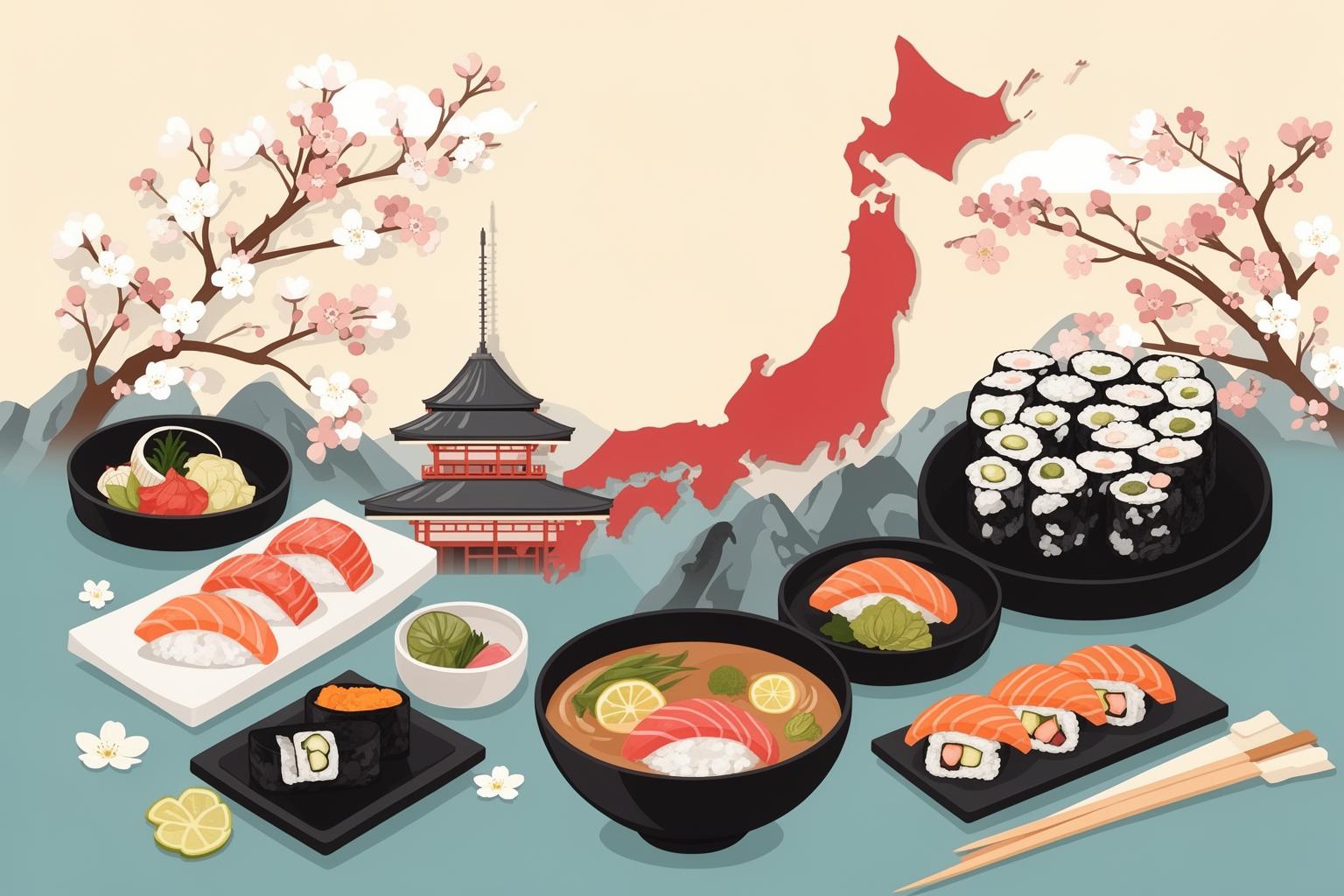
At its essence, the devotion to shun goes beyond merely good taste. It represents a philosophy that links the dining experience to the broader universe, grounding the eater in a particular moment and place.
Shun and Mono no Aware: The Elegance of Impermanence
As noted, shun is the edible expression of mono no aware, the moving beauty found in transience. Recognizing that the flavor you are savoring is fleeting heightens its value. It invites you to slow down, focus, and be fully immersed in the sensory moment. This is a form of mindfulness. You cherish the crispness of the first spring cabbage because you understand that soon it will vanish, replaced by the rich sweetness of a summer tomato. This cycle of arrival and departure creates a rhythm and depth to the culinary year. It wards off monotony and nurtures a continual sense of excitement and exploration.
A Conversation with Nature
Eating seasonally is a dialogue with the natural world. It asks you to heed what the environment presents at any given time. This stands in stark contrast to the modern industrial food system, which operates like a monologue: humans demanding whatever they want, whenever they want it, regardless of season or location. Practicing shun cultivates humility and respect. It recognizes that we are part of a larger ecological network, not its rulers. It is a small yet meaningful act of harmonizing one’s life with the greater rhythms of the Earth.
Can Shun Survive the 21st Century?
In an era of global supply chains, climate-controlled greenhouses, and a nonstop culture of convenience, one might question whether a concept like shun can survive. The pressures against it are undeniable.
The Threat of Convenience
Younger generations, raised amid unprecedented choice and convenience, may not share the same deep connection to the seasons as their parents and grandparents. When anything is available at any time, the specialness of waiting fades. The skill of knowing how to prepare seasonal ingredients is also less common than it used to be. Why bother learning how to properly prepare fresh bamboo shoots when pre-cooked, vacuum-sealed versions are easily accessible? The allure of convenience is a powerful force that threatens to erode this traditional knowledge.
The Enduring Power of a Ritual
Despite these obstacles, devotion to shun remains remarkably strong. It is so deeply rooted in the culture that it has become part of the national identity. It serves as a source of pleasure, pride, and connection to the past. High-end chefs continue to be its most passionate advocates, but its spirit also thrives in school lunch programs that highlight seasonal ingredients and in the lasting popularity of seasonal festivals and food-related customs. Perhaps in our increasingly virtual and disconnected world, the tangible, sensory experience of shun is more important than ever. It provides a way to reconnect with the physical world, mark the passage of time meaningfully, and find profound beauty in the simple, fleeting gifts of nature. It reminds us that sometimes the best things in life are not those we can have whenever we want, but those we must wait for.