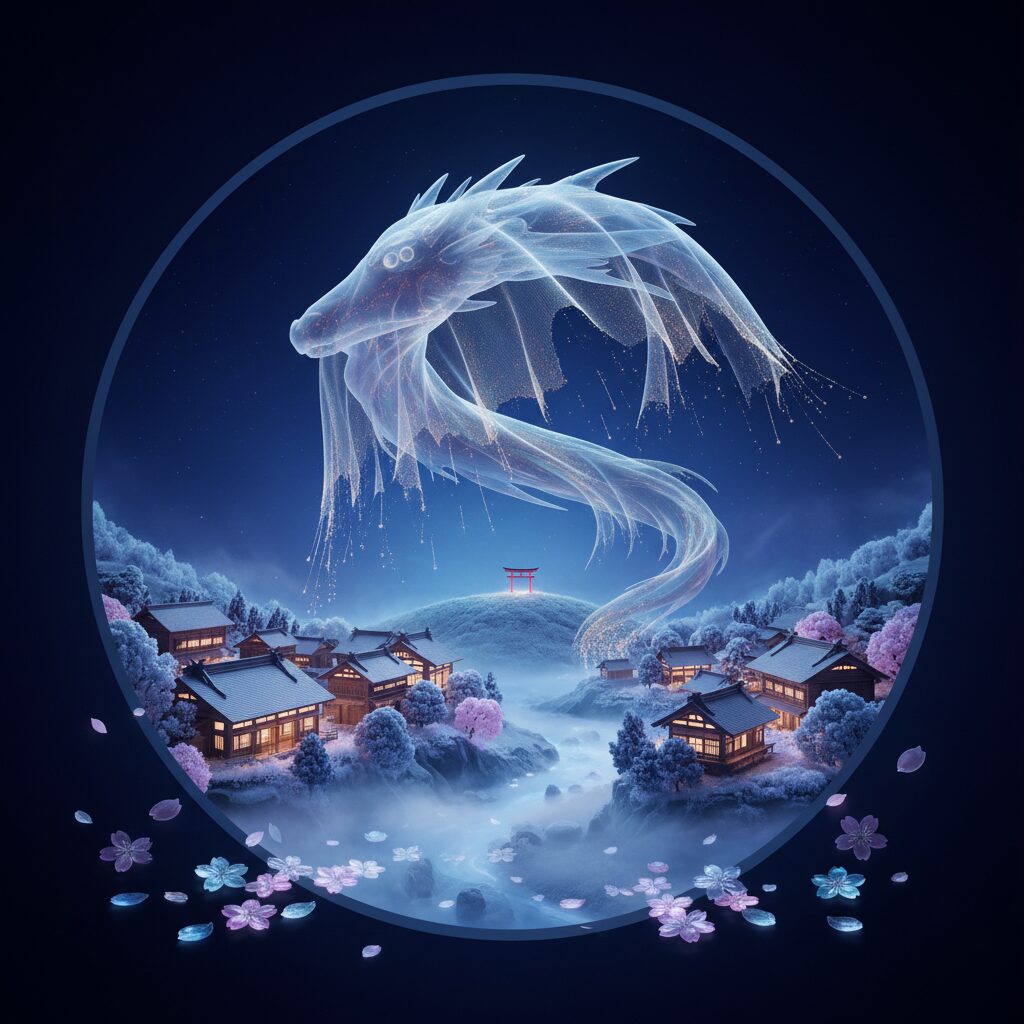
Yo, what’s up. Taro Kobayashi here. So, let’s get real for a sec. You’ve probably seen the pics on the ‘gram, right? Golden hour hitting some rice paddies, misty mountains in the background, maybe a lone temple gate. It’s a whole aesthetic. Looks peaceful, serene, like you could just vibe out there forever. And for the most part, you’d be right. But stick around. Wait for the sun to dip below those mountains. That’s when things change. The vibe shift is real, and it’s fast. That chill, beautiful landscape suddenly gets this… edge. The shadows get a little too long, the silence gets a little too loud, and this primal part of your brain starts screaming, “Dude, maybe we should bounce.” You feel watched. You feel like you’re one wrong step away from just… vanishing. If you’ve ever felt that, you’re not tripping. You’re tapping into something deep, something legit unsettling that’s baked into the Japanese landscape and psyche. We’re talking about Kamikakushi—literally, being “hidden by the gods,” or as you probably know it, “spirited away.” And no, it’s not just a super sick movie by Studio Ghibli. It’s a genuine, deep-seated cultural fear that explains why your relaxing hike can suddenly feel like the opening scene of a horror flick. It’s this wild mashup of legit dangerous geography, grim history, and a whole pantheon of spirits who maybe aren’t as friendly as they look in the anime. It’s the reason old folks will tell you not to stay out too late, the reason certain mountains have a rep. So, if you really wanna get why Japan is the way it is—beautiful but kinda terrifying, modern but ancient—you gotta understand why we get so sketched out when the sun goes down in the middle of nowhere. It’s the key to unlocking that beautifully unsettling vibe you can’t find anywhere else.
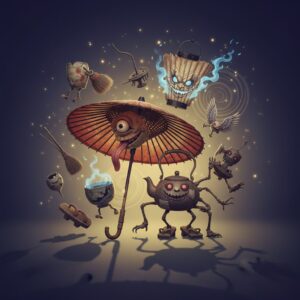
To truly grasp this animistic worldview where spirits inhabit the landscape, consider how it extends to everyday objects, as explored in our article on tsukumogami, the yokai born from aged items.
The Vibe Shift: From Chill Scenery to ‘Get Outta Here’
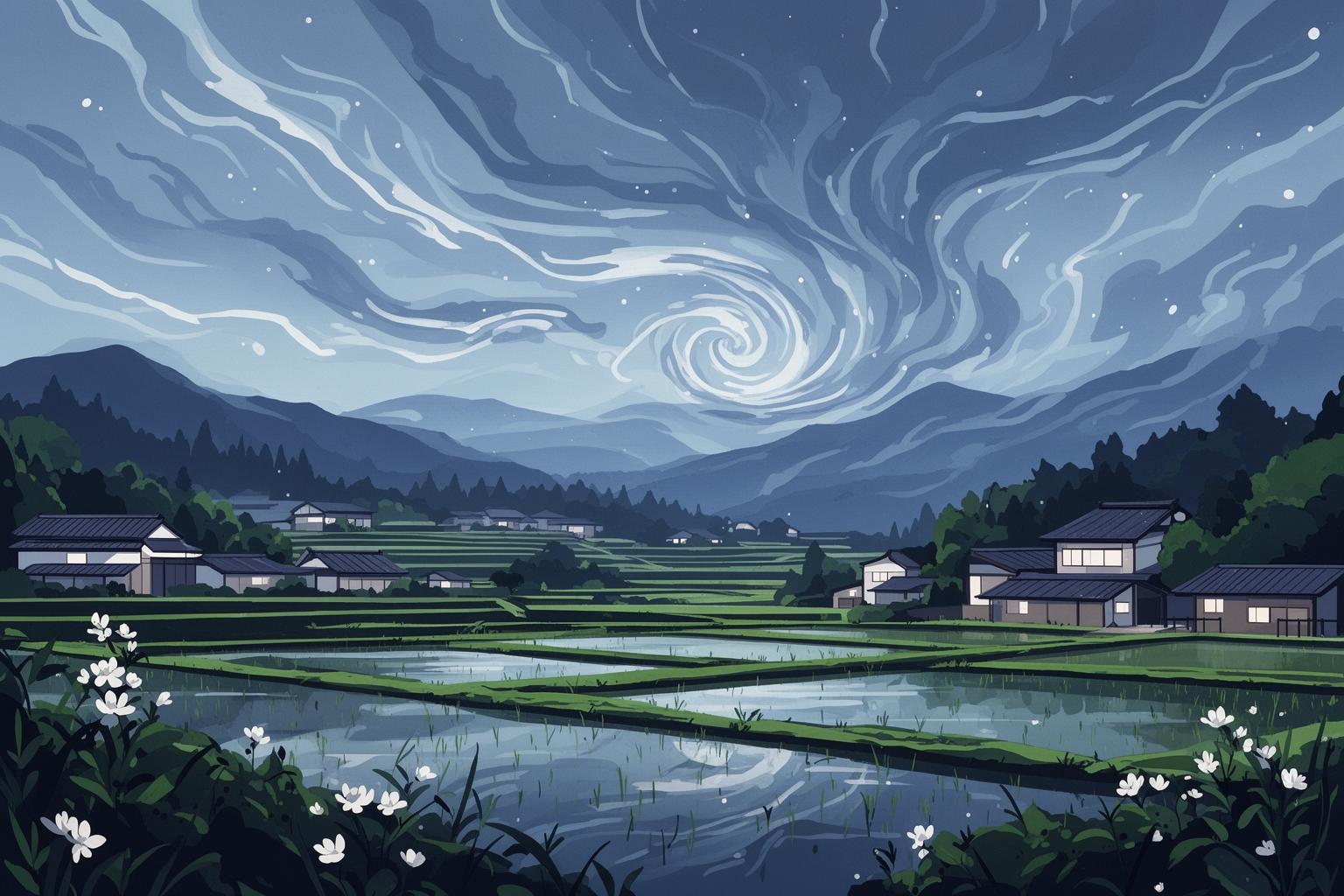
It’s a sensation that’s difficult to describe until you’ve actually lived through it. One moment you’re taking photos of the sunset, feeling calm and connected to nature. The next, every rustle in the leaves startles you, and the air feels heavy. This isn’t just city-dweller paranoia setting in. It’s a known phenomenon—a particular time of day when the world seems to hold its breath, and you’d better hold yours as well.
Tasogare-doki: Beyond Simply ‘Twilight’
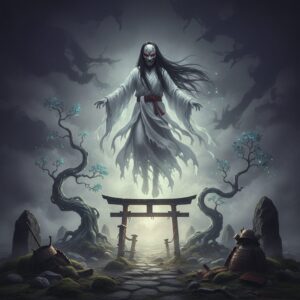
In English, we call it twilight or dusk. In Japan, it’s known as tasogare-doki (黄昏時), a term loaded with deeper meaning. Let’s unpack the word itself. The archaic spelling was 誰そ彼, which literally means “Who goes there?” or “Who is that person?” It’s that precise moment when the light is so dim and unclear that you might see a figure approaching but can’t distinguish their face. Are they friend, stranger, or something else entirely? That uncertainty—the potential for danger or mistaken identity—is embedded in the word. It marks a liminal state, a fracture in the day’s fabric. The line between day and night, the known and the unknown, blurs and becomes permeable. It’s considered the time when the supernatural and human worlds overlap. The spirits—ayakashi, mononoke, or whatever name you choose—can cross over. And maybe, whether you want to or not, you can cross over too. This is why children are told to be home before tasogare. It’s not merely a curfew; it’s a warning passed down through generations. This is the witching hour, Japanese style.
The sensory experience during tasogare plays a huge role in this phenomenon. The temperature drops suddenly, and you feel a damp chill, even on a warm day. The world loses its color, fading into shades of grey, deep purple, and a final fiery orange streak on the horizon. Then there’s the sound—or the silence. Daytime birds fall quiet. The world holds still for a few moments. And then, breaking the silence, you hear them: the higurashi. These cicadas sound nothing like the lazy buzzing ones of summer afternoons. Their call is a frantic, eerie, almost mournful rattle: “kana-kana-kana-kana.” In any Japanese movie or anime, that sound signals that something significant is about to happen. It’s the official soundtrack to the weirdness escalating. That call drills into your skull, ramping tension to the max. The very air seems to vibrate with it, like a warning siren from the forest itself. You can smell the change too—the scent of damp earth, decaying leaves, moss on old stones grows stronger, as if the land itself exhales. Shadows stretch and twist, turning familiar shapes—a gnarled tree, a strangely shaped rock—into monstrous figures in your peripheral vision. Your eyes deceive you. Was that just the wind shifting branches, or did something duck behind that cedar? This sensory onslaught is designed to put you on edge, reminding you that you’re an intruder—and the hosts are about to emerge.
The Landscape Isn’t Playful: Nature as the Original Antagonist
You need to grasp something crucial about Japan. This isn’t some gentle, pastoral paradise. Those postcard-perfect images exist, but they tell only part of the story. Around 75% of the country is mountainous—and these aren’t soft, rolling hills like you might be accustomed to. They’re steep, jagged, covered by dense forests that barely let sunlight through to the ground. The valleys, or tani, are deep and treacherous, often carved by rivers that can turn into raging torrents after sudden rainstorms. It’s alarmingly easy to get lost—really, profoundly lost. One wrong turn on an inadequately maintained trail, one slip on a mossy rock, and you’re off the path. From there, good luck. The trees all look alike. The valleys create confusing echoes. Your phone? Useless. Getting even a single bar of service just a few kilometers from a main road is a miracle.
This landscape is the original antagonist in the Japanese narrative. It’s undeniably beautiful but demanding and unforgiving. And it’s far from empty—filled with hazards that can ruin your day or your life. Let’s talk wildlife, because it’s not all gentle deer here. There are kuma, bears—the Asiatic black bear. They’re smaller than grizzlies but notoriously unpredictable and often aggressive, especially mothers with cubs. Each year, people suffer attacks, sometimes fatal. That’s why hikers ring little bells, called kuma-yoke suzu. It’s not decoration; it’s a desperate plea: “Please hear me, don’t be startled, don’t attack.”
Then, there are inoshishi, wild boars. These animals are tanks—solid muscle with sharp tusks and notoriously bad tempers. They’ll charge cars or people and can cause serious injury. They’re most active at dusk and night, rustling just off trails. A sudden crashing in the bamboo thicket nearby will make your heart race. And don’t overlook the smaller dangers: the mamushi, a venomous pit viper whose bite can be deadly without prompt treatment. Masters of camouflage, they’re easy to step on by accident. And the ultimate nightmare—the Japanese giant hornet, suzumebachi. These are thumb-sized, with venom strong enough to dissolve flesh, and fiercely territorial. A swarm of them can—and has—killed people. These are the true monsters of the woods. So when your brain screams at dusk, it’s not being irrational. It’s tapping into an ancient memory of all the dangers inhabiting these mountains. The tales of spirits and demons didn’t appear out of nowhere—they’re poetic expressions of these very real threats. A tengu might grab you in a story, but a bear will genuinely maul you. Folklore is survival lore in disguise.
Deconstructing Kamikakushi: It’s Not Just Ghosts, It’s History
So, we’ve established that the atmosphere is eerie and the landscape acts as an active force trying to end your life. However, the concept of Kamikakushi goes beyond simply getting lost or becoming animal prey. It is a complex cultural phenomenon used to explain various disappearances, wrapping harsh realities of life in a supernatural veil. It focuses less on actual ghosts and more on the spirits of history.
What ‘Spirited Away’ Really Means
The term itself reveals much. Kami (神) and kakushi (隠し) mean “hidden by a kami.” Nowadays, when people hear kami, they think of the kind, shrine-dwelling deities of Shinto. But that’s a modern, sanitized interpretation. In ancient, animistic Shinto, a kami was not just a god; it was any powerful, awe-inspiring natural force. A massive ancient tree could be a kami. A waterfall could be a kami. An entire mountain was definitely a kami. These forces were not always benevolent. They had two aspects: the gentle, good spirit (nigitama) that brought good harvests, and the violent, destructive spirit (aramitama) responsible for earthquakes, typhoons, and floods. Being “hidden by a kami” didn’t mean you were invited to a fanciful bathhouse party. It meant you trespassed, offended the mountain spirit, broke a taboo, and as punishment, were taken—an abduction, a divine kidnapping with slim chances of return.
Over time, certain figures came to embody these abductions in folklore. The most famous are the tengu (天狗), the iconic long-nosed, red-faced mountain goblins. Originally seen as disruptive demons, they later became powerful, unpredictable mountain guardians. Skilled swordsmen with magical abilities, they were also notorious troublemakers. Tengu were infamous for snatching people, especially arrogant monks or children who wandered too deep into the woods. Occasionally, they’d return the victim years later, either insane or with no memory of their ordeal. Other times, the person vanished forever. The legendary samurai Minamoto no Yoshitsune was said to have been trained by the King of the Tengu as a child—a rare positive encounter.
Then there are the Yama-uba (山姥), mountain hags: terrifying old women living deep in the mountains who sometimes offered shelter to lost travelers only to reveal their cannibalistic nature and devour them. They symbolize the ultimate fear of the wilderness—not only death but total consumption. And we mustn’t forget the tricksters like the kitsune (foxes) and tanuki (raccoon dogs), shapeshifting creatures who delight in playing tricks on humans. A kitsune might lead you astray with phantom lights (kitsunebi), leaving you hopelessly lost, or conjure an elaborate illusion of a bustling village in the woods, only for you to awaken alone in a field of weeds. Less overtly malicious than a Yama-uba, encounters with these spirits could easily result in death from exposure. All these beings personalized the forest’s faceless fears—its dangers, deceptions, and finality.
The Real-Life Disappearances: The Unspoken Truth
Now, here’s the darker side. The supernatural tales are eerie, but the realities they obscured were far grimmer. Kamikakushi became a convenient euphemism to mask human-made tragedies in small, close-knit communities where social harmony and reputation mattered deeply.
Consider mabiki (間引き), which literally means “thinning out,” the same term used when thinning seedlings in a rice field. Here, it applied to children. In pre-modern Japan, especially during the Edo period, famine was a constant threat. Poor farming families sometimes had more children than they could sustain. To ensure the survival of the family unit, newborns were occasionally… thinned out. Infanticide was a brutal act born of desperation. Yet it couldn’t be openly acknowledged, as it would bring immense shame and ostracism. So, what happened? The child was “spirited away.” A tengu took them. The gods claimed them. The community could then collectively grieve the “lost” child, offering some comfort and, importantly, avoiding a harsh truth. The story of Kamikakushi served as a necessary social fiction.
Another grim practice was ubasute (姥捨て), “abandoning an old woman.” Rooted in the same desperate poverty, when an elderly family member, usually a woman, became too old to work and was seen as a burden during famine, the family might lead them deep into the mountains and leave them to die. The most famous tale is “The Ballad of Narayama,” a heartrending story adapted into films. Whether ubasute was widespread is debated, but the legend’s persistence speaks volumes. It reinforced the mountain’s reputation as a place of no return—a place where people disappeared. The mountain god did not take grandma; her family did, forced by unspoken horrors.
Beyond these brutal acts, Kamikakushi was a perfect cover for many other disappearances. People have always run away from home—to escape debt, abusive families, or oppressive social pressure in small villages. Accidents happen, too: farmers fall into ravines; children drown in rivers. In tight-knit communities, sudden, unexplained absences caused great anxiety and shame. Was it suicide? Did they elope? Rather than confront messy human dramas, it was easier—and in some ways kinder—to blame the supernatural: “They must have been taken by the spirits.” This closed the mystery, allowed families to save face, and transformed personal tragedy into communal folklore—a cautionary tale for future generations. It acted as a social safety valve for pressures without other outlets.
The Modern Echoes: Why We’re Still Spooked
Alright, you might be thinking, “That’s all intriguing historical and folkloric background, Taro, but this is the 21st century. We have GPS and weather satellites. Nobody really believes in tengu anymore.” And you’d mostly be right. But the feeling… the cultural conditioning… it still lingers. The echoes of Kamikakushi surround us—in our entertainment, our modern fears, and in those real places that seem frozen in time.
From Ghibli to Gaming: Kamikakushi in Pop Culture
No cultural export exemplifies this concept better than Hayao Miyazaki’s iconic film, Spirited Away. For many outside Japan, it was their first encounter with the term. But Studio Ghibli did something remarkable and transformative. It took the terrifying essence of Kamikakushi—the loss of identity, the frightening otherworld, the peril of eternal entrapment—and cloaked it in breathtaking beauty and wonder. Chihiro’s journey is undeniably scary, yet the spirit world is also filled with intriguing characters, mouthwatering food, and moments of deep kindness. It softened the concept for a global audience, transforming it from a grim cautionary tale into a whimsical adventure. It made the idea of being spirited away… somewhat appealing.
However, don’t be mistaken. The original, terrifying core of Kamikakushi thrives in other areas of Japanese pop culture, especially in horror. Consider video games like the Silent Hill series, centered around a town existing in a liminal state where reality is thin and personal demons take monstrous form. Or Fatal Frame (Zero in Japan), where players explore deserted, haunted Japanese mansions equipped only with a camera that reveals ghosts. These games perfectly embody that sense of isolation and dread—entering a place governed by hostile, unfamiliar rules. Then there’s anime like Higurashi: When They Cry. It begins as a seemingly innocent slice-of-life story set in the quaint village of Hinamizawa—but quickly reveals a sinister truth. The village is steeped in dark customs, paranoia runs rampant, and friends start dying horrifically within a time loop. The show masterfully contrasts the idyllic rural setting—the buzzing of higurashi cicadas, ancient shrines, tight-knit community—with profound psychological horror. It taps directly into the fear of remote villages, outsiders uncovering dangerous secrets, and the very real threat of simply… vanishing.
The Real-Life Version: Abandoned Places and Lingering Atmospheres
This sensation isn’t confined to fiction. It’s also found throughout the Japanese countryside. I’m referring to haikyo (廃墟), or ruins. Japan faces a significant issue with depopulation, particularly in rural areas. Young people migrate to cities seeking jobs and excitement, leaving behind aging populations in villages gradually fading away. This has created a vast number of abandoned sites: schools, hospitals, hotels, theme parks, and even entire villages called genkai shuraku (限界集落), or “marginal villages.”
Exploring a haikyo feels like walking into a real-life Kamikakushi event. You enter a classroom with textbooks still open on desks. You find a house where the dinner table remains set. You wander through an abandoned theme park where mascots grin through layers of grime and decay. The atmosphere is deeply unsettling. These aren’t ancient ruins; this is recent history. It feels as if the people living there didn’t just leave—they vanished. They were spirited away, not by a tengu, but by economic forces, modernization, and the slow, inevitable passage of time. These places are tangible ghosts, monuments to a disappearing lifestyle, carrying the same heavy, sorrowful, and slightly ominous aura as the old tales. The silence in an abandoned school is far louder than that in a forest. It’s the weight of absent voices, lives once lived and now gone. It’s the modern face of Kamikakushi.
Are People Actually Still Being Spirited Away?
So, to get to the heart of the matter: Are people in modern Japan still being snatched by mountain goblins? Clearly not. But do people continue to disappear mysteriously in the mountains? Absolutely. Every year, the news reports hikers who vanish. Often they’re experienced and well-prepared, but one misstep, a sudden weather change, and they’re gone. The mountains swallow them up. And when you scroll through comments on these stories, you’ll find echoes of old beliefs: “The mountain god must have claimed him,” or “He was called by the mountain.” It’s not literal faith, but a way of acknowledging nature’s immense, uncontrollable power.
The most extreme and notorious modern example of a Kamikakushi-like place is Aokigahara Forest at the base of Mt. Fuji. Known as the “Suicide Forest,” it has a grim reputation worldwide. Many tragic people choose it as their final destination. The forest itself is unnerving—dense, with volcanic soil rich in magnetic iron that can reportedly disrupt compasses, and eerily silent because thick moss absorbs sound. It’s a place seemingly made for getting lost. The folklore surrounding it is intense, with stories of yurei (ghosts) who lure others to doom. Aokigahara blends old forest fears, harsh human despair, and modern myth into one. It’s Kamikakushi in its darkest form.
Ultimately, cultural conditioning is powerful. I’m an outdoor enthusiast. I spend a lot of time in the mountains. I’m rational—I know the real dangers are bears, cliffs, and hypothermia, not red-faced goblins. Yet even for me, when I’m alone, as the sun sets and the higurashi start to cry… I feel it. That prickling at the nape of my neck. The urge to look back. The need to return quickly to safety. It’s a cultural memory, an emotional resonance passed down through centuries. It’s in the stories my grandmother told me, in the anime I watched, and in the very soil beneath my feet.
How to Vibe With It (Without Getting Got)
So, after all this talk about man-eating hags and harsh historical truths, you might hesitate about that countryside retreat. But you shouldn’t. The aim isn’t to frighten you away. It’s to enrich your experience. Understanding these elements transforms a basic sightseeing trip into a true cultural immersion. It’s about learning to value the shadows alongside the light.
It’s Not a Theme Park, It’s a Vibe
The key is to approach the Japanese countryside with respect. It’s not a polished theme park attraction. It’s a living, breathing place with a long, often dark history. So when you’re out there and tasogare-doki begins to settle in, don’t just reach for your phone to shake off the feeling. Embrace it. Pause for a moment. Listen to the world shift. Feel the temperature drop. Let that twinge of primal fear wash over you. Know that the chill you sense is the same one Japanese people have felt in these mountains for thousands of years. It connects you to the place in a way that a thousand perfect photos never could. You’re not merely seeing a landscape; you’re sensing its story. That unsettling beauty is one of the most authentic experiences you can have in Japan.
Practical Tips for Not Becoming a Folktale
That said, let’s be realistic. The goal is to soak up the atmosphere, not to become the next cautionary tale. The old stories stemmed from real hazards, and those dangers remain very much alive. So, be wise. Basic hiking rules apply, but they’re crucial here.
- Check the Weather, Religiously: Japanese mountain weather is famously unpredictable. A sunny morning can turn into a torrential downpour and thick fog within an hour.
- Tell Someone Your Plan: Always inform someone at your hotel or a friend about your exact route and expected return time. Seriously. Don’t skip this.
- Gear Up: Bring layers, a map (physical, not just digital), a compass, a headlamp, and more water and food than you think you’ll need.
- Ring Your Bell: Carry a bear bell (kuma-yoke suzu) and let it jingle. It might seem silly, but a bear encounter is way worse.
- Don’t Push It at Dusk: Unless you’re an experienced mountaineer with a solid plan, start heading back well before dark. The mountains aren’t the place to test your night-hiking skills. Respect tasogare.
The aim isn’t fear. It’s respect. Respect the mountain. Respect the weather. Respect the wildlife. In a sense, you’re respecting the kami.
The Takeaway: A Beautifully Unsettling Reality
Ultimately, Kamikakushi is the perfect metaphor for Japan itself. On the surface, it can be stunningly beautiful, meticulously ordered, and serenely peaceful. But just beneath, there’s a deep current of darker, wilder, more chaotic forces: a history of struggle, a reverence for nature’s destructive power, and a world of spirits and stories that refuse to be forgotten. The line between cute and creepy, beautiful and terrifying, is incredibly, deliciously thin.
It’s not just a ghost story. It’s a rich cultural tapestry woven from geography, history, poverty, and spirituality. It was a way for people to make sense of a often harsh and unforgiving world—a way to explain the unexplainable and cope with loss. So next time you admire a breathtaking photo of a misty Japanese valley at sunset, remember what you can’t see. Remember the stories, the history, the real dangers, and that feeling of tasogare, of “Who goes there?” in the gathering dusk. That’s the real Japan. And it is, in my opinion, infinitely more fascinating than any postcard image.